Respuesta rápida: Si su pregunta es qué orden está más directamente representado en la investigación combinada de sauna y agua fría, sauna seguida de inmersión en agua fría o una pausa de enfriamiento con agua fría es la secuencia más clara y coincidente con la investigación. Los estudios publicados en 2016, 2020, 2025 y 2026 utilizaron calor antes que frío al examinar respuestas cardiovasculares o térmicas agudas. Ninguno de esos estudios citados comparó directamente sauna primero con frío primero para determinar un orden universalmente superior para la salud, la recuperación, el sueño o el bienestar general. Por lo tanto, la conclusión defendible es limitada: sauna → frío está mejor representado en los protocolos combinados disponibles, no probado como mejor para todas las personas. Su objetivo, la idoneidad médica, la respuesta al calor y al frío, la dosis de exposición y la capacidad de detenerse de forma segura importan más que copiar un experimento. El momento del entrenamiento, la temperatura de inmersión, la duración y el flujo de una instalación comercial son decisiones independientes.
¿Sauna antes o después del baño de inmersión en frío? Lo que realmente probaron los estudios
La respuesta más sólida que esta página puede respaldar se refiere a qué orden combinado se ha estudiado realmente, no a qué orden es universalmente mejor. En los estudios en humanos revisados a continuación, la exposición a la sauna precedió a la inmersión en agua fría o a una pausa de enfriamiento que incluía agua fría.
| Estudio | Qué evaluó el protocolo | Qué no establece |
|---|---|---|
| Radtke et al., 2016 37 hombres con insuficiencia cardíaca, enfermedad arterial coronaria o ninguna de las dos | Exposiciones a sauna finlandesa seguidas de una inmersión final en agua fría; se midieron respuestas hemodinámicas y autonómicas. Registro de PubMed | Sin comparación de frío primero; no es un ensayo de orden en población general. |
| Podstawski et al., 2020 55 hombres jóvenes sedentarios | Se comparó sauna seguida de inmersión en agua fría con sauna seguida de una condición de enfriamiento breve con ducha/descanso. Resumen del artículo | Sin comparación entre sauna primero frente a frío primero. |
| Szafraniec et al., 2025 28 mujeres normotensas | A las fases repetidas de calentamiento en sauna finlandesa les siguieron periodos de enfriamiento que incluían inmersión en agua fría; se registraron las respuestas cardiovasculares. Estudio de Scientific Reports | Sin grupo de orden inverso y sin afirmar que una secuencia sea la mejor para todos los resultados. |
| Owen et al., 2026 16 adultos sanos | En un diseño cruzado, se comparó la sauna con enfriamiento al aire frente a un enfriamiento de sauna que incluía una breve inmersión en agua fría. Estudio de Experimental Physiology | Aísla el efecto del método de enfriamiento dentro de un protocolo con sauna primero; no compara frío primero con sauna primero. |
Estos estudios conforman sauna → frío una secuencia defendible y respaldada por la investigación cuando alguien quiere reproducir el orden que se ha investigado. No demuestran que el orden inverso sea ineficaz, inseguro o inferior, ni establecen una regla universal de finalización.
Esa distinción es el núcleo de este artículo: utilizar la investigación para describir lo que se ha probado, sin convertir un protocolo de estudio en una prescripción personal.
Una secuencia común no significa una secuencia mejor demostrada
En los consejos sobre sauna y frío suelen mezclarse tres ideas diferentes: una práctica tradicional, un protocolo utilizado en un estudio y evidencia comparativa de que un protocolo produce un mejor resultado. No son el mismo nivel de evidencia.
Un estudio puede examinar una secuencia sin comparar secuencias
Si los investigadores hacen que los participantes usen una sauna y después entren en agua fría, pueden medir lo que ocurre durante ese protocolo. A menos que el estudio también compare la secuencia inversa con un diseño adecuado, no puede demostrar que sauna primero produzca un mejor resultado global que frío primero.
Secuencia estudiada ≠ secuencia superior.
Søberg 2021 no demuestra que todo el mundo deba terminar con frío
El estudio de Søberg de 2021 se cita con frecuencia en internet para respaldar la idea de que las sesiones de contraste siempre deben terminar con exposición al frío. La investigación original examinó a hombres con experiencia en natación de invierno y se centró en la termorregulación, la adaptación al frío y las respuestas relacionadas con el tejido adiposo pardo. No no aleatorizó a los participantes a sauna primero frente a frío primero, y no comparó terminar con frío frente a terminar en caliente como rutinas de consumo competidoras. El registro del estudio original muestra la población real y la pregunta de investigación.
Søberg 2021 no fue un ensayo de “terminar siempre con frío”.
Un mecanismo no es lo mismo que un resultado
El calor y el frío producen respuestas fisiológicas agudas reales. Eso no significa que todo mecanismo plausible demuestre un beneficio para el consumidor.
| Nivel de evidencia | Qué puede indicarte |
|---|---|
| Respuesta fisiológica aguda | Qué cambia durante la exposición o poco después |
| Protocolo del estudio | Qué condiciones evaluaron realmente los investigadores |
| Evidencia de resultado comparativo | Si una intervención superó a otra para un resultado definido |
| Recomendación de uso personal | Requiere que la evidencia y el límite de seguridad coincidan con la cuestión individual |
Respuesta fisiológica ≠ resultado probado.
El orden de inicio, el orden de finalización, el tiempo de transición y el número de rondas son cuestiones distintas
Saber qué modalidad va primero no le da una rutina completa de terapia de contraste.
| Variable de protocolo | La pregunta real |
|---|---|
| Orden de inicio | ¿Primero la sauna o el baño de inmersión en frío? |
| Orden de finalización | ¿Qué exposición va al final? |
| Tiempo de transición | ¿Con qué rapidez se cambia? |
| Número de ciclos | ¿Cuántas veces alternas? |
| Temperatura | ¿Qué temperatura tiene cada exposición, caliente o fría? |
| Duración | ¿Cuánto dura cada exposición? |
Los estudios publicados sobre sauna y agua fría utilizan diferentes duraciones de calentamiento, estructuras de enfriamiento, condiciones de inmersión y diseños de ciclos. Por ejemplo, el estudio de 2025 sobre sauna repetida y CWI y el estudio cruzado de 2026 sobre CWI durante pausas de enfriamiento en sauna utilizaron protocolos diferentes y respondieron a preguntas distintas de fisiología aguda. Ninguno es una rutina universal, y ninguno compara sauna primero frente a frío primero como secuencias competidoras.
Empezar por la sauna no significa automáticamente que debas terminar con frío
Comenzar con calor no establece por sí mismo cuál debe ser la exposición final. La investigación revisada para este artículo no justifica una regla universal de que todos deban terminar siempre con frío, volver a calentar después o usar un estado final específico para el metabolismo, la recuperación o el sueño.
Aquí no se establece un plazo universal para la transición inmediata
Algunos protocolos de investigación utilizan la inmersión en agua fría como parte de una pausa de enfriamiento estructurada; otros incluyen enfriamiento o descanso adicionales. Eso no justifica convertir un protocolo en una regla de que todos deban entrar en agua fría dentro de un número específico de minutos.
El orden tampoco determina cuántas rondas realizar
Un estudio puede utilizar calentamiento y enfriamiento repetidos porque los investigadores necesitan una intervención estandarizada. Ese número de ciclos pertenece al experimento, no automáticamente a un lector general.
De forma similar, los estudios de terapia de contraste con agua—alternancia de agua caliente y fría— no deben tratarse como evidencia directa de una secuencia de sauna más baño de inmersión en frío.
La terapia de contraste con agua ≠ evidencia del orden sauna y baño de inmersión en frío.
Para preguntas exactas sobre exposición, utilice los propietarios separados de HACHILL: Guía de duración de sauna, Guía de duración del baño de inmersión en frío, y Guía de temperatura del baño de inmersión en frío.
Una respuesta sobre el orden no es una prescripción de dosis.
¿Cuándo debe hacer una pausa, detenerse o evitar la siguiente transición calor-frío?
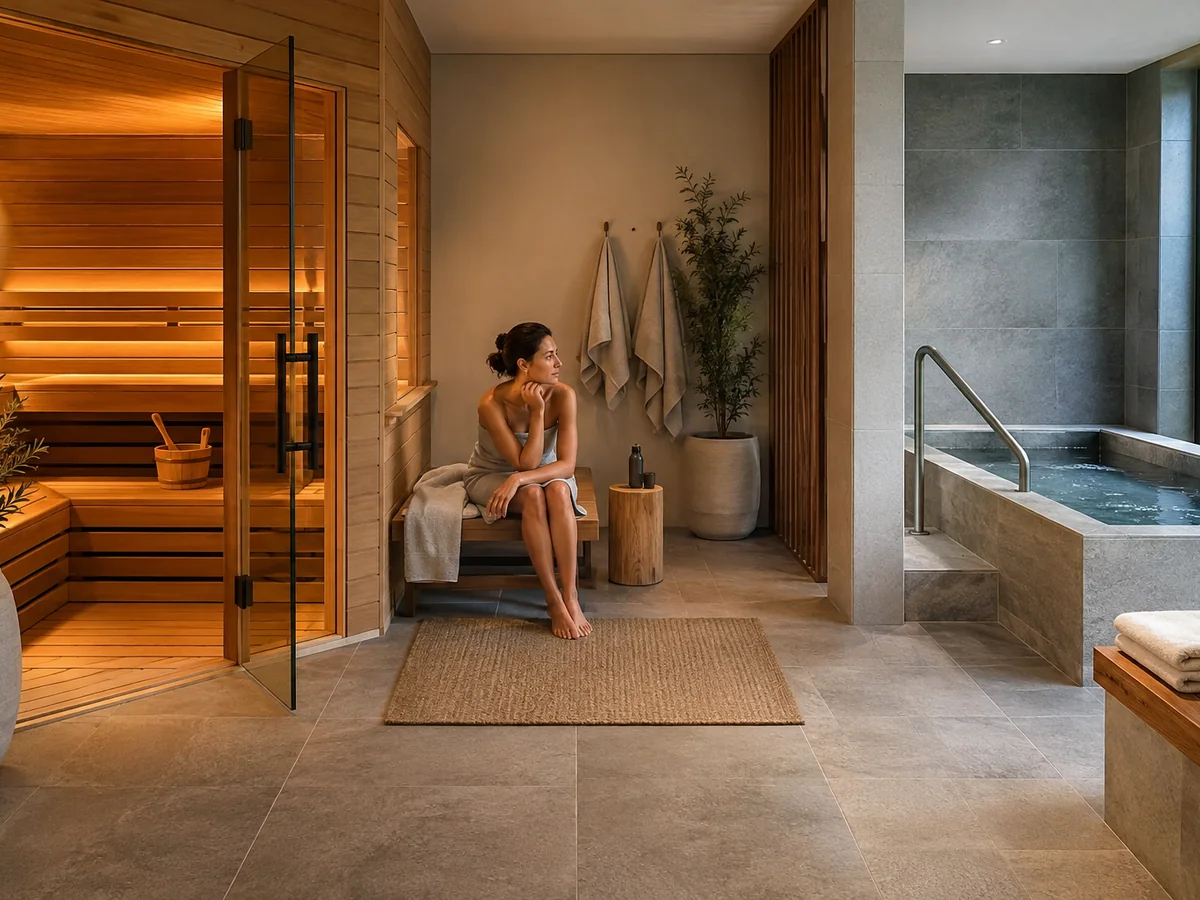
La secuencia planificada nunca debe anteponerse a su respuesta real al calor o al frío.
La inmersión en agua fría puede desencadenar una respuesta aguda de choque por frío que implica cambios rápidos en la respiración y la actividad cardiovascular. Una revisión sistemática y metaanálisis de 2024 sobre la habituación al choque por frío encontró que la inmersión repetida puede reducir varios componentes de esa respuesta en promedio. Sin embargo, la habituación no es prueba de seguridad individual y no elimina la necesidad de una salida fácil y reglas de parada basadas en síntomas.
La sauna crea un estrés separado por calor y pérdida de líquidos. Guía de la Cleveland Clinic sobre la sauna aconseja salir si aparece mareo, debilidad, dificultad para respirar o malestar significativo y recomienda orientación médica en circunstancias relevantes. Su guía sobre baños de inmersión en frío igualmente aconseja salir en caso de aturdimiento o malestar preocupante y destaca el estrés cardiovascular y respiratorio por exposición al frío.
SI NO HAY SEÑALES DE ADVERTENCIA
La ausencia de un síntoma preocupante no establece por sí misma la idoneidad médica. Manténgase atento a cómo está respondiendo y no utilice esta sección como luz verde médica.
PAUSAR O DETENER
No fuerce la siguiente exposición planificada si presenta mareo, desmayo, debilidad inusual, dificultad respiratoria importante, respiración descontrolada al entrar en frío, confusión, mala coordinación, molestias en el pecho o malestar marcado.
SIN PROTOCOLO GENÉRICO
Si la idoneidad médica es incierta debido a una circunstancia de salud relevante, embarazo, medicación, desmayos previos o una recomendación previa de restringir el calor o el frío, la orientación sanitaria individualizada es más apropiada que una secuencia en línea.
La familiaridad no elimina el riesgo
La exposición repetida al frío puede reducir algunos componentes de la respuesta media al choque por frío, pero la habituación no es inmunidad. El uso habitual de la sauna tampoco hace imposible la deshidratación, el sobrecalentamiento, el desmayo o una respuesta inusual.
Familiaridad ≠ ausencia de estrés por calor o frío.
El alcohol no debe utilizarse para que la rutina resulte más fácil
La orientación de seguridad de la sauna recomienda evitar el uso de la sauna después de consumir alcohol, y la sudoración aumenta la pérdida de líquidos. Una inmersión en frío después no revierte el juicio deteriorado, la deshidratación ni otra razón por la que la sesión de calor fue inapropiada.
¿Cambian realmente el orden tu objetivo o el contexto de entrenamiento?

A veces el objetivo cambia la decisión. Pero a menudo lo que cambia es qué página de evidencia necesitas, en lugar de crear una nueva secuencia de sauna y baño de inmersión en frío.
El entrenamiento de fuerza es un buen ejemplo
Un estudio de 2024 revisión sistemática y metaanálisis encontró que la inmersión en agua fría usada inmediatamente después de sesiones de entrenamiento de resistencia puede atenuar modestamente las ganancias de hipertrofia, aunque califica los estudios subyacentes como de calidad generalmente regular a deficiente. Los autores también señalan que la evidencia analizada se aplica a CWI realizada dentro de aproximadamente 15 minutos desde el cese del ejercicio; no establece el efecto de una inmersión ocasional varias horas después.
Ese hallazgo trata de momento de exposición al frío en relación con el entrenamiento de fuerza. No prueba que el frío primero sea mejor después de levantar pesas, y colocar la sauna antes de la inmersión no elimina la cuestión del momento.
El momento del entrenamiento ≠ la secuencia general de sauna/baño de inmersión en frío.
Los lectores que tomen una decisión específica de entrenamiento deberían usar los de HACHILL Baño de inmersión en frío antes o después del entrenamiento en lugar de considerar la sauna primero como una solución alternativa.
Las afirmaciones sobre recuperación también necesitan un resultado, no solo un mecanismo
Una persona puede sentir menos dolor o preferir la sensación después de la exposición al frío. Eso no establece automáticamente una mejor adaptación a largo plazo. Asimismo, el hecho de que el calor y el frío creen diferentes respuestas fisiológicas agudas no es suficiente para afirmar que un estado de finalización produce una recuperación universalmente superior.
Sentirse mejor ≠ adaptación mejor demostrada.
La relajación, el sueño y el estado de alerta no son reglas universales de orden
Algunas personas prefieren terminar en caliente porque les resulta relajante. Otras prefieren la sensación de terminar en frío. Son preferencias válidas cuando se describen como preferencias.
La evidencia revisada para este artículo no justifica convertirlas en afirmaciones universales como terminar en caliente para un sueño científicamente óptimo, terminar en frío para una mayor alerta, primero el frío por la mañana o la sauna al final siempre mejor por la noche.
La preferencia puede desempatar, pero preferencia ≠ superioridad médica.
Elija una secuencia: patrón que coincide con la investigación, preferencia personal o sin protocolo genérico
Una vez separados el orden, la dosis y la seguridad, la decisión queda mucho más clara.
| Su situación | Vía basada en la evidencia | Qué no significa esta vía |
|---|---|---|
| Desea el orden combinado representado de forma más directa en la investigación actual sobre sauna + CWI | SECUENCIA ADAPTADA A LA INVESTIGACIÓN — Sauna → frío | No está probado que sea universalmente mejor y no es una prescripción personal |
| Ambos pedidos son por lo demás apropiados y ninguna evidencia específica del objetivo establece superioridad | PREFERENCIA / CONTEXTO | La preferencia no es una afirmación de salud |
| La idoneidad médica es incierta o aparecen síntomas preocupantes | SIN PROTOCOLO GENÉRICO | No fuerces una rutina de internet |
| Tu pregunta se refiere principalmente a la adaptación al entrenamiento o a la recuperación del ejercicio | RESPONSABLE DEL MOMENTO DEL ENTRENAMIENTO | El pedido de sauna no resuelve la cuestión del momento del entrenamiento |
| Tu pregunta es sobre minutos, temperatura del agua o número de rondas | RESPONSABLE DE DOSIS / SEGURIDAD | La secuencia no establece la dosis de exposición |
SECUENCIA COINCIDENTE CON LA INVESTIGACIÓN
Si su objetivo es replicar el orden combinado representado por los estudios revisados aquí, sauna seguida de inmersión en agua fría es la coincidencia más cercana en la investigación. Eso no establece superioridad ni idoneidad personal.
PREFERENCIA / CONTEXTO
Cuando ambas modalidades sean por lo demás adecuadas y la evidencia directa de resultados no establezca un ganador para su objetivo, la preferencia final y el contexto práctico pueden desempatar.
SIN PROTOCOLO GENÉRICO
Utilice orientación individualizada en lugar de una secuencia de internet cuando la idoneidad médica no esté resuelta, aparezcan síntomas preocupantes, exista deterioro o la rutina requiera supuestos de exposición no respaldados.
La secuencia no siempre es la primera cuestión que debe resolverse.
Una vez resuelta la cuestión de la evidencia y la seguridad: explore las familias de equipos que encajen con la instalación prevista. Para un local comercial definido, continúe por la ruta de planificación de instalaciones en lugar de convertir un artículo sobre secuencias de uso público en un protocolo operativo.
Para instalaciones: planificar el flujo de usuarios calor–frío sin prescribir un protocolo universal
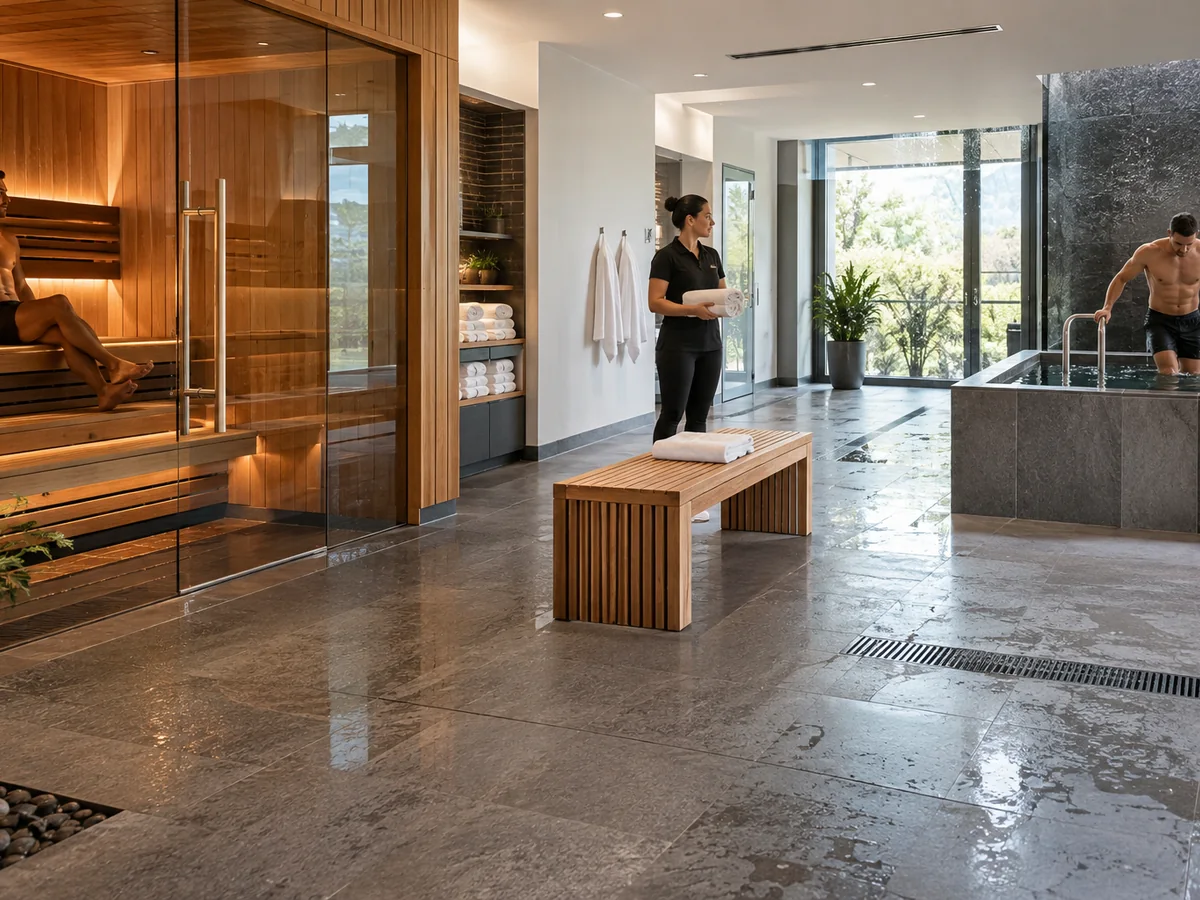
Un establecimiento comercial de sauna e inmersión en frío tiene un problema diferente que resolver: las personas deben poder moverse por el espacio de forma segura, ya sea que el recorrido operativo revisado de la instalación sea calor → frío, frío → calor o incluya un paso de recuperación separado.
La distribución de una instalación debe apoyar el recorrido operativo; no debe tratarse como evidencia médica de que todos los usuarios necesiten el mismo orden de exposición.
- ¿Pueden los usuarios mojados desplazarse entre zonas térmicas sin una ruta a pie innecesariamente peligrosa?
- ¿Existe una estrategia de drenaje creíble a lo largo de las zonas de circulación húmedas?
- ¿Hay un lugar para pausar o recuperarse en lugar de forzar una transición inmediata?
- ¿La visibilidad del personal y la circulación se ajustan al modelo operativo?
- ¿Pueden coexistir la privacidad y el movimiento de los usuarios?
- ¿Pueden realizarse la limpieza y el mantenimiento sin interferir con el flujo de usuarios?
Para contextos laborales en EE. UU., las normas de OSHA sobre superficies de tránsito y trabajo exigen que los suelos de las salas de trabajo se mantengan secos en la medida de lo posible y requieren drenaje donde se utilicen procesos húmedos. Eso es un apoyo útil para la gestión deliberada de zonas húmedas, pero su alcance es la seguridad en el lugar de trabajo, no un código universal de diseño de spa. Los requisitos de construcción, accesibilidad, salud pública, electricidad y otras instalaciones siguen siendo específicos de la jurisdicción y del proyecto.
de HACHILL Planificación de equipos para estudio de terapia de contraste la página asume la tarea más profunda de la instalación, incluidos la circulación, las interfaces húmedas/secas, los recorridos del personal y la planificación operativa.
Por lo tanto, una instalación puede diseñarse para un recorrido claro sin convertir la arquitectura en un protocolo de salud universal.
Preguntas frecuentes
¿Conviene usar la sauna antes o después de un baño de inmersión en frío?
Si desea replicar el orden utilizado en los estudios combinados revisados aquí, la sauna seguida de inmersión en agua fría es la coincidencia de investigación más cercana. Esos estudios no compararon directamente sauna primero con frío primero como rutinas competidoras, por lo que no demuestran una secuencia universalmente superior.
¿Conviene terminar con la sauna o con el baño de inmersión en frío?
La evidencia revisada aquí no establece un estado final universal. El estudio de natación de invierno de Søberg no prueba que todos deban terminar en frío, y la preferencia personal de finalización no debe convertirse en una afirmación no respaldada sobre metabolismo, recuperación o sueño.
¿Hay que pasar directamente de la sauna al agua fría?
La evidencia revisada aquí no establece un plazo universal de transición inmediata. Los protocolos de investigación utilizan estructuras de enfriamiento y tiempos de transición diferentes, por lo que el tiempo de un estudio no debe tratarse como una regla para todos los usuarios.
¿Elegir el orden indica cuántas rondas hay que hacer?
No. El orden de inicio, el orden de finalización, el tiempo de transición, el número de ciclos, la temperatura y la duración son decisiones separadas. El diseño de ciclos de un estudio es parte de ese estudio, no automáticamente una prescripción para uso personal.
¿Quién debería evitar seguir una secuencia genérica de sauna y baño de inmersión en frío?
Cualquier persona cuya idoneidad médica sea incierta no debe depender solo de una secuencia genérica en línea. Problemas cardiovasculares relevantes, embarazo, medicamentos o afecciones que puedan afectar la tolerancia al calor o al frío, desmayos previos, síntomas inexplicables o síntomas preocupantes durante una sesión son razones para usar orientación médica individualizada en lugar de forzar la siguiente exposición planificada.