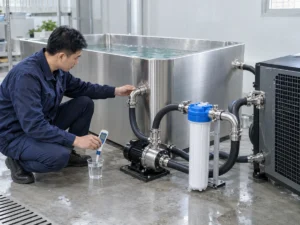
Guía comparativa de baños de agua fría
Baño de agua fría vs. baño de hielo: costo, control de temperatura, filtración y uso diario
Una decisión de inmersión en frío vs. baño de hielo se refiere principalmente al método de funcionamiento, no a cuál puede sentirse más frío. Un baño de hielo utiliza hielo añadido y normalmente impone más preparación, comprobación de temperatura, drenaje y limpieza al usuario o al personal. Una bañera de inmersión en frío con enfriador añade equipo, servicios y mantenimiento, pero puede ofrecer un control de temperatura más reproducible y puede admitir componentes de circulación, filtración y tratamiento según la configuración exacta.
Para uso personal ocasional, un baño de hielo puede ser la opción más sencilla y de menor barrera de entrada. Para uso frecuente, compartido o comercial, un sistema con enfriador puede reducir la manipulación repetida de hielo y mejorar la preparación diaria, siempre que el cuidado del agua, el drenaje, la alimentación eléctrica, el flujo de aire del condensador y el acceso de servicio se planifiquen correctamente.
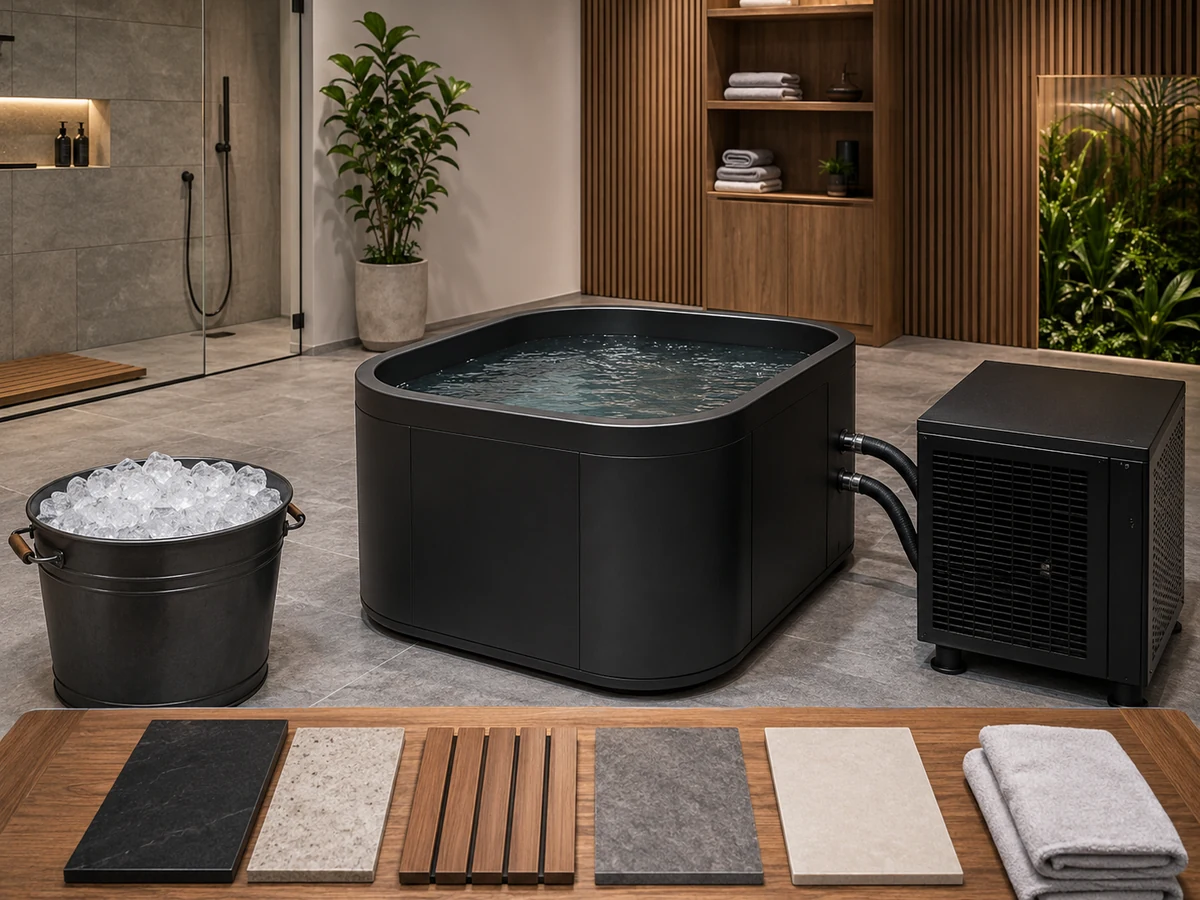
Visualización conceptual para educación del comprador; no es una foto real de proyecto HACHILL ni una afirmación de rendimiento específica de modelo.
Baño de agua fría vs baño de hielo: la respuesta breve
Elegir un baño de hielo cuando el uso es ocasional, el presupuesto y la simplicidad de instalación son lo más importante, la manipulación manual del hielo es aceptable y la variación de temperatura no es un problema.
Elija una tina de inmersión en frío con chiller cuando la temperatura repetible, menos preparación manual, opciones de circulación/filtración y disponibilidad diaria importan lo suficiente para justificar equipo, servicios auxiliares y mantenimiento.
Para los compradores comerciales, compare la carga operativa completa: usuarios previstos, temperatura objetivo, volumen de agua utilizable, condiciones ambientales, método de cuidado del agua, drenaje, suministro eléctrico, flujo de aire del enfriador, tiempo del personal y responsabilidad de servicio.
Defina las dos rutas antes de compararlas
En esta guía, un baño de hielo significa un recipiente enfriado principalmente añadiendo hielo. Puede ser una tina simple o una bañera aislada, pero el enfriamiento sigue siendo mayormente manual y el operador normalmente gestiona directamente la temperatura, el reemplazo del agua y la limpieza.
A inmersión en frío con enfriador significa una tina conectada a enfriamiento activo y circulación de agua. Según el modelo y la configuración, el sistema también puede incluir una bomba, filtro, componentes de tratamiento, cubierta, conexión de drenaje y controles. Esas características deben confirmarse a partir del alcance exacto del producto, en lugar de inferirse del término “cold plunge”.
Después de comparar las rutas de operación aquí, los compradores pueden revisar HACHILL rutas de productos de inmersión en frío para la orientación de la familia de productos.
Inmersión en frío vs baño de hielo: diferencias clave
En el móvil, deslice la tabla horizontalmente para comparar las dos rutas de operación.
| Factor de decisión | Baño de hielo | Inmersión en frío con enfriador |
|---|---|---|
| Método de enfriamiento | Hielo añadido manualmente. | Equipos activos de refrigeración/enfriamiento. |
| Costo inicial | Normalmente más bajo para una configuración básica. | Generalmente más alto porque se incluye más equipo. |
| Repetibilidad de la temperatura | Más dependiente de la cantidad de hielo, la temperatura inicial del agua y la sincronización. | Más reproducible cuando la capacidad del enfriador, el caudal, las condiciones ambientales y los controles están correctamente emparejados. |
| Preparación diaria | Más manipulación de hielo y reinicio manual. | Menos manipulación repetida de hielo, pero los controles del sistema y el mantenimiento continúan. |
| Filtración / tratamiento | A menudo ausente, salvo que se añada por separado. | Puede incluir componentes de circulación, filtración o tratamiento; el alcance exacto depende del modelo. |
| Uso compartido / comercial | Puede crear una carga significativa de cuidado del agua para el personal y entre usuarios. | Puede respaldar mejor el uso repetido si el cuidado del agua, los servicios y los procedimientos operativos se definen adecuadamente. |
| Requisitos del sitio | Agua, drenaje, seguridad del suelo y logística del hielo. | Agua, drenaje, suministro eléctrico, flujo de aire/rechazo de calor, acceso de servicio y cuidado del agua. |
Costo: compare la compra y la rutina de funcionamiento
Una bañera de hielo suele ser más barata al inicio porque puede evitar un enfriador, una bomba de circulación, un filtro y el alcance eléctrico asociado. La contrapartida es el manejo recurrente de hielo, una preparación de temperatura más manual y, a menudo, un trabajo de drenaje/limpieza/relleno más frecuente.
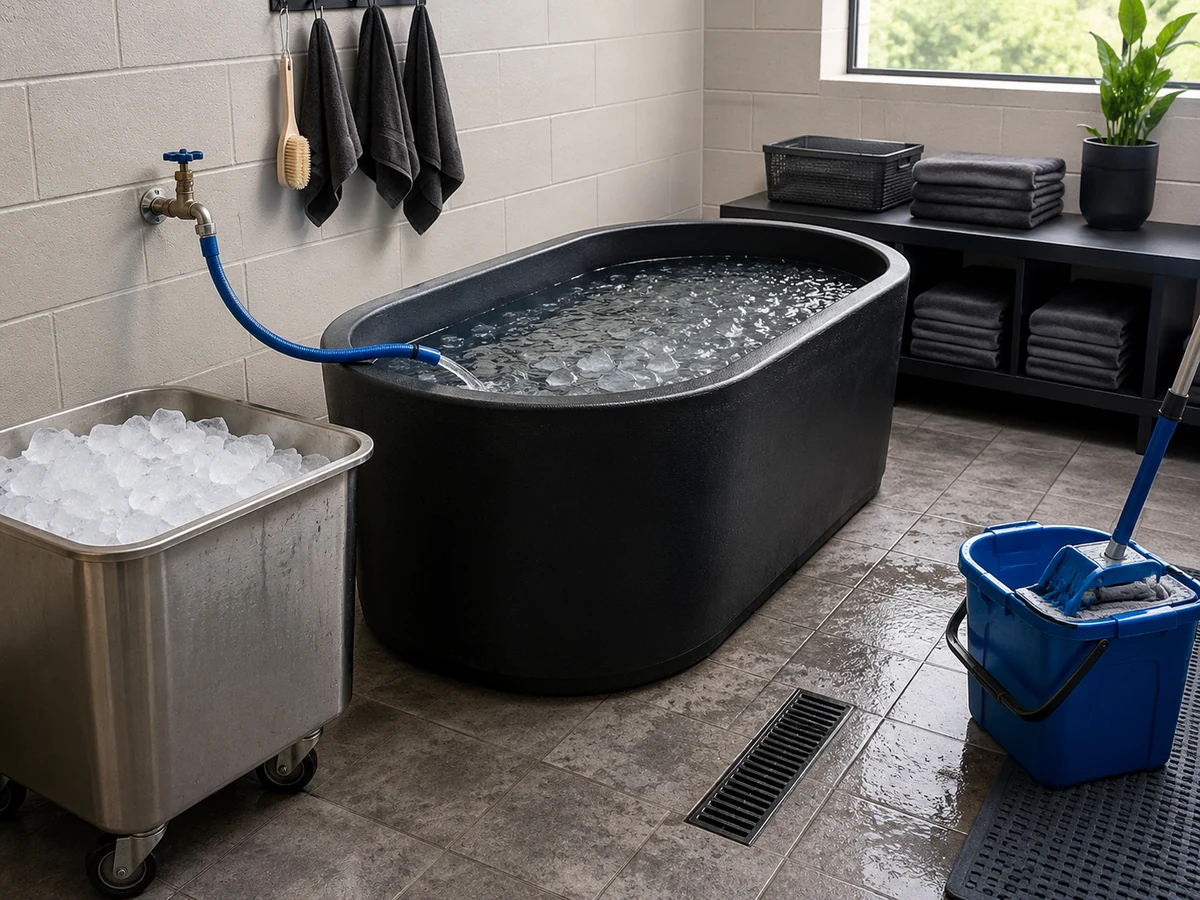
Visualización conceptual; no se implica ningún costo fijo de hielo, temperatura o resultado operativo.
Una inmersión en frío con enfriador suele costar más por adelantado y añade electricidad, mantenimiento y componentes reparables. Su justificación económica solo se fortalece cuando la menor carga de preparación, la disponibilidad repetible o el flujo de trabajo comercial son valiosos para el comprador.
No utilice una única cifra genérica de costo operativo mensual. El precio del hielo, el consumo de agua, la electricidad, las condiciones ambientales, el aislamiento, el calendario de funcionamiento, el mantenimiento y la mano de obra del personal son específicos de cada sitio. Para un límite presupuestario completo, utilice los de HACHILL guía de costos de inmersión en frío.
Control de temperatura: enfriamiento manual frente a enfriamiento activo
El hielo baja la temperatura del agua, pero el resultado cambia según la cantidad de hielo, el volumen de agua, la temperatura inicial, las condiciones ambientales, el aislamiento, el tiempo y la carga de usuarios. Por lo tanto, un baño de hielo puede ser perfectamente utilizable y, aun así, ser menos repetible de una sesión a otra.
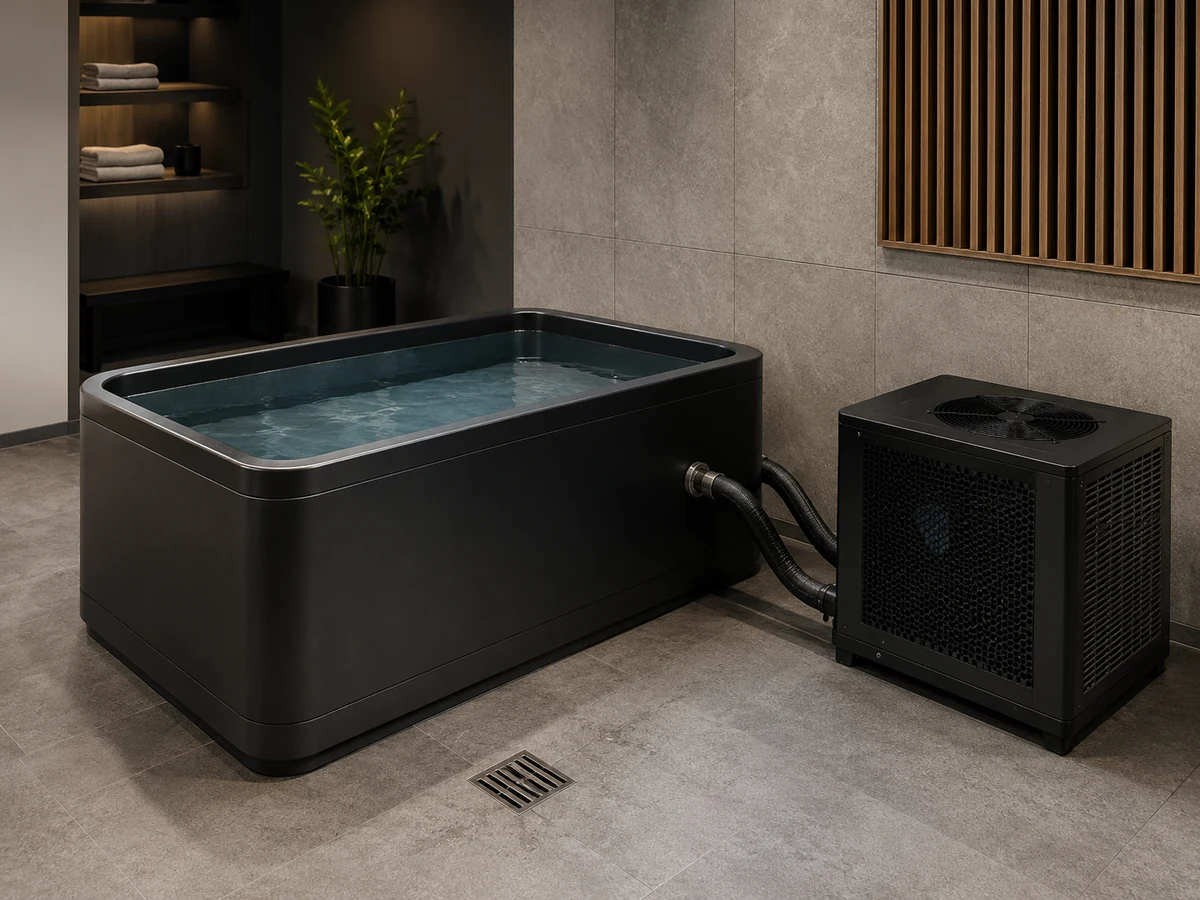
Visualización conceptual; no se implica una temperatura garantizada, tiempo de descenso ni rendimiento del enfriador.
Un enfriador puede mantener o recuperar hacia un punto de consigna, pero solo dentro de los límites de su capacidad de enfriamiento útil, flujo de agua, intercambiador de calor, aislamiento, uso de cubierta, condición del aire del condensador y ciclo de trabajo. Una etiqueta de HP más alta por sí sola no establece un enfriamiento más rápido ni una mejor adecuación al proyecto.
Para la selección técnica, mantenga esta página de comparación a nivel de ruta y use las guías dedicadas para HP del enfriador vs capacidad de enfriamiento, temperatura ambiente y tiempo de enfriamiento, o el completo método de dimensionamiento del chiller de tina de inmersión en frío.
Filtración y cuidado del agua: el enfriamiento no hace que el agua sea higiénica
El cuidado del agua es una de las diferencias prácticas más importantes entre un baño de hielo simple y un sistema diseñado para uso repetido. Un baño de hielo básico suele depender de drenaje, limpieza y rellenado manuales. Una inmersión con enfriador puede añadir componentes de circulación, filtración y tratamiento, pero esos componentes no eliminan la responsabilidad del operador de realizar pruebas, limpieza y reemplazo del agua según su condición.
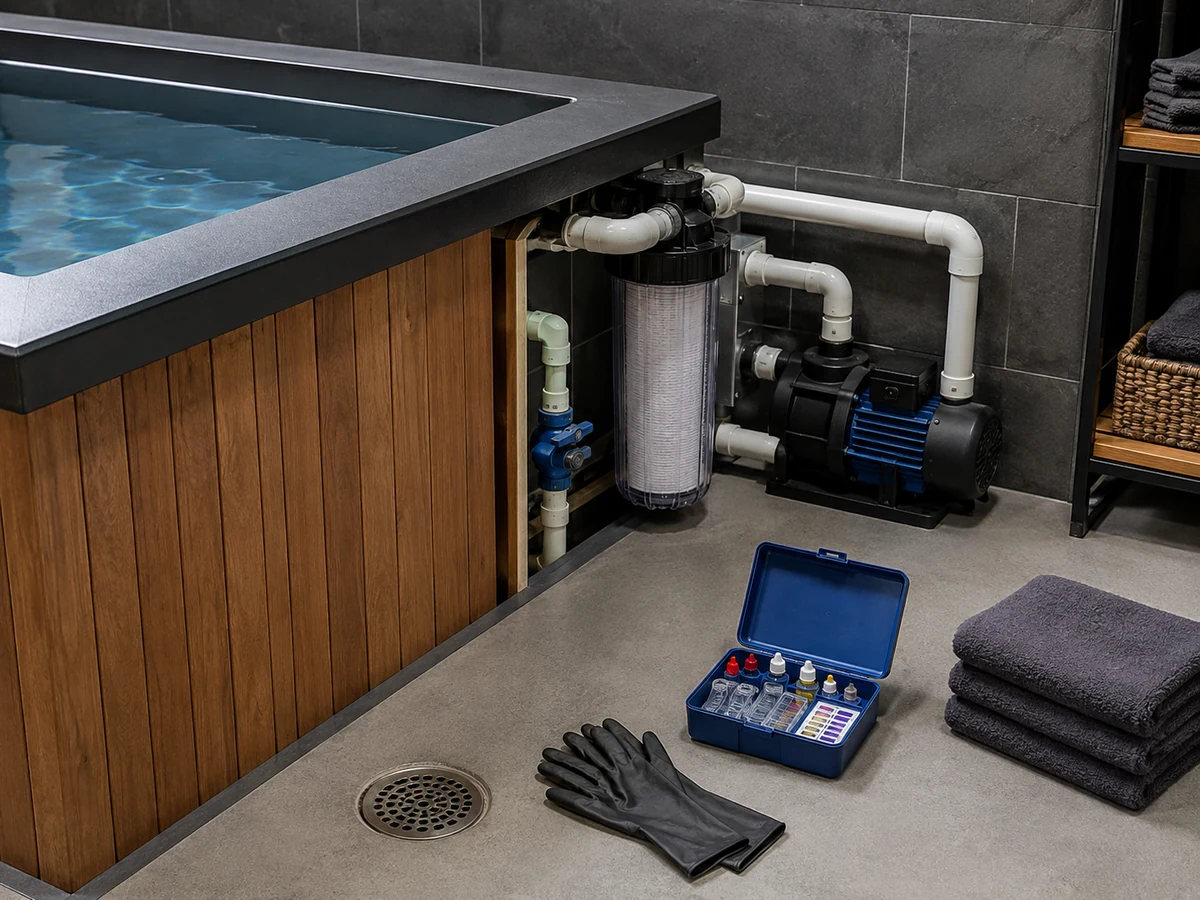
Visualización conceptual; el filtro exacto, la bomba y los componentes de desinfección deben confirmarse según el modelo y la configuración.
Lo específico de la inmersión en frío Resumen de evidencia del NCCEH señala que las vasijas compartidas de inmersión en frío pueden presentar peligros de transmisión por agua y físicos, y distingue los sistemas de recirculación de las vasijas autónomas sin filtración/desinfección. Sus recomendaciones son orientación de salud pública, no una especificación universal de producto; las reglas locales y la configuración exacta del sistema siguen rigiendo.
La filtración elimina material suspendido seleccionado; no es automáticamente saneamiento. Si un producto afirma usar UV, ozono, tratamiento químico u otra vía de tratamiento, confirme el componente exacto, la química del agua compatible, el requisito de mantenimiento y los límites de uso previsto. Para el método de funcionamiento detallado, consulte cómo mantener limpia el agua del baño de inmersión en frío.
Uso diario: ¿qué rutina puede operar realmente?
La mejor comparación es la rutina que el usuario o el personal debe repetir.
Rutina típica de baño de hielo
- llenar o revisar la tina;
- mover y añadir hielo;
- esperar y verificar la temperatura del agua;
- gestionar residuos y el estado del agua;
- drenar, limpiar y rellenar según sea necesario.
Rutina típica basada en enfriador
- comprobar la temperatura del agua y el estado del sistema;
- confirmar la circulación y el estado del filtro;
- gestionar la rutina especificada de tratamiento de agua;
- superficies de contacto limpias y zona húmeda circundante;
- mantenga despejados el flujo de aire del condensador y el acceso de servicio.
Un enfriador cambia el tipo de trabajo; no elimina el mantenimiento. Una bañera de hielo favorece un equipo más simple pero una preparación más repetida. Una ruta basada en enfriador favorece la repetibilidad operativa, pero requiere que los componentes técnicos se mantengan correctamente.
El uso comercial cambia la comparación
Una vez que varias personas comparten el agua, la compra se convierte en una decisión sobre el sistema de operación. La rotación de usuarios, la limpieza, el tratamiento del agua, el control de suelos húmedos, la formación del personal, el acceso de mantenimiento, la documentación y los requisitos locales de salud pública pueden importar más que la diferencia en el precio de la tina.
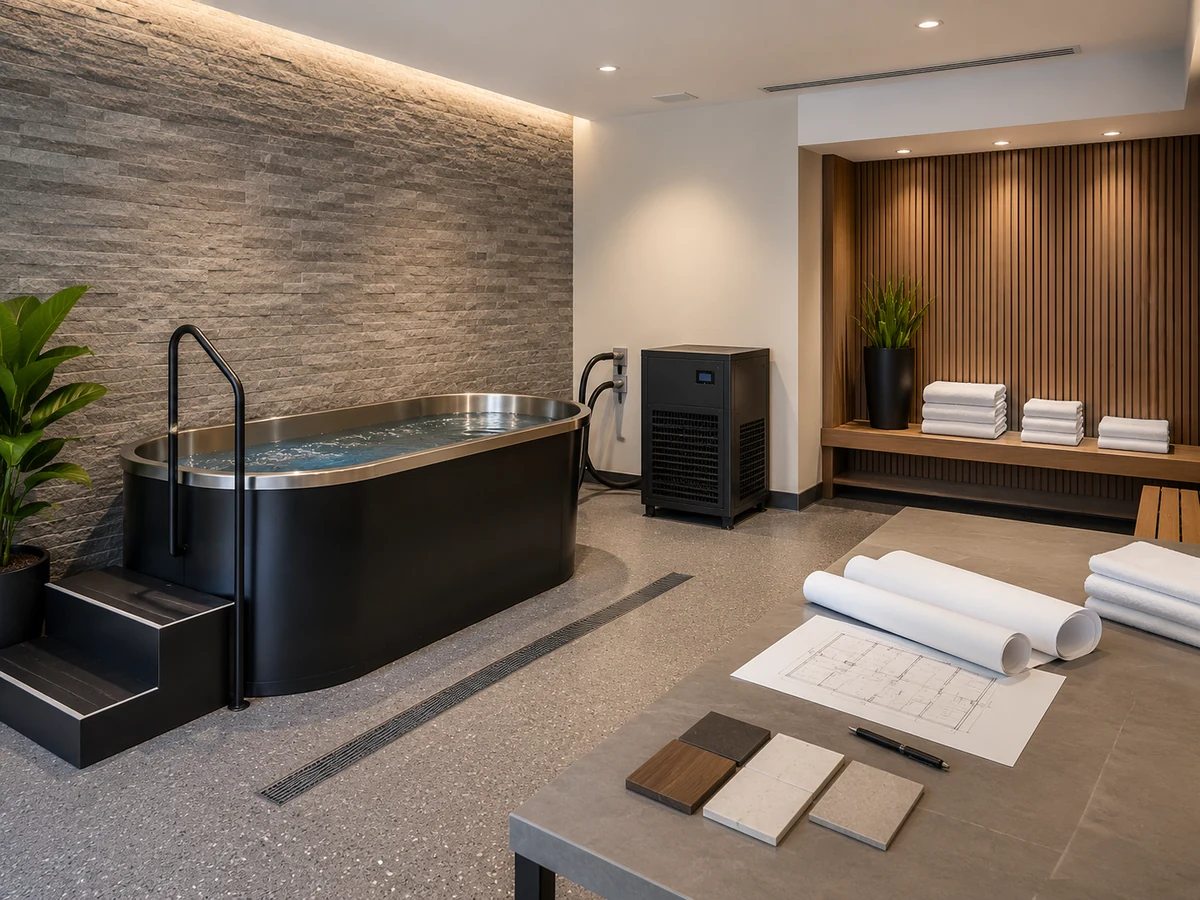
Visualización conceptual; no es un sitio de cliente real, caso de proyecto ni resultado operativo.
Para gimnasios, estudios de recuperación, spas y hoteles, una solución basada en enfriador puede ser más fácil de integrar en la operación diaria repetida cuando los componentes de control de temperatura y cuidado del agua se especifican correctamente. Un baño de hielo simple todavía puede usarse en algunos entornos, pero no debe asumirse que una rutina de uso personal sea adecuada para una operación comercial compartida.
Para la planificación de instalaciones, revise HACHILL’s planificación de inmersión en frío para centros de recuperación ruta antes de congelar la configuración del producto.
Lista de verificación del sitio antes de elegir cualquiera de las dos rutas
Muchos problemas de inmersión en frío comienzan con datos de sitio faltantes en lugar de con la tina misma.
Decisión final: elija por carga operativa, no por nombre del producto
Elija un baño de hielo cuando
El uso es ocasional, el número de usuarios es bajo, la manipulación manual de hielo es aceptable, el drenaje y la limpieza son fáciles, y la variación de temperatura entre sesiones es aceptable.
Elija una inmersión en frío con enfriador cuando
El enfriamiento repetible, la menor preparación manual, la disponibilidad diaria y una ruta integrada de circulación/filtración importan lo suficiente como para justificar servicios, mantenimiento y equipos mantenibles.
Aplace la compra cuando
Todavía no puede definir los usuarios, el volumen de agua, la temperatura objetivo, el drenaje, el suministro eléctrico, la ubicación del enfriador, el método de tratamiento, la responsabilidad de limpieza ni las reglas operativas comerciales.
Para proyectos B2B, convierta esta comparación en un breve resumen operativo antes de solicitar una cotización a nivel de modelo.
Qué preparar antes de solicitar una cotización de inmersión en frío
Proporcione las condiciones operativas que cambian la selección del producto en lugar de pedir un precio genérico de inmersión en frío.
Entradas de uso y del sitio
- tipo de comprador y uso previsto;
- usuarios y sesiones previstos por día;
- temperatura objetivo del agua y volumen de agua de funcionamiento previsto;
- ubicación interior/exterior y condiciones ambientales;
- suministro eléctrico disponible;
- drenaje, rellenado y ubicación del enfriador.
Datos de cuidado del agua y comerciales
- expectativas de filtración y tratamiento;
- responsabilidad de limpieza y pruebas;
- cantidad y mercado de destino;
- requisitos de marca o embalaje;
- documentación, repuestos y expectativas de posventa.
Con esas entradas definidas, solicite una cotización a nivel de modelo a través del canal de RFQ de HACHILL.
Evidencia y notas de referencia
Las fuentes externas solo respaldan límites de salud pública y exposición al frío. No demuestran rendimiento, alcance de componentes, capacidad de saneamiento, estado de cumplimiento ni resultados médicos para un producto HACHILL específico.
- NCCEH: Tanques de inmersión en frío — consideraciones para la salud pública ambiental — análisis específico de la inmersión en frío sobre riesgos del agua compartida, recirculación, filtración/desinfección y limpieza.
- CDC: Tratamiento y análisis del agua de piscinas y tinas de hidromasaje domésticas — referencia general sobre agua de instalaciones acuáticas para principios de tratamiento/pruebas; no es una norma específica de inmersión en frío.
- American Heart Association: riesgos de inmersión en agua fría — utilizado para el contexto de choque por frío y riesgo cardiovascular.
- Cleveland Clinic: guía de seguridad para inmersión en frío — utilizado para enmarcar con cautela la idoneidad médica y la interrupción del uso.
Preguntas frecuentes
¿Es un baño de agua fría lo mismo que un baño de hielo?
No siempre. Un baño de hielo suele depender de hielo añadido manualmente. Una bañera de inmersión en frío con enfriador de agua utiliza equipos de refrigeración activa y circulación. Algunos vendedores usan los términos de forma imprecisa, por lo que conviene comparar el sistema real en lugar de la etiqueta.
¿Es un baño de hielo más barato que un baño de agua fría?
Un baño de hielo básico suele ser más económico al inicio, pero la comparación operativa también incluye hielo, agua, limpieza y mano de obra. Una bañera de inmersión en frío con enfriador de agua normalmente cuesta más por adelantado y añade electricidad y mantenimiento, pero puede reducir la preparación repetida de hielo.
¿Una inmersión en frío siempre se mantiene a su temperatura objetivo?
No. El rendimiento depende de la capacidad útil del enfriador, el volumen de agua, las condiciones ambientales, el aislamiento, el uso de cubierta, el flujo, el estado del filtro, el flujo de aire del condensador y la carga de usuarios.
¿La filtración significa que no necesito cambiar ni tratar el agua?
No. La filtración es solo una parte del cuidado del agua. Los sistemas compartidos también pueden requerir un método de tratamiento compatible, pruebas, limpieza y reemplazo del agua según su condición, conforme a los requisitos locales aplicables.
¿Qué ruta se adapta mejor a un gimnasio, spa o centro de recuperación?
Un sistema basado en enfriador a menudo se adapta mejor a la operación diaria repetida cuando la preparación de temperatura y el cuidado estructurado del agua importan, pero la idoneidad depende de la carga de usuarios, los servicios auxiliares del sitio, el alcance del tratamiento, el acceso de mantenimiento y los requisitos locales.
¿Las bañeras de inmersión fría y los baños de hielo son seguros para todos?
No. La inmersión en frío puede desencadenar respiración rápida, respuestas de presión arterial y cardiovasculares, y la exposición prolongada puede causar hipotermia o pérdida del control motor. Las personas con condiciones médicas relevantes deben consultar la inmersión en agua fría con un profesional sanitario cualificado.
Nota sobre seguridad, salud y limitaciones de uso
Las inmersiones en frío y los baños de hielo se tratan aquí como productos de bienestar o rutina de recuperación, no como tratamiento médico. Este artículo no afirma que la exposición al frío trate, cure o prevenga enfermedades ni garantice resultados de recuperación.
Las instalaciones comerciales deben establecer supervisión, reglas de selección de usuarios, procedimientos de emergencia, procedimientos de higiene y condiciones de suspensión del uso apropiadas para la instalación y los requisitos locales.