Guia de Uso e Segurança na Sauna
O tempo de permanência na sauna deve ser visto como uma referência prudente de planejamento, não como uma meta a ser suportada. A intensidade do calor, a umidade, o tipo de sauna, a hidratação, a tolerância individual e as condições de saúde podem alterar o momento adequado de sair.
Resposta rápida
Para muitos adultos em geral saudáveis, cerca de 15–20 minutos são uma referência comum para uma sessão de sauna, enquanto iniciantes podem começar com cerca de 5 minutos. Trate esses números como referências conservadoras, não como um limite de segurança ou uma meta a cumprir. O tipo de sauna, o calor, a umidade, a hidratação, a tolerância individual e as condições de saúde podem justificar sair mais cedo.
Contexto da fonte: O guia de segurança para saunas da Cleveland Clinic recomenda manter as sessões em torno de 15–20 minutos, começando de forma mais conservadora para novos usuários, mantendo-se hidratado e saindo da sauna se surgirem tontura, fraqueza, dificuldade para respirar ou outro desconforto.
Use o relógio como ferramenta de planejamento, mas considere a tolerância ao calor e os sintomas como critérios para interromper a sessão. Uma duração publicada é uma referência geral ou um protocolo de estudo, não um requisito para permanecer no interior até o temporizador terminar.
Regra de interpretação: a decisão correta para uma sessão depende do ambiente térmico real e da pessoa que o utiliza.
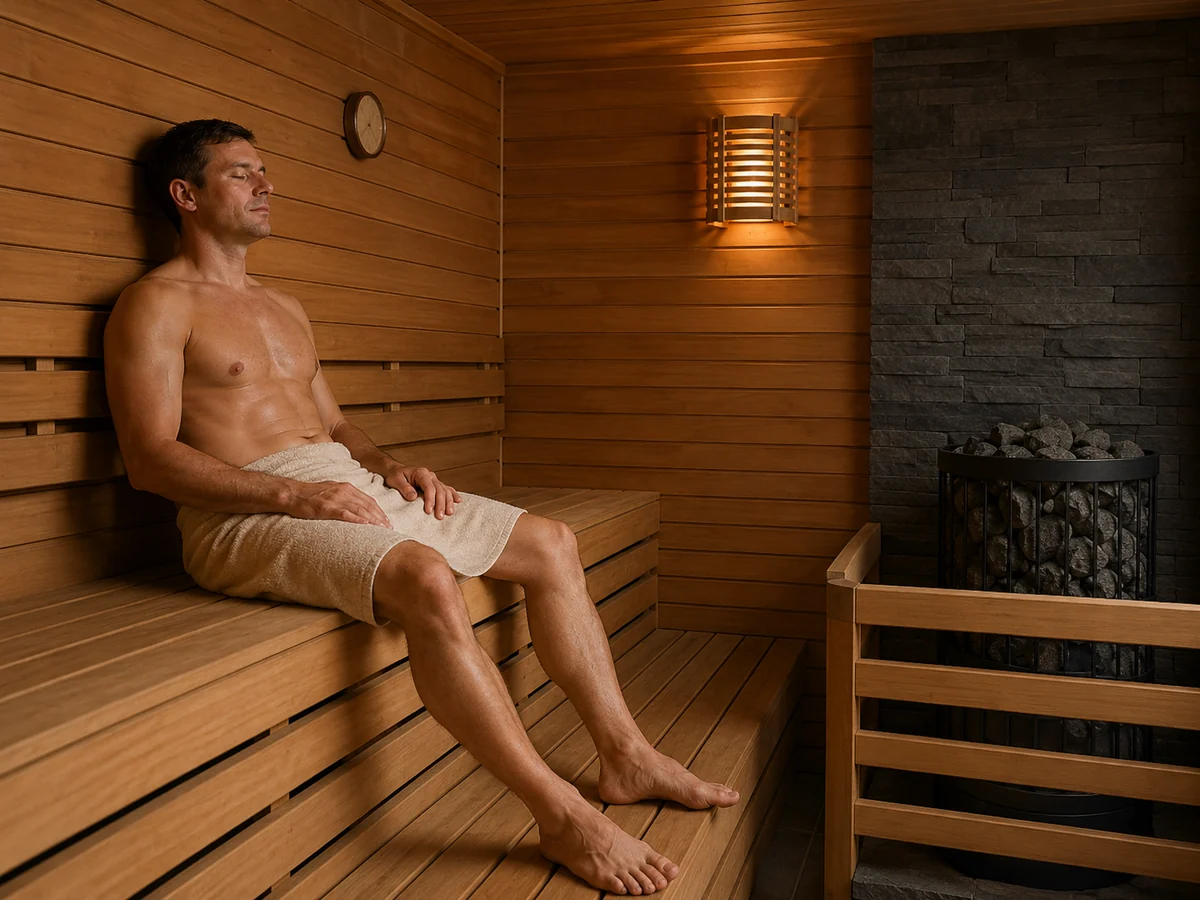
Visualização conceptual; não é uma recomendação para uma duração específica de sauna.
Não há uma duração ideal única para a sessão de sauna
Os resultados de busca frequentemente reduzem o uso da sauna a um único número: 10 minutos, 15 minutos ou 20 minutos. Isso é fácil de lembrar, mas simplifica demais a exposição ao calor.
Duas pessoas podem passar o mesmo tempo na sauna e experimentar cargas térmicas diferentes. Até a mesma pessoa pode tolerar a mesma sala de forma diferente em dias distintos.
As condições de calor mudam
A temperatura do ar, a umidade, a potência do aquecedor, os momentos de vapor, a altura do banco e a geometria da cabine podem alterar a intensidade percebida de uma sessão.
As pessoas também mudam
A hidratação, exercício recente, doença, medicação, álcool, aclimatação e a resposta cardiovascular individual podem alterar a tolerância.
Um protocolo de investigação não é uma prescrição pessoal
Se um estudo usa uma exposição de 15 minutos sob condições definidas, isso nos diz o que os pesquisadores testaram. Não estabelece uma meta universal para todos os usuários de sauna. A questão mais útil é se o ambiente térmico real permanece confortavelmente tolerado pela pessoa que o utiliza.
O que influencia o tempo de permanência confortável na sauna?
A duração da sessão só faz sentido quando as condições que envolvem a sessão são compreendidas.
| Variável | Por que isso muda a decisão |
|---|---|
| Tipo de sauna | Ambientes tradicionais, de infravermelho e de alta umidade criam condições térmicas diferentes. |
| Temperatura | Um calor maior geralmente aumenta o estresse térmico e pode reduzir o tempo de exposição confortável. |
| Umidade / löyly | A umidade adicionada pode fazer com que a mesma temperatura do ar pareça substancialmente mais intensa. |
| Posição do banco | Posições de assento mais altas podem ser mais quentes do que os níveis mais baixos em muitos layouts tradicionais de sauna. |
| Aclimatação | Uma pessoa nova na sauna pode tolerar menos exposição do que alguém familiarizado com o mesmo ambiente. |
| Hidratação | A transpiração aumenta a perda de líquidos e a desidratação pode reduzir a tolerância ao calor. |
| Exercício recente | O exercício pode alterar a temperatura corporal e a hidratação antes de entrar. |
| Álcool | O álcool pode prejudicar o julgamento e é uma má combinação com a exposição deliberada ao calor. |
| Medicação | Alguns medicamentos podem afetar a pressão arterial, a transpiração ou a resposta ao calor. |
| Estado de saúde | As circunstâncias médicas podem alterar a adequação do uso da sauna e podem exigir orientação individualizada. |
Antes de começar: verifique a pessoa, o calor e o equipamento
Uma decisão de sessão mais segura começa antes de o cronômetro iniciar. O objetivo é notar condições que tornam uma referência de tempo genérica menos útil.
| Verificar | Perguntas a fazer | Por que isso importa |
|---|---|---|
| Condição atual | Já se sente desidratado, tonto, invulgarmente cansado ou indisposto? | Começar com sintomas pode tornar o calor mais difícil de tolerar. |
| Ambiente da sauna | Esta sauna está mais quente, mais úmida ou de outra forma diferente da que você normalmente usa? | A sua duração habitual não se transfere automaticamente para condições térmicas desconhecidas. |
| Fatores pessoais | Está grávida, tem alguma condição médica relevante, historial de desmaios ou toma medicação suscetível de alterar a resposta ao calor? | As orientações genéricas para o consumidor não substituem o aconselhamento individualizado em circunstâncias de maior risco. |
| Instruções do equipamento | Já consultou as instruções de funcionamento do sistema de sauna ou aquecedor em questão? | Avisos específicos do equipamento e limites operacionais têm prioridade sobre uma rotina genérica online. |
Se você tiver uma preocupação médica sobre exposição ao calor, busque orientação individualizada de um profissional de saúde qualificado.
O tipo de sauna altera o significado de “10 ou 20 minutos”
Sauna tradicional
As saunas tradicionais aquecem o ar ao redor e podem incluir breves aumentos de umidade quando a água é usada adequadamente sobre pedras de sauna apropriadas. Uma sauna mais quente, um löyly mais forte, uma posição mais alta no banco ou uma sala desconhecida podem justificar sair mais cedo do que uma referência genérica de tempo.
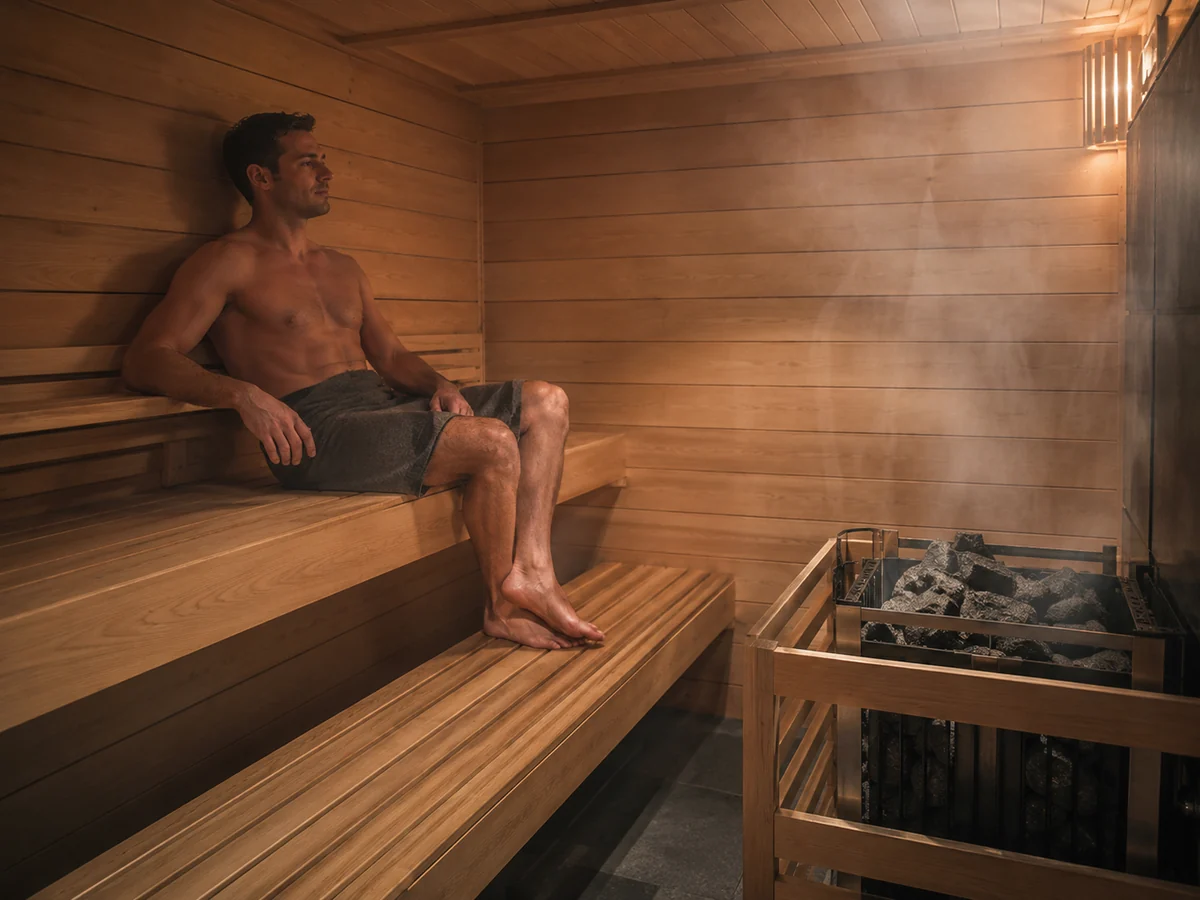
Ilustração conceptual do ambiente térmico; não está implícita qualquer temperatura ou duração universal.
Sauna infravermelha
A sauna infravermelha cria um ambiente térmico diferente e normalmente opera a uma temperatura do ar mais baixa do que uma sauna convencional. Temperatura do ar mais baixa não significa exposição ilimitada ou uma sessão segura universalmente mais longa. As instruções específicas do equipamento e a tolerância individual ao calor continuam sendo importantes.
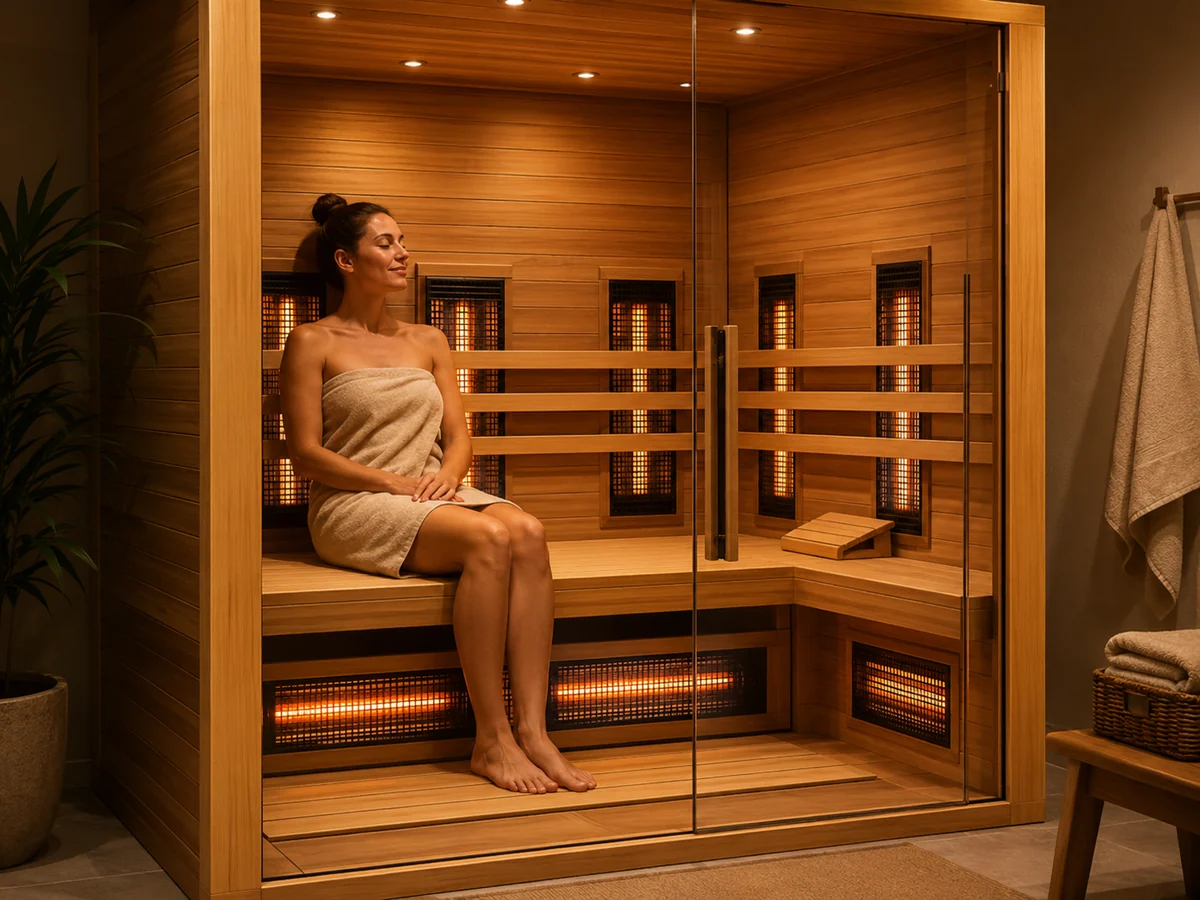
Ambiente conceptual de sauna de infravermelhos; não é uma visualização médica ou de tratamento.
As salas de vapor são um ambiente térmico diferente
As salas de vapor têm umidade muito mais alta que uma sauna seca típica. A umidade elevada reduz a eficiência da evaporação do suor e, com isso, altera a sensação de calor. A rotina de uma sala de vapor não deve ser copiada automaticamente da rotina de uma sauna seca.
Para uma visão mais ampla das diferenças no mecanismo de calor, humidade, instalações e seleção de equipamento, compare os tipos de calor da sauna. Esta página mantém o foco em como essas diferenças afetam a duração da sessão e a tolerância.
Calor mais alto geralmente significa que você deve ser mais conservador com o tempo
É tentador criar uma tabela que forneça uma duração exata para cada temperatura. Isso implicaria um nível de precisão que as evidências não suportam.
Se você precisar das faixas completas de temperatura, contexto de medição e diferenças entre tipos de sauna, use o guia de temperatura da sauna. Aqui, a temperatura é tratada apenas como um modificador da duração da sessão.
| Condição Térmica | Abordagem Prática de Duração |
|---|---|
| Exposição leve ou de intensidade relativamente baixa | Comece de forma conservadora e avalie a sua resposta. |
| Calor moderado e familiar | Mantenha a exposição controlada; não persiga um objetivo de tempo. |
| Calor elevado | Seja mais conservador com a exposição contínua. |
| Calor elevado com humidade forte | Preste mais atenção aos primeiros sinais de intolerância. |
| Sauna desconhecida | Trate-a como um novo ambiente térmico, mesmo que use sauna regularmente noutros locais. |
| Aquecedor ou padrão de vapor desconhecido | Não assuma que o seu tempo normal de sessão se aplica. |
Por que a umidade pode reduzir o tempo de exposição tolerável
O suor ajuda o corpo a dissipar calor, em parte pela evaporação. Quando a umidade aumenta, essa evaporação fica menos eficiente; por isso, um momento intenso de löyly pode parecer muito mais intenso, mesmo que pouco tempo tenha passado.
Um guia prático para decidir a duração da sessão
Use uma sequência simples em vez de tratar o cronômetro como uma dose:
- Entre com cautela. Use uma definição de calor familiar e controlada sempre que possível e não comece com o objetivo de atingir um tempo máximo.
- Reavalie durante a sessão. Preste atenção ao conforto, à respiração, a tonturas, fraqueza, náuseas e a qualquer alteração incomum na forma como sente o calor.
- Saia quando a tolerância mudar. Não permaneça apenas para completar uma duração planejada quando o calor não for mais confortavelmente tolerado.
- Resfrie-se antes de decidir por outra rodada. Reavalie após sair do calor; outra rodada é opcional.
Entre com cautela → Reavalie → Saia se a tolerância mudar → Resfrie-se → Decida se deve parar
Os Iniciantes Devem Aumentar a Tolerância ao Calor Gradualmente
Uma primeira sessão deve ser conservadora e focada em aprender como o seu corpo reage ao ambiente de calor específico, em vez de igualar a rotina de outra pessoa.
- Comece com prudência.
- Evite comportamentos competitivos ou metas de tempo.
- Saia antes de o calor se tornar difícil de tolerar.
- Arrefeça antes de decidir se outra ronda é adequada.
- Reidrate-se de acordo com as suas necessidades e circunstâncias normais.
A experiência não o torna imune ao calor
O uso regular da sauna pode tornar o ambiente familiar, mas sua rotina habitual pode não ser adequada se a sauna estiver mais quente, a umidade estiver maior, você estiver desidratado ou doente, tiver feito exercício intenso recentemente, tiver consumido álcool ou usar um medicamento que altere sua resposta ao calor.
Várias sessões curtas não equivalem a uma sessão longa e contínua
Muitas rotinas de sauna envolvem períodos repetidos de aquecimento e arrefecimento, em vez de uma tentativa ininterrupta de permanecer na sala o máximo de tempo possível.
Calor → Saia → Arrefeça → Reavalie → Próxima Ronda Opcional
A palavra importante é opcional. O resfriamento entre as rodadas altera a situação térmica, mas rodadas repetidas ainda adicionam exposição ao calor e perda de fluidos. Reavalie após o resfriamento antes de decidir se outra rodada faz sentido.
A hidratação importa mais do que atingir uma meta de tempo
A transpiração na sauna causa perda de fluidos. A desidratação pode reduzir a tolerância ao calor e pode contribuir para dor de cabeça, fraqueza, tontura e outros sinais de estresse térmico.
Não priorize concluir uma sessão em detrimento da manutenção da hidratação normal e da tolerância ao calor. As necessidades de fluidos variam, portanto este guia não prescreve um volume universal de água.
Evite álcool com o calor da sauna
O álcool é uma má combinação com a exposição deliberada ao calor porque pode prejudicar o julgamento e pode aumentar o risco de desidratação. Não combine álcool com uma rotina de calor em sauna.
Saia da sauna mais cedo se o seu corpo não estiver tolerando o calor
Sua resposta física deve sobrepor-se ao tempo de sessão planejado.
- tontura ou sensação de desmaio;
- fraqueza incomum;
- náusea;
- dor de cabeça;
- confusão;
- dificuldade para respirar;
- desconforto no peito;
- sensação de desmaio; ou
- incapacidade incomum de tolerar o calor.
Base de segurança: Cleveland Clinic recomenda sair da sauna quando você se sentir mal, tonto, fraco, com falta de ar ou desconfortável. A orientação da Mayo Clinic sobre exaustão pelo calor lista desmaio, tontura, náusea, dor de cabeça e confusão leve entre os sinais de alerta de doença por calor.

Visualização conceitual de uso para bem-estar; não é orientação de emergência ou cuidados médicos.
Quando os sintomas são mais graves
Desmaio, confusão ou agitação acentuadas, convulsão, incapacidade de beber ou suspeita de insolação exigem ajuda de emergência. Saia do calor e contate o serviço de emergência local. Dificuldade respiratória grave, sintomas torácicos ou outros sintomas graves ou persistentes também exigem avaliação médica imediata. Não volte à sauna para testar se sintomas graves melhoram.
Algumas Pessoas Devem Ter Mais Cautela com o Calor da Sauna
Orientações gerais sobre a duração da sauna não substituem orientação médica individualizada. Pessoas com condições cardiovasculares ou de pressão arterial relevantes, gravidez, uso de medicamentos que possam afetar a resposta ao calor, condições neurológicas, histórico de desmaio ou intolerância prévia ao calor devem buscar orientação individualizada de um profissional de saúde qualificado.
A Cleveland Clinic aconselha evitar a sauna após um infarto ou AVC recente e recomenda consultar um profissional de saúde quando condições médicas, gravidez ou medicamentos possam alterar a segurança na sauna.
Limite de uso médico: O guia de segurança para saunas da Cleveland Clinic. Este artigo não fornece liberação para um diagnóstico, medicamento ou gravidez.
Esta página, propositalmente, não atribui um número específico de minutos a um diagnóstico, medicamento, estado de gravidez ou outra circunstância médica pessoal.
O que a Pesquisa sobre Sauna Pode—e Não Pode—Dizer sobre a Duração da Sessão
A pesquisa sobre sauna é útil, mas o significado de uma duração de sessão depende do tipo de evidência e das condições estudadas.
| Tipo de Evidência | O que pode suportar | O Que Não Pode Estabelecer Sozinho |
|---|---|---|
| Orientações clínicas de segurança | Precauções práticas gerais | A duração ideal de sessão para uma pessoa |
| Intervenção controlada | Resposta a um protocolo de estudo definido | Uma prescrição universal de sauna |
| Pesquisa observacional | Associações entre hábitos e resultados | Causa e efeito garantidos |
| Revisão sistemática | Padrões gerais de evidência e limitações | Uma dose de tratamento individualizada |
| Orientação do fabricante | Operação específica do equipamento e avisos | Eficácia médica |
| Prática tradicional | Padrões de uso cultural | Um limite de segurança universal |
Protocolo de pesquisa não é dosagem de tratamento
Um estudo que usa uma temperatura e duração de sessão específicas descreve o que os pesquisadores testaram sob condições definidas. Isso não estabelece que a mesma exposição seja apropriada para outra pessoa ou outra sauna. Um revisão sistemática revisada por pares da pesquisa sobre sauna seca encontrou variação substancial no tipo de sauna, duração, frequência e desenho do estudo, e concluiu que as evidências eram insuficientes para recomendar uma temperatura, frequência ou duração específica para um determinado resultado de saúde.
A 2026 revisão narrativa indexada no PubMed da mesma forma observa que as condições de banho e o contexto populacional influenciam os resultados e pede estudos futuros com parâmetros de exposição e endpoints clínicos claramente definidos.
O que isso significa para este guia
A orientação clínica pode apoiar práticas de segurança conservadoras, e os estudos podem descrever respostas sob protocolos definidos. Nenhum dos dois transforma um número publicado de minutos em uma prescrição pessoal. É por isso que esta página fornece uma referência geral de tempo, mantendo a intensidade do calor, umidade, tipo de sauna, hidratação e sintomas próximos à decisão.
Erros Comuns na Duração da Sessão de Sauna
| Erro | Por Que Isso é um Problema | Abordagem melhor |
|---|---|---|
| Tratar 20 minutos como obrigatórios | A tolerância individual e as condições térmicas variam. | Use o tempo como referência, não como meta. |
| Copiar a rotina de outra pessoa | A resposta ao calor difere entre as pessoas. | Siga sua própria resposta ao ambiente real. |
| Supor que a experiência elimina o risco | Hidratação, doenças e condições do ambiente mudam. | Reavalie a cada sessão. |
| Supor que uma temperatura do ar mais baixa significa tempo ilimitado | Saunas infravermelhas e outros tipos ainda criam exposição térmica. | Siga as orientações do equipamento e a sua tolerância pessoal. |
| Ignorar tonturas ou fraqueza incomum | Esses sintomas podem indicar baixa tolerância ao calor. | Saia do calor e esfrie. |
| Copiar um protocolo de estudo | Populações e condições de pesquisa podem não corresponder à sua situação. | Use a pesquisa como contexto, não como prescrição pessoal. |
Um Cenário Ilustrativo
Situação: Um usuário regular de sauna normalmente permanece por um período familiar em casa e depois visita uma sauna que parece mais quente e úmida.
Melhor decisão: Trate o ambiente desconhecido como um novo ambiente térmico, em vez de assumir que a duração usual ainda se aplica. Entre com cautela, reavalie durante a sessão e saia mais cedo se a tolerância mudar.
Cenário meramente ilustrativo; não se trata de caso de cliente HACHILL nem de aconselhamento médico individualizado.
Perguntas frequentes
Quanto tempo você deve ficar em uma sauna?
Para muitos adultos geralmente saudáveis, cerca de 15–20 minutos é uma referência geral comum, enquanto um iniciante pode começar em torno de 5 minutos. Esses são pontos de referência, e não um limite de segurança universal, e as condições de calor, a hidratação, o tipo de sauna, as circunstâncias de saúde e a tolerância individual podem justificar sair mais cedo.
Será que 20 minutos é tempo demais numa sauna?
Pode ser. Vinte minutos podem ser tolerados por algumas pessoas em algumas condições e ser demais para outra pessoa ou para um ambiente mais quente e úmido. Não trate 20 minutos como uma meta obrigatória.
Quanto tempo um iniciante deve permanecer em uma sauna?
Comece com cautela. A Cleveland Clinic observa que novos usuários podem precisar começar com cerca de cinco minutos e aumentar gradualmente. Saia mais cedo se você se sentir mal ou se o calor se tornar difícil de tolerar.
Você pode ficar mais tempo em uma sauna infravermelha do que em uma sauna tradicional?
Não automaticamente. A sauna infravermelha geralmente usa uma temperatura do ar mais baixa do que uma sauna convencional, mas isso não cria uma duração segura universalmente maior. Siga as instruções do equipamento e sua resposta ao calor.
Deve sair da sauna se sentir tonturas?
Sim. Saia do calor em vez de tentar completar um cronômetro. Sintomas graves, que pioram ou persistentes exigem avaliação médica adequada.
Ficar mais tempo proporciona mais benefícios da sauna?
Mais tempo não significa automaticamente melhor. A pesquisa atual não estabelece uma regra universal em que minutos extras garantem benefício adicional, e os protocolos de estudo não devem ser tratados como prescrições individualizadas.
Base de Evidências e Segurança
O artigo separa as orientações gerais de uso da sauna de aconselhamento médico individualizado. Os tempos de exposição das pesquisas são tratados como protocolos de estudo, não como dosagens de tratamento ou metas universais para o consumidor.
- Cleveland Clinic — orientações sobre duração da sauna, hidratação e interrupção ao sentir-se mal
- Revisão sistemática revisada por pares — padrões de pesquisa sobre sauna seca e limitações das evidências
- Mayo Clinic — contexto térmico da sauna infravermelha versus convencional
- Mayo Clinic — sinais de alerta de exaustão pelo calor e escalonamento de emergência
- 2026 Revisão narrativa indexada no PubMed — evidências sobre banho térmico e limitações dos parâmetros de exposição
Data da revisão das evidências: 28 de setembro de 2026. Essas fontes servem de base para a abordagem geral de segurança e para a interpretação das evidências; elas não estabelecem uma prescrição individualizada de sauna.
Escolhendo uma Sauna e Também Usando Uma?
A duração da sessão é apenas uma parte da decisão. Se você está comparando equipamentos de sauna, comece com a Categorias de sauna HACHILL e avaliar os usuários pretendidos, o ambiente interno ou externo, a capacidade do ambiente, o aquecedor e os controles, o fornecimento elétrico, a ventilação, o clima, as restrições de instalação e a documentação do fabricante.
Escopo editorial: Este guia fornece informações gerais sobre uso e segurança de saunas. Ele não diagnostica condições, não fornece liberação médica nem prescreve uma dose individualizada de exposição ao calor.
Limite de evidências: Os estudos sobre sauna variam quanto ao tipo de sauna, temperatura, umidade, população, frequência e protocolo de sessão. As declarações de evidência e segurança desta página foram revisadas novamente com base nas fontes médicas e revisadas por pares citadas em 28 de setembro de 2026; não se alega revisão médica independente.