Руководство по выбору и закупке печей для сауны
Выбирайте печь для сауны, сопоставляя способ нагрева и требования к оборудованию с помещением и площадкой, а не только по кВт, числу мест или внешнему виду. Электрические печи обычно подходят для проектов с подходящей электрической инфраструктурой и повторяемыми требованиями к управлению, тогда как дровяные печи требуют выполнимой схемы подачи топлива, дымохода и пожарной безопасности. Размеры помещения, остекление, изоляция, режим работы, вентиляция, управление и условия монтажа могут изменить окончательный выбор.
Перед запросом окончательной модели подтвердите помещение, способ нагрева, инженерные коммуникации, управление, ответственность за монтаж и точную документацию производителя. Количество человек не является параметром для подбора печи, а мощность печи в кВт не является полной электрической спецификацией.
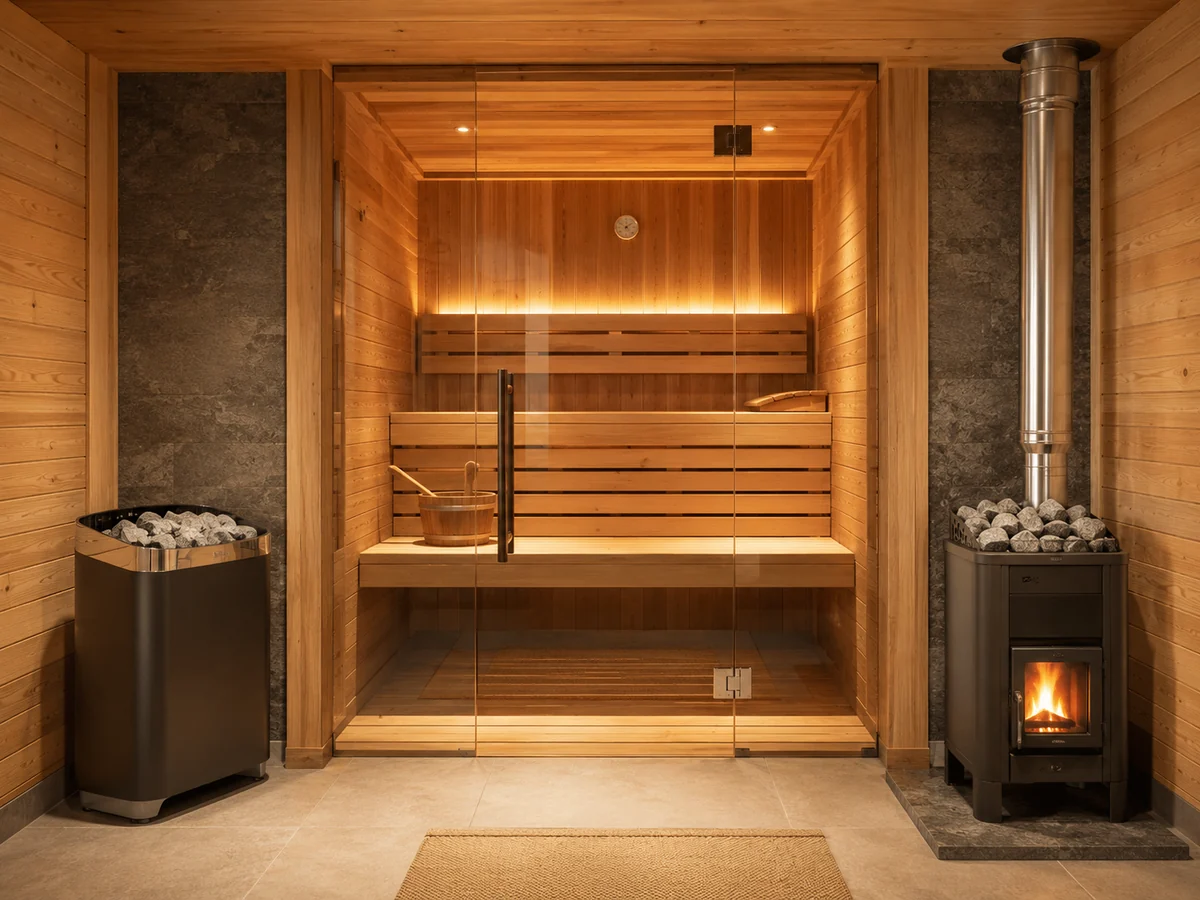
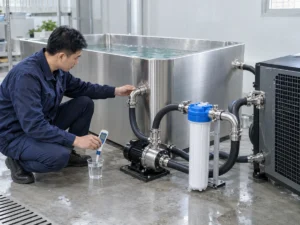
Концептуальная визуализация для планирования выбора печи; не является изображением конкретной модели печи HACHILL.
Краткий ответ: какой тип печи для сауны выбрать?
Электрические печи обычно подходят для проектов с подтвержденной электрической мощностью и необходимостью контролируемой, повторяемой работы. Дровяные печи могут подойти для проектов, где можно правильно организовать подачу топлива, прокладку дымохода, подачу воздуха для горения и соблюдение требований пожарной безопасности. Ни один из вариантов не следует выбирать только на основе мощности печи или количества человек.
Используйте фактические данные отапливаемого помещения, остекление, изоляцию, частоту эксплуатации, управление, вентиляцию, условия объекта и точную документацию модели для утверждения окончательной печи.
Технический контроль перед покупкой
Рассматривайте выбор нагревателя как предварительный, пока не будут закрыты следующие четыре вопроса.
Подтвердите внутренние размеры, остекление, изоляцию, конструкцию и расположение внутри или снаружи.
Проверьте электрическую инфраструктуру для электрических нагревателей или топливо, дымоход и возможность сжигания для дровяных нагревателей.
Подтвердите контроллер, датчики, вентиляцию, необходимые зазоры, доступ для обслуживания и ответственность установщика.
Используйте спецификации на уровне модели, руководства и доказательства для целевого рынка, а не допущения на уровне категории.
Электрические и дровяные нагреватели для сауны: таблица решений
Оба типа нагревателей могут использоваться в традиционных саунах, но они создают разные обязанности по коммунальным услугам, эксплуатации и установке.
| Фактор решения | Электрический нагреватель | Дровяной нагреватель | Покупатель должен подтвердить |
|---|---|---|---|
| Основной источник энергии | Электричество | Дрова | Доступный маршрут коммунальных услуг или топлива |
| Управление | Встроенный, внешний или цифровой в зависимости от точной модели | Тепло в основном обеспечивается за счет топлива и сгорания | Точная модель и рабочая конфигурация |
| Электропланирование | Основное требование | Может также относиться к освещению или вспомогательному оборудованию | Напряжение, фаза и мощность на объекте |
| Дымоход / вытяжная труба | Обычно не входит в систему нагревателя | Требуется | Совместимый маршрут и местные требования |
| Планирование пожарной безопасности | Допуски по моделям по-прежнему важны | Требуется дополнительная проверка допусков до печи, дымохода, очага и горючих материалов | Точная документация по оборудованию |
| Рабочий процесс | Возможность повторяемой или автоматизированной работы | Ручная загрузка топлива и управление горением | Кто будет обслуживать сауну |
| Коммерческое обслуживание | Проверка контроллеров, датчиков и нагревателя | Добавляет обслуживание хранилища топлива, золы и системы сгорания | Возможности обслуживания объекта |
| Основной риск осуществимости | Недостаточная или несовместимая электрическая инфраструктура | Неработоспособный маршрут для дымохода, огня или топлива | Осмотр объекта перед покупкой |
Электрическая модель часто лучше подходит, когда…
- Требуемая электрическая инфраструктура может быть подтверждена.
- Важна повторяемость работы.
- Нагреватель, контроллеры и датчики могут быть одобрены как единая система.
- Операционной команде необходим четко определенный процесс управления.
Дровяная печь может подойти лучше, когда…
- Обеспечены практичные условия для поставки и хранения дров.
- Возможно устройство безопасного дымохода и дымоходного канала.
- Выполнимы требования по подаче воздуха для горения и противопожарным зазорам.
- Операционная команда способна управлять топливом, золой и проверками горения.
Для проектов, ориентированных на сауну с печью и каменкой, сравните требования к помещению, маршруту печи, расположению полок и вентиляции в традиционные сауны для помещения.
Начните с помещения сауны, а не с маркировки печи
Два помещения сауны с одинаковыми физическими размерами могут предъявлять разные тепловые требования из-за остекления, изоляции, высоты потолка, открытых поверхностей или климата.
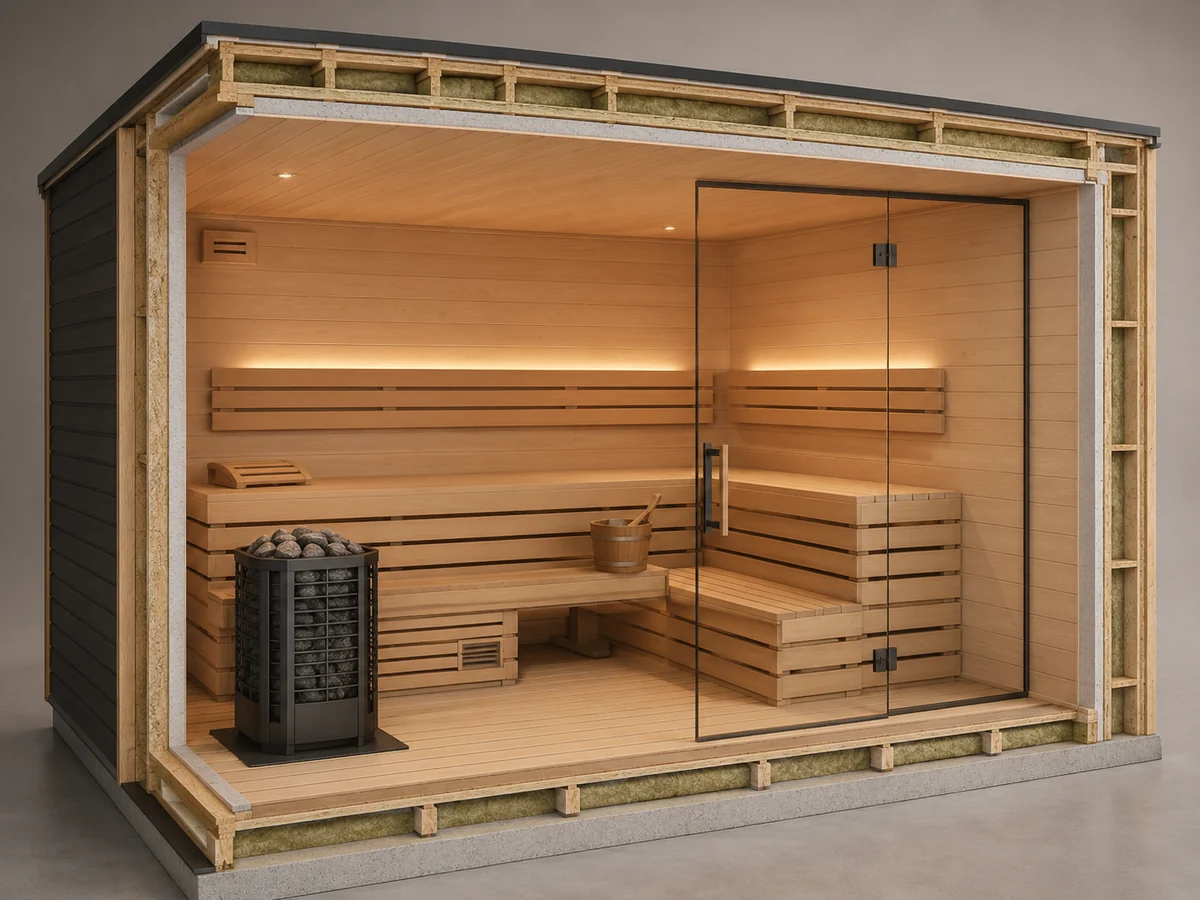
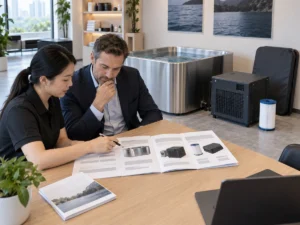
Концептуальная техническая визуализация; точный подбор мощности печи должен выполняться в соответствии с действующей документацией выбранного производителя.
Объем помещения — отправная точка, а не окончательный ответ
- Внутренние длина, ширина и высота
- Остекленные двери или стеклянные стены
- Неизолированная кладка или другие открытые поверхности
- Изоляция стен и потолка
- Высота потолка
- Внутренняя или наружная установка
- Климатическое воздействие
- Схема вентиляции
Коммерческая нагрузка может изменить выбор нагревателя
Печь, которая кажется подходящей только по объёму помещения, всё равно может потребовать дополнительной проверки при увеличении частоты работы. Частое открывание двери может повысить потребность в восстановлении тепла, а длительные периоды работы меняют ожидания по обслуживанию и inspection. Коммерческим покупателям следует определить режим работы, доступ к управлению, требования к очистке и обслуживанию до окончательного утверждения.
| Условия эксплуатации | Типичный фокус решения | Дополнительные проверки |
|---|---|---|
| Жилые / эпизодические | Соответствие помещению, управление и возможность установки | Точный подбор модели и объем локальной установки |
| Коммерческие с низкой частотой | Повторяемость эксплуатации и доступ для обслуживания | Ответственность персонала, уборка и контроль доступа |
| Частое коммерческое использование | Порядок эксплуатации, ремонтопригодность и требования к восстановлению | Подтвержденная производителем пригодность к нагрузке, планирование осмотров и запасных частей |
Когда электрическая печь для сауны имеет больше смысла
Проверьте электроснабжение перед окончательным выбором нагревателя
- Доступное напряжение
- Фаза
- Номинальная мощность нагревателя
- Требуемая защита цепи
- Требования к кабелю и подключению
- Требования к контроллеру
- Требования к датчику
- Доступ для обслуживания
- Ответственность квалифицированного электрика
Мощность нагревателя в кВт не определяет полную электрическую схему. Точная документация на модель и применимые местные электротехнические требования должны определять окончательный монтаж.
Встроенное или внешнее управление
Некоторые электрические нагреватели имеют встроенное управление, другие используют внешний контроллер и датчик температуры. Проверьте полную совместимую конфигурацию, а не предполагайте, что все необходимые компоненты управления входят в комплект.
Особенности коммерческой эксплуатации
- Кто может изменять настройки эксплуатации?
- Могут ли гости получить доступ к органам управления?
- Кто проверяет помещение перед запуском?
- Как обрабатываются неисправности контроллера или датчиков?
- Можно ли обслуживать нагреватель и органы управления без значительной разборки помещения?
Для более полного контекста помещения, инженерных коммуникаций и установки сравните конфигурации внутренних саун перед утверждением окончательной трассы нагревателя.
Когда дровяная печь для сауны имеет больше смысла
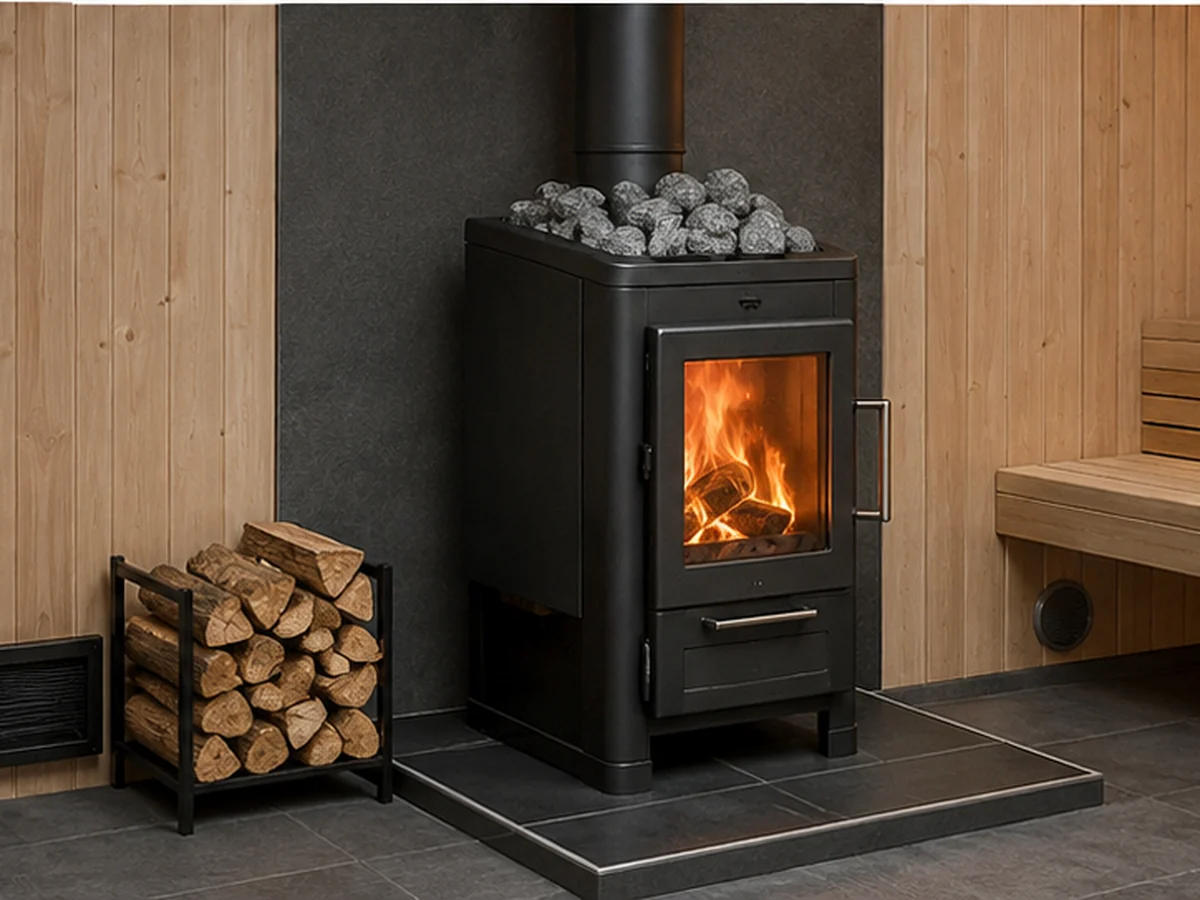
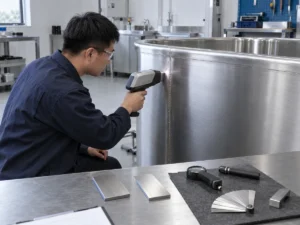
Концептуальная визуализация установки. Точные расстояния и требования к дымоходу зависят от выбранной печи, системы дымохода и местных норм.
Топливо и порядок эксплуатации
- Наличие и хранение дров
- Доступ для загрузки
- Удаление золы
- Ответственность оператора
- Осмотр камеры сгорания
- Доступ для очистки
- Местные ограничения на задымление
Планирование дымохода и дымовой трубы
Рассматривайте печь и дымоход как единую систему. Перед покупкой подтвердите выход дымовых газов, совместимые компоненты дымохода, проход через строительные конструкции, противопожарные расстояния до горючих материалов, вентиляцию для горения, воздействие погодных условий и доступ для очистки.
Как правильно подобрать размер печи для сауны без излишнего упрощения
Это руководство по покупке помогает покупателям выбрать маршрут обогревателя и подготовить исходные данные, необходимые для расчета размера. Детальный расчет эффективного объема и окончательная проверка мощности обогревателя относятся к специальному рабочему процессу подбора обогревателя и документации по подбору конкретной модели выбранного производителя.
Для расчетов эффективного объема, поправок на остекление и неутепленные поверхности, реестров нагрузок и проверки модельного ряда перейдите к Руководство по подбору мощности нагревателя для сауны.
| Ввод | Почему это важно | Покупатель должен предоставить |
|---|---|---|
| Внутренние размеры | Установите базовый отапливаемый объем | Длина × ширина × высота |
| Площадь остекления | Может увеличить эффективную потребность в отоплении | Размеры дверей/окон/остекленных стен |
| Другие неутепленные поверхности | Могут изменить тепловую нагрузку | Тип поверхности и площадь |
| Теплоизоляция | Влияет на сохранение тепла | Конструкция стен и потолка |
| Внутри / снаружи | Влияет на воздействие окружающей среды | Условия установки |
| Частота использования | Влияет на режим эксплуатации | Жилой или коммерческий характер |
| Трасса печи | Влияет на инженерные коммуникации и монтаж | Электрическая / дровяная |
| Электрические данные | Определяет возможность электрического подключения | Напряжение / фаза / доступная мощность |
| Маршрут топлива / дымохода | Определяет возможность использования дровяного нагревателя | Информация для планирования топлива и дымохода |
| Целевой рынок | Изменяет объем документации | Страна / регион |
Почему вместимость по числу мест не равна мощности нагревателя
Вместимость по числу мест — это показатель удобства. Подбор нагревателя — это тепловое решение. Две “четырехместные” сауны могут иметь разный объем помещения, площадь остекления, высоту потолков, утепление и воздействие внешней среды.
Когда требуется детальный расчет тепловой нагрузки
- Большие площади остекления
- Значительные неутеплённые поверхности
- Нестандартная высота потолков
- Воздействие наружной среды или холодного климата
- Неопределённая теплоизоляция
- Частое коммерческое использование
- Кандидатный нагреватель, близкий к границе допустимого диапазона площадей помещений, установленного производителем
Управление, датчики и пользовательский интерфейс печи для сауны
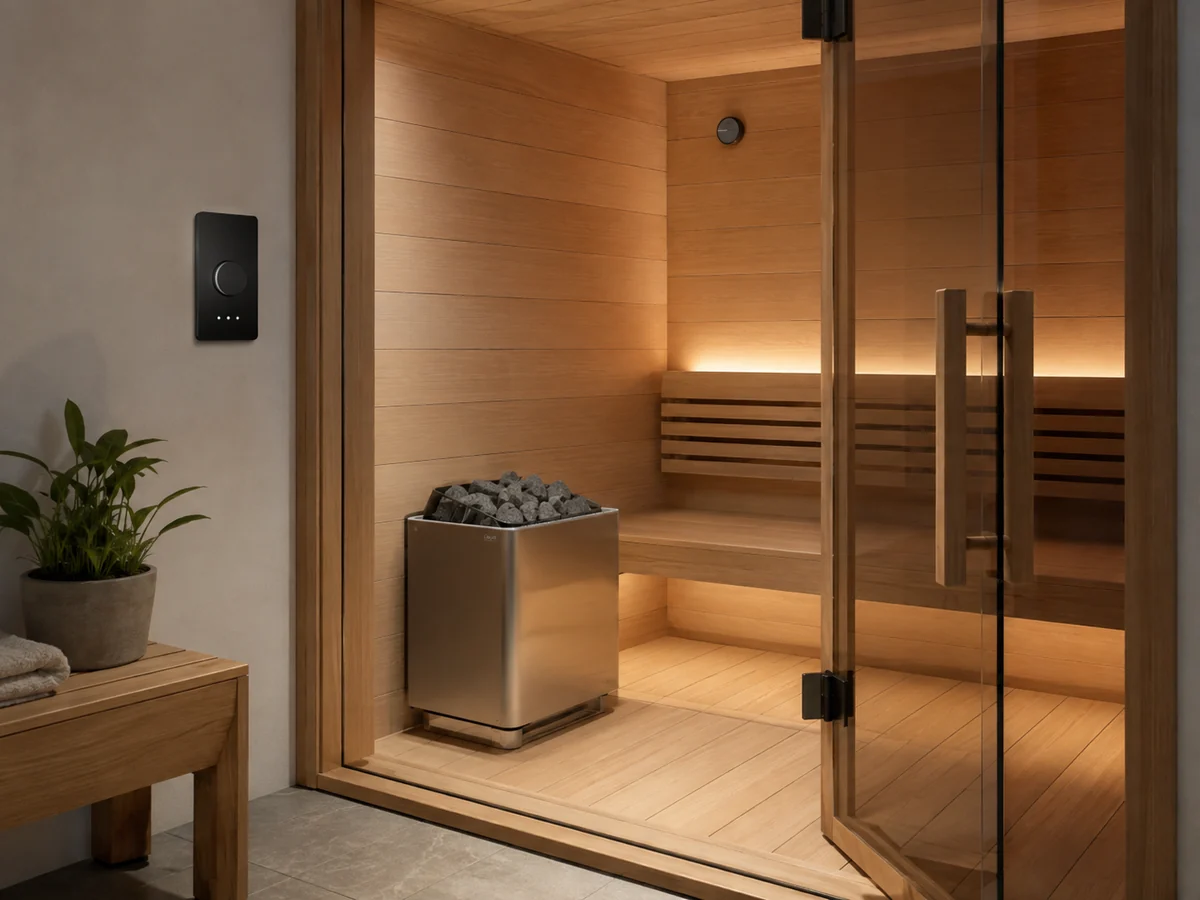
Только концептуальная конфигурация; окончательное размещение контроллера и датчиков должно соответствовать точным инструкциям по установке производителя нагревателя.
Встроенное управление
Встроенное управление может упростить отдельные конфигурации, но покупателям следует проверять доступные функции, схему размещения датчиков, условия установки и наличие на рынке.
Внешние панели управления
Внешнее управление подходит для коммерческих проектов, где пользовательский интерфейс должен располагаться вдали от нагревателя или где требуется ограниченный доступ для персонала.
Совместимость и размещение датчиков
Положение датчика может влиять на регулирование температуры и безопасную работу печи. Воздушный поток рядом с датчиком может искажать показания температуры в некоторых системах, поэтому схему приточного воздуха и расположение датчика следует рассматривать вместе. Окончательное размещение должно соответствовать точным инструкциям печи.
Удалённое или интеллектуальное управление требует подтверждения на уровне модели
Не предполагайте наличие Wi-Fi, управления через приложение, программирования или дистанционного запуска. Некоторые системы управления включают или требуют датчики двери, датчики безопасности или другие блокировки для дистанционной работы; точная архитектура зависит от производителя и модели. Рассматривайте дистанционное управление как полную систему безопасности и управления, а не только как программную функцию.
Проверка объекта и инженерных коммуникаций перед заказом
Нагреватель может подходить к помещению на бумаге, но оставаться неподходящим для фактического здания. Завершите основные вводные данные об объекте, прежде чем считать оборудование готовым к покупке.
Помещение
- Внутренние размеры
- Стекло и открытые поверхности
- Теплоизоляция
- Расположение скамьи и обогревателя
- Расположение дверей
Коммуникации
- Электроснабжение
- Трасса управления
- Трасса топлива, если применимо
- Вентиляция
- Трасса дымохода, если применимо
Ограничения проекта
- Внутренняя / наружная среда
- Климат
- Доступ для монтажа
- Коммерческое использование
- Местная профессиональная проверка
Требования к установке, которые следует проверить перед покупкой
В этом разделе определены интерфейсы установки, которые должны быть решены до покупки. Для более детальной координации по ограждающим конструкциям помещения, изоляции, пароизоляции, вентиляции и строительным работам используйте руководство по планированию строительства и установки сауны.
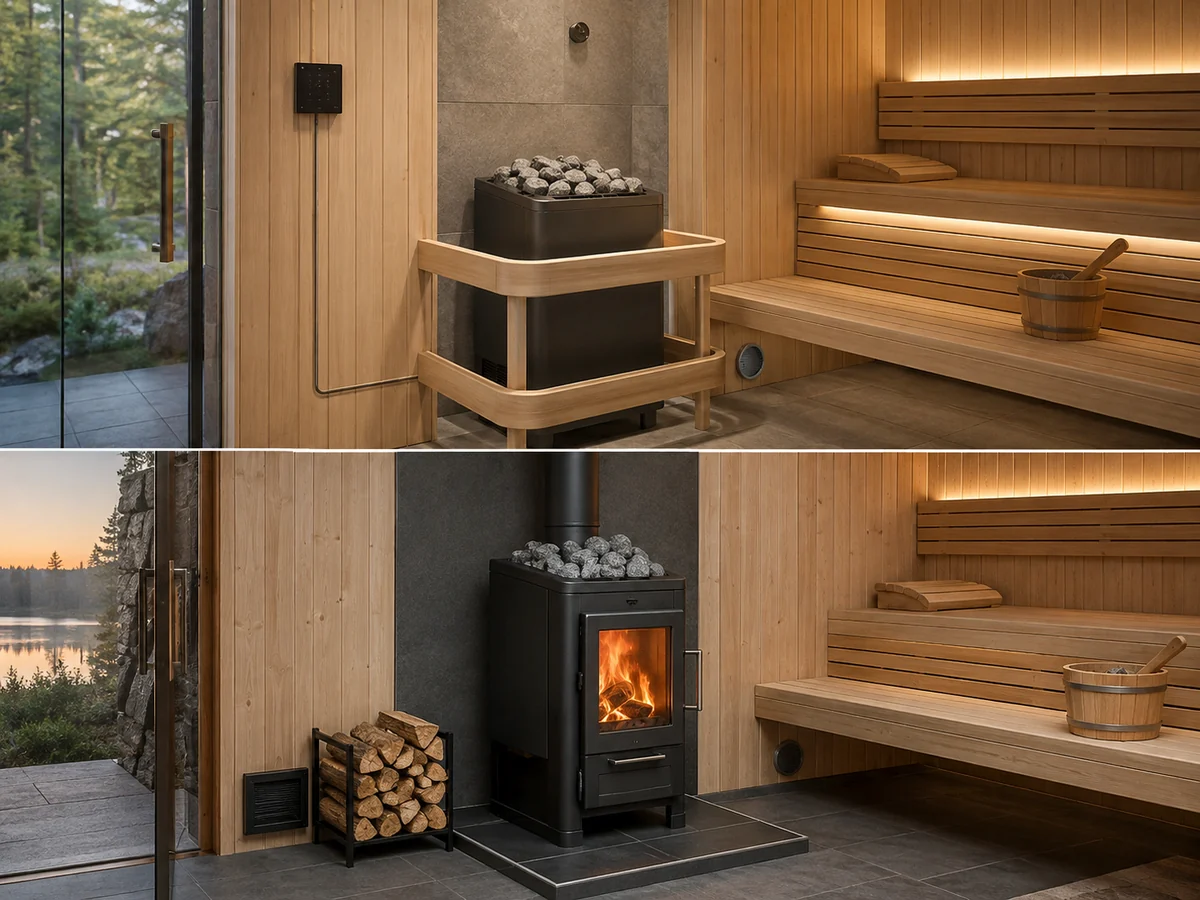
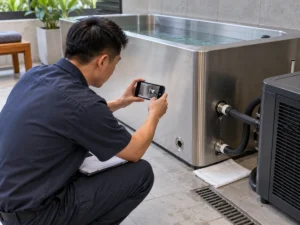
Изображение только для концептуального планирования; электромонтажные, топочные и дымоходные работы требуют инструкций для конкретной модели и квалифицированной местной проверки.
Контрольный список для места установки электрического нагревателя
- Расположение нагревателя
- Зазоры, требуемые производителем
- Электроснабжение
- Напряжение и фаза
- Требования к цепи и подключению
- Расположение контроллера
- Расположение датчика
- Вентиляция
- Доступ для обслуживания
- Объем работ квалифицированного электрика
Контрольный список для места установки дровяной печи
- Расположение печи
- Пригодность основания/пола
- Зазоры до горючих материалов
- Маршрут дымохода/дымовой трубы
- Совместимость выхода дыма
- Воздух для горения
- Защитные поверхности
- Подача топлива и золоудаление
- Местные требования к пожарной безопасности и дымоудалению
- Ответственность квалифицированного монтажника
Вентиляция и планировка должны рассматриваться вместе
Расположение нагревателя, положение датчика, приток воздуха, маршрут вытяжки, скамьи и расположение дверей не должны проектироваться независимо. Итоговая планировка должна соответствовать документации на выбранное оборудование и проектным требованиям к вентиляции.
Установки внутри и снаружи помещений не взаимозаменяемы
Уличные проекты могут добавлять воздействие погоды и наружные электрические или дымоходные интерфейсы. Требования к оболочке помещения, фундаменту и конструкции следует включать в план монтажа проекта, а не предполагать, что они определяются только печью.
Что может пойти не так, если нагреватель выбран слишком рано?
Иллюстративный сценарий планирования 1: электрическая печь выбрана до проверки электроснабжения
- Проблема
- Нагреватель выбран только на основе размера помещения.
- Причина
- Электрическая инфраструктура рассматривается после выбора оборудования.
- Корректировка
- Проверьте точные электрические характеристики нагревателя на соответствие фактическому доступному электроснабжению.
- Профилактика
- Включите информацию о напряжении, фазности и электроснабжении объекта в запрос предложения до утверждения.
Иллюстративный сценарий планирования 2: печь выбрана по количеству мест
- Проблема
- В качестве основы для подбора используется маркировка “сауна на четырех человек”.
- Причина
- Полезная площадь сидений путается с тепловой нагрузкой.
- Корректировка
- Измерьте отапливаемое помещение и определите стеклянные, изолированные и открытые поверхности.
- Профилактика
- Зафиксируйте данные помещения перед окончательной рекомендацией по обогревателю.
Иллюстративный сценарий планирования 3: дровяная печь выбрана до проверки дымохода
- Проблема
- Предпочтительная печь не соответствует фактическому маршруту прокладки в здании.
- Причина
- Планирование дымохода и зазоров до горючих материалов выполняется слишком поздно.
- Корректировка
- Рассматривайте печь, дымоход и проходку через здание как единый монтажный комплект.
- Профилактика
- Включите оценку возможности установки дымохода в первоначальное техническое задание.
Иллюстративный сценарий планирования 4: коммерческий режим работы определён слишком поздно
- Проблема
- Обогреватель выбирается только на основе объёма помещения и номинальной мощности.
- Причина
- Частота эксплуатации, требования к очистке и обслуживанию не включены в первоначальное техническое задание.
- Корректировка
- Проверьте точную конфигурацию нагревателя на соответствие предполагаемому режиму работы.
- Профилактика
- Укажите ожидаемую частоту эксплуатации и коммерческое использование до запроса котировки.
Эти сценарии являются обобщёнными примерами планирования и не являются записями о конкретных клиентах или проектах HACHILL.
Кто за что отвечает?
Проекты по нагревателям становятся рискованными, когда обязанности поставщика, покупателя и монтажника остаются неявными. Согласуйте основную границу ответственности до окончательного утверждения закупки.
| Задача | Поставщик / Производитель | Покупатель / Проектная группа | Монтажник / Местный специалист |
|---|---|---|---|
| Предоставить точную документацию по модели | Основная | Ознакомьтесь с | Ознакомьтесь с |
| Определить условия помещения и площадки | Проверить исходные данные | Основная | Поддержка / проверка |
| Подтвердить электроснабжение | Предоставить требования к нагревателю | Предоставить информацию о площадке | Основная техническая проверка |
| Подтвердить путь дымохода / пожарный маршрут | Предоставить требования к печи | Предоставить информацию о проекте/площадке | Основная техническая проверка |
| Подтвердить местные нормы / разрешения | Предоставить имеющуюся документацию | Согласование требований проекта | Первичная локальная проверка |
| Финальный монтаж | Предоставление инструкций | Согласование доступа и объёма работ | Основная |
| Порядок эксплуатации | Предоставление инструкций по оборудованию | Основная ответственность объекта | Поддержка при необходимости |
Документация и доказательства, которые покупателю следует запросить до окончательного утверждения
Изображение продукта, номер тепловой мощности или общая категорийная характеристика не являются достаточным основанием для размещения заказа. Важные характеристики должны быть привязаны к конкретной модели и конфигурации.
Технические данные
- Точная идентификация модели нагревателя
- Тип нагревателя
- Номинальная мощность
- Рекомендуемый производителем диапазон площади помещения
- Размеры
- Требования к камням, если применимо
- Условия установки
- Безопасные расстояния для конкретной модели
Доказательства для электрического нагревателя
- Инструкция по монтажу
- Требования к электропитанию
- Совместимость с блоком управления
- Требования к датчику
- Требования к безопасности/блокировке дистанционного управления, если применимо
- Применимые требования к предохранительным устройствам
Свидетельство о дровяном нагревателе
- Инструкция по установке печи
- Информация о дымоходе
- Информация о совместимом дымоходе/дымовой трубе
- Требования к зазорам
- Требования к основанию/защите
- Требования к вентиляции для горения
- Инструкции по эксплуатации и техническому обслуживанию
Подтверждение соответствия целевому рынку
| Утверждение или решение | Допустимое направление подтверждения | Не использовать в качестве доказательства |
|---|---|---|
| Пригодность помещения | Точная документация производителя по подбору размера | Только вместимость по количеству человек |
| Электрическая пригодность | Точные технические данные/руководство по обогревателю + проверка объекта | Только кВт |
| Совместимость с контроллером | Точная документация контроллера/обогревателя | Список характеристик другой модели |
| Безопасность дистанционного управления | Точное руководство по системе управления и документация по требуемым блокировкам | Общее заявление о поддержке Wi-Fi |
| Пригодность дымохода | Точная документация по печи/дымоходу + местная проверка | Общая схема дымохода |
| Сертификация / соответствие рынку | Точная документация на уровне модели | Маркетинговое заявление на уровне бренда |
Контрольный список RFQ для каменки сауны
| Поле RFQ | Ввод покупателя |
|---|---|
| Тип покупателя / проекта | Дистрибьютор, отель, спа, спортзал, жилой или другой |
| Целевой рынок | Страна / регион |
| Тип сауны | Внутренний / наружный / традиционный |
| Внутренние размеры | Длина × ширина × высота |
| Ожидаемые пользователи | Фактические эксплуатационные требования |
| Стекло / открытые поверхности | Размеры и материал |
| Теплоизоляция | Подтвержденная конструкция или подлежит определению |
| Предпочтение по нагревателю | Электрический / дровяной / не определился |
| Электроснабжение | Напряжение / фаза / доступная мощность |
| Маршрут дровяного топлива | Если применимо |
| Предпочтение по управлению | Встроенное / внешнее / по проекту |
| План вентиляции | Известен / требует проверки |
| Маршрут дымохода | Если дровяное отопление |
| Частота использования | Бытовое / коммерческое использование |
| Необходимые документы | Требования рынка назначения / проекта |
| Количество | Требуемое количество единиц |
| Брендирование | OEM / собственная торговая марка, если применимо |
| Место поставки | Страна / место реализации проекта |
| Ответственность за монтаж | Покупатель / подрядчик / монтажник / другое |
| Ожидания по послепродажному обслуживанию | Запасные части, документация или требования к сервису |
Окончательное решение о покупке
Выпускайте окончательную модель нагревателя только после подтверждения помещения, маршрута нагревателя, инженерных коммуникаций, управления, вентиляции, зазоров, рабочего режима, документации и ответственных сторон.
- Определите сауну и условия установки.
- Определите предполагаемых пользователей и частоту использования.
- Выберите электрический или дровяной нагреватель в качестве предварительного варианта.
- Подтвердите возможность подключения электричества или топлива/дымохода.
- Проверьте управление, датчики и необходимые блокировки безопасности.
- Проверьте вентиляцию, доступ для обслуживания и зазоры.
- Проверьте точные документы производителя по подбору и установке.
- Подтвердите местные профессиональные требования и требования целевого рынка.
- Подтвердите коммерческие условия технического обслуживания и поставки запасных частей, где это применимо.
Официальный справочный объем
Окончательный расчет мощности печи, электрические требования, элементы управления, расположение датчиков, безопасные расстояния и требования к дымоходу должны быть взяты из документации на конкретное выбранное оборудование. Значения или характеристики одного производителя или модели не должны автоматически применяться к другому.
Границы доказательной базы: Приведённые ниже ссылки на HUUM и Harvia иллюстрируют требования конкретных производителей к подбору мощности, управлению, датчикам и дымоходу. Они не устанавливают спецификации моделей HACHILL, объём сертификации или одобрение для конкретного рынка. Эти официальные страницы были повторно проверены в сентябре 2026 года; покупателям и монтажникам всё равно следует использовать актуальное руководство для точно выбранной модели на момент согласования и монтажа.
- Руководство по подбору мощности печей HUUM: официальный калькулятор подбора
- Документация на электрические печи HUUM: Ресурсы: страница продукта CORE и руководство пользователя
- Документация на дровяные печи HUUM: Ресурсы: страница продукта HIVE Wood и руководство пользователя
- Документация на системы управления HUUM: Ресурсы: страница продукта системы управления UKU и руководство
- Руководство по датчикам Harvia: официальное руководство по датчикам температуры
- Руководство по дымоходам Harvia: официальные рекомендации по дымоходу
Часто задаваемые вопросы
Что лучше: электрическая каменка или дровяная печь для сауны?
Ни один из вариантов не является универсально лучшим. Правильный выбор зависит от помещения сауны, доступных коммуникаций, желаемого режима эксплуатации и требований к установке.
Как узнать, какой размер нагревателя для сауны мне нужен?
Начните с фактического внутреннего объема помещения, затем учтите остекление, открытые поверхности, утепление и конструкцию. Используйте точный актуальный метод расчета производителя.
Можно ли подобрать печь для сауны по количеству человек?
Нет. Вместимость — это показатель удобства использования; размер обогревателя зависит от тепловых характеристик помещения.
Нужна ли профессиональная установка для электрических сауна-печей?
Электрические требования зависят от конкретного нагревателя и местных норм. Стационарные электромонтажные работы должны выполняться или проверяться квалифицированными местными специалистами.
Нужен ли дымоход для дровяной печи сауны?
Да. Требуется безопасный маршрут отвода продуктов сгорания. Точная схема дымохода или дымовой трубы зависит от печи, здания и действующих местных требований.
Входят ли элементы управления сауной в комплект с нагревателем?
Это зависит от модели. Уточните точную конфигурацию нагревателя, контроллера, датчика и предохранительных устройств перед покупкой.
Что еще должен уточнить коммерческий покупатель, помимо размера нагревателя?
Подтвердите рабочую частоту, контроль доступа, очистку, сервисный доступ, инженерные коммуникации, вентиляцию, ответственность за монтаж, документацию и ожидания по запасным частям.
Подготовьте техническое задание для проекта каменки для сауны
Точное коммерческое предложение начинается с условий проекта, которые действительно влияют на выбор каменки.
- Внутренние размеры сауны
- Остекление и состояние утепления
- Внутренняя / наружная среда
- Ожидаемое количество пользователей и частота использования
- Предпочтение: электрическая или дровяная каменка
- Напряжение и количество фаз для электрической модели
- Топливо и маршрут дымохода для дровяной модели
- Требования к управлению
- Целевой рынок
- Количество
- Ответственность за монтаж
- Необходимые документы
- Ожидания по послепродажному обслуживанию или запасным частям
Если выбор нагревателя ещё не определён, начните с помещения, доступных коммуникаций и условий монтажа, а не с подбора мощности нагревателя в первую очередь.
Запросить коммерческое предложение (B2B)