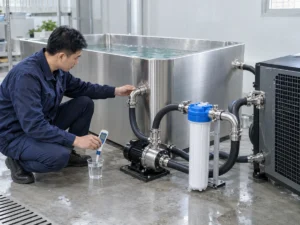
Respuesta rápida: La comparación entre baño de inmersión en frío y ducha fría no tiene un ganador universal. La ducha es la opción de menor fricción si principalmente buscas una exposición conveniente al agua fría. Un baño de inmersión dedicado se justifica más fácilmente cuando la inmersión en sí, las condiciones operativas repetibles o el uso compartido son importantes. La investigación actual no establece que un baño de inmersión sea universalmente más saludable simplemente porque se sumerge más parte del cuerpo.
La pregunta de compra útil no es simplemente “¿cuál ofrece más beneficios?”. Es si realmente necesitas un entorno de inmersión dedicado, o si la ducha que ya tienes resuelve el problema suficientemente bien.
Separa tres preguntas: cómo se expone el cuerpo al agua fría, qué ha probado realmente la investigación y qué equipo adicional y responsabilidad operativa estás pagando.Baño de inmersión en frío vs ducha fría: empieza por el método de exposición, no por los beneficios
La diferencia más clara entre una ducha fría y un baño de inmersión en frío es la forma en que el agua entra en contacto con el cuerpo.
Una ducha es una exposición a agua en movimiento. El agua sale de la alcachofa como un chorro, entra en contacto con distintas zonas del cuerpo y se drena. La exposición depende de factores como la cobertura del chorro, el flujo de agua, la posición del cuerpo y la temperatura disponible en esa instalación.
Un baño de inmersión en frío es una exposición por inmersión. Las partes del cuerpo que quedan por debajo de la línea de agua permanecen rodeadas por una masa de agua retenida mientras permanezcan sumergidas a ese nivel.
Son diferencias físicas significativas. Por sí solas, no son evidencia de que un método produzca mejores resultados de salud que el otro.
| Comparación | Ducha fría | Baño de inmersión en frío |
|---|---|---|
| Suministro de agua | Chorro en movimiento | Inmersión |
| Contacto con el cuerpo | Cambia con el chorro y la posición del cuerpo | Las zonas sumergidas permanecen rodeadas de agua |
| Cuerpo de agua retenido | No | Sí |
| Recipiente dedicado | Normalmente innecesario si ya existe una ducha adecuada | Requerido |
| ¿Superioridad universal para la salud establecida? | No | No |
Un pequeño estudio cruzado de recuperación en 17 hombres jóvenes y sanos encontró que la temperatura del músculo de la parte inferior de la pierna disminuyó más en las condiciones que añadían 20 minutos de inmersión en agua a 18 °C después de una ducha de 10 minutos a 25 °C que en las condiciones de recuperación sin inmersión. La concentración de lactato en sangre y la percepción de fatiga no difirieron entre las cuatro condiciones de recuperación. Dado que los protocolos diferían en más que la inmersión por sí sola, incluida la temperatura del agua y la actividad realizada después de la ducha, el estudio no debe interpretarse como una prueba general de que una inmersión en frío sea superior a una ducha fría. Véase el comparación directa de protocolos de recuperación.
Si la inmersión en sí es parte de la experiencia que deseas, una ducha no puede convertirse en inmersión simplemente por sentirse muy fría. Pero si solo deseas una rutina personal conveniente de agua fría, la cobertura corporal por sí sola no demuestra que necesites un baño de inmersión dedicado.
Si tu comparación real es entre un baño de hielo enfriado manualmente y un sistema de inmersión con enfriador, utiliza la guía de HACHILL Inmersión en frío vs. baño de hielo en su lugar. Esa página trata la decisión entre hielo y enfriador.
¿Tienen las duchas frías la misma evidencia que la inmersión en agua fría?
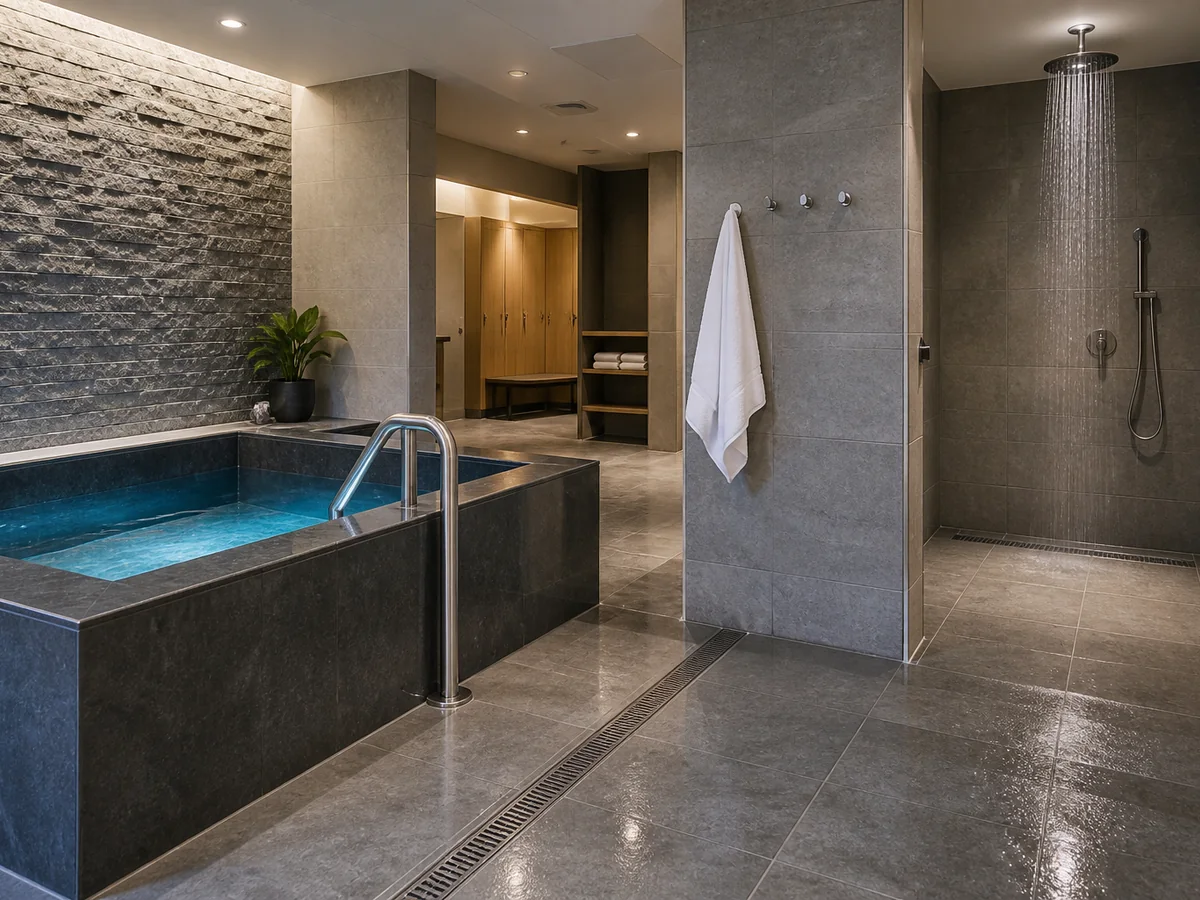
La evidencia sobre duchas frías y la evidencia sobre inmersión en agua fría no deben tratarse como intercambiables.
Cuando veas una afirmación de que “el agua fría hace X”, hazte una pregunta antes de aceptarla:
¿Ese resultado se estudió realmente con una ducha, con inmersión o con ambas?Lo que la investigación específica sobre duchas puede respaldar realmente
Un gran ensayo aleatorizado con 3,018 adultos estudió a personas que terminaban su ducha caliente habitual con 30, 60 o 90 segundos de agua fría.
Los grupos de ducha fría reportaron menos ausencias laborales por enfermedad. No no presentan significativamente menos días de enfermedad en general.
Eso significa que el estudio respalda una afirmación limitada: una rutina de duchas frías se asoció con una menor ausencia por enfermedad autoinformada en ese ensayo. No demuestra que las duchas frías prevengan enfermedades o “refuercen la inmunidad”. El estudio tampoco encontró una diferencia clara en la ausencia por enfermedad entre las tres duraciones de ducha fría probadas. Consulte el ensayo aleatorizado de ducha fría.
La mayor parte de la evidencia más amplia se basa en la inmersión
Una revisión sistemática y un metaanálisis de 2025 incluyeron 11 estudios aleatorizados con 3,177 participantes. Diez de las 11 intervenciones se realizaron en baños, mientras que solo una utilizó duchas frías. La revisión agrupó las duchas frías, los baños de hielo y las inmersiones bajo un amplio marco de exposición al agua fría, pero eso no hace que los métodos sean intercambiables.
Esa es una distinción importante en cuanto a evidencia. Cuando un estudio de inmersión examina una población concreta, una condición del agua, un protocolo de exposición y un resultado, el hallazgo pertenece en primer lugar a ese protocolo estudiado. No debe convertirse silenciosamente en prueba de que una ducha fría ordinaria produce el mismo resultado. Consulte la Revisión sistemática y metaanálisis de 2025.
Más investigación sobre inmersión no demuestra que los baños de inmersión sean mejores
El límite de la evidencia funciona en ambos sentidos. Más estudios que utilizan inmersión no establecen que las inmersiones sean universalmente más saludables.
La investigación directa de ducha frente a inmersión sigue siendo limitada, y los estudios pueden diferir en temperatura, duración, cobertura corporal, condiciones de ejercicio, características de los participantes y medidas de resultado.
La intervención fue en realidad una ducha. Las afirmaciones deben mantenerse dentro de los resultados medidos.
La intervención utilizó un baño, baño de hielo, inmersión u otro protocolo de inmersión.
La ducha y la inmersión se compararon dentro del mismo estudio y contexto de protocolo.
La conclusión requiere una transferencia entre métodos que la investigación no probó directamente.
Control de temperatura y repetibilidad: qué cambia realmente una inmersión en frío dedicada
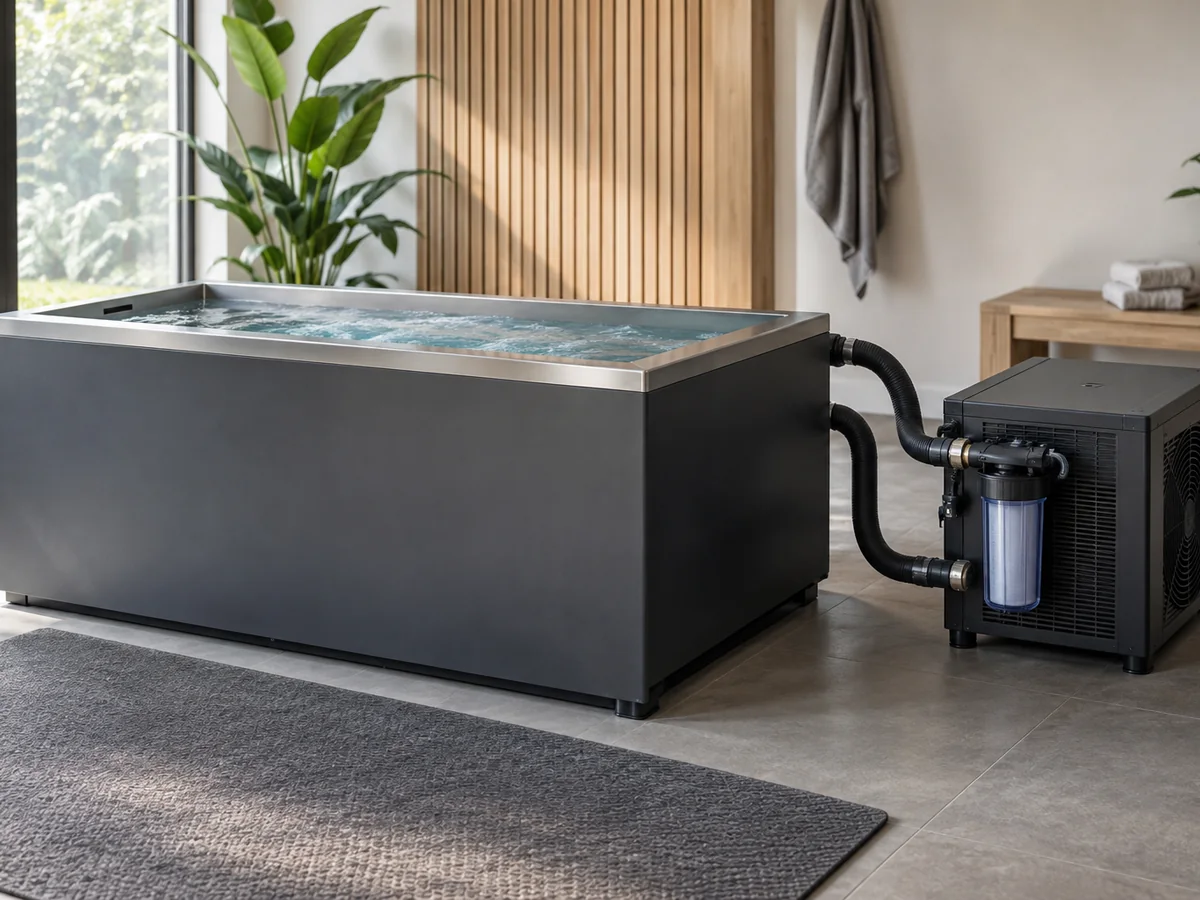
El argumento práctico más sólido a favor del equipo dedicado de inmersión en frío a menudo no es “más beneficios”. Es más control sobre el entorno de funcionamiento.
La disponibilidad de agua fría no equivale a una condición de funcionamiento definida
Una ducha doméstica común no representa una exposición al frío estandarizada.
El gran ensayo de ducha fría reportó que la temperatura más fría disponible del agua de ducha variaba según la ubicación. El desempeño del cabezal de ducha también difiere en caudal, fuerza de rociado y cobertura; el programa WaterSense de la U.S. EPA mide estas como variables de desempeño del accesorio. Véase Guía de EPA WaterSense sobre cabezales de ducha.
Por lo tanto, las tablas comparativas genéricas que asignan a cada ducha fría una banda de temperatura fija son engañosas.
Una bañera de inmersión en frío dedicada cambia la configuración porque el usuario está sumergido en una masa de agua definida. Cuando el sistema seleccionado incluye equipo apropiado de control activo de temperatura, esa agua también puede gestionarse hacia una condición operativa elegida.
Si la verdadera pregunta es cómo interpretar la temperatura del agua de la bañera fría, utilice HACHILL’s ¿Qué temperatura tiene un baño de inmersión en frío? guía en lugar de convertir esta comparación en una prescripción de temperatura.
La repetibilidad solo es valiosa cuando se necesita
Para alguien que simplemente quiere un hábito fácil de agua fría en casa, la repetibilidad puede no justificar comprar otro equipo. La ducha puede ser ya suficiente.
La repetibilidad se vuelve más relevante cuando:
- la propia inmersión importa;
- quiere recrear un entorno de agua definido;
- la rutina está estructurada y se repite;
- varios usuarios necesitan una experiencia dedicada;
- el cold plunge formará parte de una instalación comercial.
El control tiene valor cuando el control resuelve un requisito real. Un sistema más controlable no es automáticamente una exposición médicamente superior.
Compare instalación, uso del agua, mantenimiento y coste antes de comprar
Una comparación de costos justa debería preguntar por qué sistema adicional usted asume la responsabilidad. No debería comparar una alcachofa de ducha existente con el precio de venta al público de una instalación completa de inmersión en frío y quedarse ahí.
Si ya tiene una ducha adecuada, es posible que no necesite ninguna compra de equipo dedicado para exposición al frío. Esa es una ventaja práctica importante. No significa que usar la ducha sea literalmente gratis.
Una ducha consume agua corriente mientras está en funcionamiento, y el uso de agua depende del caudal y la duración de la sesión. Para el contexto de EE. UU., la EPA afirma que las alcachofas de ducha estándar usan 2.5 galones por minuto, mientras que las alcachofas de ducha con etiqueta WaterSense deben usar no más de 2.0 galones por minuto y cumplir con criterios de rendimiento. Esas cifras son referencias de accesorios de EE. UU., no valores universales de caudal de ducha.
Un sistema de inmersión en frío dedicado crea un alcance de propiedad diferente. Según el sistema y el sitio, puede agregar un vaso, equipo de enfriamiento, componentes del sistema de agua, espacio dedicado, drenaje, requisitos eléctricos, limpieza y mantenimiento, y acceso de servicio.
| Alcance de propiedad | Ruta de ducha existente | Ruta dedicada para inmersión en frío |
|---|---|---|
| Vasija de inmersión dedicada | Normalmente ninguno si ya existe una ducha adecuada | Sí |
| Equipo de enfriamiento dedicado | Normalmente ninguno | Depende de la configuración |
| Agua corriente durante la exposición | Sí | No necesariamente |
| Espacio de suelo dedicado | Normalmente, espacio adicional mínimo | Requerido |
| Drenaje/planificación del sitio | A menudo utiliza la infraestructura de ducha existente | Depende del proyecto |
| Mantenimiento dedicado | Alcance de instalaciones existentes | Alcance de equipos/sistemas adicionales |
| Compra inicial de equipo | Puede que no requiera equipo nuevo de exposición al frío | Equipo nuevo requerido |
Ninguna ruta es automáticamente la ganadora en uso de agua. Una ducha usa agua corriente durante la sesión. Una inmersión puede retener agua, pero el uso total de agua depende del volumen del recipiente, la limpieza y la práctica de rellenado, la frecuencia de uso y el diseño del sistema.
El mismo principio se aplica al dinero: el precio de compra no es el costo total de propiedad.
Si necesita una comparación completa de equipo, instalación, servicios, mantenimiento y coste del ciclo de vida, continúe con HACHILL’s Coste de la bañera fría guía.
Rutina personal vs. uso compartido o comercial: el problema operativo cambia

La misma comparación puede dar una respuesta diferente para una persona en casa y para un gimnasio, hotel, spa o centro de recuperación.
Para uso personal, la conveniencia puede ser el requisito principal
Una ducha doméstica tiene una gran ventaja: puede que ya esté ahí.
No hay un recipiente separado que comprar, ni área de piso adicional dedicada a la inmersión, ni agua de inmersión retenida que gestionar. Si el objetivo del usuario es simplemente una rutina personal accesible de agua fría, esa conveniencia puede ser suficiente.
Un usuario doméstico todavía puede preferir una tina de inmersión en frío porque desea específicamente la inmersión o una experiencia dedicada. Esa es una razón legítima. No necesita justificarse con una afirmación no respaldada de que la inmersión en frío es más saludable.
Para uso compartido, el equipo es solo una parte del sistema
Un entorno compartido de agua retenida plantea diferentes cuestiones operativas.
Según la instalación y los requisitos aplicables, estos pueden incluir:
- calidad del agua;
- limpieza y mantenimiento;
- acceso y salida;
- inspección;
- procedimientos del personal;
- gestión de incidentes;
- cierre y reapertura.
CDC’s Model Aquatic Health Code es un contexto útil de EE. UU. sobre por qué las instalaciones acuáticas públicas desinfectadas se gestionan como sistemas operativos y no solo como equipos.
Pero el MAHC es una guía, no una ley federal ni prueba de que toda instalación de inmersión en frío entre en la misma categoría regulatoria. La aplicabilidad exacta depende de la clasificación del establecimiento, la adopción local, la jurisdicción y la autoridad competente.
Los compradores comerciales que llegan a este punto deben evaluar la gama más amplia de HACHILL Bañera de inmersión en frío comercial los requisitos de la instalación por separado de la decisión personal de ducha frente a inmersión.
¿Cuándo basta una ducha fría y cuándo se justifica una inmersión en frío?
La decisión final no debería forzar que gane una tina de inmersión fría. Debería indicarle si el equipo dedicado resuelve una necesidad real.
| Su requisito real | Mejor dirección a seguir |
|---|---|
| Hábito personal sencillo y práctico de agua fría | La ducha fría puede ser suficiente |
| La inmersión en sí es importante | Considere una tina de inmersión en frío |
| Las condiciones de inmersión repetibles y definidas son importantes | Considere una tina de inmersión en frío |
| Se requiere una experiencia dedicada, compartida o comercial | Evaluar un sistema de inmersión en frío y los requisitos operativos de la instalación |
| La única razón para actualizar es una supuesta superioridad para la salud | Poner la compra en espera |
| El sitio, los servicios públicos o el modelo de uso no están definidos | Poner la compra en espera |
Quédese con la ducha cuando la exposición conveniente al agua fría sea el objetivo principal, ya exista un acceso adecuado y la inmersión o las condiciones de inmersión repetibles no sean importantes.
Considere equipo dedicado cuando la inmersión en sí, un entorno definido de agua retenida, la repetibilidad, el uso repetido estructurado o la operación compartida resuelven un requisito real.
No se precipite a seleccionar un modelo cuando el único fundamento sea una supuesta superioridad para la salud, o cuando el sitio, los servicios, el modelo de uso y la responsabilidad operativa aún no estén definidos.
“Suficiente” describe la idoneidad para la tarea, no una equivalencia médica. “Inmersión justificada” describe la idoneidad del equipo, no una superioridad sanitaria universal. Y cuando el requisito aún no está claro, no necesita comprar nada todavía.
Si la comparación apunta a una bañera de inmersión en frío dedicada, el siguiente paso es el ajuste del producto. Si apunta a la ducha o a HOLD, no se requiere ningún paso de producto. Aparte del ajuste del equipo, esta comparación no proporciona autorización médica ni establece que un método sea universalmente más seguro para una persona en particular.
¿Necesita un sistema de inmersión dedicado?
Si la comparación muestra que la inmersión y las condiciones de operación repetibles resuelven una necesidad real, revise la gama de inmersión en frío de HACHILL antes de pasar a la selección a nivel de modelo.
Explorar bañeras de inmersión en fríoPreguntas frecuentes
¿Es una ducha fría lo mismo que una inmersión en frío?
No. Una ducha fría usa rocío en movimiento, mientras que una inmersión en frío sumerge las partes del cuerpo por debajo de la línea de agua en una masa de agua retenida. Son métodos de exposición diferentes. Esa diferencia física no prueba automáticamente que uno produzca mejores resultados de salud.
¿Es mejor una inmersión en frío que una ducha fría?
No como una afirmación universal. Una bañera de inmersión en frío puede ser un mejor ajuste de equipo cuando importan la inmersión, las condiciones de operación repetibles o un entorno dedicado de uso compartido. La evidencia actual no establece que las bañeras de inmersión en frío sean universalmente más saludables o más eficaces que las duchas frías en todos los resultados.
¿Puede una ducha fría ser tan fría como una inmersión en frío?
A veces, pero no existe una temperatura universal de ducha fría doméstica. La disponibilidad de agua fría varía entre instalaciones, y la condición operativa real de una bañera de inmersión en frío depende de su equipo y configuración. Compare condiciones medidas en lugar de asumir rangos de temperatura fijos para cualquiera de los dos métodos.
¿Es una ducha fría más económica que tener una tina de inmersión fría?
Si ya existe una ducha adecuada, puede evitar el alcance incremental de compra, espacio, instalación y mantenimiento de un equipo de inmersión dedicado. Pero el uso de la ducha sigue consumiendo agua, mientras que contar con una inmersión puede añadir costes de equipo, suministros, limpieza y servicio. La respuesta completa depende del uso y la instalación reales.
¿Cuándo vale la pena comprar una bañera de inmersión fría dedicada?
Es más fácil justificar una tina de inmersión fría dedicada cuando resuelve un requisito definido, como la inmersión, condiciones de funcionamiento repetibles, un uso repetido estructurado o una operación compartida/comercial. Si la única justificación es la suposición de que una tina de inmersión fría debe proporcionar mayores beneficios para la salud, la evidencia actual no es lo suficientemente sólida para respaldar esa conclusión.