Kurze Antwort: Ein Vergleich zwischen Kaltwasser-Tauchbecken und Kaltdusche hat keinen universellen Gewinner. Die Dusche ist die Option mit geringerer Hürde, wenn Sie hauptsächlich eine bequeme Kaltwasser-Exposition wünschen. Ein eigenes Tauchbecken wird leichter zu rechtfertigen, wenn es auf die Immersion selbst, wiederholbare Betriebsbedingungen oder gemeinsame Nutzung ankommt. Die aktuelle Forschung belegt nicht, dass ein Tauchbecken allein deshalb universell gesünder ist, weil mehr Körperoberfläche eingetaucht wird.
Die entscheidende Kaufentscheidung ist nicht einfach: “Welches bietet mehr Vorteile?” Es geht darum, ob Sie tatsächlich eine eigene Immersionsumgebung benötigen oder ob die vorhandene Dusche das Problem ausreichend löst.
Trennen Sie drei Fragen: wie der Körper kaltem Wasser ausgesetzt wird, was die Forschung tatsächlich getestet hat und welche zusätzliche Ausrüstung und Betriebsverantwortung Sie bezahlen.Kaltwasser-Tauchbecken vs. Kaltdusche: Beginnen Sie mit der Expositionsmethode, nicht mit den Vorteilen
Der deutlichste Unterschied zwischen einer Kaltdusche und einem Kaltwasser-Tauchbecken ist die Art, wie Wasser mit dem Körper in Kontakt kommt.
Eine Dusche ist eine Exposition gegenüber fließendem Wasser. Das Wasser verlässt den Duschkopf als Sprühstrahl, trifft auf wechselnde Körperbereiche und fließt ab. Die Exposition hängt von Faktoren wie Sprühstrahlabdeckung, Wasserdurchfluss, Körperposition und der an der jeweiligen Installation verfügbaren Temperatur ab.
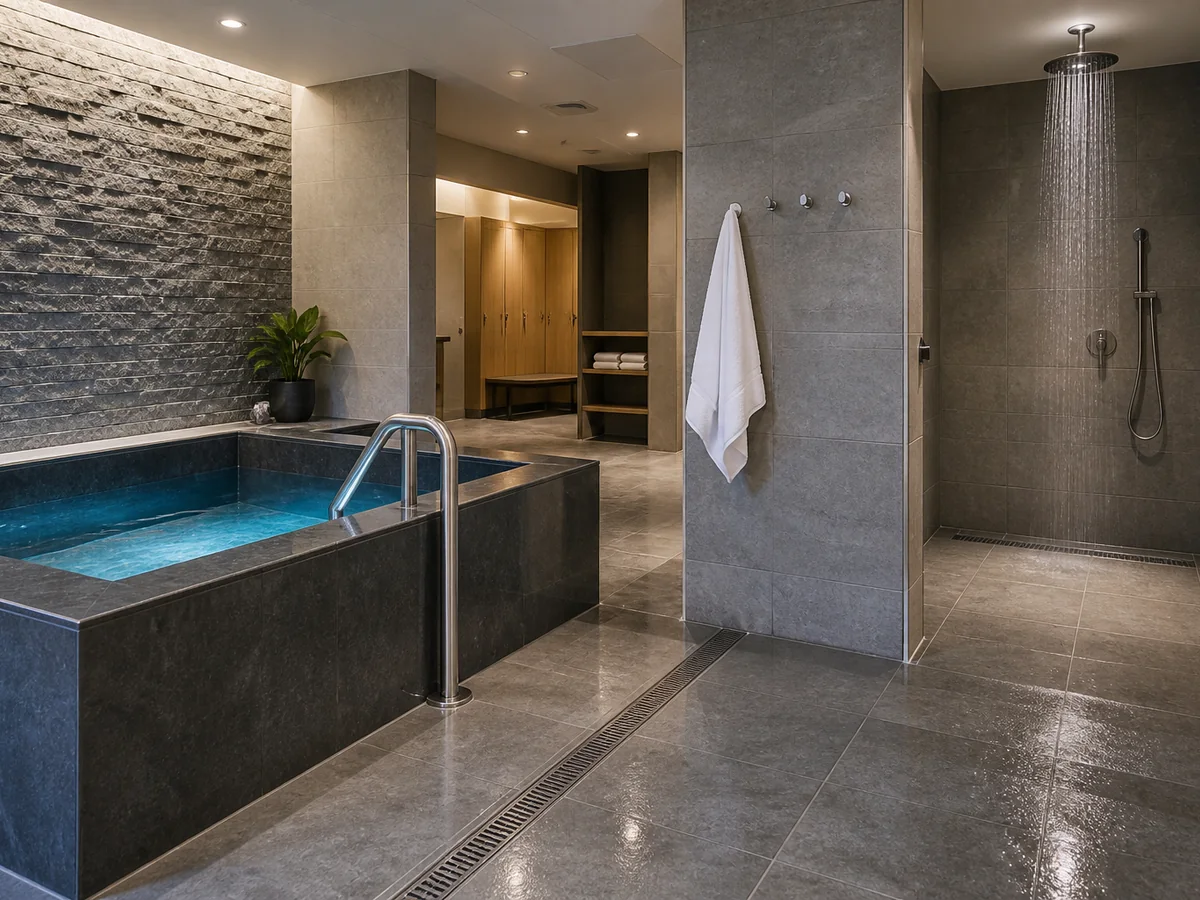
Ein Kaltwasser-Tauchbecken ist eine Exposition durch Eintauchen. Die Körperteile unterhalb der Wasserlinie bleiben von einem zurückgehaltenen Wasserkörper umgeben, solange sie auf dieser Höhe untergetaucht bleiben.
Das sind bedeutsame physikalische Unterschiede. Sie sind für sich genommen kein Beleg dafür, dass eine Methode bessere gesundheitliche Ergebnisse erzielt.
| Vergleich | Kalte Dusche | Kaltwasser-Tauchbecken |
|---|---|---|
| Wasserzufuhr | Fließender Sprühstrahl | Eintauchen |
| Körperkontakt | Ändert sich mit Sprühstrahl und Körperposition | Untergetauchte Bereiche bleiben von Wasser umgeben |
| Zurückgehaltener Wasserkörper | Nein | Ja |
| Eigenes Gefäß | In der Regel unnötig, wenn bereits eine geeignete Dusche vorhanden ist | Erforderlich |
| Universelle gesundheitliche Überlegenheit belegt? | Nein | Nein |
Eine kleine Crossover-Erholungsstudie an 17 jungen, gesunden Männern fand heraus, dass die Unterschenkelmuskeltemperatur unter den Bedingungen, die nach einer 10-minütigen Dusche bei 25 °C zusätzlich 20 Minuten Wasserimmersion bei 18 °C vorsahen, stärker sank als unter den Erholungsbedingungen ohne Immersion. Blutlaktatkonzentration und Ermüdungswahrnehmung unterschieden sich nicht zwischen den vier Erholungsbedingungen. Da sich die Protokolle in mehr als nur der Immersion unterschieden, einschließlich Wassertemperatur und der nach der Dusche ausgeführten Aktivität, sollte die Studie nicht als allgemeiner Beweis gelesen werden, dass ein Cold Plunge einer kalten Dusche überlegen ist. Siehe die direkter Vergleich der Erholungsprotokolle.
Wenn die Immersion selbst Teil des gewünschten Erlebnisses ist, kann eine Dusche nicht allein dadurch zur Immersion werden, dass sie sich sehr kalt anfühlt. Wenn Sie jedoch nur eine bequeme persönliche Kaltwasser-Routine wünschen, belegt die Körperbedeckung allein nicht, dass Sie ein eigenes Tauchbecken benötigen.
Wenn Ihr tatsächlicher Vergleich zwischen einem manuell gekühlten Eisbad und einem Immersionssystem auf Chiller-Basis liegt, verwenden Sie HACHILL’s Kaltwasser-Tauchbecken vs. Eisbad Stattdessen als Leitfaden verwenden. Diese Seite behandelt die Entscheidung zwischen Eis und Kühler.
Haben kalte Duschen dieselbe Evidenz wie Kaltwasser-Immersion?
Nein. Die Evidenz für kalte Duschen und die für Kaltwasser-Immersion sollten nicht als austauschbar behandelt werden.
Wenn Sie eine Behauptung sehen, dass “kaltes Wasser X bewirkt”, stellen Sie sich eine Frage, bevor Sie sie akzeptieren:
Wurde dieses Ergebnis tatsächlich mit einer Dusche, mit einem Tauchbad oder mit beidem untersucht?Was duschspezifische Forschung tatsächlich belegen kann
Eine große randomisierte Studie mit 3,018 Erwachsenen untersuchte Personen, die ihr normales warmes Duschen mit 30, 60 oder 90 Sekunden kaltem Wasser beendeten.
Die Gruppen mit Kaltwasserduschen berichteten weniger krankheitsbedingte Fehlzeiten bei der Arbeit. Sie taten dies nicht nicht haben insgesamt deutlich weniger Krankheitstage.
Das bedeutet, dass die Studie eine enge Aussage stützt: Eine Kaltduschen-Routine war in dieser Studie mit einer geringeren selbstberichteten Krankheitsabwesenheit verbunden. Sie beweist nicht, dass kalte Duschen Krankheiten verhindern oder das Immunsystem “stärken”. Die Studie fand auch keinen klaren Unterschied in der Krankheitsabwesenheit zwischen den drei getesteten Kaltduschen-Dauern. Siehe die randomisierte Kaltduschen-Studie.
Der Großteil der breiteren Evidenz basiert auf Immersion
Eine systematische Übersichtsarbeit und Metaanalyse aus dem Jahr 2025 umfasste 11 randomisierte Studien mit 3,177 Teilnehmenden. Zehn der 11 Interventionen wurden in Bädern durchgeführt, während nur eine Kaltduschen verwendete. Die Übersichtsarbeit fasste Kaltduschen, Eisbäder und Cold Plunges unter einem breiten Rahmen für Kaltwasserexposition zusammen, doch das macht die Methoden nicht austauschbar.
Das ist ein wesentlicher Unterschied in der Evidenz. Wenn eine Immersionsstudie eine bestimmte Personengruppe, Wasserbedingungen, Expositionsprotokoll und Ergebnis untersucht, gilt das Ergebnis zunächst für genau dieses untersuchte Protokoll. Es sollte nicht stillschweigend als Beweis dafür gelten, dass eine gewöhnliche kalte Dusche dasselbe Ergebnis erzielt. Siehe die Systematische Übersichtsarbeit und Meta-Analyse 2025.
Mehr Forschung zur Immersion belegt nicht, dass Tauchbecken besser sind
Die Evidenzgrenze gilt in beide Richtungen. Mehr Studien zur Immersion belegen nicht, dass Tauchbecken allgemein gesünder sind.
Direkte Forschung zu Dusche vs. Eintauchbad bleibt begrenzt, und Studien können sich in Temperatur, Dauer, Körperbedeckung, Trainingsbedingungen, Teilnehmermerkmalen und Ergebnisparametern unterscheiden.
Die Intervention war tatsächlich eine Dusche. Aussagen sollten sich auf die gemessenen Ergebnisse beschränken.
Die Intervention nutzte ein Bad, Eisbad, Kaltbecken oder ein anderes Immersionsprotokoll.
Dusche und Immersion wurden im selben Studien- und Protokollkontext verglichen.
Die Schlussfolgerung erfordert eine Übertragung zwischen Methoden, die die Forschung nicht direkt geprüft hat.
Temperaturkontrolle und Reproduzierbarkeit: Was ein dediziertes Cold-Plunge-Becken tatsächlich verändert
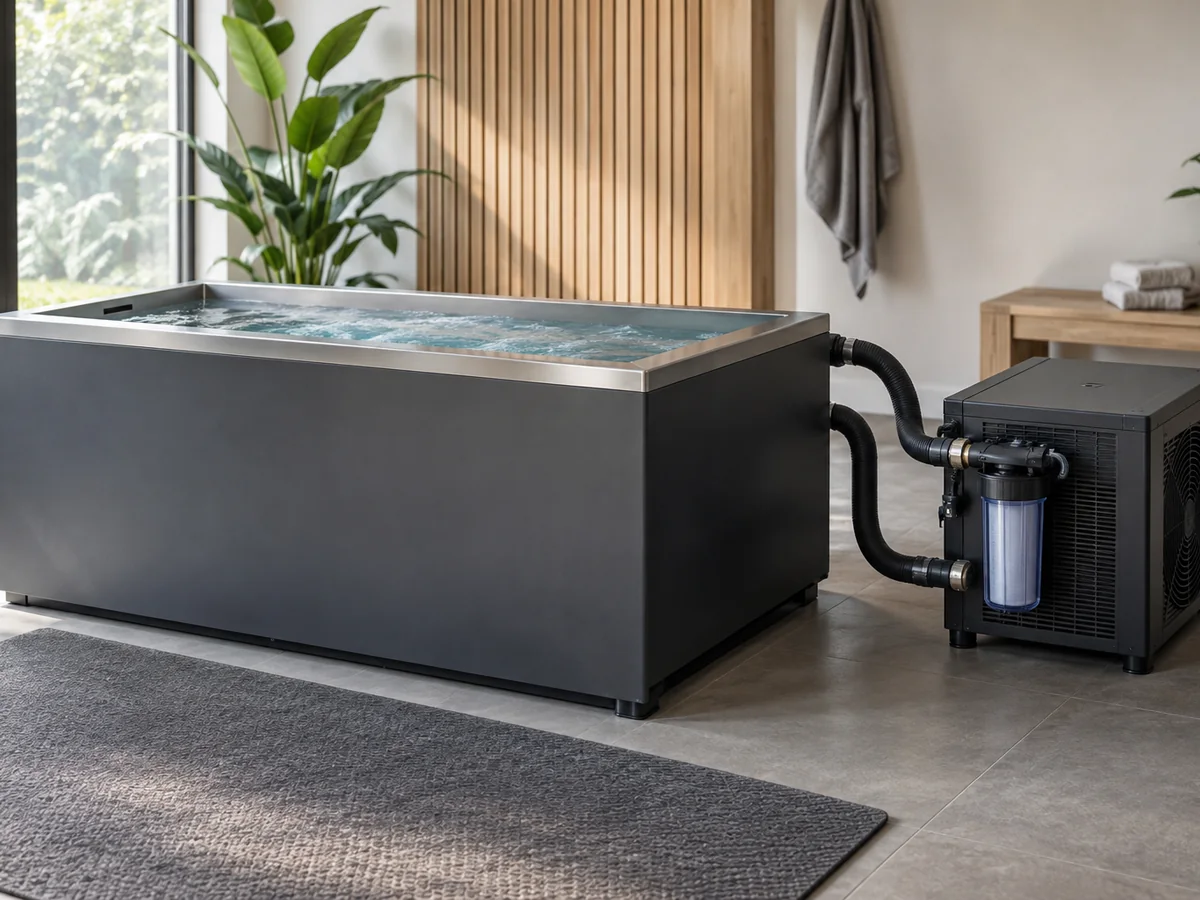
Das stärkste praktische Argument für dedizierte Cold-Plunge-Geräte ist oft nicht „mehr Vorteile“. Es ist mehr Kontrolle über die Betriebsumgebung.
Verfügbares Kaltwasser ist nicht dasselbe wie eine definierte Betriebsbedingung
Eine gewöhnliche Haushaltsdusche stellt keine standardisierte Kälteexposition dar.
Die große Kaltduschen-Studie selbst berichtete, dass die kälteste verfügbare Duschwassertemperatur je nach Standort variierte. Die Leistung von Duschköpfen unterscheidet sich auch in Durchfluss, Sprühkraft und Abdeckung; das U.S. EPA WaterSense-Programm misst diese als Armaturen-Performance-Variablen. Siehe EPA WaterSense-Leitfaden für Duschköpfe.
Daher sind allgemeine Vergleichstabellen irreführend, die jeder kalten Dusche einen festen Temperaturbereich zuweisen.
Ein dediziertes Tauchbecken verändert den Aufbau, weil der Nutzer in einen definierten Wasserkörper eintaucht. Wo das ausgewählte System geeignete aktive Temperaturregelungskomponenten umfasst, kann dieses Wasser auch auf einen gewählten Betriebszustand hin bewirtschaftet werden.
Wenn die eigentliche Frage lautet, wie die Wassertemperatur im Cold Plunge zu interpretieren ist, verwenden Sie HACHILL’s Wie kalt ist ein Kaltwasser-Tauchbecken? Leitfaden, statt diesen Vergleich in eine Temperaturvorgabe umzuwandeln.
Reproduzierbarkeit ist nur wertvoll, wenn Sie sie benötigen
Für jemanden, der zu Hause einfach eine einfache Kaltwasser-Routine möchte, rechtfertigt die Wiederholbarkeit möglicherweise nicht den Kauf eines weiteren Geräts. Die Dusche kann bereits ausreichen.
Reproduzierbarkeit wird relevanter, wenn:
- das Eintauchen selbst ist entscheidend;
- Sie ein definiertes Wasserumfeld nachbilden möchten;
- die Routine ist strukturiert und wird wiederholt;
- mehrere Nutzer ein dediziertes Erlebnis benötigen;
- das Kaltbecken wird Teil einer gewerblichen Anlage.
Steuerung hat Wert, wenn Steuerung eine reale Anforderung löst. Ein besser steuerbares System ist nicht automatisch eine medizinisch überlegene Exposition.
Vergleichen Sie Installation, Wasserverbrauch, Wartung und Kosten, bevor Sie kaufen
Ein fairer Kostenvergleich sollte die Frage stellen, für welches zusätzliche System Sie die Verantwortung übernehmen. Er sollte nicht einen vorhandenen Duschkopf mit dem Einzelhandelspreis einer kompletten Cold-Plunge-Installation vergleichen und dort stehen bleiben.
Wenn Sie bereits über eine geeignete Dusche verfügen, benötigen Sie möglicherweise überhaupt keinen Kauf spezieller Kälteexpositionsgeräte. Das ist ein großer praktischer Vorteil. Es bedeutet jedoch nicht, dass die Nutzung der Dusche buchstäblich kostenlos ist.
Eine Dusche verbraucht fließendes Wasser, während sie in Betrieb ist, und der Wasserverbrauch hängt von Durchfluss und Sitzungsdauer ab. Für den U.S.-Kontext gibt die EPA an, dass Standard-Duschköpfe 2.5 gallons per minute verwenden, während mit WaterSense gekennzeichnete Duschköpfe höchstens 2.0 gallons per minute verwenden und Leistungskriterien erfüllen müssen. Diese Werte sind U.S.-Armaturenreferenzen, keine universellen Duschdurchflusswerte.
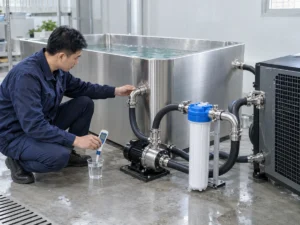
Ein dediziertes Kaltbecken schafft einen anderen Verantwortungsumfang. Je nach System und Standort kann es einen Behälter, Kühlausrüstung, Wassersystemkomponenten, dedizierten Platz, Entwässerung, elektrische Anforderungen, Reinigung und Wartung sowie Servicezugang hinzufügen.
| Eigentumsabgrenzung | Bestehender Duschweg | Dedizierte Cold-Plunge-Route |
|---|---|---|
| Dediziertes Tauchbecken | In der Regel keine, wenn bereits eine geeignete Dusche vorhanden ist | Ja |
| Dedizierte Kühlausrüstung | Üblicherweise keine | Konfigurationsabhängig |
| Fließendes Wasser während der Exposition | Ja | Nicht unbedingt |
| Dedizierte Stellfläche | Üblicherweise minimaler zusätzlicher Platzbedarf | Erforderlich |
| Entwässerungs-/Standortplanung | Nutzt häufig vorhandene Duschinfrastruktur | Projektabhängig |
| Dedizierte Wartung | Umfang bestehender Vorrichtungen | Zusätzlicher Ausrüstungs-/Systemumfang |
| Vorabkauf von Ausrüstung | Erfordert möglicherweise keine neue Ausrüstung für Kälteexposition | Neue Ausrüstung erforderlich |
Keiner der Wege ist automatisch der Sieger beim Wasserverbrauch. Eine Dusche verbraucht während der Sitzung fließendes Wasser. Ein Cold Plunge kann Wasser zurückhalten, aber der Gesamtwasserverbrauch hängt vom Beckenvolumen, der Reinigungs- und Nachfüllpraxis, der Nutzungshäufigkeit und der Systemauslegung ab.
Dasselbe Prinzip gilt für Geld: Der Kaufpreis ist nicht gleich den Gesamtkosten des Eigentums.
Wenn Sie einen vollständigen Vergleich von Ausstattung, Installation, Versorgungsanschlüssen, Wartung und Lebenszykluskosten benötigen, gehen Sie weiter zu HACHILL’s Cold-Plunge-Kosten Leitfaden.
Persönliche Routine vs. gemeinschaftliche oder gewerbliche Nutzung: Das Betriebsproblem ändert sich

Derselbe Vergleich kann für eine Person zu Hause und für ein Fitnessstudio, Hotel, Spa oder Erholungszentrum zu einer anderen Antwort führen.
Bei persönlicher Nutzung kann Bequemlichkeit die Hauptanforderung sein
Eine Haushaltsdusche hat einen großen Vorteil: Sie ist möglicherweise bereits vorhanden.
Es gibt kein separates Gefäß zu kaufen, keine zusätzliche Stellfläche speziell für das Eintauchen und kein zurückgehaltenes Tauchbeckenwasser zu bewirtschaften. Wenn das Ziel des Nutzers einfach eine zugängliche persönliche Kaltwasserroutine ist, kann diese Bequemlichkeit ausreichen.
Ein Heimanwender kann ein Tauchbecken dennoch bevorzugen, weil er gezielt Immersion oder ein eigenes Erlebnis wünscht. Das ist ein legitimer Grund. Er muss nicht mit einer unbelegten Behauptung gerechtfertigt werden, dass ein Tauchbecken gesünder sei.
Bei gemeinschaftlicher Nutzung ist Ausrüstung nur ein Teil des Systems
Eine gemeinsame Umgebung mit zurückgehaltenem Wasser wirft andere Betriebsfragen auf.
Je nach Einrichtung und anwendbaren Anforderungen können diese Folgendes umfassen:
- Wasserqualität;
- Reinigung und Wartung;
- Zugang und Ausstieg;
- Inspektion;
- Verfahren für das Personal;
- Vorfallbearbeitung;
- Schließung und Wiedereröffnung.
CDC’s Model Aquatic Health Code ist ein nützlicher US-Kontext dafür, warum öffentliche desinfizierte Wasseranlagen als Betriebssysteme und nicht nur als Ausrüstung verwaltet werden.
Aber der MAHC ist eine Orientierungshilfe, kein Bundesgesetz und kein Beweis dafür, dass jede Cold-Plunge-Installation in dieselbe regulatorische Kategorie fällt. Die genaue Anwendbarkeit hängt von der Klassifizierung des Standorts, der lokalen Übernahme, der Rechtsordnung und der zuständigen Behörde ab.
Gewerbliche Käufer, die an diesen Punkt gelangen, sollten das breitere HACHILL-Angebot bewerten Gewerbliches Kaltwasserbecken Anforderungen der Einrichtung getrennt von der persönlichen Entscheidung Dusche vs. Kaltbecken.
Wann reicht eine kalte Dusche – und wann ist ein Cold Plunge gerechtfertigt?
Die endgültige Entscheidung sollte nicht erzwingen, dass ein Kaltbecken gewinnt. Sie sollte sagen, ob dedizierte Ausrüstung eine echte Anforderung erfüllt.
| Ihr tatsächlicher Bedarf | Beste nächste Vorgehensweise |
|---|---|
| Einfache, bequeme persönliche Kaltwasser-Routine | Eine kalte Dusche kann ausreichen |
| Das Eintauchen selbst ist wichtig | Kaltbecken in Betracht ziehen |
| Reproduzierbare, definierte Tauchbedingungen sind entscheidend | Kaltbecken in Betracht ziehen |
| Eine dedizierte gemeinsame oder gewerbliche Nutzung ist erforderlich | Ein Cold-Plunge-System und die Betriebsanforderungen der Einrichtung bewerten |
| Der einzige Grund für ein Upgrade ist eine angenommene gesundheitliche Überlegenheit | Kauf zurückstellen |
| Standort, Versorgungsanschlüsse oder Nutzungsmodell sind nicht definiert | Kauf zurückstellen |
Bleiben Sie bei der Dusche, wenn eine praktische Kaltwasserexposition das Hauptziel ist, ein geeigneter Zugang bereits vorhanden ist und Immersion oder wiederholbare Immersionsbedingungen nicht wichtig sind.
Ziehen Sie spezielle Ausrüstung in Betracht, wenn Immersion selbst, eine definierte Wasserhalteumgebung, Wiederholbarkeit, strukturierte wiederholte Nutzung oder gemeinsame Nutzung einen echten Bedarf lösen.
Überstürzen Sie die Modellauswahl nicht, wenn der einzige Grund eine angenommene gesundheitliche Überlegenheit ist oder wenn Standort, Versorgungsanschlüsse, Nutzungsmodell und Betriebsverantwortung noch undefiniert sind.
„Enough“ beschreibt die Eignung für die Aufgabe, nicht eine medizinische Gleichwertigkeit. „Plunge justified“ beschreibt die Gerätepassung, nicht eine allgemeine gesundheitliche Überlegenheit. Und wenn die Anforderung noch unklar ist, Sie müssen noch nichts kaufen.
Wenn der Vergleich auf einen dedizierten Cold Plunge zeigt, ist der nächste Schritt die Produkteignung. Wenn er auf die Dusche oder auf HOLD zeigt, ist kein Produktschritt erforderlich. Unabhängig von der Geräteeignung liefert dieser Vergleich keine medizinische Freigabe und belegt nicht, dass eine Methode für eine bestimmte Person universell sicherer ist.
Benötigen Sie ein dediziertes Immersionssystem?
Wenn der Vergleich zeigt, dass Immersion und wiederholbare Betriebsbedingungen einen echten Bedarf lösen, prüfen Sie das HACHILL Cold-Plunge-Sortiment, bevor Sie zur Auswahl auf Modellebene übergehen.
Kaltwasserbecken entdeckenHäufig gestellte Fragen
Ist eine kalte Dusche dasselbe wie ein Cold Plunge?
Nein. Eine Kaltdusche verwendet fließenden Sprühstrahl, während ein Cold Plunge die Körperpartien unterhalb der Wasserlinie in ein zurückgehaltenes Wasservolumen eintaucht. Es sind unterschiedliche Expositionsmethoden. Dieser physische Unterschied beweist nicht automatisch, dass eine bessere gesundheitliche Ergebnisse erzielt.
Ist ein Cold Plunge besser als eine kalte Dusche?
Nicht als allgemeingültige Aussage. Ein Cold Plunge kann die bessere Geräteeignung sein, wenn Immersion, reproduzierbare Betriebsbedingungen oder eine dedizierte gemeinschaftlich genutzte Umgebung wichtig sind. Die aktuelle Evidenz belegt nicht, dass Cold Plunges über alle Endpunkte hinweg universell gesünder oder wirksamer als kalte Duschen sind.
Kann eine kalte Dusche genauso kalt sein wie ein Cold Plunge?
Manchmal, aber es gibt keine universelle Kaltduschtemperatur für Haushalte. Die Kaltwasserverfügbarkeit variiert zwischen Installationen, und der tatsächliche Betriebszustand eines Cold Plunge hängt von seiner Ausrüstung und Einrichtung ab. Vergleichen Sie gemessene Bedingungen, statt für beide Methoden feste Temperaturbereiche anzunehmen.
Ist eine kalte Dusche günstiger als der Besitz eines Cold Plunge?
Wenn bereits eine geeignete Dusche vorhanden ist, kann sie den zusätzlichen Beschaffungs-, Platz-, Installations- und Wartungsaufwand für dedizierte Kaltwasser-Tauchbecken-Ausrüstung vermeiden. Die Duschbenutzung verbraucht jedoch weiterhin Wasser, während der Besitz eines Kaltwasserbeckens zusätzliche Geräte-, Betriebsmittel-, Reinigungs- und Wartungskosten verursachen kann. Die vollständige Antwort hängt von der tatsächlichen Nutzung und Installation ab.
Wann lohnt sich der Kauf eines eigenen Cold Plunge?
Ein dediziertes Kaltwasser-Tauchbecken ist leichter zu rechtfertigen, wenn es eine definierte Anforderung erfüllt, etwa Immersion, reproduzierbare Betriebsbedingungen, strukturierte wiederholte Nutzung oder gemeinsame/gewerbliche Nutzung. Wenn die einzige Rechtfertigung die Annahme ist, dass ein Tauchbecken größere gesundheitliche Vorteile bieten muss, ist die aktuelle Evidenz nicht stark genug, um diese Schlussfolgerung zu stützen.