Manutenção de Cold Plunge Comercial em Thermowood
Um plano de manutenção comercial deve informar ao operador o que inspecionar, o que dispara uma ação, qual evidência encerra a tarefa e quando a banheira de imersão fria deve permanecer fora de serviço.
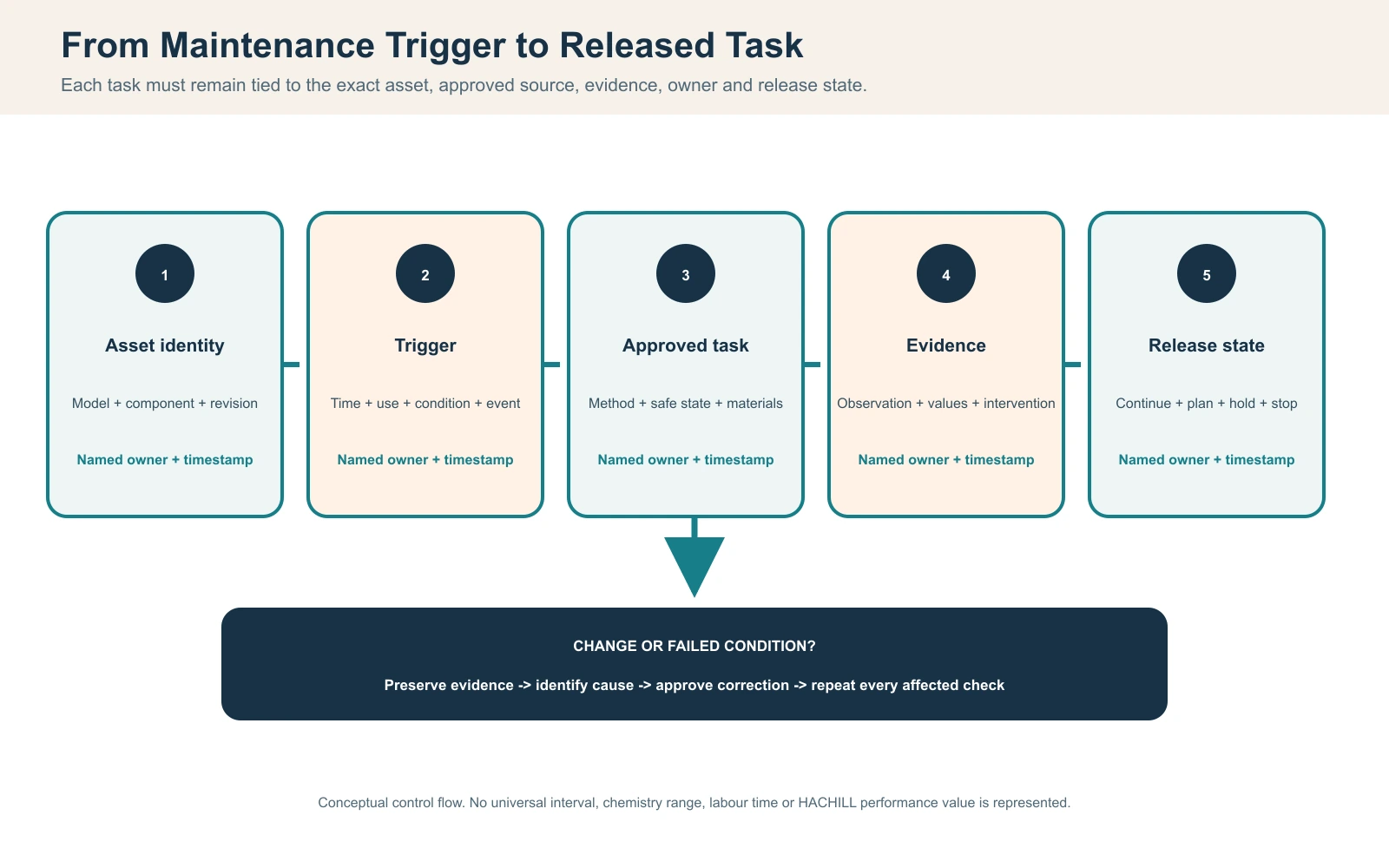
Resposta direta: A manutenção de uma banheira comercial de imersão fria em Thermowood deve considerar o sistema exato instalado e o regime operacional, não uma lista genérica semanal ou mensal. Comece por uma condição de referência de comissionamento e controle a compatibilidade da água e dos produtos de limpeza, o acabamento e as juntas em Thermowood, o estado do revestimento interno de aço inoxidável e das soldas, a drenagem e a secagem após o molhamento, a filtração, a vazão, o resfriamento, os controles e o acesso para manutenção. Cada tarefa deve ter um critério de acionamento, um método aprovado, um responsável, um registro e uma condição de liberação. Siga as instruções do fabricante e os requisitos locais aplicáveis quando definirem limites de manutenção ou tratamento da água, e revise os critérios provisórios conforme as condições registradas ao longo do tempo.
O que muda o plano: Carga de usuários, carga de limpeza, exposição interna ou externa, sistema de tratamento de água, configuração do chiller e filtro, sistema de acabamento, drenagem do local, acesso de serviço e requisitos operacionais locais.
Limite de parada: Vazamento ativo, isolamento inseguro, química não controlada, alarmes críticos, contenção comprometida ou substituições críticas desconhecidas exigem retenção e escalonamento antes da reabertura.
Congele o limite do ativo instalado e da manutenção
Um plano de manutenção pertence a uma configuração instalada exata, não à frase banheira de imersão fria Thermowood. Registre a identidade da banheira e do equipamento, a revisão do desenho e da lista de materiais, os registros do revestimento e do acabamento, a disposição do tratamento de água, o resfriador e a bomba, o filtro, os controles, a tampa, o encanamento do local, a fundação, o dreno e os manuais aprovados. Marque cada item como fornecido, fornecido no local, substituído, desconhecido ou não aplicável.
Defina o regime de operação antes de escolher tarefas: uso privado ou público/comercial, horários supervisionados, carga de usuários e limpeza, exposição interna ou externa, fechamentos planejados, política de troca de água e requisitos regulamentados locais. Separe a inspeção rotineira do operador dos trabalhos que exigem isolamento, serviço elétrico ou de refrigeração qualificado, revisão estrutural ou autoridade de saúde pública. Orientação da OSHA sobre controle de energia perigosa fornece o referencial norte-americano de local de trabalho para perigos de manutenção decorrentes de energização inesperada ou energia armazenada; o empregador responsável e as regras locais determinam o procedimento exato. Uma lista genérica de fornecedor não pode transferir essas responsabilidades.
Passaporte de manutenção do ativo instalado
| Ativo/interface | Identidade e revisão | Fonte aprovada | Condição aberta/em espera |
|---|---|---|---|
| Banheira, revestimento e revestimento externo | Modelo/pedido/BOM exatos | Desenhos e registros liberados | Somente dados de modelos relacionados |
| Circuito de água/tratamento | Esquema conforme construído e lista de componentes | Manuais e comissionamento | Ramo não mapeado ou substituição |
| Resfriador/bomba/filtro/controles | Placa de identificação e revisão | Dados e procedimentos exatos | Estado desconhecido do equipamento |
| Sistema de acabamento/limpeza | Registro aprovado de produto e aplicação | Aprovação do fabricante/projeto | Revestimento ou limpador não identificado |
| Obras no local | Tubulação, energia, dreno, fundação, ar | Registros qualificados de as-built | Propriedade ou acesso aberto |
| Dever de operação | Plano de uso, fechamento e supervisão | Requisitos do operador/local | Premissa doméstica para uso comercial |
Registre uma condição inicial antes da manutenção de rotina
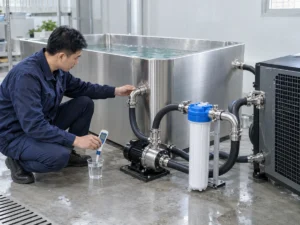
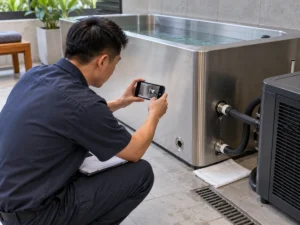
As evidências de recebimento e comissionamento devem mostrar a condição antes que a limpeza repetida, as alterações químicas, o clima e a carga de uso obscureçam o ponto de partida. Fotografe e mapeie o revestimento, a linha d'água, as soldas, as penetrações, o aro, as faces do revestimento, as extremidades dos veios, as juntas, os fixadores, os painéis traseiros quando acessíveis, a base, o compartimento de equipamentos, os filtros, as conexões de tubulação e os controles. Use nomes de localização estáveis e uma escala ou referência quando o tamanho for relevante.
Registre as condições da água e do ar, o estado do tratamento e do filtro, a medição aprovada de vazão ou um indicador indireto adequado, as temperaturas representativas do volume de água, o ar na entrada do condensador, o estado dos alarmes/controles, o resultado do teste com água e as observações de drenagem e secagem após o molhamento. Informe o instrumento, o ponto de medição, o horário e o método. Uma foto sem a identificação do equipamento, a condição da superfície e o local serve como referência visual, não como condição de referência para comparação.
Condição inicial de recebimento e comissionamento
| Ponto de verificação | Método de aquisição | Evidência de condição inicial | Evidência inválida |
|---|---|---|---|
| Revestimento/solda/linha d'água | Grade de localização e imagens controladas | Condição, iluminação, estado úmido/seco | Foto de telefone sem localização |
| Thermowood/juntas | Mapa de face/extremidade/junta/fixador | Registro de amostra/acabamento e condição | Descrição de cor isolada |
| Circuito hidráulico | Registro de rastreabilidade as-built e operação | Estado de filtro, fluxo, vazamento e controle | Somente placa de identificação |
| Lado do ar do equipamento | Observação do painel final | Estado de admissão/descarga e acesso | Armário temporariamente aberto |
| Drenar/secar | Evento de molhamento declarado e acompanhamento | Caminhos, registros de data e hora e verificações ocultas | Ralo no piso assumido |
| Entrega | Proprietário, método e local do registro | Lista de itens em aberto assinada | Promessa verbal de manutenção |
Use gatilhos de tarefa em vez de um calendário universal
A manutenção pode ser acionada por tempo decorrido, horas de operação, contagem de usuários ou limpezas, condição medida, alarme, evento climático ou de contaminação, desligamento ou mudança na química, componente ou disposição do local. Use manuais exatos e regras locais onde prescrevem um intervalo. Onde não prescrevem, estabeleça um gatilho provisório a partir da linha de base aceita e revise-o com a condição registrada, não por conveniência.
Uma instalação comercial pode precisar de verificações antes da abertura, durante um turno, após um número declarado de usos, após tempestades ou variações químicas e no fechamento sazonal. Isso não justifica publicar um intervalo para cada local. Registre por que o gatilho existe, a evidência que o encerra e quem pode alterá-lo.
Classificação do gatilho de manutenção
| Tipo de gatilho | Exemplo de entrada | Resposta necessária | Regra de revisão |
|---|---|---|---|
| Tempo/hora de operação | Intervalo manual aprovado | Tarefa nomeada e evidência | Componente/revisão exato |
| Uso/carga | Contagem de usuários ou limpezas | Inspecionar ou atender interface afetada | Validar em relação à tendência da condição |
| Condição | Alteração em relação à linha de base aceita | Classificar e investigar | Sem suposição cosmética |
| Alarme/desempenho | Evento de controle, fluxo ou temperatura | Preservar estado; diagnóstico qualificado | Não remova evidências de redefinição |
| Exposição/evento | Tempestade, vazamento, derramamento, perda de energia, risco de congelamento | Inspeção/fechamento específico do evento | Controles da página de clima afetam o caso do site |
| Alteração | Revisão de limpador, acabamento, filtro, tubulação ou software | Compatibilidade e novo teste dependente | Aprovação nomeada antes do uso |
Crie uma lista de verificação de manutenção baseada em componentes e um registro de tarefas
Cada linha deve indicar a localização exata do ativo, o gatilho, o método aprovado, o estado seguro, as ferramentas ou consumíveis, as observações, o resultado aprovado/reprovado, a evidência, o responsável e a autoridade de liberação. “Limpar madeira” ou “verificar chiller” não é executável. O técnico precisa saber qual face, junta, filtro, sensor ou conexão e qual condição exige escalonamento.
Manter o trabalho planejado separado do trabalho corretivo. A inspeção de rotina pode identificar manchas, movimentação, vazamento, restrição ou alarme, mas a causa pode atravessar interfaces. O registro deve preservar a condição observada antes do reparo e vincular a intervenção aos testes afetados.
Registro de tarefas de manutenção baseadas em componentes
| Componente/tarefa | Gatilho e condição | Método/evidência | Responsável/liberação |
|---|---|---|---|
| Inspeção de revestimento/aro/solda | Intervalo aprovado mais evento químico | Imagens da localização e código de condição | Operador; escalonamento especializado |
| Verificação de Thermowood/acabamento | Uso/exposição e alteração da linha de base | Mapa do estado seco e amostra aprovada | Operador/serviço; autoridade de acabamento |
| Caminho de umidade da junta/base | Evento de limpeza, tempestade, respingo ou vazamento | Caminho úmido e carimbos de data/hora de acompanhamento | Operador/instalador |
| Estado do filtro e do circuito | Intervalo aprovado, sintoma de carga ou fluxo | Condição do filtro, proxy de fluxo e registro de alarme | Operador/serviço qualificado |
| Condensador/caminho de ar | Detritos, sintoma de alta temperatura ambiente ou de resfriamento | Observação final de entrada/descarga no local | Operador/serviço qualificado |
| Dreno/tampa/acesso ao local | Abertura, evento e fechamento | Observação funcional e itens em aberto | Operador/proprietário do projeto |
Controle de tratamento da água e compatibilidade com produtos de limpeza
A química da água afeta usuários, saneamento, revestimento, soldas, vedações, tubulações, filtro, equipamentos de tratamento e acabamentos adjacentes. Use as instruções exatas do equipamento e os requisitos locais aplicáveis para instalações públicas. Não copie uma faixa de outra banheira, piscina ou país e a chame de aprovada. Registre o método, local de amostragem, horário, estado operacional, resultado, ação corretiva e autoridade de liberação.
Aprove produtos de limpeza em relação a todos os materiais contactados e ao método final de diluição, aplicação, tempo de contato, enxágue e secagem. Considere respingos e escoamento na borda, juntas, parte traseira dos painéis, fixadores e compartimento de equipamentos. Não misture diferentes produtos químicos de piscina ou tratamento; siga o rótulo de cada produto e o procedimento aprovado para qualquer diluição ou preparação necessária. O Orientação de segurança do CDC sobre produtos químicos para piscina apoia manter o manuseio de produtos químicos controlado em vez de improvisar combinações no local. Mantenha os dados de segurança e os controles do operador disponíveis, e isole trabalhos perigosos conforme exigido pela autoridade responsável.
Registro de compatibilidade de água e produtos de limpeza
| Entrada | Adquirir/verificar | Interfaces afetadas | Condição de manutenção |
|---|---|---|---|
| Limites de controle da água | Manuais exatos e regras locais | Usuários, revestimento, vedações, equipamentos | Faixa genérica apenas |
| Método/local de teste | Kit/instrumento aprovado e ponto de amostragem nomeado | Comparabilidade de tendências | Método desconhecido ou amostra obsoleta |
| Identidade/lote do produto de limpeza | Rótulo, FISPQ e registro de aprovação | Metal, madeira, acabamento, vedações | Produto decantado/não identificado |
| Método de aplicação | Processo de diluição, tempo de contato, enxágue e secagem | Juntas, escorrimento e resíduos | Via de contato não aprovada |
| Ação corretiva | Registro do operador vinculado à causa | Química e materiais afetados | Dosagem repetida sem diagnóstico |
| Retorno ao serviço | Verificação e autoridade exigidas | Usuários e sistema completo | Sem registro de liberação |
Cenário de engenharia: manchas retornam após repintura
Problema observado: Marcas escuras reaparecem perto da borda e da junta inferior logo após um reparo cosmético.
Causa provável: A intervenção tratou a aparência, mas não eliminou respingos repetidos, umidade retida, escorrimento de produtos químicos ou uma fonte de manchas metálicas.
Como verificar: Preserve as fotos anteriores à limpeza, mapeie o percurso da água, revise os registros dos parâmetros químicos e dos produtos de limpeza, inspecione os fixadores próximos e a secagem das áreas ocultas, e compare com a condição de referência aceita.
Caminho de prevenção ou correção: Corrija a fonte confirmada e o método de drenagem ou limpeza aprovado antes de repetir o trabalho de acabamento; em seguida, registre a área tratada, o produto, as condições, o estado seco/curado e a liberação.
Inspecione Revestimento, Acabamento, Juntas e Fixadores de Thermowood
A condição do Thermowood é influenciada por espécie/produto, evidência de modificação térmica, perfil, grão, acabamento, tratamento de bordas cortadas, detalhe de montagem, UV, ciclos molhado/seco e método de manutenção. A manual da International ThermoWood Association trata a proteção e a manutenção da superfície como dependentes da exposição e do tratamento, e não como isentas de manutenção. A mudança de cor por si só não é falha estrutural, enquanto uma pequena área escura pode exigir investigação se for persistente, úmida ou associada a uma junta ou fixador. Compare com uma linha de base controlada sob iluminação semelhante e condições de superfície seca. Para o limite de construção entre madeira externa e a casca de retenção de água, consulte Revestimento Thermowood e forros de aço inoxidável explicados.
Mapeie faces, bordas, topos das fibras, cantos, saliências horizontais, juntas, posições dos fixadores e áreas inferiores. Registre rachaduras, fissuras, movimentação, perda do revestimento, aspereza, manchas, amolecimento, odor, umidade persistente ou ferragens soltas, sem atribuir a causa apenas pela aparência. Lixamento, remoção do revestimento e novo acabamento podem alterar as dimensões e as evidências; use o sistema aprovado e mantenha a poeira, os produtos químicos e o tempo de cura separados da operação.
Mapa de condição e acabamento do Thermowood
| Localização/condição | Aquisição | Decisão | Escalonamento |
|---|---|---|---|
| Face/cor/acabamento | Imagem de estado seco controlado e comparação de amostras | Monitorizar ou tarefa de acabamento aprovada | Mudança rápida/localizada |
| Topo da fibra/borda cortada | Inspeção detalhada após molhamento ou manutenção | Proteção aceite intacta | Borda aberta/não aprovada |
| Junta/movimento | Método de referência de folga e alinhamento | Dentro da condição aprovada | Junta com interferência, solta ou que retém água |
| Fixador/contato | Registro de material e verificação de manchas/movimento | Seguro e compatível | Manchas soltas, substituídas ou em fendas |
| Zona inferior/base | Observação do percurso da água e da secagem após o molhamento | Sem estado retido persistente | Suavidade, odor ou água parada |
| Pós-acabamento | Produto/lote, preparação, condições e cura | Amostra/área libertada | Compatibilidade ou cura desconhecida |
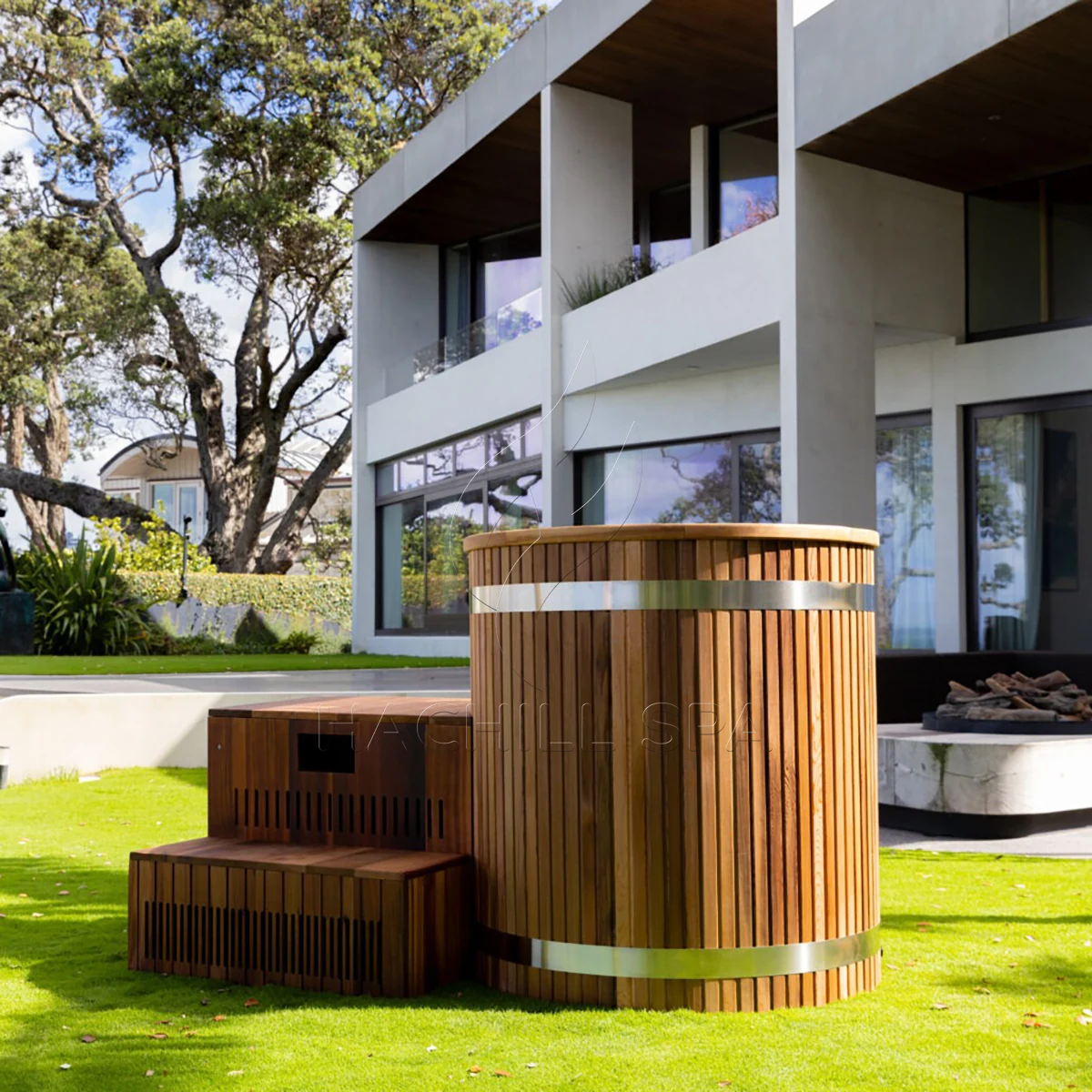
Inspecionar o Revestimento de Aço Inoxidável, Soldas e Linha d'Água como um Sistema Separado
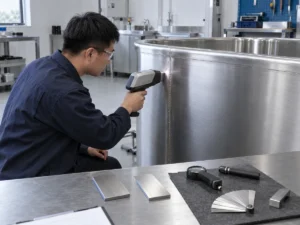
O aço inoxidável é resistente à corrosão sob certas condições, não isento de manutenção. Grau, fabricação, tratamento de solda, acabamento superficial, frestas, exposição a cloretos, química, produtos de limpeza, depósitos e contato com metais dissimilares afetam sua condição. Orientações de corrosão da Outokumpu explica o risco de corrosão localizada de ambientes contendo cloreto. Não infera liga ou tratamento pela aparência, e não afirme que o 316 é imune a pitting ou fabricação ruim.
Inspecionar a linha d'água, soldas e zonas afetadas pelo calor, penetrações, drenos, conexões, cantos e frestas protegidas. Registrar depósitos, manchas, características semelhantes a pites, arranhões, distorção e vazamento ativo por localização e condição. Usar um método de limpeza aprovado e preservar evidências antes de trabalho abrasivo. Se uma característica puder afetar a contenção ou segurança, remover o ativo de serviço e obter avaliação qualificada.
Inspeção de revestimento, solda e penetração
| Zona | Método de evidência | Limite de rotina | Parar/elevar |
|---|---|---|---|
| Linha d'água/depósitos | Imagem da localização mais registro de química/limpeza | Limpeza aprovada e tendência | Ataque localizado persistente |
| Solda/zona afetada pelo calor | Visual controlado e registro de fabricação | Comparação de condição | Evidência de trinca, vazamento ou fabricação aberta |
| Penetração/conexão | Observação seca/úmida e identidade da conexão | Inspeção acessível | Vazamento ativo ou movimento |
| Dreno/canto/fresta | Verificação de depósito e retenção de água | Acesso/remoção aprovado | Depósito preso inacessível ou recorrente |
| Arranhão/marca na superfície | Iluminação/referência e histórico de intervenção | Classificação cosmética pela autoridade | Profundidade/integridade incerta |
| Contato dissimilar | Registro de material e instalação | Interface aprovada | Substituição ou produto de corrosão |
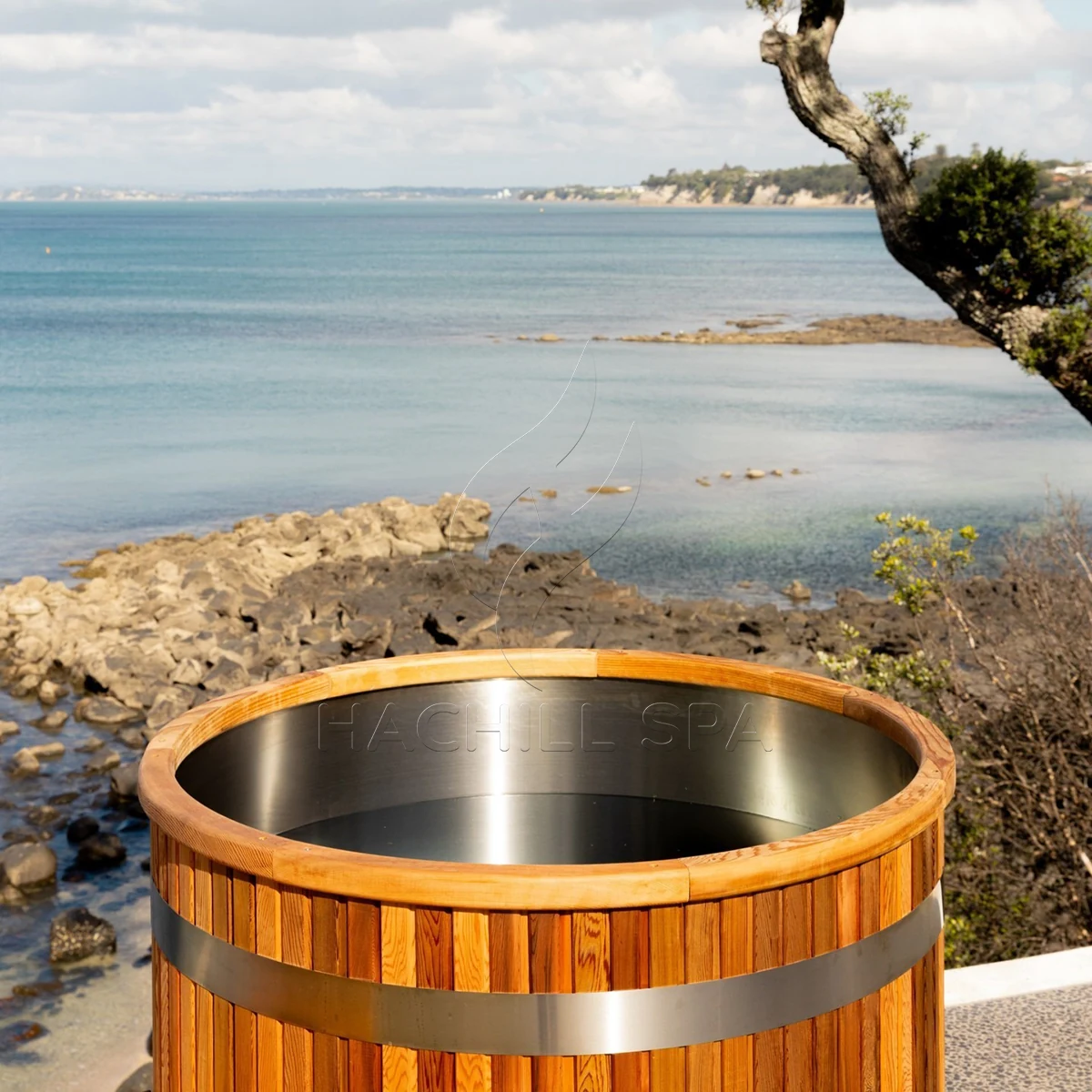
Verifique a drenagem e a secagem após o molhamento
Rastreie a água de respingos do usuário, limpeza, transbordamento, chuva, condensação e vazamentos através das juntas do aro, faces do painel, fixadores, parte traseira do painel, base, compartimento do equipamento e dreno do local. Um piso seco não prova que as interfaces ocultas estão secas, e um ralo de piso não prova que o produto direciona a água para ele. Use um evento declarado e observações de acompanhamento em pontos repetíveis.
Não estabeleça um tempo universal de secagem sem fundamento. Fluxo de ar, temperatura, umidade, acabamento, geometria das juntas e quantidade de água alteram a secagem após o molhamento. Registre a origem do evento, sua duração ou o método de quantificação, os pontos molhados e ocultos, o horário, a ventilação e a condição aceita para liberação. O molhamento persistente pode estar ligado ao local, ao produto, à tubulação ou à operação; defina quem responde pelo problema antes do reparo.
Registro de molhamento, drenagem e secagem
| Ponto de verificação | Evento/método | Passar evidência | Condição de manutenção |
|---|---|---|---|
| Aro e face do painel | Evento declarado de respingo/limpeza/chuva | Escoa para o caminho pretendido | Migração para junta cega |
| Painel traseiro/subestrutura | Inspeção acessível e registros de data/hora | Caminho de drenagem/ventilação aberto | Umidade oculta persistente |
| Base/fundação | Nível e observação de umidade | Sem contato permanente | Acumulação de água em madeira ou estrutura |
| Compartimento de equipamentos | Observação seca após o evento | Sem água não controlada | Umidade elétrica/equipamentos |
| Dreno do local | Observação controlada do percurso | Percurso de descarga aceite | Descarga bloqueada/não aprovada |
| Liberação | Acompanhamento condicionado ao estado | Estado seco aceite designado | Suposição apenas com base no tempo |
Cenário de engenharia: um suposto respingo da limpeza é um vazamento ativo na conexão
Problema observado: A água aparece repetidamente na base após a lavagem e é atribuída a respingos do operador.
Causa provável: A inspeção de acompanhamento ocorre somente logo após a limpeza. Assim, um vazamento lento na conexão e a migração de água por áreas ocultas continuam sem verificação.
Como verificar: Seque e isole a área conforme um procedimento aprovado, registre as condições da conexão e do percurso da água ao longo do tempo e compare com observações sem limpeza e com molhamento controlado.
Caminho de prevenção ou correção: A assistência qualificada corrige a origem confirmada do problema e repete as verificações de vazamento, percurso da água, secagem e dos componentes elétricos/equipamentos afetados antes da liberação.
Acompanhe Filtração, Fluxo, Desempenho do Chiller e Controles em Conjunto
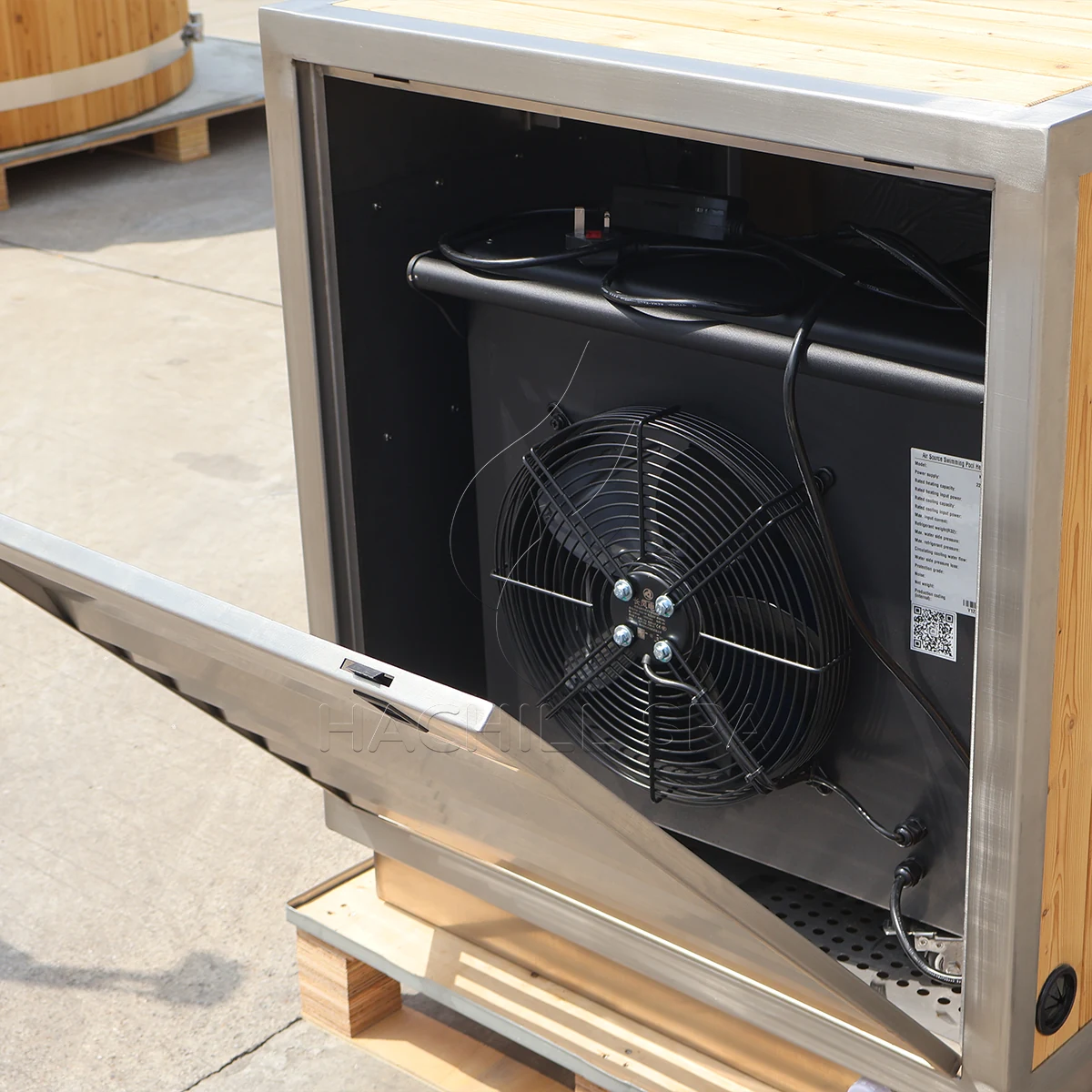
Uma banheira de imersão fria pode não atingir a temperatura desejada por carga elevada, ar quente na entrada do condensador, fluxo de ar bloqueado, filtro sujo, vazão baixa, ar no circuito, condição da bomba, estado do controle, isolamento ou capacidade do equipamento no ponto real de operação. Não conclua que o chiller está subdimensionado a partir de uma única leitura da temperatura da água. Registre de forma sincronizada a temperatura representativa do volume de água, o ar de entrada, o estado do filtro e da vazão, o estado da bomba e do compressor ou controle, a tampa e a carga de usuários.
Use a medição aprovada de vazão ou um indicador indireto tecnicamente adequado; identifique o método e a condição de referência. Um filtro aparentemente limpo ainda pode restringir a vazão. Substituí-lo sem registrar as condições antes/depois faz perder evidências úteis. Não desative as proteções de vazão, pressão, temperatura ou eletricidade. Intervenções na instalação elétrica fixa, no circuito de refrigeração ou que exijam acesso interno ao equipamento continuam sendo responsabilidade de profissionais qualificados.
Tendência de manutenção hidráulica e de resfriamento
| Entrada | Aquisição | Uso para decisão | Comparação inválida |
|---|---|---|---|
| Temperatura da água em massa | Sensor/localização designado e série temporal | Tendência de manutenção/arranque | Leitura única de parede |
| Ar de entrada do condensador | Registrador de dados na entrada de ar definitiva | Condição de resfriamento disponível | Somente aplicativo de clima |
| Estado do filtro/fluxo | Medição aprovada ou proxy | Restrição e troca de calor | Apenas limpeza visual |
| Bomba/controle/alarme | Registro de controle e serviço qualificado | Separar interrupção de capacidade | Estado de reset ausente |
| Carga da tampa/usuário | Registro operacional com carimbo de data/hora | Ganho de calor simultâneo | Política operacional diferente |
| Configuração | Revisão de tubulação, válvula, painel e software | Linha de base comparável | Alteração não registrada |
Cenário de engenharia: o resfriamento diminui após vários dias de uso intenso
Problema observado: A temperatura da água varia e o chiller funciona por mais tempo após um período de alto uso.
Causa provável: O operador assume que a capacidade do equipamento falhou, mas a carga do usuário, a restrição do filtro, o fluxo reduzido, o ar de admissão quente e a prática de cobertura não foram registrados em conjunto.
Como verificar: Capture temperaturas sincronizadas da água e da admissão, estado do filtro e do fluxo aprovado, estado da bomba/controle, cobertura e carga; compare-os com a linha de base aceita sob uma condição comparável.
Caminho de prevenção ou correção: Corrija a causa confirmada de manutenção ou do local e repita o mesmo teste vinculado à condição. Escale a capacidade somente se o ponto de operação verificado permanecer fora do caso de equipamento aprovado.
Calcule a mão de obra, o fechamento e a carga de registros da manutenção comercial
Compradores comerciais precisam de mais do que uma lista de tarefas. Meça um tempo representativo de trabalho direto para inspeção, testes, limpeza, manutenção do filtro, acesso aos painéis, drenagem, reabastecimento e preenchimento dos registros. Acrescente preparação, isolamento, interdição da área de clientes, secagem ou cura, verificação e reabertura. Separe o serviço qualificado terceirizado e o custo dos consumíveis da mão de obra do operador.
Uma relação de planejamento é carga de trabalho de manutenção por período = soma(contagem de acionamentos x tempo prático observado) + preparação + encerramento + drenagem/reenchimento + secagem/cura + verificação + registros. Este é um método de aquisição de dados, não uma promessa de mão de obra ou disponibilidade HACHILL. Recalcule quando o serviço, a química, o acabamento, o componente ou o acesso ao local mudarem.
Folha de carga de trabalho de manutenção comercial
| Elemento de trabalho | Adquirir | Impacto operacional | Resultado do planejamento |
|---|---|---|---|
| Inspeção/teste de rotina | Tempo de tarefa representativo observado | Estado aberto ou supervisionado | Horas do operador |
| Trabalho de limpeza/filtro | Tempo de tarefa e consumíveis | Fechamento parcial/total | Horas de serviço/material |
| Drenagem/reabastecimento/remoção de calor | Processo de local medido | Água e atraso de reabertura | Dependência de encerramento |
| Tempo de secagem/cura | Registro de produto/condição aprovado | Sem acesso do usuário | Fechamento de calendário |
| Serviço qualificado | Escopo real de chamada/tarefa | Isolamento e reteste | Recurso externo |
| Registros/liberação | Tempo de documentação observado | Autoridade nomeada | Carga administrativa |
Controle de Consumíveis e Peças Críticas por Revisão
Filtros, vedações, lâmpadas ou componentes de tratamento, sensores, produtos de limpeza, produtos de acabamento e hardware de reposição devem corresponder ao modelo exato e à revisão aprovada. Uma peça fisicamente semelhante pode alterar o fluxo, a compatibilidade química, a proteção elétrica, o ajuste ou o intervalo de manutenção. Registre a identidade da peça do fabricante, a autoridade de substituição aprovada, o requisito de prazo de validade ou armazenamento, o lote quando relevante e o histórico de instalação.
Use a consequência de falha e as evidências de prazo de entrega para decidir o estoque crítico; não invente uma quantidade universal de peças sobressalentes. Separe os consumíveis operacionais das peças críticas de segurança ou de serviço qualificado. Coloque em quarentena itens danificados, vencidos, não identificados ou não aprovados e preserve a decisão de substituição.
Controle de consumíveis e peças sobressalentes
| Classe do item | Evidência de identidade | Entrada para decisão de estoque | Condição de manutenção |
|---|---|---|---|
| Componente de filtro/fluxo | Peça exata e base de desempenho | Uso/carga, prazo de entrega, efeito de falha | Substituto semelhante |
| Vedação/conexão/hardware | Material, tamanho e interface | Consequência de vazamento e acesso para serviço | Compatibilidade desconhecida |
| Peça de sensor/controle | Revisão exata e necessidades de calibração | Modo de falha e serviço qualificado | Alteração não aprovada de software/elétrica |
| Produto de limpeza/água | Identidade, lote, SDS e aprovação | Uso e armazenamento | Produto expirado/sem rótulo |
| Sistema de acabamento/reparação | Produto/lote/amostra e condições | Área, vida útil e carga de cura | Somente correspondência de cor |
| Revisão crítica de estoque | Histórico de consumo e eventos | Prazo de entrega e exposição ao fechamento | Quantidade sem base |
Atribua responsabilidades de manutenção e requisitos de evidência
Escada de evidência de manutenção
| Grau | Evidência | Uso permitido | Limite |
|---|---|---|---|
| A | Tarefa/teste exato do ativo testemunhado sob condição declarada | Liberação específica de tarefa e condição | Somente método/duração |
| B | Manual, desenho ou registro aprovado do modelo exato | Planejamento e identidade da tarefa | Condição de campo ainda verificada |
| C | Registro de componente rastreável ou observação calibrada | Diagnóstico de interface | Sistema completo não comprovado |
| D | Estimativa qualificada com premissas | Planejamento/item em aberto | Não é possível fechar a liberação |
| E | Lista de verificação genérica, foto ou alegação de produto | Orientação | Sem prova específica do ativo |
O fornecedor controla as informações exatas dos componentes fornecidos e as substituições de produtos aprovadas. O comprador ou proprietário da instalação aprova o plano operacional e os recursos. O instalador preserva as interfaces do local conforme construído. O operador executa tarefas rotineiras autorizadas e registra as condições. Prestadores de serviço qualificados cuidam de trabalhos isolados de elétrica, refrigeração, estruturais e outros trabalhos especializados. Autoridades locais e profissionais qualificados controlam requisitos regulamentados de uso público, água, elétrica e construção. Para manutenção em local de trabalho nos EUA, OSHA 29 CFR 1910.147 aborda o controle de energia perigosa onde seu escopo se aplica; não substitui procedimentos específicos do equipamento nem outros requisitos locais.
Matriz de responsabilidades de manutenção para banho frio Thermowood
| Decisão/tarefa | Fornecedor | Instalação/operador | Função qualificada/local |
|---|---|---|---|
| Modelo/manual/BOM exato | Emitir evidência controlada | Reter e identificar ativo | Revisar interfaces reguladas |
| Tarefa/acionamento de rotina | Definir limite do produto fornecido | Executar, registrar e escalar | Aprovar método especializado |
| Controle de água/limpeza | Declarar limites de equipamentos compatíveis | Operar conforme plano aprovado | Autoridade de saúde pública/química |
| Dreno/energia/ar do local | Fornecer interface do produto | Manter acessível e monitorar | Projetar/instalar/verificar |
| Defeito/substituição | Revisar impacto do produto fornecido | Preservar evidências e reter | Diagnosticar/aprovar trabalho afetado |
| Retorno ao serviço | Fornecer entradas de teste afetadas | Aplicar retenção operacional | Liberação nomeada e competente |
Definir pontos de retenção e verificações de retorno ao serviço
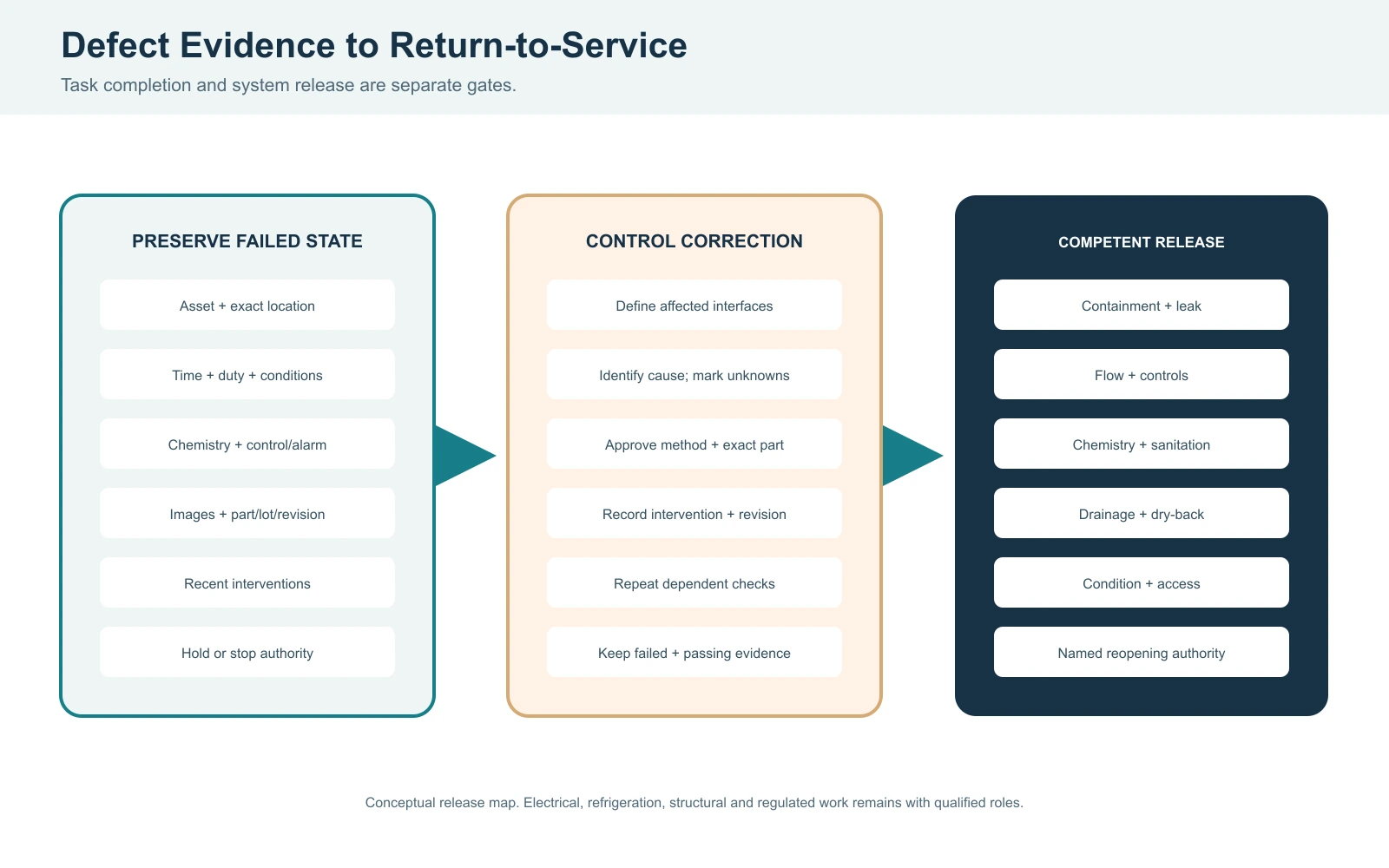
Use quatro estados: continuar com registros normais; planejar uma tarefa limitada; manter um componente, área ou modo de operação; ou parar o ativo. A autoridade exata define os limites. Vazamento ativo próximo a equipamentos, contenção comprometida, acesso inseguro, preocupações com proteção elétrica, química não controlada, umidade oculta persistente, funções de segurança/controle com falha ou substituições críticas desconhecidas exigem escalonamento em vez de encerramento cosmético.
Preserve o estado de falha antes da limpeza ou reparo: ativo e localização, data/hora, condição de operação, condições de água e ar, química, estado de controle/alarme, fotografias, peça/lote/revisão e intervenções recentes. Identifique a causa antes de alterar múltiplas variáveis. Registre a correção e repita cada teste afetado. Uma ordem de serviço concluída não libera, por si só, a parada.
Registro de defeito, retenção e retorno ao serviço
| Estado | Evidência/ação | Requisito de liberação | Proteção contra disputas |
|---|---|---|---|
| Continuar | Condição aceita e registro de rotina | Autoridade normal | Comparação de linha de base |
| Plano | Alteração/tarefa não crítica limitada | Proprietário agendado e condição de vencimento | Identidade do item em aberto |
| Retenção | Componente/operação afetada isolada | Causa e verificações dependentes encerradas | Preservar evidência de falha |
| Pare | Preocupação de segurança, contenção, química ou controle crítico | Autorização nomeada e competente | Sem redefinição/remoção |
| Corrigir | Reparo aprovado ou alteração operacional | Revisão e reteste afetado | Peça/lote/método vinculados |
| Reabrir | Vazamento, fluxo, controle, drenagem, química e condição conforme aplicável | Liberação específica da causa | Registros de falha e aprovação retidos |
Cenário de engenharia: a manutenção está concluída, mas faltam evidências de reabertura
Problema observado: Uma ordem de serviço é encerrada após o serviço de filtro e conexão, mas nenhum registro de vazamento, fluxo, controle ou condição da água é feito em seguida.
Causa provável: A conclusão da tarefa foi tratada como aceitação do sistema e as interfaces afetadas nunca foram identificadas antes do trabalho.
Como verificar: Revise a falha observada, as peças substituídas, o estado de isolamento e o procedimento exato e, em seguida, mapeie quais verificações de contenção, hidráulica, controle, química e drenagem foram afetadas.
Caminho de prevenção ou correção: Mantenha o ativo em espera até que o responsável competente nomeado conclua e registre as verificações específicas da causa; preserve as evidências de falha e de aprovação.
Encerre os requisitos de transferência e manutenção de O&M na RFQ
Antes de iniciar, entregue o passaporte exato do ativo, manuais, esquema as-built, limites do produto e do local, produtos de limpeza e acabamentos aprovados, fotografias de referência, registro de tarefas, gatilhos, formulários de registro, limites de isolamento, identidade de peças sobressalentes, rota de escalonamento e autoridade de retorno ao serviço. Demonstre tarefas representativas na condição final de acesso; um painel que abriu na fábrica pode estar bloqueado após a instalação.
Para uma cotação, forneça a configuração exata, o regime de operação, a carga de usuários e limpeza, a condição interna/externa, o plano de tratamento de água, os requisitos locais, a janela de fechamento, a habilidade do operador, o acesso de serviço, o idioma da documentação, as expectativas de peças sobressalentes, o formato de registro e as necessidades de aceitação. Peça aos fornecedores que marquem as evidências incluídas e as exclusões em vez de prometerem “baixa manutenção”.”
Campos comerciais de cotação de manutenção e transferência
| Campo | Por que é necessário | Evidência/resposta | Fechamento |
|---|---|---|---|
| Ativo/configuração exatos | Controla a aplicabilidade da tarefa | BOM, manuais e desenhos | Submissão |
| Regime de operação e plano de operação | Define o contexto de gatilho/carga | Premissas de uso, limpeza e fechamento | Plano de manutenção |
| Sistema de água/limpador | Controla compatibilidade e regulamentação | Limites, produtos e autoridade local | Procedimento do operador |
| Acessos/interfaces do local | Controla a viabilidade da tarefa | Revisão final do painel, dreno, ar e isolamento | Demonstração da tarefa |
| Sobressalentes/suporte | Exposição do fechamento dos controles | Peças exatas, base de prazo de entrega e escalonamento | Entrega |
| Aceitação/registros | Torna o serviço comparável | Formulários, testemunhas e portões de liberação | Aprovação de abertura |
Perguntas frequentes
Com que frequência uma banheira de imersão fria comercial em Thermowood deve ser mantida?
Use manuais exatos, requisitos locais aplicáveis, regime de operação e condição registrada. Combine gatilhos de tempo, uso, evento, alarme e condição; não transfira um intervalo universal entre instalações ou modelos.
O mesmo limpador pode ser usado no revestimento de aço inoxidável e no Thermowood?
Somente após a compatibilidade ser confirmada para cada material, acabamento, selante e componente em contato, na diluição, tempo de contato, enxágue e método de secagem reais. Controle o excesso de pulverização e o escoamento nas juntas e nos equipamentos.
O aço inoxidável 316 elimina a manutenção contra corrosão?
Não. O comportamento frente à corrosão também depende de fabricação, tratamento de solda, acabamento superficial, cloretos, química, produtos de limpeza, depósitos, frestas e contato entre metais dissimilares. Inspecione e registre a condição exata em vez de tratar a designação da liga como imunidade.
Quais dados ajudam a diagnosticar a redução do resfriamento da banheira de imersão fria?
Sincronize a temperatura da água em massa, o ar de entrada do condensador, o estado do filtro e do fluxo aprovado, o estado da bomba/controle/alarme, a cobertura, a carga do usuário e a configuração. Um único valor de temperatura ou potência é insuficiente.
Quando uma banheira de imersão fria pode voltar a funcionar após a manutenção?
Após a causa ser tratada e todas as verificações de contenção, hidráulica, controle, química, drenagem e condição afetadas serem concluídas sob a autoridade nomeada. Uma ordem de serviço encerrada por si só não é evidência de liberação.
Referência de Base e Limites
Código de Saúde Aquática de Modelo do CDC é uma referência pública dos EUA para instalações aquáticas; a adoção e a aplicabilidade local variam.
Outokumpu corrosion-resistance guidance serve de base para o limite de cloreto/corrosão localizada usado na inspeção do liner; não estabelece uma classificação universal de corrosão para um produto HACHILL.
International ThermoWood Association Handbook fornece contexto específico de ThermoWood sobre exposição, tratamento de superfície e manutenção; o comportamento exato do produto instalado permanece dependente de detalhes e condições.
OSHA: controle de energias perigosas descreve um quadro de segurança no trabalho dos EUA; o empregador responsável e as regras locais determinam a aplicabilidade e o procedimento.
Limite técnico: Este conteúdo não afirma intervalos exatos de manutenção HACHILL, limites químicos, processos da madeira, sistemas de acabamento, ligas metálicas, resultados de resfriamento, quantidades de peças, tempos de mão de obra, vida útil, garantias ou certificações. Prevalecem os registros aprovados do produto, os manuais, as evidências do local e as regras locais aplicáveis.
Transforme o dever operacional num resumo de manutenção
Envie à HACHILL a configuração exata, o regime operacional, as cargas de uso e limpeza, o plano de tratamento da água, as condições de exposição no local, os requisitos locais, a janela de interdição, o acesso, as peças de reposição e as evidências necessárias. A equipe pode analisar as conexões dos produtos fornecidos, enquanto os responsáveis qualificados pela instalação e os profissionais locais mantêm a autoridade sobre a operação.