Startseite / Produkte / Saunen / Außensaunen / Cube-Saunen / CS30 4-6 Personen Outdoor-Würfelsauna
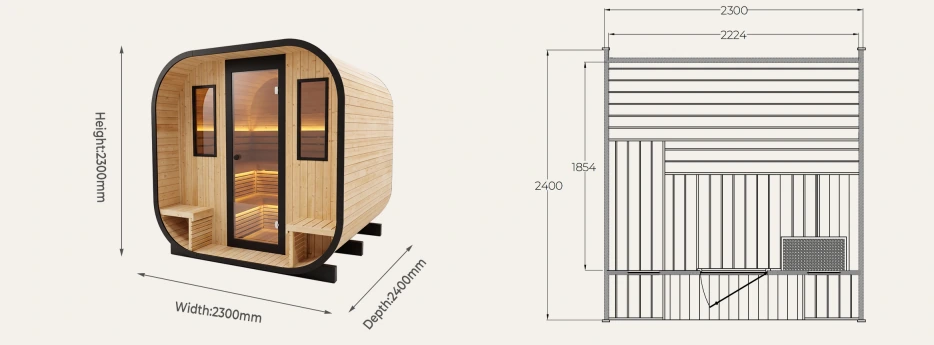
CS30 sits at the top end of the current listed HACHILL Outdoor Cube range by product envelope: W2300 × D2400 × H2300 mm outside and W2224 × D1854 × H2224 mm inside. It is still cataloged for 4–6 people, with 9 kW shown as the present heater recommendation.
That makes CS30 a footprint commitment rather than a capacity upgrade. CS22 carries the same 4–6 person label and the same 9 kW recommendation, so CS30 should stay on the shortlist only when its added enclosure solves a real layout or siting need and the receiving path can support the larger unit.
Modell
CS30
Produkttyp
Outdoor-Cube-Sauna
Katalogkapazität
4–6 Personen
Empfohlene Heizleistung
9 kW
Außen- / Innenmaße
W2300 × D2400 × H2300 mm außen
W2224 × D1854 × H2224 mm innen
Status der technischen Zeichnung
The current drawing matches the catalog outer envelope. Production and installation must follow the approved drawing issued for the order.
Range Position
Largest current listed Cube product envelope
Treat 4–6 Person as the catalog class, not evidence of extra seats, higher throughput or a comfort advantage over CS22. Treat 9 kW as the present heater-selection reference only; it does not identify the supplied heater, controls, circuit or achieved operating result.
The dimensions are suitable for model screening. Order-specific geometry must be taken from the approved drawing before execution.
Choose CS30 for a reason you can point to. The larger shell should solve a layout, interior-geometry or site-planning need; otherwise CS22 remains the smaller-envelope benchmark in the same marketed capacity class.
Keep CS30 in contention when:
The larger internal reference changes geometry, not the catalog occupancy class. It should not be turned into claims of better comfort, greater throughput, faster heating or higher performance.
| Vergleich | CS22 | CS30 |
|---|---|---|
| Product Comparison | Outdoor-Cube-Sauna | Outdoor-Cube-Sauna |
| Katalogkapazität | 4–6 Personen | 4–6 Personen |
| Empfohlene Heizleistung | 9 kW | 9 kW |
| Außenmaße | W2000 × T2000 × H2000 mm | W2300 × D2400 × H2300 mm |
| Innenmaße | W1924 × D1784 × H1924 mm | W2224 × D1854 × H2224 mm |
| Core Decision | Is this envelope sufficient? | Is the larger enclosure justified? |
The move from CS22 to CS30 does not change the marketed 4–6 person class and does not change the current 9 kW recommendation. The model step is therefore geometric, not a capacity or nominal-power upgrade.
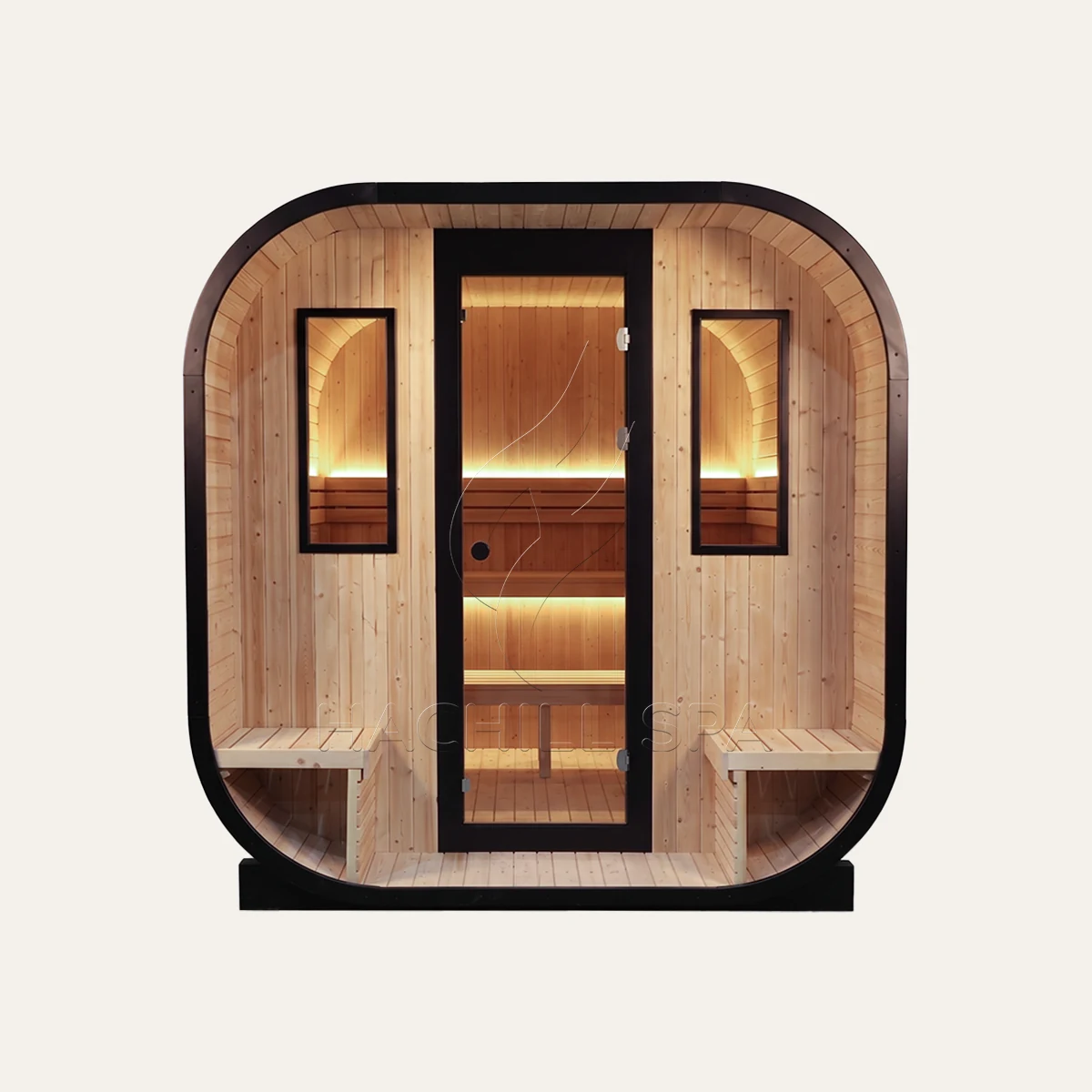
What increases is enclosure. Judge that extra body size against the available plot, the photographed bench-to-entry layout, the internal form you need and the handling burden created by the larger footprint.
Lay out the W2300 × D2400 × H2300 mm body on the intended site, then add the space required for the base, door approach, ventilation, heater clearances and future maintenance. The product body is not the finished site footprint.
Trace the unit from unloading point to final position. Record the tightest gates or openings, turns, overhead limits and any lifting or handling constraint before committing to CS30.
Reserve temporary working room for installers, tools and component movement around the final position. Do not plan this zone from unconfirmed packing size, shipping weight or assumed crew numbers.
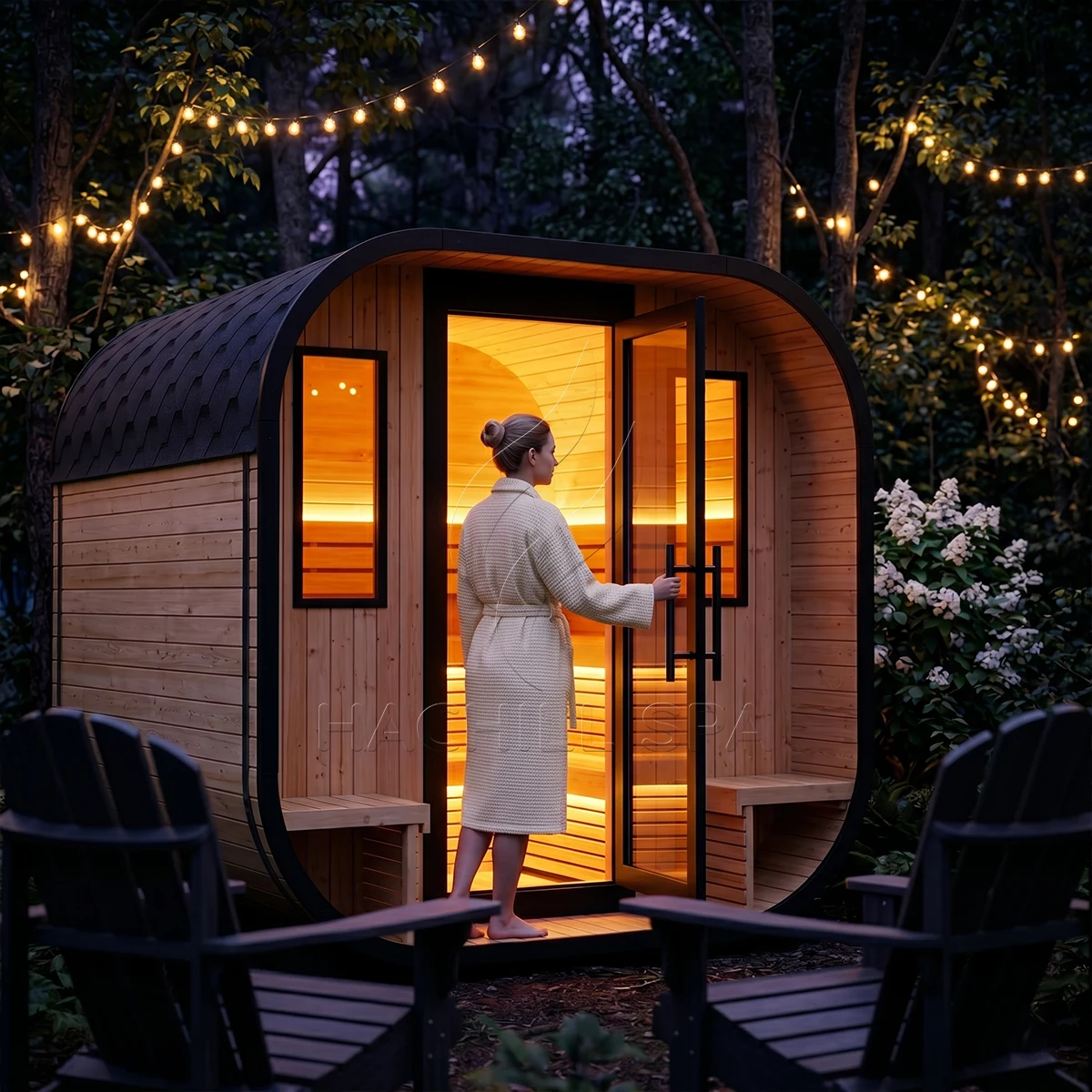
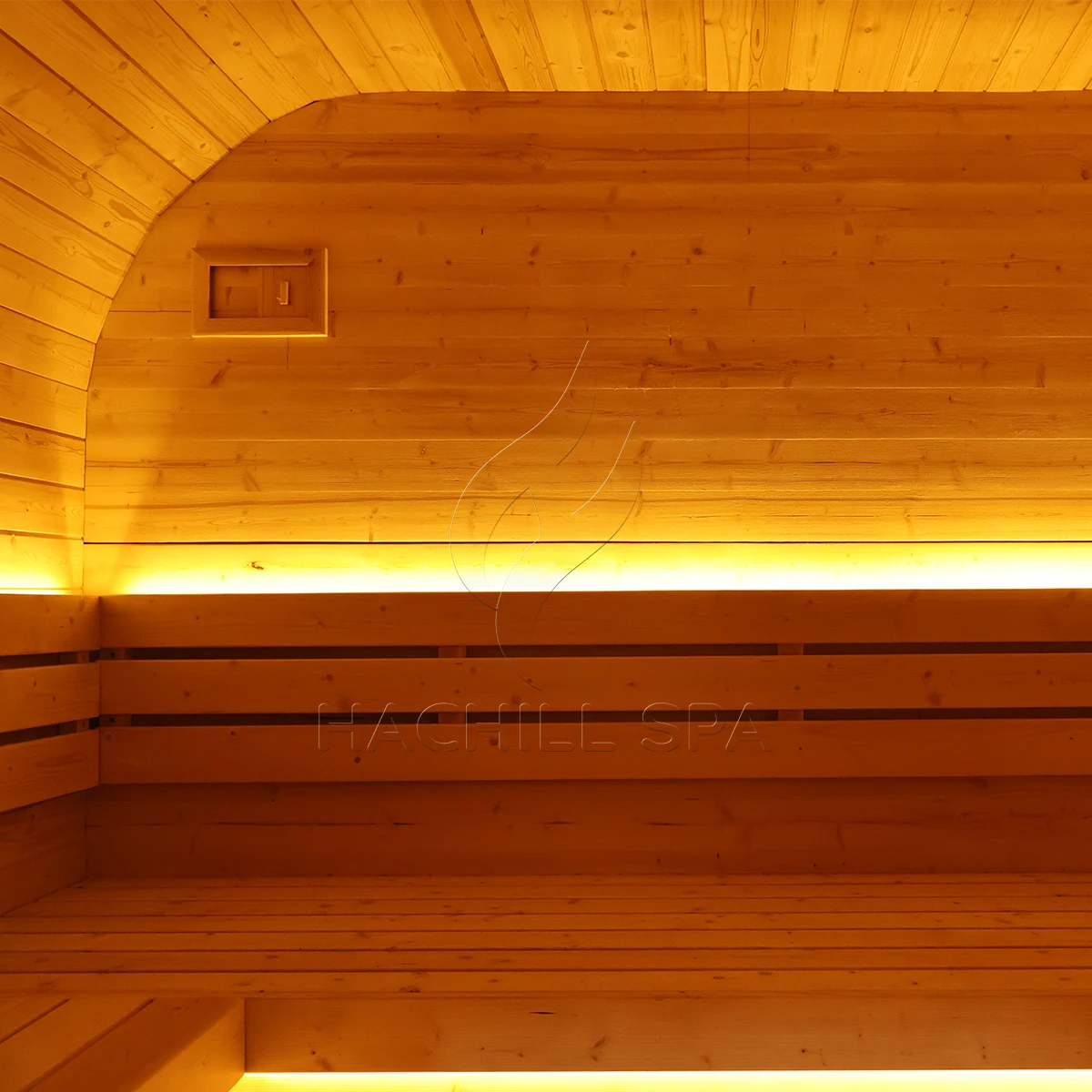
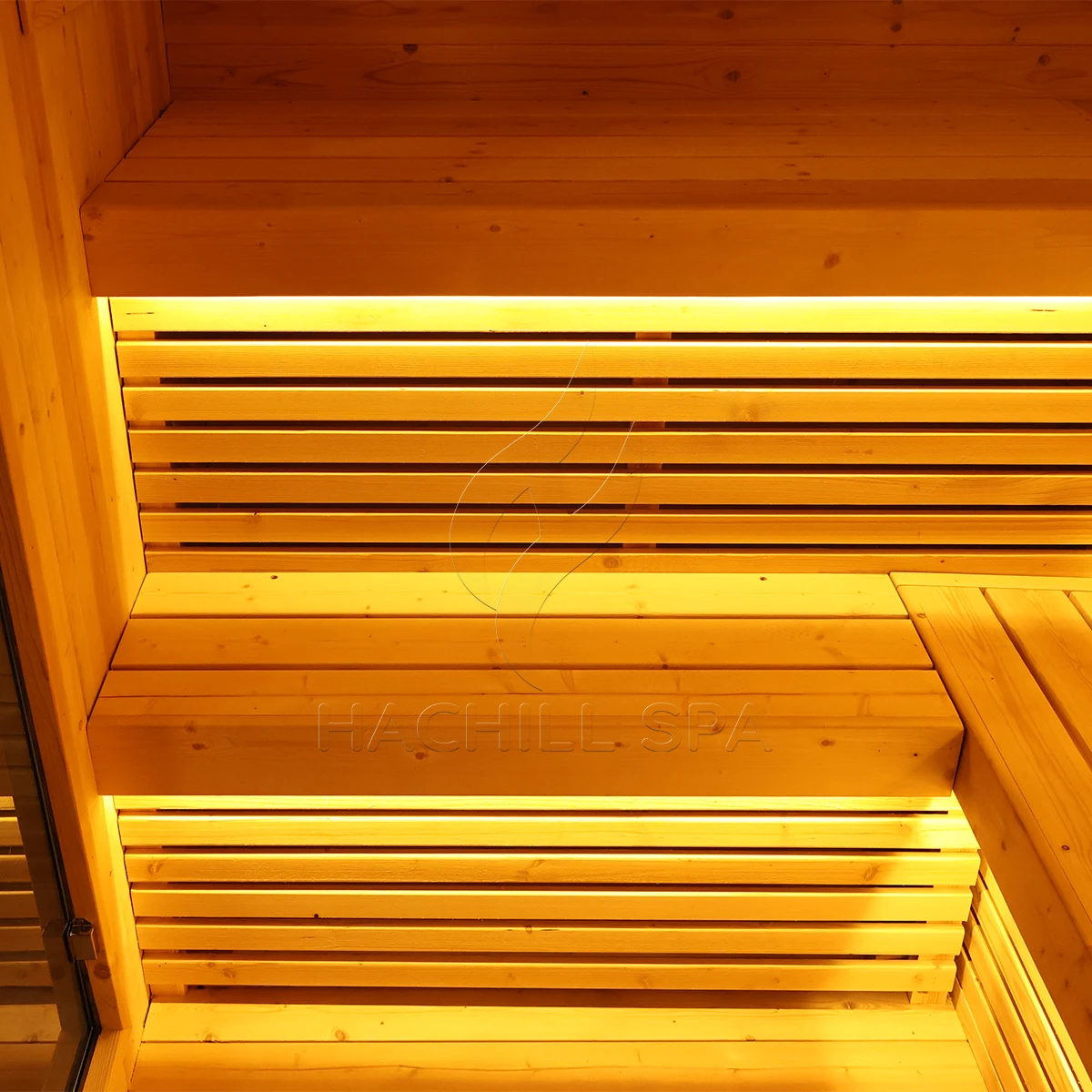
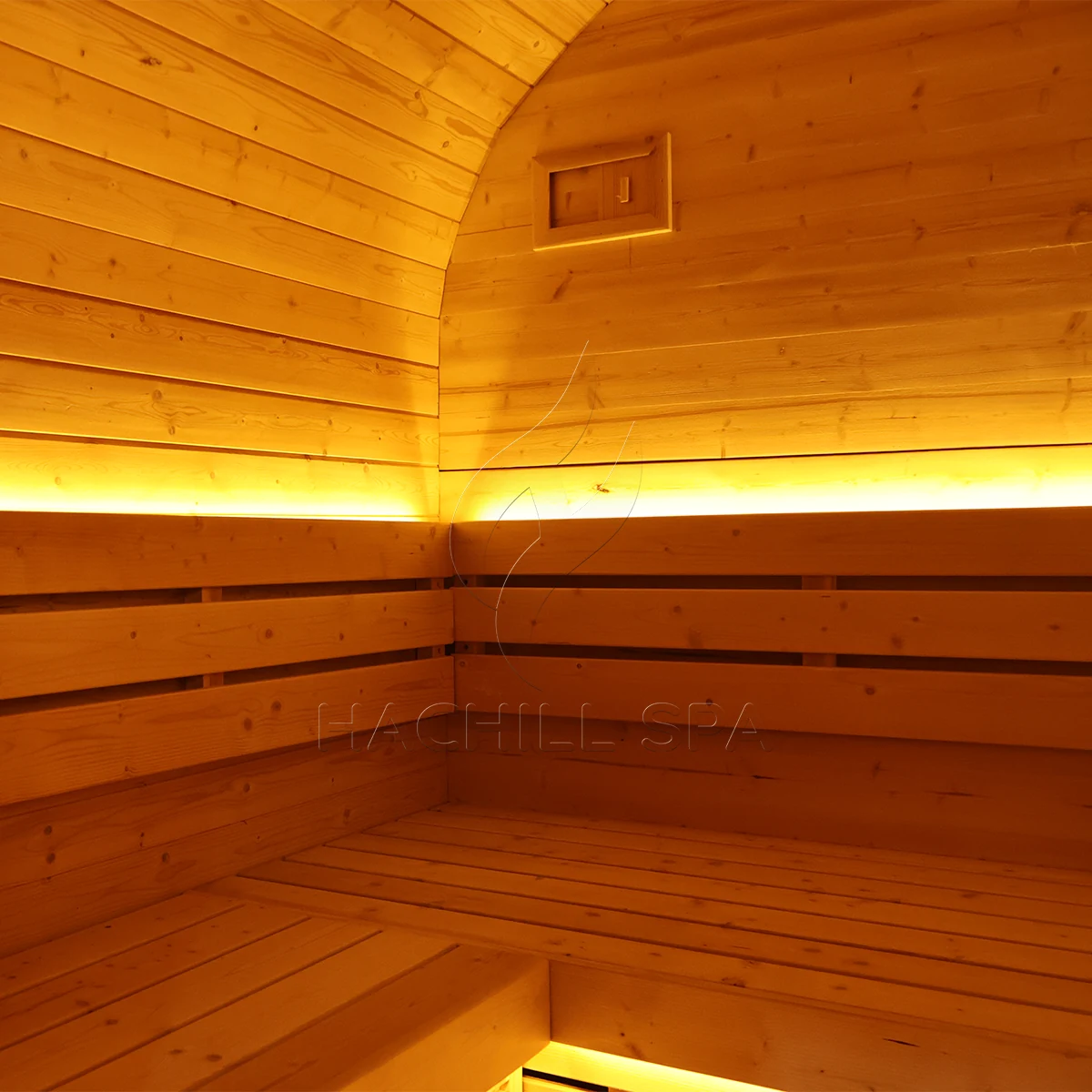
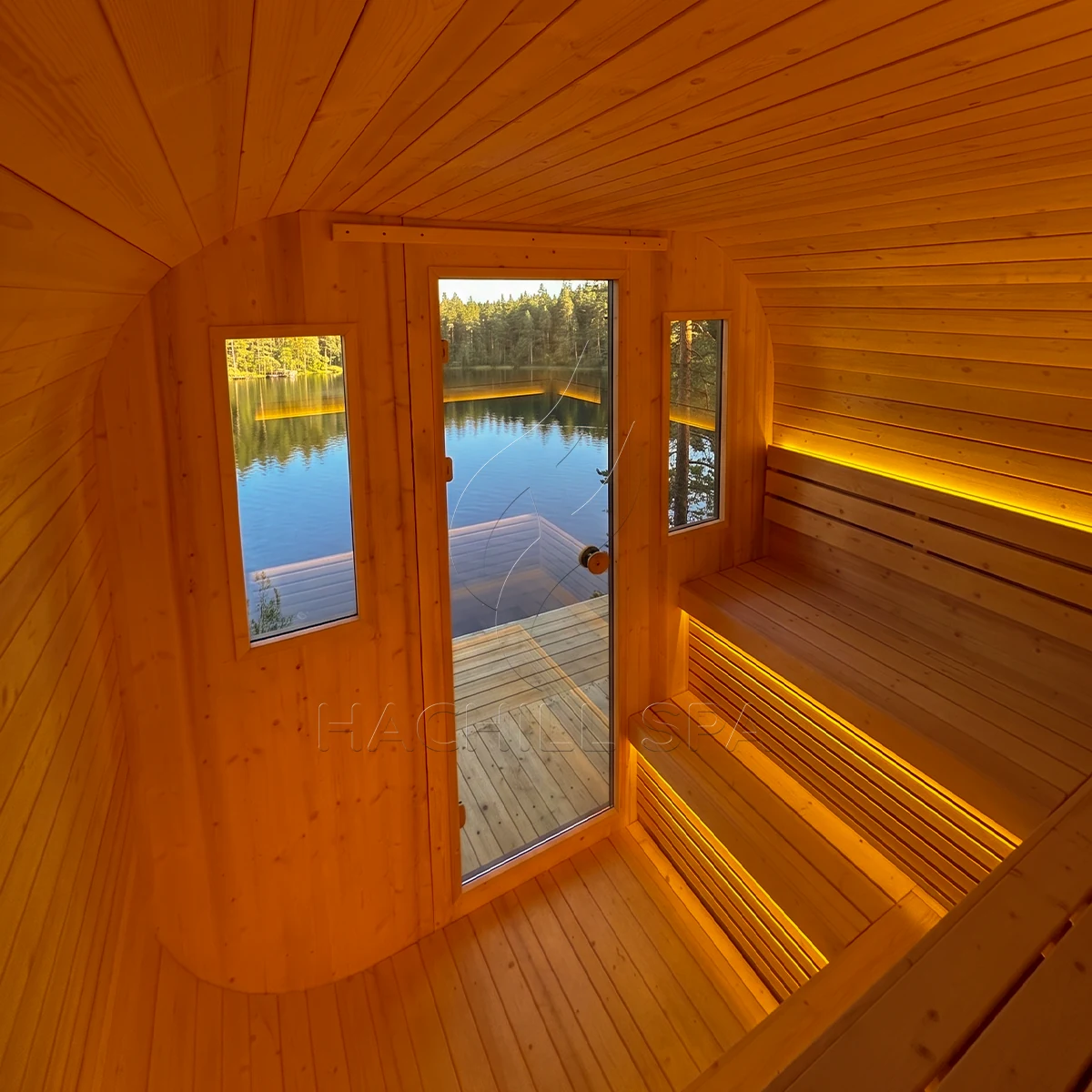
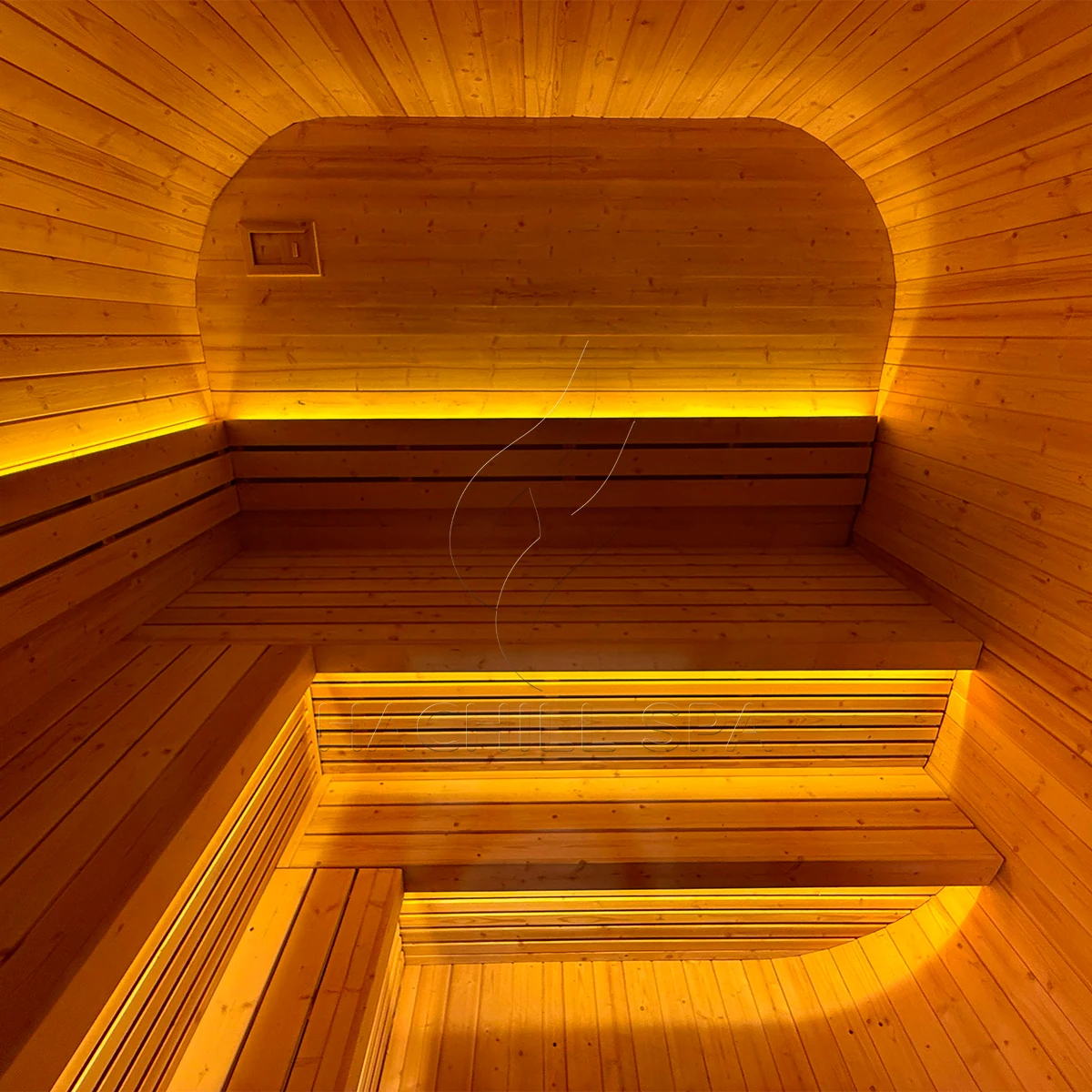
The CS30 photographs are evidence for shape and layout, not decoration. Use the front and three-quarter views to read overall mass, then use the interior, door, bench and ceiling views to decide whether the added enclosure supports the intended arrangement. The dimension drawing anchors that visual review to the current product geometry.
The pictured configuration does not prove a comfort advantage, extra occupancy, final material specification, heater model, electrical design, ventilation performance or weather rating.
For CS30, the RFQ should answer two things first: what problem does the larger enclosure solve, and can the project physically receive it?
Include the destination and quantity; intended user pattern; usable site dimensions; the tightest point on the delivery path; turning, unloading or lifting restrictions; working room for assembly; base conditions; local exposure; electrical and ventilation constraints; drawing/document requirements; and any branding or packaging needs.
The quotation should then lock the supplied heater and electrical scope plus the delivery-related details for that order. The 9 kW recommendation should remain a selection reference, not a substitute for the final supply definition.