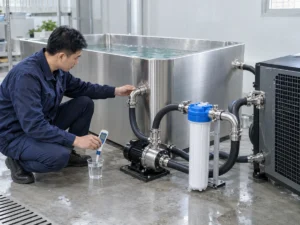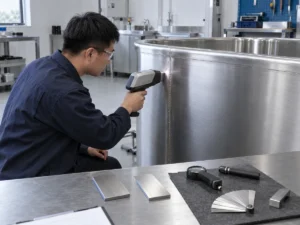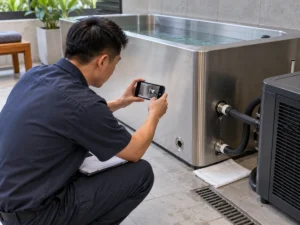
Guide d'achat des bains froids en Thermowood
Une méthode systémique pour qualifier les preuves relatives à l'exposition, au liner et au bardage, les chemins d'humidité, les équipements, la charge de maintenance, le contrôle de production et la réception.
Réponse directe : Achetez un bain froid en Thermowood comme un système multicouche d'eau et d'équipement, et non comme une simple cabine en bois. Qualifiez précisément le liner de rétention d'eau, le support, l'isolation et le chemin de vapeur, le produit Thermowood et sa finition, les détails de drainage/ventilation, les fixations, l'équipement de refroidissement et de traitement, l'accès pour la maintenance, les interfaces avec le site et les preuves de production. Le dossier d'achat décisif relie le cas réel d'exposition et de fonctionnement à des échantillons approuvés, des dessins, des contrôles de lots, des responsabilités nommées et des acceptations distinctes de production, de réception et d'ouverture.
Décision principale : Chaque couche et interface peuvent-elles survivre au cas d'exposition et de fonctionnement déclaré ?
Règle de preuve : L'apparence ne peut pas prouver le matériau du liner, les chemins d'humidité cachés ou les performances du système.
Limite de libération : Les substitutions non approuvées, les fuites, l'eau piégée ou l'accès de maintenance bloqué retardent la libération.
Classer l'exposition réelle avant de choisir le Thermowood
Un bain froid en Thermowood doit être acheté pour un cas d'exposition et d'exploitation, et non sur la seule base d'un échantillon de couleur. Définissez l'emplacement intérieur ou extérieur, la couverture du toit, la pluie et les éclaboussures, l'orientation solaire, la plage de température ambiante, l'exposition au gel, les conditions côtières ou chlorées, les agents de nettoyage, la rotation des utilisateurs, les heures d'ouverture et la politique d'apparence attendue. Indiquez si un changement de couleur naturel est acceptable ou si l'exploitant attend une finition entretenue.
Obtenez le cahier des charges à partir des relevés climatiques du site, des plans architecturaux, du plan de traitement de l'eau, de la procédure de nettoyage, du calendrier d'exploitation et d'une visite du circuit humide. Pour un nouveau projet, marquez chaque entrée comme approuvée, mesurée, estimée ou ouverte. Le mot extérieur ne décrit pas la pluie poussée par le vent, l'ombre piégée, le soleil réfléchi ou l'exposition au gel-dégel. Commercial ne définit pas la charge de baigneurs, les compétences du personnel ou l'heure de fermeture.
Brief d'exposition pour bain froid en Thermowood
| Exposition/entrée | Acquisition | Décision affectée | Condition de maintien |
|---|---|---|---|
| Pluie/éclaboussures/lavage | Séquence du site et de fonctionnement | Détail des joints, du drainage et de la finition | Chemin de mouillage inconnu |
| Orientation solaire/UV | Relevé de l’agencement et de l’ombrage | Attente en matière de couleur/finition | L’échantillon approuvé manque de contexte d’exposition |
| Plage ambiante / gel | Base climatique du projet | Isolation, vidange et composants | Condition minimale ouverte |
| Chimie de l'eau / nettoyants | Traitement approuvé et procédure opératoire standard | Revêtement, joints, métal et finition | Compatibilité non examinée |
| Utilisation / entretien | Période de pointe et calendrier des tâches | Accès, réinitialisation et entretien | Moyenne quotidienne uniquement |
| Politique d'apparence | Approbation de l'acheteur/exploitant | Gamme d'échantillons et finition | Une planche parfaite utilisée comme standard |
La qualification climatique détaillée relève de Utiliser des bains froids en Thermowood en extérieur dans différents climats, et les procédures de maintenance détaillées relèvent de Entretien du bain froid en Thermowood pour les acheteurs professionnels. Ce guide d'achat n'utilise ces éléments que pour qualifier le système produit et les preuves fournisseur avant l'achat.
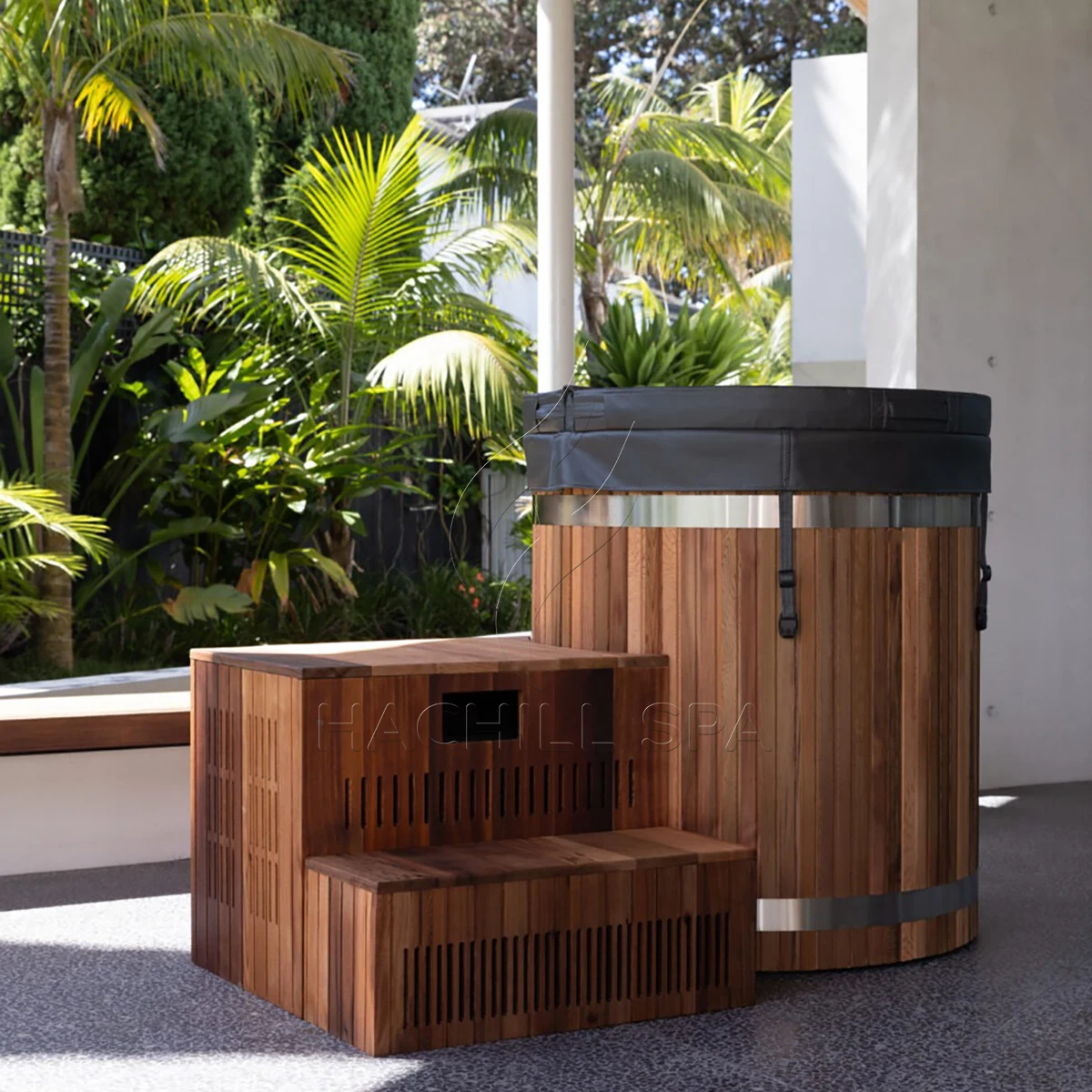
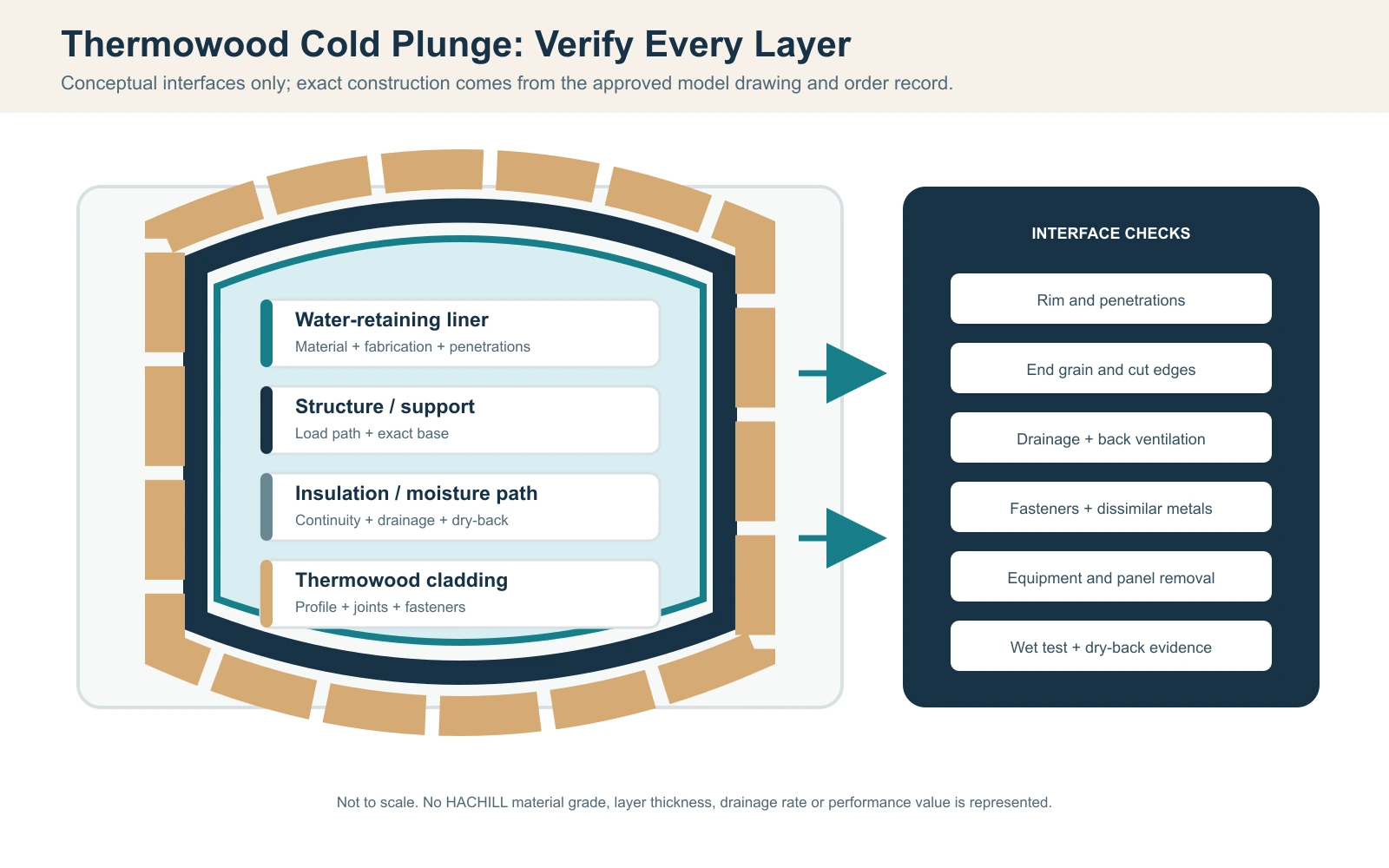
Séparez le produit en couches vérifiables
Le Thermowood est normalement un revêtement ou une couche de conception extérieure, et non une preuve du réservoir contenant l'eau. Tracez la limite complète du produit : liner, structure de support, isolation, chemin de contrôle de la vapeur le cas échéant, revêtement et sous-structure, rebord et pénétrations, fixations, couvercle, équipement de circulation, drainage et commandes. Enregistrez quelles pièces sont fournies en usine, en option, expédiées en vrac ou fournies sur site.
Chaque couche a une fonction et un mode de défaillance distincts. Le liner contient l'eau traitée. La structure reprend les charges d'eau et d'utilisateurs. L'isolation limite l'apport de chaleur et peut influencer la condensation. Le bardage gère l'aspect et l'exposition aux intempéries, mais doit sécher et rester entretenable. Les interfaces transfèrent les mouvements, l'humidité et les charges entre les couches. Une spécification de bardage solide ne peut pas compenser un liner non supporté, une fuite inaccessible ou un condenseur obstrué. Pour l'interface de fabrication détaillée entre liner et bardage, utilisez Bardage en Thermowood et cuves en inox expliqués.
Calendrier des couches et interfaces du bain froid Thermowood
| Couche/interface | Fonction principale | Preuves à demander | Risque ouvert typique |
|---|---|---|---|
| Liner de rétention d'eau | Contenir l'eau et résister à la chimie approuvée | Enregistrement exact du matériau/fabrication | Alliage/finition déduit de l'apparence |
| Structure/support | Supporter les charges d'exploitation | Dessin du cadre/base et portée | Chemin de charge ou protection contre la corrosion ouvert |
| Chemin d'isolation/vapeur | Limiter le gain et la migration d'humidité | Section/détail et limite de matériau | Espaces aux pénétrations |
| Bardage Thermowood | Enveloppe extérieure et apparence | Définition du produit, profil et échantillon | Nom générique uniquement |
| Fixations/assemblages | Conserver les panneaux et permettre l'accès pour l'entretien | Matériau, espacement et détail | Eau piégée ou taches |
| Équipement/entretien | Faire circuler, refroidir, filtrer et contrôler | Programme exact du système fourni | Accès supposé pour les performances ou le retrait |
Gérez la version du planning, car une substitution de liner, de fixation, de sous-châssis, d'isolation, de revêtement ou de groupe de refroidissement peut affecter plusieurs interfaces même si le produit fini semble inchangé.
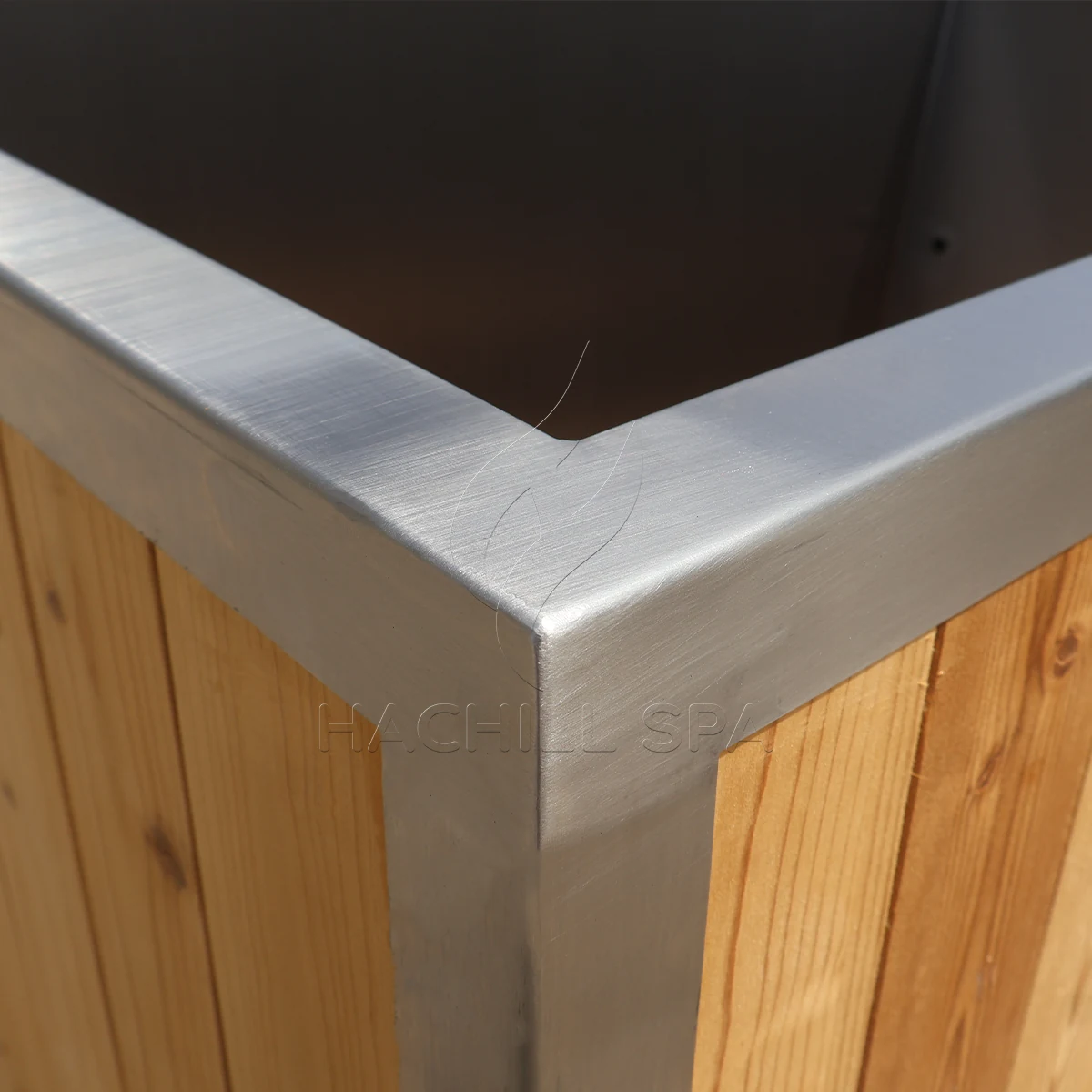
Qualifier le liner de retenue d'eau indépendamment
Demandez le matériau exact du revêtement, le procédé de formage/fabrication, la finition de surface, le traitement des soudures le cas échéant, les pénétrations et la limite de réparation pour le modèle commandé. Si de l’acier inoxydable est proposé, n’acceptez pas des affirmations telles que l’acier inoxydable ne rouille jamais. Recommandations sur la corrosion de l'acier inoxydable identifie la corrosion par piqûres et la corrosion caverneuse comme des risques dans les environnements contenant des chlorures et note que la température, le pH et les conditions oxydantes influencent également la sensibilité. L’alliage, la fabrication, l’état de teinte thermique, les crevasses, la contamination de surface, les désinfectants, les nettoyants et la maintenance doivent donc être examinés ensemble. Le 316 n’est pas immunisé contre la corrosion localisée, et le 304 ne convient pas automatiquement à chaque chimie de l’eau ou exposition.
Inspectez la continuité des soudures, les zones thermiquement affectées accessibles, la vidangeabilité, les détails de la ligne de flottaison, le contact entre métaux dissemblables et les endroits où les produits de nettoyage peuvent rester. Demandez comment le décapage/passivation ou tout autre traitement post-fabrication spécifié est consigné lorsque requis. Pour les revêtements non métalliques, examinez le support, la compatibilité UV/produits de nettoyage, la réparation de surface et la protection au transport. L'épaisseur ou l'alliage exact doit provenir de preuves approuvées du produit, et non de ce guide.
Fiche de qualification de la membrane d'étanchéité
| Point de contrôle | Preuves du fournisseur | Vérification acheteur/champ | Déclencheur de rejet/mise en attente |
|---|---|---|---|
| Matériau exact | Enregistrement approuvé du modèle/lot | Identité et révision | Revendication générique en inox/composite |
| Fabrication/soudures | Enregistrement du processus et de l'inspection | Inspection visuelle accessible | Fissure, piqûre ou teinte de chaleur non résolue |
| Surface/finition | Échantillon approuvé/définition de finition | Éclairage et inspection humide/sec | Abrasion ou contamination non contrôlée |
| Pénétrations/drain | Détail exact du dessin et du joint | Test d'étanchéité et d'accès | Joint caché ou inaccessible |
| Limite chimie/produit de nettoyage | Compatibilité manuel/matériau | Alignement des procédures de l'opérateur | Instructions chimiques contradictoires |
| Réparation/service | Procédure et pièces approuvées | Plan d'accès et de disposition | Aucune voie de défaut récupérable |
Scénario d'ingénierie : un habillage esthétique masque un litige de revêtement
Problème observé : Le personnel de réception approuve l'extérieur, mais le test d'étanchéité révèle plus tard une fuite au niveau d'une pénétration dissimulée.
Cause probable : L'inspection s'est concentrée sur la couleur du Thermowood et n'a jamais figé le détail de la pénétration de la membrane, le chemin d'accès ou les preuves de fuite avant expédition.
Comment vérifier : Conservez la caisse et les enregistrements du test d'étanchéité, tracez le dessin exact et le lot, puis inspectez le joint dissimulé sans le modifier avant l'analyse des causes.
Voie de prévention ou corrective : Faites de l'identité de la membrane, des pénétrations et des tests d'étanchéité contrôlés des points de contrôle distincts ; ne libérez pas l'apparence tant que les preuves de rétention d'eau restent ouvertes.
Transformez le mot Thermowood en une spécification contrôlée
Le bois thermiquement modifié est une catégorie générique de matériau ; ThermoWood® n'est pas un nom générique. Le Association internationale ThermoWood déclare que ThermoWood® est sa marque déposée pour les produits fabriqués selon son processus défini et son cadre de contrôle qualité. Si un devis utilise le mot Thermowood, demandez s'il désigne un matériau ThermoWood® traçable ou un produit en bois thermiquement modifié décrit de façon générique, puis consignez l'espèce/le produit exact déclaré, les preuves de modification, le profil, l'usinage, les conditions de stockage et la finition. Le produit commandé — et non le nom de catégorie — régit l'acceptation. N'inventez pas de température de traitement, de pourcentage d'humidité, de classe de produit ou de classe de durabilité lorsque le dossier fournisseur est absent.
Approuvez une gamme représentative plutôt qu'une seule planche sélectionnée. Enregistrez l'ID de l'échantillon, les dimensions de la planche/profil, l'orientation de la face, la plage de couleur et de grain, la politique de nœuds/défauts, la qualité d'usinage, le système de revêtement le cas échéant, la brillance, le traitement des bords et les conditions d'éclairage et de visualisation. La variation naturelle n'est pas automatiquement un défaut, mais une plage de variation non définie rend les litiges de réception inévitables.
Spécification et enregistrement d'échantillon du bardage Thermowood
| Champ | Définition requise | Preuve | Autorité de modification |
|---|---|---|---|
| Identité de l'espèce/produit | Matériau déclaré exact | Enregistrement fournisseur/lot | Approbation technique de l'acheteur |
| Preuve de modification | Traçabilité ThermoWood® ou enregistrement déclaré de modification thermique, selon le cas | Déclaration traçable liée au matériau commandé | Substitution approuvée uniquement |
| Profil et face | Dessin, dimensions et orientation | Plan de production approuvé | Contrôle des modifications de plans |
| Humidité/état | Méthode et critères d'acceptation spécifiés si requis | Enregistrement de l'instrument/méthode | Autorité qualité désignée |
| Système de finition | Produit, couches et préparation si utilisés | Échantillon/processus approuvé | Revue de compatibilité |
| Gamme visuelle | Couleur, veinage et limites de défauts | Jeu d'échantillons numérotés | Concession approuvée par l'acheteur |
Pour un achat en marque de distributeur ou en plusieurs lots, définissez si l'échantillon approuvé contrôle la première unité, chaque lot de production ou uniquement l'intention de conception. Conservez les échantillons protégés et identifiés. Une photographie de téléphone ne peut pas contrôler de manière fiable la couleur, la brillance ou la texture selon l'éclairage et les appareils.
Inspecter le bois de bout, les assemblages, les fixations et la remplaçabilité
Le risque lié aux détails se concentre sur le bois de bout, les bords coupés, les onglets, les angles, les rebords horizontaux, les transitions de rive, les percements de fixations, les arrières de panneaux, le dégagement de base et les bords de trappe de service plutôt que sur les seules faces de panneau continues. L'eau ne doit pas être favorisée dans des poches borgnes. Le Manuel du bois du Laboratoire des produits forestiers de l'USDA explique que le bois change de dimension lorsque la teneur en humidité varie sous la plage de saturation des fibres ; la modification thermique peut réduire les mouvements dimensionnels, mais elle ne supprime pas la nécessité d’une conception appropriée des assemblages et fixations. Le blocage rigide des lames peut encore provoquer des fentes, des tuilages ou des contraintes sur les fixations lorsque les mouvements ou tolérances d’installation ne sont pas absorbés.
Le matériau et la finition des fixations doivent convenir au bois, au sous-châssis, à l'humidité et aux métaux voisins. Examinez le contact entre métaux dissemblables, les taches, le serrage accessible et si le retrait endommage les panneaux adjacents. Si le bardage est destiné à être remplaçable, démontrez la séquence avec le rebord final, les marches et l'équipement de service installés. Un panneau nominalement amovible qui nécessite de vidanger et de soulever tout le produit n'est pas un accès de service courant.
Carte d'inspection des détails du bardage
| Détail | Question d'inspection | Méthode de preuve | Signal de défaillance/maintien |
|---|---|---|---|
| Bout de fibre/bord coupé | La préparation/finition est-elle conforme au système approuvé ? | Comparaison visuelle rapprochée et comparaison d'échantillons | Coupe exposée brute/non approuvée |
| Coin/joint | Le mouvement peut-il se produire sans piéger l'eau ? | Plan plus observation en conditions humides | Poche fermée ou fente |
| Dégagement à la base | Les éclaboussures/la pluie peuvent-elles s'écouler et l'arrière sécher ? | Relevé de niveau/dégagement tel que construit | Eau stagnante/contact avec le sol |
| Fixation | Le matériau, l'emplacement et la finition sont-ils approuvés ? | Inspection du calendrier et des échantillons | Taches, surcharge ou non-conformité |
| Panneau de service | Peut-il être retiré et réinstallé en toute sécurité ? | Démonstration chronométrée | Fixation cachée ou panneau endommagé |
| Bordure/pénétration | L'eau est-elle dirigée loin des couches cachées ? | Test d'humidification contrôlé | Migration derrière le revêtement |
Scénario d'ingénierie : un panneau de service se bloque après exposition à l'humidité extérieure
Problème observé : Un panneau qui s'ouvrait lors de l'inspection en usine ne peut plus être retiré après la pluie et une exposition répétée aux éclaboussures.
Cause probable : L’ajustement et le schéma de fixation ont été approuvés uniquement dans les conditions sèches de l’usine, sans tolérance suffisante pour le mouvement des matériaux, l’épaisseur de revêtement, la tolérance d’installation ou l’environnement final d’humidification/séchage.
Comment vérifier : Enregistrer l'état d'humidité/exposition du panneau lorsque spécifié, inspecter les jeux de bord et les fixations, et répéter la tâche de retrait sans forcer ni endommager le panneau.
Voie de prévention ou corrective : Réviser le joint ou le système de panneau approuvé, protéger les bords coupés comme spécifié et répéter l'acceptation d'accès de service sec/humide avant l'expédition ou l'ouverture.
Tracer chaque chemin d'humidité et de séchage
Dessinez les chemins de pluie, d'éclaboussures, d'eau de lavage et de condensation depuis le bord jusqu'à la base. Identifiez où l'eau s'écoule, où l'air peut circuler et quels matériaux cachés peuvent absorber ou retenir l'humidité. Le revêtement décoratif ne doit pas être traité comme le système d'étanchéité du bâtiment. Le drainage du site, les membranes de pièces humides et les rejets autorisés restent des responsabilités du projet sauf inclusion et acceptation explicites.
Une observation d'humidification contrôlée peut révéler des ponts capillaires, des pièges horizontaux et un drainage vers le compartiment d'équipement. Utilisez les joints de panneau finaux, le bord, les marches et la disposition de la base. Enregistrez la source d'eau, la durée, la quantité ou la méthode reproductible, la condition environnementale, les points d'observation et la période de séchage. Ne faites pas de déclaration universelle sur le temps de séchage ; la géométrie, la finition, la ventilation et le climat le contrôlent.
Vérification du chemin d'humidité et du séchage
| Chemin | Condition requise | Acquisition | Limite d'arrêt/nouveau test |
|---|---|---|---|
| Bord vers face du revêtement | L'eau s'écoule sans pénétrer dans le joint aveugle | Projection/mouillage contrôlé | L'eau pénètre dans la couche cachée |
| Dos du panneau/sous-cadre | Voie de drainage et de ventilation ouverte | Inspection avant fermeture | Cavité obstruée ou débris absorbants |
| Base/pieds | Pas d'eau stagnante contre le bois | Observation de niveau et d'humidité | Flache ou contact avec le sol |
| Compartiment technique | Séparé de l'humidité non contrôlée | Test d'humidification du panneau final | L'eau atteint un risque électrique/équipement |
| Chemin de condensation | Surfaces froides isolées/gérées comme prévu | Observation liée aux conditions | Source confondue avec une fuite |
| Retour sec/accès | Inspectable en fonctionnement accepté | Suivi horodaté | Humidité cachée persistante |
Examiner l'isolation et la condensation à chaque pénétration
La performance de l'isolation ne peut pas être jugée par la seule épaisseur. Demandez les zones couvertes, la limite du matériau, le traitement des joints, le détail de l'ouverture de service et la relation avec le revêtement, la structure et le bardage. Les interstices au niveau des drains, des pénétrations de tuyaux, des vannes, des supports et des portes d'accès peuvent créer des ponts thermiques. L'humidité à l'intérieur de certains systèmes d'isolation peut réduire les performances et rendre le diagnostic difficile.
La condensation est plausible lorsqu'une surface est en dessous du point de rosée de l'air ambiant. Un examen de projet doit consigner la température de l'air et l'humidité relative, les températures de surface nommées, la température de l'eau, l'état de la ventilation et l'heure. Cette vérification n'exclut pas une fuite simultanée. Les choix correctifs tels que l'isolation, le contrôle de la vapeur, la ventilation ou la déshumidification nécessitent des conditions réelles et des matériaux approuvés.
Enregistrement de l'interface isolation et condensation
| Entrée/vérification | Preuve | Pourquoi c'est important | Limite ouverte |
|---|---|---|---|
| Couverture/continuité | Section et inspection avant fermeture | Gain de chaleur et ponts thermiques | Espace caché |
| Détail joint/vapeur | Matériau/détail approuvé | Migration d'humidité | Direction/compatibilité non vérifiée |
| Pénétrations/supports | Détail exact tel que construit | Chemin de condensation local | Section générique uniquement |
| Température de l'air/HR | Compteur/enregistreur identifié et emplacement de mesure ; étalonnage/vérification lorsque requis par le projet | Base de point de rosée | Une lecture non représentative |
| Température de surface/eau | Instrument, méthode et points de mesure identifiés | Plausibilité de la condensation | Configuration de l’instrument ou localisation des points en suspens |
| État de ventilation | Journal d'exploitation | Condition d'humidité réelle | Test diffère de l'usage accepté |
Utilisez les guides de support climatiques et de maintenance pour un traitement d'exploitation plus approfondi. Au stade de l'achat, l'objectif est de fermer la limite de construction, les preuves et l'accès nécessaires pour gérer l'humidité sans promettre un résultat universel en matière d'énergie ou de condensation.
Qualifier le refroidissement, la circulation et les contrôles comme un système séparé
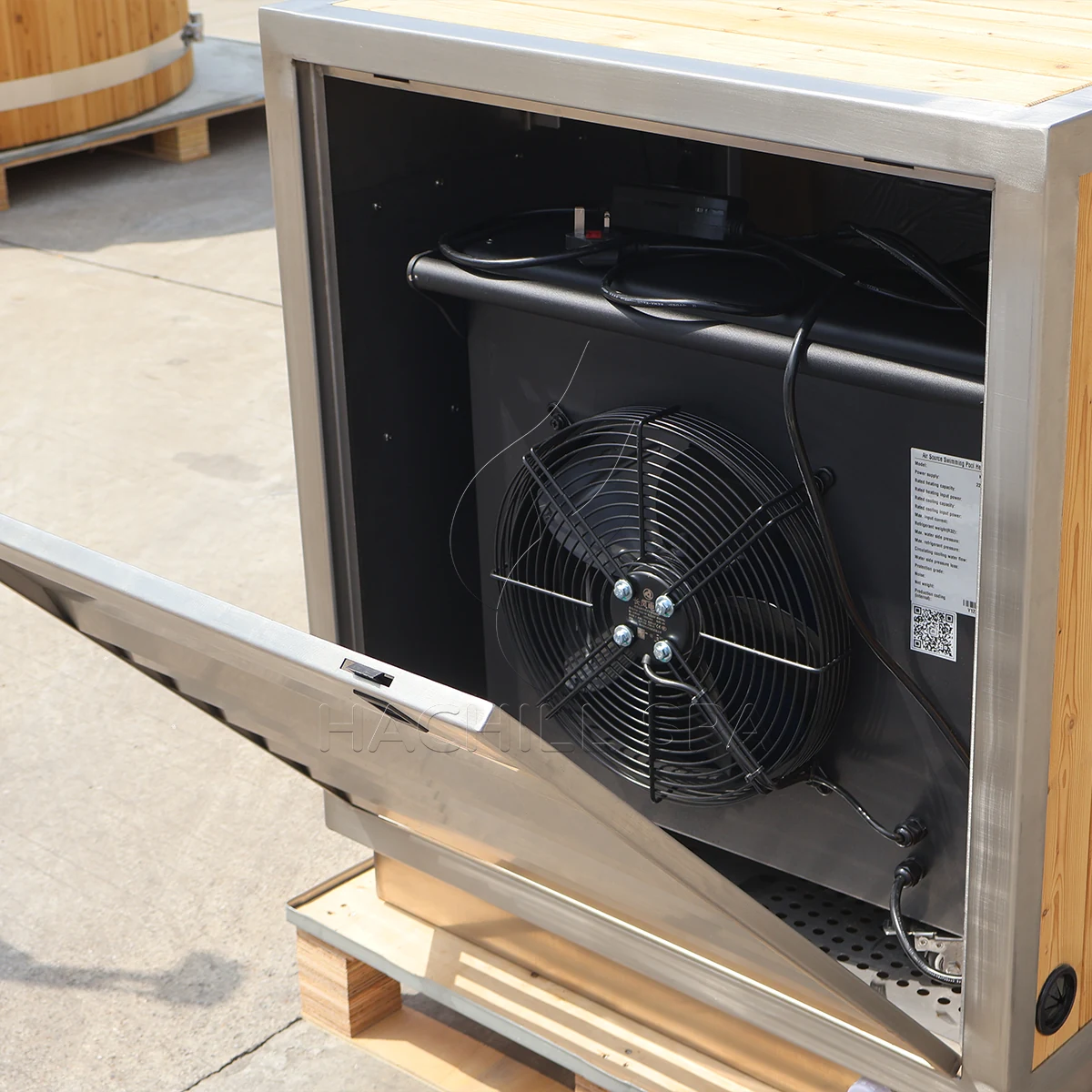
Le bardage Thermowood ne détermine pas la capacité de refroidissement, le débit, la filtration ou l'usage commercial. Consignez et approuvez le volume d'eau en service, les températures initiale et cible, la plage ambiante, la vitesse de descente et de remontée requise, le programme d'utilisation, l'état de la couverture, la tension/fréquence et l'emplacement de l'équipement intérieur/extérieur. Demandez un refroidissement utile dans des conditions correspondantes plutôt que de vous fier à la puissance du compresseur ou à la puissance électrique. Le calcul complet de la charge du projet appartient au Guide d'ingénierie thermique et de dimensionnement du refroidisseur pour bassin d'immersion froide.
Examinez le point de fonctionnement de la pompe, la perte de charge du circuit complet, la limite de débit de l'échangeur de chaleur, l'état du filtre, l'évacuation de l'air, la vidange, les contrôles, les capteurs, les alarmes et le flux d'air du condenseur. Assurez-vous que les panneaux de service permettent le retrait du filtre, de la pompe, du refroidisseur et du contrôleur sans détruire le bardage. Les photographies du produit identifient uniquement les composants visibles ; elles ne prouvent pas la portée incluse ou les performances.
Programme de système fourni pour bain froid en Thermowood
| Entrée système | Preuves requises | Utilisation de l'acceptation | Ne pas déduire de |
|---|---|---|---|
| Volume de fonctionnement/cas thermique | Données de base et de condition approuvées | Sélection de tirage/récupération | Taille de l'armoire |
| Refroidissement utile | Capacité/essai lié aux conditions | Décision thermique | Puissance HP/entrée |
| Débit/pression en boucle | Courbe et preuves terrain/essais | Fonctionnement échangeur de chaleur/filtre | Maximum de la plaque signalétique de la pompe |
| Périmètre du traitement | Composants/interfaces inclus exacts | Plan d'exploitation | Libellé marketing ozone/UV |
| Contrôles/électricité | Schéma, tension/fréquence et logique | Coordination du site | Photographie de la fiche |
| Retrait pour entretien | Démonstration de l'implantation finale | Accès au cycle de vie | Présence de porte seule |
Scénario d'ingénierie : le refroidisseur fonctionne jusqu'à l'installation de l'enceinte décorative
Problème observé : Les performances de refroidissement se dégradent et une protection haute pression se produit après que le revêtement final et l'aménagement paysager ferment la baie d'équipement.
Cause probable : L'admission du condenseur, l'évacuation d'air chaud et le dégagement de service ont été examinés avant l'installation de l'enveloppe extérieure finale et des plantations du site.
Comment vérifier : Enregistrez la température ambiante à l'entrée du condenseur, le trajet du flux d'air, l'état de la commande et les températures de l'eau avec les panneaux et l'environnement dans la configuration acceptée.
Voie de prévention ou corrective : Restaurez ou reconcevez l'enveloppe de service/flux d'air approuvée, puis répétez les tests thermiques liés aux conditions avant l'ouverture.
Calculez la charge de travail de maintenance et d'apparence
L'aptitude à la maintenance est un critère d'achat. Listez le nettoyage du revêtement, l'essuyage de la ligne de flottaison, l'inspection des panneaux, le contrôle des fixations, le dégagement des chemins de drainage, l'inspection de la finition, la refinition si spécifiée, l'entretien des couvertures et l'accès à l'équipement. Mesurez le temps de tâche représentatif avec le produit final et les dégagements installés. Séparez le temps pratique du séchage, du durcissement ou de la fermeture requise.
Une relation de planification transparente est charge de travail de maintenance par période = somme (fréquence de tâche x temps pratique observé) + préparation + fermeture/durcissement + enregistrements. Ce n'est pas une allocation de main-d'œuvre universelle. La fréquence dépend de l'exposition, du système de finition, de l'utilisation par l'utilisateur, de la procédure de nettoyage et de la politique d'apparence. Les méthodes détaillées appartiennent au manuel du modèle et au guide de maintenance.
Charge de travail de maintenance du système Thermowood
| Tâche | Acquisition | Entrée de fermeture/accès | Décision d'achat |
|---|---|---|---|
| Inspection du revêtement | Tour d'inspection chronométré du produit final | Toutes les faces/base visibles ? | Aptitude des panneaux/détails |
| Nettoyage/ligne de flottaison | Procédure approuvée observée | Fermeture et séchage par l'utilisateur | Ajustement surface/accès |
| Chemins de drainage/ventilation | Essai d'inspection/dégagement | Retrait de panneau ou d'outil | Charge de travail de contrôle de l'humidité |
| Finition/refinition | Essai/données de système approuvé | Fermeture de préparation et de durcissement | Coût de la politique d'apparence |
| Entretien des fixations/panneaux | Retrait/réinstallation minuté | Pièces de rechange/outils | Remplaçabilité |
| Entretien de l'équipement | Essai de tâche filtre/composant | Isolation eau/électricité | Charge d'exploitation commerciale |
Si l'opérateur ne peut pas fournir les compétences, l'espace ou le temps de fermeture requis, choisissez un autre système de finition ou plan de service. Qualifier le Thermowood de faible entretien sans conditions n'est pas une conclusion d'ingénierie.
Vérifier la livraison, les fondations, le drainage, l'alimentation électrique et les itinéraires de remplacement
Comparez les dimensions emballées, le poids, le centre de gravité, l'orientation autorisée et les points de levage avec chaque portail, couloir, virage, seuil, ascenseur et zone de grue. Vérifiez ensuite l'enveloppe installée, les marches, le mouvement du couvercle, l'accès, le drainage, l'air du condenseur et le retrait des composants. Un produit peut s'adapter à l'emplacement final mais échouer à la livraison ou au futur itinéraire de remplacement.
Calculez la masse d’exploitation remplie à partir du produit vide exact, de l’eau d’exploitation approuvée, des utilisateurs et des accessoires inclus ; transférez les entrées de charge résultantes, les réactions d’appui et la géométrie de base à la partie qualifiée responsable de la structure et du projet. La protection électrique, les moyens de sectionnement, la mise à la terre/liaison équipotentielle et le câblage fixe doivent suivre les instructions exactes de l’équipement et les règles électriques locales applicables. La plomberie, le drainage, l’imperméabilisation, l’approbation structurelle, l’accessibilité et les exigences d’usage public sont également spécifiques à la juridiction et au projet et doivent être attribuées aux parties qualifiées responsables de celles-ci.
Entrées de libération de site pour le bain froid Thermowood
| Interface | Données requises | Vérification | Condition de maintien |
|---|---|---|---|
| Itinéraire emballé | Enveloppe de caisse, masse, orientation | Itinéraire mesuré/trajectoire balayée | Virage/levage non vérifié |
| Fondation/support | Masse remplie et réactions de base | Examen de projet qualifié | Hypothèse générique kg/m2 |
| Zone humide/drainage | Événement de drainage et système du site | Test d'humidification contrôlé | Destination de stagnation/non approuvée |
| Alimentation/électricité | Calibre et schéma exacts | Installation/essai qualifié | Tension/fréquence/protection ouverts |
| Air du condenseur | Enveloppe d'admission/refoulement/service | Observation finale sur site | Recirculation/obstruction |
| Remplacement futur | Chemin de retrait du composant/produit | Démonstration de l'implantation finale | Accès destructif requis |
Échantillons gratuits, dessins et autorité de substitution
Avant la production, approuvez la hiérarchie exacte des spécifications : calendrier de commande, dessins, registres de matériaux, gamme numérotée d'échantillons Thermowood, échantillon de finition de revêtement, calendrier de fixation, processus de revêtement, liste d'équipements, langue des étiquettes/manuels et emballage. Indiquez quel document prévaut en cas de conflit. Désignez qui peut approuver une substitution et quelles revues en aval elle rouvre.
Utilisez des points d'arrêt de pré-production, en cours de processus et avant expédition adaptés au risque de la commande. Enregistrez l'identité du lot, la méthode de sélection des échantillons et la classification des défauts. Ne revendiquez pas une taille d'échantillon universelle sans le contrat, la quantité commandée, le risque et la norme d'inspection. L'acheteur et le fournisseur doivent convenir des définitions des défauts critiques, majeurs et mineurs et de l'autorité de disposition avant l'inspection.
Contrôles de l'échantillon à la production et des substitutions
| Contrôle | Preuves approuvées | Contrôle de production | Conséquence du changement |
|---|---|---|---|
| Gamme d'échantillons Thermowood | Ensemble physique numéroté | Comparaison de lots sous lumière déclarée | Concession ou correction de l'acheteur |
| Dessin de profil/assemblage | Révision publiée | Contrôle dimensionnel du premier article | Revue d'interface |
| Enregistrement du revêtement/matériau | Identité exacte de spécification/lot | Vérification de traçabilité et de fabrication | Revue de chimie/fabrication |
| Processus de finition/revêtement | Produit/processus/échantillon | Préparation et enregistrement de lot | Examen de l'apparence/compatibilité |
| Nomenclature de l'équipement | Marques/modèles approuvés ou limites | Vérification du numéro de série/composant | Examen thermique/électrique/service |
| Emballage/étiquettes | Dossier d'emballage et fichiers marché approuvés | Inspection avant expédition | Examen de conformité logistique/marché |
Scénario d'ingénierie : la production correspond à la photo mais pas au système approuvé
Problème observé : Un lot arrive avec une couleur similaire mais une fixation, un produit fini et un joint de panneau de service modifiés.
Cause probable : Le bon de commande a approuvé une image rendue plutôt qu'un échantillon contrôlé, un dessin et une voie de substitution.
Comment vérifier : Comparez les enregistrements de lot, les échantillons physiques, les dessins publiés et les révisions de nomenclature ; isolez le lot affecté avant l'installation.
Voie de prévention ou corrective : Traitez chaque modification via l'autorité désignée, corrigez-la ou concédez-la par écrit, et répétez les contrôles de mouillage, de service et d'apparence concernés avant la libération.
Évaluer les preuves par modèle exact, lot et méthode
Cadre d'utilisation en projet : Les niveaux A à E ci-dessous sont une aide à l'approvisionnement pour ce guide, et non une norme sectorielle ni un référentiel de certification. Le grade A correspond à un essai avec témoin de configuration exacte ou de lot, avec méthode et conditions déclarées. Le grade B correspond à un plan de modèle exact approuvé, un relevé matière ou un échantillon physique. Le grade C correspond à un relevé traçable de composant issu de la nomenclature exacte. Le grade D correspond à une estimation de planification qualifiée. Le grade E correspond à une photo de catégorie, une affirmation générique ou une déclaration non documentée. Un niveau plus élevé ne supprime pas les limites de périmètre : un échantillon ne prouve que les attributs qu'il a été approuvé à contrôler.
Échelle de preuves pour le bain froid en Thermowood
| Niveau | Preuve | Décision autorisée | Limitation |
|---|---|---|---|
| A | Test de configuration exacte/lot attesté | Acceptation du contrat | Méthode et condition uniquement |
| B | Dessin/matériau/échantillon exact approuvé | Base de production et de réception | État sur site toujours vérifié |
| C | Enregistrement de composant traçable de la nomenclature exacte | Support d'interface | Système complet non prouvé |
| D | Estimation qualifiée avec hypothèses | Planification précoce | Impossible de clôturer la version |
| E | Photo, copie de catégorie, déclaration non documentée | Orientation | Aucune clôture matérielle/performance |
Conserver les preuves remplacées et marquer leur statut. Un nouvel échantillon ou une révision de dessin ne doit pas remplacer silencieusement la base contractuelle. Relier les écarts et concessions aux quantités affectées et aux identités de série/lot.
Attribuer les responsabilités du fournisseur, de l'acheteur, de l'installateur et de l'exploitant
Attribuez les responsabilités selon le contrat et la portée du projet. Le fournisseur doit assumer la documentation exacte et précise du produit, les contrôles de production convenus et les preuves du système fourni. L’acheteur/l’équipe projet doit assumer le cahier des charges d’application, la politique d’aspect, les données de conception du site et la hiérarchie d’acceptation. L’installateur doit assumer la configuration installée, les interfaces du site et les dossiers de mise en service relevant de sa portée. L’exploitant doit assumer les procédures approuvées relatives à l’eau, au nettoyage, à l’inspection et à la fermeture. Les parties locales qualifiées restent responsables des décisions structurelles, électriques, de plomberie, d’accessibilité, de santé publique et de code relevant de leur autorité.
Matrice des responsabilités pour le bain froid en Thermowood
| Sortie | Propriétaire principal | Preuves requises | Autorité de libération |
|---|---|---|---|
| Brief d'exposition/application | Acheteur/projet/exploitant | Entrées approuvées et points ouverts | Autorité technique acheteur |
| Produit/Nomenclature exact(e) | Fournisseur | Dessin, matériau et enregistrements de portée | Approbation acheteur/fournisseur |
| Plage d'échantillons/apparence | Acheteur et fournisseur | Échantillons physiques numérotés | Autorité acheteuse désignée |
| Interfaces du site | Projet/installateur | Fondation, drainage, alimentation électrique, flux d'air | Parties qualifiées du projet |
| Mise en service | Installateur/fournisseur/exploitant | Registres de fuite, de débit, de contrôle et de tâches | Autorité de mise en service désignée |
| Opération de routine | Exploitant | Registres d'eau, de nettoyage et d'inspection | Responsable de service |
| Écart/nouvel essai | Responsable du problème nommé | Cause, traitement et registre de réussite | Autorité de libération d'origine |
Remplacez " par d'autres " par un rôle nommé, un livrable et une étape d'échéance. Ingénierie produit HACHILL peut examiner les intrants exacts du produit et du système fourni lorsqu'un modèle sélectionné, une destination et un brief de projet sont fournis ; il ne peut pas approuver les travaux réglementés sur site au nom des professionnels locaux.
Accepter séparément les échantillons, la production, la réception et l'ouverture
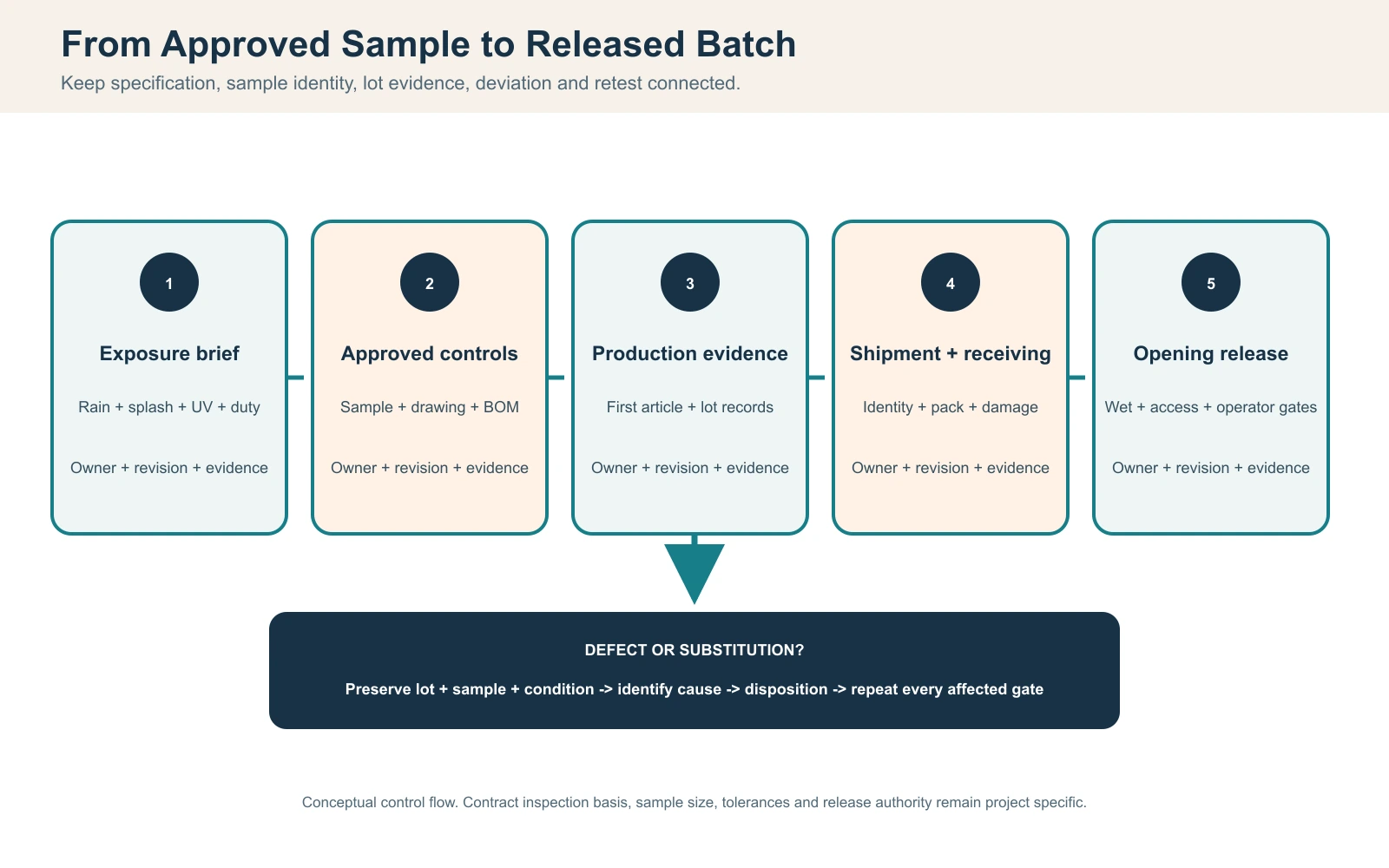
L'acceptation de l'échantillon ne clôt que les attributs visuels et matériels déclarés. L'acceptation de pré-production clôt les dessins et la nomenclature publiés. Les contrôles en cours de fabrication préservent le contrôle des lots. L'acceptation avant expédition vérifie l'état d'inspection convenu et l'emballage. L'acceptation à la réception enregistre l'état de la caisse, l'identité, la quantité, les dommages visibles et la révision des documents. L'installation et l'ouverture nécessitent des contrôles séparés de fuite, de drainage, de débit, de contrôle, d'humidification, d'accès et d'exploitant.
Lorsqu'un défaut est constaté, conservez les photographies, l'éclairage, la méthode de mesure, l'identifiant de l'échantillon, la révision du dessin, l'identité du lot/série et la quantité affectée avant la réparation. Classez le problème par rapport à la norme convenue. Identifiez la cause et le traitement : correction, remplacement, concession ou rejet. Répétez chaque contrôle affecté ; une réparation cosmétique ne clôt pas un problème de fuite, de chemin d'humidité ou d'accès au service.
Calendrier d'acceptation et de litige du système Thermowood
| Étape | Preuve de réussite | Condition de maintien/arrêt | Nouveau test contrôlé |
|---|---|---|---|
| Échantillon/spécification | Plage numérotée, dessins et hiérarchie | Base générique ou conflictuelle | Réémission des contrôles approuvés |
| Pré/en cours de processus | Premier article, lots et enregistrements de modifications | Substitution non approuvée | Corriger et rééchantillonner le lot affecté |
| Avant expédition | Inspection, preuves d'étanchéité/humidité et d'emballage | Défaut critique/écart ouvert | Réinspection spécifique à la cause |
| Réception | Identité, caisse, quantité et enregistrement des dommages | Non-conformité/dommage de transport | Disposition puis réinspection |
| Installation/mise en service | Vérifications du site, de l'humidité, du débit, du contrôle et de l'accès | Fuite, support non sécurisé, drainage/air bloqué | Restaurer la configuration déclarée |
| Ouverture | Procédure opérateur et toutes les autorisations | Autorité manquante ou risque non maîtrisé | Réouverture par une autorité nommée |
Ne pas écraser les enregistrements non conformes avec le nouveau test réussi. Reliez les deux via un dossier de non-conformité et un enregistrement de modification afin que l'acheteur et le fournisseur puissent distinguer défaut de fabrication, dommage de transport, exposition sur site, état de maintenance et variation naturelle acceptée.
Émettre une demande de devis pour un bain froid en Thermowood normalisé
Envoyer l'application, l'exposition intérieure/extérieure, le climat de destination, le niveau d'utilisation, le plan d'eau/traitement, la politique d'apparence, les dimensions/volume, le boîtier thermique, l'alimentation, les interfaces du site, la quantité, le périmètre OEM, la langue de documentation, les preuves cibles, le plan d'inspection, l'emballage et les dates du projet. Exiger de chaque soumissionnaire qu'il indique les inclusions, exclusions, hypothèses et alternatives sur le même calendrier.
Champs de la demande de devis pour bain froid en Thermowood
| Champ de l'appel d'offres | Pourquoi requis | Réponse du fournisseur | Fermeture |
|---|---|---|---|
| Politique d'exposition/apparence | Définit l'enveloppe et la plage d'échantillons | Système adapté et limitations | Offre technique |
| Calendrier des couches/matériaux | Sépare le liner, le cadre, l'isolation et le bardage | Nomenclature exacte/preuves | Soumission |
| Cas thermique/hydraulique | Empêche la sélection pilotée par l'armoire | Base système liée aux conditions | Plan de sélection/essai |
| Interfaces site/services | Ferme la fondation, le drainage, l'alimentation et l'air | Limite inclus/exclus | Coordination |
| Maintenance/pièces | Teste l'adaptation de l'opérateur | Tâches, accès et pièces de rechange | Plan d'exploitation |
| Échantillons/CQ/inspection | Contrôle la production et les litiges | Points d'arrêt et traçabilité | Commande/production |
| Emballage/dossiers marché | Contrôle la livraison et la destination | Emballage, étiquettes, manuels | Libération d'expédition |
Comparez la portée totale fournie et les preuves, pas seulement le prix extérieur. Un devis inférieur n'est pas normalisé si la qualité du liner, l'équipement, le processus de finition, les panneaux de service, l'emballage ou la mise en service restent ouverts.
Foire aux questions
Le Thermowood est-il la partie retenant l'eau d'un bain froid ?
Dans l’architecture produit abordée dans ce guide, le Thermowood est une couche de parement/de conception extérieure plutôt qu’une preuve du réservoir retenant l’eau. Le produit exact commandé reste déterminant. Demandez un schéma des couches montrant le revêtement d’étanchéité, la structure, l’isolation, le parement, les fixations et l’équipement, au lieu de supposer que le bois contient l’eau.
ThermoWood® est-il identique à tout bois thermiquement modifié ?
Non. L’International ThermoWood Association identifie ThermoWood® comme sa marque déposée, et non comme un nom générique pour tout bois modifié thermiquement. Dans une RFQ, consignez l’identité exacte du matériau déclarée par le fournisseur et demandez des preuves traçables sur le produit/processus au lieu de considérer ces termes comme automatiquement interchangeables.
Le Thermowood ne nécessite-t-il aucun entretien ?
Aucun matériau ne doit être acheté sur la base de cette promesse. Les besoins en inspection, nettoyage et finition dépendent de l'essence/produit, de la modification, du revêtement, de la pluie, des UV, des éclaboussures, de la ventilation, de la procédure de nettoyage et des attentes en matière d'apparence. Utilisez les instructions du modèle approuvé et l'exposition du projet.
Comment les acheteurs doivent-ils gérer les variations de couleur du Thermowood ?
Approuvez une gamme physique numérotée d'échantillons dans une condition de visualisation définie, et non une planche idéale ou une photo de téléphone. Définissez le veinage, les défauts, le profil, la finition, la brillance et qui peut accepter une concession ou une substitution.
Que faut-il vérifier derrière le bardage en Thermowood ?
Vérifiez les chemins de drainage et de ventilation, le sous-châssis, les fixations, la continuité de l'isolation, les pénétrations, l'accès de service et si l'humidité peut atteindre le compartiment technique. Les couches cachées nécessitent une preuve avant fermeture et une observation contrôlée de l'humidité le cas échéant.
Quelles informations doivent figurer dans une demande de devis pour un bain froid en Thermowood ?
Inclure l'exposition, la politique d'apparence, le cas d'exploitation, les exigences en matière de couches/matériaux, les entrées thermiques et électriques, les interfaces de site, la quantité, les échantillons, les points de contrôle qualité, l'emballage, les manuels, les preuves et les responsabilités d'acceptation.
Référence : bases et limites
International ThermoWood Association : qu'est-ce que le ThermoWood® ? fournit le contexte de marque, de procédé et de classe de produit. Il ne vérifie pas quel produit ou procédé de bois est utilisé dans un modèle HACHILL ou un bon de commande spécifique.
Manuel du bois du Laboratoire des produits forestiers de l'USDA fournit un contexte sur le bois/l’humidité et le comportement dimensionnel ; le comportement exact du produit reste dépendant de l’essence, du procédé, des détails et de l’exposition.
Recommandations Outokumpu sur la corrosion des aciers inoxydables fournit un contexte général de corrosion par piqûres/corrosion caverneuse pour les environnements contenant des chlorures et oxydants ; l’aptitude exacte du revêtement nécessite encore l’alliage commandé, la fabrication, la chimie de l’eau et les conditions de fonctionnement.
Code modèle de santé aquatique des CDC (page de l’édition en vigueur) est une recommandation américaine destinée aux sites aquatiques publics, et non un code de bain froid opposable à l’échelle mondiale. L’adoption locale, la classification du site et l’applicabilité doivent être vérifiées. Le CDC tient également à jour liens de ressources sur le bain froid pour les sites d’eau froide publics.
Limite technique : Aucune espèce de bois HACHILL exacte, aucun statut ThermoWood®, aucun programme de modification thermique, aucune valeur d'humidité, aucun alliage/épaisseur de revêtement, aucun temps de refroidissement, débit, durée de vie, garantie ou certification ne sont revendiqués ici. Les dossiers produits approuvés, les échantillons physiques, les manuels, les preuves de projet et les règles locales applicables prévalent.
Transformez la spécification Thermowood en une revue de projet
Envoyez à HACHILL l'exposition, l'application, le cas d'utilisation, le format préféré, les entrées d'eau et thermiques, les interfaces de site, la destination, la quantité, les échantillons, le périmètre OEM et les preuves requises. L'équipe peut examiner les options exactes de produit et de système fourni tout en laissant le travail réglementé local aux parties qualifiées du projet.