L'installazione della sauna a botte deve seguire una sequenza controllata: confermare il modello esatto e i documenti, predisporre il sito e le fondamenta, ispezionare il kit consegnato, assemblare lo scafo senza forzare l'allineamento, installare la stufa selezionata secondo la sua documentazione, coordinare la ventilazione e trattare la prima accensione come test di messa in servizio prima dell'uso normale.
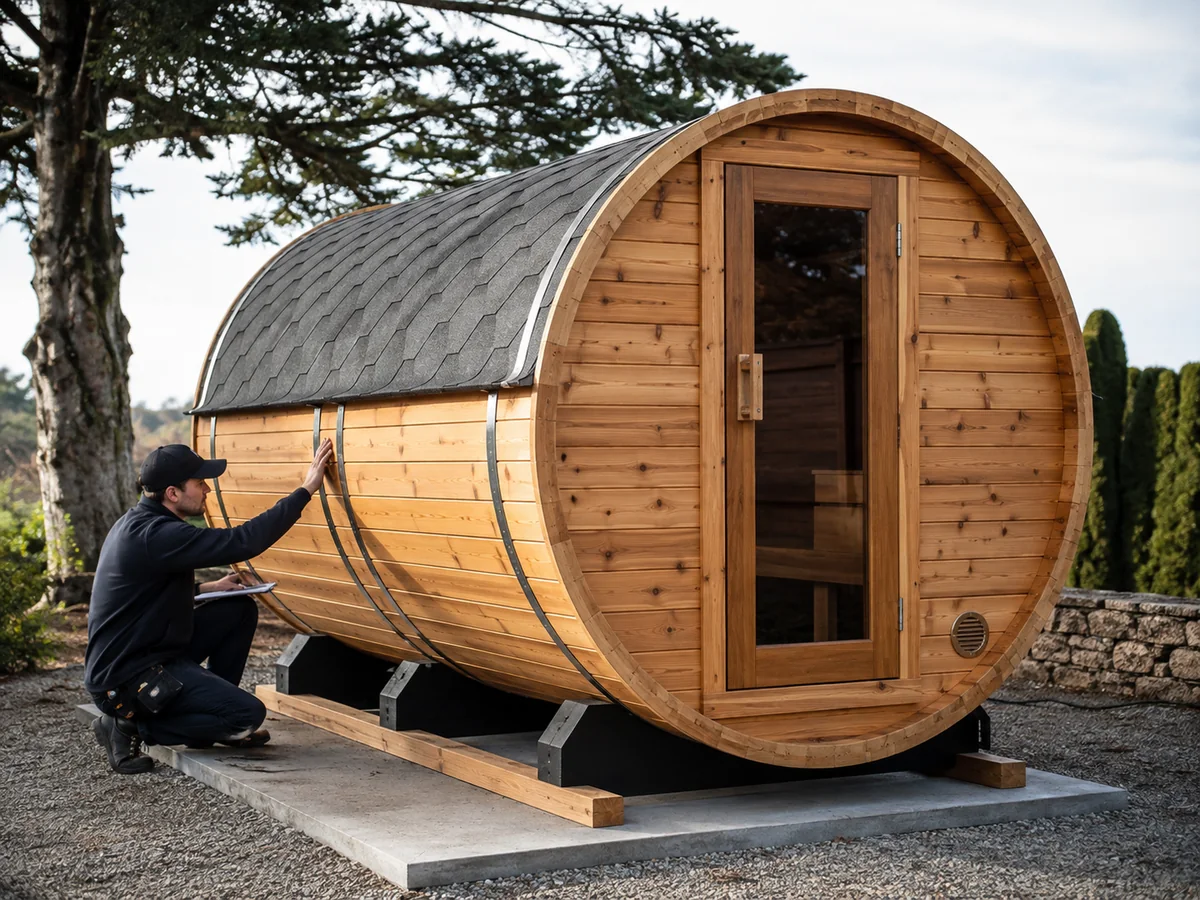
Visualizzazione concettuale dell'installazione; per le decisioni di progetto, fare riferimento alla documentazione del modello e dei componenti applicabile.
Risposta rapida
Installare una sauna a botte seguendo una sequenza controllata: verificare il modello esatto e i documenti aggiornati, predisporre il sito e la fondazione, ispezionare il kit consegnato, assemblare la struttura senza forzare l'allineamento, completare le interfacce della stufa e della ventilazione selezionate secondo le istruzioni specifiche del modello, quindi eseguire un primo riscaldamento controllato prima della consegna. Le condizioni del sito, il tipo di stufa, l'ambito elettrico o della canna fumaria e i requisiti locali possono modificare le lavorazioni.
Se il percorso del prodotto è ancora in fase di definizione, rivedere la documentazione HACHILL percorso del prodotto sauna a botte prima di trattare questa guida all'installazione come sequenza di costruzione vincolante.
Utilizzare questa guida come quadro di pianificazione dell'installazione e messa in servizio. Non sostituisce il manuale di montaggio specifico del modello, il manuale del riscaldatore o della stufa, la progettazione strutturale, la progettazione elettrica, l'approvazione del camino o la revisione delle normative locali. Quando sono coinvolti lavori elettrici, di combustione, camino, strutturali, antincendio o permessi, professionisti locali qualificati devono rivedere o eseguire tale ambito.
Adatto a questa guida
- Installatori che assemblano una sauna a botte selezionata.
- Distributori che preparano materiali di supporto all'installazione.
- Acquirenti commerciali di benessere che pianificano la consegna e l'operatività.
- Ricercatori residenziali che verificano se il sito è pronto.
Questa guida non sostituisce
- Documentazione esatta del modello HACHILL.
- Documentazione del riscaldatore, controller, sensore, stufa o camino selezionati.
- Revisione locale di elettrico, antincendio, strutturale o permessi.
- Giudizio ingegneristico o dell'installatore specifico del progetto.
Inizia con il Modello Esatto, il Sito e la Responsabilità di Installazione
Il primo compito di installazione non è sollevare il legname in posizione. È confermare cosa si sta installando, quale revisione del documento controlla il lavoro, quali presupposti del sito sono validi e chi possiede ogni attività regolamentata o specialistica.
Le dimensioni della culla, il modello di fissaggio, la distanza del riscaldatore, la posizione del sensore o la procedura di regolazione della fascia di un altro produttore non possono essere trasferiti automaticamente a una configurazione HACHILL. I manuali generali per saune a botte possono aiutare a spiegare il concetto di assemblaggio, ma i valori effettivi devono provenire dal modello esatto e dai componenti selezionati.
Per decisioni in fase di approvvigionamento come formato del modello, idoneità dell'acquirente, aspettative di capacità o ambito dell'ordine, mantenere tali domande nella guida all'acquisto di saune a botte per rivenditori e acquirenti commerciali piuttosto che espandere questa pagina di installazione in una seconda guida all'acquisto.
| Fase | Evidenze Richieste | Parte responsabile | Condizione di rilascio / trattenimento |
|---|---|---|---|
| Identità del prodotto | Modello o configurazione approvata | Fornitore / acquirente | Rilasciare solo quando l'ambito consegnato corrisponde alla base d'ordine approvata. |
| Documenti di assemblaggio | Manuale corrente, disegno o layout approvato | Fornitore / installatore | Sospendere se la revisione del documento o la configurazione non sono chiare. |
| Sito | Posizione, accesso, esposizione e area di lavoro | Acquirente / installatore | Rilasciare quando l'accesso per l'assemblaggio e la successiva manutenzione è praticabile. |
| Fondazione | Disposizione di supporto, condizione di livello, drenaggio e contesto strutturale | Acquirente / professionista strutturale dove richiesto | Sospendere se la fondazione è instabile, non verificata o incoerente con la geometria di supporto. |
| Percorso della stufa | Percorso esatto del riscaldatore elettrico o della stufa a legna | Acquirente / fornitore / installatore | Rilasciare solo quando l'interfaccia del riscaldatore è nota prima della messa in servizio. |
| Lavoro regolamentato | Ambito elettrico, camino, combustione, incendio o strutturale | Professionista locale qualificato dove richiesto | Sospendere fino a quando l'ambito professionale richiesto non è definito. |
| Ventilazione | Relazione prevista tra presa d'aria, scarico e sensore | Installatore / professionista del riscaldatore | Sospendere se le prese d'aria vengono spostate per comodità piuttosto che per documentazione. |
Registro di controllo dell'installazione
Per un distributore, un acquirente commerciale o un installatore di progetti, l'output utile dell'installazione non è solo una sauna finita. È un registro che ogni fase di lavoro è stata rilasciata dalla parte giusta prima che iniziasse la fase successiva.
| Voce di controllo | Decisione richiesta | Evidenza tipica | Scorciatoia non sicura da evitare |
|---|---|---|---|
| Controllo documentale | Quale modello e quale revisione controllano questa costruzione? | Ambito dell'ordine, manuale corrente, disegno o layout approvato. | Utilizzo di un manuale di sauna a botte simile perché la forma sembra vicina. |
| Rilascio del sito | La base è idonea prima che inizi il montaggio del legname? | Verifica delle fondamenta, controllo dell'accesso, verifica del drenaggio e approvazione del responsabile. | Avvio del montaggio perché il sito appare visivamente pianeggiante. |
| Interfaccia del riscaldatore | Il riscaldatore o la stufa selezionati sono compatibili con il percorso di installazione? | Manuale del riscaldatore, istruzioni per controller/sensori, ambito elettrico o della canna fumaria. | Completare prima la struttura e risolvere i servizi in seguito. |
| Autorità di messa in servizio | Chi può accettare o trattenere la prima accensione? | Checklist dell'installatore, rilascio del professionista locale dove richiesto, registro delle eccezioni aperte. | Consentire il funzionamento normale perché la sauna sembra completa. |
Rilasciare il sito e le fondamenta prima del montaggio
Le fondamenta fanno parte del controllo geometrico della sauna. Non sono solo una superficie comoda sotto il prodotto. Se la base, la linea di supporto o la posizione della culla sono errate, il problema può manifestarsi in seguito come doghe difficili da assestare, movimento distorto della porta, tensione eccessiva delle fasce o problemi di manutenzione prematuri.
Quando la decisione sul sito coinvolge la sauna a botte rispetto ad altri formati di sauna esterna, utilizzare la pagina più ampia delle opzioni di prodotto per saune esterne come percorso a livello di categoria e mantenere questa pagina focalizzata sull'installazione selezionata della sauna a botte.
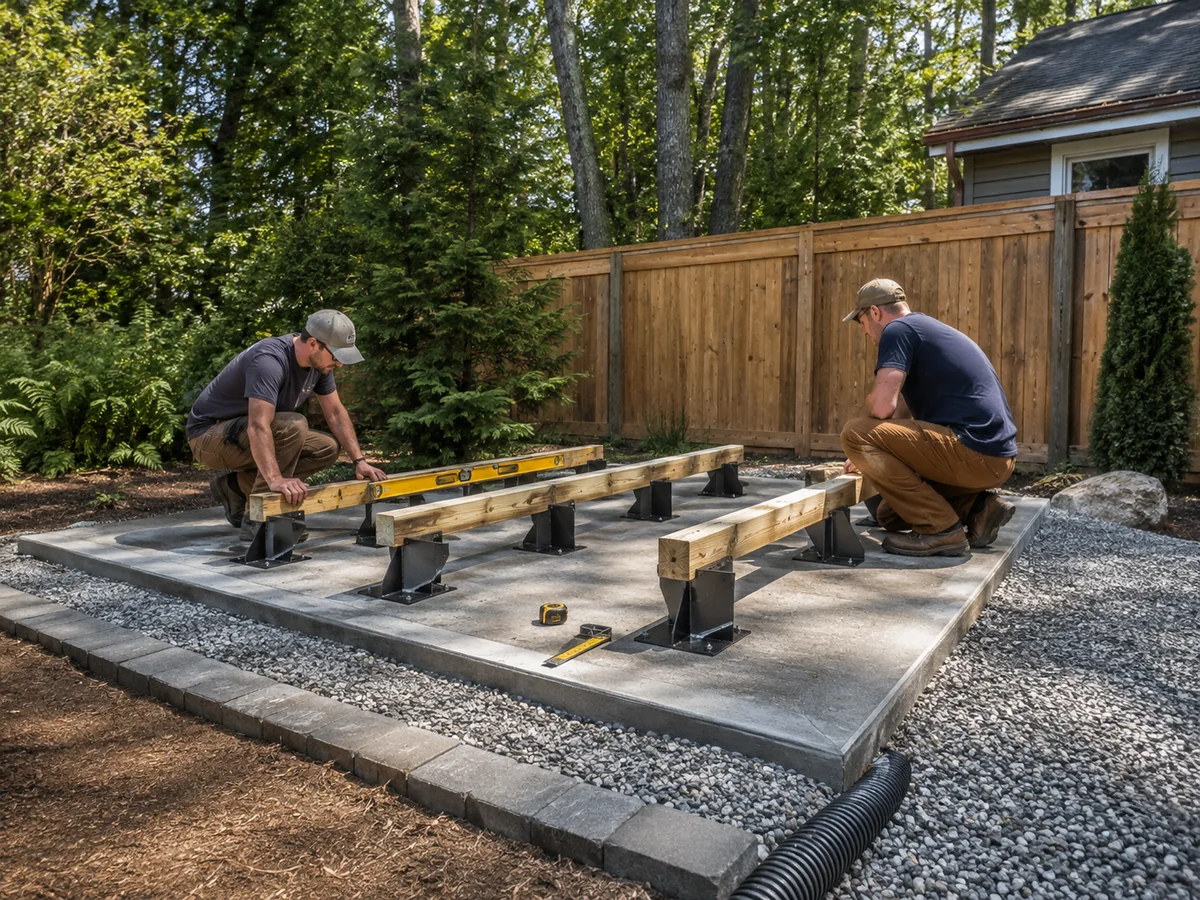
Visualizzazione concettuale dell'installazione; per le decisioni di progetto, fare riferimento alla documentazione del modello e dei componenti applicabile.
Confermare prima di posizionare le culle
- Impronta approvata e posizioni di supporto.
- Condizione di supporto stabile e sufficientemente livellata.
- Rischio di drenaggio, deflusso e schizzi dal terreno.
- Preoccupazioni relative a terreno, gelo o movimenti, ove pertinenti.
- Capacità strutturale per installazione su ponte o elevata.
- Spazio di montaggio, accesso per la consegna e spazio di manutenzione.
Non dare per scontato
- Un unico spessore di soletta universale.
- Una sola profondità di ghiaia per ogni sito.
- Un unico schema di spaziatura per ancoraggi o supporti.
- Che una base visivamente piana sia automaticamente adatta.
- Le fasce possono correggere una condizione di supporto inadeguata.
Verifica dell'accesso al sito prima del montaggio
Confermare che casse, pareti terminali, doghe, componenti della stufa e pezzi lunghi da movimentare possano effettivamente raggiungere l'area di installazione senza sollevamenti non controllati, percorsi di trasporto non sicuri o modifiche in cantiere. Le dimensioni dell'imballo, la larghezza del percorso, le scale, i cancelli, le pendenze, il metodo di scarico e la responsabilità del sollevamento possono modificare il piano di installazione anche quando la fondazione è idonea.
| Condizione del sito | Perché modifica l'installazione | Risposta di installazione sicura |
|---|---|---|
| Terreno soffice, riempimento o movimento del suolo incerto | Il supporto può assestarsi dopo il montaggio del guscio, causando problemi a porte e fasce. | Trattenere il rilascio della fondazione finché il metodo di supporto non viene verificato per il sito effettivo. |
| Ponte o piattaforma rialzata | Il progetto aggiunge carico strutturale e questioni di accesso oltre alla normale installazione a terra. | Confermare il percorso di carico, la spaziatura dei supporti e la responsabilità strutturale locale prima della consegna. |
| Esposizione a gelo-disgelo o neve | Movimenti, deflusso e manutenzione stagionale possono modificare la condizione di supporto. | Verificare il drenaggio, l'accesso stagionale e la responsabilità dell'ispezione post-invernale. |
| Uso pubblico o commerciale intenso | L'accesso per la manutenzione, la pulizia e l'autorità di sospensione dell'uso diventano requisiti operativi. | Pianificare lo spazio di servizio, le ispezioni operative e il passaggio di consegne documentato prima dell'apertura. |
Ispezionare la sauna consegnata prima del montaggio
L'ispezione al ricevimento è il punto di costo più basso per fermare un problema di configurazione o trasporto. Una volta che le parti sono state forate, tagliate, forzate in posizione o modificate in cantiere, diventa più difficile distinguere tra danni da trasporto, errori di consegna e difetti creati durante l'installazione.
| Area di ispezione | Cosa controllare | Perché è importante |
|---|---|---|
| Identità | Modello, configurazione, numero di colli e revisione del documento. | Evita che il manuale o il kit sbagliato venga utilizzato per i lavori. |
| Legno e guscio | Supporti, doghe, pareti terminali e danni visibili. | Evita che problemi di geometria o di aspetto vengano scoperti in ritardo. |
| Hardware | Fascette, elementi di fissaggio, staffe e protezioni fornite. | Evita che parti mancanti vengano sostituite in cantiere. |
| Interno | Panche, pavimentazione, porta, vetri e componenti della serratura. | Protegge l'usabilità e la qualità della consegna. |
| Percorso della stufa | Stufa o termocamino selezionato, regolatore, sensore e ambito relativo alla canna fumaria, se applicabile. | Evita il completamento meccanico prima che l'ambito impiantistico o antincendio sia pronto. |
| Registrazioni | Foto di imballaggio, danni, etichette e discrepanze. | Supporta la comunicazione tra fornitore, installatore e acquirente. |
Prove di ricevimento da conservare
Mantieni il registro di ricevimento semplice ma utile. Per un progetto commerciale, la migliore prova è un registro datato delle condizioni dell'imballo, il conteggio dei componenti, l'identificativo di modello o configurazione, le foto dei danni visibili, l'elenco delle parti mancanti e la decisione di rilasciare, trattenere o richiedere chiarimenti al fornitore.
Assemblare la Sauna a Botte nella Sequenza Controllata
L'assemblaggio della sauna a botte dipende da un allineamento progressivo. L'installazione deve stabilire un riferimento di base stabile, costruire il guscio in sequenza, mantenere sotto controllo la geometria delle pareti terminali e regolare le fascette secondo la documentazione del modello. La forza non sostituisce l'allineamento.
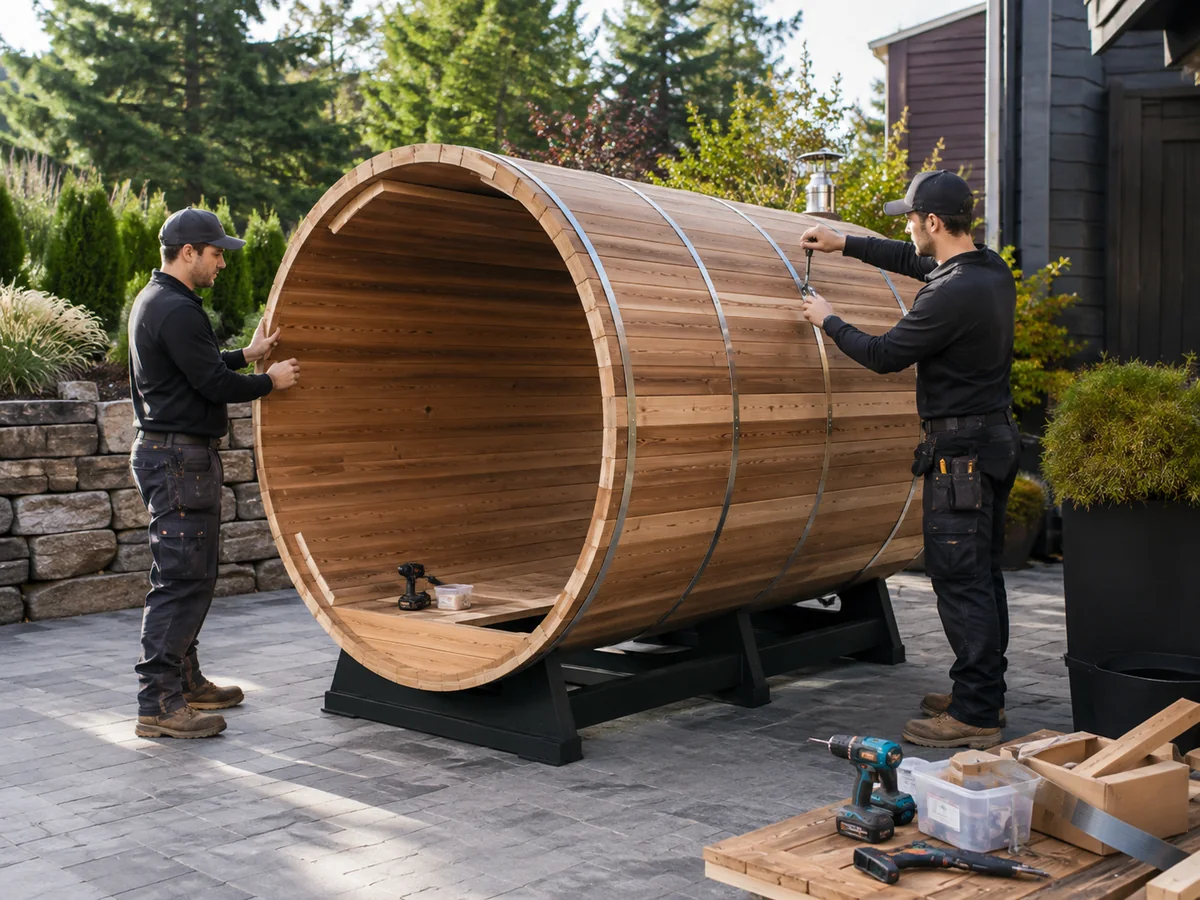
Visualizzazione concettuale dell'installazione; per le decisioni di progetto, fare riferimento alla documentazione del modello e dei componenti applicabile.
1. Posizionare le culle
Impostare le culle in base alla documentazione del modello corrente. Verificare orientamento, spaziatura, contatto di supporto, allineamento e relazione con l'impronta approvata.
2. Stabilire il riferimento
Installare correttamente il mantello inferiore e il riferimento della parete terminale prima di cercare di creare la tensione finale della fascia. Questa è la fase di controllo della geometria.
3. Aggiungere le doghe progressivamente
Prestare attenzione a resistenza crescente, fessure anomale, movimento della parete terminale o necessità di forza eccessiva. Questi indicano un controllo, non un serraggio più forte.
| Osservazione | Risposta corretta | Non fare |
|---|---|---|
| Le culle non stabiliscono la geometria prevista. | Ricontrollare fondazione, posizione e documentazione. | Forzare il montaggio superiore attorno a un riferimento debole. |
| Le doghe diventano progressivamente più difficili da inserire. | Fermarsi e controllare l'allineamento dall'ultimo punto corretto. | Usare fascette per tenere tutto insieme. |
| La parete terminale esce dalla sua posizione. | Tornare al passaggio di montaggio precedente. | Continuare a costruire attorno all'errore. |
| L'apertura della porta appare deformata. | Controllare la geometria dello scafo e dei supporti. | Piallare, tagliare o modificare subito la porta. |
| Il componente non corrisponde al manuale. | Verificare il modello e l'ambito di consegna prima di modificare. | Forare, tagliare o sostituire parti senza conferma. |
Completare la chiusura per esterni
Una forma a botte non rende automaticamente ogni installazione pronta per le intemperie. L'ambito del prodotto, la disposizione del tetto o della membrana, l'esposizione, le interfacce di porte e vetrate, le penetrazioni del camino e le condizioni di deflusso determinano la chiusura richiesta.
Checklist per la chiusura esterna
- Membrana del tetto, tegole o strato di protezione approvato dove previsto.
- Trattamento di fissaggi, penetrazioni e interfaccia camino dove applicabile.
- Verifica del deflusso di porta, vetrate e parte superiore dello scafo.
- Ruscellamento e drenaggio dell'acqua a terra attorno alla base.
- Accesso futuro per ispezione, manutenzione del riscaldatore e interventi di assistenza.
- Nessuna apertura di ventilazione o area di servizio ostruita.
Installare il riscaldatore selezionato secondo la documentazione esatta
Questa guida inizia dopo che il percorso del riscaldatore è stato selezionato. Se la scelta tra riscaldamento elettrico o a legna, la capacità del riscaldatore, i controlli o l'idoneità della stufa non sono ancora risolti, indirizzare tale decisione alla guida all'acquisto del riscaldatore per sauna prima di trattare il lavoro sul riscaldatore come un dettaglio di installazione.
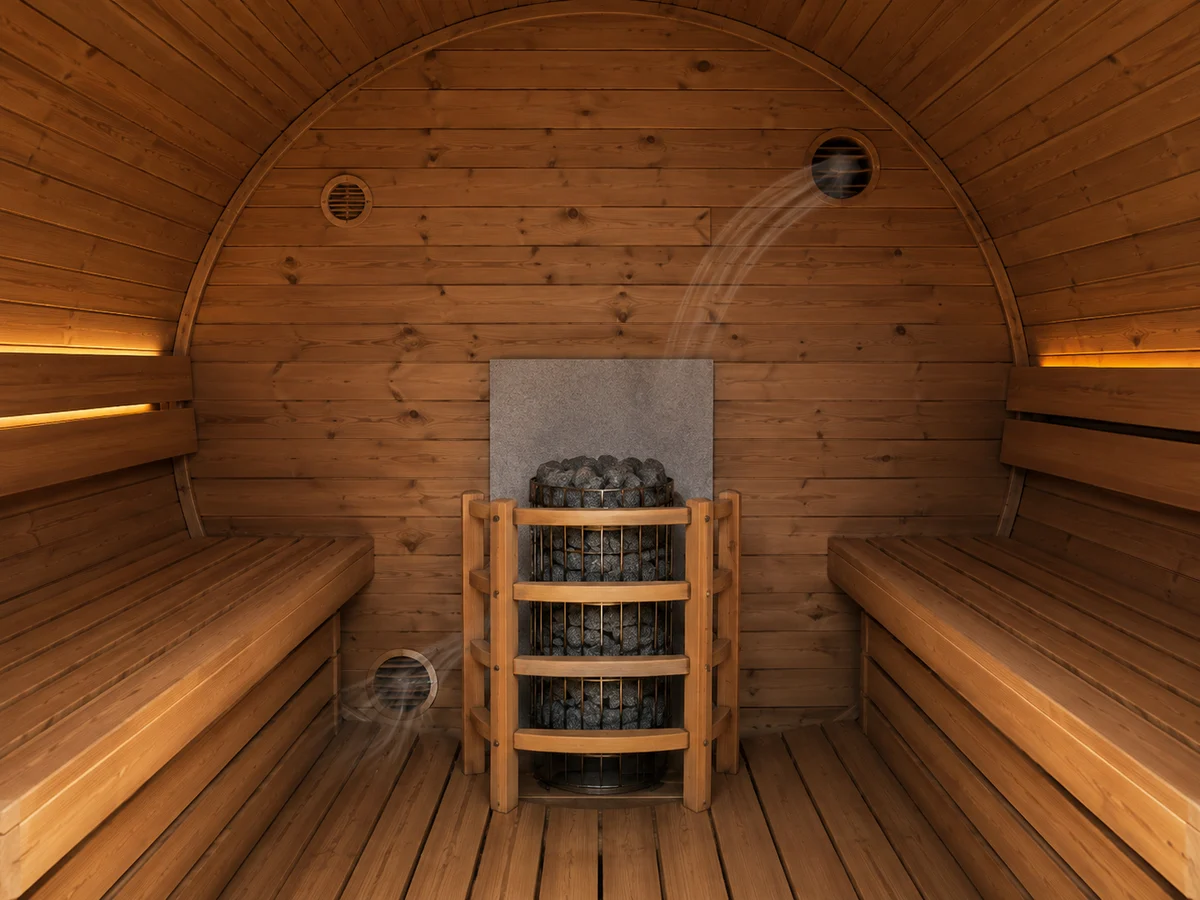
Visualizzazione concettuale dell'installazione; per le decisioni di progetto, fare riferimento alla documentazione del modello e dei componenti applicabile.
Percorso stufa elettrica
Confermare il riscaldatore esatto, la tensione, la frequenza, le fasi, il controller, l'unità di potenza dove utilizzata, il sensore, il percorso dei cavi, i dispositivi di protezione, i requisiti elettrici locali e la responsabilità della messa in servizio.
Non dedurre il progetto elettrico completo dalla sola potenza in kW della stufa. I lavori elettrici devono seguire la documentazione esatta dell'apparecchiatura e i requisiti locali applicabili. Anche le distanze di sicurezza richieste per la stufa sono specifiche del modello e devono essere verificate rispetto alle istruzioni di installazione del produttore della stufa selezionata e ai requisiti di progetto applicabili.
Percorso a legna
Confermare la stufa esatta, l'idoneità approvata del locale, le distanze di sicurezza, la protezione di pavimento e pareti, il sistema di camino o canna fumaria, i dettagli di attraversamento, l'aria di combustione, i requisiti antincendio e l'accesso per l'ispezione.
Non copiare le distanze di sicurezza o le ipotesi sul camino di un'altra stufa in un'installazione HACHILL.
| Punto di arresto | Prova di rilascio | Motivo |
|---|---|---|
| Identità del riscaldatore | Riscaldatore o stufa esatta selezionata confermata. | Previene problemi di compatibilità o di fornitura. |
| Montaggio e protezione | Posizione, protezione e accesso conformi alla documentazione. | Protegge gli utenti e le superfici combustibili. |
| Percorso elettrico | Alimentazione, controlli, sensori e ambito dell'elettricista definiti. | Previene collegamenti improvvisati non sicuri. |
| Percorso di combustione | Canna fumaria, distanze di sicurezza, requisiti antincendio e fumi verificati. | Previene installazioni a legna non sicure. |
| Autorità di messa in servizio | Parte responsabile assegnata. | Previene l'uso normale prima del collaudo. |
| Ingresso | Percorso del riscaldatore elettrico | Percorso a legna | Perché è importante |
|---|---|---|---|
| Identità dell'apparecchiatura selezionata | Riscaldatore, controlli, sensore e unità di potenza esatti, ove applicabile. | Sistema esatto di stufa, canna fumaria o condotto e ambito di protezione. | Evita di trattare sistemi di riscaldamento diversi come intercambiabili. |
| Contesto di utenza o combustibile del sito | Tensione, frequenza, fase e ambito elettrico qualificato. | Aria comburente, percorso della canna fumaria, revisione antincendio e contesto fumi. | Previene disallineamenti tardivi dell'utenza o improvvisazioni non sicure. |
| Distanze di sicurezza e protezione | Protezioni, interfacce con superfici in legno circostanti e accesso per manutenzione. | Distanze di sicurezza, protezione di pavimenti/pareti e dettagli di attraversamento. | Protegge utenti, superfici in legno e manutenibilità. |
| Dipendenza dalla messa in servizio | La risposta di controlli e sensori deve essere verificata durante il primo riscaldamento. | Tiraggio, comportamento dei fumi e funzionamento sicuro della stufa devono essere verificati durante il primo riscaldamento. | Collega l'installazione del riscaldatore alla consegna piuttosto che al completamento visivo. |
Coordinare la ventilazione con il riscaldatore e la geometria del barile
La ventilazione fa parte del sistema di riscaldamento e comfort. Non va spostata solo perché un'altra apertura sembra più pulita o è più facile da tagliare. Presa d'aria, scarico, tipo di riscaldatore e posizione del sensore di temperatura interagiscono con l'installazione effettiva.
Controlli di ventilazione
- Confermare la disposizione prevista di ingresso aria e scarico.
- Coordinare il flusso d'aria con riscaldatore, protezioni e disposizione dei banchi.
- Verificare la relazione con il sensore di temperatura prima di chiudere la parete o il soffitto.
- Non ostruire le prese d'aria con chiusure esterne o componenti interni.
- Non imporre un diametro, un'altezza o una distanza di ventilazione universali per ogni modello.
Trattare il primo riscaldamento come un test di messa in servizio
Il primo riscaldamento non è la prima sessione normale di sauna. È un ciclo di messa in servizio controllato utilizzato per verificare il funzionamento del riscaldatore, i controlli, la risposta dei sensori, la ventilazione, il comportamento della porta, il movimento dell'involucro e le anomalie di installazione prima della consegna.
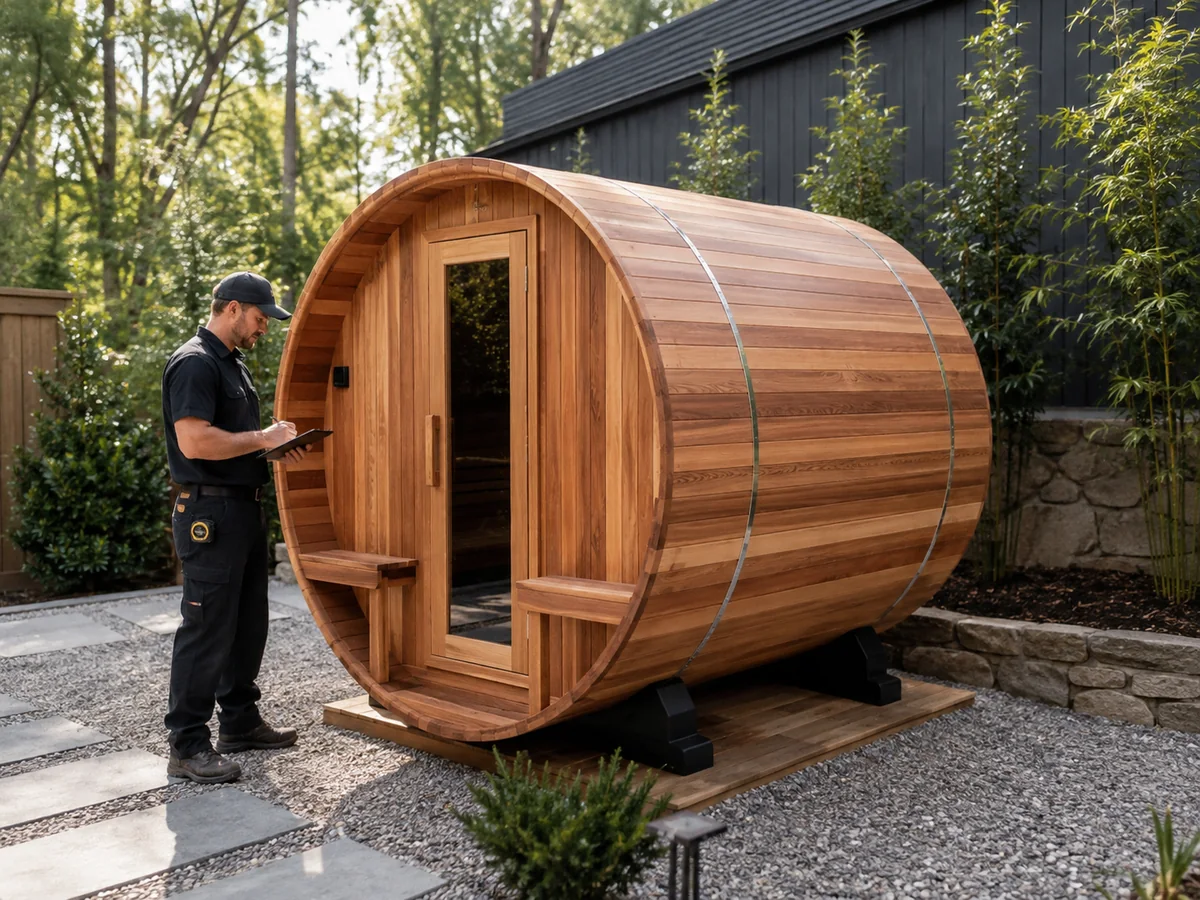
Visualizzazione concettuale dell'installazione; per le decisioni di progetto, fare riferimento alla documentazione del modello e dei componenti applicabile.
Prima del primo riscaldamento
- Rimuovere i detriti.
- Verificare protezioni e panche.
- Rilasciare l'ambito del riscaldatore o della stufa.
- Controllare prese d'aria, porta e chiusura esterna.
- Chiudere i difetti non risolti.
Durante il primo riscaldamento
- Osservare il funzionamento del riscaldatore o della stufa.
- Controllare i comandi e la risposta dei sensori.
- Osservare il flusso d'aria e il comportamento della porta.
- Cercare fumo, comportamento elettrico anomalo o contatto termico non sicuro.
Dopo il raffreddamento
- Esaminare fasce e giunti delle doghe.
- Controllare l'allineamento della porta.
- Ispezionare le interfacce del riscaldatore e della canna fumaria dove accessibili.
- Registrare esito positivo, eccezione aperta o sospensione.
| Esito della messa in servizio | Significato | Passaggio successivo consentito |
|---|---|---|
| SUPERATO | Nessun problema irrisolto di sicurezza, riscaldamento, ventilazione, porta, nastro o chiusura meteorologica rimane dopo l'ispezione a freddo. | Preparare la consegna per l'uso normale e le istruzioni operative. |
| ECCEZIONE APERTA | Una voce è documentata e assegnata, e il responsabile ha confermato esplicitamente che non influisce sul funzionamento sicuro o sulla conformità richiesta. | Rilasciare solo alle condizioni documentate e chiudere la voce di completamento entro la responsabilità concordata. |
| BLOCCATO | Problemi elettrici, di combustione, fumo, contatto termico anomalo, geometria, porta, ventilazione o documentazione rimangono irrisolti. | Non consentire il funzionamento normale finché il controllo pertinente non viene ripetuto e accettato. |
Errori comuni di installazione della sauna a botte e perché sono importanti
| Errore | Perché accade | Possibile conseguenza | Risposta corretta |
|---|---|---|---|
| Il montaggio inizia prima del rilascio della fondazione. | Il sito appare visivamente piatto. | I problemi geometrici si propagano a involucro e porta. | Fermarsi e verificare la condizione di supporto. |
| Manuale o revisione errata utilizzata. | Modelli di barile simili si assomigliano. | Posizione, hardware o sequenza errati. | Confermare il modello esatto e i documenti. |
| I componenti vengono forzati in posizione. | Un disallineamento precoce viene scambiato per un accoppiamento stretto. | Assemblaggio danneggiato o deformato. | Tornare all'ultimo dato di riferimento corretto. |
| Le fasce vengono serrate in modo aggressivo. | Le fasce vengono trattate come strumenti di allineamento. | Rimane un problema geometrico nascosto. | Correggere prima l'allineamento dell'involucro. |
| Il percorso del riscaldatore viene definito troppo tardi. | I team di prodotto e sito lavorano separatamente. | Conflitto di utilità o spazio libero. | Rilasciare l'interfaccia del riscaldatore prima della messa in servizio. |
| La ventilazione è stata spostata per comodità. | L'estetica prevale sulla progettazione del sistema. | Scarso flusso d'aria o interazione con i sensori. | Utilizzare la disposizione di ventilazione documentata. |
| Il primo riscaldamento è trattato come uso normale. | Non esiste una checklist di messa in servizio. | I difetti di installazione passano inosservati. | Eseguire un'ispezione controllata del primo riscaldamento. |
Scenario composito: guasto progressivo dell'allineamento
Un team di progetto rilascia l'installazione perché la base sembra a livello. Il guscio inferiore può essere assemblato, ma ogni doga successiva diventa più difficile da posizionare. Il team inizia a stringere di più le fasce per chiudere gli spazi.
Correzione: interrompere il serraggio, tornare ai controlli di supporto e della culla, verificare la sequenza e ristabilire il riferimento corretto.
Scenario illustrativo soltanto; non un caso cliente reale.
Scenario composito: disallineamento tra riscaldatore e sito
Il fusto è meccanicamente completo prima che venga verificato il percorso elettrico. Il percorso riscaldatore/controllo selezionato non corrisponde all'alimentazione del sito.
Correzione: sospendere la messa in servizio, verificare la documentazione esatta del riscaldatore e del controller e far risolvere l'ambito elettrico richiesto dal professionista qualificato responsabile.
Scenario illustrativo soltanto; non un caso cliente reale.
Scenario composito: lacuna nella consegna commerciale
Una struttura benessere accetta una sauna a botte esterna visivamente completa, ma nessuno si occupa dell'ispezione di routine delle fasce, della manutenzione del riscaldatore, dei controlli meteorologici o delle decisioni di cessazione dell'uso. Piccole variazioni post-riscaldamento vengono notate dal personale ma non registrate.
Correzione: riaprire il pacchetto di consegna, assegnare la responsabilità dell'ispezione di routine e definire il percorso di escalation per qualsiasi problema relativo a riscaldatore, porta, fasce, ventilazione o chiusura per condizioni meteorologiche.
Scenario illustrativo soltanto; non un caso cliente reale.
Rilasciare la Sauna per l'Utilizzo e Completare la Consegna
Il completamento meccanico non significa automaticamente il rilascio operativo. Un progetto commerciale dovrebbe anche stabilire chi è responsabile dell'ispezione, della pulizia, della manutenzione del riscaldatore, del monitoraggio meteorologico, della segnalazione dei difetti e delle decisioni di arresto dell'uso.
| Ambito | Fornitore | Installatore | Professionista locale qualificato | Acquirente / Operatore |
|---|---|---|---|---|
| Documentazione di prodotto | Fornire informazioni di prodotto controllate. | Utilizzare documenti aggiornati. | Revisionare dove necessario. | Conservare per l'operatività. |
| Interfaccia di fondazione | Fornire i requisiti di supporto del prodotto. | Posizionare correttamente il prodotto. | Revisione strutturale dove necessario. | Fornire il sito approvato. |
| Assemblaggio meccanico | Supportare il metodo del prodotto. | Eseguire il montaggio. | — | Accettare la consegna. |
| Riscaldatore elettrico | Fornire le informazioni sul prodotto selezionato. | Coordinare l'installazione. | Lavori elettrici o approvazione se necessario. | Fornire la fornitura del sito. |
| Stufa a legna / camino | Fornire le informazioni sul prodotto selezionato. | Coordinare le interfacce. | Ambito di combustione, fuoco o camino se necessario. | Fornire il sito approvato. |
| Primo riscaldamento | Fornire la procedura delle attrezzature. | Eseguire i controlli di installazione. | Partecipare dove necessario. | Accettare il rilascio. |
| Funzionamento continuo | Fornire le indicazioni applicabili sul prodotto. | — | Servizio specialistico se necessario. | Gestione operativa di routine. |
Pacchetto di prove per la consegna
- Modello installato e configurazione.
- Manuali aggiornati e disegni approvati.
- Registro di rilascio del sito e delle fondazioni.
- Registro di accettazione elettrica o di combustione, se applicabile.
- Documentazione per riscaldatore, controller, sensore o stufa.
- Verifica della ventilazione.
- Risultato della messa in servizio del primo riscaldamento.
- Registro di difetti, elenco di non conformità o deviazioni di campo approvate.
- Linee guida per la manutenzione e contatti di assistenza responsabili.
| Area operativa | Decisione prima del rilascio | Perché è incluso nella consegna |
|---|---|---|
| Pulizia e ispezione | Chi verifica banchi, pavimento, protezione del riscaldatore, prese d'aria, porta e condizioni visibili della scocca? | L'uso commerciale comporta un'esposizione ripetuta; piccoli problemi di installazione non dovrebbero trasformarsi in difetti operativi. |
| Monitoraggio meteorologico | Chi verifica drenaggio, condizioni del tetto o della membrana, schizzi d'acqua a terra ed esposizione stagionale? | Le prestazioni dell'installazione esterna dipendono dalla manutenzione del sito oltre che dall'assemblaggio del prodotto. |
| Manutenzione del riscaldatore | Chi segue le istruzioni di manutenzione selezionate per stufa, termostato, controller o canna fumaria? | La sicurezza e le prestazioni della stufa non possono essere separate dal funzionamento di routine. |
| Autorità di arresto dell'uso | Chi può mettere fuori servizio la sauna se fumo, comportamento elettrico, movimento della porta, movimento della fascia o contatto termico sono anomali? | Impedisce al personale di continuare l'operazione quando la responsabilità non è chiara. |
Informazioni per preparare il supporto all'installazione
Prima di richiedere supporto, preparare informazioni sufficienti per separare le domande sull'interfaccia del prodotto dal lavoro in loco e dall'ambito di installazione regolamentato.
| Ingresso | Perché è necessario |
|---|---|
| Modello di sauna selezionato o proposto | Controlla la sequenza di assemblaggio, il supporto, l'interfaccia della stufa e la documentazione. |
| Paese e luogo di installazione | Supporta la verifica di clima, normative, impianto elettrico e ambito antincendio. |
| Uso residenziale o commerciale | Modifica le aspettative di pulizia, ispezione, produttività e consegna. |
| Stato delle fondamenta e accesso al sito | Determina se il montaggio può procedere in sicurezza. |
| Percorso di consegna e movimentazione | Conferma le dimensioni del pacco, il metodo di scarico, cancelli, porte, scale, pendenze e vincoli di sollevamento prima della consegna o del montaggio in cantiere. |
| Percorso riscaldatore elettrico o a legna | Modifica l'ambito elettrico, del camino, della combustione e della ventilazione. |
| Tensione, frequenza e fase per il percorso elettrico | Previene una mancata corrispondenza elettrica tardiva. |
| Percorso camino e fuoco per il percorso a legna | Previene ipotesi di combustione non sicure. |
| Vincoli di ventilazione | Previene la rilocazione in campo dei percorsi di flusso d'aria previsti. |
| Servizio operativo commerciale, se applicabile | Aiuta a definire le responsabilità di pulizia, ispezione, accesso per manutenzione e fermo utilizzo prima della consegna. |
| Installatore responsabile e ambito professionale locale | Chiarisce chi può rilasciare ogni punto di controllo. |
Pacchetto di documenti da richiedere con un brief di installazione B2B
- Manuale di montaggio o disegno di installazione attuale per la configurazione esatta.
- Documentazione del riscaldatore, controller, sensore, stufa o camino selezionati.
- Elenco di imballaggio e componenti consegnati per l'ispezione al ricevimento.
- Eventuale deroga approvata, sostituzione o istruzione specifica del sito.
- Guida operativa e di manutenzione commerciale che l'acquirente o l'operatore deve conservare dopo la consegna.
Base di riferimento per le decisioni di installazione specifiche del modello
I riferimenti generali di installazione sono utili quando chiariscono il tipo di documentazione da richiedere. Non sostituiscono la documentazione esatta del prodotto HACHILL, il manuale della stufa o del generatore selezionato, l'ingegneria specifica del progetto o la verifica normativa locale.
| Tipo di riferimento | Cosa supporta | Limite di questo articolo |
|---|---|---|
| Manuali di montaggio del produttore per saune a botte | Il montaggio della sauna a botte è disciplinato da documentazione specifica del prodotto, non da una sequenza visiva universale. | Utilizzare solo a supporto del controllo documentale specifico del modello. Non trasferire dimensioni, schema di fissaggio, posizione del supporto, numero di ferramenta o regolazione delle fasce di un altro marchio a una sauna HACHILL. |
| Guida alla ventilazione della sauna Harvia | La disposizione della ventilazione interagisce con il tipo di riscaldatore e il funzionamento della sauna. | La posizione, le dimensioni e la disposizione finale della ventilazione devono derivare dalla sauna selezionata, dalla stufa e dai requisiti del progetto. |
| Guida del sensore di temperatura Harvia | La posizione del sensore può dipendere dal posizionamento del riscaldatore e dalle istruzioni specifiche dell'apparecchiatura. | Non dedurre una posizione universale del sensore HACHILL. Seguire la documentazione del controller, della stufa e della sauna selezionati. |
| Guida al primo riscaldamento Harvia | Il primo riscaldamento di una nuova stufa è una fase controllata dell'apparecchiatura in cui ventilazione e condizioni anomale sono rilevanti. | Utilizzare la procedura di messa in servizio effettiva della stufa selezionata; questa fonte non stabilisce una temperatura, una durata o un valore di accettazione universali per il primo riscaldamento HACHILL. |
| Linee guida sulle distanze di sicurezza delle stufe Harvia | Le distanze di sicurezza della stufa sono specifiche dell'apparecchiatura e sono riportate nella targhetta, nelle istruzioni di installazione o nella documentazione del prodotto della stufa. | Non trasferire le distanze Harvia a una stufa diversa o a una configurazione HACHILL differente. Utilizzare la documentazione esatta dell'apparecchiatura selezionata e i requisiti locali applicabili. |
| Linee guida per il collegamento delle stufe elettriche Harvia | Il collegamento e la manutenzione della stufa elettrica devono seguire i requisiti dell'apparecchiatura e le normative applicabili all'installazione. | Ciò non crea una regola di abilitazione universale per ogni mercato; il professionista locale responsabile e la giurisdizione determinano i requisiti applicabili sul campo. |
Limite dell'evidenza: i manuali di terze parti e i documenti dei marchi dei componenti sono input di riferimento, non specifiche HACHILL. Dove è richiesto un valore, una distanza di sicurezza, un dettaglio di supporto, un requisito di cablaggio o una procedura di messa in servizio, utilizzare la configurazione HACHILL esatta, la documentazione dei componenti selezionati e la revisione professionale locale.
Domande frequenti
Quale fondazione è migliore per una sauna a botte?
Non esiste una singola specifica di fondazione corretta per ogni sauna a botte e per ogni sito. Confermare la disposizione dei supporti del modello selezionato insieme alla stabilità del sito, al drenaggio, alle condizioni del suolo o strutturali, all'esposizione al gelo ove applicabile e ai requisiti locali del progetto.
Posso montare da solo una sauna a botte?
Alcune saune a botte prefabbricate sono progettate per il montaggio in loco, ma il progetto completo può comunque includere lavori elettrici, strutturali, di canna fumaria, di combustione, antincendio o di permessi che richiedono professionisti locali qualificati.
Quanto devono essere strette le fasce della sauna a botte?
Utilizzare le istruzioni di montaggio del modello esatto. Non utilizzare un valore di coppia generico o una distanza di serraggio di un'altra sauna. Le fasce non devono essere utilizzate per forzare in posizione un guscio non correttamente allineato.
Posso dimensionare il riscaldatore in base al numero di persone?
No. Il dimensionamento del riscaldatore dipende dalle caratteristiche della stanza della sauna e dal campo di funzionamento approvato del riscaldatore selezionato, non solo dal numero di posti. La capacità di persone non è un metodo completo per il dimensionamento del riscaldatore.
Una sauna a botte necessita di ventilazione?
La ventilazione deve essere coordinata con il riscaldatore, la geometria della sauna e la disposizione dei sensori, piuttosto che essere trattata come un'apertura estetica opzionale. Seguire esattamente la documentazione della sauna e del riscaldatore.
Cosa dovrei controllare durante la prima accensione?
Verificare il funzionamento del riscaldatore o della stufa, i comandi, la risposta dei sensori, la ventilazione, il comportamento elettrico o di combustione, il funzionamento della porta e l'installazione circostante. Dopo il raffreddamento, ispezionare nuovamente l'involucro, le fasce e i componenti accessibili.
Le fasce della sauna a botte devono essere serrate dopo il primo riscaldamento?
Ispezionarli secondo le istruzioni esatte della sauna dopo il ciclo iniziale di riscaldamento e raffreddamento. Non dare per scontato che ogni modello richieda la stessa procedura di regolazione o la stessa quantità di serraggio.
È necessario esaminare l'ambito di installazione di una sauna a botte?
Preparare il modello selezionato, l'ubicazione del sito, lo stato della fondazione, l'accesso per la consegna, il percorso della stufa, le condizioni elettriche o del camino, i vincoli di ventilazione, la responsabilità dell'installazione e i documenti richiesti.
Per un prodotto HACHILL selezionato che richiede coordinamento del sito lato produttore, utilizzare Installazione e supporto tecnico. Per un acquisto commerciale definito o un ambito di progetto, inviare la configurazione effettiva e la destinazione tramite Richiedi un preventivo.
Il supporto lato produttore non sostituisce il lavoro sul campo regolamentato, l'ingegneria specifica del progetto o la revisione delle autorità locali laddove tali responsabilità si applicano.