Kies een traditionele sauna wanneer u een ruimte met een kachel en stenen wilt en, wanneer de kachel daarvoor is ontworpen, de mogelijkheid om löyly te creëren door water op de hete stenen te gieten. Kies een infraroodsauna wanneer u specifiek een stralingscabine op basis van emitters wilt. Geen van beide routes is universeel beter, goedkoper, gezonder of eenvoudiger te installeren.
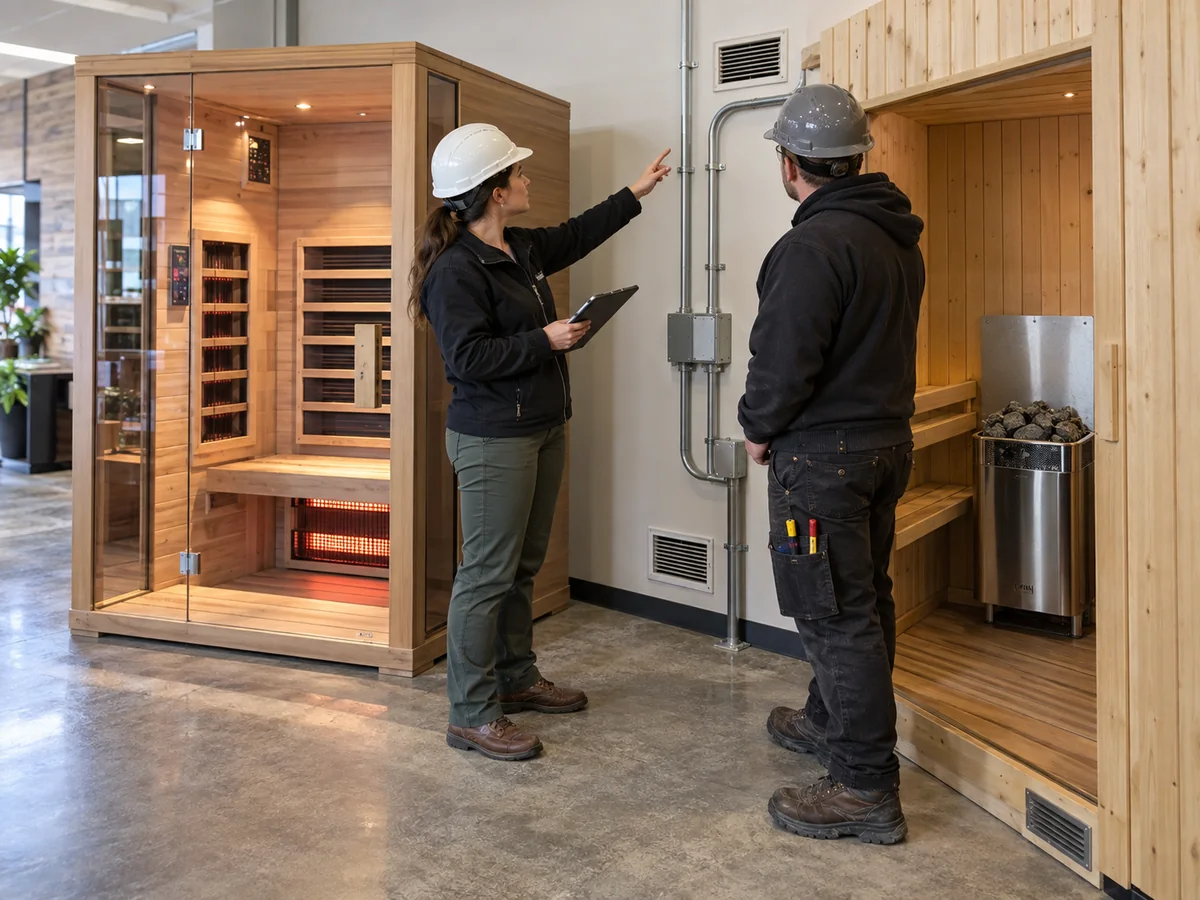
De systemen creëren en verdelen warmte op verschillende manieren. Een traditionele sauna draait om een saunakachel die de lucht in de ruimte, de omliggende oppervlakken en, indien van toepassing, de saunastenen verwarmt. Een infraroodsauna gebruikt elektrisch aangedreven emitters die rond de bezette cabine zijn geplaatst, waardoor de positie van de emitters en de gebruikersgeometrie deel uitmaken van de systeemkeuze.
Voor een nuttige vergelijking controleert u vier zaken in deze volgorde: de warmtebeleving die u wilt, of de locatie de exacte apparatuur kan ondersteunen, of prestatieclaims overeenkomen met gedocumenteerde testomstandigheden, en of het gekozen systeem past bij de beoogde residentiële of commerciële toepassing.
Infraroodsauna vs. traditionele sauna: wat is het praktische verschil?
Het praktische verschil begint bij de verwarmingsarchitectuur.
A traditionele sauna is gebouwd rond een saunakachel. De kachel verwarmt de lucht, omliggende oppervlakken en, in een kachel-en-steen-opstelling, de saunastenen. De verwarmde ruimte zelf is een belangrijk onderdeel van de ervaring.
Een infraroodsauna gebruikt elektrisch aangedreven stralers die rond de cabine zijn geplaatst. Stralingsoverdracht van die stralers speelt een grotere rol bij het verwarmen van de bezette ruimte, hoewel de cabinelucht en binnenoppervlakken tijdens gebruik ook opwarmen.
Veeg of scroll op kleinere schermen horizontaal om de volledige vergelijking te bekijken.
| Beslissingspunt | Infraroodsauna | Traditionele sauna |
|---|---|---|
| Primaire verwarmingsroute | Infraroodstralers geïntegreerd in de cabine | Saunakachel geïntegreerd met de ruimte en stenen waar van toepassing |
| Warmtebenadrukking | Grotere stralingscomponent van straler naar gebruiker | Verwarmde lucht, ruimteoppervlakken, kachel en stenen |
| Belangrijkste indelingsvraag | Hoe verhouden stralers zich tot de normale gebruiksposities? | Komen de kachel en de ruimteconfiguratie overeen met de beoogde saunaomgeving? |
| Belangrijkste projectinterfaces | Cabineconfiguratie, elektrische context, bediening, ventilatie en servicebereik | Ruimte, kachel, stenen, bediening, ventilatie, vrije ruimtes en servicebereik |
| Belevingsfocus | Op stralers gebaseerde infraroodsauna-ervaring | Traditionele sauna-ervaring met kachel en stenen |
Daarom is het beschrijven van infrarood als simpelweg een “traditionele sauna op lagere temperatuur” misleidend. De luchttemperatuur kan per systeem verschillen, maar een thermometer verklaart niet de opbouw van de apparatuur of hoe de warmte rondom de gebruiker wordt verdeeld.
Voor diepere terminologie over infraroodsystemen, stralerindeling en aankoopcriteria gebruikt u HACHILL’s infraroodsauna-gids in plaats van deze vergelijking om te vormen tot een tweede pagina met een infrarooddefinitie.
Hoe verschillen de warmtebeleving, temperatuur en löyly?
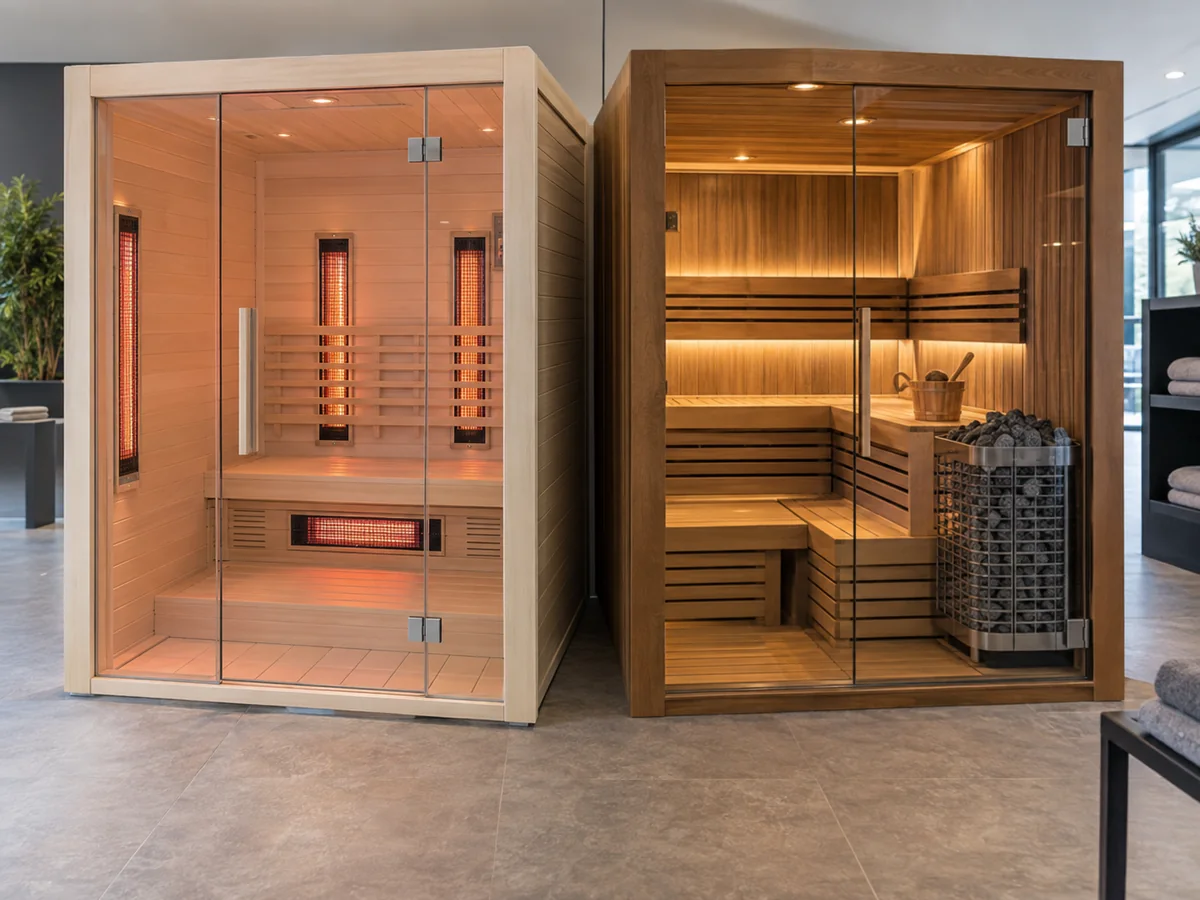
Luchttemperatuur is slechts één deel van de vergelijking, omdat infrarood- en traditionele sauna's de warmte op verschillende manieren door de gebruikte ruimte verdelen.
In een traditionele sauna werken het saunatoestel, de verwarmde lucht, de binnenoppervlakken en de saunastenen samen om het ruimteklimaat te creëren. Waar het gekozen toestel en de bijbehorende instructies dit toelaten, kan water dat op de juiste manier op verwarmde stenen wordt aangebracht, een kort stoom- en vochtigheidseffect creëren dat bekendstaat als löyly.
Dat maakt van een traditionele sauna geen stoomruimte. Löyly is een tijdelijke vochtigheidsverandering binnen een traditionele sauna met toestel en stenen, geen continu stoomruimtebedrijf.
Infraroodcabines leggen meer nadruk op stralingswarmteoverdracht van emitters die rond de gebruiker zijn geplaatst. Daardoor is de emittergeometrie belangrijk. Het totale geïnstalleerde wattage op zichzelf laat niet zien hoe de emitters zich verhouden tot de rug, zijden, benen of andere gebruikte posities in de exacte cabine.
Veeg of scroll horizontaal op kleinere schermen om de volledige tabel te bekijken.
| Verkorting | Waarom deze tekortschiet |
|---|---|
| “Meer infraroodwattage betekent betere dekking.” | De stralingsblootstelling in de gebruikte ruimte hangt ook af van de emitterpositie, de afstand en de cabinegeometrie. |
| “Meer zitplaatsen betekenen een grotere traditionele kachel.” | De kachelcapaciteit hangt af van de werkelijke ruimte en de eisen van de fabrikant, niet van het aantal zitplaatsen alleen. |
| “Een traditionele sauna is volledig droog.” | Geschikte kachel-en-steensystemen kunnen korte löyly-vochtstoten creëren. |
| “Een lagere luchttemperatuur betekent een zwakkere ervaring.” | De luchttemperatuur alleen beschrijft niet de volledige thermische omgeving tijdens gebruik. |
Traditionele sauna's werken doorgaans met hetere ruimteluchtcondities dan veel infraroodcabines, maar dit is een algemeen patroon en geen universele apparatuurgrens. De exacte bedrijfscondities blijven systeemspecifiek.
Gedetailleerde temperatuurbereiken en meetvragen horen thuis in HACHILL's temperatuurgids voor sauna’s. Traditionele kachelcapaciteit hoort thuis in de inkoopgids voor saunakachels.
Ter vergelijking: gebruik de warmteroute en de werkelijke systeemconfiguratie, niet een thermometerwaarde, het totale wattage of een personencapaciteitslabel op zichzelf.
Wat is eenvoudiger te installeren: een infraroodsauna of een traditionele sauna?
Geen van beide routes is universeel eenvoudiger te installeren.
Een infraroodcabine kan meer van het verwarmingssysteem binnen het cabinepakket bevatten, maar in het product geïntegreerd betekent niet locatie-onafhankelijk. De gekozen cabine moet nog steeds aansluiten op de elektrische omgeving van de bestemming, de ventilatiecontext, de bediening, de montageomstandigheden en de toekomstige servicebereikbaarheid.
Installatiecontroles voor infrarood
- elektrische compatibiliteit voor de exacte cabine;
- opstelling van de emitters en normale zitposities;
- bediening en sensorconfiguratie;
- ventilatie- en installatievereisten;
- toegang tot onderhoudbare componenten.
Installatiecontroles voor traditioneel
- keuze van de kachel op basis van de werkelijke ruimte in plaats van het aantal zitplaatsen;
- positie van de kachel en vereiste vrije ruimtes;
- elektrische of andere goedgekeurde kachelroute;
- bediening en sensoren;
- ventilatie;
- toekomstige toegang tot kachel en componenten.
Dit is waarom “infrarood is plug-and-play” en “een traditionele sauna gebruikt altijd dezelfde elektrische installatie” slechte aankoopregels op categorieniveau zijn.
Exacte elektrische vereisten horen bij de exacte apparatuur en de installatie op de bestemming. De definitieve voedingsconfiguratie, dimensionering van geleiders, overstroombeveiliging, ontkoppeling, aarding en aansluitmethode moeten volgen uit het typeplaatje van de apparatuur, de instructies van de fabrikant en de geldende lokale elektrische vereisten.
Installatieregel: de eenvoudigere route is degene die op de daadwerkelijke locatie minder onopgeloste interfaces overlaat. Neem aannames over bedrading, vrije ruimte of sensoren niet over van het ene model naar het andere.
Opwarmtijd en prestatieclaims: wat moeten kopers eigenlijk vergelijken?
Opwarmsnelheid kan een aankoopbeslissing beïnvloeden, maar een waarde in minuten zonder testomstandigheden is zwak bewijs.
Een specifieke infraroodcabine kan legitiem snel de door de fabrikant gedefinieerde gereedheidstoestand bereiken. Een traditioneel systeem kan worden beoordeeld tegen een ander doel dat betrekking heeft op de ruimte en de kachel-en-steenomgeving. Die cijfers zijn niet automatisch vergelijkbaar.
- Welk exact systeem is getest? Een resultaat van de ene cabine- of kachelconfiguratie mag niet automatisch een andere vertegenwoordigen.
- Wat was de uitgangssituatie? Een systeem dat start in een warme binnenomgeving is niet gelijkwaardig aan een systeem dat vanuit een koudere situatie begint.
- Wat betekent “gereed”? De ene test kan een luchttemperatuurdoel gebruiken; een andere kan een door de fabrikant gedefinieerde bedrijfsconditie gebruiken.
- Waar is de conditie gemeten? Eén luchtmeting beschrijft niet de oppervlakken, de stralingsblootstelling of elke bezette positie.
- Welke behuizing is gebruikt? Constructie, beglazing en warmteverlies kunnen het opwarmgedrag beïnvloeden.
- Wat was de bedrijfstoestand? Deurpositie, ventilatie en andere testomstandigheden kunnen het resultaat beïnvloeden.
Een nauwkeurig ogende tijd is niet automatisch sterk prestatiebewijs.
Wat kost meer om te installeren en te onderhouden?
Er is geen betrouwbare universele kostenwinnaar tussen infrarood- en traditionele sauna.
De juiste vergelijking is de totale geïnstalleerde scope, niet de apparatuurprijs op zichzelf.
Afhankelijk van het project kan de kostengrens het volgende omvatten:
- kernapparatuur voor de sauna;
- werkzaamheden aan de ruimte of behuizing;
- elektrische interfaces;
- bediening;
- ventilatie;
- levering;
- lokale installatiewerkzaamheden;
- toekomstige service toegang.
Veeg of scroll op kleinere schermen horizontaal om de volledige vergelijking te bekijken.
| Kostenlaag | Infraroodsauna | Traditionele sauna |
|---|---|---|
| Kernsysteem | Cabine, stralers, bediening en gerelateerde componenten | Ruimte/cabine, kachel, bediening en stenen waar van toepassing |
| Elektrisch werk/bouwwerkzaamheden | Afhankelijk van exact model en bestemming | Afhankelijk van exacte heater-/regelconfiguratie en bestemming |
| Ruimte-integratie | Afhankelijk van cabine/configuratie | Heater en ruimte-integratie vormen de kern van het systeem |
| Onderhoudsfocus | Emitters, bediening, sensoren, cabineonderdelen en onderhoudsbereikbare zones | Heater, stenen, bediening, sensoren, ventilatie en ruimteonderdelen |
| Uiteindelijke installatiekosten | Afhankelijk van offerte en locatie | Afhankelijk van offerte en locatie |
Energievergelijkingen vragen dezelfde discipline. Het nominale vermogen vertelt een koper niet wat de werkelijke elektriciteitsrekening zal zijn. Opwarmgedrag, regelcycli, omstandigheden in de behuizing, bedrijfsschema en daadwerkelijk gebruik beïnvloeden allemaal het verbruik.
Onderhoud verschilt ook per component en niet door een simpel label “infrarood versus traditioneel”. Traditionele systemen kunnen onderhoud aan verwarming en stenen toevoegen. Infraroodsystemen hebben een andere servicegrens voor componenten en emitters.
Voor een diepgaander kader voor het normaliseren van offertes en levenscycluskosten gebruikt u HACHILL's kostengids voor sauna's.
Kostenregel: normaliseer de projectscope en de bedrijfsomstandigheden voordat u bepaalt welke sauna goedkoper is.
Wat past beter bij residentieel en commercieel gebruik?
Residentiële en commerciële projecten mogen niet exact dezelfde selectielogica gebruiken.
Een particuliere koper kan meer gewicht toekennen aan:
- gewenste warmte-ervaring;
- ruimte- en nutsvoorzieningenaansluiting;
- installatiepraktische haalbaarheid;
- persoonlijke gebruiksroutine;
- bediening en gebruiksgemak.
Een hotel, spa, sportschool of andere commerciële voorziening vraagt een extra verificatielaag:
- gebruiksfrequentie;
- toegangsbeheer voor personeel en gebruikers;
- reinigingsroutine;
- onderhoudbaarheid van componenten;
- onderhoudsplanning;
- acceptabele uitvaltijd;
- exacte geschiktheid van de apparatuur voor de beoogde inzet.
Een label voor drie of vier personen beschrijft de bezettingsgraad of de indelingsintentie. Het bewijst niet dat de apparatuur geschikt is voor herhaald commercieel gebruik.
Infrarood moet daarom niet voor een faciliteit worden gekozen, alleen omdat een cabine op zichzelf staand lijkt. Traditioneel moet niet worden gekozen, alleen omdat verwarming-en-steen-systemen bekend zijn in commerciële omgevingen.
Voor hotels, sportscholen, spa's en andere installaties met herhaald gebruik, HACHILL's Commerciële saunaoplossing is verantwoordelijk voor de diepere locatieplannings-taak.
Voor commerciële selectie: particuliere kopers vergelijken ervaring en geschiktheid; commerciële kopers moeten ook de operationele belasting, reiniging, bediening, onderhoudbaarheid en uitvaltijd verifiëren.
Hoe zit het met de gezondheidsvoordelen van infrarood versus traditionele sauna?
Huidig bewijs rechtvaardigt niet om infrarood of traditionele sauna universeel gezonder te verklaren.
Onderzoek naar de twee modaliteiten gebruikt verschillende apparatuur, thermische omstandigheden, blootstellingsprotocollen, populaties en uitkomsten. Een bevinding die is waargenomen bij het ene type saunablootstelling mag daarom niet automatisch worden behandeld als bewijs voor het andere, en kortetermijnfysiologische reacties mogen niet worden omgezet in langetermijnklinische claims.
A 2025 gecontroleerde vergelijking van traditionele en ver-infrarood saunablootstelling onderzocht enkele acute warmteblootstellingen bij 20 gezonde jonge volwassenen en rapporteerde verschillende thermoregulatoire reacties onder de traditionele-sauna- en ver-infraroodprotocollen van het onderzoek. Dat ondersteunt de behandeling van de modaliteiten als afzonderlijke blootstellingen; het doet dat betekent niet niet om de langetermijngezondheidssuperioriteit van een van beide saunatypes vast te stellen.
A 2009 peer-reviewed overzicht van ver-infrarood saunaonderzoek was geen directe vergelijking met een traditionele sauna. Het vond dat bewijs voor verschillende ver-infraroodgezondheidsclaims beperkt was of gebaseerd op een kleine hoeveelheid onderzoek, dus het mag niet worden gebruikt om brede therapeutische voordelen te generaliseren.
Dit artikel gebruikt geen ontgifting, gewichtsverlies, ziektebehandeling of gegeneraliseerde veiligheidsclaims om de systemen te rangschikken.
Gezondheidsbewijs is daarom een grens in deze vergelijking, niet het primaire criterium voor de keuze van apparatuur.
Infrarood- of traditionele sauna: welke moet u kiezen?

Begin met het kiezen van de ervaring die u daadwerkelijk wilt. Sluit vervolgens elke route uit die de locatie of het beoogde gebruiksdoel niet kan ondersteunen.
Veeg of scroll op kleinere schermen horizontaal om de volledige beslissingsmatrix te bekijken.
| Beslissing | Infraroodkandidaat | Traditionele kandidaat |
|---|---|---|
| Gewenste ervaring | Op stralers gebaseerde infraroodsauna | Sauna met kachel en stenen |
| Stenen / löyly | Niet de bepalende ervaring | Belangrijk wanneer traditionele löyly gewenst is |
| Indelingsbeoordeling | Posities van emitters en bezettingsdekking | Ruimtebelasting, kachelpositie en kachelintegratie |
| Installatie | Exacte afstemming van cabine, elektra, ventilatie en service | Afstemming van ruimte, kachel, elektra/warmteroute, ventilatie, vrije ruimtes en service |
| Prestatiebewijs | Exacte cabine- en testomstandigheden | Exact kachel-/ruimsysteem en testomstandigheden |
| Commerciële belasting | Moet worden bevestigd voor de geselecteerde apparatuur | Moet worden bevestigd voor de geselecteerde apparatuur |
Infrarood op de shortlist wanneer
Infrarood is de sterkere kandidaat wanneer de koper bewust een op stralers gebaseerde stralingssauna wil, de cabine-indeling past bij de beoogde gebruikers, de elektrische omgeving compatibel is en de geselecteerde apparatuur past bij het beoogde gebruik.
Traditioneel op de shortlist wanneer
Traditioneel is de sterkere kandidaat wanneer een kachel-en-steen-ervaring het doel is, löyly van belang is voor het beoogde gebruik, en de ruimte, kachel, bediening, ventilatie, vrije ruimtes en servicevereisten kunnen worden opgelost.
Stel de beslissing uit wanneer
- de werkelijke ruimteomstandigheden nog onbekend zijn;
- de elektrische context van de bestemming niet is bevestigd;
- exacte productdocumentatie niet beschikbaar is;
- de indeling van de infraroodstralers niet beschikbaar is;
- de dimensionering van de traditionele kachel niet is gecontroleerd ten opzichte van de ruimte;
- residentieel of commercieel gebruik onduidelijk is;
- installatieverantwoordelijkheid is niet gedefinieerd.
- Ervaring: kies de beoogde warmteroute.
- Haalbaarheid: controleer de ruimte, nutsvoorzieningen, ventilatie en installatie.
- Bewijs: verifieer prestatieclaims tegen het exacte systeem.
- Scope: vergelijk gelijkwaardige geïnstalleerde kosten en onderhoudsverantwoordelijkheid.
- Taak: verifieer de geselecteerde apparatuur voor het beoogde gebruik.
Zodra de route duidelijk is, gaat u verder naar de Infraroodsauna of Traditionele binnen-sauna categorie voor beoordeling op modelniveau.
Volgende stap
Als u nog bezig bent met het kiezen van de verwarmingsrichting, vergelijk dan de HACHILL binnen-sauna routes. Zodra de route duidelijk is, gaat u naar de betreffende productfamilie voor beoordeling op modelniveau.