Guia de ergonomia do Upright Cold Plunge
Como avaliar a entrada e a saída em cold plunge vertical usando a geometria exata do modelo, interfaces de degrau e apoio, testes com usuários representativos e comissionamento úmido controlado.
Resposta direta: Avalie a entrada e a saída de uma banheira de imersão fria vertical no modelo exato e no arranjo de acesso instalado — não em dimensões externas, um rótulo de uma pessoa ou uma foto do produto. Verifique o perfil da borda, apoio interno para os pés ou assento, degrau ou plataforma aprovados, posições de apoio para as mãos, nível operacional de água, área de saída molhada e espaço de recuperação, e a sequência completa de movimento desde a aproximação até a saída. Remova componentes de acesso instáveis, espaço de saída obstruído, água de piso não controlada, interfaces de suporte não verificadas e qualquer tarefa de saída que os usuários previstos não consigam completar sob a supervisão planejada antes da pontuação comparativa ou da abertura.
Para compras e comissionamento, mantenha um limite de usuário/tarefa específico do modelo, registro de geometria, mapa de movimentação, registro de condições de espera do projeto, registro de observações a seco e molhado, matriz de responsabilidades e arquivo de aceitação/reteste. Esses registros apoiam uma decisão apenas dentro do modelo, local, grupo de usuários e procedimento operacional documentados; eles não certificam segurança universal, acessibilidade, adequação ao tamanho corporal, adequação médica ou conformidade regulatória.
Escopo da página: este artigo trata da ergonomia de entrada, imersão, saída e recuperação em cold plunge vertical. Compra geral no formato vertical, seleção do tipo de instalação, dimensionamento do sistema de resfriamento, tratamento de água, especificações exatas de modelo, certificação e desfechos de saúde pertencem às suas páginas dedicadas ou registros de projeto controlados.
Defina os Usuários Pretendidos e a Tarefa Completa de Entrada/Saída
Comece pelas pessoas e pelo método de operação, não por uma afirmação de que um recipiente é ergonômico. Registre quem deve usar a estação, se o uso é autônomo ou supervisionado, que assistência a equipe pode fornecer e quais usuários precisam de encaminhamento a profissionais qualificados de saúde, acessibilidade ou segurança. Uma banheira vertical pode reduzir o comprimento do piso, mas sua transição mais alta pode exigir colocação e suporte dos pés mais coordenados do que outro formato.
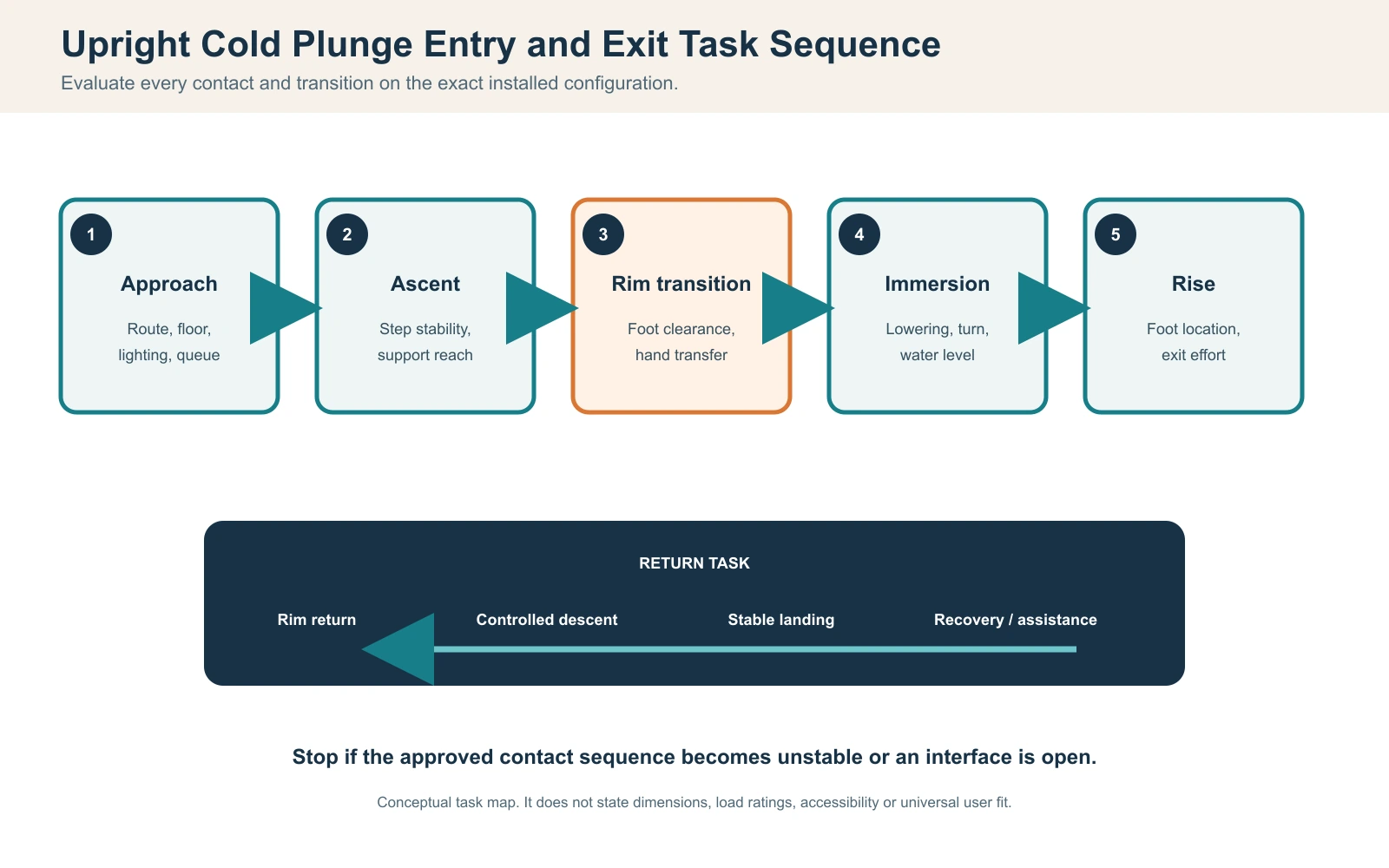
Divida um ciclo em aproximação, subida, transição da borda, descida, imersão, giro ou reposicionamento, subida, retorno à borda, descida e recuperação estável. Defina os contatos esperados de mãos e pés em cada transição. Um corrimão acessível durante a subida pode ficar atrás do usuário na saída; um apoio interno visível quando vazio pode ser mais difícil de localizar através de água agitada. O resultado é uma definição de tarefa para uma instalação exata, não uma faixa universal de tamanho corporal.
| Entrada | Como obter | Decisão afetada | Status |
|---|---|---|---|
| Grupo de usuários pretendido | Política da instalação e design de serviço | Grupo de teste e restrições de operação | Aprovado / aberto |
| Autodirigido ou supervisionado | Procedimento operacional e escala | Observação, assistência e encerramento | Definido / aberto |
| Método de assistência | Revisão qualificada de tarefa/risco | Cargo do funcionário e suportes aprovados | Aprovado / proibido / aberto |
| Estado de vestuário e calçado | Fluxo de trabalho de serviço observado | Contato dos pés e rota de piso molhado | Observado / planejado |
| Nível de água operacional | Manual do modelo exato ou registro aprovado | Flutuabilidade, alcance, respingos e saída | Confirmado / aberto |
| Limite de saúde/acessibilidade | Revisão local qualificada | Elegibilidade, alternativas e avisos | Confirmado / pendente |
| Resposta a saída anormal | Procedimento treinado ou documentado | Interrupção do uso e escalonamento da equipe | Testemunhado / aberto |
Não use altura, idade ou capacidade atlética como atalho para adequação individual. Dois usuários de altura semelhante podem usar estratégias de movimento diferentes. Defina a população pretendida e observe a tarefa real sob um procedimento controlado. Se uma instalação nos EUA estiver sujeita a requisitos de acessibilidade, trate a acessibilidade como uma classificação e questão de projeto no nível do projeto. O Padrões ADA do U.S. Access Board incluem disposições de escopo e técnicas para piscinas, piscinas infantis e spas, incluindo meios acessíveis de entrada para spas cobertos; se uma instalação vertical específica de imersão fria se enquadra em uma disposição específica deve ser resolvido pela equipe qualificada de acessibilidade/códigos do projeto. Este artigo não determina conformidade.
Meça a geometria do produto e o envelope instalado de entrada/saída
O diâmetro externo, a largura ou a capacidade para uma pessoa descreve apenas parte do problema. O envelope instalado inclui o tanque, degrau ou plataforma, aproximação, alcance de apoio das mãos, movimento de transposição da borda, área de saída livre, posição de secagem e recuperação, movimento da tampa, posição de assistência da equipe e acesso de serviço. Esses envelopes podem se sobrepor somente quando o procedimento operacional impede tarefas conflitantes.
Use uma planta em escala e elevação. Registre a geometria do modelo e configuração exatos pedidos; não copie uma imagem de categoria ou desenho de outro modelo. Marque cada desconhecido como em aberto. A expressão de planejamento é envelope de tarefa instalado = união dos envelopes de produto + aproximação + subida + transição + saída + recuperação + assistência. Esta é uma união geométrica, não uma promessa de adequação e não uma simples soma de áreas retangulares.
| Campo de geometria | Evidência preferida | Por que é importante | Regra de registro |
|---|---|---|---|
| Pegada externa e altura | Desenho de modelo aprovado | Posição, rota e abordagem da borda | Modelo/configuração/revisão |
| Geometria interna utilizável | Desenho de seção ou amostra aprovada medida | Tarefa de pé, joelho, giro e postura | Não inferir a partir de fora |
| Altura, largura e perfil do aro | Desenho/medição controlado | Transferência de peso e contato | Registrar unidades e datum |
| Geometria do degrau/plataforma | Desenho de escopo incluído ou detalhe do local | Subida, descida e estabilidade | Identificar fornecedor e fixação |
| Suporte para as mãos | Detalhe aprovado do produto/obra | Direção de alcance e caminho de carga | Não inferir capacidade de carga |
| Apoio para os pés/assento/suporte | Desenho interno e inspeção | Descida, elevação e posição dos pés | Registrar visibilidade do estado da água |
| Nível de água operacional | Manual e registro de comissionamento | Flutuabilidade, respingos e alcance | Registrar condição real |
| Área de pouso/recuperação | Desenho de local coordenado | Saída controlada e acesso da equipe | Proteger de fila/armazenamento |
| Cobrir/interfaces de serviço | Manual mais layout concluído | Evitar conflitos de tarefas | Revisar estados operacionais |
Meça a partir de um datum definido e identifique se um valor é nominal, máximo, mínimo ou observado. Fotografias são úteis para orientação, mas são evidências dimensionais fracas porque perspectiva, distorção de lente e configuração desconhecida podem enganar. Quando os desenhos do fornecedor e as condições de campo diferirem, pare e reconcilie o modelo, a revisão e a instalação antes de continuar a decisão ergonômica.
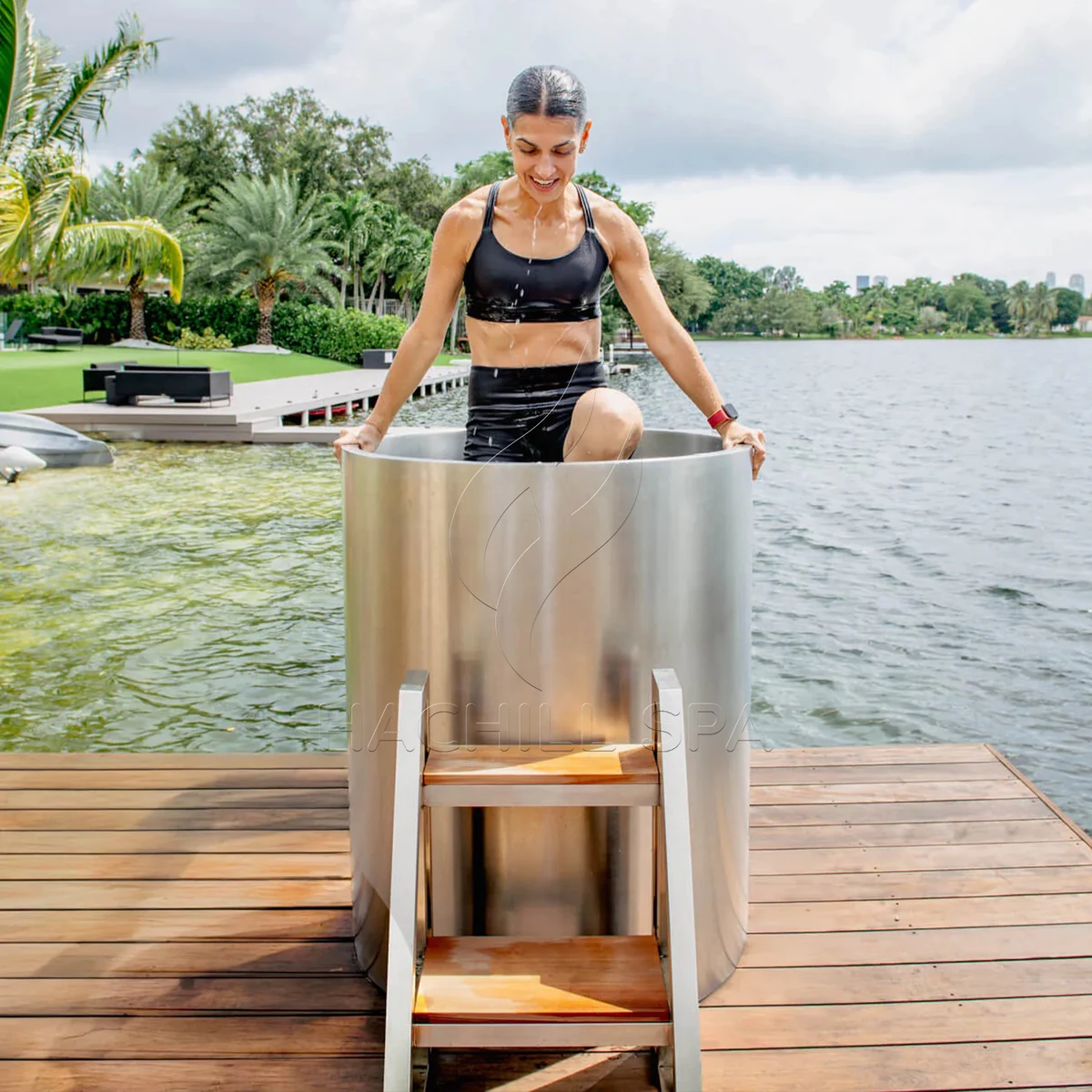
Mapeie Cada Transição de Mãos, Pés e Corpo
Crie um mapa de movimentos antes do teste. Para cada fase, identifique o contato pretendido, a direção da força, a dica visual, a possível obstrução e a posição de recuperação se o movimento for interrompido. Revise tanto a entrada quanto a saída; a saída geralmente muda a carga porque o usuário passa do suporte flutuante para o peso total do corpo enquanto molhado. A avaliação deve incluir a cobertura, paredes próximas, tubulações, móveis, toalhas e outros usuários em suas posições reais de operação.
| Fase | Observar | Evidência obrigatória | Resposta a falhas |
|---|---|---|---|
| Aproximação | Condição do piso, rota, iluminação e fila | Planta da área molhada e caminhada | Limpar ou redesenhar a rota |
| Subida | Etapa de contato, alcance de apoio e estabilidade | Etapa aprovada mais teste seco | Segurar se o movimento/apoio estiver instável |
| Transição de borda | Espaço para os pés, transferência manual e espaço acima da cabeça | Planta/elevação mais observação | Alterar disposição aprovada |
| Abaixamento | Descida controlada e contato interno | Teste exato da geometria interna | Restringir ou rejeitar configuração |
| Imersão/giro | Postura, espaço para joelhos/pés e acesso aos controles | Tarefa pretendida observada | Revisar limite/procedimento do usuário |
| Subir | Sequência de mãos/pés e esforço após a imersão | Tentativa de saída observada | Fornecer alteração aprovada ou interromper |
| Retorno à borda | Equilíbrio ao molhado e direção da transição | Observação da comissão em estado úmido | Resolver interface não resolvida |
| Descida/recuperação | Aterrissagem, secagem, assistência e rota livre | Observação do local concluído | Proteger o envelope de recuperação |
Um movimento não é aceito porque um demonstrador treinado pode completá-lo uma vez. Repetibilidade, uso correto dos apoios pretendidos e a capacidade de parar sem queda descontrolada ou agarramento improvisado são mais importantes. Não peça a uma pessoa para repetir um movimento que já mostrou instabilidade apenas para obter mais dados.
Cenário de engenharia: o apoio funciona na entrada, mas desaparece durante a saída
Problema observado: Um usuário sobe com um apoio alcançável, mas após virar-se no vaso, o mesmo apoio fica atrás do ombro durante o primeiro movimento de saída.
Causa provável: A revisão do layout tratou entrada e saída como imagens espelhadas e não mapeou a transferência das mãos após a imersão.
Como verificar: Marque as posições das mãos e dos pés para cada fase na configuração exata instalada e, em seguida, observe uma tarefa seca controlada com a direção de deslocamento pretendida.
Caminho de prevenção ou correção: Altere o suporte aprovado, a orientação ou o limite operacional e repita o ensaio seco afetado antes da comissionamento em ambiente úmido.
Condições de espera claras de entrada/saída antes de pontuar preferências
Não faça a média de uma falha de interface crítica em uma pontuação geral atraente. Para o método de projeto neste guia, trate um degrau solto ou não aprovado, caminho de carga de suporte não resolvido, patamar de acesso obstruído, dano com bordas cortantes, água no piso não controlada, controle de parada inacessível, observação exigida inadequada ou incapacidade dos usuários previstos de concluir a saída controlada como condições de retenção até que sejam fechadas, restritas por uma regra operacional aprovada ou rejeitadas. Esses são portões de decisão de compra e comissionamento, não uma lista universal definida por norma; instruções do fabricante e requisitos locais aplicáveis podem adicionar ou alterar pontos de retenção.
| Condição de manutenção | Evidências necessárias para liberação | Responsável pela liberação |
|---|---|---|
| Degrau/plataforma se move, balança ou não possui escopo aprovado | Detalhe aprovado, registro de instalação e verificação de estabilidade | Fornecedor/projetista do local/instalador conforme escopo |
| Suporte manual ou caminho de carga não verificado | Evidência aprovada de componente e fixação | Autoridade de projeto e revisor qualificado |
| O usuário pretendido não consegue concluir a saída controlada | Alteração aprovada ou restrição de usuário documentada | Comprador/operador com revisão qualificada |
| Espaço de pouso ou recuperação obstruído | Layout concluído e controle operacional | Projetista do local/operador |
| Água parada ou drenagem cria rota não controlada | Piso/drenagem corrigidos e verificação de umidade testemunhada | Instalador/operador |
| Superfície de contato afiada, danificada ou instável | Reparo/substituição e inspeção | Fornecedor/instalador/operador |
| A equipe não consegue observar ou interromper a tarefa conforme projetado | Escala revisada, linha de visão ou controle de acesso | Operador |
| Revisão local/acessibilidade necessária está pendente | Decisão documentada específica do projeto | Profissional qualificado/AHJ |
Regra de decisão: uma condição de bloqueio de projeto não resolvida não é uma pontuação baixa. Não prossiga para pontuação comparativa, uso por funcionários, abertura ao público ou uma solução improvisada até que a autoridade nomeada a encerre. Em locais de trabalho nos U.S. onde OSHA 1910.22 aplica-se, superfícies de caminhamento e trabalho devem ser mantidas limpas e organizadas e, na medida do possível, secas; onde processos molhados são usados, a drenagem deve ser mantida. Essa regra sustenta tratar riscos não resolvidos de superfícies de caminhamento molhadas como bloqueadores de liberação para áreas cobertas de funcionários, mas não é um padrão completo de segurança para cold plunge.
Meça o Layout Concluído com um Método Repetível
Defina o vaso exato, o componente de acesso aprovado e as interfaces ao redor em escala real antes que os serviços permanentes tornem a alteração cara. Use uma trena ou laser adequado à superfície, um nível onde for relevante, marcas removíveis no piso, fotografias de pontos de vista fixos e um esboço datado. Registre o instrumento, o datum, as unidades, o observador e a revisão. O objetivo é a rastreabilidade, não a precisão falsa.
Para observações de alcance e movimento, registre onde ocorre o contato em vez de declarar uma distância aceitável universal. Documente se a pessoa se inclina, gira, procura um ponto de apoio, muda a pegada, toca uma borda ou precisa de assistência. Meça o envelope de aterrissagem e recuperação no estado de acabamento completo, incluindo portas, tampas, telas, drenos e painéis de serviço.
| Registro | Método | Evidência bruta | Uso para decisão |
|---|---|---|---|
| Geometria de planta/elevação | Medir a partir do datum nomeado | Valores, unidades, esboço e foto | Comparar com o layout aprovado |
| Estado do degrau/plataforma | Verificação de nível/estabilidade e posição | Foto, fixação e condição | Tarefa de subida de liberação |
| Sequência de contato manual | Observação controlada da tarefa | Mapa de contato por fase | Encontrar transferências inacessíveis |
| Sequência de contato dos pés | Observação controlada da tarefa | Mapa de pés/apoios por fase | Encontrar busca ou interferência |
| Aterrissagem/recuperação | Envelope marcado em escala real | Registro de dimensões e obstruções | Proteger saída controlada |
| Posição de assistência da equipe | Demonstração do procedimento | Registro de posição/linha de visão | Validar método de operação |
| Estados de cobertura e manutenção | Simulação de abertura/fechamento/remoção | Fotografias de conflitos | Evitar sobreposição de envelopes |
| Desvio | Comparar desenho com o campo | Proprietário, impacto e status | Reter aceitação afetada |
Se uma medição mudar após piso, nivelamento, substituição de degrau ou revisão do produto, atualize o registro e repita apenas as tarefas afetadas, além de qualquer transição dependente. Mantenha o registro anterior; ele explica por que a conclusão anterior não controla mais a instalação concluída.
Realize testes de entrada/saída a seco com usuários representativos
Um teste a seco reduz a exposição enquanto o layout ainda é ajustável. Selecione participantes do grupo de usuários pretendido da instalação usando um método aprovado e não discriminatório; o teste não é triagem médica. Explique o sinal de parada, mantenha o recipiente seguro, use apenas suportes aprovados e forneça um observador qualificado quando o projeto exigir. Não peça aos participantes para pular, subir em superfícies não aprovadas ou testar uma condição já identificada como instável.
Observe a mesma sequência roteirizada para cada participante. Registre conclusão, sequência de contato, assistência, desvios e motivo da parada. A aprovação de um participante não prova ajuste universal. Uma falha pode indicar um problema de configuração, uma restrição operacional ou a necessidade de revisão qualificada. Preserve observações malsucedidas em vez de fazer uma média delas.
| Campo | O que registrar | Por que é importante | Estado do resultado |
|---|---|---|---|
| Grupo/código do participante | Agrupamento relevante de usuários pretendidos sem dados pessoais desnecessários | Vincula a observação ao escopo declarado | Dentro do escopo / fora do escopo |
| Configuração/revisão | Recipiente, etapa, suporte, orientação e layout | Impede a transferência para outra configuração | Confirmado / incompatibilidade |
| Fase da tarefa | Sequência de movimento padrão | Localiza a interface | Completo / assistido / interrompido |
| Contatos/desvio | Mãos, pés, inclinação, torção, busca ou colisão | Mostra como a tarefa foi realizada | Esperado / desvio |
| Observador/testemunha | Nome/função e horário | Apoia a rastreabilidade | Registrado / ausente |
| Motivo da parada | Instabilidade, dor, incerteza, obstrução ou gatilho de procedimento | Protege o participante e a evidência | Fechado / aberto |
| Ação/reteste | Mudança aprovada e fases afetadas | Iteração de controles | Obrigatório / não obrigatório |
Cenário de engenharia: um único demonstrador atlético mascara o limite real do usuário
Problema observado: A demonstração do fornecedor parece fácil, mas usuários pretendidos mais baixos procuram um apoio interno e não conseguem reproduzir a mesma sequência de saída.
Causa provável: A decisão baseou-se em um demonstrador familiar, sem fases roteirizadas e sem registro do nível de água operacional ou da configuração exata.
Como verificar: Execute a sequência seca aprovada com usuários pretendidos representativos e registre contatos, assistência, desvios e motivos de parada por revisão de configuração.
Caminho de prevenção ou correção: Defina o limite real do usuário, altere o arranjo de entrada aprovado quando justificado e repita as tarefas afetadas antes da aceitação.
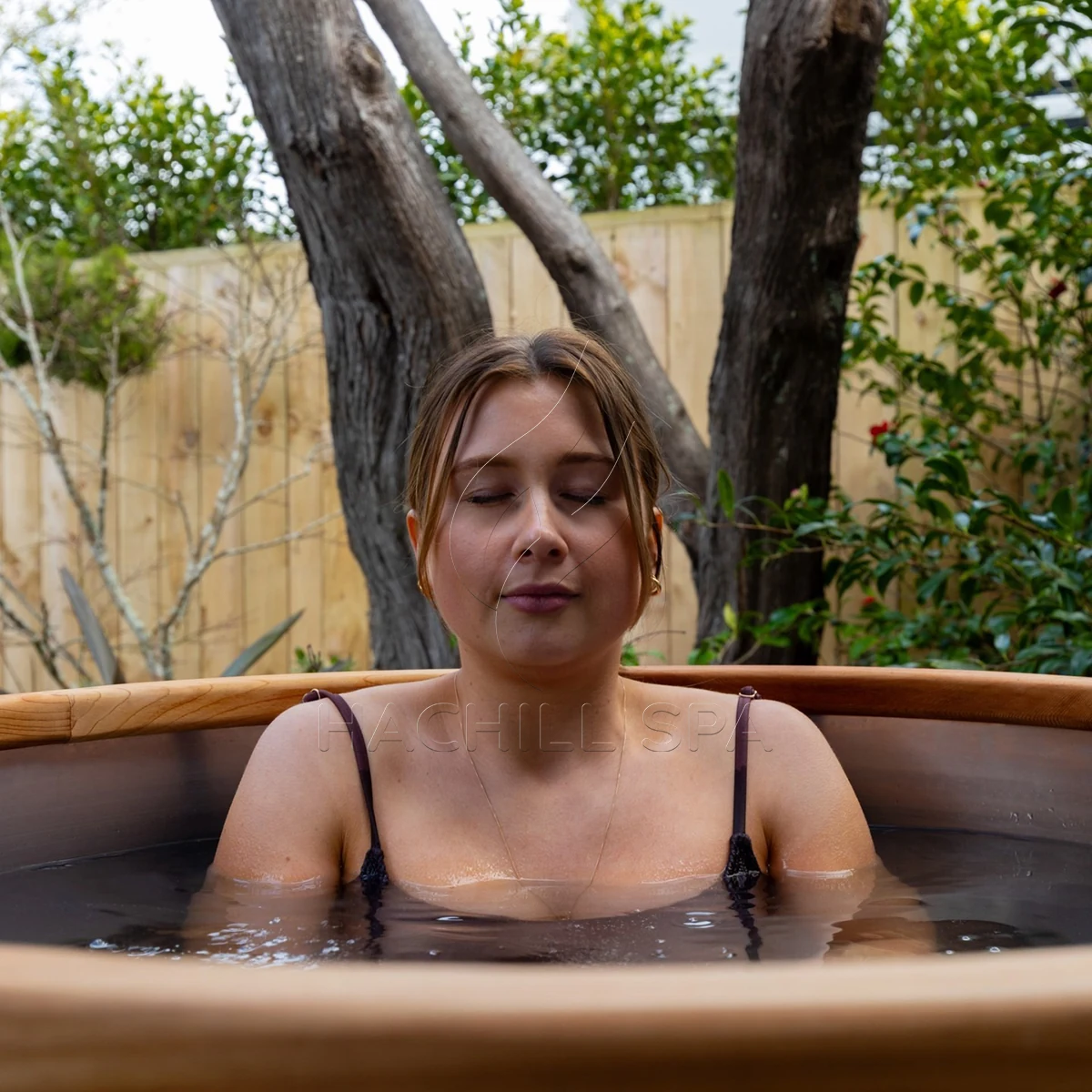
Valide entrada/saída em condição molhada durante comissionamento controlado
A água altera flutuabilidade, visibilidade, condição da superfície, respingos e a transição da imersão apoiada para o peso total do corpo. A validação molhada, portanto, é importante, mas não é um convite à experimentação insegura. Comece somente após os portões estruturais, hidráulicos, elétricos, de drenagem e de tarefas secas serem fechados sob o procedimento de projeto aprovado. Use o nível de água operacional pretendido e registre as condições da água e do ambiente.
Compare as observações molhadas com a linha de base seca: se a localização do pé permanece visível, se a sequência de mãos muda, onde os respingos atingem o patamar, quão rapidamente o piso drena e se o usuário consegue alcançar uma posição de recuperação estável. Pare em caso de instabilidade inesperada, água descontrolada, vazamentos ativos, suspeita de exposição elétrica, suportes danificados, disparos repetidos de proteção ou qualquer condição de parada manual ou do local.
| Condição | Linha de base | Observação molhada | Ação |
|---|---|---|---|
| Nível de água operacional | Alvo/marca aprovado | Nível real antes e depois da entrada do usuário | Correto antes de julgar a tarefa |
| Visibilidade interna do pé/suporte | Mapa de contato seco | Visível, obscurecido ou pesquisado | Revisar sinal/suporte/procedimento |
| Sequência de mãos | Mapa de contato seco | Igual ou alterado sob saída molhada | Reavaliar transição afetada |
| Respingo e drenagem | Aterrissagem marcada seca | Extensão molhada e resposta de drenagem | Rota correta ou limpeza |
| Transição de recuperação | Tarefa de aterragem seca | Estabilidade e assistência utilizadas | Segurar se não controlado |
| Condição inesperada | Nenhuma esperada | Fuga, movimento, tropeço ou dano | Parar, preservar evidências, escalar |
| Retestar limite | Configuração aprovada | Variável alterada e controlos estáveis | Aceitar apenas reteste controlado |
Não compare diferentes níveis de água, degraus, posições de apoio e grupos de utilizadores como se apenas uma variável tivesse mudado. Um reteste defensável altera a causa identificada, mantém outros controlos válidos, usa o mesmo método de observação e regista a nova revisão. Se isso for impossível, descreva o resultado como um novo teste, não como uma confirmação.
Compare configurações somente após a liberação das condições de retenção
Uma pontuação de projeto divulgada pode comparar duas configurações somente depois que ambas tiverem superado as condições de retenção aplicáveis. Ela não pode certificar segurança, acessibilidade ou conformidade. Escolha critérios que correspondam à instalação, como sequência repetível de mãos/pés, controle de plataforma de acesso, observação, posição de assistência, limpeza/restauração e conflitos de serviço. Atribua pesos antes de revisar resultados de fornecedores para reduzir viés de retrospectiva.
Um método transparente e específico do projeto é pontuação ponderada da tarefa = soma(peso x classificação) / soma(pesos). Defina a escala de classificação no registro do projeto, mantenha as observações brutas e faça uma verificação de sensibilidade variando os pesos mais altos. Se a opção preferida mudar com alterações pequenas e razoáveis nos pesos, a comparação não é robusta e deve ser resolvida com melhores evidências ou prioridades operacionais explícitas, em vez de aritmética oculta.
| Critério | Exemplo de evidência | Base de pesos | Limite |
|---|---|---|---|
| Sequência mãos/pés | Mapas de contacto seco e húmido | Repetibilidade da tarefa principal | Sem desqualificador aberto |
| Controlo de saída e recuperação | Transição de aterragem observada | Política de risco/assistência da instalação | Revisão qualificada quando necessário |
| Linha de visão/posição do pessoal | Inspeção do layout concluído | Modelo de supervisão | Não substitui o pessoal |
| Restauro após limpeza | Observação de reinício cronometrado | Frequência de operação | Apenas peças/posições aprovadas |
| Conflitos de cobertura/serviço | Desenho do envelope multiestado | Dever de manutenção/encerramento | Sem sobreposição de utilização em direto |
| Confiança nas evidências | Registros específicos do modelo/revisão | Risco de aquisição | Factos em aberto permanecem em aberto |
Mantenha pesos, classificações, observações brutas e o responsável pela decisão no registro do projeto. Não publique pontuações inventadas como classificações de modelos HACHILL. Qualquer pontuação pertence apenas à configuração avaliada, ao local, ao grupo de usuários, ao procedimento operacional e à revisão de evidências.
Classificar evidências por modelo, grupo de usuários, método e condição
A força da evidência depende da relevância, não da qualidade da apresentação. Um desenho aprovado para o modelo exato é mais forte para geometria do que uma fotografia de categoria. Um ensaio de tarefa testemunhado na configuração concluída é mais forte para esse grupo de utilizadores e procedimento do que uma demonstração em showroom não registada. Nenhum dos dois comprova adequação médica ou acessibilidade universal.
Nota de grau de evidência: os rótulos A-D abaixo são uma convenção de registro de projeto usada neste guia, não uma certificação externa, classificação regulatória ou grau de produto HACHILL.
| Grau | Evidência | Uso permitido | Limite |
|---|---|---|---|
| A – controlado | Modelo/configuração exato, método aprovado, grupo pretendido, condição registada, testemunha e revisão | Decisão de aceitação dentro do limite declarado | Não transfere automaticamente |
| B – específico do modelo | Desenho/manual aprovado ou evidência de amostra controlada | Planeamento do projeto e dos ensaios | O trabalho de campo e as tarefas do utilizador ainda requerem confirmação |
| C – análogo | Modelo relacionado, maquete ou condição incompleta | Identificação de riscos e planeamento provisório | Sem evidência de liberação |
| D – ilustrativo | Imagem de marketing, declaração genérica ou demonstração não registada | Apenas orientação | Sem conclusão sobre dimensão, carga, ajuste ou conformidade |
| Abrir | Informação em falta, contraditória ou com revisão desconhecida | Registar como ação | Não pode ser convertido numa premissa |
Cada registo deve indicar o produto/configuração, o estado do local, o grupo de utilizadores, o método, o observador, a data, as unidades e a revisão. Mantenha os registos contraditórios e explique a resolução. Eliminar o resultado falhado ou desatualizado torna mais difícil reconstruir disputas posteriores e pode permitir que um desenho antigo recupere autoridade.
Cenário de engenharia: um degrau fornecido no local muda após o ensaio
Problema observado: O pessoal de abertura descobre que o degrau de substituição é mais alto e fica mais próximo do vaso do que o degrau utilizado durante a aceitação.
Causa provável: O degrau foi tratado como mobiliário solto e não como parte controlada da configuração de entrada, pelo que a aquisição o alterou sem revisão ergonómica da alteração.
Como verificar: Compare o item instalado, a fixação, a posição e a revisão com o registo geométrico aceite e os registos de tarefas; isole a utilização enquanto persistir a discrepância.
Caminho de prevenção ou correção: Controle os componentes de acesso fornecidos no local por desenho e revisão e, em seguida, repita cada transição afetada de acordo com o método aprovado.
Atribuir responsabilidade por cada interface ergonômica
O comprador/operador define os utilizadores pretendidos, a supervisão, a assistência e as regras de paragem. O fornecedor fornece desenhos exatos do produto encomendado, componentes de acesso incluídos, manuais e evidências acordadas. O coordenador do projeto coordena as interfaces de aterragem, piso, drenagem, percurso, iluminação e suporte. O instalador constrói e regista a disposição aprovada. O responsável pela comissão testemunha o método de tarefa. Profissionais qualificados e a autoridade com jurisdição decidem sobre questões regulamentadas de acessibilidade, estruturais, elétricas, de uso público e de local de trabalho.
| Decisão | Liderança | Saída necessária | Aprovação/testemunha |
|---|---|---|---|
| Utilizador e limite operacional | Comprador/operador | Grupo pretendido, supervisão, assistência e regras de paragem | Revisores qualificados, conforme aplicável |
| Geometria/âmbito do produto | Fornecedor | Modelo exato, degrau/suporte incluído e revisões | Autoridade técnica do comprador |
| Envelope de movimento no local | Projetista | Planta/alçado coordenado e área de recuperação | Operador/profissionais qualificados |
| Disposição de acesso instalada | Instalador/execução | Posição conforme construído, fixação, nível e drenagem | Responsável pela comissão |
| Ensaio de tarefa a seco/em condições húmidas | Responsável pela comissão | Método, observações brutas, desvios e novo ensaio | Testemunha do comprador/operador |
| Abertura e verificações diárias | Operador | POP, registos, encerramento e escalonamento | Autoridade operacional nomeada |
| Controle de alterações | Parte que propõe a alteração | Impacto, evidência revista e aprovação | Titulares da decisão original |
Os contratos podem combinar funções, mas nenhuma interface deve ser anónima. Uma declaração do fornecedor de que um degrau está disponível não aprova o piso, a fixação, o patamar ou a tarefa do utilizador. Da mesma forma, um instalador que conclui o trabalho físico não define a elegibilidade do utilizador ou o limite médico da instalação.
Definir aprovação, desvio, parada e reteste controlado
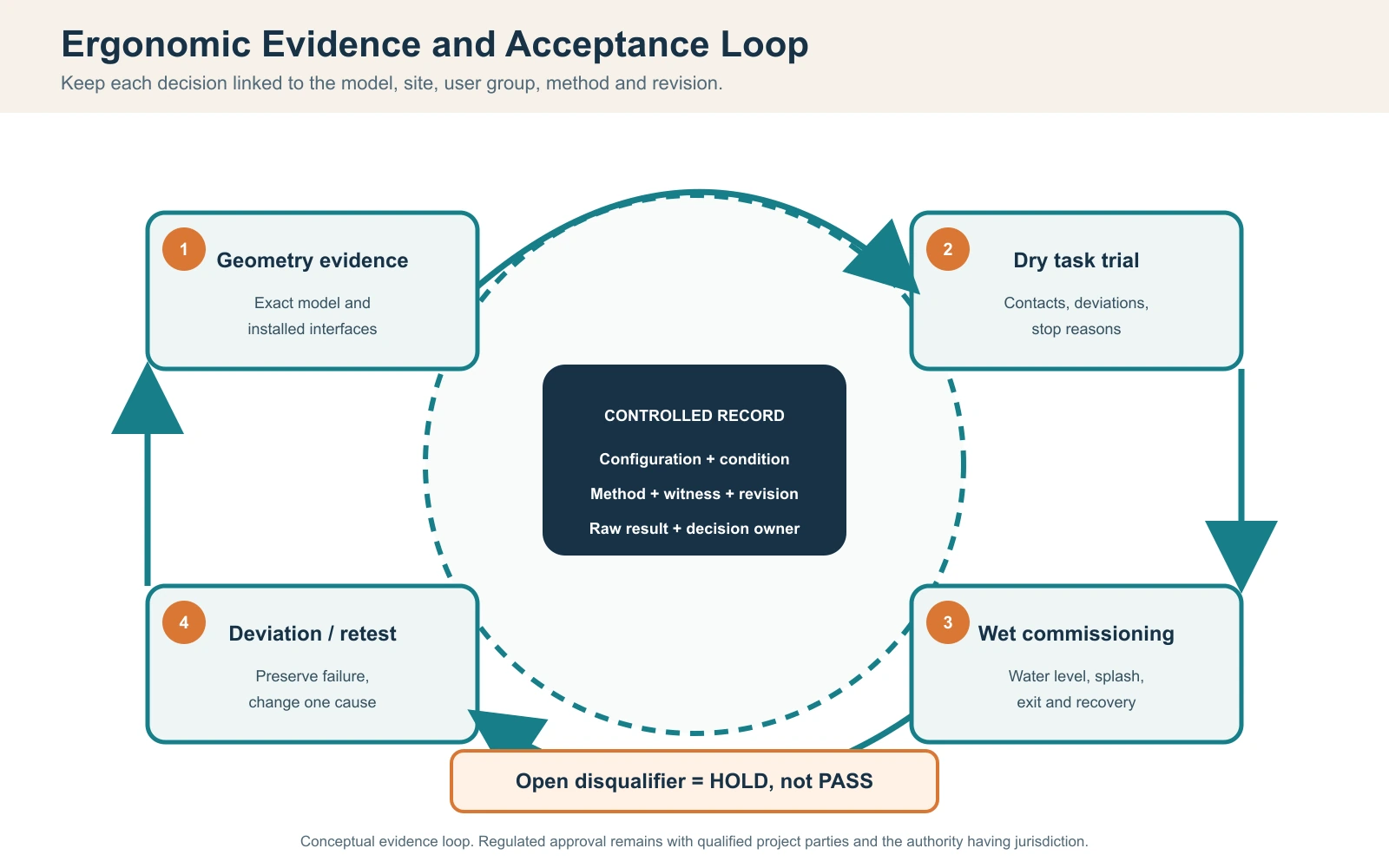
Um método prático de projeto usa quatro portões: liberação de evidências, layout a seco, comissionamento úmido controlado e operação de abertura. Cada portão precisa de um método, registro bruto, limite de aprovação, testemunha e autoridade para liberar. Um desvio deve identificar as tarefas afetadas, a restrição provisória, o responsável e o prazo. Não rotule um resultado condicional ou em aberto como aprovado.
| Etapa | Registo bruto/método | Passar limite | Regra de falha/re-teste |
|---|---|---|---|
| Divulgação de evidências | Registo aprovado de modelo, geometria e âmbito | Campos críticos e revisões encerrados | Suspender interfaces de encomenda/site |
| Layout seco | Marcações em escala real, medições e ensaios de tarefas com script | Sequência pretendida concluída dentro do limite aprovado | Alteração identificada como causa; repetir tarefas afetadas |
| Comissionamento úmido | Registo de nível de água, contacto, salpicos, drenagem e recuperação | Sem alteração não controlada em relação ao método aceite | Parar, corrigir e reteste controlado |
| Revisão de abertura | Procedimento operacional padrão, inspeção, encerramento e exercício de resposta | A equipe pode inspecionar, encerrar, escalar e restaurar | Não abrir até que as funções/evidências sejam encerradas |
| Revisão pós-mudança | Avaliação de impacto da revisão | Todas as evidências dependentes permanecem válidas ou são repetidas | Colocar em quarentena a configuração alterada |
| Preservação de disputas | Fotos, medições, registros e revisões | Condição rastreável e cadeia de custódia | Não sobrescrever evidências originais |
Quando as partes discordarem, compare o requisito acordado, a configuração exata, o método e o registro bruto antes de debater conclusões. Preserve o requisito acordado, os desenhos originais, as observações brutas e o resultado reprovado; não os sobrescreva com a revisão corretiva. Preserve as evidências de embalagem e recebimento quando houver danos ao produto, e preserve as medições conforme construído e os registros de teste quando a geometria do local for relevante. Um novo teste deve ser testemunhado pelas partes responsáveis pela interface em disputa.
Mantenha o arranjo aceito de entrada/saída controlado durante a operação
As verificações diárias de abertura devem cobrir o degrau/plataforma, suportes, superfícies de borda/contato, rota, pouso, drenagem, iluminação, cobertura e qualquer item restaurado após limpeza ou manutenção. Móveis, toalhas, mangueiras e sinalização temporária podem invalidar o envelope aceito. Registre defeitos, feche a estação com um método eficaz e nomeie quem pode autorizar a reabertura.
| Item | Verificação de abertura | Condição de parada de uso | Evidências de reabertura |
|---|---|---|---|
| Degrau/plataforma | Item correto, posição, fixação e condição | Movimento, dano ou incompatibilidade | Configuração corrigida e inspecionada |
| Superfícies de apoio/contato | Seguro, limpo e sem obstruções | Solto, afiado, danificado ou contaminado | Registro de reparo/limpeza |
| Rota/aterrissagem | Claro, iluminado e protegido | Conflito de fila, armazenamento, cobertura ou mangueira | Layout restaurado |
| Piso/drenagem | Sem acúmulo de água descontrolado | Entupimento de dreno ou rota úmida descontrolada | Verificação de dreno/piso |
| Nível de água/estado da tarefa | Dentro do método operacional aprovado | Nível/controles alteram a tarefa inesperadamente | Condição corrigida e revisão |
| Observação/fechamento | Equipe e método de fechamento disponíveis | Supervisão ou fechamento obrigatório indisponível | Escala/controle restaurado |
| Estado pós-manutenção | Degraus, painéis e tampas restaurados | Configuração desconhecida ou alterada | Devolução pós-manutenção e inspeção |
Analise falhas recorrentes em vez de tratar cada uma como isolada. Movimento repetido de degraus, drenos obstruídos ou móveis deslocados indica um problema de projeto ou de controle operacional. Eleve a causa e revise o arranjo ou procedimento aceito em vez de depender de lembretes repetidos.
Emitir um RFQ focado em ergonomia e registro de aceitação
Envie a cada fornecedor o mesmo limite de usuário/tarefa, desenhos do local, modelo de supervisão, solicitação de evidência do modelo, escopo dos componentes de acesso e método de aceitação. Peça ao fornecedor para marcar cada campo como em conformidade, desvio, alternativa ou em aberto. A comparação de preços antes de alinhar o degrau, o suporte, os desenhos e a responsabilidade recompensa exclusões ocultas.
| Campo de RFQ | Entrada do comprador/projeto | Resposta do fornecedor |
|---|---|---|
| Aplicação/usuários | Instalação, grupo pretendido, supervisão e limite de assistência | Limitações declaradas de modelo/uso |
| Configuração exata | Formato e orientação exigidos | Modelo, revisão e lista de opções |
| Geometria | Campos e dados de referência exigidos no desenho | Evidência externa/interna, borda, degrau, suportes e nível de água |
| Componentes de acesso | Responsabilidade incluída/fornecida pelo local | Escopo, fixação, limites, manuais e exclusões |
| Envelope instalado | Planta da sala, patamar, drenagem e recuperação | Acesso/folga exigidos e conflitos |
| Evidência | Requisitos de desenho, manual, teste e revisão | Grau disponível e itens em aberto |
| Aceitação | Tarefas secas/úmidas, testemunhas, pontos de espera e novo teste | Suporte de método, desvios e limites |
| Escopo comercial | Quantidade, destino, marca e cronograma | Escopo incluído/excluído e controle de alterações |
Para um RFQ em nível de modelo, forneça os campos preenchidos em vez de perguntar se um plunge vertical é ergonômico em geral. Use a resposta exata de modelo/configuração para fechar os campos do lado do produto; layout do local, acessibilidade, trabalho regulamentado e aprovação operacional permanecem com as partes responsáveis do projeto.
Perguntas frequentes
Como você avalia a entrada e a saída de uma banheira vertical de imersão fria?
Defina os usuários pretendidos e o método de operação, obtenha a geometria exata do modelo e dos componentes de acesso, mapeie cada transição de mãos e pés, elimine condições desqualificantes e, em seguida, realize observações controladas de tarefas secas e molhadas sob o procedimento aprovado do local. Registre a configuração, o nível da água, os participantes, o método, os desvios, a testemunha e a revisão.
As dimensões externas da banheira podem comprovar que uma banheira vertical de imersão fria caberá no usuário?
Não. As dimensões externas não definem o espaço interno de movimentação, a transição da borda, a posição dos pés, o alcance do suporte, o nível operacional da água, o esforço para sair ou as condições de aterrissagem. Utilize evidências internas e externas exatas, além de um teste de tarefa com usuário representativo para a configuração e os limites da instalação pretendidos.
A banheira vertical de imersão fria deve ser fornecida com um degrau de entrada?
O pedido deve declarar se o degrau ou plataforma aprovado está incluído, é opcional ou fornecido no local. Sua geometria, fixação, posição, superfície, evidência de carga aplicável, manutenção e controle de substituição devem ser definidos. Um banco móvel genérico não deve ser tratado como equivalente, a menos que seu projeto, estabilidade, posicionamento e uso pretendido tenham sido especificamente aprovados para a tarefa e o local.
Por que a comissão úmida deve repetir partes do teste ergonômico seco?
A água altera a flutuabilidade, a visibilidade dos pés, os respingos, a condição da superfície e a transição da imersão para o peso total do corpo. A comissão em ambiente úmido verifica se a sequência de contato aceita e a rota de recuperação permanecem controladas no nível de água aprovado. Ela deve começar somente após a aprovação das etapas estruturais, elétricas, de drenagem e de tarefas a seco.
Quando uma estação vertical de imersão fria deve ser fechada?
De acordo com o método de projeto descrito aqui, interrompa o uso em caso de degrau ou suporte solto ou danificado, dano cortante, instalação instável, plataforma de acesso obstruída, água acumulada descontrolada, vazamento ativo, suspeita de exposição elétrica, disparos repetidos de proteção, supervisão necessária indisponível ou qualquer condição de parada do fabricante/local. Reabra somente depois que a autoridade responsável registrar a correção e qualquer reteste necessário.