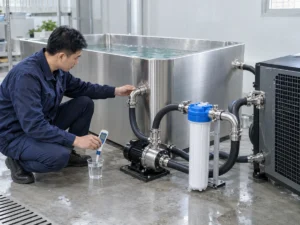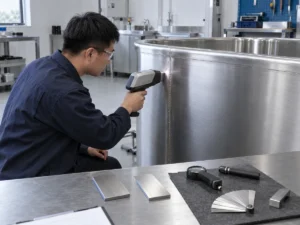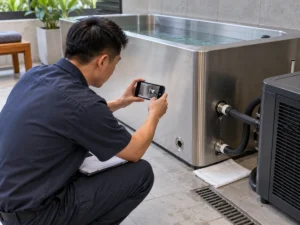
Um método controlado para comparar banheiras de imersão fria isoladas e não isoladas em regimes de resfriamento, manutenção e recuperação.
Resposta direta: Uma banheira de imersão fria isolada pode reduzir o ganho de calor pelos limites que estão realmente isolados — como parede da cuba, base, tampa ou tubulação conectada —, mas uma comparação justa de resfriamento deve alterar apenas o limite de isolamento declarado. Iguale massa de água, temperatura inicial e alvo, chiller, circulação, estado do filtro, exposição ambiente, programação da tampa, sensores e carga de usuários. Avalie pull-down, sustentação e recuperação separadamente. Caso contrário, um tempo de resfriamento mais curto pode vir de um chiller, vazão, tampa ou condição de teste diferentes, e não do isolamento. Esta página explica como comparar e interpretar testes; ela não reivindica um resultado publicado de desempenho A/B da HACHILL.
Este guia é para compradores de produtos, operadores comerciais, distribuidores, instaladores e engenheiros de projeto que precisam de um método repetível, não de uma porcentagem de economia sem comprovação. Ele explica como avaliar a energia do lado da água, coletar dados comparáveis, inspecionar pontes térmicas e umidade, classificar evidências, atribuir responsabilidades e encerrar um resultado contestado.
Escopo da página: Este artigo é responsável pelo método e pela interpretação da comparação entre isolado e não isolado, não por um resultado universal de desempenho de resfriamento. Páginas de produto são responsáveis pela construção exata, acessórios incluídos e dados do modelo. Um resultado se aplica apenas à configuração testada e às condições declaradas.
Efeito principal: O isolamento reduz o fluxo de calor através do limite que cobre continuamente.
Controle crítico: Mantenha o sistema de resfriamento, a massa de água e a exposição iguais.
Casos de decisão: Separe o resfriamento inicial, a manutenção e a recuperação.
Evidências necessárias: Manter séries temporais brutas, revisões, eventos e registros de testemunhas.
Defina exatamente o que significa “isolado”
A palavra isolado não é uma especificação completa. Registre o material, a propriedade térmica declarada quando verificada, espessura instalada, cobertura, juntas, compressão, proteção contra vapor e revisão. Depois identifique cada ruptura na camada. Um painel de parede pode ser isolado enquanto a borda, armação, base, porta de acesso, conexões de tubulação e cobertura permanecem expostas. Esses caminhos podem dominar um vaso pequeno ou um local úmido.
Decida se a comparação é entre a construção da parede, vasos completos ou sistemas instalados. Se uma amostra usa uma tampa isolada e a outra está aberta, o teste mede dois sistemas, não apenas o isolamento da parede. Isso ainda pode ser útil, mas o relatório e o título do resultado devem indicar isso.
| Item do limite | Registro | Por que é importante | Não presumir |
|---|---|---|---|
| Parede e base do vaso | Material, cobertura, juntas, compressão | Controla o ganho de calor por condução | A espessura nominal equivale ao desempenho instalado |
| Aro, estrutura e pés | Construção contínua ou com pontes | Pode contornar o campo isolado | Áreas pequenas são desprezíveis |
| Cobertura | Construção, ajuste e programação aberta/fechada | Controla a carga na superfície superior | Uma cobertura é incluída automaticamente |
| Tubulação e conexões | Comprimento, diâmetro, exposição e isolamento | Adiciona ganho de calor externo e caminhos de condensação | O isolamento da banheira cobre o circuito |
| Gabinete do equipamento | Caminho de ar e aberturas de serviço | Afeta a rejeição de calor e a umidade | Mais isolamento é sempre útil |
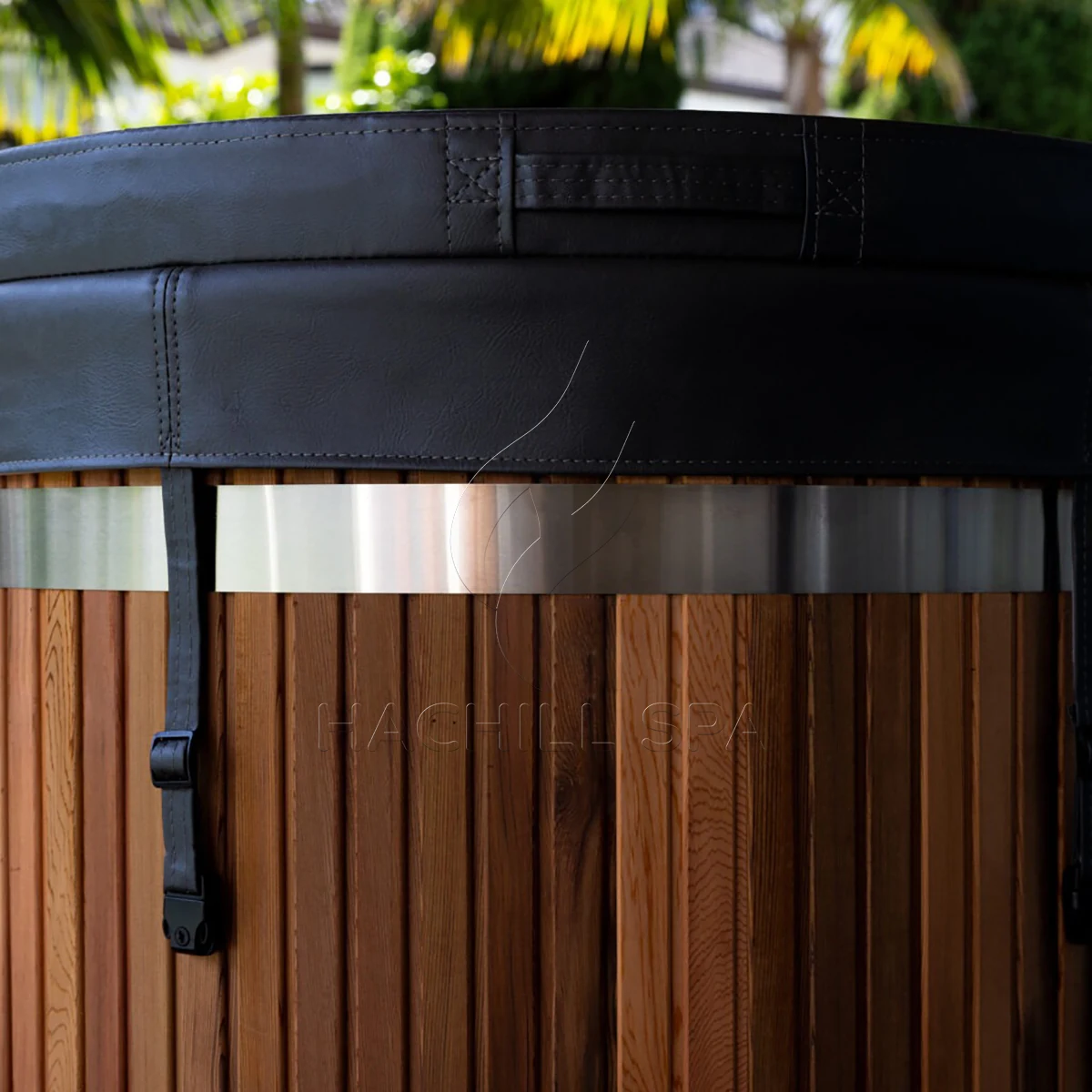
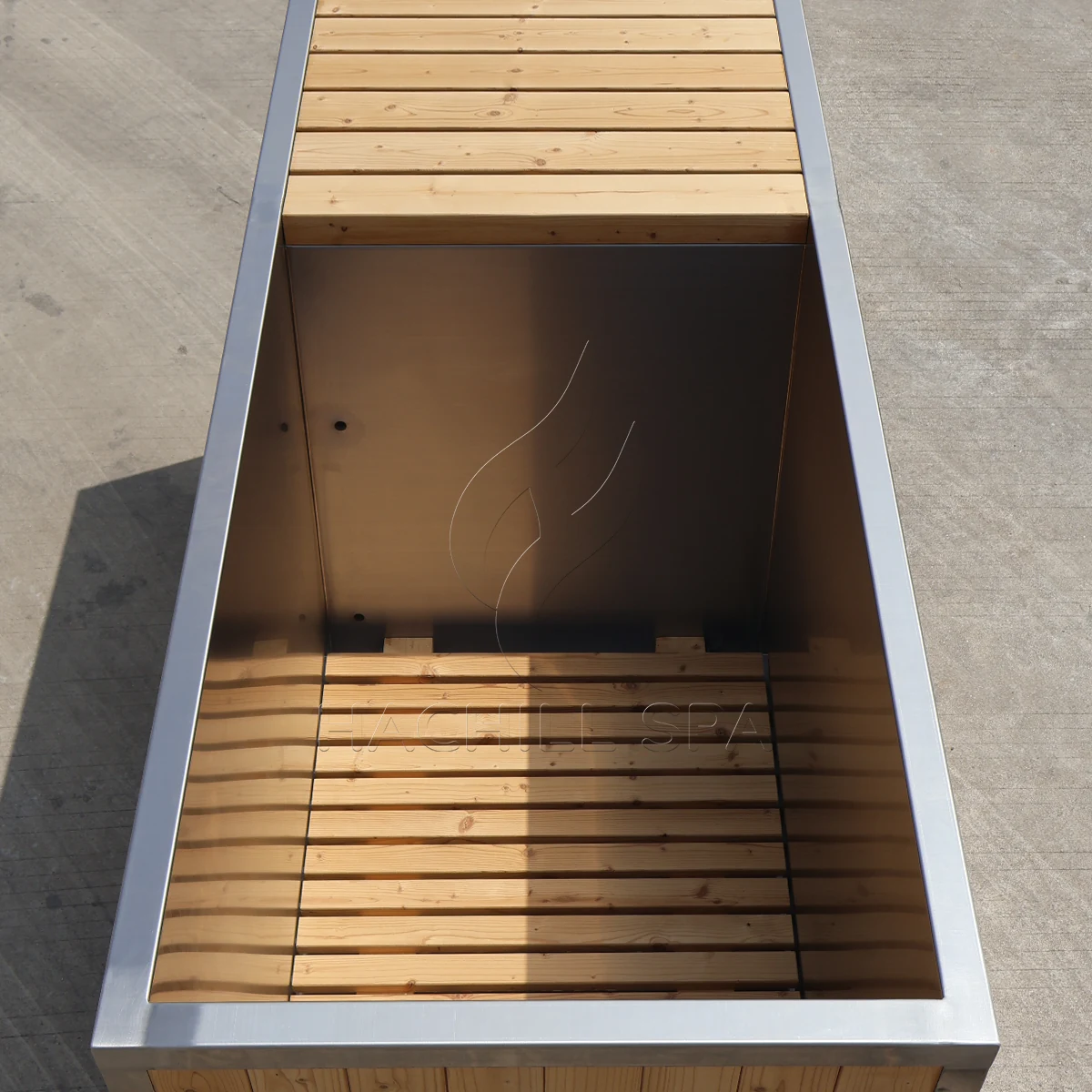
Não infira construção oculta a partir de uma fotografia do produto. Para compra, solicite um desenho de seção aprovado ou uma programação de construção específica do modelo. Se o fornecedor não puder verificar um campo, marque-o como aberto. Um campo aberto é mais seguro do que converter um rótulo de categoria em uma propriedade contratual.
Separar Rebaixamento, Manutenção e Recuperação
O isolamento não influencia todos os estados operacionais da mesma forma. Durante o resfriamento inicial, o calor armazenado na água pode dominar e um resfriador de alta capacidade pode ocultar uma diferença menor no ganho contínuo de calor. Durante a manutenção com tampa fechada, o ganho de calor ambiental e o comportamento de controle tornam-se mais visíveis. A recuperação adiciona pessoas, água de reposição, tempo com tampa aberta e eventos operacionais.
| Cenário de operação | Regra inicial | Observação principal | Conclusão inválida |
|---|---|---|---|
| Resfriamento inicial | Água inicial declarada e alvo | Tendência de temperatura ao longo do tempo | Um ponto final prova economia de isolamento |
| Manutenção | Alvo estável e estado de tampa declarado | Ganho de calor, ciclagem ou entrada ao longo do tempo | Resultado noturno prevê operação ocupada |
| Recuperação | Evento de usuário ou reabastecimento com registro de data e hora | Tendência de retorno e resposta de controle | Teste de pull-down comprova recuperação |
| Anormal | Evento de fluxo, fluxo de ar, vazamento ou proteção | Resposta de proteção e parada | Ignorar proteção para concluir uma execução |
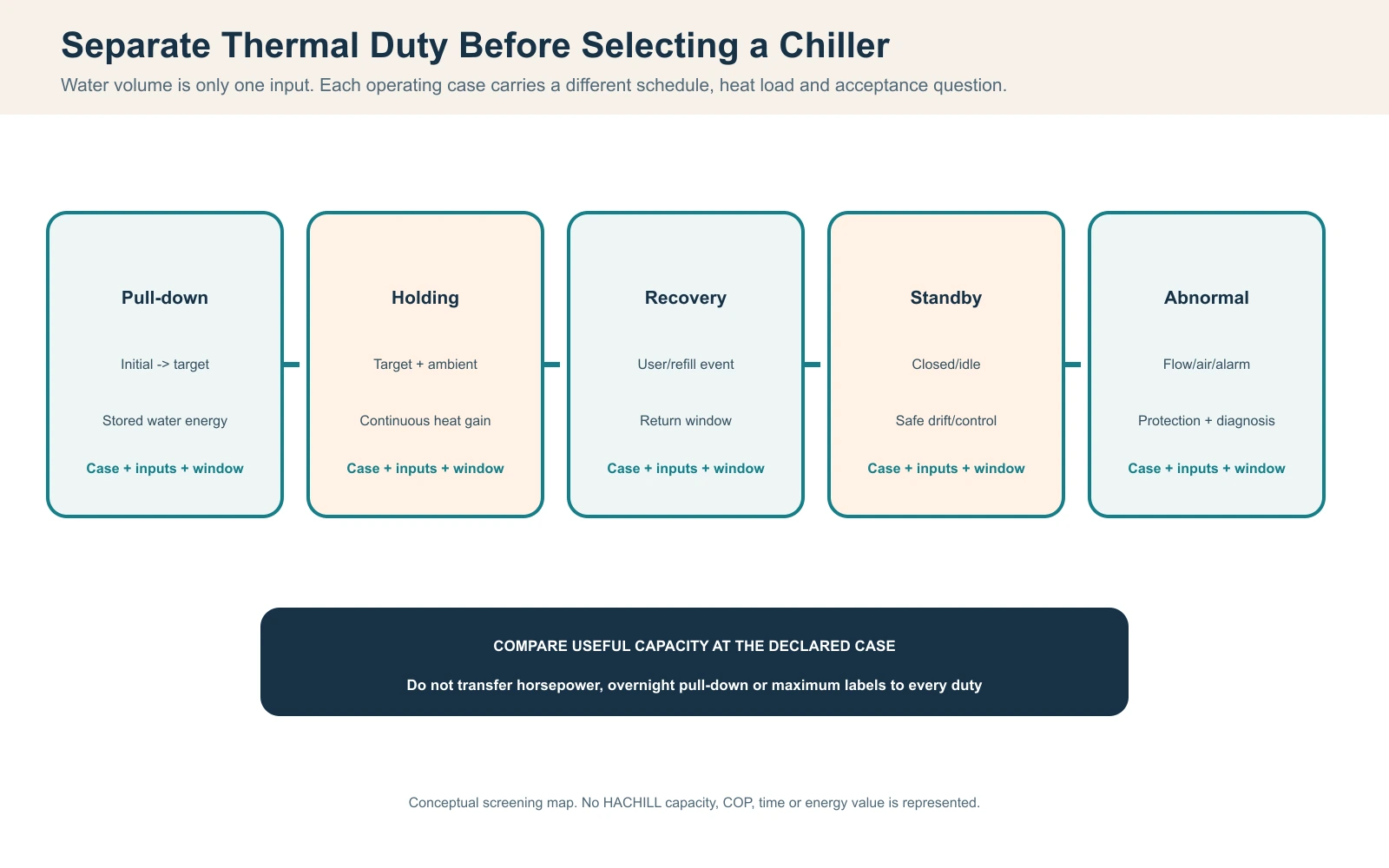
Declare a janela de observação e a regra de início/parada antes de revisar os dados. Um sistema que opera continuamente durante um pull-down quente intencional não é automaticamente subdimensionado. Um sistema que cicla durante a manutenção de baixa carga não é automaticamente superdimensionado. O caso de serviço e o histórico de carga dão significado ao tempo de operação.
Use o Cálculo de Energia do Lado da Água como Triagem
A tela de energia da água armazenada é Q = m × cp × ΔT, em que Q é a energia térmica, m é a massa de água, cp é o calor específico da água e ΔT é a variação de temperatura necessária. Mantenha as unidades consistentes. Esse cálculo é útil porque obriga o comprador a definir a massa de água operacional e a variação de temperatura antes de comparar alegações de resfriamento.
| Entrada | Valor de planejamento de exemplo | Uso | Limite |
|---|---|---|---|
| Massa de água, m | 500 kg | Energia da água armazenada | Verifique a massa operacional ou derive-a do volume medido usando uma base de densidade declarada. |
| Calor específico, cp | 4.18 kJ/kg-K | Propriedade da água na tela | Valor representativo de triagem próximo à temperatura ambiente; use dados de propriedades específicos da condição para trabalho formal. |
| Variação de temperatura, ΔT | 20°C a 10°C = 10 K | Mudança de temperatura da água necessária | Não inclui recipiente nem ganho contínuo de calor |
| Q = m × cp × ΔT | 20,900 kJ, cerca de 5.8 kWh térmicos | Compara o desempenho da água armazenada | Não é consumo elétrico nem tempo decorrido |
Para o exemplo identificado, 500 kg × 4.18 kJ/kg-K × 10 K resultam em 20,900 kJ, ou cerca de 5.8 kWh de energia térmica. O valor de 4.18 kJ/kg-K é uma propriedade arredondada de triagem para água líquida próxima da temperatura ambiente; um cálculo formal deve usar uma base de propriedades apropriada para a temperatura e a composição reais do fluido. Isto não é uma classificação de produto HACHILL, resultado medido no local ou promessa de energia elétrica. Exclui massa térmica da cuba, calor que entra durante a operação, calor da bomba, comportamento do controle, eventos de degelo ou proteção e diferenças entre capacidade de resfriamento nominal e de campo.
Uma triagem preliminar pode comparar a carga térmica total com a capacidade de resfriamento em uma condição declarada, mas a potência em cavalos e a entrada elétrica não são capacidade de resfriamento. Mesmo uma divisão baseada na capacidade é apenas uma estimativa de planejamento até que a condição real, o fluxo e o desempenho completo do sistema sejam verificados.
Escreva um protocolo de teste pareado antes de começar
Um teste pareado defensável altera a variável de isolamento pretendida e mantém os demais insumos iguais. Use a mesma geometria do recipiente quando possível. Se forem necessários dois recipientes físicos, registre a área de superfície, a massa de água, os materiais, o volume de tubulação conectado e todas as diferenças de construção. Randomize a ordem de execução ou alterne as configurações quando prático, para que uma mudança de ambiente ou condição climática não favoreça consistentemente uma amostra.
| Variável | Como controlar | Evidência | Manter teste se |
|---|---|---|---|
| Água | Mesma massa operacional medida e química | Registro de enchimento e referência de nível | Base de volume diferente |
| Circuito de resfriamento | Mesmo resfriador, tubulação, bomba e filtro limpo | Foto da configuração e registro do fluxo | Estado do fluxo ou do filtro desconhecido |
| Estado inicial e estado alvo | Mesma tolerância de mistura e de partida | Leituras de série temporal | Uma amostra começa mais fria |
| Ambiente | Carga de ar de admissão, umidade, vento e solar comparável | Registro de sensor local | Aplicativo de clima substitui a leitura do local |
| Cobertura e carga do usuário | Mesmo cronograma com registro de data e hora | Registro de eventos | Períodos abertos diferem |
| Instrumentação | Mesmos sensores, locais e intervalo | Registro de instrumento | Alterações na posição dos sensores |
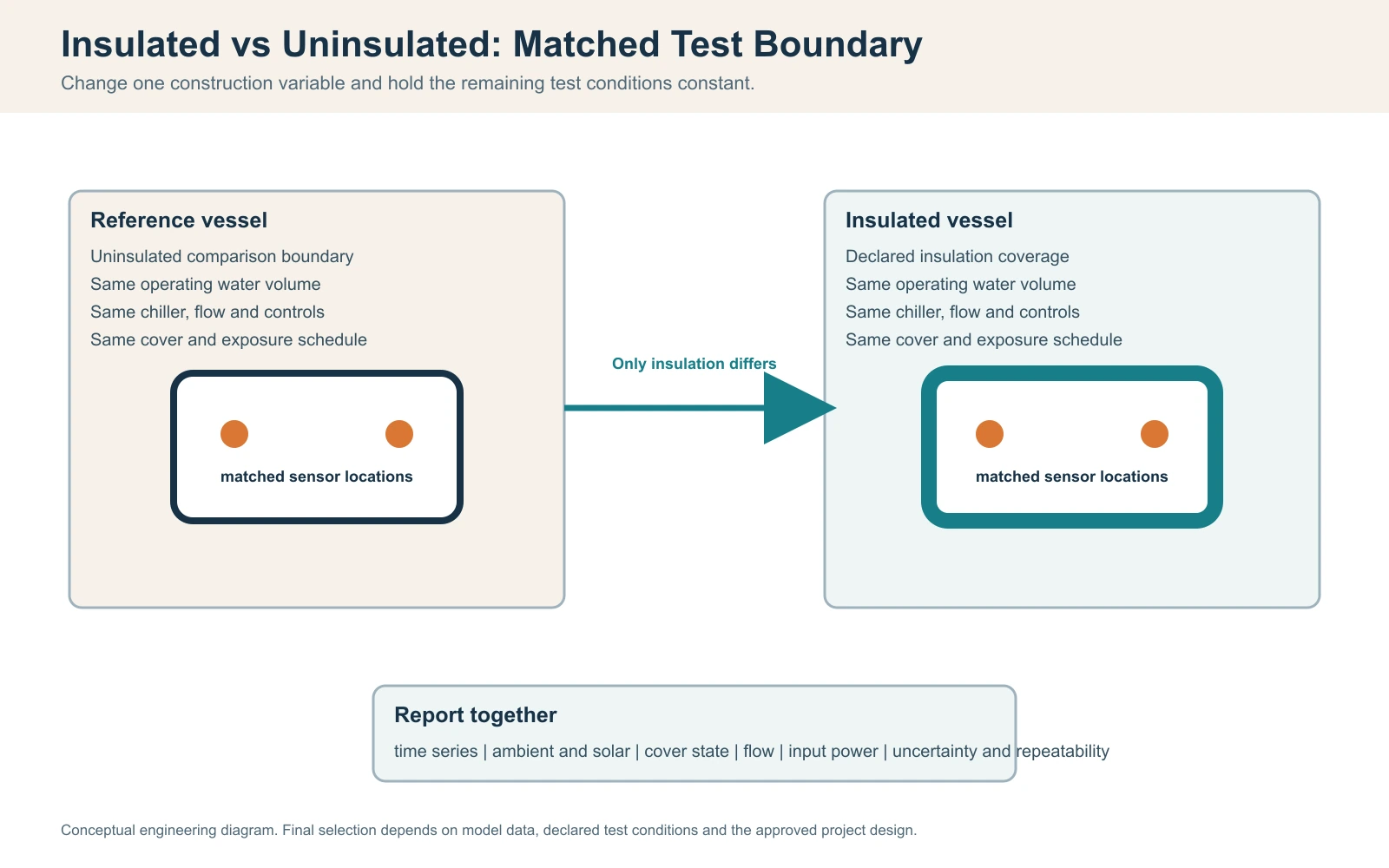
Defina regras de estabilização, mistura e ponto final. Por exemplo, a execução não deve começar apenas porque um sensor cruza brevemente um número. Declare como a água é misturada, onde a temperatura é medida, qual tolerância inicia o cronômetro, qual alvo encerra a execução e como uma interrupção é tratada. O protocolo também deve dizer se a cobertura permanece fechada, quando a bomba de circulação liga e se o sistema completo ou apenas um componente está sendo medido.
Execuções repetidas são mais importantes quando a melhoria alegada é pequena. Preserve cada rastro válido. Remover uma execução inconveniente sem uma regra de exclusão documentada transforma uma comparação de engenharia em relato seletivo.
Colete dados sincronizados que possam explicar a diferença
Uma captura de tela do controlador registra um momento; ela não estabelece o que aconteceu durante um teste. Use uma base de tempo compartilhada e intervalo fixo para temperatura da água, ar local e umidade, chamada de resfriamento, estado de funcionamento do compressor ou resfriador, alarmes, evidência de fluxo, estado do filtro e eventos de cobertura/usuário. Registre identidade do sensor, localização, unidades e informações disponíveis de verificação ou calibração.
| Campo | Método | Uso para decisão | Evidência de problema |
|---|---|---|---|
| Temperatura da água | Pontos fixos com regra de mistura declarada | Tendência e ponto final | Sensor próximo à entrada influencia o resultado |
| Ambiente e umidade | Na entrada do produto e do condensador | Normalizar condições de calor e ponto de orvalho | Somente registro meteorológico remoto |
| Estado do fluxo/filtro | Medição aprovada ou proxy declarado | Verificar condição de transferência de calor | Sem registro após manutenção do filtro |
| Estado de resfriamento/controle | Registrar data e hora de chamadas, execuções, ciclos e alarmes | Explicar o comportamento de operação | A redefinição apaga o histórico |
| Eventos de cobertura, usuário e reabastecimento | Registrar data e hora de cada evento | Carga imposta separada | Somente lembrança da equipe |
| Entrada elétrica | Limite de medidor definido por função qualificada | Comparar o mesmo escopo do sistema | Somente compressor vs. sistema completo |
| Risco | Sinal observado | Verificar | Tratamento |
|---|---|---|---|
| Deslocamento do sensor | Sensores paralelos discordam | Co-localizar antes/depois da execução | Corrigir ou incluir incerteza |
| Mistura deficiente | Profundidades diferentes mostram gradientes | Use misturas e locais declarados | Não escolha ponto favorável |
| Deriva ambiente | As execuções ocorrem em diferentes condições climáticas | Compare registros locais sincronizados | Repita ou limite a conclusão |
| Controle a histerese | Limiares diferentes de início/parada | Registre o setpoint e as chamadas reais | Normalizar antes da comparação |
| Variação entre execuções | O efeito é menor que a dispersão | Repetir ambas as configurações | Relatar como inconclusivo |
Posicione o sensor ambiente onde ele represente o produto e a entrada do condensador, em vez de uma parede distante ou serviço meteorológico. Um sensor de ar de descarga não deve ser confundido com a temperatura ambiente. Sensores de água próximos à entrada fria podem indicar uma condição mais fria do que a água em massa se a mistura for deficiente. Registre pelo menos a localização e a regra de mistura para que outro revisor possa interpretar o traçado.
Se a entrada de energia for comparada, fixe o limite do medidor. Um medidor de sistema completo que inclui bomba e controles não é diretamente comparável a uma leitura apenas do compressor. Use pessoal qualificado para medição elétrica regulamentada e nunca abra equipamentos energizados apenas para concluir um teste de blog.
Inspecione pontes térmicas, condensação e capacidade de serviço
Quando uma superfície fria cai abaixo do ponto de orvalho local, a umidade pode condensar. Isolamento contínuo e controle de vapor podem elevar a temperatura da superfície externa, mas frestas podem deslocar a condensação para a borda, conexões, moldura ou aberturas de serviço. A ausência de umidade visível em um painel não prova que o conjunto completo esteja seco.
| Localização | Mecanismo possível | Inspeção | Caminho corretivo |
|---|---|---|---|
| Aro e estrutura | Descontinuidade do isolamento | Mapa de temperatura superficial e condensação | Revisar continuidade e detalhe aprovado |
| Passagens de tubulação | Conexão fria encontra ar quente e úmido | Inspeção seca antes e depois da operação | Selar/isolar usando método aprovado |
| Base e pés | Ponte estrutural ou água retida | Verificação de acesso e drenagem | Restaurar drenagem e inspecionar materiais |
| Invólucro de serviço | entrada de vapor ou vazamento | Rastrear fonte de umidade | Não ocultar até que a causa seja eliminada |
| Isolamento em si | Material úmido, comprimido ou deslocado | Registro de construção vinculado à revisão | Substituir/reparar conforme especificação aprovada |
Inspecione antes, durante e após cada operação. Distinga condensação de vazamento de água secando a área, observando o tempo e rastreando a fonte sob um procedimento aprovado. Isolamento úmido pode perder desempenho, reter contaminantes ou ocultar corrosão. Não sele o espaço até que a fonte, o material afetado e o caminho de drenagem tenham sido revisados.
O isolamento adicionado não deve bloquear o fluxo de ar do condensador, a ventilação da bomba, os drenos, os painéis de serviço ou os afastamentos exigidos. Uma melhoria térmica que torne a inspeção ou o reparo impraticável pode criar um risco maior no projeto. Inclua o acesso para manutenção e o método de substituição na decisão de comparação.
Interprete o Traço Completo, Não Apenas um Ponto Final
Compare as curvas de temperatura versus tempo, não apenas o momento em que um sensor exibido atinge o alvo. Revise a inclinação inicial, o comportamento próximo ao alvo, as chamadas de controle, a deriva ambiente e qualquer alarme ou evento. O resfriamento rápido pode parecer semelhante enquanto o comportamento de manutenção difere, ou um resultado mais curto pode desaparecer quando a temperatura inicial e o fluxo são normalizados.
| Observação | Possível explicação | Próxima verificação | Não afirmar |
|---|---|---|---|
| Resfriamento mais rápido | Menor ganho de calor ou outra entrada alterada | Limite correspondente e tendência completa | Economia de tempo universal |
| Resfriamento rápido semelhante | A saída de resfriamento domina a carga de água armazenada | Teste de manutenção e incerteza | O isolamento não tem valor |
| Ciclo de desligamento mais longo | Menor carga de retenção ou controles diferentes | Faixa de controle e estado do sensor | Percentual de energia garantido |
| A condensação se move para a borda | A ponte térmica permanece | Mapa de superfície/umidade | Sem risco de condensação |
| Maior entrada em uma única execução | O escopo de ambiente, fluxo, cobertura ou medidor difere | Normalizar todas as entradas | O isolamento causou a diferença |
Relate o resultado em uma frase vinculada à condição: qual configuração foi testada, sob qual programação de ambiente e cobertura, com qual massa de água e circuito de resfriamento, para qual caso de serviço. Evite transformar uma observação de desenvolvimento em um percentual universal. Um teste em uma sala interna amena não prova a mesma diferença sob sol direto, ar úmido ou uma programação comercial movimentada.
Cenários Comuns de Engenharia que Produzem uma Conclusão Falsa
Cenário 1: a cobertura, não a parede, cria o resultado
Problema: A amostra isolada atinge o alvo mais cedo, mas sua cobertura permaneceu fechada enquanto a referência foi aberta para verificações.
Causa: O ganho de calor superficial e a evaporação mudaram com a construção da parede.
Verificar: Compare o registro de eventos, os carimbos de data/hora da cobertura e os rastreamentos completos.
Prevenção: Use uma prática de cobertura idêntica ou rotule a saída como uma comparação de sistema completo.
Cenário 2: nenhuma diferença no resfriamento é tratada como prova de que o isolamento não tem valor
Problema: Ambas as amostras apresentam tempo de queda semelhante.
Causa: A carga térmica da água armazenada e a capacidade de resfriamento predominam no teste curto, enquanto as diferenças nos ganhos de calor ficam dentro da variação das medições.
Verificar: Revise a repetibilidade e, em seguida, execute um teste de retenção declarado.
Prevenção: Separe os casos de carga e defina uma diferença mínima detectável antes de fazer uma afirmação.
Cenário 3: condensação aparece após um retrofit de isolamento
Problema: Os painéis laterais permanecem secos, mas a umidade se acumula nos acessórios e na base.
Causa: Controle descontínuo de vapor ou uma ponte térmica concentra a condensação no caminho frio remanescente.
Verificar: Mapeie as condições de superfície/umidade e descarte vazamentos.
Prevenção: Revise a continuidade, a drenagem e as aberturas de serviço como um conjunto antes de fechar o invólucro.
Separe evidências de teste da responsabilidade do projeto
As comparações de produtos tornam-se difíceis quando as partes usam a mesma palavra para provas diferentes. Uma foto do modelo pode confirmar a aparência, mas não o isolamento oculto. Um cálculo pode avaliar a carga térmica, mas não o desempenho em campo. Um teste controlado do sistema final pode apoiar a aceitação apenas para a condição declarada. Use um grau de evidência no registro de decisões para que uma suposição de planejamento não seja confundida com evidência de liberação.
| Grau | Evidência | Uso permitido | Limite |
|---|---|---|---|
| A | Teste emparelhado testemunhado na configuração final declarada | Aceitação específica da condição | Apenas condições testadas |
| B | Teste controlado do modelo exato com método completo | Comparação de ofertas e planejamento | Conciliar diferenças do local |
| C | Desenho, cálculo ou registro de componente vinculado à revisão | Triagem de design e revisão de interface | Sem prova final em campo |
| D | Estimativa qualificada com premissas | Orçamento e planejamento de itens em aberto | Deve ser verificado |
| E | Foto, etiqueta ou resumo de marketing | Apenas orientação | Não pode apoiar a aceitação de desempenho |
| Decisão | Fornecedor | Comprador ou equipe do projeto | Função local qualificada |
|---|---|---|---|
| Configuração | Emitir escopo de construção vinculado à revisão | Congelar comparação necessária | Rever interfaces do local |
| Método de teste | Indique os limites do produto e as evidências disponíveis | Aprove variáveis e testemunhas | Verifique medição/trabalho regulamentado |
| Condições do local | Indique as necessidades de fluxo de ar, hidráulicas e de acesso | Forneça ambiente e cronograma precisos | Instale e comissione |
| Aceitação | Forneça registros e evidências de correção | Preserve a linha de base e assine a disposição | Autorize a liberação de segurança quando necessário |
| Controle de alterações | Notifique substituições/revisões | Avalie os critérios afetados | Repita o teste da interface afetada |
O fornecedor deve identificar a configuração e as evidências disponíveis; o comprador ou a equipe do projeto deve congelar os casos de uso, as condições do local e as testemunhas necessárias; profissionais locais qualificados devem realizar a instalação e as medições regulamentadas. A linguagem de compatibilidade não transfere a responsabilidade pela estrutura, drenagem, proteção elétrica, ventilação ou aprovação de uso público.
Decida como um resultado contestado será retestado
Os critérios de aceitação devem nomear a revisão da configuração, o caso de serviço, a condição inicial, o alvo, a janela de observação, os desvios permitidos, os instrumentos, as testemunhas e os registros necessários. Evite um critério como “a banheira isolada esfria mais rápido” sem uma diferença mínima válida e um método para incerteza. Quando a diferença estiver dentro da variação normal de execução a execução, relate-a como inconclusiva.
| Problema | Preservar | Correção | Regra de novo teste ou liberação |
|---|---|---|---|
| Condições incompatíveis | Ambos os registros brutos e fotos de configuração | Restabelecer limite correspondente | Repetir ambos os casos |
| Disputa de sensor ou medidor | IDs do instrumento e dados originais | Verificar ou substituir instrumento | Repetir medições afetadas |
| Desvio de fluxo ou fluxo de ar | Registros de alarmes, filtro, tubulação e admissão | Restaurar condição aprovada | Repetir caso térmico |
| Umidade ou vazamento | Fotografias, carimbos de data/hora e estado do material | Identificar a origem e a reparação aprovada | Verificação de vazamentos/umidade antes do ensaio térmico |
| Revisão da construção | Desenhos antigos e novos, mais aviso de alteração | Avaliar a fronteira afetada | O resultado anterior só se aplica se a equivalência for justificada |
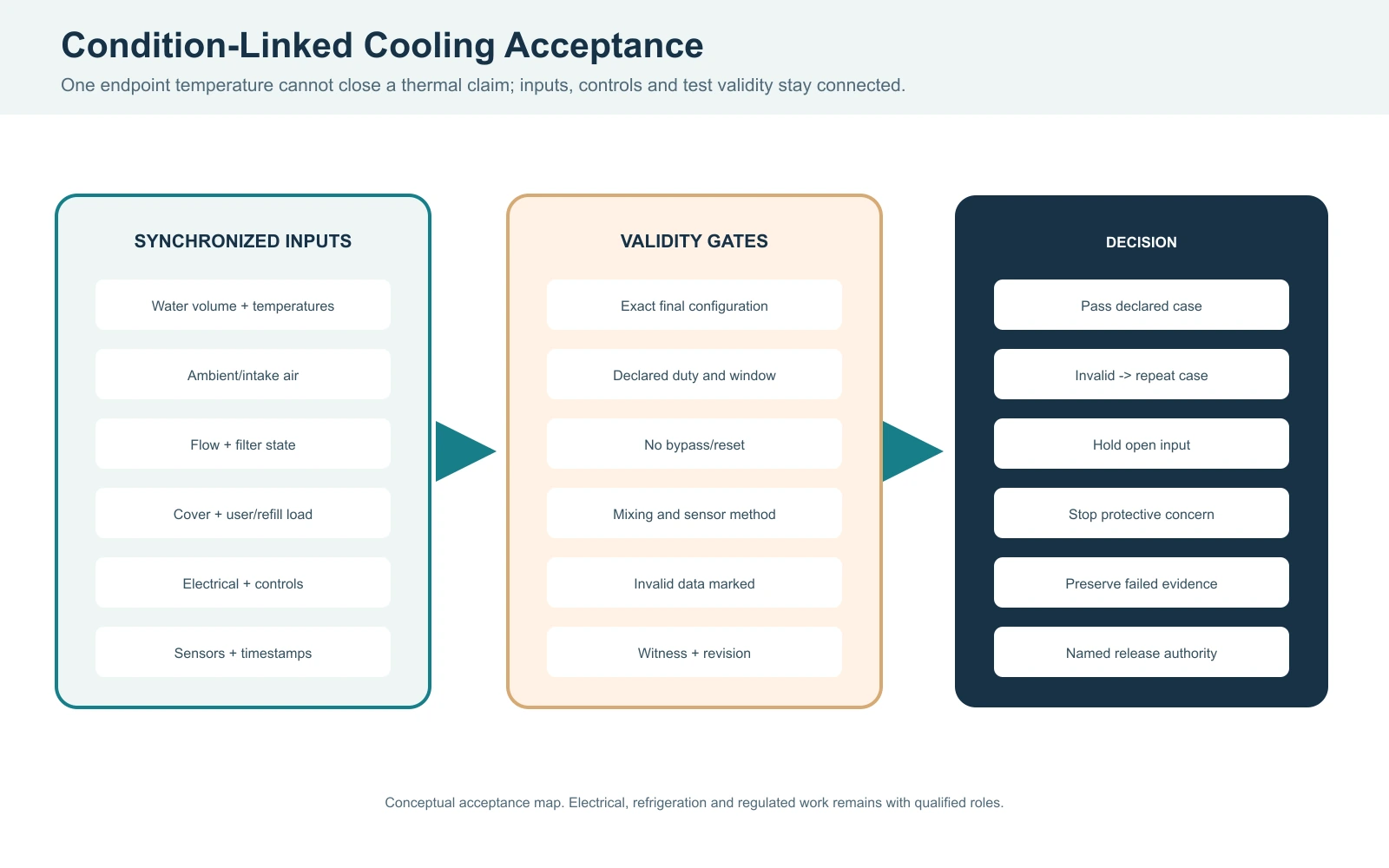
Preserve o registro reprovado ou contestado. Corrija uma causa verificada por vez e repita o teste do caso afetado sob as mesmas condições de contorno. O teste corrigido comprova a condição corrigida, mas não apaga o desvio original. Se a construção mudar após o teste, registre a alteração e decida se a equivalência pode ser justificada ou se a comparação deve ser repetida.
Condição de parada: Interrompa o teste em caso de vazamento, equipamento elétrico molhado, perda de vazão, acionamentos repetidos de proteção, condensação sem controle penetrando nos materiais ou nas áreas de manutenção, água em condição insegura, ou quando um limite do produto/manual exigir a interrupção. Trabalhos com refrigerante, instalação elétrica fixa e outras atividades regulamentadas exigem profissionais qualificados.
Levar a comparação para o recebimento e a RFQ
No recebimento, compare a identificação do modelo/número de série, o estado do engradado, danos visíveis, peças incluídas, conexões soltas e revisões dos documentos com o pedido aprovado. Fotografe as divergências antes da instalação. Inspecione o isolamento térmico ou a tampa somente onde o acesso for permitido; não desmonte um compartimento de forma que comprometa a segurança ou a garantia apenas para verificar uma alegação de marketing.
Realize o comissionamento conforme o procedimento aprovado: apoio nivelado, estanqueidade, posição das válvulas, escorvamento, vazão, filtro, controles, indicação de temperatura, tratamento da água, drenagem e alarmes. Registre as condições locais do ambiente e da água em qualquer observação de desempenho. Mantenha a aceitação no local separada dos testes de desenvolvimento do fornecedor.
Informações a Incluir em uma RFQ de Comparação de Isolamento
- Aplicação e serviço comercial ou residencial
- Volume de água operacional e geometria
- Condições de água iniciais e alvo
- Clima interior/exterior e exposição solar
- Evidência de limite de isolamento e construção
- Cobertura da construção e cronograma de uso
- Disposição do chiller, circulação, filtro e tubulação
- Objetivos de rebaixamento, manutenção e recuperação
- Plano de condensação, drenagem e acesso para manutenção
- Tensão, frequência, fases e destino
- Método de teste, testemunhas e registros de aceitação
- Escopo de quantidade, marca e documentação
A HACHILL pode revisar as entradas da família de produtos e do projeto sem converter campos abertos em promessas. A construção exata, o desempenho, a certificação e o escopo incluído devem permanecer vinculados ao modelo selecionado, ao destino e aos documentos aprovados.
Perguntas frequentes
O isolamento faz a banheira de imersão fria resfriar mais rápido?
Ela pode reduzir o calor que entra pelas superfícies que cobre, mas a redução da temperatura também depende da massa de água, da temperatura inicial e alvo, da capacidade real de resfriamento, do fluxo, da exposição ao ambiente e da prática de uso da cobertura. Uma comparação válida controla essas variáveis e relata a curva completa de temperatura ao longo do tempo. Um resultado mais rápido entre dois produtos diferentes não pode ser atribuído apenas ao isolamento.
Qual é a melhor forma de comparar banheiras de imersão fria isoladas e não isoladas?
Use um protocolo pareado com a mesma massa de água em operação, resfriador, circuito de circulação, filtro limpo, posições dos sensores, condições iniciais e alvo, exposição ambiente local e programação de cobertura. Registre água, ar, umidade, estado do controle, evidência de fluxo e eventos em intervalos sincronizados. Repita ambas as configurações quando a diferença observada estiver próxima da variação normal do teste.
Posso calcular o tempo de resfriamento da banheira de imersão fria com base no volume de água?
O volume de água suporta uma análise de energia usando Q = m × cp × ΔT, mas não estabelece o tempo em campo. O vaso, o ganho contínuo de calor, a condição de teste da capacidade de resfriamento, o fluxo, os controles e as perdas também importam. Divida pela capacidade apenas como uma estimativa de planejamento explicitamente limitada, não como um resultado garantido de redução de temperatura.
Um isolamento mais espesso sempre tem melhor desempenho?
Não automaticamente. As propriedades térmicas, a continuidade, a compressão, as juntas, a proteção contra umidade e as pontes térmicas determinam o limite instalado. O material adicional também pode afetar o acesso para manutenção, a drenagem ou o fluxo de ar do equipamento. Compare os detalhes construtivos aprovados e as evidências de teste em vez de apenas a espessura, e mantenha as alegações exatas do modelo vinculadas à revisão aplicável.
Quando um teste de comparação de isolamento deve ser interrompido?
Pare em caso de vazamento, equipamento elétrico molhado, perda de circulação, disparos repetidos de proteção, condensação insegura, condição de água descontrolada ou qualquer limite de instrução/manual. Preserve as leituras e alarmes originais antes da correção. Uma pessoa qualificada deve realizar trabalhos regulamentados de eletricidade, refrigeração ou segurança, e o caso afetado deve ser testado novamente após a causa ser documentada.
Base de Referência
- Unidades SI do NIST – Temperatura — unidades de temperatura e convenções de intervalo para registros de teste.
- NIST Chemistry WebBook – Água — dados de capacidade térmica da água líquida que sustentam a propriedade arredondada de triagem usada no exemplo de energia.
- Guia de Controle de Umidade da EPA dos EUA — princípios de ponto de orvalho e condensação para superfícies frias e revisão de controle de umidade.
- Código de Saúde Aquática de Modelo do CDC — orientação para instalações aquáticas públicas; não é lei federal, e a aplicabilidade depende da adoção local.
- Visão geral dos requisitos NSF/ANSI/CAN 50 para cold plunge — contexto de escopo para banheiras frias com sistemas de circulação, tratamento ou desinfecção; esta não é uma alegação de certificação da HACHILL.
Limite técnico: Documentos aprovados do produto, requisitos locais de construção, elétricos e de saúde pública, profissionais qualificados e a autoridade competente têm prioridade sobre este guia geral. Normas e orientações aplicam-se apenas dentro de seu escopo declarado e jurisdição adotada. Nenhum tempo exato de resfriamento, economia de energia, propriedade de isolamento, certificação ou resultado médico da HACHILL é reivindicado aqui.
Transforme a Comparação em um Briefing de Projeto
Envie o volume de água, condição inicial e alvo, exposição ambiente, cronograma de cobertura, circuito de resfriamento, casos de serviço, destino, quantidade e evidência de teste necessária. A HACHILL pode revisar um modelo ou rota de família de produtos, mantendo campos não verificados em aberto.