Beschaffungsdokumentation für holzbeheizte Badezuber
Kurze Antwort: Fordern Sie ein kontrolliertes, modellspezifisches Dokumentenpaket an
Käufer von holzbeheizten Badezubern sollten vor der Freigabe der Bestellung, des Versands, der Installation oder des ersten Anfeuerns ein kontrolliertes, modellspezifisches Dokumentenpaket anfordern. Das Paket sollte den genauen Zuber, den Heizweg, den Ofen oder Wärmetauscher, die Schornsteinkomponenten, die Zirkulationsmethode, das Zubehör und die geltende Revision identifizieren. Ein Katalog, ein allgemeines Handbuch oder ein Komponentenzertifikat kann das gesamte System nicht freigeben, wenn dessen Konfiguration oder Umfang von der Bestellung abweicht.
Das Hauptrisiko bei der Beschaffung besteht darin, professionell aussehende Dateien zu akzeptieren, die nicht auf das bestellte System zurückgeführt werden können. Definieren Sie die erforderlichen Nachweise an den Meilensteinen Angebot, Bestellung, Produktion, Versand, Installation und Inbetriebnahme; dokumentieren Sie dann Aussteller, Umfang, Revision, offene Punkte und verantwortliche Stelle. Die endgültige Freigabe hängt auch vom tatsächlichen Standort, Fundament, Zugang, Entwässerung, Klima, Schornsteinverlauf, Betriebsplan, örtlichen Vorschriften und vom Hersteller bestätigten Daten ab. Bereiten Sie ein Projektkurzprofil und ein Dokumentenregister vor, bevor Sie die endgültige Freigabe beantragen.
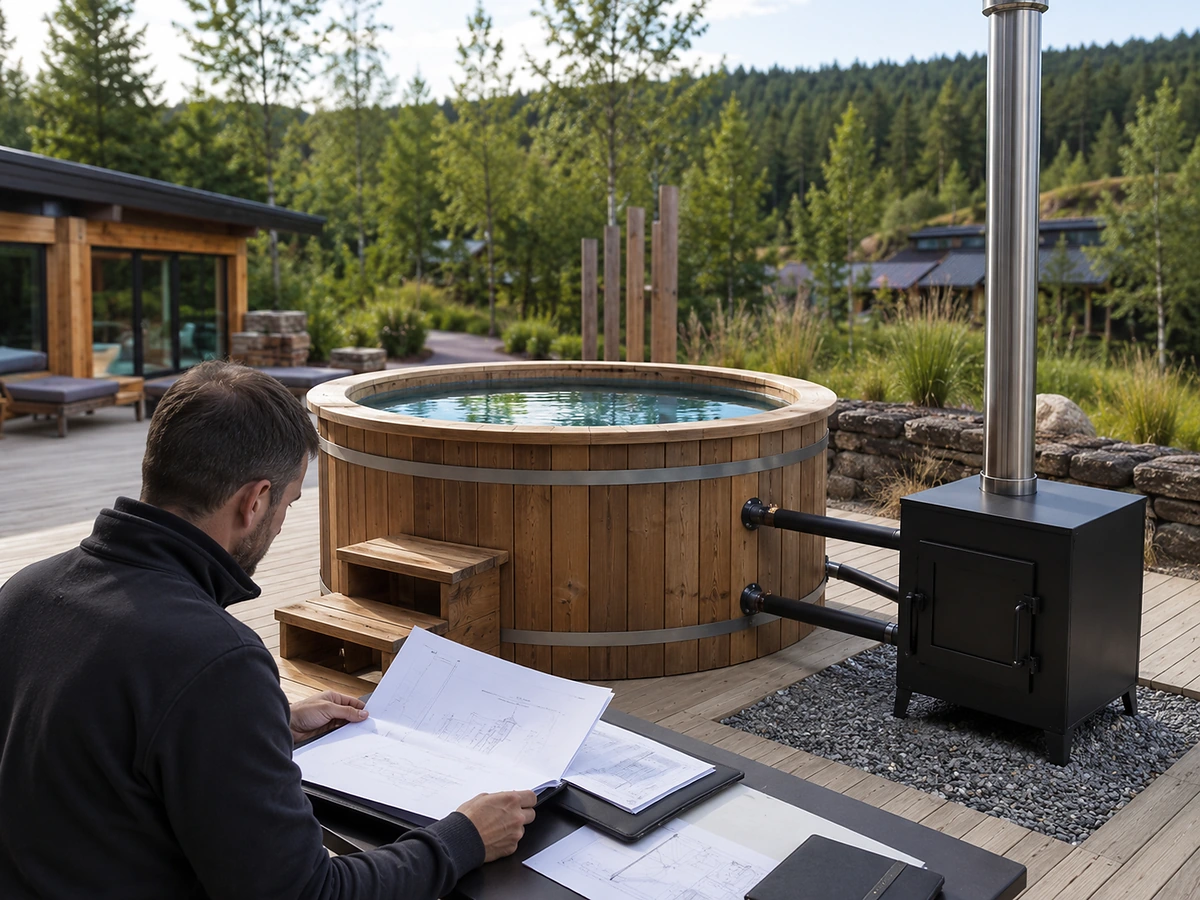
KI-generierte konzeptionelle Visualisierung; kein verifiziertes HACHILL-Modell, Kundenprojekt, Zertifizierungsbild oder freigegebene Installationszeichnung.
- Käufer, die Lieferanten oder Konfigurationen vergleichen;
- Vertriebspartner, Hotels, Resorts und gewerbliche Betreiber;
- Architekten, Installateure, QA-Prüfer und OEM-/Eigenmarken-Teams.
- ein Schornstein, strukturelle oder Thermosiphon-Ausführung;
- eine universelle Zertifizierung oder rechtliche Konformitätsbewertung;
- ein Ersatz für Modellanweisungen oder qualifizierte lokale Überprüfung.
Die Mindestdokumentationsgruppen
Mindestens sollte der Käufer erwarten, dass die Dokumentationsanfrage Folgendes abdeckt:
- Produktidentität und kontrollierte Spezifikation;
- aktuelle allgemeine Anordnungs- und Schnittstellenzzeichnungen;
- Umfang von Wanne, Ofen, Schornstein und Zubehör;
- Installations- und Betriebsanleitung;
- Anleitung zu Wasserstand, Zirkulation, Temperatur und Abschaltung;
- Material- und Komponentennachweise, soweit beansprucht;
- Prüf-, Test-, Abweichungs- und Freigabeaufzeichnungen;
- Verpackungs-, Empfangs- und Schadensregulierungsinformationen;
- Inbetriebnahme und Übergabe an den Betreiber;
- Anforderungen an SOP und Aufzeichnungen für gewerbliche Nutzung, sofern zutreffend.
Womit das Paket übereinstimmen muss
Jedes Dokument sollte gegen denselben Referenzsatz geprüft werden:
- exaktes Produkt oder genehmigte Konfiguration;
- exakte Ofen- und Schornstein-/Abgasführung;
- Zeichnungs- und Handbuchrevision;
- Kaufbestellung oder Projektreferenz;
- vorgesehene private oder gewerbliche Nutzung;
- Installationsland oder Zielmarkt;
- enthaltene, optionale und bauseits gelieferte Komponenten;
- verantwortlicher Lieferant, Installateur, Betreiber und örtlicher Fachbetrieb.
Wenn eine dieser Referenzen unklar ist, behandeln Sie das Dokument als vorläufig und nicht als endgültig.
Warum ein allgemeines Handbuch oder Zertifikat nicht ausreicht
Ein Dokument ist nur dann nützlich, wenn sein Geltungsbereich auf das bestellte Produkt und die Entscheidung, die es unterstützt, zurückgeführt werden kann. Ein gepflegtes Handbuch, ein Bericht oder ein Zertifikat kann dennoch für eine andere Beckengeometrie, Heizungsart, Rauchrohrpaket, Zirkulationsmethode, Zubehörsatz oder Markt gelten.
Modell- und Konfigurationsabweichung
Eine Abweichung kann offensichtlich sein, wie der falsche Produktname, oder subtil, wie das richtige Becken mit den falschen Ofen- oder Rauchrohranweisungen. Überprüfen Sie:
- Modell-, Familien- oder kontrollierte Konfigurationsreferenz;
- Beckengeometrie und vorgesehene Verwendung;
- interne oder externe Heizroute;
- Naturumlauf- oder Pumpenwasserroute;
- Identität von Ofen oder Wärmetauscher;
- Umfang der Schornstein- oder Rauchrohrkomponenten;
- Umfang der enthaltenen Schutzgitter, Abdeckungen, Stufen, Abläufe und Zubehörteile;
- Optionen, die Betrieb, Reinigung oder Installation verändern.
Revisions- und Übersetzungsrisiko
Angebotszeichnungen, Versandhandbücher und Standortanweisungen sollten einen kontrollierten Revisions- und Freigabestatus aufweisen. Übersetzte Kopien müssen Warnhinweise, Komponentennamen, Verantwortlichkeiten und Bedienschritte bewahren; Konflikte erfordern eine kontrollierte Korrektur.
Zertifikatsumfang versus Produktumfang
Wenn eine Zertifizierung, ein Bericht oder eine Erklärung angeboten wird, fordern Sie an:
- ausstellende Organisation;
- Berichts- oder Zertifikatsnummer;
- Ausstellungs- und Gültigkeitsinformationen;
- abgedecktes Modell, Muster oder Bauteil;
- geprüfter oder erklärter Umfang;
- referenzierte Normen oder Anforderungen;
- Ausschlüsse und Einschränkungen;
- Bezug zur bestellten Produktkonfiguration.
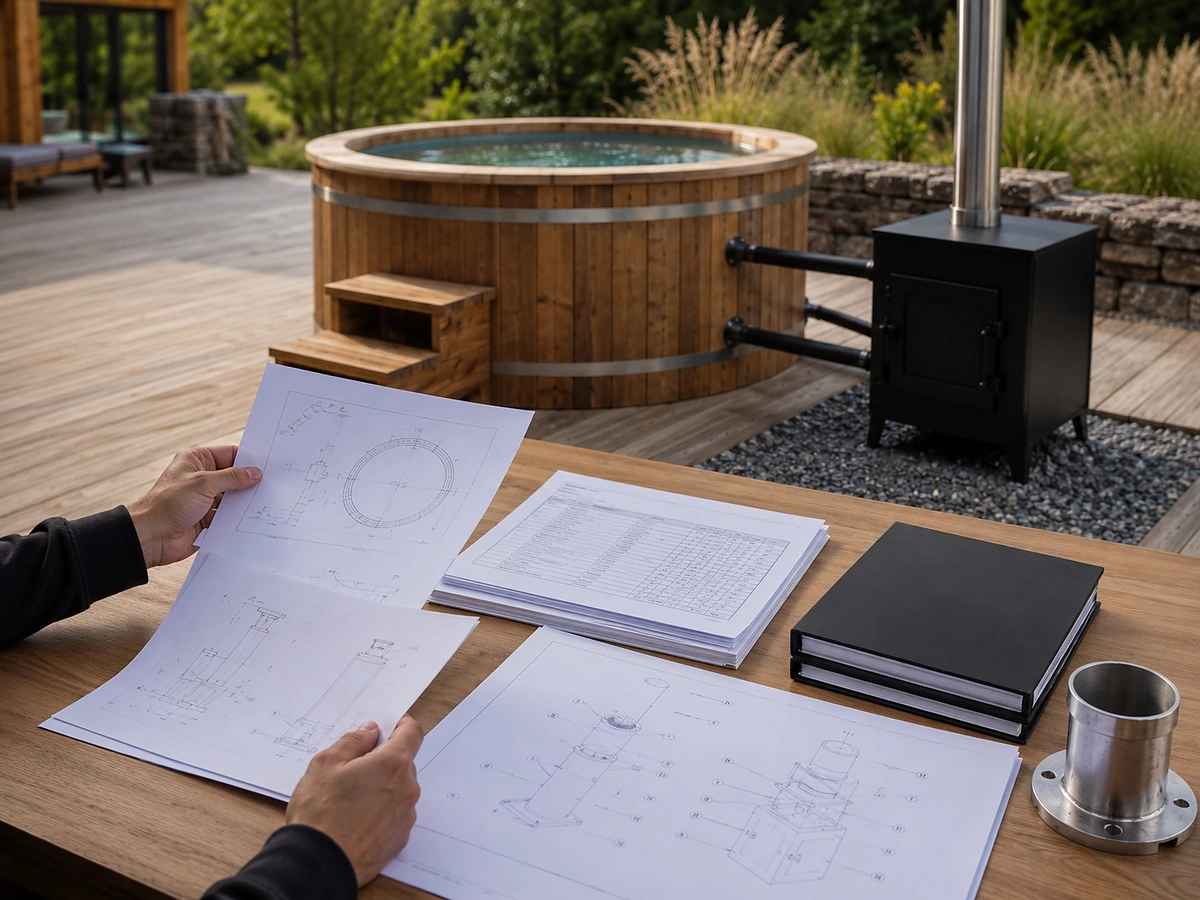
KI-generierte konzeptionelle Visualisierung; kein verifiziertes HACHILL-Modell, Kundenprojekt, Zertifizierungsbild oder freigegebene Installationszeichnung.
Unterlagen, die Käufer in jeder Projektphase anfordern sollten
Ordnen Sie jedes Dokument der Entscheidung zu, die es steuert. So werden Lücken bei Standort, Heizsystem, Verantwortung und Nachweisen aufgedeckt, bevor der Käufer sich festlegt.
Dokumentation von Project Gate
Auf kleineren Bildschirmen horizontal wischen, um alle Tabellenspalten zu sehen.
| Project Gate | Angaben des Käufers | Lieferantendokumente | Lokale / Käuferdokumente | Freigabeergebnis |
|---|---|---|---|---|
| Shortlisting | Veranstaltungsort, Nutzer, Zielmarkt, Produktweg | Vorläufige Konfiguration und Dokumentenverfügbarkeitserklärung | Erste Standortbedingungen | Qualifiziert oder nicht qualifiziert |
| Angebot | Standort, Zugang, Fundament, Entwässerung, Ofen-/Abzugskonzept, gewerbliche Nutzung | Kontrollierte Spezifikation, Vorentwurf, Inklusiv-/Exklusivleistungen, Dokumentenliste | Verantwortlichkeitsannahmen | Vergleichbares Angebot |
| PO-Freigabe | Freigegebener Weg, Optionen, Menge und geforderte Nachweise | Freigegebener Revisionssatz, Komponentenumfang, anwendbare Berichte, Kennzeichnungs-/Handbuchplan | Genehmigte Verantwortlichkeitsmatrix | Technischer Anhang zur Bestellung |
| Produktionsfreigabe | Endgültige Konfiguration und genehmigte Änderungen | Stücklisten-/Konfigurationsnachweis, Prüfplan, Verpackungs- und Handbuchumfang | Nachweis der Käuferfreigabe | Produktionsfreigabe |
| Versand | Auftragsreferenz, Liefer- und Empfangsplan | Endprüfungs-/Freigabenachweis, Packliste, Dokumentenpaket und Abweichungsstatus | Eingangscheckliste | Versandfreigabe |
| Installation | Standortvorbereitung und verantwortliche Gewerke | Montage-/Aufbauanleitung und Informationen zu Produktschnittstellen | Örtliche Zeichnungen, Genehmigungen und fachliche Prüfung | Montagefreigabe |
| Inbetriebnahme | Installierter Zustand und zugewiesener Bediener | Inbetriebnahme, Vorheiz- und Abschaltverfahren | Örtliche Abnahme und Schulungsnachweis | Abnahme der Inbetriebnahme |
| Betrieb | Richtlinie für Standort und Nutzer | Anweisungen für Nutzer, Wartung, Wasserpflege und Nutzungsunterbrechung | SOPs, Protokolle und lokale Anforderungen | Betriebsgenehmigung |
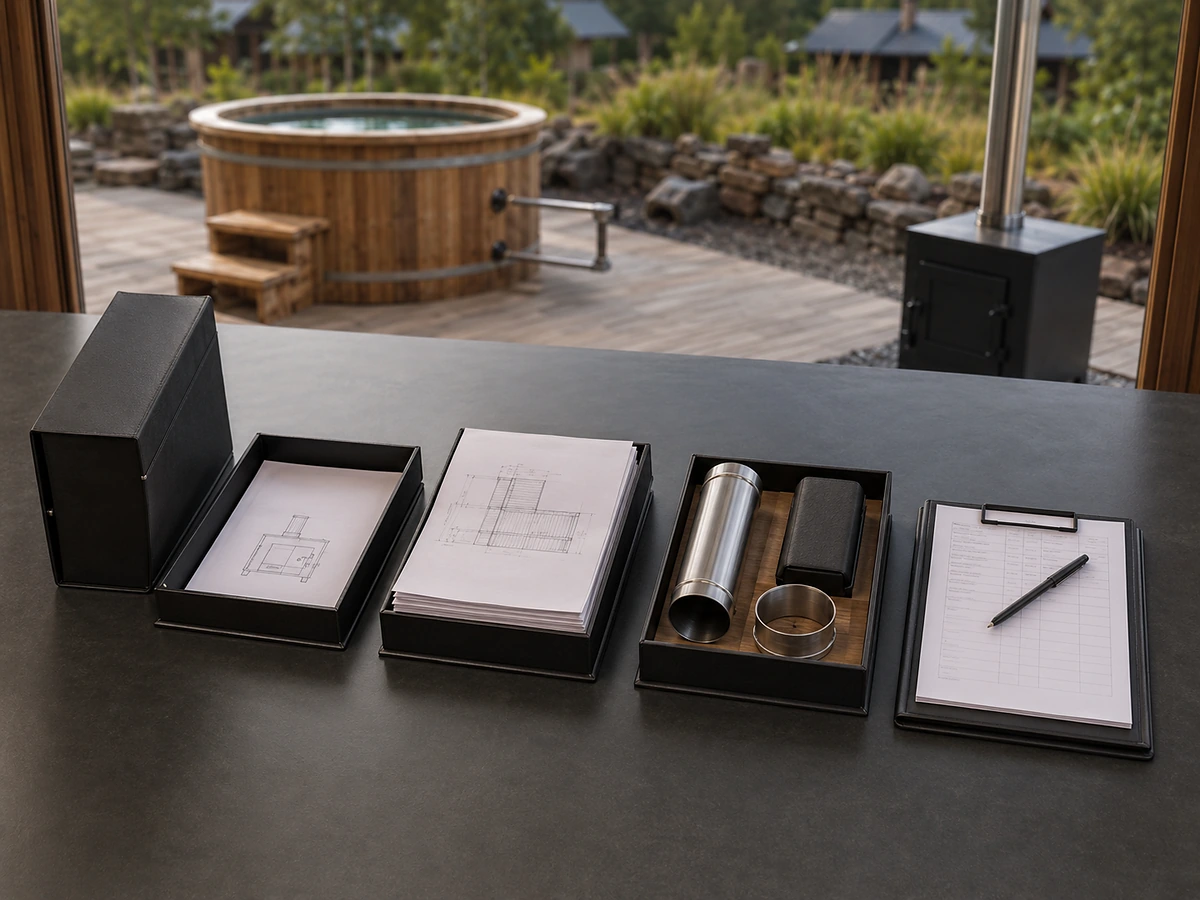
KI-generierte konzeptionelle Visualisierung; kein verifiziertes HACHILL-Modell, Kundenprojekt, Zertifizierungsbild oder freigegebene Installationszeichnung.
Vor Angebotserstellung
Bevor Preise verglichen werden, sind der Verwendungszweck, der Markt, der Standort und die kommerziellen Eingaben anzugeben, die zur Definition der Konfiguration erforderlich sind.
- vorgesehene Nutzer und Betriebsumfeld;
- private oder gewerbliche Nutzung;
- Installationsland;
- rund, rechteckig oder Projektroute;
- Außenexposition und Klima;
- verfügbare Stellfläche und Zugang;
- Annahmen zu Fundament, Wasserversorgung und Entwässerung;
- bevorzugte Ofen- und Schornsteinroute;
- Anforderungen an Branding, Menge, Verpackung und Logistik;
- Erwartungen an Nachweise und Dokumente.
Vor Freigabe der Bestellung
Die technische Anlage zur Bestellung sollte die genehmigte Konfiguration, Revisionen, Verantwortlichkeiten, Nachweise und den Änderungsmanagementprozess festlegen.
- Produktspezifikation;
- Zeichnungsrevision;
- Bauteil- und Zubehörliste;
- Ofen- und Schornstein-/Abgasumfang;
- Material- und Oberflächenliste, soweit bestätigt;
- Dokumentenliste;
- Inspektions- und Abnahmeprüfplan;
- Verantwortlichkeitsmatrix;
- Änderungsmanagement-Verfahren;
- Register offener Punkte.
Vor Versand und Installation
Die Freigabe zum Versand bestätigt das bestellte Produkt und das Dokumentationspaket; die Freigabe zur Installation bestätigt die Bereitschaft des Standorts vor Ort. Es handelt sich um getrennte Entscheidungen.
- Endkontrolle und Freigabeprotokoll;
- Bestell-/Konfigurationsidentifikation;
- Packliste und Paketanzahl;
- Schadens- und Ausnahmeprotokoll;
- Handbücher, Warnhinweise und Kennzeichnungen;
- Status ungelöster Abweichungen;
- Installations- und Inbetriebnahmepaket.
- Genehmigter Standortplan;
- Fundament- oder Strukturprüfung;
- Zugangs- und Handhabungsplan;
- Rauchgasweg und örtliche Feuerstättenprüfung;
- Entwässerung und Wasserhandhabung;
- Montageverantwortlichkeiten;
- Offene Punkte bezüglich Genehmigung oder Behörde.
Vor Inbetriebnahme und Betrieb
Lieferung ist keine Inbetriebnahme. Vor dem ersten Anfeuern und der ersten Nutzung sollte das Projekt die Punkte zur Produktidentität, Wasserführung, Abgasführung, Schutzvorrichtung, Temperaturverifizierung, Bedienung und Nutzungsunterbrechung abschließen, die für das ausgewählte System und den Standort gelten.
- Erforderlicher Wasserstand;
- Wasserweg und Ventilposition;
- Leckagefreie Verbindungen;
- zugelassene Ofen- und Rauchrohrbaugruppe;
- Prüfung von Schornsteinabstützung und -abschluss;
- Schutzgitter gegen heiße Oberflächen;
- Methode zur Temperaturmessung;
- Sicheres Anfeuern und Abschaltsequenz;
- Bedienpersonal-Zuweisung;
- Reinigung, Wasserpflege und Wartung;
- Kriterien für Nutzungsstopp und Eskalation.
Freigabelogik: Was jeder Dokumentstatus erlaubt
Ein Dokumentenregister benötigt einen betrieblichen Status, nicht nur einen Dateinamen. Der Status sollte steuern, ob der Käufer Angebote vergleichen, die Bestellung freigeben, den Versand autorisieren, mit der Installation beginnen oder den Zuber in Betrieb nehmen darf.
| Status | Bedeutung | Zulässige Entscheidung | Erforderliche Kontrolle |
|---|---|---|---|
| Akzeptiert | Das Dokument ist für die genannte Entscheidung anwendbar, aktuell und vollständig. | Innerhalb des genehmigten Umfangs fortfahren. | Die genehmigte Revision beibehalten und dem Auftrag zuordnen. |
| Bedingt | Das Dokument ist erst nach Abschluss eines definierten offenen Punktes verwendbar. | Nur fortfahren, wenn die Bedingung das aktuelle Gate nicht beeinflusst. | Eigentümer, Fälligkeitstermin und erforderliche Nachweise für den Abschluss benennen. |
| Abgelehnt | Das Dokument ist falsch, veraltet, widersprüchlich, nicht verifizierbar oder außerhalb des Geltungsbereichs. | Nicht für Freigabe oder Installation verwenden. | Eine kontrollierte Ersetzung oder formelle technische Klärung ausgeben. |
| Zur Information | Das Dokument liefert Kontext, ist aber kein Abnahmenachweis. | Nur zur Orientierung verwenden. | Broschüren, Beispielunterlagen oder allgemeine Handbücher nicht als Freigabedokumente behandeln. |
Produktidentität, Spezifikation und kontrollierte Zeichnungen
Die Produktdokumentationsmappe sollte festlegen, was gekauft wird, und nicht lediglich beschreiben, was die Produktfamilie potenziell umfassen kann.
Kontrolliertes Spezifikationsblatt
Eine kontrollierte Spezifikation sollte Folgendes festlegen:
- Produktweg oder Modell;
- vorgesehene Anwendung;
- freigegebene Geometrie und Gesamtumfang;
- Heizweg;
- Zirkulationsmethode;
- enthaltene und optionale Komponenten;
- bestätigte Materialien und Oberflächen;
- Zubehör;
- Verpackungs- und Lieferform;
- Dokumentumfang;
- Revisions- und Freigabestatus.
Allgemeine Anordnungs- und Schnittstellenzeichnungen
Die allgemeine Anordnungszeichnung sollte die Informationen zeigen, die zur Koordination des Produkts mit dem Standort erforderlich sind. Je nach gewählter Konfiguration kann dies Folgendes umfassen:
- Gesamtabmessungen;
- Installationsausrichtung;
- Zugangs- und Wartungsbereiche;
- Ofenposition;
- Zu- und Ablaufanschlüsse;
- Schornstein-/Abgasführung;
- Abfluss- und Befüllungsschnittstellen;
- Position von Stufe, Schutz oder Abdeckung;
- Montageschnittstellen;
- Hebepunkte oder Handhabungspunkte, sofern zutreffend.
Enthaltene, optionale und bauseitige Komponenten
Eine nützliche Komponentenübersicht unterscheidet:
- werksgelieferte Zuberteile;
- Ofen- oder Wärmetauscherteile;
- Schornstein-/Rauchrohrteile;
- Schutz- und Sicherheitselemente;
- Zirkulations- oder Sanitärkomponenten;
- Ablauf- und Befüllungszubehör;
- Stufen, Abdeckungen und optionales Zubehör;
- Installationsverbrauchsmaterial;
- vom Auftragnehmer oder Käufer gelieferte Teile.
Dies ist besonders wichtig für Schornsteinabstützung, Dach- oder Wanddurchführungen, Fundamentarbeiten, Entwässerung und örtliche Brandschutzelemente. Der Käufer sollte nicht davon ausgehen, dass diese enthalten sind, nur weil sie in einer Darstellung oder einem Projektfoto erscheinen.
Überarbeitung und Änderungskontrolle
Jede Änderung, die Material, Ofen, Schornstein, Zirkulation, Anschluss, Schutz, Zubehör, Etikett, Verpackung oder Handbuchinhalt betrifft, sollte gegen den genehmigten Umfang bewertet werden. Der Änderungsdatensatz sollte Folgendes angeben:
- Was hat sich geändert;
- Warum;
- Betroffene Dokumente;
- Technische oder kommerzielle Auswirkung;
- Erforderliche Käuferfreigabe;
- Freigabestatus.
Konfigurations-Baseline-Datensatz
Die Baseline verbindet die kommerzielle Auswahl, Zeichnungen, Komponenten, Prüfung und Übergabe, sodass eine korrekte Datei nicht auf das falsche physische Produkt angewendet wird.
| Baseline-Feld | Warum es das Ergebnis verändert | Nachweis zur Festlegung |
|---|---|---|
| Beckenführung und Geometrie | Ändert Grundriss, Zugang, Wasservolumen, Abstützung und Benutzeranordnung. | Freigegebene Modell-/Konfigurationsreferenz und GA-Zeichnung. |
| Heizungsführung | Ändert Ofenposition, Wasseranschlüsse, Servicezugang und Bedienungsanleitung. | Exakter Umfang des Ofens oder Wärmetauschers und Anschlusszeichnung. |
| Rauchgaspaket | Ändert gelieferte Abschnitte, Stützen, Schutzvorrichtungen und lokale Installationsschnittstellen. | Freigegebener Komponentenplan und offene Punkte-Liste für Installateur/lokale Prüfung. |
| Zirkulationsmethode | Ändert Vorheizprüfungen, Ventilposition, Risiko ohne Durchfluss und Fehlerbehebung. | Geregeltes Wasserweg-Diagramm und Betriebsanleitung. |
| Materialien und Optionen | Ändert Wartung, Kompatibilität, Verpackung und Ersatzteile. | Auftragsspezifischer Material-/Optionsplan. |
| Dokumentrevision | Bestimmt, welche Anweisungen, Maße und Abnahmekriterien gelten. | Master-Dokumentenregister mit aktuell genehmigter Revision. |
Änderungsauswirkungs-Screening vor Freigabe
- Produktpassung: Verändert die Änderung Abmessungen, Sitzplätze, Wartungsabstände, Wasservolumen oder Zugang?
- Heizsystem: Ändert es den Ofen, den Wasserweg, die Rauchrohrkomponenten, Schutzvorrichtungen oder Betriebswarnungen?
- Standortschnittstelle: Betrifft es Fundamentvorgaben, Entwässerung, Handhabung, Durchführungen oder die lokale fachliche Prüfung?
- Nachweise: Müssen Zeichnungen, Handbücher, Stücklisten-/Konfigurationsunterlagen, Etiketten, Prüfkriterien und Verpackungsunterlagen überarbeitet werden?
- Kommerzieller Umfang: Betrifft die Änderung Menge, Markenbildung, Verpackung, Ersatzteile, Garantiegrenzen oder Schulungen?
Ein Austausch ist nicht automatisch gleichwertig, nur weil er ähnlich aussieht oder eine ähnliche Nennleistung hat. Lassen Sie die Änderung offen, bis die betroffenen Dokumente und Verantwortlichkeiten schriftlich aktualisiert sind.
Dokumentation zu Ofen, Schornstein, Verbrennung und heißen Oberflächen
Der Ofen und die Abgasanlage bergen das offensichtlichste Brand- und Verbrennungsrisiko, aber die Dokumentationsanforderung sollte konfigurationsspezifisch bleiben. Käufer benötigen genügend Informationen, um das gelieferte System zu identifizieren und es mit qualifizierter lokaler Installation und behördlicher Prüfung abzustimmen.
Dokumentation zu Ofen und Wärmeübertragung
Fordern Sie die genaue Identifikation des Ofens oder Wärmetauschers sowie die aktuellen Installations- und Betriebsanleitungen für die gelieferte Version an. Die Dokumente sollten Folgendes klarstellen:
- vorgesehene Ausrichtung;
- Verhältnis von Einlass und Auslass;
- erforderlicher Wasserzustand vor dem Anheizen;
- zugelassene Brennstoffe und Betriebsgrenzen, sofern bestätigt;
- normales Befüll- und Abschaltverfahren;
- Ascheentfernung und Wartung;
- zugängliche Prüfpunkte;
- Warnungen vor Überhitzung, Kochen oder fehlendem Durchfluss;
- Anforderungen an Schutzvorrichtungen oder Benutzertrennung;
- verbotene Änderungen.
Für den allgemeinen US-amerikanischen Brandschutzkontext bei Holzöfen und Schornsteinen in Wohngebäuden gilt die U.S. Fire Administration empfiehlt, brennbare Stoffe von Wärmequellen fernzuhalten und Heizgeräte sowie Schornsteine professionell prüfen und reinigen zu lassen. Dies ist allgemeine Brandschutzorientierung, kein Freigabeplan und keine Zulassung für die Installation eines holzbefeuerten Hot Tubs; Modellanweisungen und örtliche Anforderungen gelten weiterhin für das konkrete Projekt.
Ein Ofenschild oder Nennwert der Heizleistung begründet weder eine sichere Installation noch eine garantierte Aufheizzeit. Die Leistung hängt vom gesamten Wasser- und Wärmeverlustzustand ab, während die Installation vom tatsächlichen Standort und den örtlichen Vorschriften abhängt.
Schornstein-/Abgasrohrführung und Komponentenumfang
Der Käufer sollte eine kontrollierte Liste oder Zeichnung der gelieferten Abgasrohrkomponenten erhalten. Diese sollte, sofern zutreffend, Folgendes identifizieren:
- Geräteanschluss;
- Rauchrohrsegmente;
- Bögen oder Adapter;
- Stützen;
- Wetterhaube oder Endstück;
- Schutzvorrichtungen;
- Dichtungen oder Verbindungen;
- vom Installateur gelieferte Komponenten;
- Punkte, die einer örtlichen Planungsprüfung bedürfen.
Für ein Beispiel mit örtlicher Zuständigkeit, Englands genehmigtes Dokument J behandelt Verbrennungsluft, Abführung von Verbrennungsprodukten, Gebäudeschutz, Kohlenmonoxid-Warnung und Informationspflichten. Es ist kein globaler Zulassungsweg.
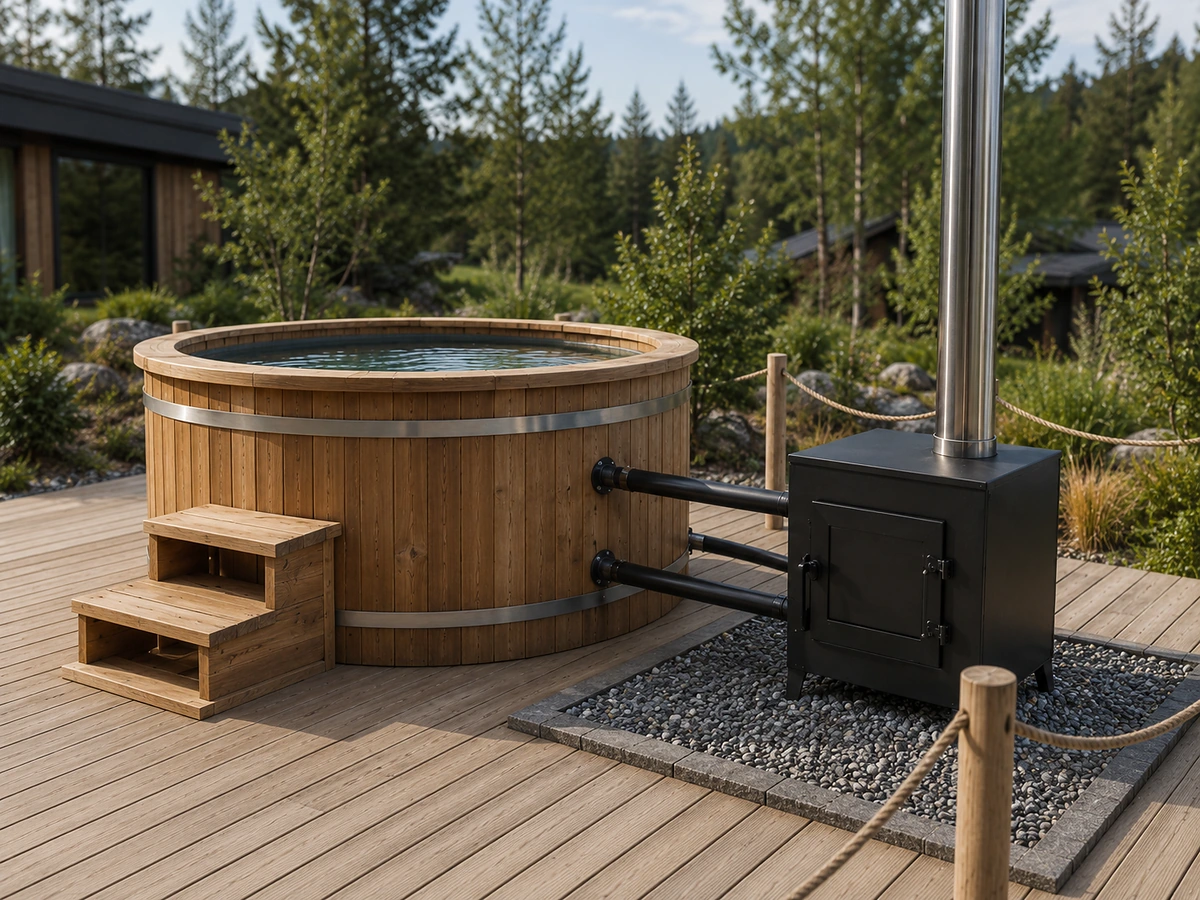
KI-generierte konzeptionelle Visualisierung; kein verifiziertes HACHILL-Modell, Kundenprojekt, Zertifizierungsbild oder freigegebene Installationszeichnung.
Heißflächenschutz und Benutzertrennung
Das Dokumentenpaket sollte heiße Oberflächen identifizieren, die während des normalen Betriebs zugänglich sein können, und zeigen, welche Schutzvorrichtungen oder Absperrungen gemäß den Anweisungen des ausgewählten Produkts und der Standortprüfung enthalten oder erforderlich sind. Dies ist wichtig, wenn:
- der Ofen neben dem Zuber steht;
- Benutzer in der Nähe des Schornsteins gehen;
- das Produkt in einem Gastronomiebetrieb installiert ist;
- Kinder oder unbeaufsichtigte Benutzer den Bereich betreten können;
- Ascheentfernung in der Nähe von öffentlichen Verkehrswegen erfolgt.
Ein Foto allein kann nicht belegen, dass eine Schutzvorrichtung den erforderlichen Schutz bietet. Die installierte Anordnung muss anhand der tatsächlichen Gegebenheiten vor Ort und des Nutzerflusses überprüft werden.
Örtliche Grenze für Feuer- und Installationsgenehmigung
Der Lieferant kann das Produkt, die enthaltenen Komponenten, die Bedienungsanleitung und bekannte Schnittstellen definieren. Der örtliche qualifizierte Fachbetrieb und die Behörde bleiben verantwortlich für Angelegenheiten wie:
- endgültige Rauchrohrführung;
- Durchführungen;
- erforderliche Abstände;
- Verbrennungsluftbedingungen;
- Gebäudeschutz;
- Kohlenmonoxid-Maßnahmen, sofern erforderlich;
- Rauchschutzbeschränkungen;
- Anforderungen an Genehmigungen und Inspektionen.
Das Dokumentationspaket sollte diese Grenze klar ausweisen, anstatt dem Käufer die Verantwortung zu überlassen.
Fragen zur Abnahme der Ofen- und Abgasdokumentation
- Identität: Lassen sich Ofen, Abgasrohrsegmente, Adapter, Stützen und Schutzvorrichtungen auf die zugelassene Konfiguration zurückführen?
- Wasserzustand: Legen die Anweisungen die erforderlichen Befüll-, Anschluss- und Zirkulationsbedingungen vor dem Anfeuern fest?
- Betriebsgrenze: Werden Brennstoff, Beschickung, Abschaltung, Aschehandhabung und verbotene Änderungen für das ausgewählte Gerät behandelt?
- Standortschnittstelle: Unterscheidet das Paket zwischen gelieferten Teilen und lokalen Stützen, Durchführungen, Schutzvorrichtungen und behördlicher Prüfung?
- Benutzertrennung: Sind heiße Oberflächen und normale Bedien-/Ascheentnahmebereiche für den tatsächlichen Standort gekennzeichnet?
- Offene Punkte: Werden örtliche Abstände, endgültige Leitungsführung, Verbrennungsluft und Genehmigungspflichten benannt, anstatt hinter einem allgemeinen Haftungsausschluss versteckt zu werden?
Die Komponentenliste und Anweisungen des Lieferanten legen den Lieferumfang fest. Sie ersetzen keine qualifizierte örtliche Prüfung der endgültigen Rauchgasführung, Stützen, Durchdringungen, Abstände, Gebäudeschutzmaßnahmen oder Genehmigung für gewerbliche Standorte.
Dokumente zu Behälter, Zirkulation, Wasserstand, Temperatur und Wasserpflege
Ein holzbeheizter Hot Tub kann nicht nur als Verbrennungsprodukt bewertet werden. Auch Behälter, Wasserweg, Temperaturprüfung, Entwässerung und Rückhaltewasserkonzept erfordern kontrollierte Informationen.
Füllstand und Kontrollen vor dem Anheizen
Die Bedienungsanleitung sollte die modellspezifischen Anforderungen an Füllung und Vorheizprüfung angeben. Die entscheidende Käuferfrage ist, ob das System sicher befeuert werden kann, wenn:
- der Tub nicht voll ist;
- eine Verbindung Luft enthält;
- ein Ventil geschlossen ist;
- ein Einlass oder Auslass verstopft ist;
- der Ofen isoliert ist;
- der Tub entleert oder gewartet wird.
Die Anleitung sollte Bedingungen für die Nutzungsunterbrechung und den sicheren Abschaltweg angeben. Sie sollte sich nicht darauf verlassen, dass der Bediener “fühlt”, ob Wasser zirkuliert.
Zirkulations- und Anschlussdiagramm
Das genehmigte Diagramm sollte den Wasserweg zwischen Tub und Heizsystem angeben. Es sollte natürliche Zirkulation von einer Pumpenstrecke unterscheiden und die Anschlussorientierung zeigen, ohne den Käufer zu zwingen, das System aus Fotos zu rekonstruieren.
Das Dokument sollte außerdem angeben:
- Ventile und deren normale Betriebsstellung;
- Befüll- und Entlüftungsreihenfolge;
- Wartungspunkte;
- Einschränkungen beim Schließen oder Isolieren des Kreislaufs;
- Filter- oder Pumpenschnittstellen, sofern vorhanden;
- Warnsignale für blockierte oder ungewisse Zirkulation.
Der Artikel schreibt keine Rohrdimensionen oder Thermosiphon-Geometrie vor. Diese gehören zum ausgewählten Modell und zur qualifizierten Systemauslegung.
Mischwassertemperatur und Überhitzungsschutz
Die Dokumentation sollte festlegen, wie der Bediener die Mischwassertemperatur vor der Nutzung prüft. Eine lokale heiße Zone in der Nähe des Rücklaufs oder eine ungenaue Regleranzeige kann zu einem Zustand führen, der von der durchschnittlichen Beckentemperatur abweicht.
Das Verfahren sollte Folgendes angeben:
- Messstelle;
- Mischanforderung;
- Instrument oder Verifikationsmethode;
- Prüfung vor dem Einstieg;
- Bedingung für Nutzungsstopp;
- Eskalation bei abnormalen Messwerten.
Eine produktspezifische 2022er Rückruf der US-amerikanischen Verbraucherproduktsicherheitskommission erfasste benannte elektrische Hot-Tub-Modelle von Jacuzzi und Sundance, weil ein Temperatursensor eine falsche Wassertemperatur melden konnte. Die CPSC wies Besitzer der zurückgerufenen Einheiten an, bis zur Reparatur vor dem Einsteigen ein genaues externes Thermometer zu verwenden. Dies stützt den engeren Beschaffungspunkt, dass das ausgewählte System eine definierte Temperaturverifizierung und eine Reaktion auf anormale Messwerte benötigt; daraus entsteht keine allgemeine Anforderung eines externen Thermometers für holzbefeuerte Tubs.
Entleerung, Reinigung und Frostschutz
Die Betriebs- und Wartungsunterlagen sollten Folgendes ausweisen:
- Entleerungsort und -methode;
- ob das Wasser zurückgehalten oder ersetzt wird;
- Zugang für die Reinigung;
- Kompatibilität mit zugelassenen Reinigungsmitteln;
- Anforderungen an Trocknung und Lagerung;
- saisonale Stilllegung;
- Frostschutz;
- Verantwortung für die Entsorgung;
- Einschränkungen beim Ablassen von Warmwasser oder Behandlungschemikalien.
Die Holzverkleidung bestimmt nicht das Auskleidungsmaterial oder die Wasserpflegemethode. Das genaue Becken, die benetzten Materialien und die zugelassenen Wartungsanweisungen müssen für das ausgewählte Produkt bestätigt werden.
Betriebseingaben, die modellspezifisch bleiben müssen
| Betriebseingabe | Warum sie wichtig ist | Erforderliches Dokumentenergebnis |
|---|---|---|
| Befüllung und Zustand vor dem Anzünden | Das Anfeuern, wenn der erforderliche Wasserzustand nicht bestätigt ist, kann je nach ausgewähltem System Überhitzung, Dampf oder Geräteschadenrisiko erzeugen. | Modellspezifische Checkliste für Befüllung, Entlüftung und Vorbereitung vor dem Anzünden. |
| Zirkulationsweg und Ventilstellung | Blockierter oder isolierter Durchfluss verändert die Wärmeübertragung und das Abschaltrisiko. | Kontrolliertes Anschlussdiagramm und normale Betriebsstellungen. |
| Prüfung der Mischwassertemperatur | Eine lokale heiße Zone oder eine ungenaue Anzeige muss nicht das gesamte Becken repräsentieren. | Messort, Mischschritt, Instrument und Regel zum Stoppen der Nutzung. |
| Entleerungs- und Frostschutzplan | Restwasser kann Komponenten beschädigen oder unsichere Neustartbedingungen schaffen. | Saisonale Abschaltung, Entleerung und Neustartverfahren für den gewählten Weg. |
| Pflege von verbleibendem Wasser | Benutzerlast, Materialien, Temperatur und Behandlungsweg beeinflussen Reinigung und Austausch. | Kompatibler Verantwortungsrahmen für Wasserpflege und Wartung. |
Konvertieren Sie diese Eingaben nicht in universelle Füllhöhen, Rohrdimensionen, Temperaturgrenzen oder Wartungsintervalle. Verwenden Sie das aktuelle Modellhandbuch, die Komponentenanweisungen, den Standortplan und die geltenden lokalen Anforderungen.
Dokumente zu Standort, Fundament, Zugang und Installationsverantwortung
Das Standortpaket sollte vor Produktionsfreigabe oder Versand bereit sein, nicht erst nach Ankunft des Produkts.
Eingaben zu Fundament, Last und Platzierung
Der Lieferant sollte verifizierte Produkteingaben bereitstellen, die der lokale Planer benötigt, wie z. B.:
- Produktabmessungen;
- bestätigte Trocken- oder Füllmasse, sofern verfügbar;
- Auflager-/Kontaktanordnung;
- Abfluss- und Wartungszugang;
- Verhältnis von Ofen und Abgasrohr;
- erforderlicher Montagezugang.
Der lokale Statiker sollte das Fundament, die Terrasse oder die Tragkonstruktion bestimmen. Der Artikel schreibt keine universelle Basis vor, da Boden, Frost, Entwässerung, Gebäudestruktur und Zuständigkeit unterschiedlich sind.
Lieferung, Handhabung und Montage
Der Käufer sollte anfordern:
- Verpackungsabmessungen und Paketanzahl;
- Komponentenaufteilung;
- Einschränkungen beim Heben oder Handhaben;
- Annahmen zu Tor, Weg und Kran/Gabelstapler;
- Montagereihenfolge;
- geschützte Komponenten;
- vom Standort gelieferte Befestigungsmittel oder Verbrauchsmaterialien;
- Verfahren zur Schadensmeldung;
- Lagerungsanforderungen vor der Installation.
Ein Produkt kann am endgültigen Standort passen, aber dennoch unmöglich über den verfügbaren Weg dorthin zu transportieren sein. Der Zugang ist daher Teil der Dokumentationsvorgabe, nicht nur ein logistisches Detail.
Entwässerung, Wasser- und Witterungseinflüsse
Das Standortdokumentationspaket sollte Folgendes klären:
- Wasserquelle;
- Befüllungsmethode;
- Abfluss-/Entleerungsweg;
- Umgang mit Umgebungsrutsch- und Spritzwasser;
- Regen- und Schneeeinwirkung;
- Windeinfluss auf Abgasführung und Heizlast;
- Abdeckung, Lagerung und Handhabung;
- saisonale Stilllegung;
- Frostbedingungen;
- nahe gelegene brennbare oder bewohnte Bereiche.
Der Lieferant kann Produktschnittstellen und -grenzen benennen. Das lokale Team muss die Standortlösung planen und freigeben.
Verantwortlichkeitsmatrix für die Installation
Eine Verantwortlichkeitsmatrix sollte festlegen, wer für jede Aktivität zuständig ist.
| Aufgabe | Lieferant / Hersteller | Installateur / Auftragnehmer | Käufer / Betreiber | Lokaler Fachmann / Behörde |
|---|---|---|---|---|
| Produktkonfiguration | Gelieferten und freigegebenen Umfang festlegen | Schnittstellen prüfen | Vorgesehene Verwendung genehmigen | Bei Bedarf prüfen |
| Fundament | Verifizierte Produkteingaben bereitstellen | Bauarbeiten koordinieren | Standortdaten bereitstellen | Lokal planen/freigeben |
| Ofen und Schornstein | Gelieferte Komponenten und Anweisungen festlegen | Freigegebene Route installieren | Sicheren Betrieb gewährleisten | Brand-/Gebäudekonformität prüfen |
| Entwässerung | Produktschnittstellen definieren | Standortroute installieren | Betreiben und warten | Lokale Anforderungen prüfen |
| Inbetriebnahme | Verfahrens- und Produktkriterien bereitstellen | Vertraglich vereinbarte Prüfungen durchführen | Betreiber zuweisen und Übergabe akzeptieren | Wo erforderlich freigeben |
| Gewerblicher Betrieb | Nutzungsgrenzen des Produkts angeben | Vertraglich vereinbarte Schnittstellen unterstützen | SOPs, Protokolle und Abschlussentscheidungen verantworten | Geltende Anforderungen durchsetzen |
Vollständigkeitsmatrix Standorteingaben
| Standorteingabe | Warum dies das Projekt verändert | Primärer Nachweis / Verantwortlicher |
|---|---|---|
| Fundament und Unterstützung | Verfüllmasse, Boden, Frost, Deckaufbau und Kontaktanordnung beeinflussen die Auslegung der Unterstützung. | Herstellerangaben plus qualifizierte lokale Statik. |
| Zugang für Lieferung und Montage | Verpackte Abmessungen, Kurven, Tore und der Hebe-/Transportweg können die Lieferung blockieren, auch wenn die endgültige Grundfläche passt. | Verpackungs-/Handhabungsdaten plus Zugangsplan von Käufer/Generalunternehmer. |
| Standort von Ofen und Abgasrohr | Verändert Nutzertrennung, Servicezugang, Witterungseinfluss und Umfang der Brandprüfung. | Freigegebene Produktschnittstelle plus lokale Brand-/Bauprüfung. |
| Entwässerung und Ableitung | Beeinflusst Reinigung, Winterabschaltung, Rutschkontrolle und lokale Abwasserzuständigkeit. | Produktablaufschnittstelle plus Standortentwässerungsplan. |
| Klima und Exposition | Regen, Schnee, Wind und Frost beeinflussen Abdeckung, Wärmeverlust, Abgasverhalten und Abschaltplanung. | Standortklima-Kurzbericht plus vom Hersteller bestätigte Betriebsgrenzen. |
| Kommerzieller Nutzerfluss | Gästezirkulation, Personalzugang, Reinigungswechsel und Schließkontrolle beeinflussen Layout und Betriebsdokumente. | Veranstaltungsplan, SOP-Verantwortlichkeit und lokale gewerbliche Prüfung. |
Eine Lieferantenzeichnung kann verifizierte Produktschnittstellen bereitstellen; sie sollte nicht als statische Berechnung, Standortentwässerungsplan oder lokale Brandschutzgenehmigung dargestellt werden.
Material-, Komponenten- und Zielmarktnachweise
Materialliste und medienberührte Komponenten
Wenn Materialangaben Haltbarkeit, Korrosion, Hygiene, Wartung oder Optik beeinflussen, fordern Sie eine auftragsspezifische Liste an, die Folgendes abdeckt:
- Wanne oder Liner;
- medienberührtes Metall;
- Ofen oder Wärmetauscher;
- Schornstein/Abgasrohr;
- Verkleidung;
- Beschichtung oder Oberfläche;
- Befestigungselemente;
- Dichtungen;
- Schläuche und Armaturen;
- Stufen, Schutzvorrichtungen und Abdeckungen.
Das Dokument sollte verifiziertes Material von optionalem Material und bauseits geliefertem Material unterscheiden. Eine Holzverkleidung beweist nicht die Auskleidung, den Ofen oder die Güteklasse des benetzten Metalls.
Komponentenhandbücher und Lieferantendaten
Für Fremdkomponenten, die Teil der freigegebenen Konfiguration sind, fordern Sie die genaue Hersteller- und Modelldokumentation an. Beispiele können umfassen:
- Ofen oder Wärmetauscher;
- Schornstein-/Abgaskomponenten;
- Pumpe;
- Filter;
- Thermometer oder Steuerung;
- Abdeckungsbeschläge;
- elektrisches Zubehör.
Dokumentationsumfang für den Zielmarkt
Der Käufer sollte den Zielmarkt vor der Angebotserstellung festlegen und eine Dokumentenliste anfordern, die Folgendes angibt:
- anwendbare Produkt- oder Komponentennachweise;
- Sprache der Etiketten und Warnhinweise;
- Sprache des Handbuchs;
- Anforderungen an Installateur oder Genehmigung;
- örtliche Verantwortung für Inspektionen;
- ungeklärte marktspezifische Punkte.
Was Konformitätsnachweise beweisen – und was nicht
Behandeln Sie „CE“, „UL“, „ETL“ oder ein anderes Akronym nicht als universelle Zertifikatskategorie. Wenn ein Weg für den Zielmarkt relevant ist, prüfen Sie die tatsächliche Nachweisart, den Aussteller oder verantwortlichen Hersteller, das abgedeckte Modell/Bauteil, den anwendbaren Umfang und den aktuellen Status. Beispielsweise erläutert ein EU-Leitfaden, dass die CE-Kennzeichnung die Erklärung des Herstellers ist, dass die anwendbaren EU-Anforderungen berücksichtigt wurden, und dass sie durch das relevante Konformitätsbewertungsverfahren, die technische Dokumentation und die EU-Konformitätserklärung gestützt wird; sie ist kein zentrales EU-Produktzulassungszertifikat. In den Vereinigten Staaten erkennt der NRTL-Rahmen von OSHA Laboratorien nur für das Prüfen und Zertifizieren von Produkten innerhalb ihres anerkannten Umfangs an.
Selbst gültige Produkt- oder Komponentennachweise genehmigen nicht automatisch das Fundament, den Abgasweg, die Entwässerung, die öffentliche Nutzung, das Betriebs-SOP oder die gelieferte Konfiguration.
- das Fundament ist ausreichend;
- der Abgasweg ist lokal genehmigt;
- die erforderlichen Abstände werden eingehalten;
- der Entwässerungsweg ist akzeptabel;
- das Produkt ist für die öffentliche/gewerbliche Nutzung zugelassen;
- die Betriebsanweisung ist angemessen;
- das gelieferte Gerät entspricht dem geprüften Muster;
- die aktuelle Bestellung enthält dieselben Komponenten.
Diese Fragen erfordern separate Nachweise und Genehmigungen.
Nachweishierarchie: Stärker bedeutet nicht umfassender
| Nachweisgrad | Was er belegen kann | Was er nicht automatisch belegen kann |
|---|---|---|
| Auftragsbezogener kontrollierter Datensatz | Die genehmigte Konfiguration, Revision, Prüfung oder Freigabe für den genannten Auftrag. | Örtliche Installationsgenehmigung oder Tatsachen außerhalb des dokumentierten Umfangs. |
| Modellspezifisches Handbuch oder Modellspezifische Zeichnung | Produktschnittstellen, Betrieb und Warnhinweise für das identifizierte Modell/die identifizierte Revision. | Dass das gelieferte Gerät ohne Auftragsrückverfolgbarkeit dem Dokument entspricht. |
| Dokument des Komponentenherstellers | Der genannte Ofen, das Rauchrohr, die Pumpe, die Steuerung oder das Zubehör innerhalb seines Komponentenumfangs. | Konformität oder Leistung des vollständig montierten Whirlpool-Systems. |
| Bericht, Zertifikat oder Erklärung | Die vom Aussteller angegebene Probe, das Modell, die Komponente, die Prüfung oder der erklärte Umfang. | Allgemeine Marktzulassung, Standortgenehmigung oder unveränderte Produktionskonfiguration. |
| Familienbroschüre oder Website-Seite | Verfügbare Produktvarianten, Optionen und Fragen zur Qualifizierung. | Endgültige Abmessungen, Materialien, enthaltene Teile, Zertifizierung oder Abnahmenachweise. |
Stellen Sie sich bei jedem Nachweis die Frage: “Was genau belegt dieser?” und “Was bleibt außerhalb seines Umfangs?”
Qualitätskontroll-, Inspektions-, Prüf- und Freigabeprotokolle
Qualitätssicherungsansprüche werden erst dann nützlich, wenn Käufer und Lieferant vereinbaren, was geprüft wird, wie das Ergebnis dokumentiert wird und was die Freigabe blockiert.
Inspektions- und Prüfplan
Der Inspektions- und Prüfplan sollte Folgendes festlegen:
- Inspektionspunkt;
- Abnahmekriterium;
- verantwortliche Stelle;
- erstellter Nachweis;
- Anforderung an Haltepunkt oder Zeugenprüfung;
- Weg bei Nichtkonformität;
- endgültige Freigabebefugnis.
Nicht jedes Produkt erfordert denselben Prüfumfang. Der Plan sollte für die exakte Konfiguration und Bestellung erstellt werden.
Konfigurations- und Funktionsprüfungen
Je nach Produkt und vereinbartem Umfang können die Nachweise Folgendes abdecken:
- Modell- und Zeichnungsrevision;
- Maße;
- sichtbarer Montagezustand;
- enthaltene Hardware und Zubehör;
- Übereinstimmung von Wanne/Ofen/Schornstein-Komponenten;
- Anschlussorientierung;
- Zustand von Ablauf und Armaturen;
- Etiketten und Warnhinweise;
- Handbuch und Dokumentationspaket;
- Verpackung und Schutz.
Dichtheits-, Durchfluss- oder Funktionsprüfungen sollten nur dann angegeben werden, wenn Methode und Ergebnis tatsächlich für den Auftrag dokumentiert sind.
Abschluss von Nichtkonformitäten und Abweichungen
Eine Abweichung sollte nicht verschwinden, nur weil das Produkt ansonsten vollständig ist. Die Aufzeichnung sollte Folgendes enthalten:
- festgestellte Abweichung;
- betroffener Auftrag/betroffenes Dokument;
- Ursache;
- Entscheidung/Maßnahme;
- technische Auswirkung;
- Freigabe durch den Käufer, sofern erforderlich;
- korrigierte Zeichnung oder Anleitung;
- endgültiger Abschlussstatus.
Die gleiche Regel gilt, wenn ein Lieferant während der Produktion ein alternatives Bauteil vorschlägt.
Endfreigabe und Verpackungsnachweise
Vor dem Versand sollte der Käufer die vereinbarten Unterlagen erhalten oder freigeben:
- Endprüfungs-/Freigabeprotokoll;
- Konfigurationsreferenz;
- Packliste;
- Packstückanzahl;
- Kennzeichnung von Produkt und Zubehör;
- Schadens-/Ausnahmeprotokoll;
- Dokumentenmappe;
- Umfang der Ersatzteile;
- Status offener Punkte.
Allgemeine Werksfotos ersetzen keinen auftragsbezogenen Freigabenachweis.
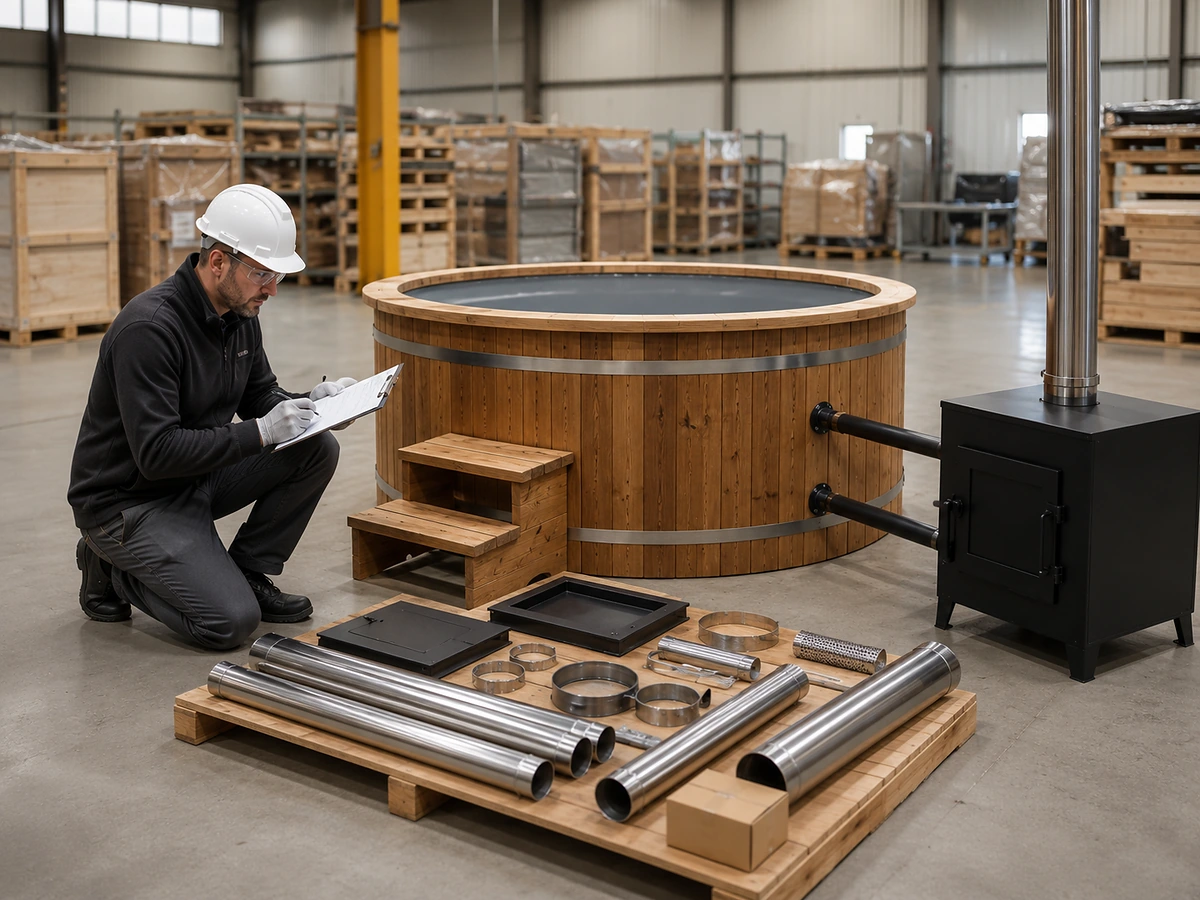
KI-generierte konzeptionelle Visualisierung; kein verifiziertes HACHILL-Modell, Kundenprojekt, Zertifizierungsbild oder freigegebene Installationszeichnung.
Qualitätsstufen für auftragsbezogene Nachweise
- Stufe 1 — Erklärung: Ein Lieferant gibt an, dass eine Inspektion oder Prüfung durchgeführt wird. Nützlich für die Qualifizierung, aber kein Nachweis für diesen Auftrag.
- Stufe 2 — Beispieldatensatz: Eine geschwärzte vergleichbare Checkliste zeigt das Prozessformat. Sie beweist jedoch nicht, dass die aktuelle Einheit geprüft wurde.
- Stufe 3 — Auftragsdatensatz: Der Datensatz identifiziert Auftrag, Modell/Konfiguration, Revision, Abnahmepunkt und Ergebnis.
- Stufe 4 — Abgeschlossenes Freigabepaket: Auftragsdatensatz, Abweichungen, Verpackungsumfang, Dokumentenpaket und Freigabegenehmigung stimmen überein.
Der Käufer sollte das erforderliche Nachweisniveau vor Produktionsbeginn festlegen. Nach dem Versand “QC-Fotos” anzufordern, ist nicht gleichbedeutend mit der vorherigen Vereinbarung eines Inspektions- und Freigabeplans.
Inbetriebnahme-, Übergabe- und Betreiberdokumente
Die Inbetriebnahme verbindet die installierte Konfiguration, das sichere erste Anfeuern und die Übergabe der Betriebsverantwortung.
Checkliste für die Inbetriebnahme vor dem ersten Anfeuern
Die Checkliste sollte Folgendes überprüfen:
- korrektes Produkt/Konfiguration;
- abgeschlossene Installation;
- freigegebener Wasserstand;
- offener und ungehinderter Zirkulationsweg;
- Leckagefreie Verbindungen;
- Ofen- und Abgasrohrmontage;
- Schutzvorrichtungen;
- Standortentwässerung;
- Methode zur Temperaturmessung;
- sicheres Abschaltverfahren;
- verantwortlicher Bediener;
- offene Punkte.

KI-generierte konzeptionelle Visualisierung; kein verifiziertes HACHILL-Modell, Kundenprojekt, Zertifizierungsbild oder freigegebene Installationszeichnung.
Bedienerschulung und Anweisungen zur sicheren Verwendung
Das Bedienerpaket sollte Folgendes erläutern:
- Befüllung;
- Vorfeuerungskontrollen;
- Brennstoff- und Feuerungsverfahren;
- Wasserzirkulation;
- Temperaturprüfung;
- Benutzerzugang und Aufsicht;
- Trennung von heißen Oberflächen;
- Aschehandhabung;
- Reinigung und Wasserpflege;
- Entleerung und Frostschutzmaßnahmen;
- Abschaltung;
- Nutzungsstopp und Notfall-Eskalation.
Wartung, Ersatzteile und Service-Übergabe
Das Übergabepaket sollte Folgendes festlegen:
- Inspektions- und Reinigungsaufgaben;
- Häufigkeitsrahmen;
- Austauschbare Teile;
- Freigegebene Ersatzteilspezifikationen;
- Servicezugang;
- Lagerungsanforderungen;
- Verantwortlichkeiten von Lieferant und lokalem Service;
- Garantiegrenzen;
- Für eine Serviceanfrage erforderliche Informationen.
Kriterien für Stilllegung und Eskalation
Die Betriebsdokumente sollten festlegen, wann die Wanne außer Betrieb bleiben muss. Beispiele hierfür sind:
- unsichere Wasserzirkulation;
- Kochen, Dampfaustritt oder Hammerschlag;
- Rauchentwicklung;
- beschädigter Rauchabzug;
- Undichtigkeit in der Nähe des Ofens oder der Anschlüsse;
- verformte oder überhitzte Teile;
- instabiler oder beschädigter Unterbau;
- fehlende Schutzvorrichtung;
- unkontrollierter Wasserzustand;
- ungeklärte Installations- oder Genehmigungsfrage.
Haltepunkte vor dem Anheizen
| Haltepunkt | Freigabenachweis | Nicht fortfahren, wenn |
|---|---|---|
| Produkt- und Installationsidentität | Die installierte Konfiguration entspricht den genehmigten Zeichnungen und dem Komponentenumfang. | Modell, Ofen, Rauchabzug oder Verbindungsweg sind unklar. |
| Wasser und Zirkulation | Erforderliche Befüllung, Entlüftung, Ventilstellung und Zirkulationsweg sind bestätigt. | Wasserstand, Lufteinschlüsse, Verstopfung oder Absperrung können nicht ausgeschlossen werden. |
| Zustand von Ofen und Abgasleitung | Montage, Abstützung, Schutzvorrichtungen und lokale Überprüfungspunkte sind abgeschlossen. | Schäden an der Abgasleitung, ungestützte Abschnitte, Rauchweg oder Schutz vor heißen Oberflächen sind nicht behoben. |
| Standortbereitschaft | Fundament, Zugang, Entwässerung und Umgebung sind für den vorgesehenen Betrieb freigegeben. | Instabilität, unsichere Ableitung, Rutschgefahr oder Behinderung des Betriebs bestehen weiterhin. |
| Temperatur und Abschaltung | Messmethode, Durchmischung, Abschaltung und Eskalationsverfahren sind verfügbar. | Es ist keine zuverlässige Prüfung oder kein geschulter Verantwortlicher für die Abschaltung zugewiesen. |
| Übergabe an den Bediener | Benannte Mitarbeiter verfügen über aktuelle Handbücher, Schulungen und Aufzeichnungsformulare. | Verantwortung wird übernommen, aber nicht zugewiesen oder dokumentiert. |
Ein Haltepunkt blockiert die erste Inbetriebnahme oder Nutzung, bis der benannte Eigentümer die erforderlichen Nachweise bestätigt und kritische offene Punkte abschließt.
Dokumentations-Warnsignale, die die Freigabe stoppen sollten
Dokumente sollten als akzeptiert, bedingt akzeptiert oder abgelehnt eingestuft werden. Ein Käufer sollte ein Paket nicht allein deshalb genehmigen, weil der Ordner viele Dateien enthält.
Red-Flag-Entscheidungstabelle
| Befund | Risiko | Erforderliche Maßnahme |
|---|---|---|
| Allgemeines Handbuch für “alle Modelle” | Falsche Konfiguration könnte installiert oder betrieben werden | Genehmigung zurückhalten, bis die Anwendbarkeit bestätigt ist |
| Fehlende Modell-/Konfigurationsreferenz | Produkt kann nicht dem Dokument zugeordnet werden | Kontrollierte Kennzeichnung anfordern |
| Fehlende Revision oder fehlendes Datum | Veraltete Anweisungen können verwendet werden | Als endgültige Ausgabe ablehnen |
| Handbuch widerspricht der Zeichnung | Das Baustellenteam kann widersprüchliche Anweisungen befolgen | Geklärte Ausgabe ausstellen |
| Zertifikatsumfang kann nicht mit dem Produkt verknüpft werden | Fälschliche Annahme der Konformität | Umfang und Modellverknüpfung anfordern |
| Falsche Ofen-/Schornstein-Komponentenliste | Unsichere Montage oder fehlende Baustellenarbeiten | Freigegebenes Paket korrigieren |
| Unkontrollierte Übersetzung | Warnhinweise oder Schritte können verändert sein | Kontrollierte Übersetzung ausgeben |
| Allgemeine QC-Checkliste | Kein Nachweis der Auftragsprüfung | Auftragsspezifischen Freigabenachweis anfordern |
| Offene Abweichung | Gelieferter Umfang weicht von der Freigabe ab | Freigabe blockieren oder Auswirkung formal akzeptieren |
| Kein Inbetriebnahmeverfahren | Erstzündung und Übergabe bleiben unkontrolliert | Betrieb nicht autorisieren |
| Keine Verantwortlichkeitsmatrix | Standortpflichten können entfallen | Projektposition offen halten |
| Dokumente für den kommerziellen Betrieb fehlen | Personal, Aufzeichnungen und Stopp-Entscheidungen sind nicht definiert | Kommerzielle Öffnung zurückhalten |
Drei Maßnahmen anwenden: falsche, veraltete oder widersprüchliche Nachweise ablehnen; definierte offene Punkte mit Verantwortlichem und Abschlussanforderung bedingt akzeptieren; und strukturelle, abgastechnische, entwässerungstechnische, gesundheitsbezogene und genehmigungsrelevante Entscheidungen einer qualifizierten lokalen Prüfung zuweisen.
Muster für Käufer-Dokumentenanfrage und Bestellfreigabeschritt
Eine gute Anfrage fragt nicht nur nach “Handbüchern und Zertifikaten”. Sie definiert Produkt, Projekt, Nachweise und Genehmigungsprozess.
Informationen, die der Käufer bereitstellen sollte
- Käufertyp und Zielmarkt;
- Standort und vorgesehene Nutzer;
- private oder gewerbliche Nutzung;
- runde, rechteckige oder projektspezifische Streckenführung;
- Abmessungen und Zugang vor Ort;
- Klima und Exposition;
- Verantwortung für Fundament/Basis;
- Wasserversorgung und Entwässerung;
- bevorzugter Ofen- und Abgasweg;
- Betriebs- und Wasserpflegeplan;
- Menge, Branding und Verpackung;
- Ziellieferung und Installationsreihenfolge;
- erforderliche Dokumentsprache und -format;
- erforderliche Genehmigungsstufen.
Dokumente, die der Lieferant zurücksenden sollte
- kontrollierte Produktspezifikation;
- aktuelle Zeichnungen;
- Liste der enthaltenen/ausgeschlossenen Komponenten;
- Dokumentation zu Ofen/Kamin;
- Wasser-/Umwälz- und Betriebsanleitung;
- Material-/Komponentennachweise, sofern zutreffend;
- Dokumentenliste für den Zielmarkt;
- Inspektions- und Freigabeplan;
- Verpackungs- und Empfangsinformationen;
- Installations- und Inbetriebnahmepaket;
- Wartungs- und Ersatzteilumfang;
- Verfahren für Abweichungen und Änderungskontrolle.
Freigabestatus: Akzeptiert / Bedingt / Abgelehnt
Verwenden Sie die zuvor auf der Seite festgelegten Freigabestatus-Definitionen; erstellen Sie kein zweites, widersprüchliches Freigabevokabular.
Bedingungen für die Freigabe von Bestellungen und Lieferungen
Geben Sie jedes Tor erst dann frei, wenn die für diese Entscheidung erforderliche Konfiguration, Revisionen, Nachweise, Verantwortlichkeiten, Abweichungen und der Übergabeumfang abgeschlossen sind.
- exakte Konfiguration;
- kontrollierte Spezifikation;
- Zeichnungs- und Handbuchliste;
- Nachweisumfang;
- Verantwortlichkeitsmatrix;
- Änderungslenkungsprozess;
- Gewerblicher und Verpackungsumfang.
OEM-/Private-Label-Änderungsmanagement-Anhang
Für OEM-, ODM-, Händlermarken- oder kundenspezifische Programme sollte die Dokumentationsbasis das freigegebene Muster mit der Produktion verbinden. Eine rein visuelle Freigabe legt Ofen, Wasserweg, BOM/Konfiguration, Warnhinweise, Handbücher, Verpackung oder Ersatzteile nicht verbindlich fest.
- Umfang des freigegebenen Musters: Dokumentieren Sie, welche physischen und funktionalen Merkmale das Muster repräsentiert – und welche vorläufig bleiben.
- Zeichnungs- und BOM-/Konfigurationssperre: Steuern Sie Zuber, Ofen, Rauchabzug, Armaturen, Schutzvorrichtungen, Oberfläche, Kennzeichnungen, Handbücher und Zubehör nach Revisionsstand.
- Markengrenze: Trennen Sie Logo-, Farb- und Verpackungsänderungen von sicherheitskritischen Komponenten- oder Anleitungsänderungen.
- Änderungsmitteilung: Definieren Sie, welche Substitutionen eine Käuferprüfung, aktualisierte Nachweise oder ein neues Muster erfordern.
- Produktionsprüfung: Prüfplan und Freigabeprotokoll mit der freigegebenen Produktionsrevision abgleichen.
- Kontinuität nach dem Verkauf: Identität der Ersatzteile, Revisionsstand der Anleitungen und Serviceinformationen mit den gelieferten Einheiten abgestimmt halten.
Eine scheinbar kosmetische Änderung kann Warnhinweise, Verpackungsschutz, Montageanleitungen oder die Rückverfolgbarkeit von Ersatzteilen beeinträchtigen. Jede Änderung auf technische, dokumentarische und kommerzielle Auswirkungen prüfen.
Checklisten für Käufer
Kompakte Dokumentenfreigabeprüfung
- Modell, Ofen, Rauchabzug, Zubehör und Zeichnungsrevision entsprechen der Bestellung.
- Das Dokumentenpaket identifiziert aktuelle Anleitungen, Nachweisumfang und offene lokale Punkte.
- Prüfung, Abweichungen, Verpackung und Versandfreigabe sind bis zur Bestellung rückverfolgbar.
- Die Installationsbereitschaft umfasst Fundament, Zugang, Entwässerung, Rauchabzugsweg und verantwortliche Gewerke.
- Die Erstinbetriebnahme umfasst Befüllung, Zirkulation, Leckage, Schutzvorrichtungen, Temperaturprüfung und Abschaltung.
- Betreiberschulung, Wartung, Ersatzteile, Aufzeichnungen und Befugnis zur Stilllegung sind zugewiesen.
Zusammengesetzte Beschaffungsszenarien
Illustratives Resort-Szenario: Generisches Handbuch, kein genehmigter Rauchgasweg
Beobachtetes Problem: Ein Bauteam eines Resorts erhält ein allgemeines Handbuch für den holzbefeuerten Badezuber, nachdem das Deck und die umgebenden Ausbauten fertiggestellt sind. Das Handbuch beschreibt ein Rauchgaskonzept, entspricht jedoch nicht dem ausgewählten Ofenpaket und zeigt nicht den tatsächlichen Verlauf durch das Gelände.
Ursache: Das Einkaufsteam genehmigte das Angebot, bevor die genaue Heizkonfiguration, der Umfang der örtlichen Brandprüfung und die Verantwortlichkeitsmatrix für die Installation abgeschlossen waren.
Korrektur: Die Installation ist pausiert. Der Lieferant erstellt eine konfigurationsspezifische Zeichnung und Stückliste. Der örtliche qualifizierte Fachmann prüft den Verlauf, den Gebäudeschutz, die Unterstützung und die geltenden Genehmigungsanforderungen. Offene Punkte werden zugewiesen und nachverfolgt.
Prävention: Fordern Sie das Installationsschnittstellenpaket vor der Bestellfreigabe und der Freigabe für den Bau an. Behandeln Sie eine Kategoriebroschüre nicht als freigegebene Standortzeichnung.
Illustratives Distributor-Szenario: Compliance-Nachweis stimmt nicht mit der Konfiguration überein
Beobachtetes Problem: Ein Händler erhält während der technischen Prüfung ein Zertifikat, aber das Dokument bezieht sich auf eine Komponente oder ein Muster, das nicht mit der bestellten Kombination aus Zuber, Ofen und Rauchgasführung verknüpft werden kann.
Ursache: Die RFQ forderte pauschale „Compliance-Dokumente“ an, ohne die genaue Produktkonfiguration, die Anforderung des Zielmarkts, die Nachweisart oder den Umfang zu benennen.
Korrektur: Der Käufer fordert den Aussteller, die Berichts-/Zertifikatsnummer, das abgedeckte Modell/Muster, den Umfang, die Einschränkungen und den Bezug zur bestellten Konfiguration an. Das Dokument bleibt vorläufig, bis die Anwendbarkeit festgestellt ist.
Prävention: Legen Sie die geforderte Nachweisart, den Umfang, die Modellzuordnung und die Abnahmekriterien in der technischen Bestellungsanlage fest. Verwenden Sie Compliance-Akronyme nicht als Ersatz für die Umfangsprüfung.
Illustratives Wareneingangsszenario: Heizkomponenten stimmen nicht mit der Freigabeliste überein
Beobachtetes Problem: Die Packliste und die physischen Ofen-/Schornsteinkomponenten weichen von der endgültig freigegebenen Komponentenliste ab.
Ursache: Eine Produktionsänderung wurde vorgenommen, ohne den Zeichnungsrevisions- und Abweichungsdatensatz zu schließen.
Korrektur: Das betroffene Paket ist gesperrt. Das Team vergleicht physische Teile, Etiketten, Handbücher und die freigegebene Konfiguration. Der Lieferant stellt entweder den genehmigten Umfang wieder her oder gibt eine formelle Abweichung zur Auswirkungsprüfung und Käuferfreigabe heraus.
Prävention: Wareneingangsprüfung an den final freigegebenen Bauteilplan koppeln, nicht an ein Angebotsbild oder eine alte Packliste.
Häufig gestellte Fragen
Was ist das wichtigste Dokument für einen Käufer eines holzbefeuerten Hot Tubs?
Kein einzelnes Dokument ist ausreichend. Die kontrollierte Spezifikation, aktuelle Zeichnungen, der Komponentenumfang, Installations- und Betriebshandbücher, die Verantwortungsmatrix und Freigabeunterlagen müssen mit der exakt bestellten Konfiguration übereinstimmen.
Reicht eine CE-Kennzeichnung, eine UL/ETL-Listung oder ein sonstiges Zertifikat oder ein sonstiger Bericht aus, um das Produkt freizugeben?
Nein. Der Nachweisweg unterscheidet sich je nach Markt und je nach Produkt oder Komponente. Prüfen Sie den verantwortlichen Aussteller oder Hersteller, den genauen Modellumfang, die anwendbare Norm- oder Regulierungsgrundlage, den aktuellen Status und den Bezug zur bestellten Konfiguration. Konformitätsnachweise für Produkte oder Komponenten ersetzen keine lokale Genehmigung für Struktur, Brandschutz, Entwässerung, Installation oder gewerblichen Betrieb.
Sollten Ofen und Schornstein über separate Dokumentationen verfügen?
Die mitgelieferten Ofen- und Rauchrohrkomponenten sollten im genehmigten Komponentenumfang erkennbar sein, einschließlich der geltenden Installations- und Bedienungsanleitungen. Der örtliche qualifizierte Fachbetrieb muss den endgültigen Verlauf, die Abstützung, die Durchführungen, die Abstände und die örtlichen Anforderungen weiterhin prüfen.
Was muss genehmigt werden, bevor die Bestellung freigegeben wird?
Die exakte Konfiguration, kontrollierte Zeichnungen, enthaltenen/ausgeschlossenen Leistungsumfang, geforderte Nachweise, Verantwortlichkeitsmatrix, Änderungsmanagementprozess, Prüfplan, Verpackungsumfang und Übergabeanforderungen freigeben.
Welche Unterlagen müssen vor dem Versand eintreffen?
Die vereinbarte Endabnahme- und Freigabedokumentation, Konfigurationsreferenz, Packliste, Handbuch-/Dokumentationspaket, Abweichungsstatus, Installationsinformationen sowie Inbetriebnahme-/Übergabedokumente gemäß Auftrag.
Welche Dokumentation ist für Hotels oder Resorts anders?
Gewerbliche Einrichtungen benötigen in der Regel zusätzliche Personalverantwortlichkeiten, Betriebs- und Wasserpflege-SOPs, Reinigungs- und Überwachungsprotokolle, Inbetriebnahme-/Schulungsunterlagen, Kriterien für Schließung/Wiedereröffnung sowie Überprüfungen durch die örtlichen Behörden.
Was sollte ein Käufer tun, wenn Handbuch und Zeichnung voneinander abweichen?
Wählen Sie nicht informell eine Option aus. Stellen Sie eine kontrollierte Klärungsanfrage, identifizieren Sie die maßgebliche Anforderung, geben Sie korrigierte Dokumente heraus und aktualisieren Sie das Revisionsregister vor Installation oder Betrieb.
Modellspezifische Dokumentationsanfrage vorbereiten
Vor der Anforderung eines Angebots oder eines Freigabepakets vorbereiten:
- Käufertyp und Zielmarkt;
- vorgesehener Standort und Nutzungsmuster;
- Produktweg und bevorzugte Konfiguration;
- Standort-, Zugangs-, Fundament-, Entwässerungs- und Klimadaten;
- Ofen- und Schornstein-/Rauchabzugskonzept;
- gewerblicher oder privater Betrieb;
- erforderliche Handbücher, Zeichnungen, Berichte und Freigabedokumente;
- Freigabegates vor Bestellung, Versand, Installation und Betrieb;
- Menge, Branding, Verpackung und Logistik;
- Verantwortlichkeiten von Installateur, Betreiber und lokalen Fachkräften;
- Erwartungen an Ersatzteile und Kundendienst.
Senden Sie eine Projekt- und Dokumentenbeschreibung, damit die angeforderte Dokumentation der ausgewählten Konfiguration, dem Bestimmungsmarkt und dem Genehmigungsstand zugeordnet werden kann.
Modellspezifisches Angebot anfragen
Zehn Fragen für die Lieferantenprüfung
- Welche genaue Konfiguration aus Wanne, Ofen, Schornstein und Umwälzung wird angeboten?
- Welche Zeichnungs- und Handbuchrevisionen gelten für Angebot und Bestellung?
- Welche Komponenten sind enthalten, optional oder bauseits zu liefern?
- Welche Dokumentation gilt für das genaue Modell oder Bauteil – und was liegt außerhalb ihres Geltungsbereichs?
- Welche Installationspunkte erfordern eine qualifizierte lokale Planung, Genehmigungen oder eine Prüfung durch die zuständige Behörde?
- Welche Prüf- und Freigabedokumente werden dieser Bestellung zugeordnet?
- Wie werden Änderungen, Abweichungen und Dokumentrevisionen freigegeben?
- Was muss vor Versand, Installation, erstem Anheizen und erster öffentlicher Nutzung abgeschlossen sein?
- Welche Betriebs-, Wartungs-, Ersatzteil- und Schulungsunterlagen werden übergeben?
- Bei gewerblicher oder OEM-Nutzung: Wer ist für Protokolle, Änderungskontrolle, Nutzungsstopp und Wiederinbetriebnahme verantwortlich?
Offizielle Nachweise und Geltungsbereich
Diese Quellen unterstützen den allgemeinen Rahmen für Verbrennung, Installation, Temperaturverifizierung, öffentlich-aquatischen Betrieb und Konformitätsnachweise. Sie zertifizieren kein HACHILL-Modell, legen keinen globalen Zulassungsweg fest und genehmigen keinen bestimmten Projektstandort.
- GOV.UK Approved Document J — Ein länderspezifisches Beispiel für Verbrennungsluft, Abgasführung, Gebäudeschutz und Informationspflichten.
- U.S. Fire Administration – Sicherheit beim Heizen mit Feuer — Aktive allgemeine Leitlinien zu Holzöfen, Schornsteinwartung und Abstand zu brennbaren Materialien; keine Zertifizierung für holzbefeuerte Badezuber oder modellspezifische Abstandsangaben.
- CDC Model Aquatic Health Code — aktuelle Ausgabe — Die 2024 5th Edition ist die aktuelle US-Model-Code-Leitlinie für öffentliche Wasseranlagen; Übernahme und Anwendbarkeit bleiben von der jeweiligen Rechtsordnung abhängig.
- UK HSE HSG282 — Leitfaden für gewerbliche Spa-Becken zu Planung, Inbetriebnahme, Betrieb, Wartung, Überwachung und Inspektion.
- US-amerikanisches CPSC-Beispiel zur Temperaturwarnung bei Whirlpools — Ein produktspezifischer Rückruf, der zeigt, warum die anwendbare Methode zur Temperaturverifizierung und die Reaktion auf abnormale Messwerte explizit sein sollten; er legt keine universelle Methode für holzbefeuerte Hot Tubs fest.
- Europäische Kommission / Your Europe — CE-Kennzeichnung — Offizielle Leitlinien zu Herstellerverantwortung, Konformitätsbewertung, technischer Dokumentation und EU-Konformitätserklärung; die CE-Kennzeichnung ist kein zentrales EU-Zulassungszertifikat.
- OSHA — Programm für national anerkannte Prüflaboratorien — US-Kontext für Laboranerkennung, Produktprüfung/-zertifizierung und Geltungsbereichsgrenzen.
Sicherheit, Konformität und Einschränkungen
Dieser Leitfaden bietet keine Schornstein- oder Thermosiphonauslegung, keine statischen Berechnungen, keine festen Abstände, keine universellen Wasseraufbereitungsanweisungen, keine garantierten Aufheizzeiten, keine Zertifizierungsansprüche, keine medizinischen Ratschläge und keine rechtsgebietspezifische Genehmigung. Verwenden Sie die aktuellen Modell-/Komponentenanleitungen und die qualifizierte lokale Prüfung der Statik, des Brandschutzes, der Abgasführung, der Entwässerung und des öffentlichen Gesundheitswesens für gewerbliche Einrichtungen. Nehmen Sie den Zuber außer Betrieb, wenn Wasserstand, Zirkulation, Leckage, Temperatur, Abgaszustand, Schutzvorrichtungen oder Installationsstatus nicht verifiziert werden können.