Documentation d'approvisionnement pour bain nordique chauffé au bois
Réponse rapide : exiger un dossier documentaire contrôlé et spécifique au modèle
Les acheteurs de bains nordiques chauffés au bois doivent exiger un dossier documentaire contrôlé et spécifique au modèle avant d'approuver la commande, l'expédition, l'installation ou la première mise en feu. Le dossier doit identifier le bain exact, la voie de chauffage, le poêle ou l'échangeur de chaleur, les composants du conduit de fumée, la méthode de circulation, les accessoires et la révision en vigueur. Un catalogue, un manuel générique ou un certificat de composant ne peut pas approuver le système complet si sa configuration ou sa portée diffère de la commande.
Le principal risque d'approvisionnement est d'accepter des fichiers d'apparence professionnelle qui ne peuvent pas être rattachés au système commandé. Définissez les preuves requises aux étapes de devis, de bon de commande, de production, d'expédition, d'installation et de mise en service ; puis enregistrez l'émetteur, la portée, la révision, les points ouverts et le responsable. L'approbation finale dépend également du site réel, des fondations, de l'accès, du drainage, du climat, du tracé du conduit de fumée, du plan d'exploitation, des règles locales et des données confirmées par le fabricant. Préparez un brief de projet et un registre des documents avant de demander l'approbation finale.
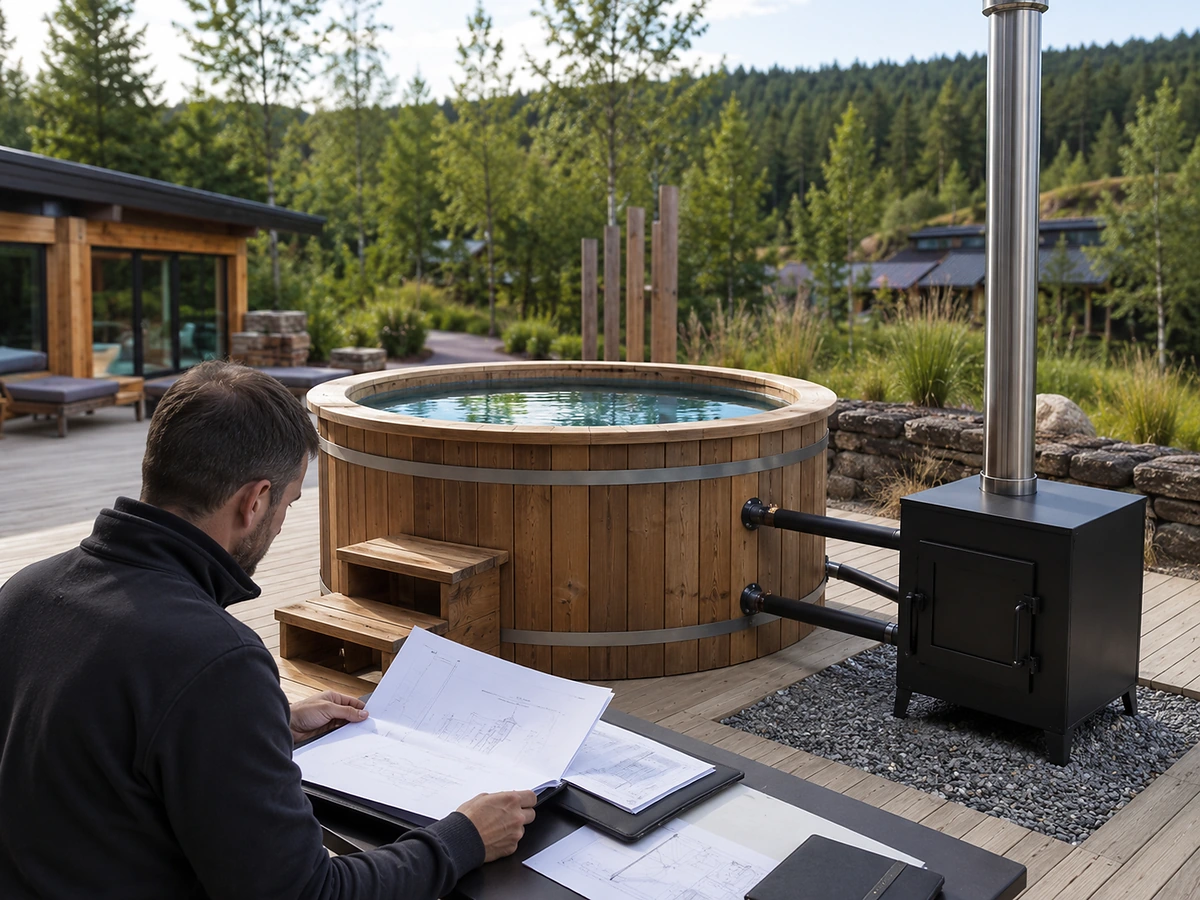
Visualisation conceptuelle générée par IA ; il ne s'agit pas d'un modèle HACHILL vérifié, d'un projet client, d'une image de certification ou d'un plan d'installation approuvé.
- acheteurs comparant les fournisseurs ou les configurations ;
- distributeurs, hôtels, centres de villégiature et exploitants commerciaux ;
- architectes, installateurs, examinateurs QA et équipes OEM/marque de distributeur.
- une cheminée, de conception structurelle ou à thermosiphon ;
- un avis universel de certification ou de conformité légale ;
- un remplacement des instructions du modèle ou un examen local qualifié.
Les groupes de documents minimaux
Au minimum, l'acheteur doit s'attendre à ce que la demande de documentation couvre :
- l'identité du produit et les spécifications contrôlées ;
- les plans d'agencement général et les dessins d'interface actuels ;
- la portée de la baignoire, du poêle, de la cheminée et des accessoires ;
- les instructions d'installation et d'utilisation ;
- les consignes relatives au niveau d'eau, à la circulation, à la température et à l'arrêt ;
- preuves de matériaux et de composants lorsque cela est revendiqué ;
- registres d'inspection, d'essai, d'écart et de libération ;
- informations sur l'emballage, la réception et le contrôle des dommages ;
- mise en service et remise à l'exploitant ;
- exigences de procédures opérationnelles normalisées (PON) et de registres pour un usage commercial, le cas échéant.
Ce que le dossier doit contenir
Chaque document doit être vérifié par rapport au même ensemble de référence :
- produit exact ou configuration approuvée ;
- trajet exact du poêle et du conduit de cheminée ;
- révision du dessin et du manuel ;
- référence de commande ou de projet ;
- usage résidentiel ou professionnel prévu ;
- pays d'installation ou marché de destination ;
- composants inclus, en option et fournis sur site ;
- fournisseur responsable, installateur, exploitant et professionnel local.
Si l'une de ces références n'est pas claire, considérez le document comme conditionnel plutôt que définitif.
Pourquoi un manuel ou un certificat générique ne suffit pas
Un document n'est utile que si sa portée peut être rattachée au produit commandé et à la décision qu'il soutient. Un manuel, un rapport ou un certificat soigné peut encore s'appliquer à une autre géométrie de cuve, à un mode de chauffage, à un ensemble de conduit de fumée, à une méthode de circulation, à un ensemble d'accessoires ou à un marché.
Inadéquation du modèle et de la configuration
Une inadéquation peut être évidente, comme un nom de produit incorrect, ou subtile, comme la bonne cuve associée à des instructions de poêle ou de conduit de fumée incorrectes. Vérifiez :
- référence du modèle, de la famille ou de la configuration contrôlée ;
- géométrie de la cuve et utilisation prévue ;
- circuit de chauffage interne ou externe ;
- circuit d'eau à circulation naturelle ou pompée ;
- identité du poêle ou de l'échangeur de chaleur ;
- périmètre du conduit de fumée ou du conduit d'évacuation ;
- périmètre des protections, couvercles, marches, drains et accessoires inclus ;
- options qui modifient le fonctionnement, le nettoyage ou l'installation.
Révision et risque de traduction
Les dessins de devis, les manuels expédiés et les instructions sur site doivent partager un statut de révision et d'approbation contrôlé. Les copies traduites doivent préserver les avertissements, les noms des composants, les responsabilités et les étapes de fonctionnement ; les conflits nécessitent une correction contrôlée.
Périmètre du certificat par rapport au périmètre du produit
Lorsqu'une certification, un rapport ou une déclaration est proposé, demandez :
- organisme émetteur ;
- numéro du rapport ou du certificat ;
- informations de délivrance et de validité ;
- modèle, échantillon ou composant couvert ;
- portée testée ou déclarée ;
- normes ou exigences de référence ;
- exclusions et limitations ;
- lien avec la configuration du produit commandé.
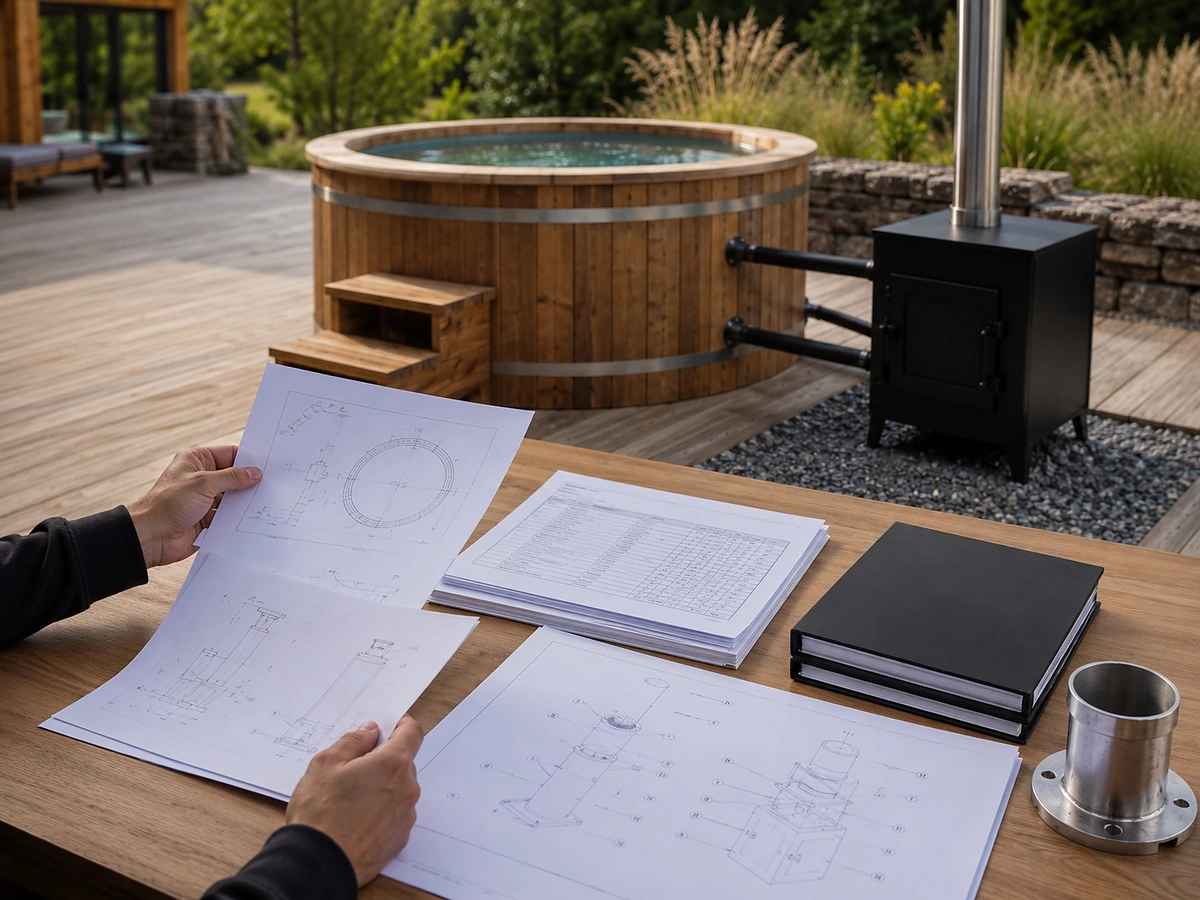
Visualisation conceptuelle générée par IA ; il ne s'agit pas d'un modèle HACHILL vérifié, d'un projet client, d'une image de certification ou d'un plan d'installation approuvé.
Documents que les acheteurs doivent exiger à chaque étape du projet
Reliez chaque document à la décision qu'il contrôle. Cela met en évidence les lacunes concernant le site, le système de chauffage, les responsabilités et les preuves avant que l'acheteur ne s'engage.
Documentation par Project Gate
Sur les petits écrans, faites glisser horizontalement pour consulter toutes les colonnes du tableau.
| Project Gate | Saisies de l'acheteur | Documents du fournisseur | Documents locaux / de l'acheteur | Résultat d'approbation |
|---|---|---|---|---|
| Présélection | Lieu, utilisateurs, marché cible, circuit produit | Configuration préliminaire et déclaration de disponibilité des documents | Contraintes initiales du site | Qualifié ou non qualifié |
| Devis | Site, accès, fondation, drainage, concept de poêle/conduit, usage commercial | Spécification maîtrisée, plan préliminaire, inclusions/exclusions, liste de documents | Hypothèses de responsabilité | Devis comparable |
| Émission du bon de commande | Itinéraire approuvé, options, quantité et preuves requises | Jeu de révisions approuvé, périmètre des composants, rapports applicables, plan d'étiquetage/manuel | Matrice des responsabilités approuvée | Pièce jointe technique au bon de commande |
| Libération de production | Configuration finale et modifications approuvées | Nomenclature/configuration, plan de contrôle, emballage et périmètre du manuel | Enregistrement d'approbation de l'acheteur | Autorisation de production |
| Expédition | Référence de commande, plan de livraison et de réception | Enregistrement d'inspection finale/de libération, liste de colisage, dossier documentaire et statut des écarts | Liste de contrôle à la réception | Autorisation d'expédition |
| Installation | Préparation du site et corps de métier responsables | Instructions d'installation/assemblage et informations sur les interfaces produit | Plans locaux, permis et revue professionnelle | Autorisation d'installation |
| Mise en service | État après installation et opérateur désigné | Procédures de mise en service, de pré-allumage et d'arrêt | Validation locale et registre de formation | Acceptation de la mise en service |
| Fonctionnement | Politique du lieu et de l'utilisateur | Instructions d'utilisation, d'entretien, de traitement de l'eau et d'arrêt d'utilisation | Procédures opérationnelles standard, journaux et exigences locales | Autorisation d'exploitation |
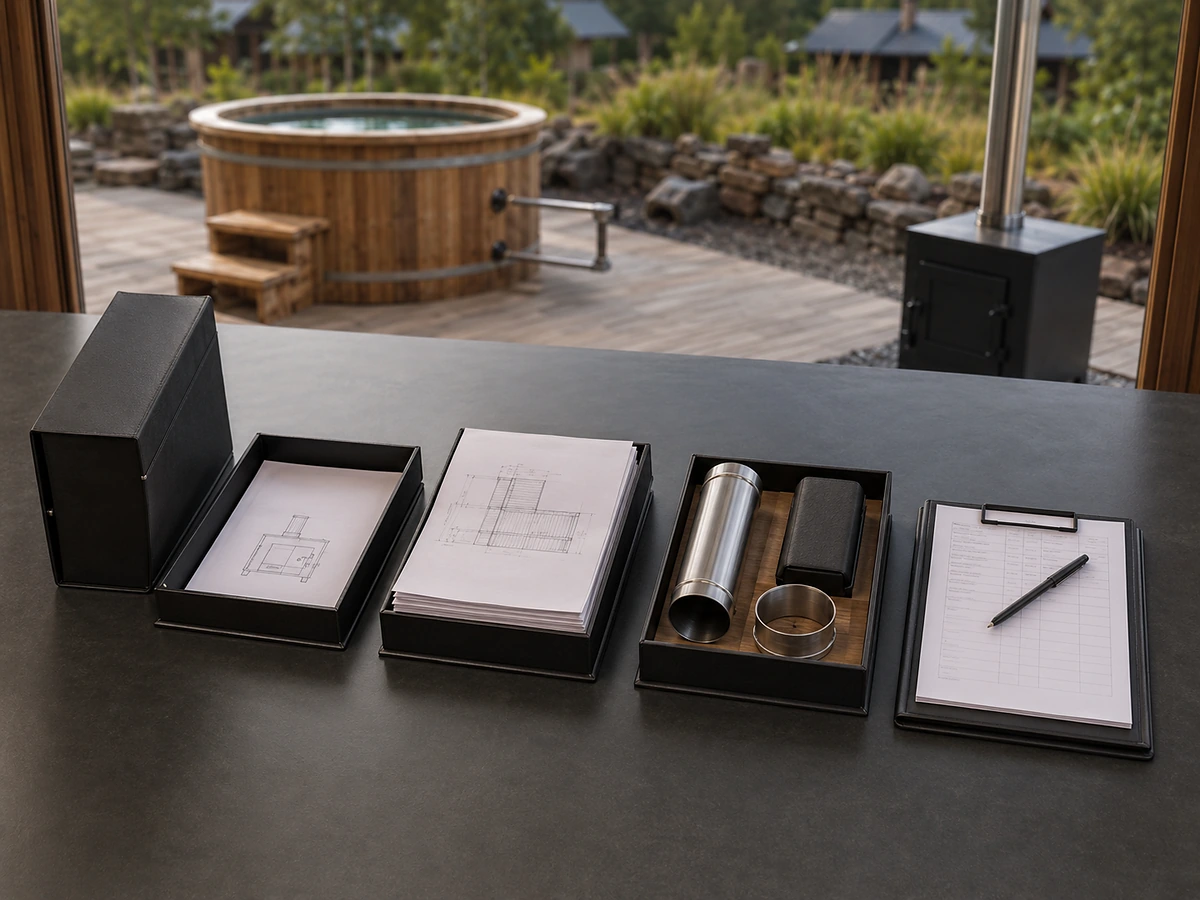
Visualisation conceptuelle générée par IA ; il ne s'agit pas d'un modèle HACHILL vérifié, d'un projet client, d'une image de certification ou d'un plan d'installation approuvé.
Avant la soumission de devis
Avant de comparer les prix, fournissez l'utilisation prévue, le marché, le site et les données commerciales nécessaires pour définir la configuration.
- utilisateurs prévus et environnement d'exploitation ;
- usage résidentiel ou professionnel ;
- pays d'installation ;
- rond, rectangulaire ou tracé de projet ;
- exposition extérieure et climat ;
- empreinte disponible et accès ;
- hypothèses de base, d'alimentation en eau et de drainage ;
- trajet préféré du poêle et du conduit de cheminée ;
- exigences de marque, de quantité, d'emballage et de logistique ;
- attentes en matière de preuves et de documents.
Avant l'émission du bon de commande
La pièce jointe technique du bon de commande doit identifier la configuration approuvée, les révisions, les responsabilités et le circuit de contrôle des modifications.
- spécification du produit ;
- révision de plan;
- plan des composants et accessoires;
- périmètre du poêle et du conduit de fumée;
- plan des matériaux et finitions si confirmé;
- liste des documents;
- plan d'inspection et de réception;
- matrice des responsabilités;
- procédure de gestion des modifications;
- registre des points ouverts.
Avant expédition et installation
La libération de l'expédition confirme le produit commandé et le pack documentaire ; la libération pour installation confirme la préparation du site local. Ce sont des décisions distinctes.
- enregistrement de l'inspection finale et de la libération ;
- identification de la commande / configuration ;
- liste de colisage et nombre de colis ;
- enregistrement des dommages et exceptions ;
- manuels, avertissements et étiquettes ;
- statut des écarts non résolus ;
- pack d'installation et de mise en service.
- plan de site approuvé ;
- revue des fondations ou de la structure ;
- plan d'accès et de manutention ;
- trajet du conduit de fumée et examen local des risques d'incendie ;
- évacuation et gestion de l'eau ;
- responsabilités de montage ;
- points en suspens concernant le permis ou les autorités.
Avant la mise en service et l'exploitation
La livraison ne constitue pas une mise en service. Avant la première chauffe et la première utilisation, le projet doit clôturer les points applicables au système et au site retenus : identité produit, circuit d'eau, conduit de fumée, protection, vérification de la température, exploitant et arrêt d'utilisation.
- niveau d'eau requis ;
- trajet de l'eau et position de la vanne ;
- connexions sans fuite ;
- ensemble approuvé poêle et conduit de fumée ;
- examen du support et de la terminaison du conduit de fumée ;
- protections contre les surfaces chaudes ;
- méthode de mesure de la température ;
- séquence de mise à feu et d'arrêt en toute sécurité ;
- affectation de l'opérateur ;
- nettoyage, entretien de l'eau et maintenance ;
- critères d'arrêt d'utilisation et d'escalade.
Logique de publication : ce que chaque statut de document autorise
Un registre de documents nécessite un statut opérationnel, pas seulement un nom de fichier. Le statut doit contrôler si l'acheteur peut comparer les devis, émettre le bon de commande, autoriser l'expédition, commencer l'installation ou mettre le bain en service.
| Statut | Signification | Décision autorisée | Contrôle requis |
|---|---|---|---|
| Accepté | Le document est applicable, à jour et complet pour la décision indiquée. | Procéder dans le cadre approuvé. | Conserver la révision approuvée et la tracer jusqu'à la commande. |
| Conditionnel | Le document n'est utilisable qu'après la clôture d'un point en suspens défini. | Ne procéder que si la condition n'affecte pas le portail actuel. | Nommer le propriétaire, le point d'échéance et les preuves requises pour la clôture. |
| Rejeté | Le document est incorrect, obsolète, contradictoire, invérifiable ou hors de portée. | Ne pas l'utiliser pour approbation ou installation. | Émettre un remplacement contrôlé ou une clarification technique formelle. |
| Pour information | Le document fournit un contexte mais ne constitue pas une preuve d'acceptation. | Utiliser uniquement pour orientation. | Ne pas traiter les brochures, les enregistrements d'exemple ou les manuels génériques comme des documents de diffusion. |
Identité du produit, spécifications et plans maîtrisés
Le dossier de documentation produit doit établir ce qui est acheté, et non pas simplement décrire ce que la famille de produits peut potentiellement inclure.
Fiche de spécifications contrôlée
Une spécification contrôlée doit identifier :
- la voie ou le modèle de produit ;
- l'application prévue ;
- la géométrie approuvée et le périmètre global ;
- la voie de chauffage ;
- la méthode de circulation ;
- les composants inclus et en option ;
- les matériaux et finitions confirmés ;
- accessoires ;
- formulaire d'emballage et de livraison ;
- portée du document ;
- statut de révision et d'approbation.
Plans d'encombrement général et d'interface
Le plan d'encombrement général doit montrer les informations nécessaires pour coordonner le produit avec le site. Selon la configuration choisie, cela peut inclure :
- dimensions hors tout ;
- orientation d'installation ;
- zones d'accès et de service ;
- position du poêle ;
- raccordements d'entrée et de sortie ;
- trajet du conduit de fumée ;
- interfaces de vidange et de remplissage ;
- position des marches, garde-corps ou couvercles ;
- interfaces d'assemblage ;
- points de levage ou de manutention le cas échéant.
Composants inclus, en option et fournis sur site
Un planning des composants utile distingue :
- pièces de baignoire fournies par l'usine ;
- pièces du poêle ou de l'échangeur de chaleur ;
- pièces de conduit/cheminée ;
- garde-corps et éléments de protection ;
- composants de circulation ou de plomberie ;
- accessoires de vidange et de remplissage ;
- marches, couvercles et équipements en option ;
- consommables d'installation ;
- articles fournis par l'entrepreneur ou l'acheteur.
Ceci est particulièrement important pour le support du conduit, les pénétrations de toit ou de mur, les travaux de fondation, le drainage et les éléments de protection contre l'incendie locaux. L'acheteur ne doit pas supposer qu'ils sont inclus parce qu'ils apparaissent dans un rendu ou une photo de projet.
Contrôle des révisions et des modifications
Toute modification affectant le matériau, le poêle, le conduit, la circulation, le raccordement, les protections, les accessoires, l'étiquetage, l'emballage ou le contenu du manuel doit être évaluée par rapport à la portée approuvée. L'enregistrement des modifications doit indiquer :
- ce qui a changé ;
- pourquoi ;
- documents concernés ;
- impact technique ou commercial ;
- approbation requise de l'acheteur ;
- statut de diffusion.
Fiche de référence de configuration
La référence relie la sélection commerciale, les plans, les composants, l'inspection et la remise afin qu'un fichier correct ne soit pas appliqué au mauvais produit physique.
| Champ de référence | Pourquoi cela modifie le résultat | Preuve à verrouiller |
|---|---|---|
| Parcours et géométrie de la cuve | Modifie l'empreinte au sol, l'accès, le volume d'eau, le support et l'agencement des utilisateurs. | Référence du modèle/config approuvé et plan GA. |
| Parcours de chauffage | Modifie la position du poêle, les raccordements d'eau, l'accès de service et les instructions d'utilisation. | Périmètre exact du poêle ou de l'échangeur de chaleur et plan de raccordement. |
| Kit de conduit de fumée | Modifie les sections fournies, les supports, les protections et les interfaces d'installation locales. | Calendrier des composants approuvé et liste des points ouverts pour l'installateur/examen local. |
| Méthode de circulation | Modifie les vérifications avant mise en feu, la position des vannes, le risque d'absence de débit et le dépannage. | Schéma du circuit d'eau contrôlé et manuel d'utilisation. |
| Matériaux et options | Modifie la maintenance, la compatibilité, l'emballage et les pièces de rechange. | Planning des matériaux/options spécifique à la commande. |
| Révision du document | Détermine quelles instructions, dimensions et critères d'acceptation s'appliquent. | Registre maître des documents avec la révision approuvée en vigueur. |
Évaluation de l'impact des modifications avant approbation
- Adéquation du produit : Le changement modifie-t-il les dimensions, les places assises, la zone de service, le volume d'eau ou l'accès ?
- Système de chauffage : Modifie-t-il le poêle, le circuit d'eau, les composants du conduit de fumée, les protections ou les avertissements d'utilisation ?
- Interface du site : Cela affecte-t-il les données de fondation, le drainage, la manutention, les pénétrations ou l'examen professionnel local ?
- Preuves : Les dessins, manuels, enregistrements de nomenclature/configuration, étiquettes, critères d'inspection et dossiers d'emballage doivent-ils être révisés ?
- Périmètre commercial : Le changement affecte-t-il la quantité, la marque, l'emballage, les pièces de rechange, les limites de garantie ou la formation ?
Une substitution n'est pas automatiquement équivalente parce qu'elle a une apparence ou une puissance nominale similaire. Laissez le changement ouvert jusqu'à ce que les documents et responsabilités concernés soient mis à jour par écrit.
Documentation sur le poêle, le conduit de fumée, la combustion et les surfaces chaudes
Le poêle et le système de conduit présentent le risque d'incendie et de combustion le plus évident, mais l'exigence documentaire doit rester spécifique à la configuration. Les acheteurs ont besoin de suffisamment d'informations pour identifier le système fourni et le coordonner avec un installateur local qualifié et l'examen des autorités.
Documentation du poêle et du transfert de chaleur
Demandez l'identification exacte du poêle ou de l'échangeur de chaleur et les instructions d'installation et d'utilisation actuelles pour la version fournie. Les documents doivent préciser :
- orientation prévue ;
- relation entrée/sortie ;
- condition d'eau requise avant l'allumage ;
- combustible approuvé et limites de fonctionnement le cas échéant ;
- procédure normale de chargement et d'arrêt ;
- retrait des cendres et entretien ;
- points de contrôle accessibles ;
- avertissements de surchauffe, d'ébullition ou d'absence de débit ;
- exigences de protection ou de séparation des utilisateurs ;
- modifications interdites.
Pour le contexte général de sécurité incendie des poêles à bois et cheminées résidentiels aux États-Unis, la U.S. Fire Administration recommande de tenir les matières combustibles à l'écart des sources de chaleur et de faire inspecter et ramoner professionnellement les équipements de chauffage et les cheminées. Il s'agit d'une orientation générale en matière de sécurité incendie, et non d'un barème de dégagement ni d'une approbation pour l'installation d'un bain nordique chauffé au bois ; les instructions du modèle et les exigences locales régissent toujours le projet réel.
Une étiquette de poêle ou une valeur de puissance nominale ne garantit pas une installation sûre ni un temps de chauffe garanti. Les performances dépendent de l'ensemble des conditions d'eau et de perte de chaleur, tandis que l'installation dépend du site réel et des règles locales.
Parcours du conduit de fumée / cheminée et portée des composants
L'acheteur doit recevoir une liste contrôlée ou un schéma des composants de conduit fournis. Celle-ci doit identifier, le cas échéant :
- raccordement de l'appareil ;
- sections de conduit ;
- coudes ou adaptateurs ;
- supports ;
- chapeau de cheminée ou terminal ;
- protections ;
- joints d'étanchéité ;
- composants fournis par l'installateur ;
- points nécessitant une revue de conception locale.
Pour un exemple spécifique à une juridiction, Document J approuvé de l'Angleterre traite de l'air de combustion, de l'évacuation des produits de combustion, de la protection du bâtiment, de l'avertissement au monoxyde de carbone et des obligations d'information. Il ne s'agit pas d'une voie d'approbation mondiale.
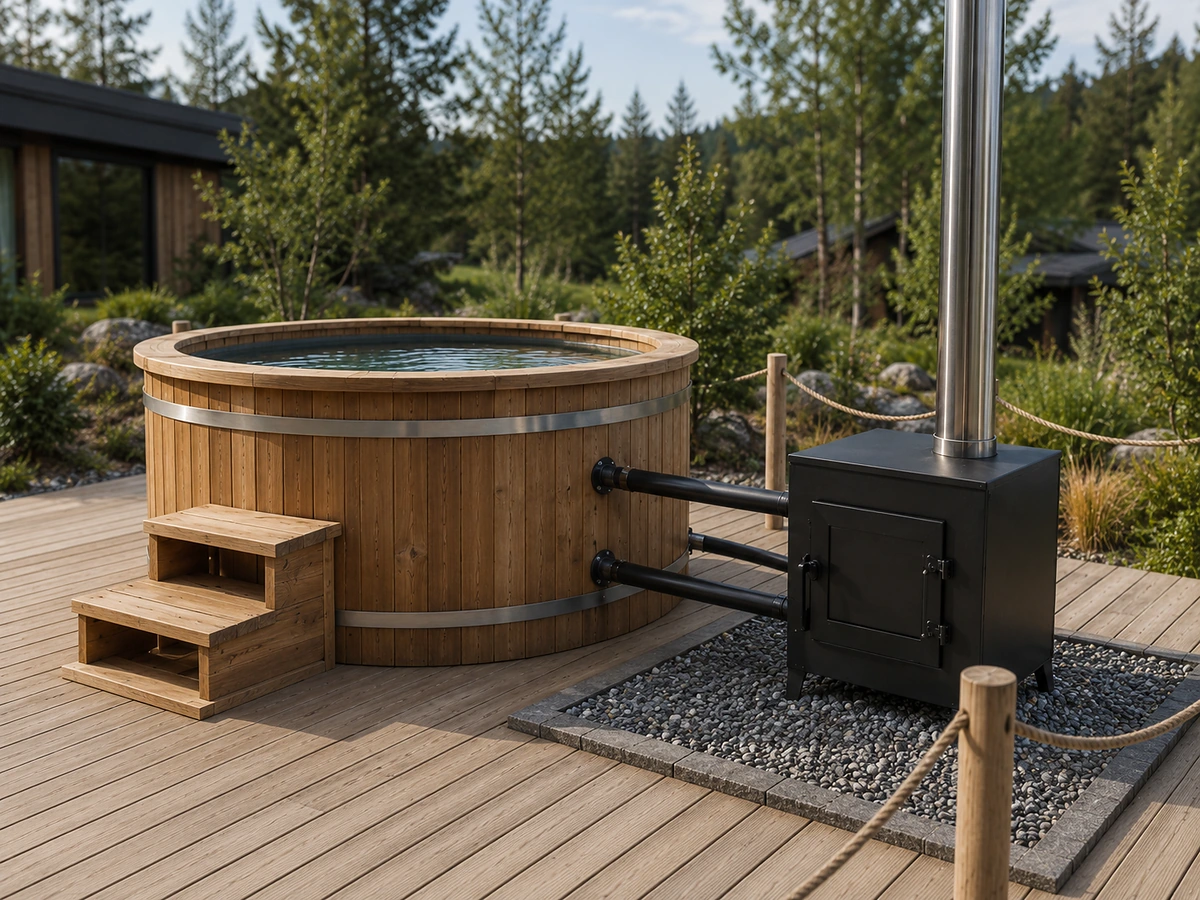
Visualisation conceptuelle générée par IA ; il ne s'agit pas d'un modèle HACHILL vérifié, d'un projet client, d'une image de certification ou d'un plan d'installation approuvé.
Protections contre les surfaces chaudes et séparation des utilisateurs
Le dossier documentaire doit identifier les surfaces chaudes susceptibles d'être accessibles en fonctionnement normal et indiquer quelles protections ou barrières sont incluses ou requises par les instructions du produit retenu et l'analyse du site. Cela importe lorsque :
- le poêle est adjacent au bain ;
- les utilisateurs passent près du conduit de fumée ;
- le produit est installé dans un établissement d'accueil ;
- des enfants ou des utilisateurs non supervisés peuvent entrer dans la zone ;
- le retrait des cendres se produit à proximité de la circulation publique.
Une photographie seule ne peut pas prouver qu'un garde-corps offre la protection requise. L'installation en place doit être examinée en fonction du site réel et du flux d'utilisateurs.
Limites de responsabilité en matière d'approbation locale de l'installation et des incendies
Le fournisseur peut définir le produit, les composants inclus, les instructions d'utilisation et les interfaces connues. Le professionnel qualifié local et l'autorité restent responsables de questions telles que :
- le tracé final du conduit de fumée ;
- les pénétrations ;
- les dégagements requis ;
- les conditions d'air de combustion ;
- la protection du bâtiment ;
- les mesures de monoxyde de carbone si nécessaire ;
- les restrictions de contrôle des fumées ;
- exigences en matière de permis et d'inspection.
Le dossier de documentation doit rendre cette limite explicite plutôt que de laisser l'acheteur en déduire la responsabilité.
Questions d'acceptation de la documentation du poêle et du conduit de fumée
- Identité : Le poêle, les sections de conduit, les adaptateurs, les supports et les protections peuvent-ils être rattachés à la configuration approuvée ?
- Condition de l'eau : Les instructions définissent-elles les conditions de remplissage, de raccordement et de circulation requises avant la mise en service ?
- Limite d'exploitation : Le combustible, le chargement, l'arrêt, la gestion des cendres et les modifications interdites sont-ils traités pour l'unité sélectionnée ?
- Interface du site : Le dossier distingue-t-il les pièces fournies des supports locaux, des pénétrations, de la protection et de l'examen par les autorités ?
- Séparation des utilisateurs : Les surfaces chaudes et les zones normales de service/d'évacuation des cendres sont-elles identifiées pour le lieu réel ?
- Points ouverts : Les dégagements locaux, le tracé final, l'air de combustion et les responsabilités en matière de permis sont-ils nommés plutôt que cachés derrière une clause de non-responsabilité générique ?
La liste des composants et les instructions du fournisseur définissent la portée fournie. Ils ne remplacent pas un examen local qualifié du tracé final du conduit de fumée, des supports, des pénétrations, des dégagements, de la protection du bâtiment ou de l'approbation du site commercial.
Documents sur la cuve, la circulation, le niveau d'eau, la température et l'entretien de l'eau
Un bain nordique chauffé au bois ne peut pas être évalué uniquement comme un produit de combustion. Le récipient, le circuit d'eau, la vérification de la température, le drainage et le plan de rétention d'eau nécessitent également des informations contrôlées.
Niveau de remplissage et vérifications avant allumage
Le manuel d'utilisation doit indiquer les exigences de remplissage et de pré-allumage spécifiques au modèle. La question clé pour l'acheteur est de savoir si le système peut être allumé en toute sécurité lorsque :
- le bain n'est pas plein ;
- une connexion contient de l'air ;
- une vanne est fermée ;
- une entrée ou une sortie est obstruée ;
- le poêle est isolé ;
- le bain se vide ou est en cours d'entretien.
Le manuel doit identifier les conditions d'arrêt et la procédure d'arrêt sécurisée. Il ne doit pas se fier à la sensation de l'opérateur pour savoir si l'eau circule.
Schéma de circulation et de connexion
Le schéma approuvé doit identifier le trajet de l'eau entre le bain et le système de chauffage. Il doit distinguer la circulation naturelle d'un circuit pompé et montrer l'orientation des connexions sans obliger l'acheteur à déduire le système à partir de photos.
Le document doit également identifier :
- les vannes et leur position de fonctionnement normale ;
- séquence de remplissage et de purge ;
- points de service ;
- restrictions de fermeture ou d'isolement du circuit ;
- interfaces de filtre ou de pompe si présentes ;
- signes d'alerte d'une circulation bloquée ou incertaine.
L'article ne prescrit pas les dimensions des tuyaux ni la géométrie du thermosiphon. Celles-ci relèvent du modèle sélectionné et de la conception qualifiée du système.
Température de l'eau mélangée et contrôle de la surchauffe
Le dossier de documentation doit définir comment l'opérateur vérifie la température de l'eau mélangée avant utilisation. Une zone chaude locale près du retour ou une lecture inexacte du contrôleur peut créer une condition différente de la température moyenne du bain.
La procédure doit préciser :
- emplacement de mesure ;
- exigence de mélange ;
- instrument ou méthode de vérification ;
- contrôle avant entrée ;
- condition d'arrêt d'utilisation ;
- escalade en cas de lectures anormales.
Un document produit spécifique de 2022 Rappel de la U.S. Consumer Product Safety Commission couvrait des modèles nommés de bains à remous électriques Jacuzzi et Sundance, car un capteur de température pouvait indiquer une température d'eau incorrecte. La CPSC a demandé aux propriétaires des unités rappelées d'utiliser un thermomètre externe précis avant l'entrée dans le bain, jusqu'à la réparation. Cela étaye le point d'achat plus restreint selon lequel le système retenu nécessite une vérification définie de la température et une réponse aux relevés anormaux ; cela ne crée pas d'obligation universelle de thermomètre externe pour les bains nordiques chauffés au bois.
Drainage, nettoyage et protection contre le gel
Les documents d'exploitation et de maintenance doivent identifier :
- emplacement et méthode de vidange ;
- rétention ou remplacement de l'eau ;
- accès pour le nettoyage ;
- compatibilité avec les produits de nettoyage approuvés ;
- exigences de séchage et de stockage ;
- arrêt saisonnier ;
- protection contre le gel ;
- responsabilité de l'élimination ;
- restrictions concernant la vidange de l'eau chaude ou des produits de traitement chimique.
Le revêtement en bois ne détermine pas le matériau de la cuve ni la méthode de traitement de l'eau. La cuve exacte, les matériaux en contact avec l'eau et les instructions d'entretien approuvées doivent être confirmés pour le produit sélectionné.
Entrées d'exploitation qui doivent rester spécifiques au modèle
| Entrée d'exploitation | Pourquoi c'est important | Résultat documentaire requis |
|---|---|---|
| Condition de remplissage et de préchauffage | Une chauffe sans confirmation de l'état d'eau requis peut créer un risque de surchauffe, de vapeur ou de dommage matériel selon le système retenu. | Liste de contrôle de remplissage, de purge et de préchauffage spécifique au modèle. |
| Circuit de circulation et état des vannes | Un débit bloqué ou isolé modifie le transfert de chaleur et le risque d'arrêt. | Schéma de connexion contrôlé et positions normales de fonctionnement. |
| Contrôle de la température de l'eau mélangée | Une zone chaude locale ou un affichage inexact peut ne pas représenter l'ensemble de la cuve. | Emplacement de mesure, étape de mélange, instrument et règle d'arrêt d'utilisation. |
| Plan de vidange et de protection contre le gel | L'eau résiduelle peut endommager les composants ou créer des conditions de redémarrage dangereuses. | Procédure d'arrêt saisonnier, de vidange et de redémarrage pour l'itinéraire sélectionné. |
| Entretien de l'eau retenue | La charge de l'utilisateur, les matériaux, la température et le traitement affectent le nettoyage et le remplacement. | Responsabilité compatible de l'entretien de l'eau et cadre de maintenance. |
Ne convertissez pas ces entrées en hauteurs de remplissage universelles, dimensions de tuyaux, limites de température ou intervalles de maintenance. Utilisez le manuel du modèle actuel, les instructions des composants, le plan du site et les exigences locales applicables.
Documents sur le site, les fondations, l'accès et la responsabilité d'installation
Le pack site doit être prêt avant la mise en production ou l'expédition, et non après l'arrivée du produit.
Entrées de base, de charge et de placement
Le fournisseur doit fournir les entrées produit vérifiées nécessaires au concepteur local, telles que :
- dimensions du produit ;
- masse sèche ou remplie confirmée si disponible ;
- disposition du support/contact ;
- accès de vidange et de maintenance ;
- relation poêle et conduit de fumée ;
- accès d'assemblage requis.
Le professionnel structurel local doit déterminer les fondations, la terrasse ou la structure de support. L'article ne prescrit pas une base universelle car le sol, le gel, le drainage, la structure du bâtiment et la juridiction diffèrent.
Livraison, manutention et assemblage
L'acheteur doit demander :
- dimensions emballées et nombre de colis ;
- répartition des composants ;
- restrictions de levage ou de manutention ;
- hypothèses de portail, de chemin et de grue/chariot élévateur ;
- séquence d'assemblage ;
- composants protégés ;
- fixations ou consommables fournis sur site ;
- procédure de déclaration des dommages ;
- exigences de stockage avant l'installation.
Un produit peut correspondre à l'emplacement final mais être impossible à déplacer le long du chemin disponible. L'accès fait donc partie du cahier des charges documentaire, et non pas seulement un détail logistique.
Drainage, eau et exposition aux intempéries
Le dossier documentaire du site doit résoudre :
- source d'eau ;
- méthode de remplissage ;
- voie de drainage/évacuation ;
- gestion des glissades et éclaboussures environnantes ;
- exposition à la pluie et à la neige ;
- effet du vent sur le conduit de fumée et la charge de chauffage ;
- stockage et manutention du couvercle ;
- arrêt saisonnier ;
- conditions de gel ;
- zones combustibles ou occupées à proximité.
Le fournisseur peut identifier les interfaces et les limites du produit. L'équipe locale doit concevoir et approuver la solution sur site.
Matrice des responsabilités d'installation
Une matrice des responsabilités doit indiquer qui est responsable de chaque activité.
| Tâche | Fournisseur / Fabricant | Installateur / Entrepreneur | Acheteur / Exploitant | Professionnel local / Autorité |
|---|---|---|---|---|
| Configuration du produit | Définir le périmètre fourni et approuvé | Vérifier les interfaces | Approuver l'utilisation prévue | Examiner si nécessaire |
| Fondation | Fournir des données produit vérifiées | Coordonner la construction | Fournir les données du site | Concevoir / approuver localement |
| Poêle et cheminée | Définir les composants fournis et les instructions | Installer le tracé approuvé | Maintenir un fonctionnement sûr | Examiner la conformité incendie/bâtiment |
| Drainage | Définir les interfaces produit | Installer le tracé du site | Exploiter et entretenir | Examiner les exigences locales |
| Mise en service | Fournir les critères de procédure et de produit | Exécuter les contrôles contractuels | Affecter l'opérateur et accepter la remise | Valider si nécessaire |
| Exploitation commerciale | Énoncer les limites d'utilisation du produit | Assister les interfaces contractuelles | Détenir les SOP, les journaux et les décisions de clôture | Appliquer les exigences applicables |
Matrice de complétude des entrées du site
| Entrée du site | Pourquoi cela modifie le projet | Preuve principale / Propriétaire |
|---|---|---|
| Fondation et support | La masse remblayée, le sol, le gel, la structure du tablier et la disposition des contacts affectent la conception du support. | Entrées du fabricant plus conception structurelle locale qualifiée. |
| Accès pour la livraison et l'assemblage | Les dimensions une fois emballé, les virages, les portails et le parcours de levage peuvent bloquer la livraison même lorsque l'empreinte finale convient. | Données d'emballage/manutention plus plan d'accès de l'acheteur/entrepreneur. |
| Emplacement du poêle et du conduit de fumée | Modifie la séparation des utilisateurs, l'accès pour l'entretien, l'exposition aux intempéries et le périmètre de l'examen de sécurité incendie. | Interface produit approuvée plus examen local de sécurité incendie/bâtiment. |
| Drainage et évacuation | Influe sur le nettoyage, l'arrêt hivernal, le contrôle de l'antidérapant et la responsabilité locale en matière d'eaux usées. | Interface de vidange du produit et plan de drainage du site. |
| Climat et exposition | La pluie, la neige, le vent et le gel affectent la couverture, les pertes de chaleur, le comportement du conduit de fumée et la planification de l'arrêt. | Brève description du climat du site et limites de fonctionnement confirmées par le fabricant. |
| Parcours utilisateur commercial | La circulation des clients, l'accès du personnel, la rotation du nettoyage et le contrôle de la fermeture affectent la disposition et les documents d'exploitation. | Plan du lieu, propriétaire des procédures opératoires et examen commercial local. |
Un dessin du fournisseur peut fournir des interfaces produit vérifiées ; il ne doit pas être présenté comme un calcul structurel, une conception de drainage du site ou une approbation incendie locale.
Preuves relatives aux matériaux, composants et marché de destination
Nomenclature des matériaux et composants en contact avec l'eau
Lorsque les déclarations sur les matériaux affectent la durabilité, la corrosion, l'hygiène, l'entretien ou l'apparence, demandez une nomenclature spécifique à la commande couvrant les éléments applicables :
- cuve ou revêtement ;
- métal en contact avec l'eau ;
- poêle ou échangeur de chaleur ;
- cheminée/conduit de fumée ;
- revêtement extérieur ;
- revêtement ou finition ;
- fixations ;
- joints ;
- tuyaux et raccords ;
- marches, garde-corps et couvercles.
Le document doit distinguer le matériau vérifié du matériau optionnel et du matériau fourni sur site. Un extérieur en bois ne prouve pas le grade du revêtement, du poêle ou du métal en contact avec l'eau.
Manuels des composants et données fournisseurs
Pour les composants de tiers, demandez la documentation exacte du fabricant et du modèle lorsqu'elle fait partie de la configuration approuvée. Les exemples peuvent inclure :
- poêle ou échangeur de chaleur ;
- composants de cheminée/conduit de fumée ;
- pompe ;
- filtre ;
- thermomètre ou régulateur ;
- quincaillerie de couvercle ;
- accessoire électrique.
Portée documentaire du marché de destination
L'acheteur doit définir le marché de destination avant la soumission et demander une liste de documents indiquant :
- preuves applicables du produit ou du composant ;
- langue des étiquettes et des avertissements ;
- langue du manuel ;
- exigences d'installation ou de permis ;
- responsabilité de l'inspection locale ;
- éléments non résolus spécifiques au marché.
Ce que les preuves de conformité prouvent — et ne prouvent pas
Ne considérez pas “ CE ”, “ UL ”, “ ETL ” ou un autre acronyme comme une catégorie de certificat universelle. Si une voie vers le marché de destination est pertinente, vérifiez le type de preuve réel, l'émetteur ou le fabricant responsable, le modèle/composant couvert, le périmètre applicable et le statut actuel. Par exemple, les orientations de l'UE expliquent que le marquage CE est la déclaration du fabricant selon laquelle les exigences applicables de l'UE ont été traitées et qu'il est étayé par la voie d'évaluation de la conformité, la documentation technique et la déclaration UE de conformité pertinentes ; il ne s'agit pas d'un certificat central d'approbation de produit de l'UE. Aux États-Unis, le cadre NRTL de l'OSHA reconnaît des laboratoires pour tester et certifier des produits uniquement dans leur périmètre reconnu.
Même des preuves valides du produit ou du composant n'approuvent pas automatiquement la fondation, le tracé du conduit de fumée, le drainage, l'usage public, la procédure d'exploitation ou la configuration livrée.
- la fondation est adéquate ;
- le tracé du conduit de fumée est approuvé localement ;
- les dégagements requis sont respectés ;
- le trajet d'évacuation est acceptable ;
- le produit est approuvé pour un usage public/commercial ;
- la procédure opératoire normalisée (SOP) est adéquate ;
- l'unité livrée correspond à l'échantillon testé ;
- la commande actuelle comprend les mêmes composants.
Ces questions nécessitent des preuves distinctes et une approbation séparée.
Hiérarchie des preuves : plus fort ne signifie pas plus large
| Niveau de preuve | Ce qu'il peut étayer | Ce qu'il ne peut pas prouver automatiquement |
|---|---|---|
| Enregistrement contrôlé spécifique à la commande | La configuration approuvée, la révision, l'inspection ou la libération pour la commande indiquée. | Approbation d'installation locale ou faits hors du périmètre enregistré. |
| Manuel ou dessin spécifique au modèle | Interfaces produit, fonctionnement et avertissements pour le modèle/révision identifié(e). | Que l'unité livrée correspond au document sans traçabilité de commande. |
| Document du fabricant du composant | Le poêle, conduit, pompe, contrôleur ou accessoire nommé dans son périmètre de composant. | Conformité ou performance du système complet de spa assemblé. |
| Rapport, certificat ou déclaration | L'échantillon, le modèle, le composant, le test ou le périmètre déclaré par l'émetteur. | Approbation de marché universelle, approbation de site ou configuration de production inchangée. |
| Brochure familiale ou page de site web | Voies produit disponibles, options et questions pour la qualification. | Dimensions finales, matériaux, pièces incluses, certification ou preuves d'acceptation. |
Pour chaque élément de preuve, demandez : “ Qu'est-ce que cela prouve exactement ? ” et “ Qu'est-ce qui reste hors de son périmètre ? ”
Registres de contrôle qualité, d'inspection, de test et de libération
Les affirmations de contrôle qualité deviennent utiles lorsque l'acheteur et le fournisseur conviennent de ce qui sera inspecté, comment le résultat sera enregistré et ce qui bloque la libération.
Plan d'inspection et d'essai
Le plan d'inspection et d'essai doit identifier :
- point d'inspection ;
- critère d'acceptation ;
- partie responsable ;
- enregistrement produit ;
- exigence de maintien ou de témoin ;
- voie de non-conformité ;
- autorité de libération finale.
Tous les produits ne nécessitent pas le même périmètre d'essais. Le plan doit être rédigé pour la configuration et la commande exactes.
Contrôles de configuration et fonctionnels
Selon le produit et le périmètre convenu, les enregistrements peuvent couvrir :
- modèle et révision de plan ;
- dimensions ;
- état d'assemblage visible ;
- quincaillerie et accessoires inclus ;
- correspondance des composants cuve/poêle/cheminée ;
- orientation du raccordement ;
- état du drain et des raccords ;
- étiquettes et avertissements ;
- manuel et pack de documents ;
- emballage et protection.
Les contrôles d'étanchéité, de débit ou fonctionnels ne doivent être revendiqués que si la méthode et le résultat sont réellement enregistrés pour la commande.
Clôture des non-conformités et écarts
Un écart ne doit pas disparaître simplement parce que le produit est par ailleurs complet. L'enregistrement doit indiquer :
- différence identifiée ;
- commande/document concerné ;
- cause ;
- disposition ;
- impact technique ;
- approbation de l'acheteur si requise ;
- plan ou manuel corrigé ;
- statut final de clôture.
La même règle s'applique lorsqu'un fournisseur propose un composant alternatif pendant la production.
Preuve de libération finale et d'emballage
Avant l'expédition, l'acheteur doit recevoir ou approuver les éléments convenus :
- le rapport d'inspection/libération finale ;
- la référence de configuration ;
- la liste de colisage ;
- le nombre de colis ;
- l'identification du produit et des accessoires ;
- le rapport de dommages/exceptions ;
- le dossier documentaire ;
- le périmètre des pièces de rechange ;
- le statut des points ouverts non résolus.
Les photographies génériques d'usine ne remplacent pas les preuves de libération spécifiques à la commande.
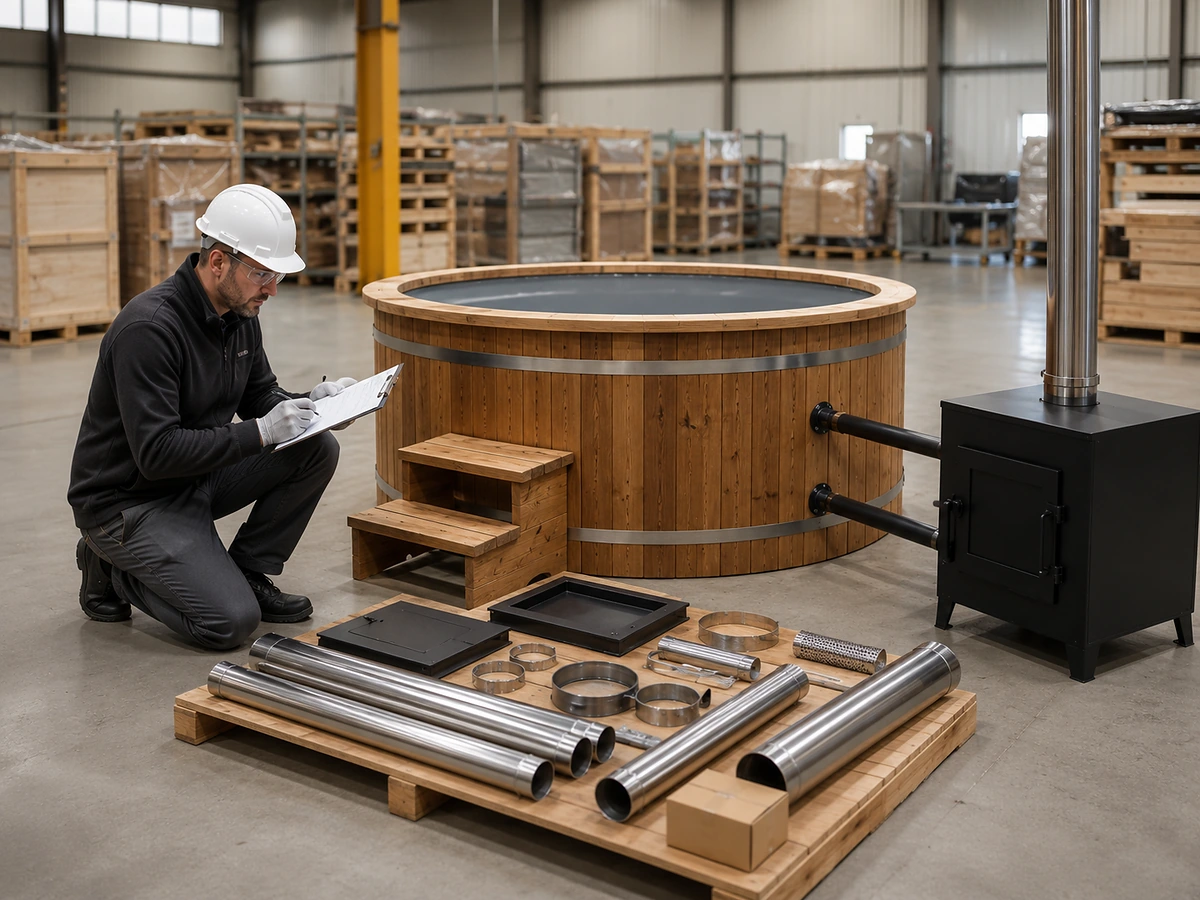
Visualisation conceptuelle générée par IA ; il ne s'agit pas d'un modèle HACHILL vérifié, d'un projet client, d'une image de certification ou d'un plan d'installation approuvé.
Échelle de qualité des preuves spécifiques à la commande
- Niveau 1 — Déclaration : Un fournisseur déclare qu'une inspection ou un test est effectué. Utile pour la qualification, mais pas comme preuve pour cette commande.
- Niveau 2 — Exemple de rapport : Une liste de contrôle comparable expurgée montre le format du processus. Elle ne prouve toujours pas que l'unité actuelle a été vérifiée.
- Niveau 3 — Rapport de commande : L'enregistrement identifie la commande, le modèle/la configuration, la révision, le point de réception et le résultat.
- Niveau 4 — Pack de libération clos : L'enregistrement de commande, les écarts, le périmètre d'emballage, le pack documentaire et l'autorisation de libération concordent.
L'acheteur doit définir le niveau de preuve requis avant la production. Demander des “ photos de contrôle qualité ” après expédition n'équivaut pas à convenir d'un plan d'inspection et de libération à l'avance.
Documents de mise en service, de remise et d'exploitation
La mise en service relie la configuration installée, le premier allumage sûr et le transfert de la responsabilité d'exploitation.
Liste de contrôle avant la première mise à feu
La liste de contrôle doit vérifier :
- le produit/la configuration corrects ;
- l'achèvement de l'installation ;
- le niveau d'eau approuvé ;
- le circuit de circulation ouvert et sans obstruction ;
- connexions sans fuite ;
- l'assemblage du poêle et du conduit de fumée ;
- protections ;
- le drainage du site ;
- méthode de mesure de la température ;
- la méthode d'arrêt sécurisé ;
- l'opérateur responsable ;
- les points ouverts.

Visualisation conceptuelle générée par IA ; il ne s'agit pas d'un modèle HACHILL vérifié, d'un projet client, d'une image de certification ou d'un plan d'installation approuvé.
Formation de l'opérateur et instructions d'utilisation sécurisée
Le pack opérateur doit expliquer :
- le remplissage ;
- les vérifications avant mise à feu ;
- la procédure d'alimentation en combustible et de mise à feu ;
- la circulation de l'eau ;
- le contrôle de la température ;
- l'accès utilisateur et la supervision ;
- la séparation des surfaces chaudes ;
- la gestion des cendres ;
- le nettoyage et le traitement de l'eau ;
- vidange et réponse en cas de gel ;
- arrêt ;
- cessation d'utilisation et escalade d'urgence.
Maintenance, pièces de rechange et transfert de service
Le dossier de transfert doit identifier :
- tâches d'inspection et de nettoyage ;
- cadre de fréquence ;
- pièces remplaçables ;
- spécifications de remplacement approuvées ;
- accès pour l'entretien ;
- exigences de stockage ;
- responsabilités du fournisseur et du service local ;
- limites de garantie ;
- informations requises pour une demande de service.
Critères de cessation d'utilisation et d'escalade
Les documents d'exploitation doivent indiquer quand la cuve doit rester hors service. Exemples :
- circulation d'eau incertaine ;
- ébullition, vapeur ou coups de bélier ;
- fuite de fumée ;
- conduit de fumée endommagé ;
- fuite près du poêle ou des raccordements ;
- pièces déformées ou surchauffées ;
- base instable ou endommagée ;
- protection manquante ;
- condition d'eau non maîtrisée ;
- point d'installation ou d'autorité non résolu.
Points de contrôle avant mise à feu
| Point d'arrêt | Preuve de libération | Ne pas procéder lorsque |
|---|---|---|
| Identité du produit et de l'installation | La configuration installée correspond aux dessins approuvés et au périmètre des composants. | Le modèle, le poêle, le conduit ou le tracé du raccordement est incertain. |
| Eau et circulation | Le remplissage, la ventilation, l'état des vannes et le circuit de circulation requis sont confirmés. | Le niveau d'eau, l'air emprisonné, le blocage ou l'isolement ne peuvent être exclus. |
| État du poêle et du conduit | L'assemblage, le support, les protections et les points de revue locale sont clos. | Les dommages au conduit, les sections non supportées, le cheminement des fumées ou la protection des surfaces chaudes ne sont pas résolus. |
| Préparation du site | La base, l'accès, le drainage et la zone environnante sont acceptés pour l'opération prévue. | L'instabilité, le déchargement dangereux, le risque de glissade ou l'obstruction du service demeurent. |
| Température et arrêt | La méthode de mesure, le mélange, l'arrêt et la procédure d'escalade sont disponibles. | Aucun contrôle fiable ou responsable d'arrêt formé n'est assigné. |
| Passation de l'opérateur | Le personnel désigné dispose des manuels, de la formation et des formulaires d'enregistrement à jour. | La responsabilité est assumée mais non assignée ni documentée. |
Un point d'arrêt bloque la première mise à feu ou utilisation jusqu'à ce que le responsable désigné confirme les preuves requises et clôture les points critiques ouverts.
Signaux d'alerte dans la documentation qui doivent suspendre l'approbation
Les documents doivent être classés comme acceptés, conditionnels ou rejetés. Un acheteur ne doit pas approuver un dossier simplement parce que le dossier contient de nombreux fichiers.
Tableau de décision des signaux d'alerte
| Recherche | Risque | Action requise |
|---|---|---|
| Manuel générique “ tous modèles ” | Une configuration incorrecte peut être installée ou utilisée | Suspendre l'approbation jusqu'à confirmation de l'applicabilité |
| Référence de modèle/configuration manquante | Le produit ne peut pas être relié au document | Demander une identification contrôlée |
| Révision ou date manquante | Des instructions obsolètes peuvent être utilisées | Rejeter en tant que version finale |
| Le manuel entre en conflit avec le dessin | L'équipe sur site peut suivre des instructions contradictoires | Émettre une clarification contrôlée |
| La portée du certificat ne peut pas être liée au produit | Hypothèse de conformité erronée | Demander la portée et le lien avec le modèle |
| Liste incorrecte des composants de poêle/cheminée | Assemblage non sécurisé ou travaux sur site manquants | Corriger le dossier approuvé |
| Traduction non contrôlée | Les avertissements ou étapes peuvent être modifiés | Émettre une traduction contrôlée |
| Liste de contrôle QC générique | Aucune preuve d'inspection de commande | Demander le dossier de libération spécifique à la commande |
| Écart non clos | Périmètre livré différent de l'approbation | Bloquer la libération ou accepter formellement l'impact |
| Aucune procédure de mise en service | Première mise à feu et remise restent non contrôlées | Ne pas autoriser l'exploitation |
| Aucune matrice des responsabilités | Les tâches sur site peuvent être omises | Maintenir l'élément du projet ouvert |
| Documents d'exploitation commerciale absents | Personnel, enregistrements et décisions d'arrêt non définis | Suspendre l'ouverture commerciale |
Utiliser trois actions : rejeter les preuves erronées, obsolètes ou contradictoires ; accepter sous condition les points ouverts définis avec un responsable et une exigence de clôture ; et maintenir les décisions structurelles, de conduit, de drainage, de santé publique et de permis affectées à un examen local qualifié.
Modèle de demande de documents pour l'acheteur et condition de libération de la commande
Une bonne demande ne se limite pas à “ manuels et certificats ”. Elle définit le produit, le projet, les preuves et le processus d'approbation.
Informations que l'acheteur doit fournir
- type d'acheteur et marché de destination ;
- lieu et utilisateurs prévus ;
- usage résidentiel ou professionnel ;
- trajet rond, rectangulaire ou spécifique au projet ;
- dimensions du site et accès ;
- climat et exposition ;
- responsabilité des fondations ;
- alimentation en eau et évacuation ;
- emplacement préféré du poêle et tracé du conduit de fumée ;
- plan d'exploitation et de traitement de l'eau ;
- quantité, marque et emballage ;
- calendrier cible de livraison et séquence d'installation ;
- langue et format requis des documents ;
- étapes d'approbation requises.
Documents que le fournisseur doit retourner
- spécification produit maîtrisée ;
- plans à jour ;
- liste des composants inclus/exclus ;
- documentation du poêle/conduit de fumée ;
- instructions de circulation d'eau et d'exploitation ;
- preuves des matériaux/composants le cas échéant ;
- liste des documents pour le marché de destination ;
- plan d'inspection et de libération ;
- informations sur l'emballage et la réception ;
- dossier d'installation et de mise en service ;
- périmètre de maintenance et de pièces de rechange ;
- procédure d'écart et de maîtrise des modifications.
Statut d'approbation : Accepté / Conditionnel / Rejeté
Utilisez les définitions de statut de libération établies plus haut dans la page ; ne créez pas un deuxième vocabulaire d'approbation contradictoire.
Conditions de libération de la commande et de l'expédition
Libérez chaque étape uniquement lorsque la configuration, les révisions, les preuves, les responsabilités, les écarts et le périmètre de transfert requis pour cette décision sont clôturés.
- configuration exacte ;
- spécification maîtrisée ;
- liste des dessins et manuels ;
- périmètre des preuves ;
- matrice des responsabilités;
- circuit de maîtrise des modifications ;
- périmètre commercial et d'emballage.
Avenant de contrôle de version OEM / Marque privée
Pour les programmes OEM, ODM, de marque distributeur ou personnalisés, la base documentaire doit relier l'échantillon approuvé à la production. Une approbation visuelle seule ne fige pas le poêle, le circuit d'eau, la nomenclature/configuration, les avertissements, les manuels, l'emballage ou les pièces de rechange.
- Périmètre de l'échantillon approuvé : Consignez les caractéristiques physiques et fonctionnelles que l'échantillon représente—et celles qui restent provisoires.
- Verrouillage du plan et de la nomenclature/configuration : Contrôlez la cuve, le poêle, le conduit, les raccords, les protections, la finition, les étiquettes, les manuels et les accessoires par révision.
- Limite de marquage : Séparez les modifications de logo, de couleur et d'emballage des modifications de composants critiques pour la sécurité ou des instructions.
- Notification de modification : Définissez quels remplacements nécessitent un examen par l'acheteur, des preuves mises à jour ou un nouvel échantillon.
- Inspection de production : Faites correspondre le plan d'inspection et l'enregistrement de libération à la révision de production approuvée.
- Continuité après-vente : Maintenez l'identité des pièces de rechange, la révision du manuel et les informations de service alignées sur les unités expédiées.
Une modification qui semble cosmétique peut affecter les avertissements, la protection de l'emballage, les instructions d'assemblage ou la traçabilité des pièces de rechange. Évaluez chaque modification en fonction de son impact technique, documentaire et commercial.
Listes de contrôle pour l'acheteur
Contrôle compact de libération documentaire
- Le modèle, le poêle, le conduit, les accessoires et la révision du plan correspondent à la commande.
- Le pack documentaire identifie les manuels en vigueur, le périmètre des preuves et les éléments locaux non résolus.
- L'inspection, les écarts, l'emballage et la libération d'expédition sont traçables jusqu'à la commande.
- La préparation à l'installation couvre le socle, l'accès, l'évacuation, le tracé du conduit de fumée et les corps de métier responsables.
- Les contrôles de première mise à feu couvrent le remplissage, la circulation, les fuites, les protections, la vérification de la température et l'arrêt.
- La formation des opérateurs, la maintenance, les pièces de rechange, les registres et l'autorité d'arrêt d'utilisation sont attribués.
Scénarios d'approvisionnement composites
Scénario de complexe illustratif : manuel générique, aucune évacuation de conduit approuvée
Problème observé : Une équipe de construction d'un complexe reçoit un manuel générique de bain nordique à bois après l'achèvement de la terrasse et des finitions environnantes. Le manuel décrit un concept de conduit mais ne correspond pas au kit de poêle sélectionné et ne montre pas le tracé réel à travers le site.
Cause : L'équipe d'approvisionnement a approuvé le devis avant que la configuration exacte du chauffage, le périmètre de l'examen local de sécurité incendie et la matrice des responsabilités d'installation ne soient finalisés.
Correction : L'installation est suspendue. Le fournisseur émet un dessin spécifique à la configuration et une liste de composants. Le professionnel qualifié local examine le tracé, la protection du bâtiment, le support et les exigences d'approbation applicables. Les points ouverts sont attribués et suivis.
Prévention : Exiger le dossier d'interface d'installation avant la commande d'achat et la libération des travaux. Ne pas traiter une brochure de catégorie comme le dessin de site approuvé.
Scénario de distributeur illustratif : les preuves de conformité ne correspondent pas à la configuration
Problème observé : Un distributeur reçoit un certificat lors de l'examen technique, mais le document couvre un composant ou un échantillon qui ne peut pas être lié à la combinaison commandée de bain, poêle et conduit.
Cause : La demande de prix (RFQ) demandait des “ documents de conformité ” génériques sans identifier la configuration produit exacte, l'exigence du marché de destination, le type de preuve ni la portée.
Correction : L'acheteur demande l'émetteur, le numéro de rapport/certificat, le modèle/échantillon couvert, le périmètre, les limitations et le lien avec la configuration commandée. Le document est conservé sous condition jusqu'à ce que l'applicabilité soit établie.
Prévention : Indiquez le type de preuve requis, la portée, le lien avec le modèle et les critères d'acceptation dans l'annexe technique du bon de commande. N'utilisez pas les acronymes de conformité comme substitut à l'examen de la portée.
Scénario de réception illustratif : les composants de chauffage ne correspondent pas à la liste de libération
Problème observé : La liste de colisage et les composants physiques du poêle/de la cheminée diffèrent du calendrier final approuvé des composants.
Cause : Un changement de production a été effectué sans clôturer la révision du dessin et l'enregistrement de déviation.
Correction : Le lot concerné est mis en quarantaine. L'équipe compare les pièces physiques, les étiquettes, les manuels et la configuration libérée. Le fournisseur rétablit le périmètre approuvé ou émet une déviation formelle pour examen d'impact et approbation de l'acheteur.
Prévention : Relier l'inspection de réception au calendrier final des composants libérés, et non à une image de devis ou à une ancienne liste de colisage.
Foire aux questions
Quel est le document le plus important pour un acheteur de bain nordique chauffé au bois ?
Aucun document unique ne suffit. La spécification maîtrisée, les plans actuels, le périmètre des composants, les manuels d'installation et d'utilisation, la matrice des responsabilités et les enregistrements de diffusion doivent correspondre à la configuration exacte commandée.
Le marquage CE, un référencement UL/ETL ou un autre certificat/rapport suffisent-ils pour approuver le produit ?
Non. La voie de preuve diffère selon le marché et selon le produit ou le composant. Vérifiez l'émetteur ou le fabricant responsable, la portée exacte du modèle, la norme ou la base réglementaire applicable, le statut actuel et le lien avec la configuration commandée. Les preuves de conformité d'un produit ou d'un composant ne remplacent pas l'approbation locale en matière de structure, d'incendie, de drainage, d'installation ou d'exploitation commerciale.
Le poêle et le conduit de fumée doivent-ils faire l'objet d'une documentation séparée ?
Le poêle et les composants du conduit de fumée fournis doivent être identifiables dans le périmètre des composants approuvés, avec les instructions d'installation et d'utilisation applicables. Le professionnel qualifié local doit néanmoins examiner le tracé final, le support, les traversées, les distances de sécurité et les exigences locales.
Qu'est-ce qui doit être approuvé avant l'émission de la commande ?
Approuver la configuration exacte, les plans contrôlés, le périmètre inclus/exclu, les preuves requises, la matrice des responsabilités, le processus de gestion des modifications, le plan d'inspection, le périmètre d'emballage et les exigences de remise.
Quels enregistrements doivent arriver avant l'expédition ?
Le procès-verbal d'inspection finale et de libération convenu, la référence de configuration, la liste de colisage, le pack de manuels/documents, l'état des écarts, les informations d'installation et les documents de mise en service/remise appropriés à la commande.
Quelle documentation est différente pour les hôtels ou les centres de villégiature ?
Les établissements professionnels nécessitent généralement des responsabilités supplémentaires pour le personnel, des procédures opérationnelles normalisées (PON) d'exploitation et d'entretien de l'eau, des journaux de nettoyage et de surveillance, des dossiers de mise en service et de formation, des critères de fermeture/réouverture ainsi qu'un examen par les autorités locales.
Que doit faire un acheteur en cas de conflit entre le manuel et le plan ?
Ne choisissez pas de manière informelle. Soulevez une clarification contrôlée, identifiez l'exigence applicable, émettez les documents corrigés et mettez à jour le registre des révisions avant l'installation ou la mise en service.
Préparer une demande de documentation spécifique au modèle
Avant de demander un devis ou un dossier d'approbation, préparez :
- type d'acheteur et marché de destination ;
- le lieu prévu et le schéma d'utilisation ;
- le parcours du produit et la configuration préférée ;
- les données sur le site, l'accès, la base, le drainage et le climat ;
- le concept du poêle et du conduit/cheminée ;
- l'exploitation commerciale ou résidentielle ;
- les manuels, dessins, rapports et dossiers de libération requis ;
- les étapes d'approbation avant la commande, l'expédition, l'installation et l'exploitation ;
- la quantité, la marque, l'emballage et la logistique ;
- les responsabilités de l'installateur, de l'exploitant et des professionnels locaux ;
- attentes en matière de pièces de rechange et de service après-vente.
Envoyez un brief de projet et de documentation afin que les preuves demandées puissent être adaptées à la configuration sélectionnée, au marché de destination et à l'étape d'approbation.
Demander un devis au niveau du modèle
Dix questions à inclure dans l'évaluation du fournisseur
- Quelle configuration exacte de cuve, poêle, conduit de fumée et circulation est proposée ?
- Quelles révisions de plans et de manuels régissent le devis et le bon de commande ?
- Quels composants sont inclus, en option ou fournis par le site ?
- Quelles preuves s'appliquent au modèle ou composant exact — et qu'est-ce qui est hors de son champ d'application ?
- Quels éléments d'installation nécessitent une conception locale qualifiée, des permis ou un examen par les autorités ?
- Quels enregistrements d'inspection et de libération identifieront cette commande ?
- Comment les substitutions, les écarts et les révisions de documents sont-ils approuvés ?
- Que doit-on clôturer avant l'expédition, l'installation, la première mise à feu et la première utilisation publique ?
- Quels documents d'exploitation, de maintenance, de pièces de rechange et de formation seront remis ?
- Pour un usage commercial ou OEM, qui est propriétaire des journaux, du contrôle des modifications, des décisions d'arrêt d'utilisation et de réouverture ?
Preuves officielles et portée
Ces sources couvrent le périmètre général de la combustion, de l'installation, de la vérification de la température, de l'exploitation aquatique publique et des preuves de conformité. Elles ne certifient pas un modèle HACHILL, n'établissent pas une voie d'approbation mondiale unique et n'approuvent pas un site de projet spécifique.
- Document J approuvé par GOV.UK — Un exemple spécifique à une juridiction couvrant l'air de combustion, l'évacuation des produits de combustion, la protection du bâtiment et les obligations d'information.
- U.S. Fire Administration — Sécurité incendie liée au chauffage — Directives générales actives sur les poêles à bois, l'entretien des cheminées et les distances de sécurité par rapport aux matériaux combustibles ; ne constitue pas une certification de bain nordique chauffé au bois ni un calendrier de dégagements spécifique au modèle.
- CDC Model Aquatic Health Code — édition en vigueur — La 5e édition de 2024 est la référence actuelle du code modèle américain pour les sites aquatiques publics ; l'adoption et l'applicabilité restent propres à chaque juridiction.
- Le HSE britannique HSG282 — Guide pour spas à usage professionnel couvrant la conception, la mise en service, l'exploitation, la maintenance, la surveillance et l'inspection.
- Exemple de rappel de température de spa par la CPSC américaine — Un rappel spécifique à un produit montrant pourquoi la méthode applicable de vérification de la température et la réponse aux relevés anormaux doivent être explicites ; il ne définit pas une méthode universelle pour les bains chauffés au bois.
- Commission européenne / L'Europe est à vous — marquage CE — Orientations officielles sur la responsabilité du fabricant, l’évaluation de la conformité, la documentation technique et la déclaration UE de conformité ; le marquage CE n’est pas un certificat central d’approbation de l’UE.
- OSHA — programme des laboratoires d’essai reconnus au niveau national — Contexte américain pour la reconnaissance des laboratoires, les essais/certifications de produits et les limites de portée.
Sécurité, conformité et limites
Ce guide ne fournit pas de conception de cheminée ou de thermosiphon, de calculs structurels, de dégagements fixes, d'instructions universelles de traitement de l'eau, de temps de chauffe garanti, de déclarations de certification, de conseils médicaux ou d'approbation légale spécifique à une juridiction. Utilisez les instructions actuelles du modèle/composant et l'examen qualifié local de la structure, de l'incendie, du conduit de fumée, du drainage et de la santé publique commerciale. Gardez le spa hors service chaque fois que le niveau d'eau, la circulation, les fuites, la température, l'état du conduit, les protections ou l'état de l'installation ne peuvent pas être vérifiés.