Guía de planificación de bañeras nórdicas calentadas con leña
Una tina de hidromasaje calentada a leña comúnmente necesita unas horas para calentarse desde un llenado en frío. Para planificación preliminar, aproximadamente 2–4 horas es un rango de mercado útil, pero no es una especificación universal ni una garantía para un modelo HACHILL. El tiempo real depende del volumen de agua utilizable, la temperatura inicial y objetivo, el diseño de la estufa y la circulación, el combustible seco, el aislamiento, el uso de la cubierta, el viento y las condiciones ambientales. Use las condiciones exactas de prueba de tina y estufa —no un tiempo genérico de titular— al comparar modelos o planificar un programa operativo comercial.
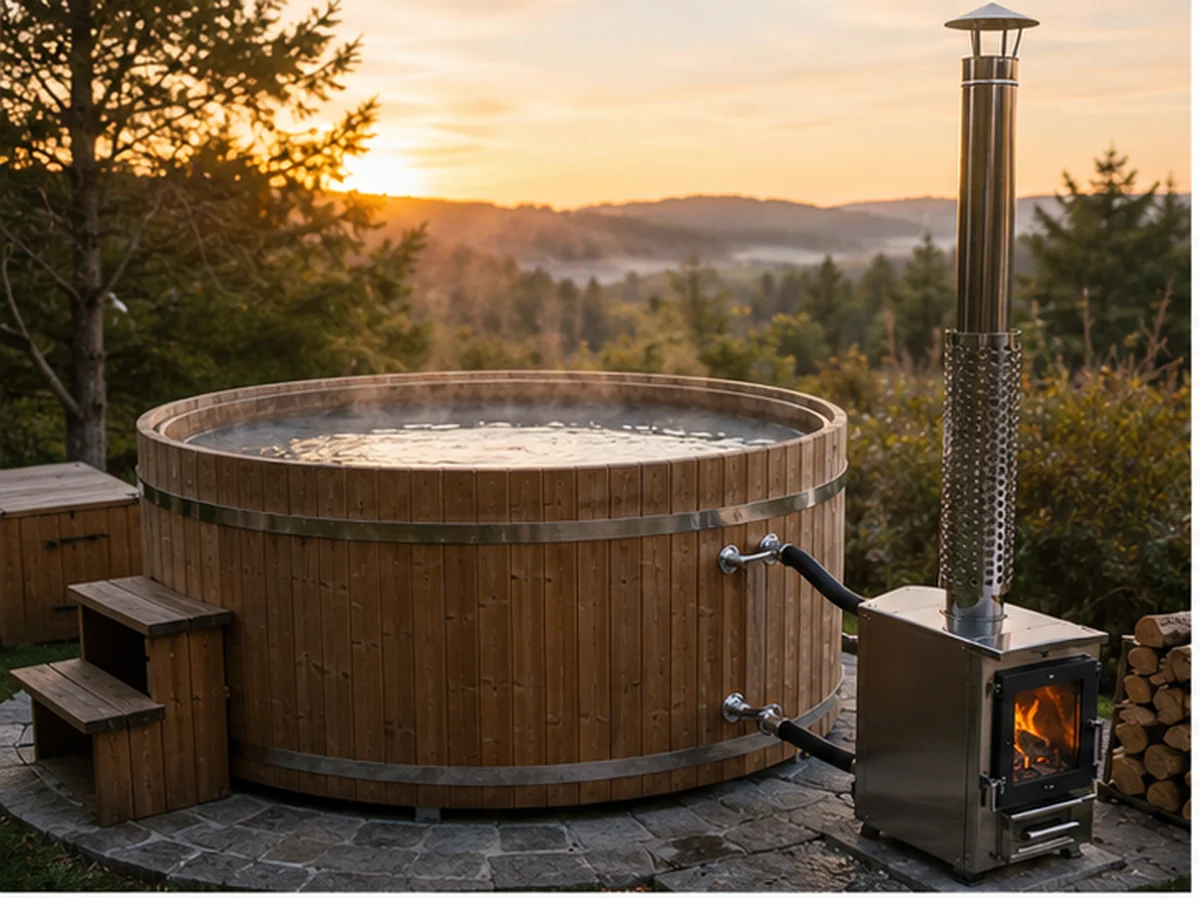
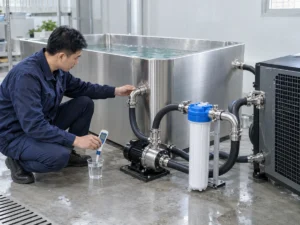
Visualización conceptual; no es un modelo HACHILL verificado ni una prueba de rendimiento.
Respuesta rápida
Para la planificación preliminar, un hot tub de leña a menudo se trata como un tarea de calentamiento de 2–4 horas, pero los sistemas reales pueden quedar fuera de ese rango. La cifra solo es útil cuando se conocen el volumen de agua, la temperatura inicial, la temperatura objetivo, la configuración de la estufa, la ruta de circulación, la condición del combustible y el clima. Una tina más pequeña con agua de llenado templada y baja pérdida de calor puede calentarse antes; una instalación de invierno de gran volumen con agua fría, combustible húmedo, exposición al viento o circulación débil puede tardar mucho más.
- Volumen de agua útil y aumento de temperatura requerido
- Ruta exacta de la estufa, transferencia de calor y circulación
- Combustible seco aprobado y combustión estable
- Cubierta, aislamiento y tuberías expuestas
- Temperatura ambiente, viento y método de funcionamiento
Confirme cualquier cifra de tiempo de calentamiento con el modelo seleccionado, la configuración aprobada y las condiciones de prueba documentadas. Los compradores también deben comparar las disponibles gama de tinas de agua caliente a leña antes de solicitar un presupuesto a nivel de modelo.
Para el control de documentos, la evidencia de configuración y los requisitos de hito de liberación, utilice la Guía del comprador sobre documentación de seguridad de bañeras nórdicas calentadas con leña. Esta página sigue siendo la responsable de la estimación del tiempo de calentamiento y las variables de calentamiento.
Cuándo es útil una estimación del tiempo de calentamiento y cuándo no
Útil para la planificación
- Compare el volumen de agua y el aumento de temperatura.
- Permita un margen de preparación realista.
- Ajuste para invierno o ubicaciones expuestas.
- Compare las condiciones de prueba del proveedor.
No es suficiente para la aprobación.
- Ajuste entre estufa y bañera
- Cumplimiento de chimenea, distancia de seguridad o normativa contra incendios
- Diseño final de circulación e instalación
- Idoneidad de higiene o personal comercial
Límite de decisión: utilice una estimación para filtrar opciones y preparar preguntas. Emita una orden de compra solo después de confirmar la tina, la estufa, la circulación, las condiciones del sitio y el alcance de la evidencia exactos.
¿Cuánto tarda en calentarse una bañera nórdica calentada con leña?
Una respuesta práctica de planificación es aproximadamente 2–4 horas para muchos sistemas de leña, pero eso es un rango orientativo de selección más que una especificación transferible. Los ejemplos publicados de modelos varían porque el tamaño de la tina, el volumen de agua, el diseño de la estufa y las condiciones de prueba difieren. Una tina compacta con agua de llenado a temperatura moderada, combustible seco, baja exposición al viento y una ruta efectiva de transferencia de calor puede calentarse antes; una tina más grande llena con agua muy fría durante el invierno puede tardar bastante más. Trate toda afirmación a nivel de modelo como dependiente de las condiciones y verifique el volumen de agua, el aumento de temperatura, la configuración y el método de prueba que la respaldan.
Un rango típico es solo un punto de partida
Una indicación del tiempo de calentamiento solo es útil cuando se conocen las condiciones que hay detrás:
- Volumen de agua útil
- Temperatura inicial del agua mezclada
- Temperatura objetivo del agua mezclada
- Temperatura ambiente y viento
- Configuración exacta de la estufa y la bañera
- Tipo de combustible y estado de humedad
- Estado de la cubierta y el aislamiento
- Método de circulación y medición
El calentamiento con llenado en frío y el recalentamiento son tareas distintas
Calentar agua recién llenada de 8°C a 38°C requiere un aumento de temperatura de 30°C. Recalentar agua retenida de 25°C a 38°C requiere solo 13°C. Por lo tanto, incluso con la misma tina y estufa, la tarea térmica es diferente. Agregar agua fría después de la limpieza, la evaporación o el uso de bañistas también puede extender el período de recuperación.
Defina cuándo comienza y termina la prueba de calentamiento
- Mida la temperatura inicial del agua mezclada.
- Registre el volumen útil de llenado.
- Encienda la estufa siguiendo el procedimiento aprobado.
- Opere el sistema en las condiciones documentadas.
- Mezcle o haga circular el agua según las instrucciones.
- Mida la temperatura final del agua mezclada.
Una capa caliente cerca de la superficie o una temperatura alta cerca de la salida de la estufa no demuestran que la tina completa haya alcanzado la temperatura objetivo.
Por qué no existe un tiempo de calentamiento universal para las bañeras nórdicas calentadas con leña
El tiempo de calentamiento se rige por dos cantidades separadas: la energía requerida por el agua y la media neto calor realmente transferido a esa agua. Datos de capacidad calorífica de agua líquida del NIST admite una aproximación de planificación de aproximadamente 4.18 kJ/kg·K cerca de temperaturas normales de bañera de hidromasaje.
Fórmula de planificación: energía de calentamiento de agua en kWh ≈ volumen de agua en litros × aumento de temperatura en °C × 0.00116. Esto usa aproximadamente 1 kg de agua por litro como supuesto práctico de estimación.
El cálculo estima solo la energía absorbida por el agua. No incluye automáticamente las pérdidas de chimenea, la radiación de la estufa y la tubería, el calor que escapa por la tina y la superficie del agua, la combustión cambiante, el combustible húmedo, la circulación inestable ni la exposición al exterior.
Cálculo ilustrativo: Una tina hipotética de 1,200 litros calentada de 10°C a 38°C tiene un aumento de temperatura de 28°C y necesita aproximadamente 39 kWh de energía teórica del agua. Si la transferencia de calor neta promedio medida al agua fuera de 15 kW, el resultado idealizado sería de aproximadamente 2.6 horas; a 10 kW netos, aproximadamente 3.9 horas. Esas cifras de potencia neta son ejemplos de cálculo, no valores típicos de estufas ni datos de modelos HACHILL. El tiempo real de calentamiento puede ser mayor porque las pérdidas y la combustión varían a lo largo del ciclo de combustión.
El volumen de agua útil importa más que el número de asientos
Dos tinas destinadas al mismo número de usuarios pueden tener dimensiones internas, desplazamiento de bancos, líneas de llenado, desplazamiento de estufa y volumen real de agua llenada diferentes. Estime a partir del volumen de agua utilizable aprobado, no solo de las dimensiones externas o la capacidad nominal de personas.
La potencia nominal de la estufa no equivale al calentamiento de agua entregado
La transferencia útil depende del sistema completo: la geometría de la cámara de combustión y del intercambiador, la superficie de contacto con el agua, la condición de combustión, el tiro de la chimenea, la circulación, la disposición de las tuberías, la temperatura del agua, la pérdida de calor y el mantenimiento. Pregunte si un tiempo de calentamiento publicado proviene de una prueba completa de tina y estufa o solo de un valor nominal de la estufa.
Las variables que cambian el tiempo de calentamiento de la bañera nórdica calentada con leña
En pantallas más pequeñas, deslice horizontalmente para ver la tabla completa.
| Variable | Qué confirmar | Por qué cambia el tiempo de calentamiento |
|---|---|---|
| Volumen de agua útil | Litros o galones reales en la línea de llenado de funcionamiento | Más agua requiere más energía |
| Temperatura inicial | Temperatura del agua mezclada antes de encender | El agua más fría requiere un mayor aumento de temperatura |
| Temperatura objetivo | Temperatura final prevista del agua mezclada | Un objetivo más alto aumenta la demanda de energía |
| Configuración de la estufa | Combinación exacta aprobada de estufa, intercambiador y bañera | Define la ruta de transferencia de calor |
| Circulación | Circulación natural, bomba aprobada o mezcla manual | Afecta a la transferencia de calor y a la uniformidad de la temperatura |
| Condición del combustible | Tipo de combustible aprobado, humedad y tamaño de las piezas | Afecta a la estabilidad de la combustión y al calor útil |
| Tiro de la chimenea | Disposición de conductos aprobada y flujo de aire sin obstrucciones | Afecta al rendimiento de la combustión |
| Cubierta y aislamiento | Configuración exacta y uso permitido durante el calentamiento | Los cambios en la superficie y la pérdida de calor del revestimiento |
| Clima | Temperatura ambiente, viento y precipitaciones | Cambia la pérdida de calor externa |
| Mantenimiento | Superficies de transferencia de calor limpias y flujo sin restricciones | La incrustación y las restricciones pueden reducir el rendimiento |
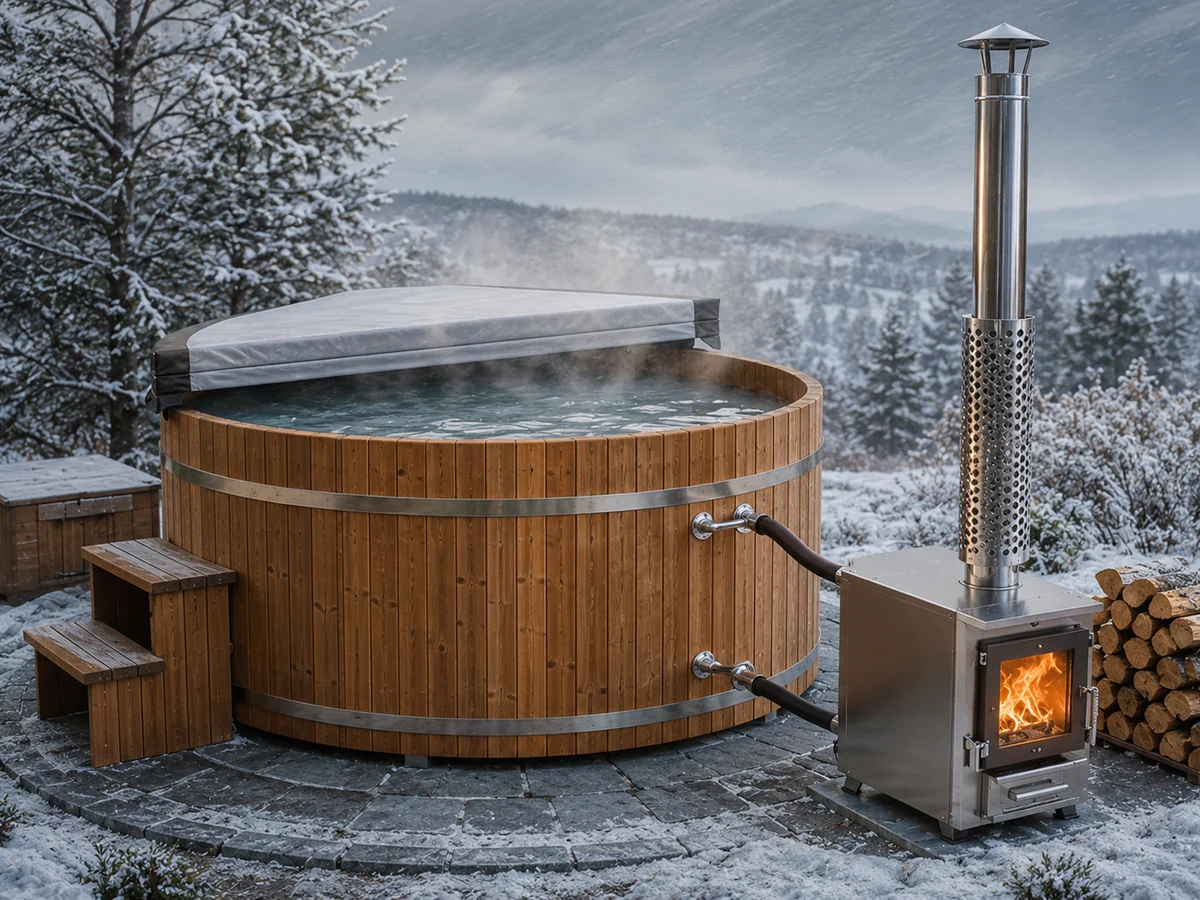
Escena conceptual de operación invernal; no es una prueba verificada del modelo HACHILL ni un resultado universal de tiempo de calentamiento. La posición de la cubierta es solo ilustrativa y debe seguir las instrucciones del producto seleccionado y las distancias seguras de la estufa y la chimenea.
Volumen de agua y aumento de temperatura
El volumen de agua y el aumento de temperatura requerido crean la carga de calentamiento básica. Registre la temperatura real del agua de origen en invierno en lugar de aplicar los datos de verano sin cambios.
Estufa y ruta de transferencia de calor
Las disposiciones de intercambio de calor internas, externas y otras aprobadas tienen diferentes rutas de flujo, desplazamiento de agua, exposición de tuberías y requisitos de mantenimiento. Ninguna ruta es automáticamente más rápida en cada configuración.
Circulación y estratificación de temperatura
Los sistemas de circulación natural dependen de las diferencias de temperatura, la posición de las tuberías, la pendiente y el flujo sin restricciones. Los sistemas con bomba aprobados dependen de la selección de la bomba y la resistencia de las tuberías. No añada una bomba a un sistema de circulación natural a menos que el fabricante haya aprobado la modificación.
Calidad del combustible y control de la combustión
El combustible húmedo consume parte de la energía del fuego al evaporar la humedad en lugar de calentar el agua. Utilice únicamente combustible permitido por las instrucciones de la estufa y las normas locales. No queme madera pintada o tratada, tableros aglomerados, residuos domésticos ni combustibles excluidos por el fabricante.
Cubierta, aislamiento y pérdida de calor
Una cubierta aislante compatible puede reducir la pérdida de calor superficial, pero no debe crear un problema de espacios libres ni un riesgo de incendio alrededor de la estufa o la chimenea. La construcción exacta y el uso permitido durante el calentamiento deben verificarse.
Clima, viento y condiciones estacionales
El aire frío y el viento aumentan la pérdida de calor. La planificación del sitio debe tener en cuenta la temperatura invernal, la exposición al viento, las precipitaciones, el almacenamiento de combustible, el almacenamiento de cubiertas, la protección contra congelación, los procedimientos de vaciado y el acceso seguro alrededor del equipo de combustión.
Cómo estimar el tiempo de calentamiento antes de encender la estufa
1. Confirmar el volumen de agua utilizable
Use el volumen de llenado aprobado del modelo’s seleccionado. No sustituya el volumen exterior de la tina sin contabilizar los bancos, el desplazamiento de la estufa, la geometría de las paredes y la línea de llenado operativa.
2. Medir el aumento de temperatura
Registre la temperatura inicial del agua mezclada, la temperatura objetivo prevista y la diferencia entre ambas.
Debido a que la carga de calentamiento depende del punto final, revise cómo seleccionar y verificar la temperatura objetivo del agua mezclada. Para contexto general de salud pública, el CDC aconseja que el agua de la bañera de hidromasaje no debe exceder 40°C (104°F); el objetivo real del proyecto puede tener que ser menor.
3. Identificar la configuración aprobada
Confirme la ruta de la estufa, el método de circulación, la disposición de tuberías, la chimenea, el combustible, la cubierta y el método de medición de temperatura.
4. Aplicar las condiciones reales del sitio
Incluya la temperatura ambiente, el viento, la humedad del combustible, el llenado en frío frente al recalentamiento, el uso de la cubierta y cualquier requisito de limpieza o rellenado.
5. Agregar un margen operativo
Una operación programada debe permitir tiempo para llenado, encendido, circulación estable, mezcla, verificación de temperatura, controles de limpieza, controles de cuidado del agua cuando corresponda y reducción segura de la intensidad de combustión.
Utilice el nivel de evidencia adecuado: un cálculo teórico verifica una plausibilidad general; una prueba de modelo controlada establece una línea base para una configuración aprobada; los registros repetidos en sitio son la mejor base para la programación diaria. Mantenga consistentes la línea de llenado, el método de mezcla y las ubicaciones de medición.
Las estufas internas y externas afectan el sistema de calefacción de manera diferente
En pantallas más pequeñas, deslice horizontalmente para ver la tabla completa.
| Consideración | Estufa interna | Estufa externa |
|---|---|---|
| Trayectoria del calor | Integrada con el agua de la tina | Calor transferido a través de conexiones externas |
| Desplazamiento de agua | Puede reducir el volumen de agua utilizable | Generalmente fuera del área de baño |
| Protección del bañista | Requiere protección contra superficies calientes | La cámara de combustión puede separarse de los bañistas |
| Dependencia de la circulación | Depende del diseño interno exacto | Muy afectado por la disposición de tuberías y la elevación |
| Pérdida de calor externa | Puede usar menos conexiones de agua externas | Las tuberías y la carcasa de la estufa pueden añadir pérdidas |
| Conclusión sobre el tiempo de calentamiento | Debe basarse en el modelo completo | Debe basarse en el circuito instalado completo |
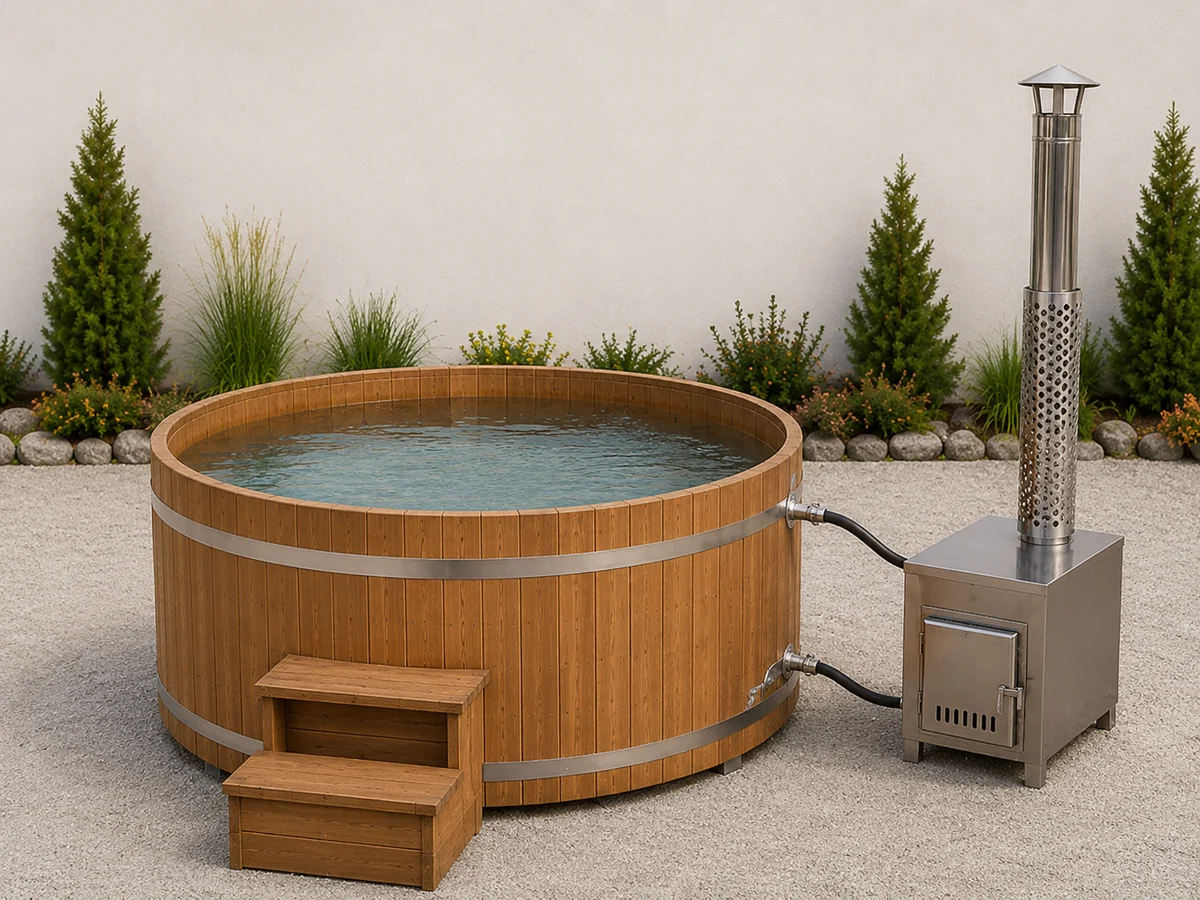
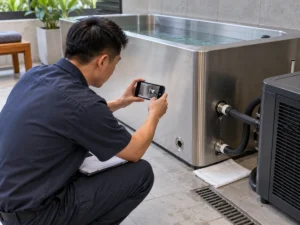
Configuración conceptual de estufa externa; la geometría de conexión, la chimenea y las distancias de seguridad deben seguir los documentos del producto seleccionado y los requisitos locales.
La ruta correcta no se determina solo por el tiempo de calentamiento. El acceso del usuario, el volumen de agua utilizable, la limpieza, el espacio disponible, la separación de combustión, los cimientos, el trazado de tuberías, el mantenimiento y los requisitos locales de incendios también afectan la elección.
Para la decisión de compra comercial más amplia de formato redondo, incluidos el asiento, la adecuación al sitio, el cuidado del agua y el alcance de la cotización, use la Guía de compra de bañeras nórdicas redondas calentadas con leña.
Para ver la relación completa entre combustión, termosifón o circulación por bombeo aprobada, tiro de chimenea y temperatura del agua mezclada, revise cómo transfieren calor las bañeras nórdicas calentadas con leña.
Entradas del sitio y de la instalación que afectan el calentamiento
El rendimiento de calefacción no puede separarse de la instalación. Confirme estos datos antes de aplicar un resultado de prueba a un proyecto real:
- Cimentación y nivel: soportar la carga llena y preservar la geometría aprobada de la estufa y la tubería.
- Recorrido de la tubería: verificar la altura de conexión, pendiente, diámetro y longitud para el sistema seleccionado.
- Chimenea y tiro: utilizar componentes aprobados y cumplir con los requisitos locales de incendio y humo.
- Drenaje y rellenado: incluir el efecto de la limpieza, el rellenado parcial y la temperatura del agua de origen.
- Condiciones de congelación: definir procedimientos de vaciado, almacenamiento y cierre estacional.
Los requisitos finales de cimentación, chimenea, combustión, drenaje y uso público deben ser revisados por el instalador local y la autoridad competente.
Escenarios estacionales y operativos
Escenario residencial ilustrativo
Llenado en frío con clima templado
Un usuario residencial llena una tina durante clima templado con combustible seco y exposición limitada al viento. El calentamiento puede ser más rápido que en condiciones más frías o más expuestas, pero el propietario aún debe registrar el volumen de agua, la temperatura inicial y la temperatura final mezclada antes de tratar el resultado como repetible.
Escenario estacional ilustrativo
Llenado en frío en invierno
La misma tina comienza con agua más fría y mayor pérdida de calor. La respuesta correcta es ampliar la ventana de operación, proteger el combustible de la humedad y revisar los procedimientos de gestión de congelación—no sobrecalentar la estufa.
Escenario técnico compuesto
Problema de circulación con estufa externa
La estufa quema normalmente pero la tina calienta de manera desigual. Las posibles causas incluyen aire en el circuito, geometría de conexión inadecuada, flujo restringido o mezcla insuficiente. El operador debe seguir el procedimiento de inspección aprobado en lugar de alterar la tubería o añadir una bomba sin revisión del fabricante.
Escenario comercial compuesto
Planificación del horario de apertura del resort
El personal solo permite el tiempo estimado de encendido y omite el llenado, el encendido, la mezcla, la verificación de temperatura y las comprobaciones de cuidado del agua. El cronograma corregido trabaja hacia atrás desde el acceso de los huéspedes y asigna un operador capacitado a cada etapa de preparación.
Estos escenarios son compuestos ilustrativos y no representan proyectos de clientes de HACHILL mencionados por su nombre.
Formas seguras de reducir el tiempo de calentamiento
El objetivo es reducir la pérdida de calor evitable y la combustión inestable—no llevar el equipo más allá de sus límites aprobados.
Prepare el circuito de agua antes de encender
- Llene hasta el nivel de funcionamiento requerido.
- Confirme que las superficies de calentamiento y el circuito de agua estén sumergidos según sea necesario.
- Abra la ruta de circulación aprobada.
- Compruebe si hay obstrucciones o fugas visibles.
- Confirme que la chimenea y las distancias de seguridad requeridas estén listas.
- Siga las instrucciones de puesta en marcha del modelo seleccionado.
Use combustible seco aprobado
Use combustible seco y almacenado correctamente, de un tipo y tamaño permitidos por las instrucciones de la estufa. La guía archivada Burn Wise de US EPA’s respalda la madera seca y curada y advierte contra la quema de productos de madera recubiertos, pintados, tratados a presión o encolados, y de residuos domésticos. El programa EPA dejó de actualizar este material en 2025, por lo que las instrucciones de la estufa seleccionada y las normas locales vigentes siguen siendo determinantes.
Controle la pérdida de calor sin crear un riesgo de incendio
Cuando esté aprobado, use la cubierta aislada correcta, proteja las tuberías de agua expuestas, mantenga el aislamiento y reduzca la exposición al viento mediante una planificación segura del sitio. No coloque aislamiento ni barreras cortavientos improvisadas cerca de superficies calientes o componentes del conducto de humos.
Mezcle y mida antes de agregar más combustible
La estufa y las brasas pueden seguir transfiriendo calor después de que el agua se acerque al objetivo de operación. Reduzca la intensidad de combustión según las instrucciones, permita la circulación, mezcle donde sea necesario y mida en una ubicación representativa antes de añadir más combustible.
Cuándo el calentamiento lento puede indicar un problema
Una sesión más lenta no siempre se debe al clima frío. Compare la sesión actual con la línea base aprobada y los registros de operación anteriores.
En pantallas más pequeñas, deslice horizontalmente para ver la tabla completa.
| Condición observada | Posible explicación | Respuesta segura |
|---|---|---|
| Combustión débil o con humo | Combustible húmedo, aire restringido, acumulación de ceniza o tiro deficiente | Utilice únicamente comprobaciones rutinarias aprobadas; deténgase si el humo se derrama hacia la zona de trabajo. |
| Retorno caliente pero temperatura irregular de la tina | Estratificación, bolsa de aire o circulación restringida | Siga el procedimiento aprobado de mezcla y circulación; no modifique la tubería. |
| El tiempo de calentamiento aumenta con sesiones repetidas | Cambio de combustible, ensuciamiento, daños en la cubierta o deriva de medición | Compare los registros y realice únicamente las tareas de mantenimiento aprobadas. |
| Sobreimpulso, ebullición, vapor o movimiento violento del agua | Adición tardía de combustible, flujo bloqueado o circulación inestable | Impida el acceso y siga el procedimiento de apagado del fabricante. |
Cuando el resultado sea sustancialmente más lento que la línea base verificada, siga la Solución de problemas de calentamiento en bañeras nórdicas calentadas con leña secuencia antes de añadir más combustible o cambiar la ruta de circulación.
Detenga la operación y obtenga asistencia cualificada para circulación bloqueada, ebullición descontrolada, vapor, fugas, derrame de humo, componentes del conducto de humos dañados o movimiento estructural.
¿Qué evidencia de tiempo de calentamiento debe solicitar un comprador?
En pantallas más pequeñas, deslice horizontalmente para ver la tabla completa.
| Elemento de evidencia | Por qué es importante | Decisión respaldada |
|---|---|---|
| Configuración exacta de la tina y la estufa | Evita que el resultado de un modelo’ se aplique a otro | Comparación de productos y cotización |
| Volumen de agua útil y aumento de temperatura | Define la carga térmica real | Plausibilidad técnica |
| Condiciones ambientales, cubierta y aislamiento | Muestra el límite de pérdida de calor de la prueba’s | Comparación del emplazamiento |
| Tipo de combustible, humedad y método de circulación | Explica las condiciones de combustión y transferencia de calor | Revisión de repetibilidad |
| Método de medición y repeticiones de prueba | Evita que un punto caliente local o un resultado puntual se convierta en la cifra principal | Evidencia de rendimiento |
| Planos aprobados, alcance de componentes y responsabilidades | Conecta la afirmación de rendimiento con la configuración adquirida | Liberación de la orden de compra y entrega |
La evidencia de calefacción a nivel de modelo debe revisarse junto con la configuración aprobada, los planos, los componentes y la revisión de fabricación y control de calidad.
Una declaración útil: bajo condiciones documentadas, la configuración exacta de tina y estufa calentó el volumen de agua útil declarado desde la temperatura inicial registrada hasta la temperatura registrada del agua mezclada en el período medido.
Un conteo de asientos, una imagen de estilo de vida, un folleto de categoría genérica o una clasificación nominal de la estufa no son evidencia suficiente por sí solos.
Planificación del tiempo de calentamiento para complejos turísticos y locales comerciales
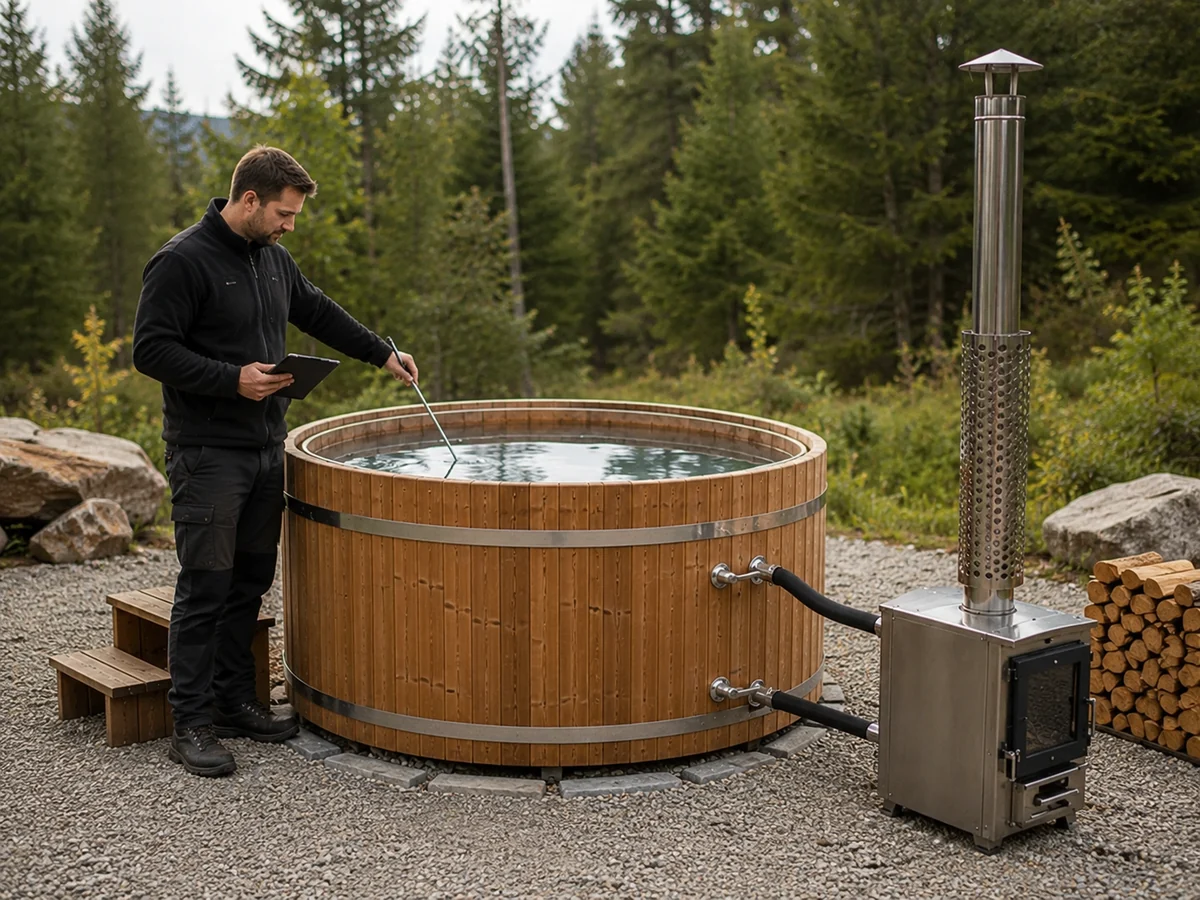
Escena operativa conceptual; no representa un sitio de cliente específico, una instalación comercial aprobada ni un procedimiento operativo específico de HACHILL.
Los compradores comerciales deben coordinar el tiempo de calentamiento con el flujo de huéspedes, la dotación de personal, la limpieza, los servicios y la entrega mediante planificación de proyectos de bienestar para hoteles y resorts.
Trabaje hacia atrás desde la hora de apertura
- Inspección del sitio y del equipo
- Llenado de agua
- Preparación del fuego y encendido
- Calefacción
- Mezcla y verificación de temperatura
- Controles del cuidado del agua
- Aprobación de acceso de invitados
- Monitoreo durante el uso
- Limpieza y apagado
Defina el operador y el procedimiento de monitoreo
Asigne responsabilidad para la gestión del fuego, el registro de temperatura, el almacenamiento de combustible, la calidad del agua, la limpieza, la separación de invitados, el apagado de emergencia, el manejo de cenizas y los procedimientos de congelación.
Confirme si la operación con leña se adapta al lugar
En pantallas más pequeñas, deslice horizontalmente para ver la tabla completa.
| Responsabilidad | Fabricante / Proveedor | Comprador / Lugar | Instalador / Profesional local |
|---|---|---|---|
| Configuración de producto aprobada | Proporcione el modelo confirmado y el alcance de los componentes | Apruebe el uso previsto y el resumen operativo | Confirme la compatibilidad con el sitio |
| Cimentación y acceso | Proporcione las dimensiones y cargas conocidas del producto cuando estén disponibles | Proporcione los datos del sitio y las restricciones de entrega | Diseñe y verifique la cimentación final y la ruta de manejo |
| Cumplimiento de chimenea y fuego | Proporcione las instrucciones del producto y los componentes aprobados | Identifique los requisitos del lugar y locales | Verifique la instalación, los espacios libres y las aprobaciones |
| Cuidado del agua e higiene comercial | Indique el equipo incluido y las limitaciones del producto | Defina la política de operación, limpieza y monitoreo | Revise los requisitos locales de salud pública y drenaje |
| Registro del tiempo de calentamiento | Proporcione la referencia a nivel de modelo cuando esté disponible | Mantenga los registros del sitio y los márgenes operativos | Investigue la desviación relacionada con la instalación cuando corresponda |
Defina el límite de responsabilidad antes de la entrega
En pantallas más pequeñas, deslice horizontalmente para ver la tabla completa.
| Tarea operativa | Entradas clave | Por qué es importante |
|---|---|---|
| Llenado inicial en frío | Volumen total de agua, temperatura del agua de origen y tiempo de apertura | Suele crear la mayor carga de calentamiento individual |
| Recuperación de temperatura | Carga de bañistas, exposición, rellenado parcial y estado del fuego | Determina si las sesiones repetidas son prácticas |
| Limpieza y rellenado | Política de cuidado del agua, volumen de drenaje y temperatura de rellenado | Puede crear un ciclo adicional de calentamiento diario |
Separar el calentamiento inicial, la recuperación y el rendimiento diario
Una opción calentada a leña requiere una revisión adicional cuando el establecimiento no puede proporcionar operación capacitada, una chimenea aprobada y un plan de espacios libres, almacenamiento seguro de combustible, ubicación compatible con el humo, cuidado confiable del agua, separación de huéspedes, tiempo de preparación suficiente, protección contra congelamiento y las aprobaciones locales requeridas. Estas limitaciones operativas pueden hacer que otra opción de calefacción sea más práctica para algunos establecimientos.
Lista de verificación del tiempo de calentamiento antes de la compra o primer uso
- Modelo y configuración exactos de la tina
- Estufa exacta y ruta de transferencia de calor
- Volumen de agua útil
- Temperatura inicial del agua
- Temperatura objetivo prevista
- Aumento de temperatura total requerido
- Estufa interna o externa
- Circulación natural o por bomba aprobada
- Tipo de combustible aprobado
- Condición de humedad del combustible
- Configuración de cubierta y aislamiento
- Temperatura ambiente y exposición al viento
- Revisión de chimenea y distancias de seguridad
- Cimentación y drenaje
- Procedimiento de gestión de congelación
- Método de monitoreo de temperatura
- Responsabilidad del operador
- Condiciones de prueba del proveedor
- Requisitos locales de incendio, humo e instalación
Aplicación: Uso residencial, resort, spa u otro uso comercial
Capacidad: Usuarios esperados, volumen de agua útil y sesiones diarias
Clima: Temperaturas de verano e invierno, viento y exposición
Ruta de calentamiento: Estufa interna o externa y preferencia de circulación
Sitio: Plan de cimentación, chimenea, drenaje, acceso y congelación
Combustible: Tipo de madera aprobado disponible, almacenamiento y control de humedad
Cuidado del agua: Rutina de llenado, vaciado, limpieza, saneamiento y rellenado
Uso comercial: Horario de apertura, operador capacitado, monitoreo y necesidades de recuperación
Adquisición: Cantidad, marca, empaque, destino y alcance documental
Entradas mínimas para una revisión a nivel de modelo
La selección final depende de la capacidad real de usuarios, la frecuencia de uso, el entorno de instalación, el clima, la cimentación, las condiciones del combustible, el drenaje, la rutina de cuidado del agua, el acceso de transporte, los requisitos del proyecto, la normativa local y los datos confirmados del fabricante.
Referencias de evidencia y seguridad
- NIST Chemistry WebBook: capacidad calorífica del agua líquida para la base de ingeniería del cálculo preliminar de agua y energía.
- Guía de seguridad para jacuzzis de los CDC para el contexto general de seguridad de temperatura máxima del agua de 104°F (40°C).
- Prácticas archivadas de Burn Wise de la US EPA para los principios generales sobre combustible seco y combustible prohibido. El programa Burn Wise dejó de actualizar este material en 2025; las instrucciones actuales del aparato y las normas locales siguen siendo las que rigen.
Estas fuentes respaldan únicamente principios generales de ingeniería o seguridad. No establecen un tiempo de calentamiento probado, certificación, aprobación de instalación ni cumplimiento de mercado para ningún modelo HACHILL.
Resumen de la decisión:
- Estimación a partir del volumen de agua utilizable y el aumento de temperatura requerido.
- Evaluar la configuración completa de tina, estufa y circulación, no solo la potencia nominal de la estufa.
- Añadir un margen de sitio y operación para combustible, clima, uso de cubierta, mezcla y verificación.
- Solicitar condiciones de prueba documentadas antes de aceptar una afirmación de tiempo de calentamiento a nivel de modelo.
Preguntas frecuentes
¿Cuánto tiempo suele tardar en calentarse una bañera nórdica calentada con leña?
Aproximadamente 2–4 horas es un rango preliminar de planificación útil para muchos sistemas, pero no es universal. Confirme el volumen exacto de agua, el aumento de temperatura, la configuración de la estufa, la ruta de circulación, la condición del combustible, el clima y el método de prueba para el sistema seleccionado.
¿Una estufa de leña más grande siempre calienta más rápido una bañera de hidromasaje?
No. El tiempo de calentamiento depende del conjunto completo de estufa, intercambiador, circulación y bañera. Una potencia nominal mayor no garantiza que llegue más calor al agua de forma segura.
¿Por qué una bañera nórdica calentada con leña tarda más en calentarse en invierno?
El funcionamiento en invierno suele combinar agua de llenado más fría con una mayor pérdida de calor desde la superficie del agua, las paredes y los componentes expuestos. El viento y el combustible húmedo pueden prolongar aún más el período de calentamiento.
¿Una estufa interna calienta más rápido que una estufa externa?
No necesariamente. Las estufas internas tienen un recorrido de calor corto, mientras que los sistemas externos dependen más del diseño de conexión y circulación. Compare configuraciones completas probadas en lugar de solo la ubicación de la estufa.
¿Puede una cubierta reducir el tiempo de calentamiento?
Una cubierta aislante compatible puede reducir la pérdida de calor en la superficie. Debe utilizarse según las instrucciones del producto y mantenerse alejada de condiciones inseguras de la estufa o la chimenea.
¿Cómo puedo calcular el tiempo de calentamiento según el volumen de agua?
Estime la energía del agua a partir de litros × aumento de temperatura × 0.00116 kWh, y luego divida por una estimación defendible del calor neto promedio entregado al agua, no por la potencia nominal bruta de la estufa. Añada margen para las pérdidas de superficie, tuberías, bañera y combustión.
¿Qué debe incluir un proveedor con una afirmación sobre el tiempo de calentamiento?
Solicite el modelo exacto, el volumen de agua útil, la temperatura inicial y objetivo, las condiciones ambientales, la configuración de la estufa, el método de circulación, el estado del combustible, el estado de la cubierta y el método de medición.
Preparar un informe de calentamiento de jacuzzi a leña
Una revisión cualificada necesita más que un tiempo objetivo de calentamiento. Prepare la aplicación prevista, el volumen de agua utilizable, las temperaturas inicial y objetivo, el clima, la preferencia de estufa y circulación, el combustible, los cimientos, la chimenea, el drenaje, la rutina de cuidado del agua, el acceso para entrega y el programa de operación.
Para proyectos comerciales u OEM, proporcione también el rendimiento diario, la dotación de personal, el mercado de destino, la cantidad, el branding, el embalaje y los documentos técnicos o de cumplimiento requeridos.
El rendimiento final de calefacción, la instalación y la idoneidad comercial deben confirmarse para el modelo seleccionado y la configuración del proyecto aprobada.
Enviar un informe de proyecto de jacuzzi a leña
Alcance técnico y límite de la revisión: Esta guía de HACHILL explica las variables de calentamiento de bañeras de hidromasaje con leña, la estimación preliminar de la carga térmica, las condiciones de funcionamiento y los datos de entrada para proyectos B2B. No es un manual de instalación específico para un modelo ni un certificado de rendimiento. El volumen exacto de agua, la configuración de la estufa, el rendimiento de calentamiento, la chimenea, las distancias de seguridad, el combustible, el cuidado del agua y la idoneidad comercial deben ser confirmados para el producto seleccionado y el mercado de destino por el fabricante, el instalador y los profesionales locales pertinentes.