Planungsleitfaden für holzbeheizte Badezuber
Ein holzbefeuerter Hot Tub benötigt üblicherweise einige Stunden, um nach Kaltbefüllung aufzuheizen. Für die Vorplanung etwa 2–4 Stunden ist ein nützlicher Marktbereich, aber keine universelle Spezifikation und keine Garantie für ein HACHILL-Modell. Die tatsächliche Zeit hängt vom nutzbaren Wasservolumen, der Start- und Zieltemperatur, dem Ofen- und Umwälzdesign, trockenem Brennstoff, Dämmung, Abdeckungsnutzung, Wind und Umgebungsbedingungen ab. Verwenden Sie beim Vergleich von Modellen oder bei der Planung eines kommerziellen Betriebsplans die exakten Testbedingungen für Wanne und Ofen — nicht eine allgemeine Schlagzeiten-Angabe.
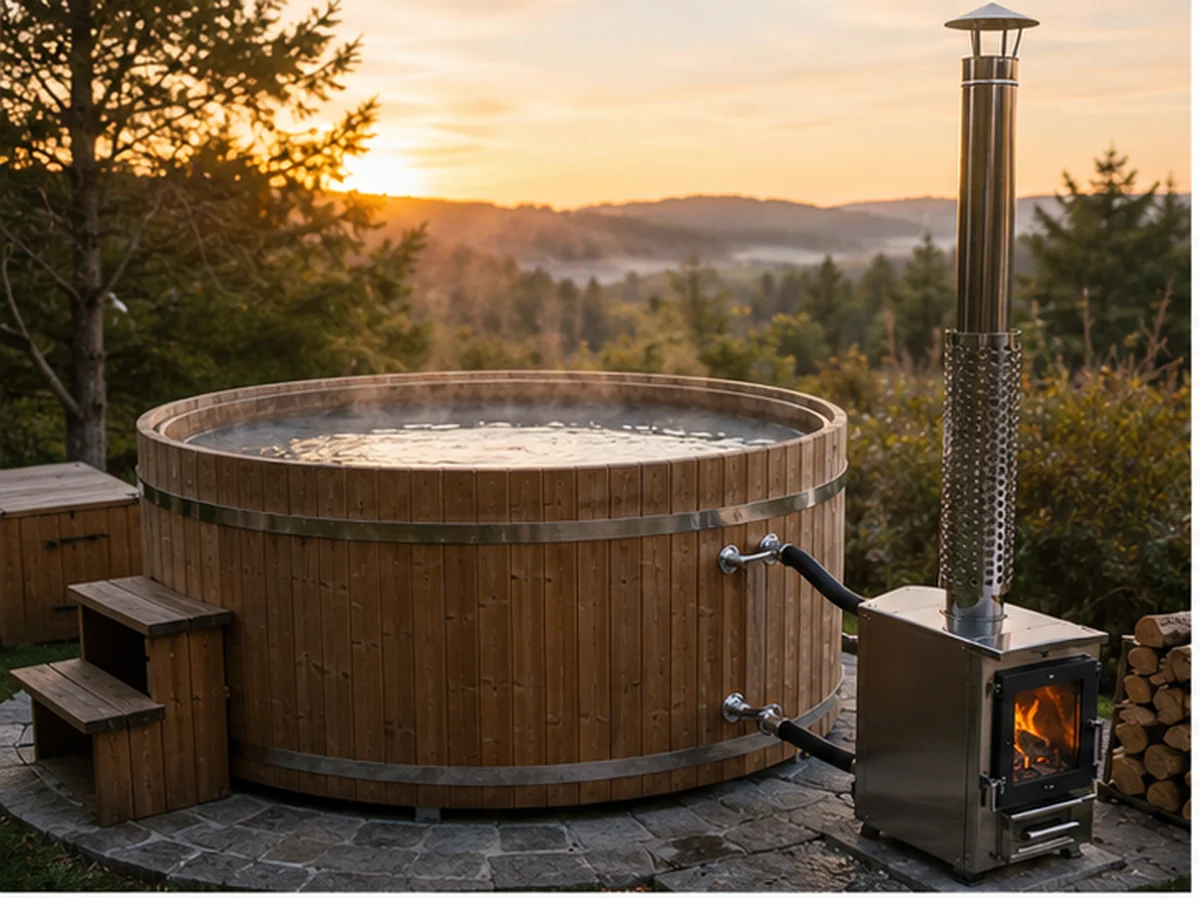
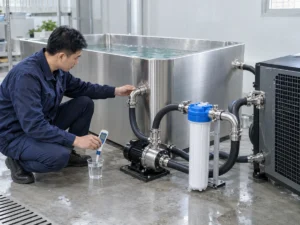
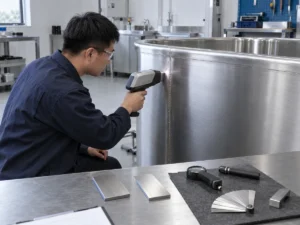
Konzeptionelle Visualisierung; kein verifiziertes HACHILL-Modell oder Leistungstest.
Kurze Antwort
Für die Vorplanung wird ein holzbefeuerter Hot Tub oft als 2–4-stündige Heizaufgabe, aber reale Systeme können außerhalb dieses Bereichs liegen. Die Zahl ist nur nützlich, wenn Wasservolumen, Starttemperatur, Zieltemperatur, Ofenkonfiguration, Umwälzweg, Brennstoffzustand und Wetter bekannt sind. Eine kleinere Wanne mit mildem Füllwasser und geringem Wärmeverlust kann früher aufheizen; eine Winterinstallation mit hohem Volumen, kaltem Wasser, nassem Brennstoff, Windbelastung oder schwacher Umwälzung kann deutlich länger dauern.
- Nutzbares Wasservolumen und erforderlicher Temperaturanstieg
- Exakter Ofen-, Wärmeübertragungs- und Zirkulationsweg
- Zugelassener trockener Brennstoff und stabile Verbrennung
- Abdeckung, Isolierung und freiliegende Rohrleitungen
- Umgebungstemperatur, Wind und Betriebsart
Bestätigen Sie jede Aufheizzeitangabe anhand des ausgewählten Modells, der genehmigten Konfiguration und der dokumentierten Testbedingungen. Käufer sollten außerdem die verfügbaren Holzbefeuerte Hot-Tub-Baureihe bevor Sie eine Angebotsanfrage auf Modellebene stellen.
Für Dokumentenlenkung, Konfigurationsnachweise und Release-Gate-Anforderungen verwenden Sie die Kaufratgeber zur Sicherheitsdokumentation für holzbefeuerte Badezuber. Diese Seite bleibt die verantwortliche Instanz für die Schätzung der Heizzeit und die Heizvariablen.
Wann eine Schätzung der Aufheizzeit sinnvoll ist – und wann nicht
Nützlich für die Planung
- Vergleichen Sie Wasservolumen und Temperaturanstieg.
- Planen Sie einen realistischen Vorbereitungszeitraum ein.
- Berücksichtigen Sie Winter- oder exponierte Standorte.
- Vergleichen Sie die Testbedingungen der Lieferanten.
Nicht ausreichend für die Zulassung
- Abstimmung von Ofen und Wanne
- Schornstein, Abstand oder Brandschutzkonformität
- Endgültige Zirkulations- und Installationsplanung
- Gewerbliche Hygiene- oder Personaleignung
Entscheidungsgrenze: Nutzen Sie eine Kostenschätzung, um Optionen vorzufiltern und Fragen vorzubereiten. Geben Sie eine Bestellung erst frei, nachdem das exakte Becken, der Ofen, die Umwälzung, die Standortbedingungen und der Nachweisumfang bestätigt sind.
Wie lange dauert es, bis ein holzbeheizter Badezuber aufgeheizt ist?
Eine praktische Planungsantwort ist etwa 2–4 Stunden bei vielen holzbefeuerten Systemen, aber das ist ein Screening-Bereich und keine übertragbare Spezifikation. Veröffentlichte Modellbeispiele variieren, weil Wannengröße, Wasservolumen, Ofendesign und Testbedingungen unterschiedlich sind. Eine kompakte Wanne mit Füllwasser mittlerer Temperatur, trockenem Brennstoff, geringer Windexposition und einem effektiven Wärmeübertragungsweg kann schneller aufheizen; eine größere Wanne, die im Winter mit sehr kaltem Wasser gefüllt wird, kann deutlich länger brauchen. Behandeln Sie jede Aussage auf Modellebene als bedingungsabhängig und verifizieren Sie das Wasservolumen, den Temperaturanstieg, die Konfiguration und die dahinterstehende Testmethode.
Ein typischer Bereich ist nur ein Ausgangspunkt
Eine Aussage zur Aufheizzeit ist nur dann aussagekräftig, wenn die zugrunde liegenden Bedingungen bekannt sind:
- Nutzbares Wasservolumen
- Starttemperatur des Mischwassers
- Zieltemperatur des Mischwassers
- Umgebungstemperatur und Wind
- Exakte Ofen- und Zuberkonfiguration
- Brennstoffart und Feuchtigkeitszustand
- Zustand von Abdeckung und Isolierung
- Zirkulations- und Messmethode
Kaltbefüllung, Aufheizen und Wiederaufheizen sind unterschiedliche Aufgaben
Das Erwärmen von frisch eingefülltem Wasser von 8°C auf 38°C erfordert einen Temperaturanstieg von 30°C. Das Wiedererwärmen von zurückgehaltenem Wasser von 25°C auf 38°C erfordert nur 13°C. Selbst bei derselben Wanne und demselben Ofen ist die thermische Aufgabe daher unterschiedlich. Das Hinzufügen von kaltem Wasser nach Reinigung, Verdunstung oder Nutzung durch Badende kann die Wiederaufheizzeit ebenfalls verlängern.
Festlegen, wann der Heiztest beginnt und endet
- Messen Sie die Temperatur des gemischten Ausgangswassers.
- Notieren Sie das nutzbare Füllvolumen.
- Zünden Sie den Ofen gemäß dem zugelassenen Verfahren.
- Betreiben Sie das System unter den dokumentierten Bedingungen.
- Mischen oder zirkulieren Sie das Wasser wie angewiesen.
- Messen Sie die endgültige Temperatur des gemischten Wassers.
Eine heiße Schicht nahe der Oberfläche oder eine hohe Temperatur nahe dem Ofenauslass beweist nicht, dass die gesamte Wanne die Zieltemperatur erreicht hat.
Warum es keine universelle Aufheizzeit für holzbeheizte Badezuber gibt
Die Heizzeit wird von zwei separaten Größen bestimmt: der vom Wasser benötigten Energie und der durchschnittlichen netto tatsächlich in das Wasser übertragene Wärme. NIST-Daten zur Wärmekapazität von flüssigem Wasser unterstützt eine überschlägige Planung von etwa 4.18 kJ/kg·K bei normalen Hot-Tub-Temperaturen.
Planungsformel: Wassererwärmungsenergie in kWh ≈ Wasservolumen in Litern × Temperaturanstieg in °C × 0.00116. Dies nutzt als praktische Schätzannahme ungefähr 1 kg Wasser pro Liter.
Die Berechnung schätzt nur die vom Wasser aufgenommene Energie. Sie berücksichtigt nicht automatisch Kaminverluste, Strahlung vom Ofen und Rohrleitungen, Wärme, die über den Hot Tub und die Wasseroberfläche entweicht, veränderliche Verbrennung, nasses Brennholz, instabile Zirkulation oder Außenaufstellung.
Beispielrechnung: Ein hypothetischer 1,200-Liter-Bottich, erwärmt von 10°C auf 38°C, hat einen Temperaturanstieg von 28°C und benötigt etwa 39 kWh theoretische Wasserenergie. Wenn die gemessene durchschnittliche Netto-Wärmeübertragung an das Wasser 15 kW betragen würde, läge das idealisierte Ergebnis bei etwa 2.6 Stunden; bei 10 kW netto bei etwa 3.9 Stunden. Diese Nettoleistungszahlen sind Rechenbeispiele, keine typischen Ofenleistungen oder HACHILL-Modelldaten. Die reale Aufheizzeit kann länger sein, weil Verluste und Verbrennung über den gesamten Feuerungszyklus hinweg variieren.
Nutzbares Wasservolumen ist wichtiger als die Sitzplatzanzahl
Zwei Wannen für dieselbe Nutzerzahl können unterschiedliche Innenmaße, Bankverdrängung, Füllstandslinien, Ofenverdrängung und tatsächliches Füllwasservolumen haben. Kalkulieren Sie mit dem zugelassenen nutzbaren Wasservolumen, nicht nur mit Außenmaßen oder nominaler Personenzahl.
Nennleistung des Ofens ist nicht gleichbedeutend mit gelieferter Wassererwärmung
Der nutzbare Wärmeübergang hängt vom Gesamtsystem ab: Geometrie von Feuerkammer und Wärmetauscher, wasserberührte Fläche, Verbrennungszustand, Schornsteinzug, Zirkulation, Rohranordnung, Wassertemperatur, Wärmeverlust und Wartung. Fragen Sie, ob eine veröffentlichte Aufheizzeit aus einem vollständigen Test von Tub und Ofen stammt oder nur einen nominalen Ofenwert darstellt.
Die Variablen, die die Aufheizzeit von Holzfeuer-Wannen verändern
Auf kleineren Bildschirmen horizontal wischen, um die vollständige Tabelle anzuzeigen.
| Variable | Was zu bestätigen ist | Warum es die Aufheizzeit verändert |
|---|---|---|
| Nutzbares Wasservolumen | Tatsächliche Liter oder Gallonen an der Betriebsfülllinie | Mehr Wasser erfordert mehr Energie |
| Starttemperatur | Mischwassertemperatur vor dem Anzünden | Kälteres Wasser erfordert einen größeren Temperaturanstieg |
| Zieltemperatur | Beabsichtigte Endtemperatur des Mischwassers | Eine höhere Zieltemperatur erhöht den Energiebedarf |
| Ofenkonfiguration | Exakte zugelassene Kombination aus Ofen, Wärmetauscher und Wanne | Definiert den Wärmeübertragungsweg |
| Zirkulation | Natürliche Zirkulation, zugelassene Pumpe oder manuelles Mischen | Beeinflusst Wärmeübertragung und Temperaturgleichmäßigkeit |
| Brennstoffzustand | Zugelassene Brennstoffart, Feuchtigkeit und Stückgröße | Beeinflusst Verbrennungsstabilität und nutzbare Wärme |
| Schornsteinzug | Zugelassene Abgasanlage und ungehinderter Luftstrom | Beeinflusst die Verbrennungsleistung |
| Abdeckung und Isolierung | Exakte Konfiguration und zulässige Nutzung während des Heizens | Verändert den Wärmeverlust über Oberfläche und Gebäudehülle |
| Wetter | Umgebungstemperatur, Wind und Niederschlag | Verändert den externen Wärmeverlust |
| Wartung | Saubere Wärmeübertragungsflächen und ungehinderter Durchfluss | Verschmutzung und Einschränkungen können die Leistung mindern |
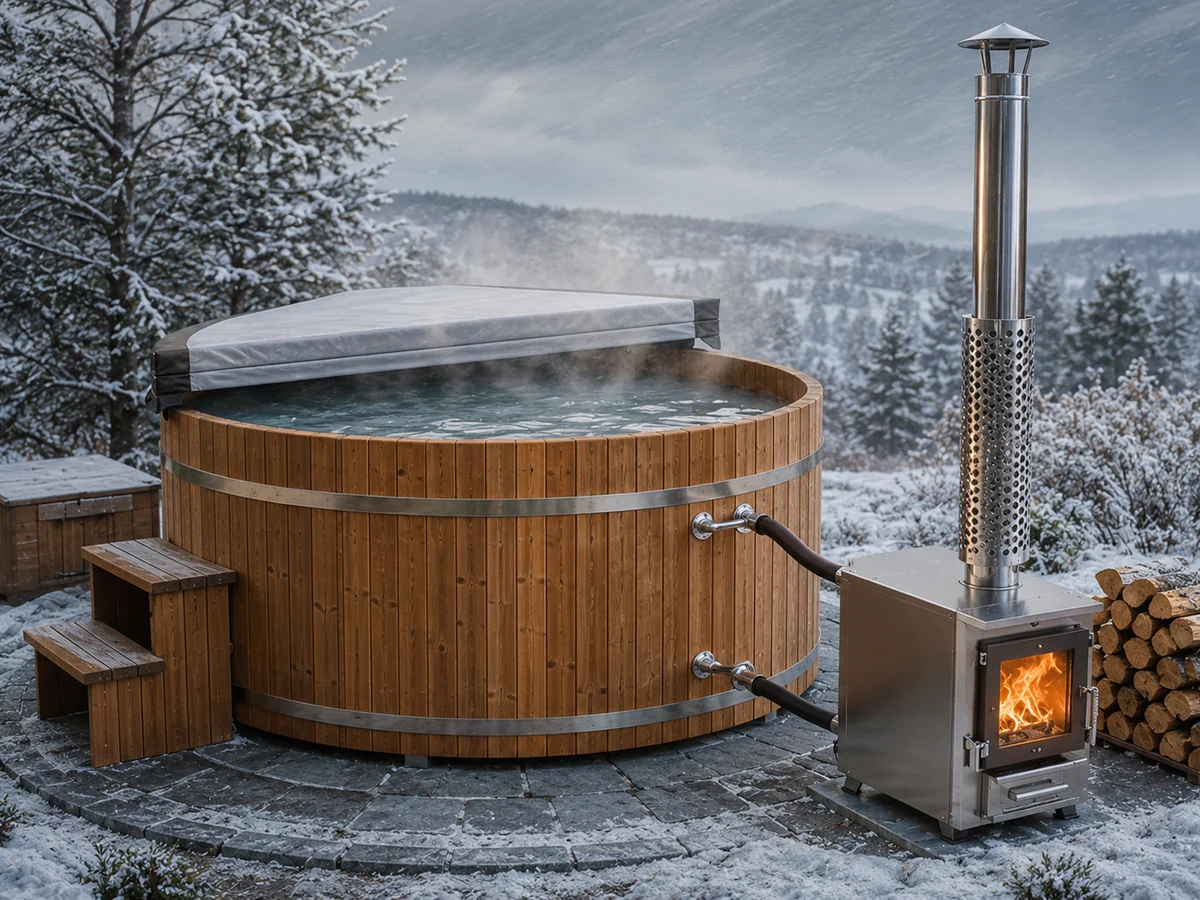
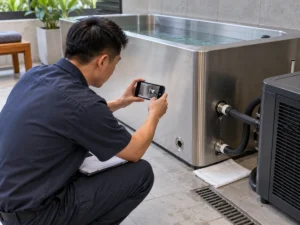
Konzeptionelle Winterszene; kein verifizierter HACHILL-Modelltest oder allgemeingültiges Aufheizzeit-Ergebnis. Die Abdeckungsposition ist nur illustrativ und muss den Anweisungen des ausgewählten Produkts sowie den sicheren Abständen zu Ofen und Schornstein folgen.
Wasservolumen und Temperaturanstieg
Wasservolumen und erforderlicher Temperaturanstieg bilden die grundlegende Heizlast. Erfassen Sie die tatsächliche Quellwassertemperatur im Winter, statt Sommerdaten unverändert anzuwenden.
Ofen und Wärmeübertragungsweg
Interne, externe und andere zugelassene Wärmetauscheranordnungen haben unterschiedliche Strömungswege, Wasserverdrängung, Rohrleitungsexposition und Wartungsanforderungen. Keine der beiden Varianten ist in jeder Konfiguration automatisch schneller.
Zirkulation und Temperaturschichtung
Systeme mit Naturumlauf hängen von Temperaturunterschieden, Rohrposition, Gefälle und ungehindertem Durchfluss ab. Zugelassene pumpenbetriebene Systeme hängen von der Pumpenauswahl und dem Rohrleitungswiderstand ab. Fügen Sie einem Naturumlaufsystem keine Pumpe hinzu, sofern der Hersteller die Änderung nicht zugelassen hat.
Kraftstoffqualität und Verbrennungssteuerung
Nasses Brennholz verbraucht einen Teil der Energie des Feuers für das Verdampfen von Feuchtigkeit, anstatt das Wasser zu erhitzen. Verwenden Sie nur Brennstoff, der laut Ofenanleitung und örtlichen Vorschriften zulässig ist. Verbrennen Sie kein lackiertes oder behandeltes Holz, keine verleimten Platten, keinen Hausmüll und keine vom Hersteller ausgeschlossenen Brennstoffe.
Abdeckung, Isolierung und Wärmeverlust
Eine kompatible isolierte Abdeckung kann Oberflächenwärmeverluste reduzieren, darf aber kein Abstands- oder Brandrisiko um den Ofen oder Kamin herum erzeugen. Genaue Konstruktion und zulässige Nutzung während des Heizens müssen überprüft werden.
Wetter, Wind und saisonale Bedingungen
Kaltluft und Wind erhöhen den Wärmeverlust. Die Standortplanung sollte Wintertemperatur, Windeinwirkung, Niederschlag, Brennstofflagerung, Abdeckungslagerung, Frostschutz, Entleerungsverfahren und sicheren Zugang rund um die Verbrennungsausrüstung berücksichtigen.
So schätzen Sie die Aufheizzeit vor dem Anzünden des Ofens
1. Nutzbares Wasservolumen bestätigen
Verwenden Sie das zugelassene Füllvolumen des ausgewählten Modells. Ersetzen Sie es nicht durch das Außenvolumen der Wanne, ohne Bänke, Ofenverdrängung, Wandgeometrie und betriebliche Füllstandslinie zu berücksichtigen.
2. Temperaturanstieg messen
Notieren Sie die anfängliche Mischwassertemperatur, die angestrebte Zieltemperatur und die Differenz zwischen beiden.
Da die Heizlast vom Endpunkt abhängt, lesen Sie, wie Sie die Mischwasser-Zieltemperatur auswählen und überprüfen. Für den allgemeinen Kontext der öffentlichen Gesundheit, die CDC, dass Whirlpool-Wasser 40°C (104°F) nicht überschreiten sollte; das tatsächliche Projektziel muss möglicherweise niedriger angesetzt werden.
3. Genehmigte Konfiguration identifizieren
Bestätigen Sie den Ofenweg, die Umwälzmethode, die Rohranordnung, den Schornstein, den Brennstoff, die Abdeckung und die Temperatur- Messmethode.
4. Reale Standortbedingungen anwenden
Berücksichtigen Sie Umgebungstemperatur, Wind, Brennstofffeuchte, Kaltbefüllung versus Wiederaufheizung, Abdeckungsnutzung und jeglichen Reinigungs- oder Nachfüllbedarf.
5. Fügen Sie eine Betriebsmarge hinzu
Ein geplanter Betrieb sollte Zeit für Befüllen, Zünden, stabile Umwälzung, Durchmischung, Temperaturprüfung, Reinigungskontrollen, Wasserpflegekontrollen, sofern zutreffend, und sicheres Reduzieren der Verbrennungsintensität vorsehen.
Verwenden Sie die richtige Evidenzstufe: eine theoretische Berechnung prüft die grobe Plausibilität; ein kontrollierter Modelltest legt eine Baseline für eine genehmigte Konfiguration fest; wiederholte Standortaufzeichnungen sind die beste Grundlage für die tägliche Zeitplanung. Halten Sie Fülllinie, Mischmethode und Messstellen konsistent.
Innen- und Außenöfen beeinflussen das Heizsystem unterschiedlich
Auf kleineren Bildschirmen horizontal wischen, um die vollständige Tabelle anzuzeigen.
| Überlegung | Innenofen | Außenofen |
|---|---|---|
| Wärmeweg | Integriert mit dem Wannenwasser | Wärmeübertragung über externe Anschlüsse |
| Wasserverdrängung | Kann das nutzbare Wasservolumen reduzieren | Normalerweise außerhalb des Badebereichs |
| Baderschutz | Erfordert Schutz vor heißen Oberflächen | Feuerraum kann von Badern getrennt werden |
| Zirkulationsabhängigkeit | Hängt vom genauen Innendesign ab | Stark abhängig von Rohrführung und Höhenlage |
| Äußere Wärmeverluste | Kann weniger externe Wasseranschlüsse benötigen | Rohrleitungen und Ofengehäuse können zusätzliche Verluste verursachen |
| Fazit zur Aufheizzeit | Muss auf dem vollständigen Modell basieren | Muss auf dem vollständig installierten Kreislauf basieren |
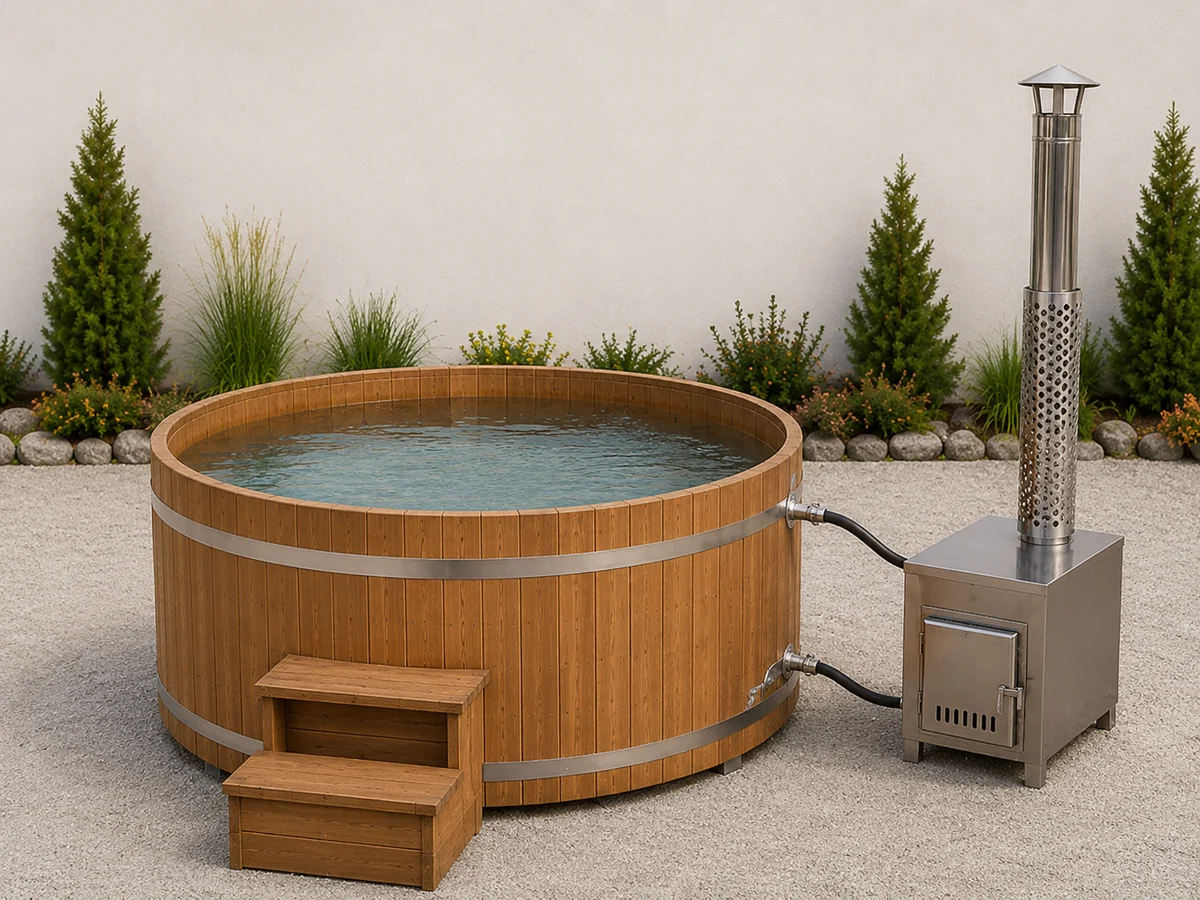
Konzeptionelle Konfiguration mit externem Ofen; Anschlussgeometrie, Schornstein und Abstände müssen den ausgewählten Produktdokumenten und örtlichen Anforderungen entsprechen.
Der richtige Weg wird nicht allein durch die Aufheizzeit bestimmt. Nutzerzugang, nutzbares Wasservolumen, Reinigung, verfügbarer Platz, Brandabstand, Fundament, Rohrleitungsführung, Wartung und örtliche Brandschutzanforderungen beeinflussen ebenfalls die Wahl.
Für die breitere kommerzielle Kaufentscheidung im runden Format, einschließlich Sitzgelegenheiten, Standortpassung, Wasserpflege und Angebotsumfang, verwenden Sie die Kaufberatung für runde holzbeheizte Badezuber.
Für den vollständigen Zusammenhang zwischen Verbrennung, Thermosiphon- oder zugelassener Pumpenzirkulation, Schornsteinzug und Mischwassertemperatur lesen Sie wie holzbeheizte Badezuber Wärme übertragen.
Standort- und Installationsfaktoren, die die Heizleistung beeinflussen
Die Heizleistung kann nicht von der Installation getrennt werden. Bestätigen Sie diese Eingangsgrößen, bevor Sie ein Testergebnis auf ein reales Projekt anwenden:
- Fundament und Nivellierung: tragen die gefüllte Last und erhalten die zugelassene Ofen- und Rohrgeometrie.
- Rohrführung: Anschlusshöhe, Gefälle, Durchmesser und Länge für das gewählte System prüfen.
- Schornstein und Zug: zugelassene Komponenten verwenden und die örtlichen Brand- und Rauchanforderungen einhalten.
- Entleerung und Nachfüllung: den Einfluss von Reinigung, Teilnachfüllung und Quellwassertemperatur berücksichtigen.
- Frostbedingungen: Verfahren für Entleerung, Lagerung und saisonale Abschaltung festlegen.
Die endgültigen Anforderungen an Fundament, Schornstein, Verbrennung, Entwässerung und öffentliche Nutzung müssen vom lokalen Installateur und der zuständigen Behörde geprüft werden.
Saisonale und betriebliche Szenarien
Anschauliches Wohnszenario
Kaltbefüllung bei mildem Wetter
Ein privater Nutzer befüllt eine Wanne bei mildem Wetter mit trockenem Brennstoff und begrenzter Windeinwirkung. Die Erwärmung kann schneller sein als unter kälteren oder stärker exponierten Bedingungen, aber der Eigentümer sollte dennoch Wasservolumen, Starttemperatur und gemischte Endtemperatur erfassen, bevor er das Ergebnis als reproduzierbar betrachtet.
Anschauliches saisonales Szenario
Kaltbefüllung im Winter
Dasselbe Becken startet mit kälterem Wasser und größerem Wärmeverlust. Die richtige Reaktion besteht darin, das Betriebsfenster zu verlängern, Brennstoff vor Feuchtigkeit zu schützen und die Verfahren zur Froststeuerung zu überprüfen – nicht darin, den Ofen zu überfeuern.
Zusammengesetztes technisches Szenario
Problem mit der Zirkulation bei externem Ofen
Der Ofen brennt normal, aber die Wanne erwärmt sich ungleichmäßig. Mögliche Ursachen sind Luft im Kreislauf, ungeeignete Anschlussgeometrie, eingeschränkter Durchfluss oder unzureichende Durchmischung. Der Betreiber sollte das genehmigte Inspektionsverfahren befolgen, statt Rohrleitungen zu ändern oder ohne Herstellerprüfung eine Pumpe hinzuzufügen.
Zusammengesetztes kommerzielles Szenario
Planung der Öffnungszeiten für Resorts
Personal berücksichtigt nur die geschätzte Anfeuerzeit und lässt Befüllung, Anzünden, Mischen, Temperaturprüfung und Wasserpflegeprüfungen aus. Der korrigierte Zeitplan geht rückwärts vom Gästezugang aus und weist jeder Vorbereitungsstufe einen geschulten Bediener zu.
Diese Szenarien sind illustrative Beispiele und stellen keine benannten HACHILL-Kundenprojekte dar.
Sichere Methoden zur Reduzierung der Aufheizzeit
Ziel ist es, vermeidbare Wärmeverluste und instabile Verbrennung zu reduzieren—nicht das Gerät über seine zulässigen Grenzen hinaus zu belasten.
Wasserkreislauf vor dem Anzünden vorbereiten
- Bis zum erforderlichen Betriebsniveau füllen.
- Bestätigen, dass Heizflächen und Wasserkreislauf wie erforderlich untergetaucht sind.
- Den zugelassenen Zirkulationsweg öffnen.
- Auf sichtbare Verstopfungen oder Lecks prüfen.
- Bestätigen, dass Schornstein und erforderliche Abstände bereit sind.
- Befolgen Sie die Inbetriebnahme-Anweisungen des ausgewählten Modells’.
Zugelassenes trockenes Brennholz verwenden
Verwenden Sie ordnungsgemäß gelagerten, trockenen Brennstoff einer Art und Größe, die in den Ofenanweisungen zulässig ist. Die archivierte Burn-Wise-Richtlinie der US EPA unterstützt trockenes, abgelagertes Holz und warnt davor, beschichtete, lackierte, druckbehandelte oder verleimte Holzprodukte sowie Hausmüll zu verbrennen. Das EPA-Programm hat die Aktualisierung dieses Materials 2025 eingestellt, daher bleiben die Anweisungen des ausgewählten Ofens und die aktuellen lokalen Vorschriften maßgeblich.
Wärmeverlust kontrollieren, ohne eine Brandgefahr zu schaffen
Sofern freigegeben, verwenden Sie die korrekte isolierte Abdeckung, schützen Sie freiliegende Wasserleitungen, erhalten Sie die Isolierung und reduzieren Sie Windeinwirkung durch sichere Standortplanung. Platzieren Sie keine improvisierten Isolierungen oder Windbarrieren in der Nähe heißer Oberflächen oder Abgaskomponenten.
Mischen und messen, bevor Sie mehr Brennstoff nachlegen
Der Ofen und die Glut können weiter Wärme übertragen, nachdem sich das Wasser dem Betriebsziel nähert. Reduzieren Sie die Feuerungsintensität gemäß den Anweisungen, ermöglichen Sie die Zirkulation, mischen Sie, wo erforderlich, und messen Sie an einer repräsentativen Stelle, bevor Sie mehr Brennstoff hinzufügen.
Wenn langsames Aufheizen auf ein Problem hindeuten kann
Eine langsamere Sitzung wird nicht immer durch kaltes Wetter verursacht. Vergleichen Sie die aktuelle Sitzung mit dem genehmigten Basiswert und früheren Betriebsaufzeichnungen.
Auf kleineren Bildschirmen horizontal wischen, um die vollständige Tabelle anzuzeigen.
| Beobachteter Zustand | Mögliche Erklärung | Sichere Reaktion |
|---|---|---|
| Schwache oder rauchige Verbrennung | Nasser Brennstoff, eingeschränkte Luftzufuhr, Ascheablagerungen oder schlechter Zug | Nur zugelassene Routineprüfungen durchführen; bei Rauchentwicklung in den Arbeitsbereich den Betrieb stoppen. |
| Heißer Rücklauf, aber ungleichmäßige Wannentemperatur | Schichtung, Luftblase oder eingeschränkte Zirkulation | Das zugelassene Misch- und Zirkulationsverfahren befolgen; die Rohrleitungen nicht verändern. |
| Die Aufheizzeit verlängert sich bei wiederholten Sitzungen | Brennstoffwechsel, Verschmutzung, Abdeckungsschaden oder Messwertdrift | Protokolle vergleichen und nur die zugelassenen Wartungsarbeiten durchführen. |
| Überschwingen, Sieden, Dampfbildung oder heftige Wasserbewegung | Späte Brennstoffzugabe, blockierter Durchfluss oder instabile Zirkulation | Zugang verhindern und das Abschaltverfahren des Herstellers befolgen. |
Wenn das Ergebnis deutlich langsamer ist als die verifizierte Basislinie, befolgen Sie die Fehlersuche bei der Beheizung von holzbeheizten Badezubern Reihenfolge, bevor Sie mehr Brennstoff hinzufügen oder die Zirkulationsroute ändern.
Betrieb stoppen und qualifizierte Hilfe anfordern für blockierte Umwälzung, unkontrolliertes Sieden, Dampf, Leckage, Rauchaustritt, beschädigte Rauchgaskomponenten oder strukturelle Bewegung.
Welche Aufheizzeit-Nachweise sollte ein Käufer anfordern?
Auf kleineren Bildschirmen horizontal wischen, um die vollständige Tabelle anzuzeigen.
| Nachweisposition | Warum sie wichtig ist | Unterstützte Entscheidung |
|---|---|---|
| Exakte Wannen- und Ofenkonfiguration | Verhindert, dass das Ergebnis eines Modells’ auf ein anderes angewendet wird | Produktvergleich und Angebotserstellung |
| Nutzbares Wasservolumen und Temperaturanstieg | Definiert die tatsächliche Heizlast | Technische Plausibilität |
| Umgebungsbedingungen, Abdeckung und Isolierung | Zeigt die Wärmeverlustgrenze des Test’s | Standortvergleich |
| Brennstoffart, Feuchtigkeit und Umwälzverfahren | Erläutert die Verbrennungs- und Wärmeübertragungsbedingungen | Überprüfung der Wiederholbarkeit |
| Messmethode und Testwiederholungen | Verhindert, dass ein lokaler Hotspot oder ein einmaliges Ergebnis zur Hauptaussage wird | Leistungsnachweis |
| Freigegebene Zeichnungen, Komponentenumfang und Verantwortlichkeiten | Verknüpft die Leistungsangabe mit der gekauften Konfiguration | Bestellfreigabe und Übergabe |
Modellbezogene Heiznachweise sollten zusammen mit der freigegebenen Konfiguration, Zeichnungen, Komponenten und der Fertigungs- und Qualitätskontrollprüfung geprüft werden.
Eine nützliche Aussage: unter dokumentierten Bedingungen erwärmte die genaue Wannen- und Ofenkonfiguration das angegebene nutzbare Wasservolumen von der aufgezeichneten Starttemperatur auf die aufgezeichnete Mischwassertemperatur im gemessenen Zeitraum.
Eine Sitzplatzanzahl, ein Lifestyle-Bild, ein allgemeiner Kategorie-Prospekt oder eine nominale Ofenleistung sind für sich genommen kein ausreichender Nachweis.
Aufheizzeit-Planung für Resorts und gewerbliche Einrichtungen
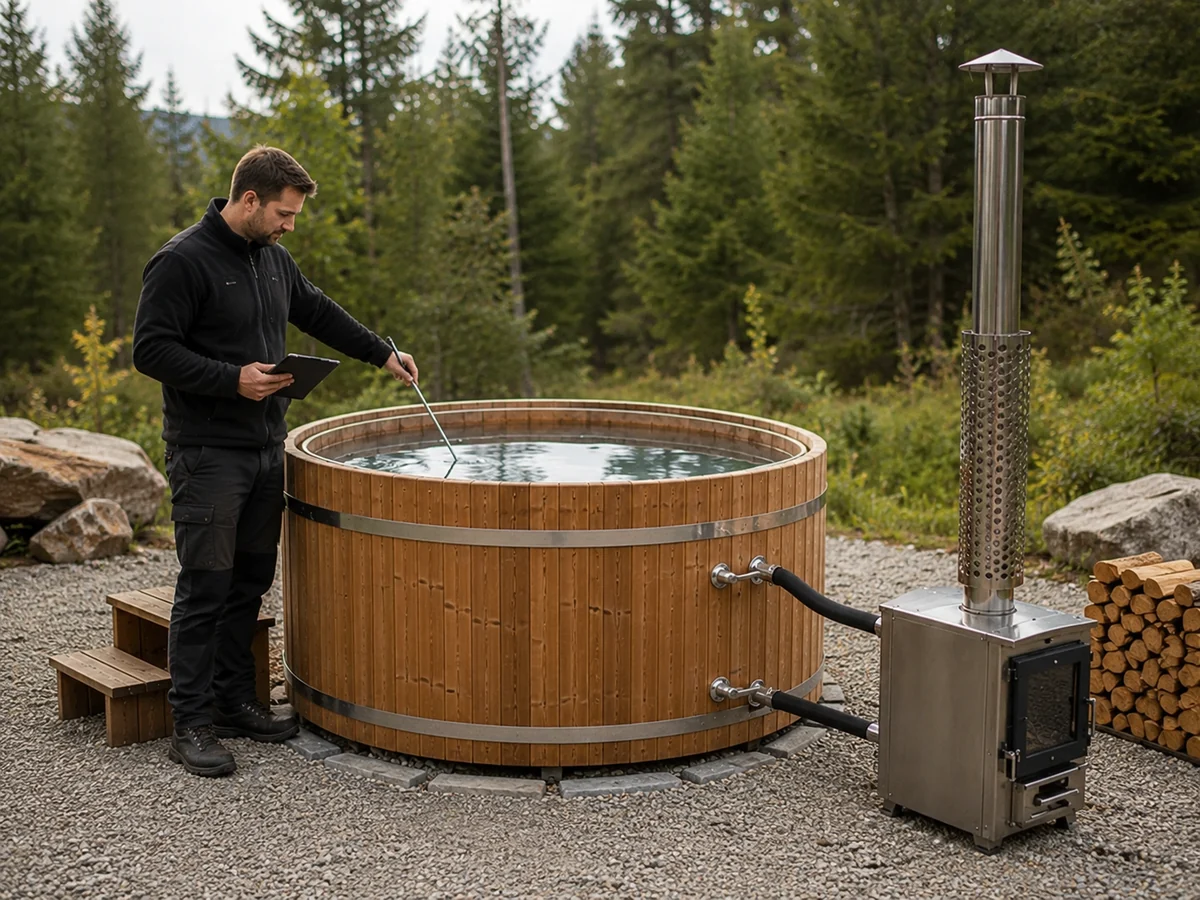
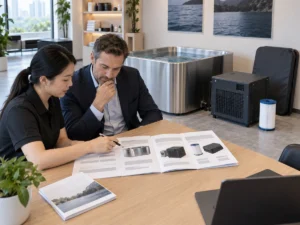
Konzeptionelle Betriebsszene; sie stellt keinen benannten Kundenstandort, keine zugelassene gewerbliche Installation und kein spezifisches HACHILL-Betriebsverfahren dar.
Gewerbliche Käufer sollten die Aufheizzeit mit Gästefluss, Personalbesetzung, Reinigung, Medienversorgung und Übergabe über Wellness-Projektplanung für Hotels und Resorts.
Von der Öffnungszeit rückwärts planen
- Standort- und Geräteprüfung
- Befüllung mit Wasser
- Feuervorbereitung und Zündung
- Heizung
- Mischen und Temperaturprüfung
- Wasserpflege-Checks
- Freigabe des Gästezugangs
- Überwachung während des Betriebs
- Reinigung und Abschaltung
Betreiber- und Überwachungsverfahren festlegen
Weisen Sie Verantwortlichkeiten für Feuerführung, Temperaturaufzeichnung, Brennstofflagerung, Wasserqualität, Reinigung, Gästetrennung, Notabschaltung, Ascheentsorgung und Frostschutzverfahren zu.
Bestätigen, ob Holzfeuerbetrieb für den Veranstaltungsort geeignet ist
Auf kleineren Bildschirmen horizontal wischen, um die vollständige Tabelle anzuzeigen.
| Verantwortung | Hersteller / Lieferant | Käufer / Veranstaltungsort | Installateur / lokaler Fachbetrieb |
|---|---|---|---|
| Freigegebene Produktkonfiguration | Bestätigten Modell- und Komponentenumfang bereitstellen | Verwendungszweck und Betriebsanweisung genehmigen | Kompatibilität mit dem Standort bestätigen |
| Fundament und Zugang | Bekannte Produktabmessungen und Lasten bereitstellen, sofern verfügbar | Standortdaten und Lieferbeschränkungen bereitstellen | Endgültiges Fundament und Handhabungsweg entwerfen und verifizieren |
| Schornstein- und Feuerstättenkonformität | Produktanleitungen und zugelassene Komponenten bereitstellen | Veranstaltungsort und lokale Anforderungen ermitteln | Installation, Abstände und Zulassungen prüfen |
| Wasserpflege und gewerbliche Hygiene | Enthaltene Ausstattung und Produkteinschränkungen angeben | Betriebs-, Reinigungs- und Überwachungsrichtlinie festlegen | Lokale Gesundheits- und Entwässerungsanforderungen prüfen |
| Aufheizzeit-Protokoll | Modellspezifische Basiswerte bereitstellen, sofern verfügbar | Standortprotokolle und Betriebsreserven führen | Installationsbedingte Abweichungen gegebenenfalls untersuchen |
Verantwortungsgrenze vor Übergabe festlegen
Auf kleineren Bildschirmen horizontal wischen, um die vollständige Tabelle anzuzeigen.
| Betriebsaufgabe | Wichtige Eingaben | Warum sie wichtig ist |
|---|---|---|
| Erstbefüllung mit kaltem Wasser | Gesamtwassermenge, Quellwassertemperatur und Öffnungszeit | Erzeugt in der Regel die größte einzelne Heizlast |
| Temperaturerholung | Badegastlast, Exposition, Teilbefüllung und Feuerungszustand | Bestimmt, ob wiederholte Sitzungen praktikabel sind |
| Reinigung und Nachfüllung | Wasserpflege-Richtlinie, Ablassvolumen und Nachfülltemperatur | Kann einen zusätzlichen täglichen Aufheizzyklus erzeugen |
Getrennte Erstaufheizung, Wiederaufheizung und täglicher Durchsatz
Eine holzbefeuerte Variante erfordert eine zusätzliche Prüfung, wenn der Standort keinen geschulten Betrieb, keinen zugelassenen Schornstein- und Abstandsplan, keine sichere Brennstofflagerung, keine rauchverträgliche Aufstellung, keine zuverlässige Wasserpflege, keine Gästetrennung, keine ausreichende Vorbereitungszeit, keinen Frostschutz und keine erforderlichen lokalen Genehmigungen bereitstellen kann. Diese Betriebsbeschränkungen können für einige Standorte eine andere Heizvariante praktischer machen.
Checkliste zur Aufheizzeit vor dem Kauf oder der ersten Nutzung
- Exaktes Whirlpool-Modell und Konfiguration
- Exakter Ofen und Wärmeübertragungsweg
- Nutzbares Wasservolumen
- Startwassertemperatur
- Beabsichtigte Zieltemperatur
- Erforderlicher Gesamttemperaturanstieg
- Interner oder externer Ofen
- Natürliche oder zugelassene Zwangsumwälzung
- Zugelassener Brennstofftyp
- Feuchtezustand des Brennstoffs
- Abdeckungs- und Isolationskonfiguration
- Umgebungstemperatur und Windeinwirkung
- Schornstein- und Abstandsprüfung
- Fundament und Entwässerung
- Frostschutzverfahren
- Temperaturüberwachungsmethode
- Verantwortung des Betreibers
- Prüfbedingungen des Lieferanten
- Lokale Anforderungen an Feuer, Rauch und Installation
Anwendung: Wohn-, Resort-, Spa- oder andere gewerbliche Nutzung
Kapazität: Erwartete Nutzer, nutzbares Wasservolumen und tägliche Sitzungen
Klima: Sommer- und Wintertemperaturen, Wind und Exposition
Heizroute: Interner oder externer Ofen und Umwälzpräferenz
Standort: Fundament, Schornstein, Entwässerung, Zugang und Frostschutzplan
Brennstoff: Verfügbares zugelassenes Holz, Lagerung und Feuchtigkeitskontrolle
Wasserpflege: Befüll-, Entleer-, Reinigungs-, Desinfektions- und Nachfüllroutine
Gewerbliche Nutzung: Öffnungszeiten, geschultes Personal, Überwachungs- und Wiederherstellungsbedarf
Beschaffung: Menge, Branding, Verpackung, Zielort und Dokumentationsumfang
Mindestangaben für eine modellbezogene Prüfung
Die endgültige Auswahl hängt von der tatsächlichen Nutzerkapazität, Nutzungshäufigkeit, Installationsumgebung, Klima, Fundament, Brennstoffbedingungen, Entwässerung, Wasserpflegeroutine, Transportzugang, Projektanforderungen, lokalen Vorschriften und bestätigten Herstellerdaten ab.
Nachweise und Sicherheitsreferenzen
- NIST Chemistry WebBook: Wärmekapazität von flüssigem Wasser für die technische Grundlage der vorläufigen Wasser-Energie-Berechnung.
- CDC-Sicherheitshinweise für Whirlpools für den allgemeinen Sicherheitskontext der maximalen Wassertemperatur von 104°F (40°C).
- Archivierte Burn-Wise-Praktiken der US EPA für allgemeine Grundsätze zu trockenem Brennstoff und verbotenem Brennstoff. Das Burn Wise-Programm hat die Aktualisierung dieses Materials 2025 eingestellt; aktuelle Geräteanweisungen und lokale Vorschriften bleiben maßgeblich.
Diese Quellen stützen ausschließlich allgemeine technische oder sicherheitstechnische Grundsätze. Sie belegen weder eine getestete Aufheizzeit noch eine Zertifizierung, Installationsgenehmigung oder Marktkonformität für ein HACHILL-Modell.
Entscheidungszusammenfassung:
- Schätzung anhand des nutzbaren Wasservolumens und der erforderlichen Temperaturerhöhung.
- Bewerten Sie die gesamte Konfiguration aus Bottich, Ofen und Zirkulation – nicht nur die Ofenleistung.
- Planen Sie eine standort- und betriebsbedingte Reserve für Brennstoff, Wetter, Abdeckungsnutzung, Durchmischung und Überprüfung ein.
- Fordern Sie dokumentierte Testbedingungen an, bevor Sie eine modellbezogene Aufheizzeit-Angabe akzeptieren.
Häufig gestellte Fragen
Wie lange dauert es normalerweise, bis ein holzbeheizter Badezuber aufgeheizt ist?
Etwa 2–4 Stunden sind für viele Systeme ein nützlicher vorläufiger Planungsbereich, aber nicht allgemeingültig. Bestätigen Sie das genaue Wasservolumen, den Temperaturanstieg, die Ofenkonfiguration, den Umwälzweg, den Brennstoffzustand, das Wetter und die Testmethode für das ausgewählte System.
Heizt ein größerer Holzofen ein Badezuber immer schneller auf?
Nein. Die Aufheizzeit hängt vom gesamten Ofen-, Wärmetauscher-, Umwälz- und Beckensystem ab. Eine höhere Nennleistung garantiert nicht, dass mehr Wärme sicher ins Wasser gelangt.
Warum dauert das Aufheizen eines holzbeheizten Badezubers im Winter länger?
Im Winterbetrieb trifft oft kälteres Füllwasser auf einen größeren Wärmeverlust über die Wasseroberfläche, die Wände und freiliegende Bauteile. Wind und feuchtes Brennmaterial können die Aufheizzeit zusätzlich verlängern.
Heizt ein interner Ofen schneller als ein externer Ofen?
Nicht unbedingt. Interne Öfen haben einen kurzen Wärmeweg, während externe Systeme stärker von der Verbindungs- und Zirkulationskonstruktion abhängen. Vergleichen Sie vollständige, getestete Konfigurationen und nicht nur die Position des Ofens.
Kann eine Abdeckung die Aufheizzeit verkürzen?
Eine kompatible isolierte Abdeckung kann den Wärmeverlust an der Oberfläche reduzieren. Sie muss gemäß den Produktanweisungen verwendet und von unsicheren Ofen- oder Schornsteinbedingungen ferngehalten werden.
Wie kann ich die Aufheizzeit anhand des Wasservolumens abschätzen?
Schätzen Sie die Wasserenergie aus Litern × Temperaturanstieg × 0.00116 kWh und teilen Sie dann durch eine belastbare Schätzung der durchschnittlichen Netto-Wärme, die an das Wasser abgegeben wird – nicht durch die rohe Ofen-Nennleistung. Fügen Sie einen Zuschlag für Oberflächen-, Rohr-, Becken- und Verbrennungsverluste hinzu.
Was sollte ein Lieferant einer Angabe zur Aufheizzeit beifügen?
Geben Sie das genaue Modell, das nutzbare Wasservolumen, die Start- und Zieltemperatur, die Umgebungsbedingungen, die Ofenkonfiguration, die Zirkulationsmethode, den Brennstoffzustand, den Abdeckungsstatus und die Messmethode an.
Erstellen Sie ein Briefing für die Beheizung eines holzbefeuerten Whirlpools
Eine qualifizierte Prüfung benötigt mehr als eine Ziel-Heizzeit. Bereiten Sie den beabsichtigten Einsatz, das nutzbare Wasservolumen, Start- und Zieltemperaturen, Klima, Ofen- und Umwälzpräferenz, Brennstoff, Fundament, Schornstein, Entwässerung, Wasserpflegeroutine, Anlieferungszugang und Betriebsplan vor.
Für gewerbliche oder OEM-Projekte geben Sie außerdem den täglichen Durchsatz, Personalbesetzung, Zielmarkt, Menge, Branding, Verpackung und erforderliche technische oder Konformitätsdokumente an.
Die endgültige Heizleistung, Installation und gewerbliche Eignung müssen für das ausgewählte Modell und die freigegebene Projektkonfiguration bestätigt werden.
Projektbriefing für holzbefeuerten Whirlpool einreichen
Technischer Umfang und Prüfgrenzen: Dieser HACHILL-Leitfaden erläutert die Variablen der Beheizung holzbefeuerter Whirlpools, die vorläufige Wärmelastabschätzung, Betriebsbedingungen und B2B-Projekteingaben. Er ist kein modellspezifisches Installationshandbuch und kein Leistungszertifikat. Exaktes Wasservolumen, Ofenkonfiguration, Heizleistung, Schornstein, Sicherheitsabstände, Brennstoff, Wasserpflege und gewerbliche Eignung müssen für das ausgewählte Produkt und den Zielmarkt durch den Hersteller, den Installateur und relevante lokale Fachleute bestätigt werden.