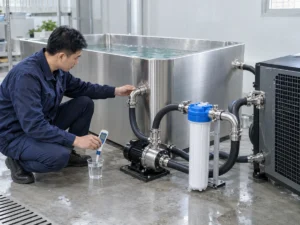
Руководство по планированию купели с дровяным подогревом
Дровяной купели обычно требуется несколько часов, чтобы нагреться от холодного заполнения. Для предварительного планирования примерно 2–4 часа Это полезная рыночная линейка, но это не универсальная спецификация или гарантия модели HACHILL. Фактическое время зависит от полезного объема воды, начальной и целевой температуры, конструкции плиты и циркуляции, сухого топлива, изоляции, использования крышки, ветра и условий окружающей среды. Используйте точные условия испытаний в ванне и в печи, а не общее время заголовка, при сравнении моделей или планировании коммерческого графика работы.
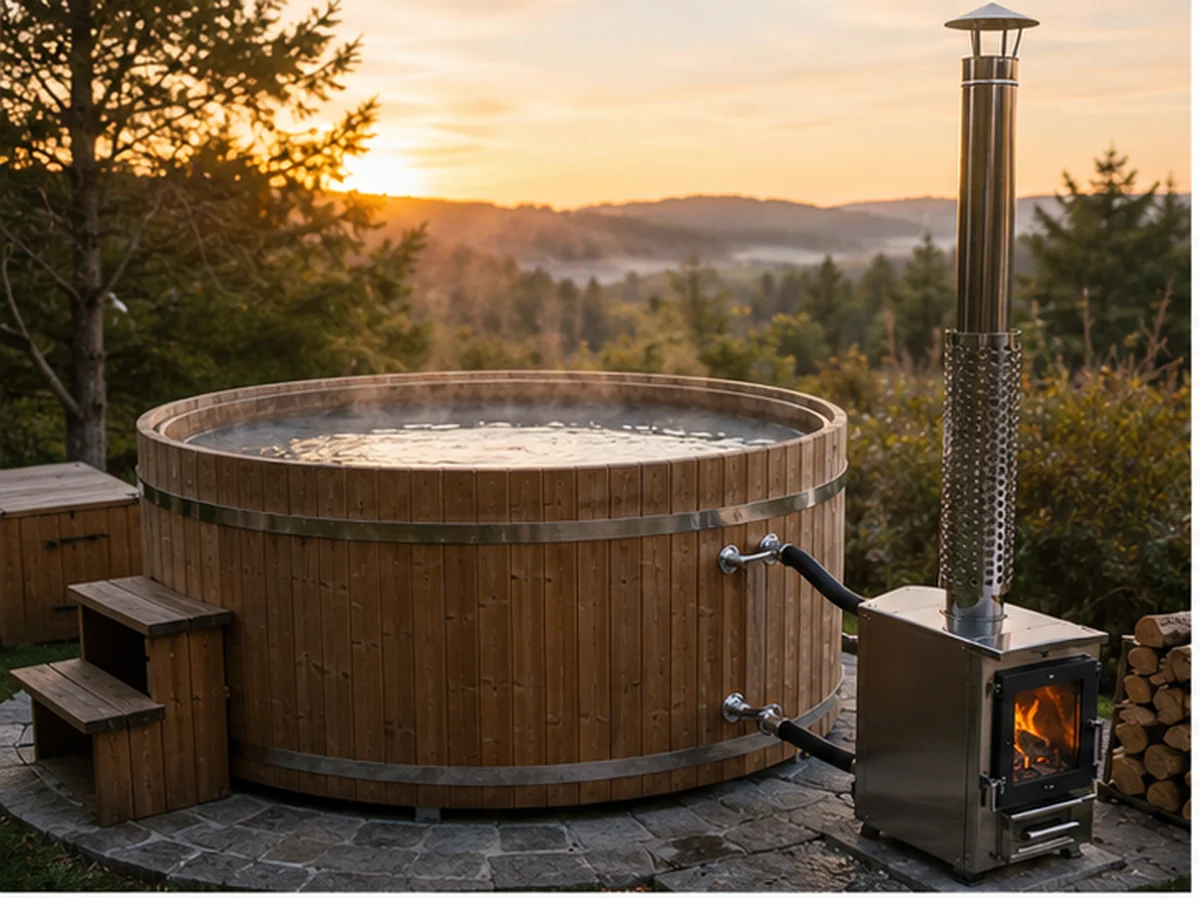
Концептуальная визуализация; не является проверенной моделью HACHILL или результатом испытаний.
Краткий ответ
Для предварительного планирования дровяной горячий чан часто рассматривается как задача нагрева продолжительностью 2–4 часаНо реальные системы могут выходить за пределы этого диапазона. Фигура полезна только тогда, когда известен объем воды, начальная температура, целевая температура, конфигурация плиты, маршрут циркуляции, состояние топлива и погода. Меньшая ванна с мягкой водой и низкой потерей тепла может нагреваться раньше; зимняя установка с большим объемом холодной воды, мокрого топлива, воздействия ветра или слабой циркуляции может занять гораздо больше времени.
- Полезный объём воды и требуемый перепад температур
- Точная печь, путь теплопередачи и циркуляции
- Одобренное сухое топливо и стабильное горение
- Крышка, теплоизоляция и открытые участки трубопровода
- Температура окружающей среды, ветер и метод эксплуатации
Сверяйте любую цифру времени нагрева с выбранной моделью, утверждённой конфигурацией и документированными условиями испытаний. Покупателям также следует сравнить доступные линейка дровяных банных чанов перед запросом оценки для конкретной модели.
Для контроля документов, подтверждения конфигурации и требований к контрольным точкам выпуска используйте Руководство покупателя по документации по безопасности дровяной купели. Эта страница остаётся ответственной за оценку времени нагрева и параметры нагрева.
Когда оценка времени нагрева полезна, а когда нет
Полезно для планирования
- Сравните объём воды и повышение температуры.
- Заложите реалистичное время на подготовку.
- Учитывайте зимние условия или открытые площадки.
- Сравнивайте условия испытаний поставщиков.
Недостаточно для согласования
- Подбор печи к купели
- Соответствие требованиям к дымоходу, зазорам и пожарной безопасности
- Финальная схема циркуляции и монтажа
- Пригодность для коммерческой гигиены или укомплектования персоналом
Граница принятия решения: используйте оценку для отбора вариантов и подготовки вопросов. Выпускайте заказ на покупку только после того, как точная купель, печь, циркуляция, условия площадки и объём доказательств подтверждены.
Сколько времени требуется купели с дровяным подогревом для нагрева воды?
Практичный ответ для планирования — около 2–4 часов для многих дровяных систем, но это оценочный диапазон, а не переносимая спецификация. Опубликованные примеры моделей различаются, потому что размер купели, объём воды, конструкция печи и условия испытаний отличаются. Компактная купель с водой умеренной температуры для заполнения, сухим топливом, слабым воздействием ветра и эффективным маршрутом теплопередачи может нагреться быстрее; более крупная купель, заполненная очень холодной водой зимой, может нагреваться существенно дольше. Рассматривайте любое заявление на уровне модели как зависящее от условий и проверяйте объём воды, повышение температуры, конфигурацию и метод испытаний, лежащие в его основе.
Типичный диапазон — это лишь отправная точка
Утверждение о времени нагрева становится полезным только тогда, когда известны условия, на которых оно основано:
- Полезный объём воды
- Начальная температура смешанной воды
- Целевая температура смешанной воды
- Температура окружающей среды и ветер
- Точная конфигурация печи и купели
- Тип топлива и влажность
- Состояние покрытия и изоляции
- Метод циркуляции и измерения
Нагрев при холодном заполнении и повторный нагрев — разные задачи
Нагрев свеженаполненной воды с 8°C до 38°C требует повышения температуры на 30°C. Повторный нагрев сохранённой воды с 25°C до 38°C требует лишь 13°C. Поэтому даже при одном и том же чане и печи тепловая задача различается. Добавление холодной воды после очистки, испарения или использования купающимися также может продлить период восстановления.
Определите начало и окончание теста нагрева
- Измерьте температуру смешанной исходной воды.
- Зафиксируйте полезный объём заполнения.
- Растопите печь по утверждённой процедуре.
- Эксплуатируйте систему в документированных условиях.
- Перемешивайте или циркулируйте воду в соответствии с инструкцией.
- Измерьте конечную температуру смешанной воды.
Горячий слой у поверхности или высокая температура возле выхода печи не доказывают, что весь чан достиг целевой температуры.
Почему не существует универсального времени нагрева купели с дровяным подогревом
Время нагрева определяется двумя отдельными величинами: энергией, необходимой воде, и средней нетто тепло, фактически переданное в эту воду. Данные NIST по теплоемкости жидкой воды поддерживает проектную аппроксимацию около 4.18 kJ/kg·K при обычных температурах гидромассажной ванны.
Формула планирования: энергия нагрева воды в кВт·ч ≈ объём воды в литрах × повышение температуры в °C × 0.00116. Здесь используется примерно 1 кг воды на литр как практическое допущение для оценки.
Расчет оценивает только энергию, поглощенную водой. Он не включает автоматически потери через дымоход, излучение от печи и трубопроводов, тепло, уходящее через чан и поверхность воды, изменяющееся горение, влажное топливо, нестабильную циркуляцию или наружное воздействие.
Пример расчёта: Гипотетическая купель объёмом 1,200 литров, нагреваемая с 10°C до 38°C, имеет повышение температуры на 28°C и требует около 39 kWh теоретической энергии воды. Если измеренная средняя полезная теплопередача воде составляла бы 15 kW, идеализированный результат составил бы около 2.6 часа; при 10 kW полезной мощности — около 3.9 часа. Эти значения полезной мощности являются примерами расчёта, а не типичными номиналами печи или данными моделей HACHILL. Реальное время нагрева может быть больше, поскольку потери и горение изменяются в течение цикла топки.
Полезный объём воды важнее количества мест
Два чана, рассчитанные на одинаковое количество пользователей, могут иметь разные внутренние размеры, вытеснение скамьей, линии заполнения, вытеснение печью и фактический объем залитой воды. Оценивайте по утвержденному полезному объему воды, а не только по внешним размерам или номинальной вместимости людей.
Номинальная мощность печи не означает фактический нагрев воды
Полезная теплопередача зависит от всей системы: геометрии топки и теплообменника, поверхности контакта с водой, условий горения, тяги дымохода, циркуляции, схемы труб, температуры воды, теплопотерь и обслуживания. Уточняйте, получено ли опубликованное время нагрева из испытания полной ванны с печью или это лишь номинальное значение для печи.
Переменные, влияющие на время нагрева купели с дровяным подогревом
На небольших экранах проводите пальцем по горизонтали, чтобы увидеть всю таблицу.
| Переменная | Что уточнить | Почему это меняет время нагрева |
|---|---|---|
| Полезный объём воды | Фактический объём в литрах или галлонах на рабочей линии заполнения | Больше воды требует больше энергии |
| Начальная температура | Температура смешанной воды перед розжигом | Более холодная вода требует большего перепада температур |
| Целевая температура | Предполагаемая конечная температура смешанной воды | Более высокая целевая температура увеличивает потребность в энергии |
| Конфигурация печи | Точно согласованная комбинация печи, теплообменника и купели | Определяет путь передачи тепла |
| Циркуляция | Естественная циркуляция, одобренный насос или ручное перемешивание | Влияет на теплопередачу и равномерность температуры |
| Состояние топлива | Одобренный тип топлива, влажность и размер поленьев | Влияет на стабильность горения и полезное тепло |
| Тяга дымохода | Согласованная схема дымохода и беспрепятственный поток воздуха | Влияет на эффективность сгорания |
| Крышка и теплоизоляция | Точная конфигурация и допустимое использование во время нагрева | Изменяет потери тепла через поверхность и ограждающие конструкции |
| Погодные условия | Температура окружающей среды, ветер и осадки | Внешние теплопотери |
| Обслуживание | Чистые поверхности теплообмена и беспрепятственный поток | Загрязнение и ограничения могут снизить производительность |
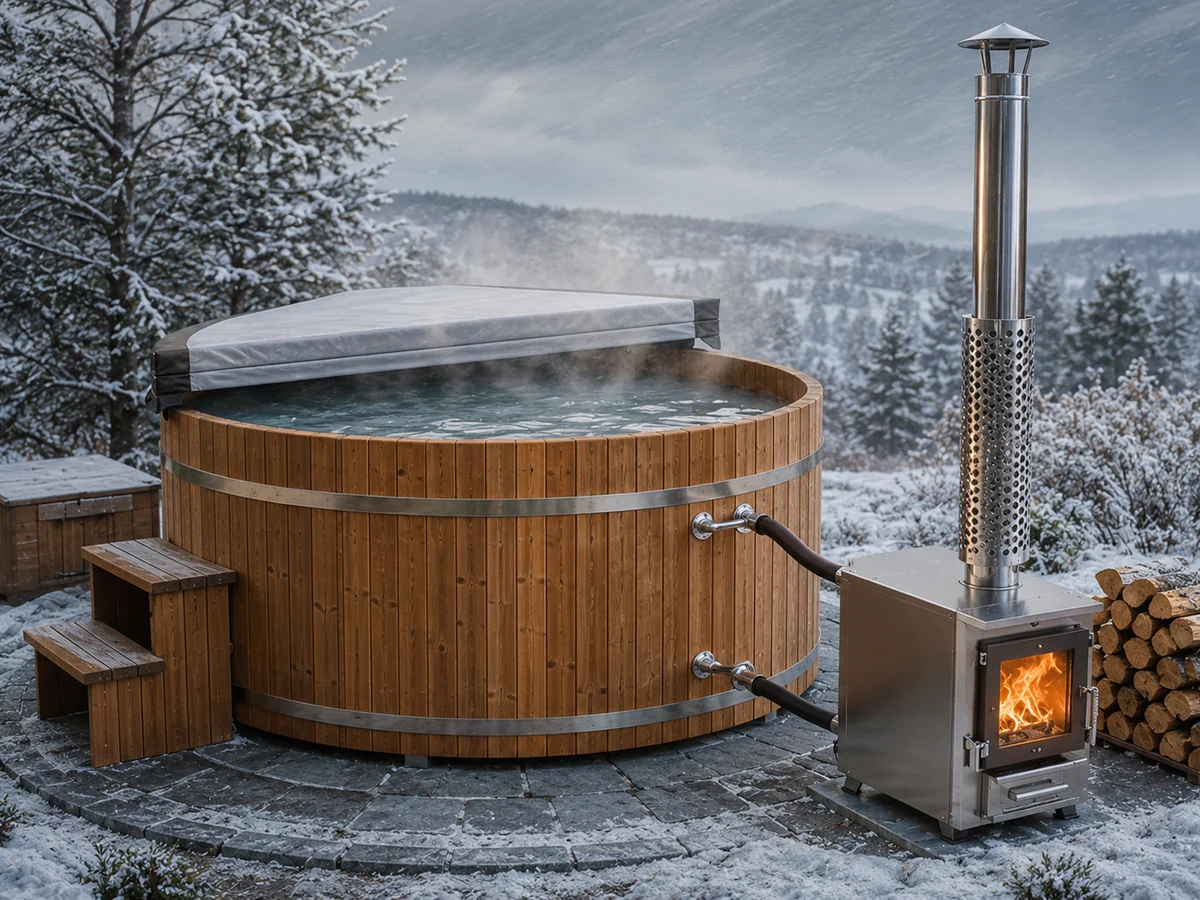
Концептуальная зимняя сцена эксплуатации; не является проверенным испытанием модели HACHILL или универсальным результатом времени нагрева. Положение крышки показано условно и должно соответствовать инструкциям выбранного изделия и безопасным расстояниям до печи и дымохода.
Объём воды и повышение температуры
Объем воды и требуемый подъем температуры создают базовую нагрузку на нагрев. Фиксируйте фактическую температуру исходной воды зимой, а не применяйте летние данные без изменений.
Печь и маршрут передачи тепла
Внутренние, внешние и другие одобренные схемы теплообмена имеют разные пути потока, вытеснение воды, открытость труб и требования к обслуживанию. Ни один маршрут не является автоматически быстрее во всех конфигурациях.
Циркуляция и температурная стратификация
Системы естественной циркуляции зависят от разности температур, положения труб, уклона и беспрепятственного потока. Одобренные насосные системы зависят от подбора насоса и сопротивления трубопроводов. Не добавляйте насос к системе естественной циркуляции, если производитель не одобрил такое изменение.
Качество топлива и контроль горения
Влажное топливо расходует часть энергии огня на испарение влаги вместо нагрева воды. Используйте только топливо, разрешенное инструкциями для печи и местными правилами. Не сжигайте окрашенную или обработанную древесину, склеенные плиты, бытовые отходы или топливо, исключенное производителем.
Покрытие, изоляция и теплопотери
Совместимая теплоизолирующая крышка может снизить потери тепла с поверхности, но она не должна создавать риск зазора или пожара вокруг печи или дымохода. Точную конструкцию и допустимое использование при нагреве необходимо проверять.
Погода, ветер и сезонные условия
Холодный воздух и ветер увеличивают потери тепла. При планировании участка следует учитывать зимнюю температуру, воздействие ветра, осадки, хранение топлива, хранение крышки, защиту от замерзания, процедуры слива и безопасный доступ вокруг оборудования сгорания.
Как оценить время нагрева перед растопкой печи
1. Подтвердите полезный объем воды
Используйте утверждённый объём заполнения для выбранной модели’. Не подставляйте внешний объём купели без учёта скамей, вытеснения печи, геометрии стен и рабочей линии заполнения.
2. Измерьте повышение температуры
Запишите начальную температуру смешанной воды, целевое значение температуры и разницу между ними.
Поскольку тепловая нагрузка зависит от конечной точки, ознакомьтесь с тем, как выбрать и проверить целевое значение температуры смешанной воды. Для общего контекста в области общественного здравоохранения, CDC рекомендует, чтобы температура воды в горячей ванне не превышала 40°C (104°F); фактический целевой показатель проекта может быть ниже.
3. Определите утверждённую конфигурацию
Подтвердите маршрут печи, метод циркуляции, схему труб, дымоход, топливо, крышку и метод измерения температуры.
4. Учитывайте реальные условия на объекте
Укажите температуру окружающей среды, ветер, влажность топлива, холодное заполнение или повторный нагрев, использование крышки и любые требования по очистке или доливу.
5. Добавьте эксплуатационный запас
Плановая эксплуатация должна предусматривать время на заполнение, розжиг, стабильную циркуляцию, смешивание, проверку температуры, проверки очистки, проверки водоподготовки, где применимо, и безопасное снижение интенсивности горения.
Используйте правильный уровень доказательности: теоретический расчет проверяет общую правдоподобность; контролируемое испытание модели устанавливает базовый уровень для одной утвержденной конфигурации; повторяющиеся записи с площадки — лучшая основа для повседневного планирования. Поддерживайте постоянными линию заполнения, метод смешивания и места измерений.
Внутренние и внешние печи по-разному влияют на систему отопления
На небольших экранах проводите пальцем по горизонтали, чтобы увидеть всю таблицу.
| Фактор | Внутренняя печь | Внешняя печь |
|---|---|---|
| Путь тепла | Интегрирована с водой ванны | Тепло передается через внешние соединения |
| Вытеснение воды | Может уменьшить полезный объём воды | Обычно вне зоны купания |
| Защита купающихся | Требуется защита от горячих поверхностей | Топка может быть отделена от купающихся |
| Зависимость от циркуляции | Зависит от точной внутренней конструкции | Сильно зависит от разводки труб и перепада высот |
| Внешние потери тепла | Может использовать меньше внешних подключений воды | Трубопровод и корпус печи могут увеличивать потери |
| Вывод о времени нагрева | Должен основываться на полной модели | Должен основываться на полном установленном контуре |
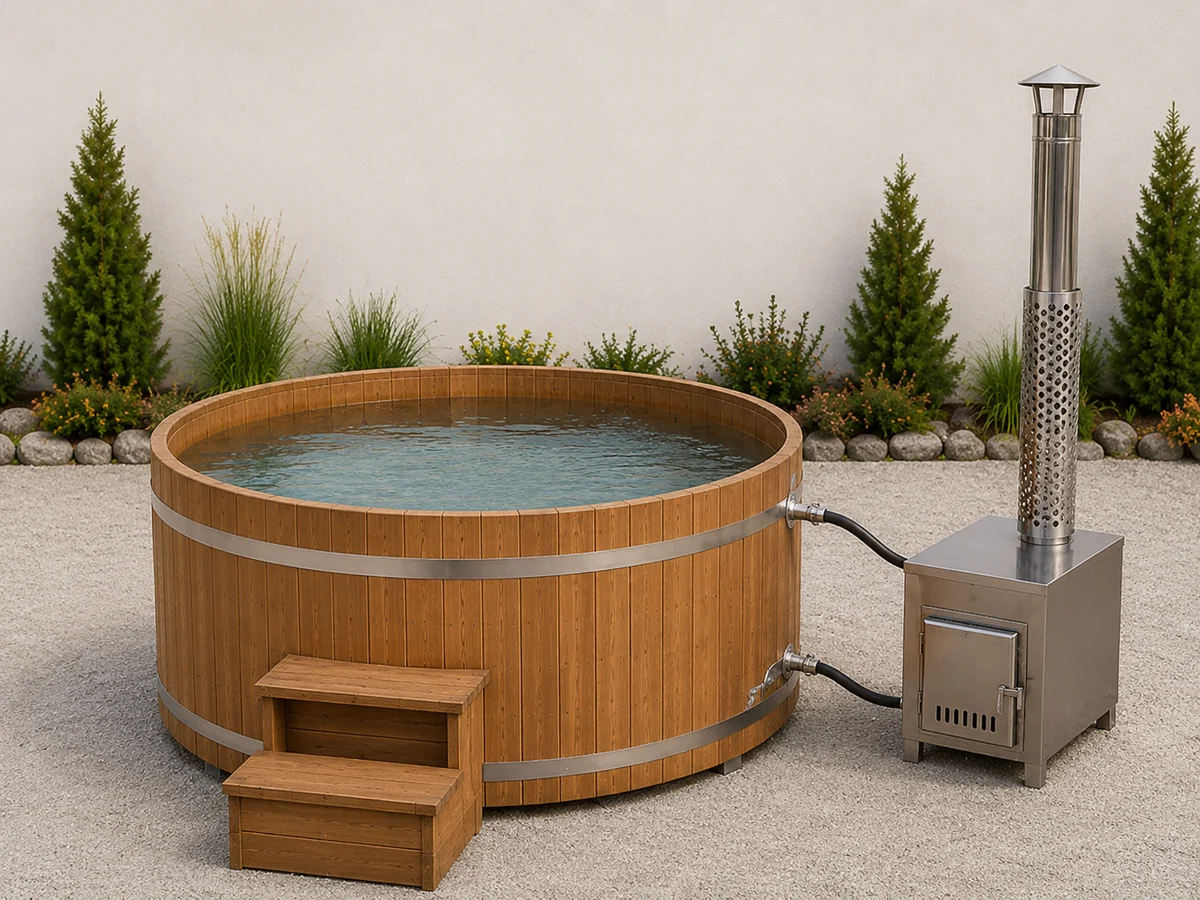
Концептуальная конфигурация с внешней печью; геометрия подключения, дымоход и зазоры должны соответствовать документации выбранного изделия и местным требованиям.
Правильный маршрут определяется не только временем нагрева. Доступ пользователей, полезный объём воды, очистка, доступное пространство, отделение горения, фундамент, схема трубопроводов, обслуживание и местные противопожарные требования также влияют на выбор.
Для более широкого коммерческого решения о покупке круглого формата, включая посадку, соответствие площадке, уход за водой и объём предложения, используйте Руководство по покупке круглой купели с дровяным подогревом.
Для полной взаимосвязи между горением, термосифонной или утверждённой насосной циркуляцией, тягой дымохода и температурой смешанной воды см. как купели с дровяным подогревом передают тепло.
Исходные данные по площадке и установке, влияющие на нагрев
Производительность нагрева нельзя отделять от монтажа. Подтвердите эти исходные данные, прежде чем применять результат испытания к реальному проекту:
- Фундамент и уровень: выдерживают заполненную нагрузку и сохраняют утвержденную геометрию печи и трубопровода.
- Трасса трубопровода: проверьте высоту подключения, уклон, диаметр и длину для выбранной системы.
- Дымоход и тяга: используйте сертифицированные компоненты и соблюдайте местные требования пожарной безопасности и дымоудаления.
- Слив и долив: учитывайте влияние очистки, частичного долива и температуры исходной воды.
- Условия замерзания: Определите процедуры слива, хранения и сезонной остановки.
Окончательные требования к фундаменту, дымоходу, сжиганию, дренажу и общественному использованию должны быть рассмотрены местным монтажником и компетентным органом.
Сезонные и эксплуатационные сценарии
Иллюстративный бытовой сценарий
Заполнение холодной водой в мягкую погоду
Частный пользователь наполняет купель в мягкую погоду с сухим топливом и ограниченным воздействием ветра. Нагрев может быть быстрее, чем в более холодных или более открытых условиях, но владельцу всё равно следует записать объём воды, начальную температуру и конечную температуру после перемешивания, прежде чем считать результат воспроизводимым.
Иллюстративный сезонный сценарий
Заполнение холодной водой зимой
Та же ёмкость начинает работу с более холодной водой и большими теплопотерями. Правильные действия — увеличить окно эксплуатации, защитить топливо от влаги и пересмотреть процедуры управления замерзанием, а не перетапливать печь.
Комбинированный технический сценарий
Проблема циркуляции с внешней печью
Печь горит нормально, но купель нагревается неравномерно. Возможные причины включают воздух в контуре, неподходящую геометрию подключения, ограниченный поток или недостаточное перемешивание. Оператор должен следовать утверждённой процедуре проверки, а не изменять трубопроводы или добавлять насос без рассмотрения производителем.
Комбинированный коммерческий сценарий
Планирование времени открытия курорта
Персонал выделяет только расчетное время топки и пропускает наполнение, розжиг, смешивание, проверку температуры и проверки ухода за водой. Исправленный график строится в обратном порядке от момента доступа гостей и закрепляет обученного оператора за каждым этапом подготовки.
Эти сценарии являются иллюстративными комбинированными примерами и не представляют реальные проекты клиентов HACHILL.
Безопасные способы сократить время нагрева
Цель — сократить предотвратимые теплопотери и нестабильное горение, а не выводить оборудование за его утверждённые пределы.
Подготовьте водяной контур перед розжигом
- Заполните до требуемого рабочего уровня.
- Подтвердите, что поверхности нагрева и водяной контур погружены в воду, как требуется.
- Откройте одобренный путь циркуляции.
- Проверьте на наличие видимых засоров или утечек.
- Подтвердите готовность дымохода и необходимых зазоров.
- Следуйте инструкциям по запуску выбранной модели’.
Используйте одобренное сухое топливо
Используйте правильно хранимое сухое топливо типа и размера, разрешенного инструкциями по плите. Архивированный справочник EPA США по Burn Wise поддерживает сухую, заправленную древесину и предупреждает о сжигании покрытых, окрашенных, обработанных давлением или клееных древесных продуктов и бытовых отходов. Программа EPA прекратила обновлять этот материал в 2025 году, поэтому выбранные инструкции по плите и текущие местные правила остаются под контролем.
Контролируйте потери тепла, не создавая пожарной опасности
Где это утверждено, используйте правильную утепленную крышку, защищайте открытые водопроводные трубы, поддерживайте изоляцию и снижайте воздействие ветра с помощью безопасного планирования участка. Не размещайте импровизированную изоляцию или ветрозащитные барьеры рядом с горячими поверхностями или компонентами дымохода.
Перемешивайте и измеряйте перед добавлением дополнительного топлива
Печь и угли могут продолжать передавать тепло после того, как вода приблизится к рабочей целевой температуре. Уменьшите интенсивность топки согласно инструкциям, дайте циркуляции поработать, перемешайте при необходимости и измерьте в репрезентативном месте, прежде чем добавлять топливо.
Когда медленный нагрев может указывать на проблему
Более медленный сеанс не всегда вызван холодной погодой. Сравните текущий сеанс с утверждённой базовой линией и предыдущими эксплуатационными записями.
На небольших экранах проводите пальцем по горизонтали, чтобы увидеть всю таблицу.
| Наблюдаемое состояние | Возможное объяснение | Безопасная реакция |
|---|---|---|
| Слабое или дымное горение | Влажное топливо, ограниченный воздух, зольные отложения или плохая тяга | Используйте только утверждённые плановые проверки; остановитесь, если дым попадает в рабочую зону. |
| Горячая обратка, но неравномерная температура в ванне | Расслоение, воздушная пробка или ограниченная циркуляция | Следуйте утверждённой процедуре смешивания и циркуляции; не изменяйте трубопровод. |
| Время нагрева увеличивается при повторных сеансах | Смена топлива, загрязнение, повреждение крышки или дрейф измерений | Сравните журналы и выполняйте только утверждённые работы по техническому обслуживанию. |
| Перегрев, кипение, пар или интенсивное движение воды | Поздняя подача топлива, заблокированный поток или нестабильная циркуляция | Предотвратите доступ и следуйте процедуре остановки производителя. |
Если результат существенно медленнее проверенного базового показателя, следуйте Устранение неисправностей нагрева купели с дровяным подогревом последовательности действий перед добавлением топлива или изменением маршрута циркуляции.
Остановите работу и обратитесь за квалифицированной помощью при заблокированной циркуляции, неконтролируемом кипении, паре, утечке, выбросе дыма, повреждённых компонентах дымохода или перемещении конструкции.
Какие доказательства времени нагрева должен запросить покупатель?
На небольших экранах проводите пальцем по горизонтали, чтобы увидеть всю таблицу.
| Пункт доказательства | Почему это важно | Поддерживаемое решение |
|---|---|---|
| Точная конфигурация ванны и печи | Предотвращает применение результата одной модели’ к другой | Сравнение продукции и котировка |
| Полезный объем воды и повышение температуры | Определяет реальную тепловую нагрузку | Техническая правдоподобность |
| Условия окружающей среды, крышка и изоляция | Показывает границу теплопотерь испытания’ | Сравнение объектов |
| Тип топлива, влажность и метод циркуляции | Объясняет условия горения и теплопередачи | Проверка воспроизводимости |
| Метод измерения и повторения испытаний | Предотвращает превращение локальной горячей точки или разового результата в главный показатель | Доказательства производительности |
| Утвержденные чертежи, объем компонентов и обязанности | Связывает заявление о производительности с приобретенной конфигурацией | Выпуск заказа на поставку и передача |
Доказательства нагрева на уровне модели следует рассматривать вместе с утверждённой конфигурацией, чертежами, компонентами и проверкой производства и контроля качества.
Полезное утверждение: в задокументированных условиях точная конфигурация «ёмкость и печь» нагрела указанный полезный объём воды от зафиксированной начальной температуры до зафиксированной температуры смешанной воды за измеренный период.
Количество мест, имиджевое фото, общая брошюра категории или номинальная мощность печи сами по себе не являются достаточным доказательством.
Планирование времени нагрева для курортов и коммерческих объектов
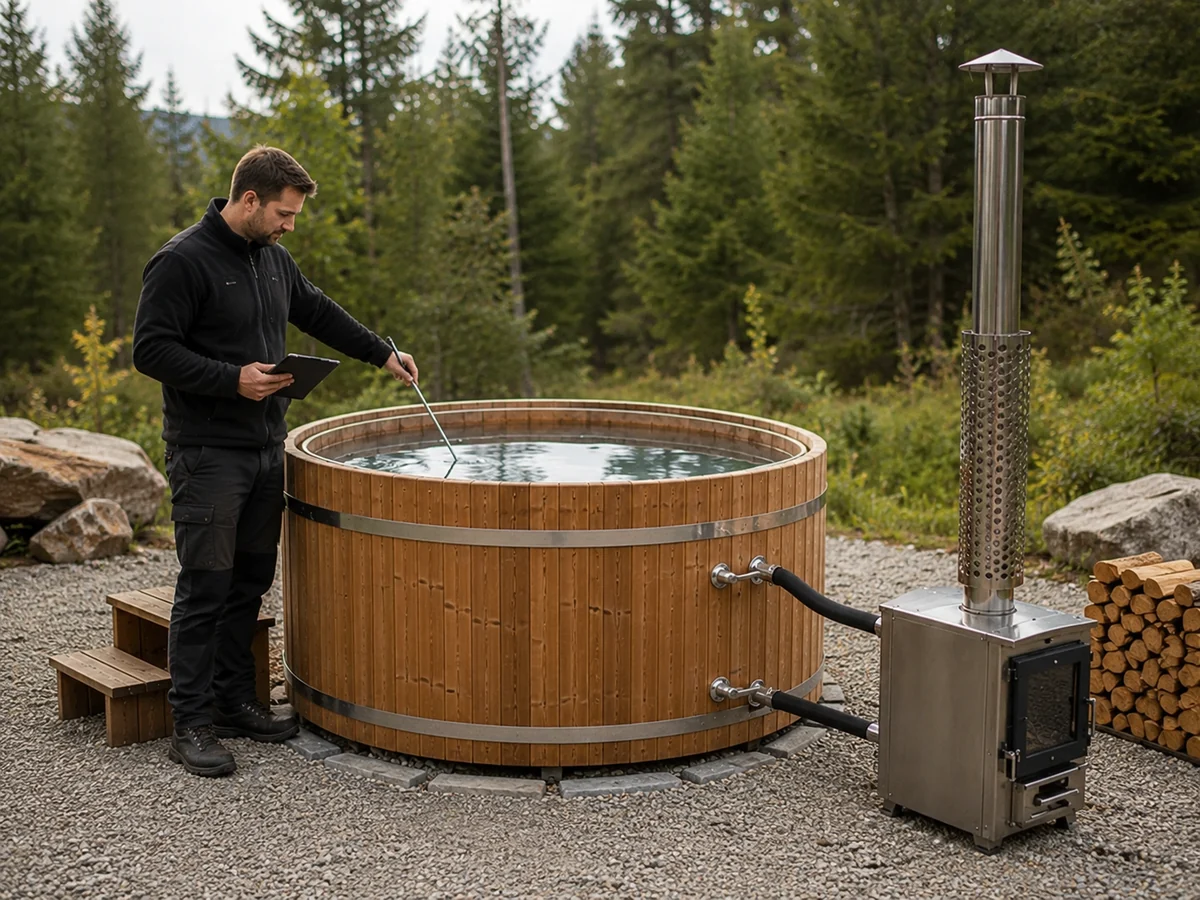
Концептуальная рабочая сцена; она не представляет конкретный объект клиента, утвержденную коммерческую установку или конкретную рабочую процедуру HACHILL.
Коммерческим покупателям следует согласовывать время нагрева с потоком гостей, персоналом, уборкой, коммунальными услугами и передачей через планирование оздоровительных проектов для отелей и курортов.
Планируйте в обратном порядке от времени открытия
- Осмотр площадки и оборудования
- Наполнение водой
- Подготовка топки и розжиг
- Нагрев
- Смешивание и проверка температуры
- Проверки водоподготовки
- Одобрение доступа гостей
- Контроль во время использования
- Очистка и остановка
Определите порядок действий оператора и мониторинга
Назначьте ответственность за управление огнем, регистрацию температуры, хранение топлива, качество воды, очистку, разделение гостей, аварийное отключение, обращение с золой и процедуры защиты от замерзания.
Подтвердите, подходит ли дровяная эксплуатация для объекта
На небольших экранах проводите пальцем по горизонтали, чтобы увидеть всю таблицу.
| Ответственность | Производитель / Поставщик | Покупатель / Объект | Монтажник / Местный специалист |
|---|---|---|---|
| Согласованная конфигурация продукта | Укажите подтвержденную модель и состав компонентов | Согласуйте предполагаемое использование и техническое задание на эксплуатацию | Подтвердите совместимость с объектом |
| Фундамент и доступ | Укажите известные габариты и нагрузки изделия, если они доступны | Предоставьте данные по объекту и ограничениям доставки | Спроектируйте и проверьте окончательный фундамент и маршрут перемещения |
| Соответствие дымохода и требованиям пожарной безопасности | Предоставьте инструкции по изделию и одобренные компоненты | Определите требования площадки и местные требования | Проверьте монтаж, зазоры и разрешения |
| Уход за водой и коммерческая гигиена | Укажите входящее оборудование и ограничения изделия | Определите политику эксплуатации, очистки и мониторинга | Проверьте местные требования к общественному здравоохранению и канализации |
| Журнал времени нагрева | Предоставьте базовые показатели для модели, если они доступны | Ведите журналы объекта и эксплуатационные запасы | Расследуйте отклонения, связанные с монтажом, если применимо |
Определите границу ответственности до передачи объекта
На небольших экранах проводите пальцем по горизонтали, чтобы увидеть всю таблицу.
| Эксплуатационная задача | Ключевые исходные данные | Почему это важно |
|---|---|---|
| Первоначальное холодное заполнение | Полный объем воды, температура исходной воды и время открытия | Обычно создает наибольшую единичную тепловую нагрузку |
| Восстановление температуры | Количество купающихся, экспозиция, частичное заполнение и состояние пожара | Определяет, практичны ли повторные сеансы |
| Очистка и повторное заполнение | Политика ухода за водой, объем слива и температура повторного заполнения | Может создавать дополнительный цикл ежедневного нагрева |
Раздельные: первоначальный нагрев, восстановление и ежедневная пропускная способность
Маршрут, проложенный по дереву, требует дополнительного осмотра, когда место проведения не может обеспечить обученную работу, утвержденный план дымохода и очистки, безопасное хранение топлива, совместимое с дымом место, надежный уход за водой, разделение гостей, достаточное время подготовки, защиту от замерзания и требуемые местные разрешения. Эти эксплуатационные ограничения могут сделать другой маршрут отопления более практичным для некоторых объектов.
Контрольный список времени нагрева перед покупкой или первым использованием
- Точная модель и конфигурация чана
- Точная печь и путь передачи тепла
- Полезный объём воды
- Начальная температура воды
- Целевая температура
- Требуемый общий подъем температуры
- Внутренняя или внешняя печь
- Естественная или одобренная принудительная циркуляция
- Допустимый тип топлива
- Состояние влажности топлива
- Конфигурация укрытия и изоляции
- Температура окружающей среды и воздействие ветра
- Проверка дымохода и зазоров
- Фундамент и дренаж
- Процедура защиты от замерзания
- Метод контроля температуры
- Ответственность оператора
- Условия испытаний поставщика
- Местные требования по пожарной безопасности, дымоудалению и монтажу
Применение: Жилое использование, курорт, спа или другое коммерческое применение
Вместимость: Ожидаемое количество пользователей, полезный объем воды и ежедневные сеансы
Климат: Летние и зимние температуры, ветер и экспозиция
Способ нагрева: Предпочтение по внутренней или внешней печи и циркуляции
Место: План фундамента, дымохода, дренажа, доступа и защиты от замерзания
Топливо: Доступный одобренный тип древесины, хранение и контроль влажности
Уход за водой: Процедура заполнения, слива, очистки, санитарной обработки и повторного заполнения
Коммерческая эксплуатация: Время работы, обученный оператор, потребности в мониторинге и восстановлении
Закупки: Количество, брендирование, упаковка, пункт назначения и объем документации
Минимальные исходные данные для проверки на уровне модели
Окончательный выбор зависит от фактической вместимости по пользователям, частоты использования, среды установки, климата, фундамента, условий топлива, дренажа, режима ухода за водой, доступа для транспортировки, требований проекта, местных нормативных требований и подтвержденных данных производителя.
Справочные материалы по безопасности и доказательствам
- NIST Chemistry WebBook: теплоемкость жидкой воды для инженерного обоснования предварительного водно-энергетического расчёта.
- Руководство CDC по безопасности гидромассажных ванн для общего контекста безопасности при максимальной температуре воды 104°F (40°C).
- Архивные практики Burn Wise US EPA для общих принципов сухого топлива и запрещённого топлива. Программа Burn Wise прекратила обновлять этот материал в 2025 году; действующие инструкции к прибору и местные правила остаются определяющими.
Эти источники подтверждают только общие инженерные или связанные с безопасностью принципы. Они не устанавливают проверенное время нагрева, сертификацию, одобрение установки или соответствие требованиям рынка для какой-либо модели HACHILL.
Резюме решения:
- Оценка на основе полезного объема воды и требуемого повышения температуры.
- Оцените полную конфигурацию ванны, печи и циркуляции, а не только мощность печи.
- Добавьте запас на площадку и эксплуатацию для топлива, погоды, использования крышки, смешивания и проверки.
- Запросите документированные условия испытаний, прежде чем принимать заявление о времени нагрева для конкретной модели.
Часто задаваемые вопросы
Сколько времени обычно занимает нагрев купели с дровяным подогревом?
Примерно 2–4 часа — полезный предварительный диапазон планирования для многих систем, но он не универсален. Уточните точный объем воды, повышение температуры, конфигурацию печи, маршрут циркуляции, состояние топлива, погоду и метод испытаний для выбранной системы.
Всегда ли большая дровяная печь нагревает купель быстрее?
Нет. Время нагрева зависит от всей системы: печи, теплообменника, циркуляции и купели. Большая номинальная мощность не гарантирует, что больше тепла безопасно поступит в воду.
Почему купель с дровяным подогревом нагревается дольше зимой?
Зимняя эксплуатация часто сочетает более холодную заливочную воду с большими теплопотерями через поверхность воды, стенки и открытые компоненты. Ветер и влажное топливо могут дополнительно увеличить время нагрева.
Нагревает ли внутренняя печь быстрее, чем внешняя?
Не обязательно. Внутренние печи имеют короткий путь нагрева, тогда как внешние системы в большей степени зависят от конструкции соединения и циркуляции. Сравнивайте полностью протестированные конфигурации, а не только расположение печи.
Может ли крышка сократить время нагрева?
Совместимый утеплённый чехол может снизить потери тепла с поверхности. Его следует использовать в соответствии с инструкциями к изделию и держать вдали от опасных условий эксплуатации печи или дымохода.
Как рассчитать время нагрева по объёму воды?
Оцените энергию для воды по формуле литры × повышение температуры × 0.00116 kWh, затем разделите на обоснованную оценку среднего чистого тепла, подведённого к воде, — а не на паспортную мощность печи. Добавьте запас на потери через поверхность, трубы, ванну и на потери при горении.
Что поставщик должен указать в заявлении о времени нагрева?
Укажите точную модель, полезный объём воды, начальную и целевую температуру, условия окружающей среды, конфигурацию печи, способ циркуляции, состояние топлива, наличие крышки и метод измерения.
Подготовьте техническое задание на нагрев дровяной горячей ванны
Квалифицированная проверка требует большего, чем целевое время нагрева. Подготовьте предполагаемое применение, полезный объём воды, начальную и целевую температуры, климат, предпочтения по печи и циркуляции, топливо, фундамент, дымоход, дренаж, режим ухода за водой, доступ для доставки и график эксплуатации.
Для коммерческих проектов или проектов OEM также предоставьте суточную пропускную способность, данные о персонале, целевой рынок, количество, брендинг, упаковку и требуемые технические документы или документы о соответствии.
Окончательные характеристики нагрева, установка и коммерческая пригодность должны быть подтверждены для выбранной модели и утверждённой конфигурации проекта.
Отправить техническое задание на проект дровяной горячей ванны
Технический объем и границы обзора: Это руководство HACHILL объясняет переменные нагрева дровяной горячей ванны, предварительную оценку тепловой нагрузки, условия эксплуатации и входные данные для B2B-проекта. Это не руководство по установке для конкретной модели и не сертификат производительности. Точный объем воды, конфигурация печи, характеристики нагрева, дымоход, зазоры, топливо, уход за водой и коммерческая пригодность должны быть подтверждены для выбранного продукта и целевого рынка производителем, установщиком и соответствующими местными специалистами.