Per una sauna elettrica tradizionale convenzionale, un'aspettativa di pianificazione utile è all'incirca nell'intervallo dei 30 minuti abbondanti fino a circa un'ora in condizioni adeguate, ma non esiste un tempo di riscaldamento universale.
Quella fascia di pianificazione è una sintesi delle attuali indicazioni Harvia, non una garanzia per l’intera categoria: un esempio di timer Harvia dice che la sauna impiega circa un’ora per riscaldarsi, mentre la diagnostica Harvia per il riscaldamento lento dice che in quel contesto di risoluzione dei problemi la temperatura desiderata viene di solito raggiunta in 35–45 minuti. Il tempo effettivo di riscaldamento della sauna cambia con volume del locale, adattamento riscaldatore-locale, vetro o altre superfici non isolate, isolamento, temperatura iniziale, ventilazione, aperture delle porte, condizioni delle pietre, comportamento del controllo e—soprattutto—cosa significa “pronto” e dove viene misurata la temperatura.
Non confrontare due tempi di riscaldamento della sauna finché entrambe le affermazioni non utilizzano la stessa condizione di partenza, condizione finale e punto di misurazione.
Questa guida si concentra su riscaldamento di una sauna elettrica tradizionale. Le cabine a infrarossi, le saune a legna e i bagni turco usano fonti di calore, logica di controllo e criteri di prontezza diversi, quindi le loro dichiarazioni di riscaldamento non devono essere confrontate direttamente con i dati di questa pagina. Per il contesto della temperatura di esercizio, usare HACHILL’s guida alle temperature della sauna.
Quanto tempo ci vuole per riscaldare una sauna? Inizia dalle condizioni di test
I risultati di ricerca spesso riducono il riscaldamento della sauna a un unico numero. Ciò è utile per una pianificazione approssimativa, ma tecnicamente incompleto. Una cabina esterna fredda con grandi superfici vetrate, una stanza interna compatta e isolata e una stufa “sempre pronta” possono produrre risposte molto diverse anche quando ogni fonte utilizza la frase “tempo di riscaldamento”.”
Punti di riferimento attuali del produttore
Esempio di timer Harvia
Circa un'ora
Le attuali istruzioni rapide di Harvia per riscaldatori a controllo meccanico utilizzano un esempio di timer in cui la sauna impiega circa un'ora a riscaldarsi prima del bagno.
Contesto di risoluzione dei problemi Harvia
Solitamente 35–45 minuti
L’attuale diagnostica Harvia per il riscaldamento lento indica che la temperatura desiderata viene solitamente raggiunta in 35–45 minuti nel suo contesto di verifica del termostato, e invita inoltre gli utenti a controllare potenza del riscaldatore, pietre, ventilazione e comportamento del sensore o del termostato quando il riscaldamento richiede un tempo significativamente maggiore.
Architettura speciale
Non ogni orologio è un avvio a freddo
Il design “ever-ready” di Harvia Forte mantiene calda la camera delle pietre in standby, quindi il comportamento di prontezza in pochi minuti dichiarato parte da uno stato fondamentalmente diverso rispetto a una stufa convenzionale ad avvio a freddo.
Perché un intervallo pubblicato non è una promessa di prestazioni HACHILL
Il riferimento di riscaldamento di un produttore terzo di stufe descrive l'attrezzatura di quel produttore e le condizioni dichiarate. Non stabilisce il tempo di riscaldamento di ogni sauna, di ogni architettura di stufa o di qualsiasi modello HACHILL non testato.
Per la pianificazione del progetto, considera il riscaldamento iniziale come un risultato a livello di ambiente. Definire stanza, stufa, vetro, isolamento, clima del sito, ventilazione, schema operativo e metodo di misurazione prima di usare un valore temporale per acquisti, materiale di vendita o accettazione della messa in servizio.
Per la selezione di modello e stufa, utilizzare la Guida all'Acquisto di Riscaldatori per Sauna e la più dettagliata guida al dimensionamento della stufa e alla progettazione termica.
Definisci l'orologio prima di confrontare i tempi di riscaldamento della sauna
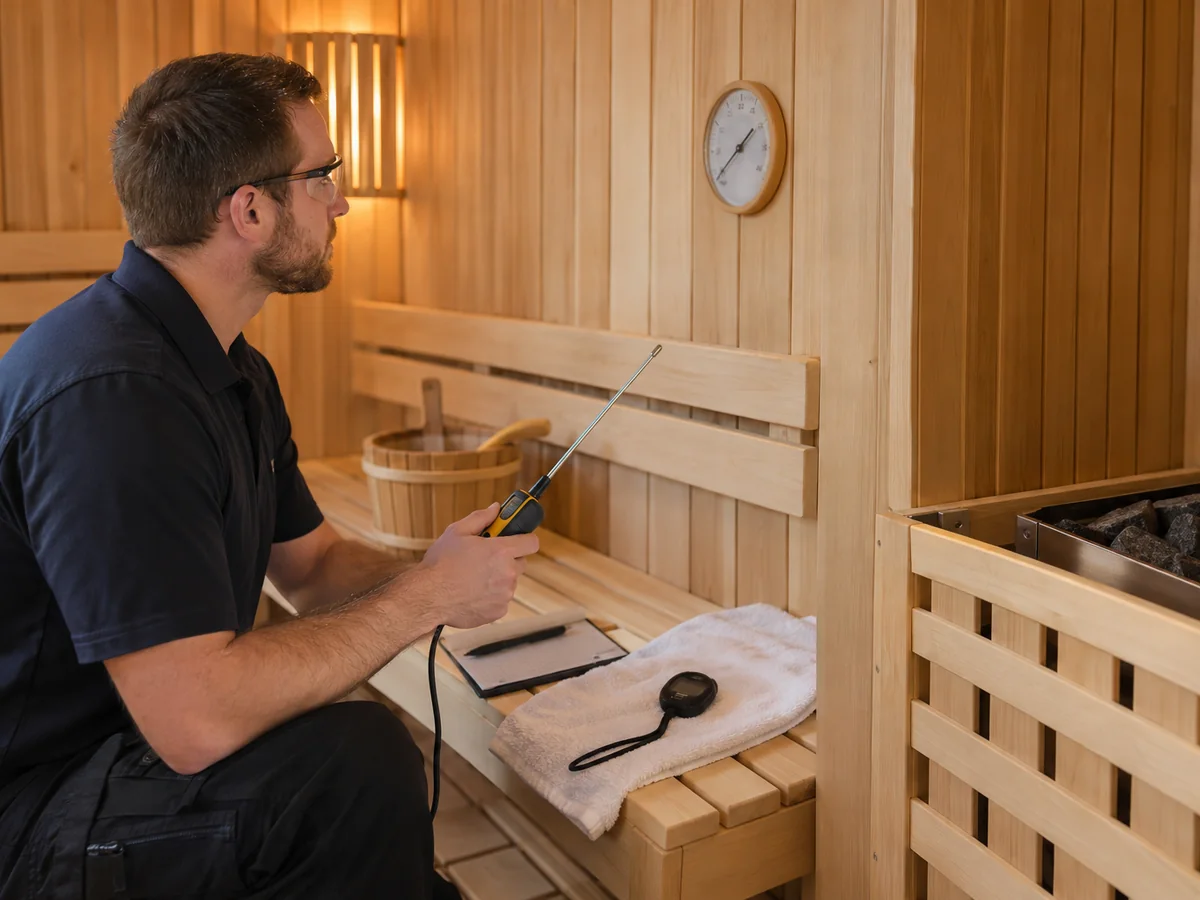
Il modo più efficace per confrontare le dichiarazioni sui tempi di riscaldamento della sauna è definire tre elementi del test prima di guardare il risultato.
Condizione iniziale: avvio a freddo, standby o pietre preriscaldate?
Una stanza che parte vicino alla temperatura ambiente interna non affronta lo stesso carico di una sauna esterna che è rimasta per ore al freddo. Allo stesso modo, un riscaldatore sempre pronto con camera delle pietre calda non parte dallo stesso stato di un riscaldatore convenzionale a freddo.
Registrare la temperatura ambiente iniziale, se la stanza e le pietre erano già calde, la condizione della porta, la modalità di ventilazione e lo stato del riscaldatore al tempo zero.
Condizione finale: cosa significa “pronto”?
“Pronto” può significare che il controller ha raggiunto il suo setpoint, che la zona occupata della panca superiore ha raggiunto la condizione operativa concordata del progetto, che le pietre sono pronte a produrre la risposta di vapore prevista, o che la struttura ha raggiunto un punto di rilascio di commissioning definito.
Questi endpoint possono verificarsi in momenti diversi. Harvia mantiene un percorso di risoluzione dei problemi separato per il caso in cui la sauna si riscalda rapidamente ma le pietre non sono abbastanza calde, il che è un utile promemoria che la temperatura dell’aria ambiente da sola non prova un’identica prontezza delle pietre.
Punto di misurazione: il sensore non è l'intera stanza
L'aria della sauna si stratifica verticalmente, e le letture vicino al riscaldatore, al soffitto, alla porta, all'ingresso, alla panca superiore e a quella inferiore possono differire. Il sensore di controllo fa parte del sistema del riscaldatore; non è automaticamente lo stesso punto di misurazione utilizzato per un confronto delle prestazioni della stanza.
Per un registro di riscaldamento utile, mantenere la posizione di misurazione fissa e documentata. Non spostare un sensore di sicurezza o di controllo per far sembrare migliore un'affermazione sul riscaldamento.
Cosa modifica il tempo di riscaldamento della sauna?
Volume dell'ambiente e adattamento stufa-ambiente
La potenza del riscaldatore è importante, ma l'etichetta sul riscaldatore è utile solo quando è abbinata alla stanza reale. Le attuali linee guida Harvia per il dimensionamento utilizzano esplicitamente il volume della stanza e aggiungono carico per vetro e altre superfici non isolate o che accumulano calore. La selezione finale del riscaldatore dovrebbe comunque seguire l'intervallo approvato della stanza e le istruzioni per il modello esatto.
Una stufa sottodimensionata può impiegare più tempo a raggiungere la condizione desiderata e potrebbe funzionare a potenza elevata per periodi più lunghi. Anche il sovradimensionamento non è una scorciatoia universale; la selezione finale richiede comunque l'intervallo di volume ambiente approvato dal produttore, le distanze di sicurezza, i controlli e il contesto elettrico.
Vetro, isolamento e clima esterno
Le porte e le pareti in vetro possono modificare sostanzialmente la base di dimensionamento del riscaldatore. L’attuale guida Harvia al dimensionamento considera il vetro e altre superfici non isolate o che accumulano calore come carico effettivo aggiuntivo, motivo per cui due ambienti con lo stesso volume geometrico possono non richiedere la stessa scelta del riscaldatore.
Per questo due saune con le stesse dimensioni fisiche possono riscaldarsi in modo diverso. Una può avere superfici in legno isolate in un ambiente interno stabile; un'altra può avere una grande parete in vetro, più superfici esposte e un avvio a freddo in ambiente esterno.
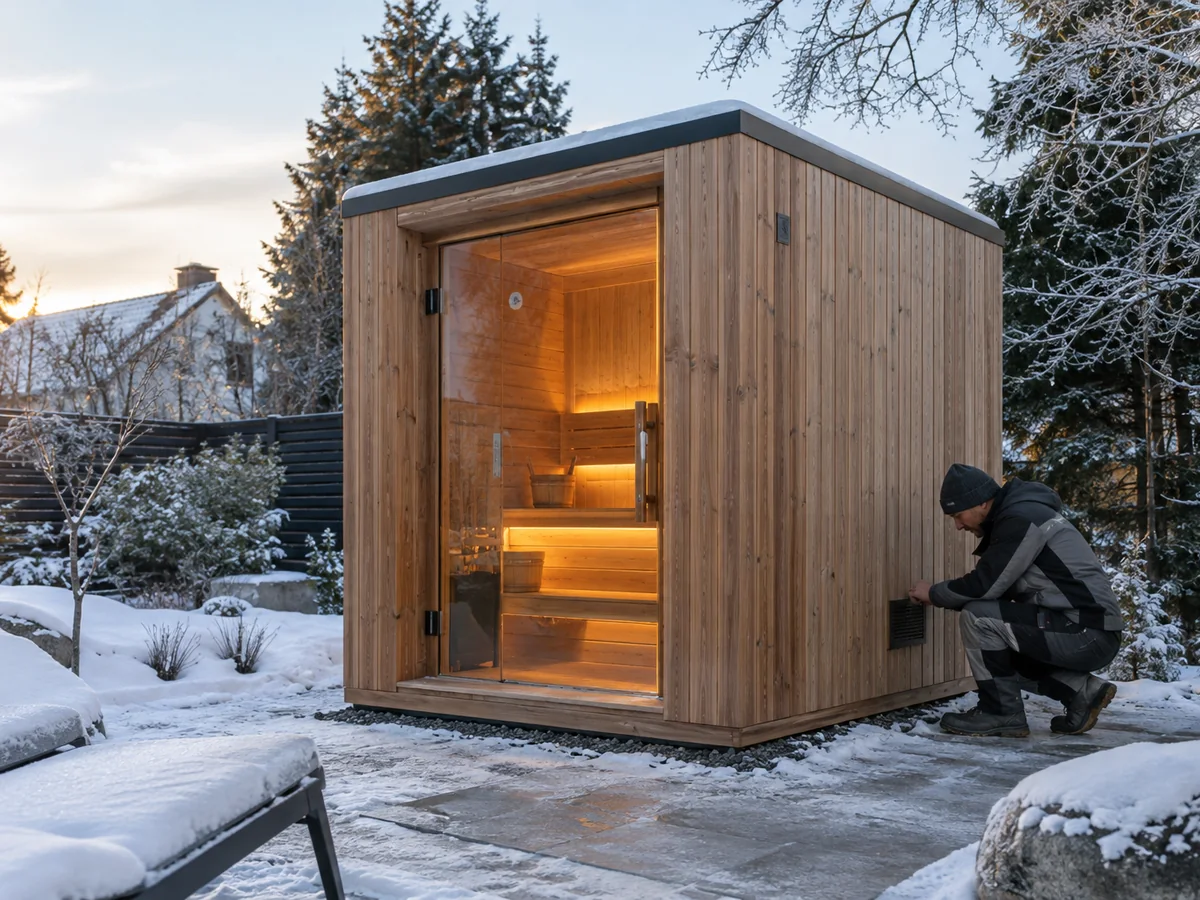
Per i progetti da esterno, confrontare l'involucro e la soluzione di riscaldamento con le condizioni reali del sito invece di trasferire un'aspettativa di riscaldamento da interno. HACHILL gamma di saune da esterno deve essere valutato con il clima reale, la vetratura, le utenze e i dati del sito.
Ventilazione, uso della porta, pietre e comportamento del sensore
Le prestazioni di riscaldamento osservate possono cambiare anche quando l’aria lascia il locale più rapidamente del previsto, la porta viene aperta ripetutamente, le pietre limitano il flusso d’aria attraverso il riscaldatore o il rilevamento del controllo fa ciclare il riscaldatore prima che la zona occupata prevista raggiunga il target di progetto.
L’attuale guida Harvia per il riscaldamento lento indirizza gli utenti a verificare capacità della stufa, condizione e disposizione delle pietre, ventilazione e comportamento di termostato/sensore anziché presumere che l’unica risposta sia aspettare più a lungo.
Non bypassare un dispositivo di limite massimo, non spostare un sensore di sicurezza al di fuori delle istruzioni dell'apparecchio, non chiudere ciecamente la ventilazione richiesta e non modificare l'impianto elettrico fisso per cercare un riscaldamento più rapido. Utilizzare la documentazione esatta della stufa/del controller e rivolgersi a installatori locali qualificati ove richiesto.
Come confrontare i dati di riscaldamento pubblicati per le saune senza essere tratti in inganno
Matrice di confronto dei dati di riscaldamento
| Fonte / sistema | Riferimento pubblicato | Condizioni dichiarate o implicite | Cosa si può concludere | Cosa non si deve concludere |
|---|---|---|---|---|
| Guida Harvia per il controllo meccanico rapido | Circa un'ora nel suo esempio di timer | Caso d'uso convenzionale di stufa elettrica per sauna | Circa un'ora è l'esempio di pianificazione dichiarato da Harvia per quel contesto d'uso del timer | Ogni sauna o ogni modello Harvia si riscalda esattamente in un'ora |
| Diagnostica Harvia per riscaldamento lento | Di solito 35–45 minuti per raggiungere la temperatura desiderata nel suo contesto di verifica del termostato | Procedura diagnostica con il riscaldatore in funzione e la stanza controllata per il normale comportamento di riscaldamento | Un riferimento più breve può essere valido in un contesto di troubleshooting definito | 35–45 minuti è un limite di accettazione universale per ogni sauna elettrica |
| Architettura ever-ready Harvia Forte | Pronta per la sauna entro pochi minuti dalla selezione di HI | La camera delle pietre viene mantenuta calda in standby | Lo stato iniziale della stufa può cambiare sostanzialmente il tempo | Pochi minuti sono comparabili a una stufa tradizionale con avvio a freddo |
Se due dichiarazioni di riscaldamento non utilizzano lo stesso stato iniziale, la stessa base ambientale, la stessa architettura della stufa, la stessa condizione finale e lo stesso punto di misurazione, trattare il confronto come non ancora equivalente.
Caso di test di settore: la disposizione delle pietre ha modificato il risultato a un'ora
Harvia ha testato la stessa sauna da 10 m³ e la stessa stufa da 7 kW con diverse condizioni delle pietre
Harvia riporta un test con una sauna da 10 m³ e una stufa Cilindro PC70E da 7 kW. Dopo un'ora, il risultato della temperatura ambiente differiva di circa 10°C tra pietre nuove disposte in modo compatto e pietre nuove disposte in modo allentato secondo il metodo di test. Harvia ha attribuito il risultato migliore a un flusso d'aria migliorato attraverso la stufa.
Perché è importante: anche quando il volume dell'ambiente e la potenza della stufa restano invariati, la manutenzione e la disposizione delle pietre possono modificare il comportamento di riscaldamento. Una sauna lenta non è quindi automaticamente un problema di stufa sottodimensionata.
Limite delle evidenze: questo è il test pubblicato da Harvia con le sue dichiarate configurazioni di ambiente, stufa e pietre. Non è una regola universale dei 10°C e non sono dati di test HACHILL.
Fonte: Harvia — Cambiare le pietre della sauna fa riscaldare la sauna più velocemente.
Applicazioni di settore: saune domestiche, da esterno e commerciali
I progetti residenziali e da esterno richiedono margini di pianificazione diversi
Residenziale da interno
Condizioni di partenza stabili
Una sauna da interno compatta e isolata, con una stufa elettrica correttamente abbinata, può essere gestita secondo un programma di preriscaldamento ripetibile una volta che il proprietario ha verificato il comportamento reale del locale.
Esterno / glamping
L'avvio a freddo e la vetratura sono importanti
Una cabina sauna da esterno o una sauna cubica può partire da temperature molto più basse e può utilizzare più vetro. La progettazione deve basarsi sulle reali condizioni stagionali di partenza, non sul risultato del collaudo in clima caldo o in ambiente interno.
Rivenditore / fornitura per progetti
Non vendere un tempo senza una base di test
Per preventivi e documenti di progetto, indicare stufa, locale, clima, vetratura, punto finale del test e base di misura alla base di qualsiasi dichiarazione sul tempo di riscaldamento, invece di pubblicare un unico valore valido per l'intera categoria.
Ridisegno con frontale in vetro dopo la scelta della stufa
Situazione: una sauna viene inizialmente scelta con un frontale prevalentemente isolato, poi il progetto passa a una vetratura sostanzialmente maggiore senza riaprire la verifica termica.
Perché il risultato del preriscaldamento può cambiare: Le attuali linee guida di dimensionamento di Harvia trattano esplicitamente vetro e altre superfici non isolate o che accumulano calore come carico efficace aggiuntivo per la selezione del riscaldatore.
Risposta corretta al progetto: riaprire la base di dimensionamento della stufa, la verifica elettrica/del sito e il piano di accettazione del riscaldamento. Non promettere il vecchio tempo di riscaldamento solo perché le dimensioni esterne del locale non sono cambiate.
Le strutture commerciali richiedono dati di recupero, non solo il riscaldamento a freddo
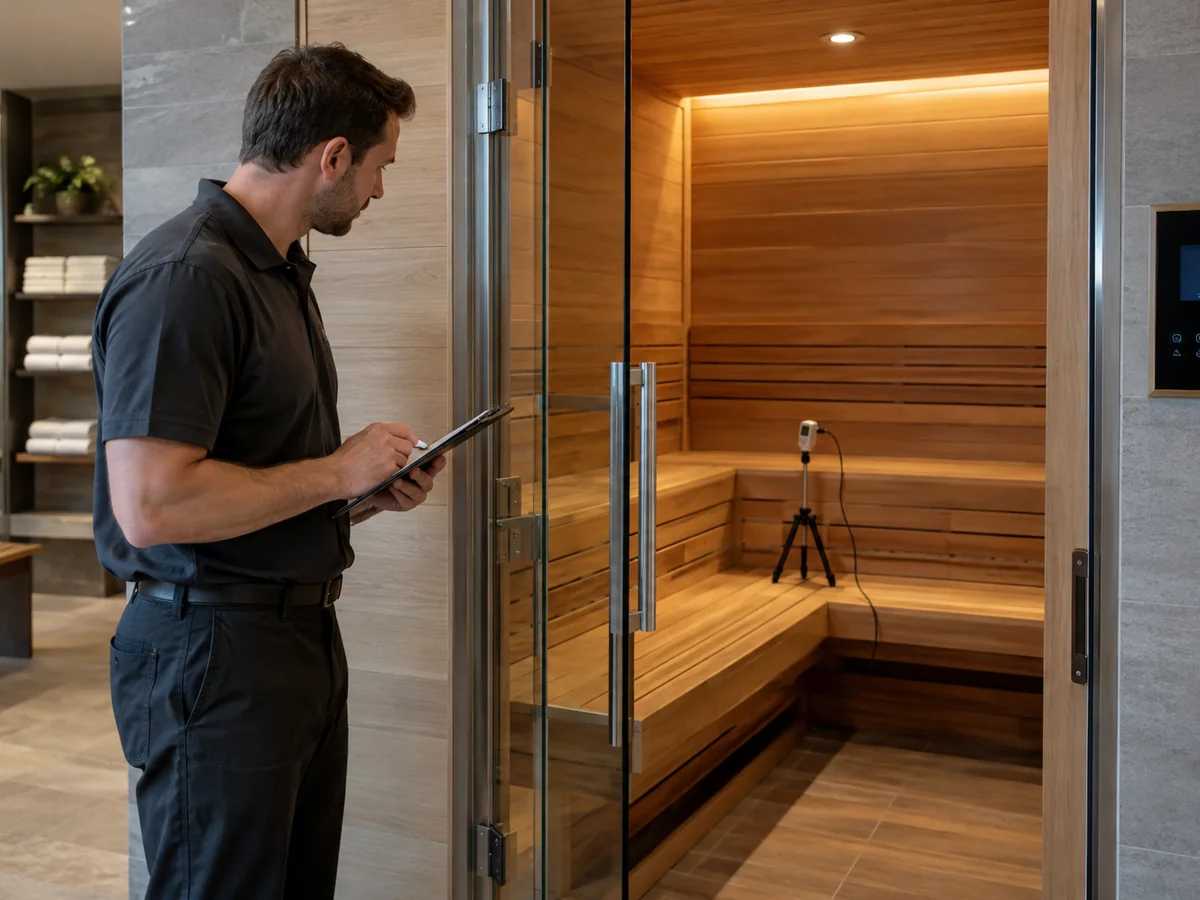
Hotel, resort, palestre e strutture wellness condivise hanno una domanda operativa diversa. Una sauna può raggiungere con successo il setpoint di apertura e comunque avere difficoltà dopo ripetute aperture della porta e ricambio degli utenti.
Ciò significa che riscaldamento iniziale, mantenimento stabile e recupero a sala occupata devono essere trattati come questioni prestazionali separate. L'operatore commerciale è interessato a sapere se il locale ritorna alle condizioni operative concordate secondo il programma effettivo, non solo se ha raggiunto la temperatura una volta prima dell'apertura.
La sauna dell'hotel raggiunge il setpoint prima dell'apertura ma resta indietro nei periodi di punta
Non passare direttamente a un setpoint più alto. Per prima cosa confrontate le letture sincronizzate, i cicli della stufa, gli eventi della porta, lo stato della ventilazione e le temperature della zona occupata. Il risultato può indicare carico di recupero, ventilazione, dispersioni dell'involucro o rilevamento—non semplicemente “una stufa lenta”.”
Quando un riscaldamento lento richiede la diagnosi invece di un'attesa più lunga
Un riscaldamento più lungo del previsto è un'informazione diagnostica utile quando la base di confronto è nota. Diventa molto meno utile quando l'aspettativa iniziale derivava da una stufa, un ambiente, un clima o un punto di misura diversi.
Eseguite un controllo del sistema prima di modificare la stufa o il setpoint
- Verificate l'orologio: stessa temperatura ambiente iniziale, stessa condizione target/finale e stesso punto di misura.
- Verificate l'ambiente: volume interno effettivo, vetratura, isolamento e altre superfici non isolate.
- Verificate la stufa: modello esatto, intervallo di ambiente approvato dal produttore e stato operativo.
- Verificate il sito: condizione interno/esterno e temperatura ambiente stagionale rappresentativa.
- Confermare il percorso dell'aria: disposizione di ventilazione approvata, condizione della porta e perdite evidenti.
- Confermare le pietre: tipo, condizione e posizionamento corretti secondo le istruzioni della stufa.
- Confermare controlli e rilevamento: posizione del sensore approvata e comportamento normale del controller/dispositivi di protezione.
- Ripetere la stessa prova: dopo una correzione verificata, ripetere lo stesso stato di avvio e lo stesso metodo di misurazione.
la stufa esatta non è nota, vetro/isolamento sono cambiati dopo la selezione, le condizioni di avvio in esterno non sono state registrate, il punto di misurazione è stato spostato, ventilazione o uso della porta sono cambiati, i dispositivi di protezione scattano, oppure il confronto si basa sulle condizioni ambientali/di prova di un altro produttore.
Per una revisione a livello di progetto, registrare le informazioni seguenti prima di richiedere un impegno sui tempi di riscaldamento o una raccomandazione per la risoluzione dei problemi.
| Ingresso | Registro | Perché è importante |
|---|---|---|
| Ambiente | Dimensioni interne finite, superfici vetrate/non isolate, base di isolamento | Definisce il carico termico da riscaldare |
| Stufa | Modello esatto, configurazione di controllo/sensore e stato operativo | Impedisce confronti a livello di categoria |
| Avvia | Temperatura ambiente, stato di stanza/pietre, stato di porta e ventilazione | Definisce il tempo zero |
| Fine | Criterio dichiarato di target o di prontezza al bagno | Definisce quando si arresta il cronometro |
| Misurazione | Strumento e posizione fissa | Mantiene comparabili i retest |
| Eventi | Aperture delle porte, uso dell'acqua, modifiche ai controlli, allarmi o interruzioni | Spiega le perturbazioni nella curva |
Inizia con HACHILL’s percorsi di prodotto sauna, quindi inviare le dimensioni interne finite, vetratura, base di isolamento, clima del sito, preferenza del riscaldatore, alimentazione elettrica disponibile, dovere operativo previsto e metodo di prova proposto attraverso il percorso di preventivazione di progetto. Qualsiasi obiettivo di riscaldamento del progetto dovrebbe essere legato alla configurazione selezionata e alle condizioni di accettazione dichiarate piuttosto che a una promessa generica di categoria.
Questo articolo utilizza materiale di supporto corrente del produttore e materiale di prova pubblicato dal produttore per spiegare come interpretare le dichiarazioni di riscaldamento della sauna elettrica tradizionale. I test esterni sono identificati come test esterni; gli scenari illustrativi sono identificati come scenari. Questo articolo non rivendica risultati indipendenti di test di riscaldamento HACHILL, esiti dei clienti, revisione medica o prestazioni universali del riscaldatore.
- Harvia — Istruzioni rapide del riscaldatore per modelli con comandi meccanici
- Harvia — La sauna si riscalda lentamente
- Harvia — La sauna si riscalda rapidamente, ma le pietre non sono abbastanza calde
- Harvia — Selezione della potenza del riscaldatore: volume della stanza e superfici non isolate
- Harvia — Test di riscaldamento pubblicato in condizioni con pietre
- Harvia — Riscaldatore Forte Ever-Ready: architettura con stato iniziale diverso
Controllo delle evidenze: 26 settembre 2026. Le istruzioni del produttore e la documentazione del modello possono cambiare; verificare il documento vigente per l’apparecchiatura esatta prima di trattare un tempo di riscaldamento come requisito di accettazione del progetto.