Kort antwoord: Een vergelijking tussen een cold plunge en een koude douche kent geen universele winnaar. Een douche is de optie met de laagste drempel als u vooral op een praktische manier aan koud water wilt worden blootgesteld. Een speciaal daarvoor bestemde plunge is eerder te rechtvaardigen wanneer de onderdompeling zelf, herhaalbare bedrijfsomstandigheden of gedeeld gebruik van belang zijn. Het huidige onderzoek toont niet aan dat een plunge universeel gezonder is, alleen omdat een groter deel van het lichaam wordt ondergedompeld.
De nuttige aankoopvraag is niet simpelweg “Welke optie biedt meer voordelen?”. De vraag is of u daadwerkelijk een speciale omgeving voor onderdompeling nodig hebt, of dat de douche die u al hebt het probleem voldoende oplost.
Splits dit op in drie vragen: hoe het lichaam aan koud water wordt blootgesteld, wat het onderzoek daadwerkelijk heeft getest, en voor welke extra apparatuur en operationele verantwoordelijkheid u betaalt.Cold Plunge versus koude douche: begin bij de blootstellingsmethode, niet bij de voordelen
Het duidelijkste verschil tussen een koude douche en een cold plunge is de manier waarop water in contact komt met het lichaam.
Een douche is een blootstelling aan stromend water. Water verlaat de douchekop als spray, raakt wisselende delen van het lichaam en stroomt weg. De blootstelling is afhankelijk van factoren zoals sproeidekking, waterdebiet, lichaamshouding en de temperatuur die bij die installatie beschikbaar is.
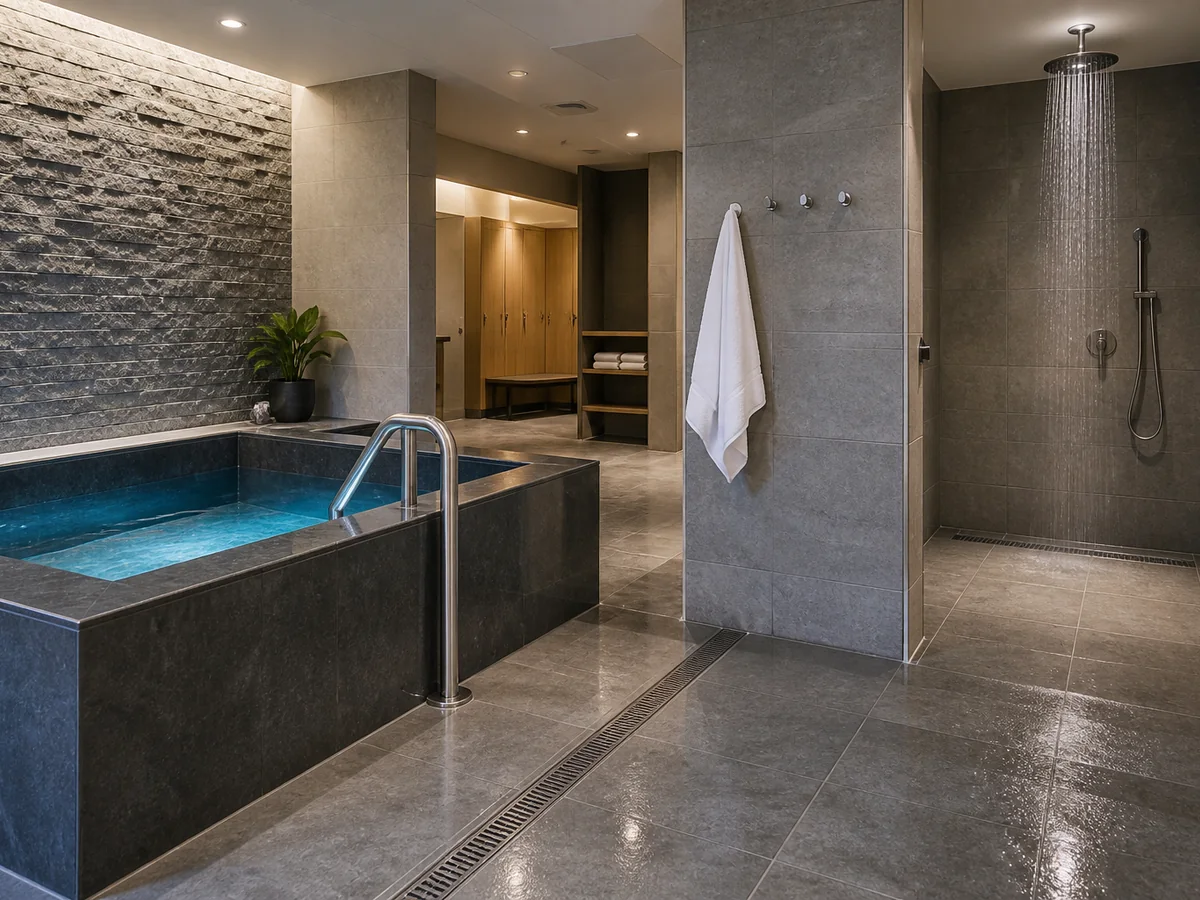
Een cold plunge is een immersieblootstelling. De delen van het lichaam onder de waterlijn blijven omringd door een vastgehouden waterlichaam zolang ze tot dat niveau ondergedompeld blijven.
Dat zijn betekenisvolle fysieke verschillen. Ze zijn op zichzelf geen bewijs dat de ene methode betere gezondheidsuitkomsten oplevert.
| Vergelijking | Koude douche | Cold plunge |
|---|---|---|
| Watertoevoer | Stromende spray | Immersie |
| Lichaamscontact | Verandert met spray en lichaamshouding | Ondergedompelde zones blijven omringd door water |
| Vastgehouden waterlichaam | Nee | Ja |
| Speciaal bassin | Meestal niet nodig als er al een geschikte douche aanwezig is | Vereist |
| Algemene gezondheidsmeerwaarde vastgesteld? | Nee | Nee |
Uit een klein cross-over herstelonderzoek bij 17 jonge, gezonde mannen bleek dat de temperatuur van de onderbeenspieren sterker daalde onder omstandigheden waarbij 20 minuten onderdompeling in water van 18 °C werd toegevoegd na een douche van 10 minuten bij 25 °C dan onder herstelomstandigheden zonder onderdompeling. De lactaatconcentratie in het bloed en de perceptie van vermoeidheid verschilden niet tussen de vier herstelcondities. Omdat de protocollen op meer punten verschilden dan alleen de onderdompeling, inclusief de watertemperatuur en de activiteit die na het douchen werd uitgevoerd, mag het onderzoek niet worden gelezen als een algemeen bewijs dat een koude duik superieur is aan een koude douche. Zie de directe vergelijking van herstelprotocollen.
Als immersie zelf deel uitmaakt van de ervaring die u wilt, kan een douche geen immersie worden door alleen maar zeer koud aan te voelen. Maar als u alleen een praktische persoonlijke koudwaterroutine wilt, bewijst lichaamsbedekking alleen niet dat u een speciaal bassin nodig hebt.
Als uw werkelijke vergelijking gaat tussen een handmatig gekoeld ijsbad en een immersiesysteem met chiller, gebruik dan HACHILL’s Koudwaterbad vs ijsbad gids. Die pagina behandelt de keuze tussen ijs en chiller.
Hebben koude douches hetzelfde bewijs als onderdompeling in koud water?
Nee. Bewijs uit een koude douche en onderdompeling in koud water mogen niet als onderling uitwisselbaar worden beschouwd.
Als je een bewering ziet dat ‘koud water X doet’, stel dan één vraag voordat je deze accepteert:
Is die uitkomst daadwerkelijk onderzocht met douchen, met onderdompeling, of met beide?Wat douchespecifiek onderzoek daadwerkelijk kan ondersteunen
In een groot gerandomiseerd onderzoek onder 3,018 volwassenen werden mensen bestudeerd die hun normale warme douche beëindigden met 30, 60 of 90 seconden koud water.
De kouddouchegroepen rapporteerden minder ziekteverzuim op het werk. Dat deden ze betekent niet hebben in totaal aanzienlijk minder ziektedagen.
Dat betekent dat het onderzoek een enge bewering ondersteunt: een routine van koud douchen ging in dat onderzoek gepaard met een lager zelfgerapporteerd ziekteverzuim. Het bewijst niet dat koude douches ziekten voorkomen of ‘de immuniteit versterken’. Uit het onderzoek blijkt ook dat er geen duidelijk verschil is in ziekteverzuim tussen de drie geteste duur van de koude douche. Zie de gerandomiseerde proef met koude douche.
Het merendeel van het bredere bewijsmateriaal is gebaseerd op onderdompeling
Een systematische review en meta-analyse van 2025 omvatte gerandomiseerde 11-onderzoeken met 3,177-deelnemers. Tien van de 11-interventies werden uitgevoerd in baden, terwijl slechts één een koude douche gebruikte. De review groepeerde koude douches, ijsbaden en duiken onder een breed raamwerk voor blootstelling aan koud water, maar dat maakt de methoden niet uitwisselbaar.
Dat is een belangrijk bewijsonderscheid. Wanneer een immersiestudie een bepaalde populatie, waterconditie, blootstellingsprotocol en resultaat onderzoekt, behoort het resultaat eerst tot dat bestudeerde protocol. Het mag niet stilletjes het bewijs worden dat een gewone koude douche hetzelfde resultaat oplevert. Zie de Systematische review en meta-analyse uit 2025.
Meer onderdompelingsonderzoek bewijst niet dat duiken beter is
De bewijsgrens werkt twee kanten op. Uit meer onderzoeken waarbij onderdompeling wordt gebruikt, blijkt niet dat duiken universeel gezonder is.
Onderzoek naar direct douchen versus onderdompelen blijft beperkt, en onderzoeken kunnen verschillen wat betreft temperatuur, duur, lichaamsbedekking, oefenomstandigheden, kenmerken van de deelnemers en uitkomstmaten.
De interventie was eigenlijk een douche. Claims moeten binnen de gemeten uitkomsten blijven.
Bij de interventie werd gebruik gemaakt van een bad-, ijsbad-, duik- of ander onderdompelingsprotocol.
Douchen en onderdompelen werden vergeleken binnen dezelfde onderzoeks- en protocolcontext.
The conclusion requires a transfer between methods that the research did not directly test.
Temperatuurbeheersing en herhaalbaarheid: wat een toegewijde koude duik feitelijk verandert
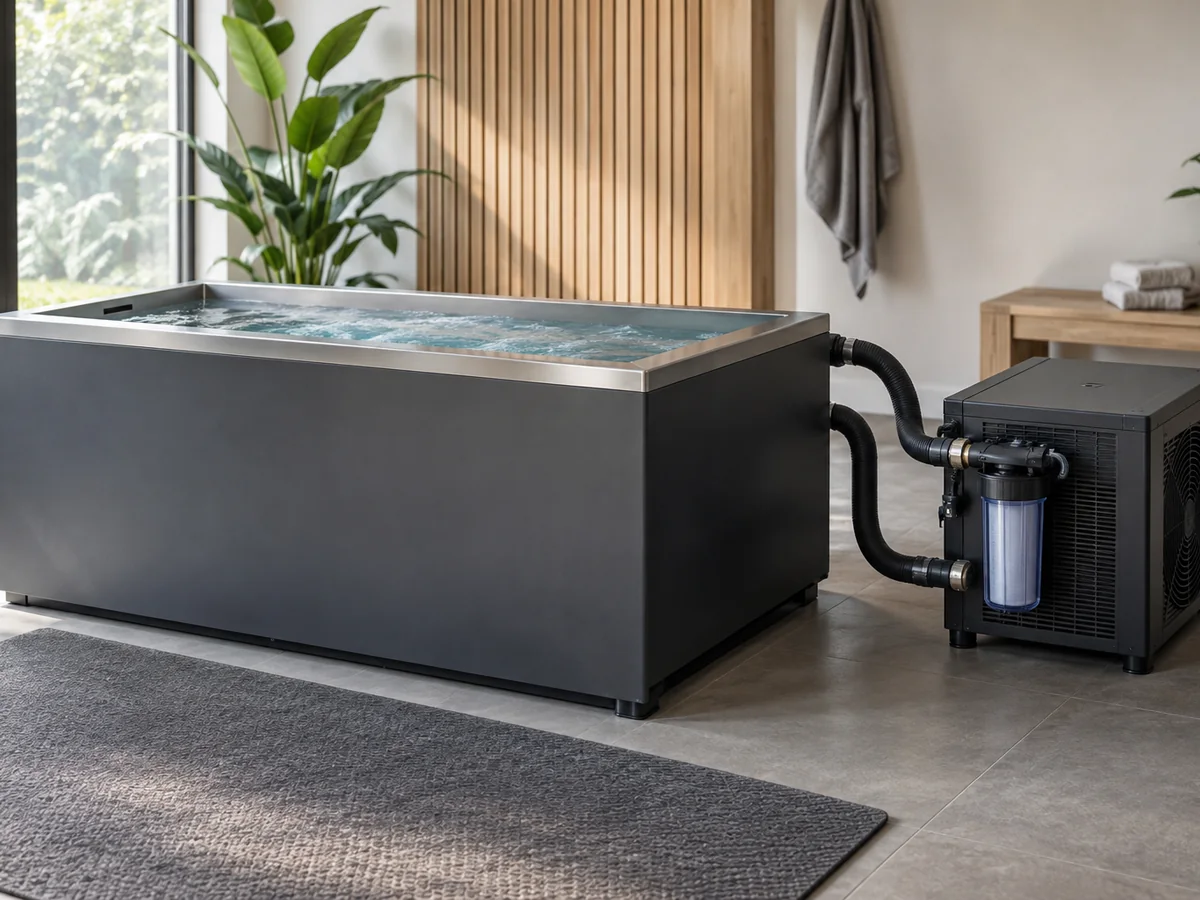
Het sterkste praktische argument voor speciale apparatuur voor koude duik is vaak niet ‘meer voordelen’. Het is meer controle over de werkomgeving.
Beschikbaar koud water is niet hetzelfde als een gedefinieerde bedrijfsomstandigheid
Een gewone huishoudelijke douche vertegenwoordigt niet één gestandaardiseerde blootstelling aan koude.
Uit de grote koude doucheproef zelf bleek dat de koudste beschikbare douchewatertemperatuur per locatie verschilde. De prestaties van de douchekop verschillen ook qua stroom, spuitkracht en dekking; het Amerikaanse EPA WaterSense-programma meet deze als prestatievariabelen voor het armatuur. Zie EPA WaterSense douchekopgeleiding.
Generieke vergelijkingstabellen die elke koude douche één vaste temperatuurband toewijzen, zijn dus misleidend.
Een speciale duik verandert de opstelling omdat de gebruiker wordt ondergedompeld in een gedefinieerd waterlichaam. Wanneer het geselecteerde systeem geschikte actieve temperatuurcontroleapparatuur omvat, kan dat water ook worden beheerd in de richting van een gekozen bedrijfsconditie.
Als de echte vraag is hoe de koudwatertemperatuur moet worden geïnterpreteerd, gebruik dan die van HACHILL Hoe koud is een cold plunge? als leidraad in plaats van deze vergelijking om te zetten in een temperatuurvoorschrift.
Herhaalbaarheid is alleen waardevol als u het nodig hebt
Voor iemand die thuis gewoon een gemakkelijke gewoonte van koud water wil, rechtvaardigt herhaalbaarheid misschien niet de aanschaf van een ander apparaat. The shower may already be enough.
Herhaalbaarheid wordt relevanter wanneer:
- onderdompeling zelf is belangrijk;
- u wilt een gedefinieerde wateromgeving creëren;
- de routine is gestructureerd en herhaald;
- meerdere gebruikers hebben een specifieke ervaring nodig;
- de duik zal onderdeel worden van een commerciële faciliteit.
Controle heeft waarde wanneer controle een reële behoefte oplost. Een beter controleerbaar systeem betekent niet automatisch een medisch superieure blootstelling.
Vergelijk installatie, waterverbruik, onderhoud en kosten voordat u koopt
Bij een eerlijke kostenvergelijking moet u zich afvragen voor welk extra systeem u de verantwoordelijkheid op zich neemt. Het mag een bestaande douchekop niet vergelijken met de verkoopprijs van een volledige kouddompelinstallatie en daar blijven.
Als u al over een geschikte douche beschikt, hoeft u mogelijk helemaal geen speciale apparatuur voor blootstelling aan koude aan te schaffen. Dat is een groot praktisch voordeel. Het betekent niet dat het gebruik van de douche letterlijk gratis is.
Een douche verbruikt stromend water terwijl deze in werking is, en het waterverbruik is afhankelijk van de stroom en de duur van de sessie. Voor de Amerikaanse context stelt EPA dat standaard douchekoppen 2.5 gallon per minuut gebruiken, terwijl douchekoppen met het WaterSense-label niet meer dan 2.0 gallon per minuut mogen gebruiken en aan prestatiecriteria moeten voldoen. Deze cijfers zijn Amerikaanse armatuurreferenties, geen universele douchestroomwaarden.
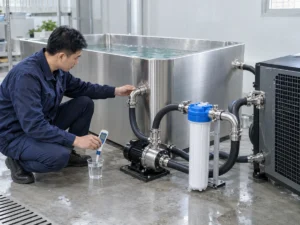
Een specifieke duik creëert een ander eigendomsbereik. Afhankelijk van het systeem en de locatie kan het een vat, koelapparatuur, onderdelen van het watersysteem, speciale ruimte, afvoer, elektrische vereisten, reiniging en onderhoud en servicetoegang toevoegen.
| Eigendomsbereik | Bestaande doucheroute | Speciale koude duikroute |
|---|---|---|
| Speciaal dompelvat | Meestal geen als er al een geschikte douche bestaat | Ja |
| Speciale koelapparatuur | Meestal geen | Configuratie-afhankelijk |
| Stromend water tijdens blootstelling | Ja | Niet noodzakelijkerwijs |
| Toegewijde vloeroppervlakte | Meestal minimale extra ruimte | Vereist |
| Afwatering/locatieplanning | Maakt vaak gebruik van bestaande douche-infrastructuur | Projectafhankelijk |
| Toegewijd onderhoud | Bestaande armatuuromvang | Extra uitrusting/systeemomvang |
| Aankoop van apparatuur vooraf | Vereist mogelijk geen nieuwe apparatuur voor blootstelling aan koude | Nieuwe apparatuur vereist |
Geen van beide routes is automatisch de winnaar van het watergebruik. Bij een douche wordt tijdens de sessie gebruik gemaakt van stromend water. Bij een duik kan water worden vastgehouden, maar het totale waterverbruik is afhankelijk van het vatvolume, de wijze van schoonmaken en bijvullen, de gebruiksfrequentie en het systeemontwerp.
Hetzelfde principe geldt voor geld: de aankoopprijs is niet de totale eigendomskosten.
Als u een volledige vergelijking nodig heeft van apparatuur, installatie, nutsvoorzieningen, onderhoud en levenscycluskosten, ga dan naar HACHILL’s Kosten voor koude duik gids.
Persoonlijke routine versus gedeeld of commercieel gebruik: het operationele probleem verandert

Dezelfde vergelijking kan voor één persoon thuis een ander antwoord opleveren dan voor een sportschool, hotel, spa of herstelcentrum.
Voor persoonlijk gebruik kan gemak de belangrijkste vereiste zijn
Een huishoudelijke douche heeft een sterk voordeel: hij kan er al zijn.
Er hoeft geen afzonderlijk vat te worden aangeschaft, er is geen extra vloeroppervlak voor afzinking en er hoeft geen water te worden vastgehouden dat wordt vastgehouden. Als het doel van de gebruiker eenvoudigweg een toegankelijke, persoonlijke koudwaterroutine is, kan dat gemak voldoende zijn.
Een thuisgebruiker kan nog steeds de voorkeur geven aan een duik, omdat hij specifiek onderdompeling of een toegewijde ervaring wil. Dat is een legitieme reden. Het hoeft niet te worden gerechtvaardigd met een niet-onderbouwde bewering dat een duik gezonder is.
Bij gedeeld gebruik is apparatuur slechts een onderdeel van het systeem
Een gedeelde wateropslagomgeving roept verschillende operationele vragen op.
Afhankelijk van de faciliteit en de toepasselijke vereisten kunnen deze het volgende omvatten:
- waterkwaliteit;
- schoonmaak en onderhoud;
- toegang en uitgang;
- inspectie;
- personeelsprocedures;
- incidentafhandeling;
- sluiting en heropening.
CDC's Model Aquatic Health Code is een nuttige Amerikaanse context voor de reden waarom openbare gedesinfecteerde watervoorzieningen worden beheerd als besturingssystemen en niet alleen als apparatuur.
Maar de MAHC is een leidraad, geen federale wet en geen bewijs dat elke koudduikinstallatie binnen dezelfde regelgevende categorie valt. De exacte toepasbaarheid hangt af van de classificatie van de locatie, de lokale adoptie, de jurisdictie en de autoriteit die jurisdictie heeft.
Commerciële kopers die dit punt bereiken, moeten de bredere HACHILL evalueren Commerciële cold plunge faciliteitsvereisten los van de persoonlijke douche-vs-dompelbeslissing.
Wanneer is een koude douche voldoende en wanneer is een koude duik gerechtvaardigd?
De uiteindelijke beslissing mag geen koude duik forceren om te winnen. Het zou u moeten vertellen of speciale apparatuur een reële behoefte oplost.
| Uw daadwerkelijke behoefte | Beste volgende richting |
|---|---|
| Eenvoudige, handige persoonlijke koudwatergewoonte | Een koude douche kan voldoende zijn |
| Onderdompeling zelf is belangrijk | Denk eens aan een koude duik |
| Herhaalbare, gedefinieerde onderdompelingsomstandigheden zijn van belang | Denk eens aan een koude duik |
| Een specifieke gedeelde of commerciële ervaring is vereist | Evalueer een koudduiksysteem en de operationele vereisten van de faciliteit |
| De enige reden om te upgraden is de veronderstelde superioriteit op gezondheidsgebied | Houd de aankoop vast |
| Locatie, nutsvoorzieningen of gebruiksmodel zijn niet gedefinieerd | Houd de aankoop vast |
Blijf bij de douche als gemakkelijke blootstelling aan koud water het hoofddoel is, er al geschikte toegang bestaat en onderdompeling of herhaalbare onderdompelingsomstandigheden niet belangrijk zijn.
Overweeg speciale apparatuur wanneer onderdompeling zelf, een gedefinieerde omgeving waarin water wordt vastgehouden, herhaalbaarheid, gestructureerd herhaald gebruik of gedeeld gebruik een reële behoefte oplost.
Ga niet overhaast over tot modelselectie als de enige grondgedachte een superioriteit op het gebied van de gezondheidszorg is, of als locatie, nutsvoorzieningen, gebruiksmodel en operationele verantwoordelijkheid nog steeds niet gedefinieerd zijn.
‘Genoeg’ beschrijft de geschiktheid voor de taak, niet de medische gelijkwaardigheid. ‘Duik gerechtvaardigd’ beschrijft de geschiktheid van apparatuur, en niet universele gezondheidssuperioriteit. En als de eis nog onduidelijk is, je hoeft nog niets te kopen.
Als de vergelijking wijst op een specifieke daling, is de volgende stap productfit. Als het naar de douche of naar HOLD wijst, is er geen productstap vereist. Afgezien van de pasvorm van de apparatuur levert deze vergelijking geen medische goedkeuring op en bewijst niet dat één methode universeel veiliger is voor een bepaalde persoon.
Heeft u een speciaal onderdompelingssysteem nodig?
Als uit de vergelijking blijkt dat onderdompeling en herhaalbare bedrijfsomstandigheden een reële behoefte oplossen, bekijk dan het koude duikbereik van HACHILL voordat u overgaat tot selectie op modelniveau.
Ontdek Cold PlungesVeelgestelde vragen
Is een koude douche hetzelfde als een koude duik?
Nee. Bij een koude douche wordt gebruik gemaakt van een stromende straal, terwijl bij een koude duik de delen van het lichaam onder de waterlijn in een vastgehouden watermassa worden ondergedompeld. Het zijn verschillende belichtingsmethoden. Dat fysieke verschil bewijst niet automatisch dat men betere gezondheidsresultaten oplevert.
Is een koude duik beter dan een koude douche?
Niet als een universele verklaring. Een koude duik kan een betere uitrusting zijn als onderdompeling, herhaalbare bedrijfsomstandigheden of een speciale omgeving voor gedeeld gebruik van belang zijn. Uit huidig bewijsmateriaal blijkt niet dat een duik in alle uitkomsten universeel gezonder of effectiever is dan een koude douche.
Kan een koude douche net zo koud zijn als een koude duik?
Soms, maar er is geen universele koude douchetemperatuur in het huishouden. De beschikbaarheid van koud water varieert per installatie, en de werkelijke bedrijfstoestand van een duik hangt af van de uitrusting en opstelling ervan. Vergelijk de gemeten omstandigheden in plaats van voor beide methoden vaste temperatuurbereiken aan te nemen.
Is een koude douche goedkoper dan een koude duik?
Als er al een geschikte douche bestaat, kan dit de extra aanschaf, ruimte, installatie en onderhoudsomvang van speciale duikuitrusting vermijden. Maar het gebruik van een douche kost nog steeds water, terwijl het gebruik van een douche de kosten voor apparatuur, nutsvoorzieningen, schoonmaak en service kan verhogen. Het volledige antwoord hangt af van het daadwerkelijke gebruik en de installatie.
Wanneer is het kopen van een speciale koude duik de moeite waard?
Een speciale duik is gemakkelijker te rechtvaardigen wanneer deze een gedefinieerde vereiste oplost, zoals onderdompeling, herhaalbare bedrijfsomstandigheden, gestructureerd herhaald gebruik of gedeelde/commerciële exploitatie. Als de enige rechtvaardiging de veronderstelling is dat een duik grotere gezondheidsvoordelen moet opleveren, is het huidige bewijsmateriaal niet sterk genoeg om die conclusie te ondersteunen.