Direct antwoord: Er is geen enkele op bewijs gebaseerde cold-plunge-duur die voor iedereen veilig of optimaal is. Voor een eerste gecontroleerde volledige onderdompeling beginnen gerenommeerde gezondheidsrichtlijnen zeer kort: UCLA Health adviseert aanvankelijk ongeveer 10–20 seconden, Mayo Clinic beschrijft dat veel beginners rond 30–60 seconden starten, en Cleveland Clinic adviseert beginners om vroege sessies te beperken tot ongeveer 1–2 minuten. Dit zijn praktische startreferenties, geen universele veiligheidslimieten. Watertemperatuur, de directe koudeschokreactie, gezondheidscontext, toezicht, veilige uitstap en herstel zijn allemaal belangrijker dan het voltooien van een doeltijd.
Als je nieuw bent met koudwateronderdompeling, denk dan in seconden tot laag eencijferige minuten, niet in uithoudingsdoelen. Langer is niet automatisch beter, en een duur die is overgenomen van een studie, atleet, influencer of andere gebruiker wordt niet passend alleen omdat deze populair is.
Hoe lang moet je een cold plunge doen? Een praktisch startpunt
Voor een gezonde volwassene die al heeft besloten dat koudwateronderdompeling het proberen waard is, is de best verdedigbare aanpak voor beginners om te beginnen met een korte, gecontroleerde blootstelling in plaats van te streven naar een vast doel van meerdere minuten.
| Bron | Gepubliceerde startrichtlijn | Hoe je dit interpreteert |
|---|---|---|
| UCLA Health | Begin met volledige onderdompeling in korte blootstellingen van ongeveer 10–20 seconden en bouw geleidelijk op als langere dips het doel zijn. | Een zeer conservatieve referentie voor de eerste blootstelling, geen universeel minimum. |
| Mayo Clinic | Beschrijft koudwaterplunjers die gewoonlijk ongeveer 30 seconden tot 1 minuut beginnen en zich vanaf daar geleidelijk uitbreiden. | Een praktisch voortgangsvoorbeeld; Mayo merkt ook op dat het optimale proces en de timing nog steeds worden bestudeerd. |
| Cleveland Clinic | Adviseert beginners om vroege sessies ongeveer 1 à 2 minuten te houden en legt de nadruk op het luisteren naar het lichaam in plaats van het negeren van waarschuwingssignalen. | Een door artsen beoordeelde beginnersreferentie, geen bewijs dat 1 à 2 minuten veilig is voor elke persoon of elke watertemperatuur. |
Het belangrijke punt is niet dat een van deze cijfers ‘correct’ is. De aanbevelingen verschillen omdat blootstelling aan koud water niet kan worden beperkt tot tijd alleen. Ze delen echter een nuttig patroon: begin kort, behandel ongemak niet als een wedstrijd en verleng het alleen als de blootstelling onder controle blijft.
Eenvoudige regel: Voor een eerste duik is een korte blootstelling, gemeten in seconden, voldoende om te leren hoe uw ademhaling, coördinatie en uitgangscontrole reageren. U hoeft niet aan te tonen dat u enkele minuten kunt blijven.
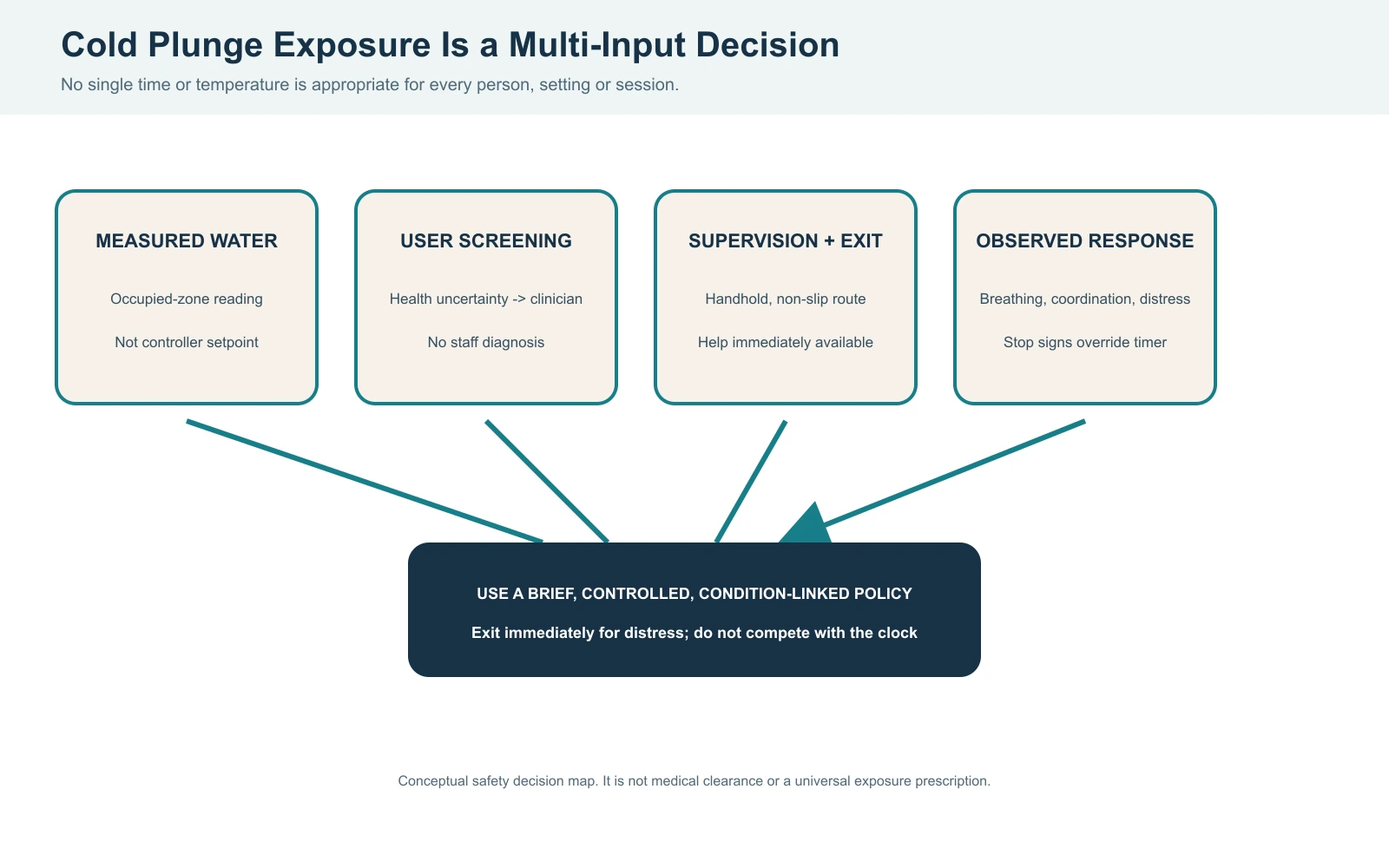
Waarom er geen universele koude-duiktijd bestaat
Een 2025 systematische review en meta-analyse van onderdompeling in koud water bij gezonde volwassenen vond aanzienlijke variatie in onderzoeksprotocollen. De opgenomen blootstellingen varieerden over verschillende watertemperaturen, onderdompelingsmethoden, duur en uitkomsten, en de auteurs concludeerden dat er nog steeds beter bewijs nodig is om optimale CWI-protocollen op te stellen.
Dat betekent dat een onderzoeksduur u kan vertellen wat onderzoekers onder gedefinieerde omstandigheden hebben getest; het kan niet automatisch een persoonlijke veiligheidslimiet of een algemeen welzijnsvoorschrift worden.
| Variabele | Waarom het de beslissing verandert | Wat te doen met de timer |
|---|---|---|
| Werkelijke watertemperatuur | Kouder water veroorzaakt over het algemeen een sterkere thermische en koudeschokuitdaging. | Vergelijk de duur niet, tenzij ook de watertoestand bekend is. |
| Onderdompelingsdiepte | Op borsthoogte of dieper onderdompelen is niet hetzelfde als alleen de benen blootleggen of een koude douche nemen. | Breng geen timingprotocol over tussen verschillende belichtingsmethoden zonder context. |
| Onmiddellijke reactie | Plotselinge onderdompeling kan naar adem snakken, snelle ademhaling en cardiovasculaire stress veroorzaken. | Beëindig de belichting als de reactie niet onder controle is, zelfs als er heel weinig tijd is verstreken. |
| Voorafgaande blootstelling aan koude | Herhaalde blootstelling kan een deel van de koudeschokreactie verminderen, maar de aanpassing is variabel. | Ervaring kan vooruitgang bevorderen; het is geen medische goedkeuring en rechtvaardigt geen onbeperkte duur. |
| Gezondheidscontext | Cardiovasculaire, circulatoire, neurologische, metabolische, zwangerschaps- en medicatiegerelateerde factoren kunnen de geschiktheid veranderen. | Een generieke timer kan geen individueel medisch risico oplossen. |
| Exit en toezicht | Iemand die flauwvalt, verward raakt of slecht gecoördineerd is, kan mogelijk niet veilig vertrekken. | Plan de exit voordat u begint en gebruik de tijd niet als toestemming om door te gaan. |
A systematische review van gewenning aan koudeschokreacties ontdekte dat herhaalde onderdompeling componenten van de koudeschokreactie kan verminderen, terwijl het ook een betekenisvolle variatie tussen onderzoeken laat zien. Dat ondersteunt een geleidelijke gewenning, maar niet de aanname dat een ervaren gebruiker automatisch veilig is bij langere tijd of lagere temperatuur.
Hoe de watertemperatuur de duurbeslissing verandert
“Hoe lang?” en "hoe koud?" Het zijn afzonderlijke vragen, maar ze kunnen niet onafhankelijk worden geïnterpreteerd. Een tijdsadvies zonder gemeten waterconditie is onvolledig.
Bij koudwateronderzoek wordt vaak gebruik gemaakt van temperaturen rond de 10–15 °C (50–59 °F), maar in onderzoeken wordt ook gebruik gemaakt van koudere omstandigheden. HACHILL is gescheiden cold-plunge temperatuurgids verklaart waarom dat algemeen bestudeerde bereik eerder een bewijscontext is dan een universeel persoonlijk doelwit.
Bouw geen universele tijd-temperatuurgrafiek. Huidig bewijsmateriaal valideert een formule als “X minuten bij Y-temperatuur” niet voor elk gebruikers-, doel- en gezondheidsprofiel.
Voor beginners adviseert Cleveland Clinic specifiek een starttemperatuur rond de 50–59°C (10–15°F) en waarschuwt ervoor om niet onder de 40°C (4°F) te komen. Dat is een nuttig, door artsen beoordeeld advies, maar het moet nog steeds worden behandeld als bronspecifiek advies en niet als een internationale veiligheidsnorm.
Het praktische technische punt is eenvoudiger: verifieer aan welk water de gebruiker daadwerkelijk wordt blootgesteld. Een instelpunt van een koelmachine is apparatuurinformatie; het is niet automatisch hetzelfde als de representatieve watertemperatuur en het is nooit een persoonlijk duurvoorschrift.
Hoe beginners vooruitgang kunnen boeken zonder de tijd in een uitdaging te veranderen
Vooruitgang kan beter worden aangepakt als een controleprobleem dan als een wekelijks uithoudingsschema. Houd de blootstelling begrijpelijk, verander één belangrijke variabele tegelijk en stop met het verlengen van de duur als de controle verslechtert.
- Meet de waterconditie. Ken de werkelijke watertemperatuur in plaats van alleen te vertrouwen op een “ijsbad”, “koude instelling” of het instelpunt van de koelmachine.
- Maak de eerste blootstellingsbrief. Gebruik een korte duur om het toegangsantwoord te leren, niet om tolerantie te bewijzen.
- Houd de ademhaling beheersbaar. Beschouw langdurige hyperventilatie, paniek of hijgen niet als iets waar je doorheen moet.
- Houd het hoofd en het gezicht naar buiten tijdens de gewone onderdompeling voor beginners. Opzettelijke onderdompeling in het gezicht of het inhouden van de adem introduceert een andere autonome reactie en mag niet worden gebruikt als een routinematige intensiteitstruc.
- Ga naar buiten terwijl beweging en oordeel normaal blijven. Wacht niet tot de coördinatie verslechtert voordat u besluit dat de sessie ver genoeg is gegaan.
- Herstel beoordelen. Een sessie die in het water draaglijk lijkt, maar daarna een verontrustende reactie oplevert, mag niet automatisch worden herhaald bij dezelfde of grotere blootstelling.
- Verhoog slechts één variabele tegelijk. Maak het water niet tegelijkertijd kouder en de sessie langer, omdat je dan het vermogen verliest om te interpreteren wat de reactie heeft veranderd.
Onderzoek naar koudwaterimmersie en autonome conflict is een reden om de adem in te houden en het opzettelijk onderdompelen van het gezicht gescheiden te houden van het gewone timingadvies voor beginners. Het beschrijft concurrerende cardiovasculaire reflexen die het risico op aritmie in gevoelige omstandigheden kunnen verhogen.
Wanneer moet u een koude duik onmiddellijk stoppen?
De timer zou er niet meer toe doen zodra de belichting niet langer onder controle blijft.
De Amerikaanse nationale weerdienst beschrijft dat koude shock onvrijwillig hijgen, snelle ademhaling en abrupte veranderingen in hartslag en bloeddruk kan veroorzaken. Deze effecten zijn vooral belangrijk bij binnenkomst, wanneer iemand nog steeds gefocust is op het “halen” van een geplande tijd.
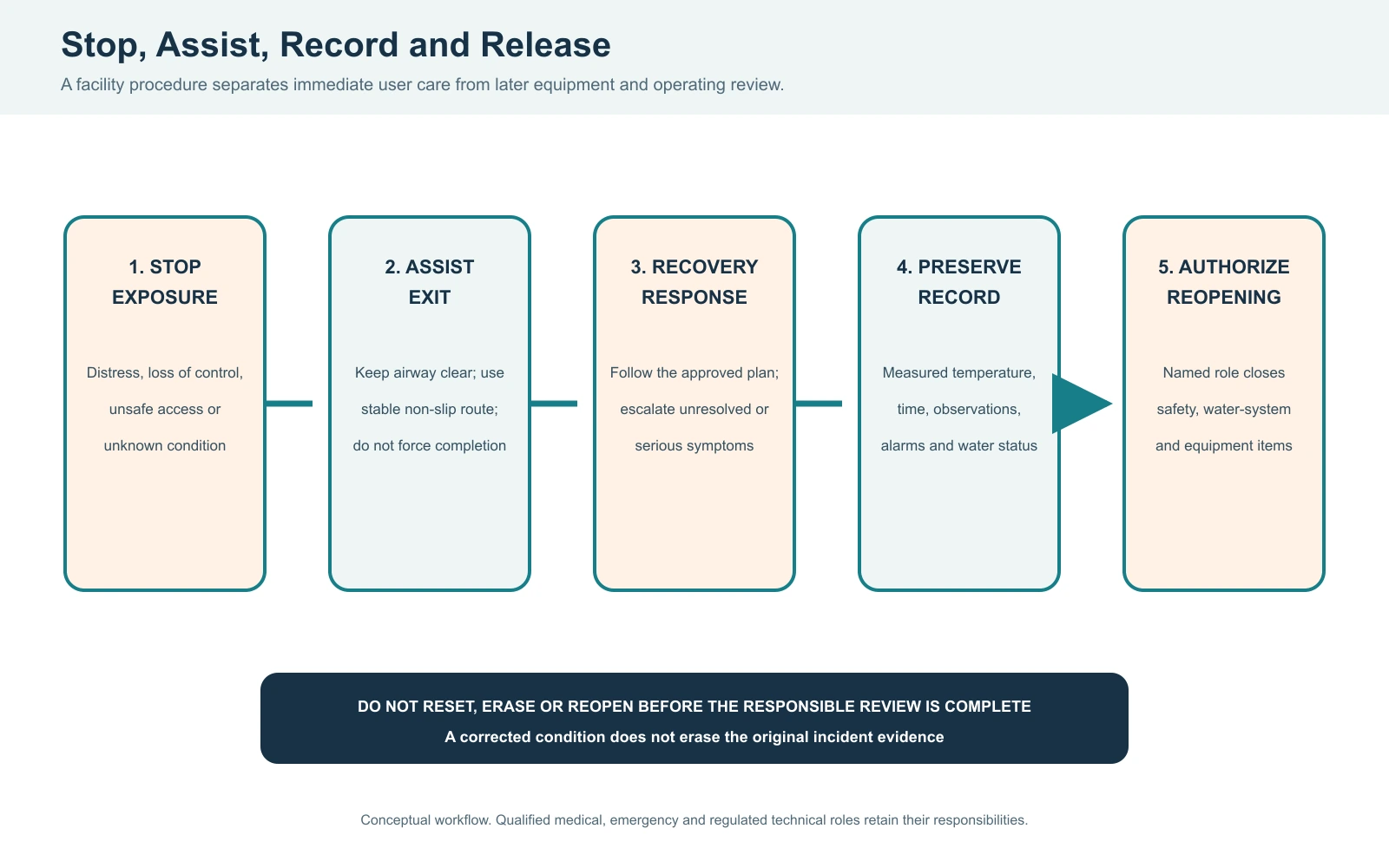
Beëindig de blootstelling en ga veilig naar buiten bij ongecontroleerde ademhaling, flauwvallen, ernstige pijn of druk op de borst, verwarring, verlies van coördinatie, onvermogen om normaal te reageren of onvermogen om veilig naar buiten te gaan. Ernstige of aanhoudende symptomen vereisen passende noodhulp en gekwalificeerde medische zorg in plaats van online probleemoplossing.
MedlinePlus begeleiding bij hypothermie somt verwarring, ongecontroleerd rillen, zwakte en verlies van coördinatie op als belangrijke waarschuwingssignalen in een context van onderkoeling. Deze noodreferentie mag niet verkeerd worden geïnterpreteerd als bewijs dat elke korte wellnessduik onderkoeling veroorzaakt; het is hier nuttig omdat het laat zien waarom achteruitgang in denken of bewegen niet iets is dat we ‘door moeten drukken’.
| Wat u waarneemt | Wat het betekent voor de timer | Actie |
|---|---|---|
| De ademhaling blijft ongecontroleerd | De toegangsreactie is niet gecontroleerd geworden. | Beëindig de belichting in plaats van te wachten op de geplande tijd. |
| Flauwvallen, verwarring of ongewone problemen met denken | Doorgaan voor een tijdsdoel is niet langer gepast. | Ga veilig naar buiten en escaleer als de symptomen ernstig of aanhoudend zijn. |
| Verlies van coördinatie of moeilijkheden bij het verlaten | Een veilige zelfuitstap wordt in gevaar gebracht. | Stop onmiddellijk en bied hulp passend bij de situatie. |
| Ernstige symptomen op de borst | Dit is geen uithoudingskeu. | Beëindig de blootstelling en zoek zo nodig dringend medisch onderzoek. |
Wie moet medische begeleiding krijgen voordat hij een koude duik neemt?
Onderdompeling in koud water veroorzaakt acute ademhalings- en cardiovasculaire stress. Algemene webrichtlijnen kunnen niet bepalen of die stress passend is voor een bepaalde persoon.
Cleveland Clinic adviseert mensen om met een zorgverlener te praten voordat ze een koude duik nemen als ze aandoeningen hebben zoals hartaandoeningen, hoge bloeddruk, diabetes, perifere neuropathie, slechte bloedsomloop, veneuze stasis of koude-agglutinineziekte, en ook tijdens de zwangerschap. Harvard Health waarschuwt mensen met hart- en vaatziekten, vooral ritmeproblemen, ook voor blootstelling aan koud water.
Een ontheffings-, producthandleiding-, timer- of apparatuurleverancier kan geen medische goedkeuring geven. Hun rollen zijn verschillend: medische professionals kijken naar persoonlijke geschiktheid, terwijl apparatuurdocumentatie betrekking heeft op het product binnen het aangegeven werkingsbereik.
Plan binnenkomst, vertrek en herstel voordat u de timer start
Een koude duik is niet alleen de tijd die u in het water doorbrengt. Toegang, de mogelijkheid om de exposure te beëindigen en de herstelomgeving maken deel uit van de sessie.
Kom binnen onder gecontroleerde omstandigheden
Gebruik een stabiele toegangsroute en voorkom blootstelling wanneer een uitglijding, val of moeilijke exit een gewone koudereactie zou veranderen in een toegangsnoodgeval. In een beheerde faciliteit moeten de omstandigheden in de omringende natte gebieden en de toezichtverantwoordelijkheden al worden gedefinieerd.
Vertrouw niet op wilskracht om te ontsnappen
Het beste moment om te beslissen hoe je eruit komt, is voordat je naar binnen gaat. Een persoon hoeft niet over een obstakel te klimmen, te wachten op hulp die niet beschikbaar is, of door te gaan omdat er nog een uitdagingstimer loopt.
Neem herstel op in het plan
Droog u na het verlaten af, ga naar een geschikte herstelomgeving en blijf letten op hoe u zich voelt. Cleveland Clinic raadt aan om je te concentreren op het opwarmen na de duik. Als de symptomen abnormaal, ernstig of aanhoudend zijn, behandel dat dan als een gezondheidsprobleem in plaats van als bewijs dat een ‘harde sessie’ succesvol was.
Verandert uw doel hoe lang u binnen moet blijven?
Ja, maar doelspecifiek onderzoek mag niet worden omgezet in één universele persoonlijke dosis.
Veel onderzoeken naar onderdompeling in koud water zijn ontworpen rond herstel na inspanning, warmtebeheer of een ander gedefinieerd resultaat. Deze onderzoeken gebruiken mogelijk langere blootstellingen dan een wellnessduik voor beginners, maar het protocol weerspiegelt de onderzoeksvraag, de deelnemersgroep, de watertemperatuur, de onderdompelingsdiepte en de monitoring die in dat onderzoek zijn gebruikt.
De systematische review van gezonde volwassenen uit 2025 omvatte een breed scala aan looptijden en concludeerde dat er meer kwalitatief hoogstaand onderzoek nodig is om optimale CWI-protocollen te definiëren. Om die reden is “een onderzoek van 10 of 15 minuten” niet voldoende bewijs om een algemene lezer te vertellen die duur te kopiëren.
Gebruik onderzoek om de context te begrijpen, niet om een persoonlijke uitdaging te creëren. De relevante vraag is of een protocol uw beoogde resultaat heeft bestudeerd onder omstandigheden die veel op de uwe lijken.
Als uw belangrijkste vraag de timing van de oefening is in plaats van de duur, bewaar dat dan als een afzonderlijke beslissing. Hetzelfde geldt voor de wekelijkse frequentie, die wordt behandeld in Hoe vaak moet je cold plungen?
Commerciële faciliteiten moeten de persoonlijke duur scheiden van het operationele beleid
Een sportschool, hotel, spa- of wellnesscentrum kan getimede sessies gebruiken voor planning, supervisie en omzet, maar een boekingsslot is geen universeel medisch veilige blootstellingsduur.
- Persoonlijke blootstelling: stopborden en individuele geschiktheid overschrijven nog steeds een geposte sessietijd.
- Waterwerking: verifieer de toestand van het bedrijfswater met behulp van de door de faciliteit gedefinieerde meet- en apparatuurprocedures.
- Toegang: het handhaven van gecontroleerde in- en uitgang, beheer van natte gebieden en eventueel vereist toezicht.
- Noodreactie: Bepaal wie een sessie kan stoppen en hoe abnormale reacties worden geëscaleerd.
Gedetailleerde watersysteem-, sanitaire voorzieningen-, service-, doorvoer- en projectvereisten behoren tot de specifieke vereisten Commerciële cold-plunge-planning route in plaats van deze gids met persoonlijke duur.
Veelgestelde vragen
Hoe lang moet een beginner een koude duik nemen?
Begin kort. De richtlijnen van een gerenommeerd gezondheidssysteem variëren van ongeveer 10-20 seconden voor een eerste blootstelling aan het hele lichaam tot ongeveer 30-60 seconden of 1-2 minuten voor beginners. De variatie is belangrijk: dit zijn praktische referenties, geen universele veilige dosis. Stop eerder als de ademhaling, coördinatie, alertheid of een veilige uitgang in het gedrang komen.
Is vijf minuten in een koude duik veilig?
Vijf minuten kunnen niet universeel veilig worden verklaard op basis van de timer alleen. Cleveland Clinic adviseert om sessies niet langer dan vijf minuten te laten duren, terwijl andere richtlijnen in het gezondheidszorgsysteem andere bovengrenzen hanteren. Watertemperatuur, individuele gezondheid, reactie- en uitgangsomstandigheden zijn nog steeds van belang, dus “vijf minuten” mogen niet worden beschouwd als automatische toestemming om door te gaan.
Is 10 minuten te lang voor een koude duik?
Protocollen van tien minuten komen voor in sommige onderzoeken en klinische opleidingen, maar zijn geen universeel doel voor beginners. Als u een langer onderzoeks- of herstelprotocol gebruikt, moeten de temperatuur, populatie, doel en monitoringomstandigheden overeenkomen met de context. Voor algemeen welzijn is er geen bewijs dat iedereen naar 10 minuten toe moet bouwen.
Welke temperatuur moet ik gebruiken als ik besluit hoe lang ik binnen blijf?
Er bestaat geen gevalideerde universele tijd-temperatuurformule. Rond de 10–15 °C (50–59 °F) is gebruikelijk bij onderzoek naar onderdompeling in koud water en wordt ook door Cleveland Clinic gebruikt als referentiebereik voor beginners, maar het is geen universeel persoonlijk doelwit. Zie Hoe koud is een cold plunge? voor de beslissing over de volledige temperatuur.
Moet ik mijn hoofd onder water steken of mijn adem inhouden tijdens een koude duik?
Gebruik niet opzettelijk de adem inhouden of gezichtsonderdompeling als routinematige manier om een duik intenser te maken. Gezichtsonderdompeling en het inhouden van de adem voegen fysiologische reacties toe die anders zijn dan gewone onderdompeling met de nek naar beneden en kunnen het cardiovasculaire risico verhogen in gevoelige omstandigheden.
Hoe vaak moet ik een koude duik nemen?
De frequentie is een afzonderlijke blootstellingsbeslissing. Verleng niet tegelijkertijd de duur, verlaag de temperatuur en verhoog de wekelijkse frequentie als u wilt begrijpen hoe u reageert. Zie Hoe vaak moet je cold plungen? voor de speciale frequentiegids.
Gerelateerde HACHILL-bronnen
Hoe koud is een cold plunge?
Gebruik de temperatuurgids wanneer de volgende beslissing de gemeten watertemperatuur betreft in plaats van de blootstellingstijd.
Hoe vaak moet je cold plungen?
Ga van sessieduur naar herhalingssessiefrequentie zonder de twee beslissingen door elkaar te halen.
Commerciële cold-plunge-planning
Ga verder met de planning van faciliteiten, watersystemen, toegang, service en projecten voor beheerde omgevingen.
Koude duikproducten
Bekijk de huidige rechtopstaande, neerliggende en commerciële productroutes nadat de locatie- en operationele vereisten zijn gedefinieerd.
Referentiebasis
- Systematische review en meta-analyse uit 2025 van onderdompeling in koud water bij gezonde volwassenen — protocolvariabiliteit, bewijslimieten en de behoefte aan beter dosis-responsonderzoek.
- UCLA Health: koude duik en cryotherapie voor het hele lichaam - zeer korte blootstelling voor beginners en begeleiding bij geleidelijke progressie.
- Mayo Clinic: koudwaterduiken na het sporten — praktische context van de startduur en erkenning dat de optimale timing nog steeds wordt onderzocht.
- Cleveland Clinic: begeleiding bij koude duik — referenties voor tijd en temperatuur voor beginners, stopadvies en context voor gezondheidsscreening.
- Amerikaanse nationale weerdienst: gevaren en veiligheid in koud water — koudeschokademhaling en cardiovasculaire context.
- Systematische review van gewenning aan koudeschokreacties — aanpassingsbewijs en grenzen.
- Onderdompeling in koud water en autonome conflicten — context van het inhouden van de adem en het risico op onderdompeling in het gezicht.
- MedlinePlus: Onderkoeling – context van een noodwaarschuwingsbord, geen voorschrift voor een wellness-duikduur.
Gebruik tijd als maatstaf, niet als tolerantietest
Het nuttigste antwoord op “hoe lang moet je koud duiken?” is niet één getal. Een beginner moet beginnen met een korte, gecontroleerde blootstelling, de toestand van het water verifiëren, de ademhaling en beweging onder controle houden en stoppen voordat de sessie een duurtest wordt.
Gepubliceerde klinische begeleiding begint voor beginners ergens tussen seconden en ongeveer 1 à 2 minuten, wat nog een reden is om niet te doen alsof er één universele timer bestaat.
Als er een betekenisvolle stopconditie verschijnt, is de doeltijd niet langer het doel.
Plant u een commercieel Cold-Plunge-project?
Als uw vraag is verschoven van persoonlijke blootstellingsduur naar apparatuur- of faciliteitsplanning, definieer dan de locatie, de beoogde toestand van het bedrijfswater, het geselecteerde bad- of watervolume, het gebruiksschema, de toegang, de afvoer, de status van het koelsysteem, de nutsvoorzieningen en de servicevereisten voordat u deze op modelniveau beoordeelt.
Vraag een projectbeoordeling aan