Guia de Clima para Banheira de Imersão Fria Thermowood Externa
Este guia ajuda compradores comerciais e de projetos a decidir se uma banheira de imersão fria Thermowood pode operar ao ar livre em um local específico e o que deve ser verificado antes do uso durante todo o ano ou sazonal.
Resposta direta: Uma banheira de imersão fria Thermowood pode ser usada ao ar livre em uma configuração adequada, mas a adequação para uso externo é uma decisão de sistema completo, não uma alegação sobre o revestimento de madeira. Verifique a banheira exata, o resfriador de água, a tubulação, os controles, a cobertura e o local em relação a calor, umidade, chuva, exposição solar, risco de congelamento, vento, detritos e exposição a sal. O Thermowood pode ser apropriado para aplicações externas quando especificado e mantido para a exposição, mas a madeira não torna o resfriador de água, os equipamentos elétricos, as juntas ou a drenagem à prova de intempéries. Use as condições reais do local e os limites específicos do modelo, defina procedimentos de molhagem/secagem e congelamento, e mantenha em aberto qualquer limite ambiental não verificado antes da compra ou da reabertura sazonal.
Decisão principal: Os limites exatos do produto e os controles do local fecham todos os fatores climáticos locais?
Regra de dados: Use as condições no local da banheira e do equipamento, não um nome de cidade ou uma fotografia ao ar livre.
Limite de parada: Água não controlada, inventário de congelamento não resolvido, condições inseguras no local ou limites de componentes em aberto impedem a liberação.
Congelar o limite operacional externo exato
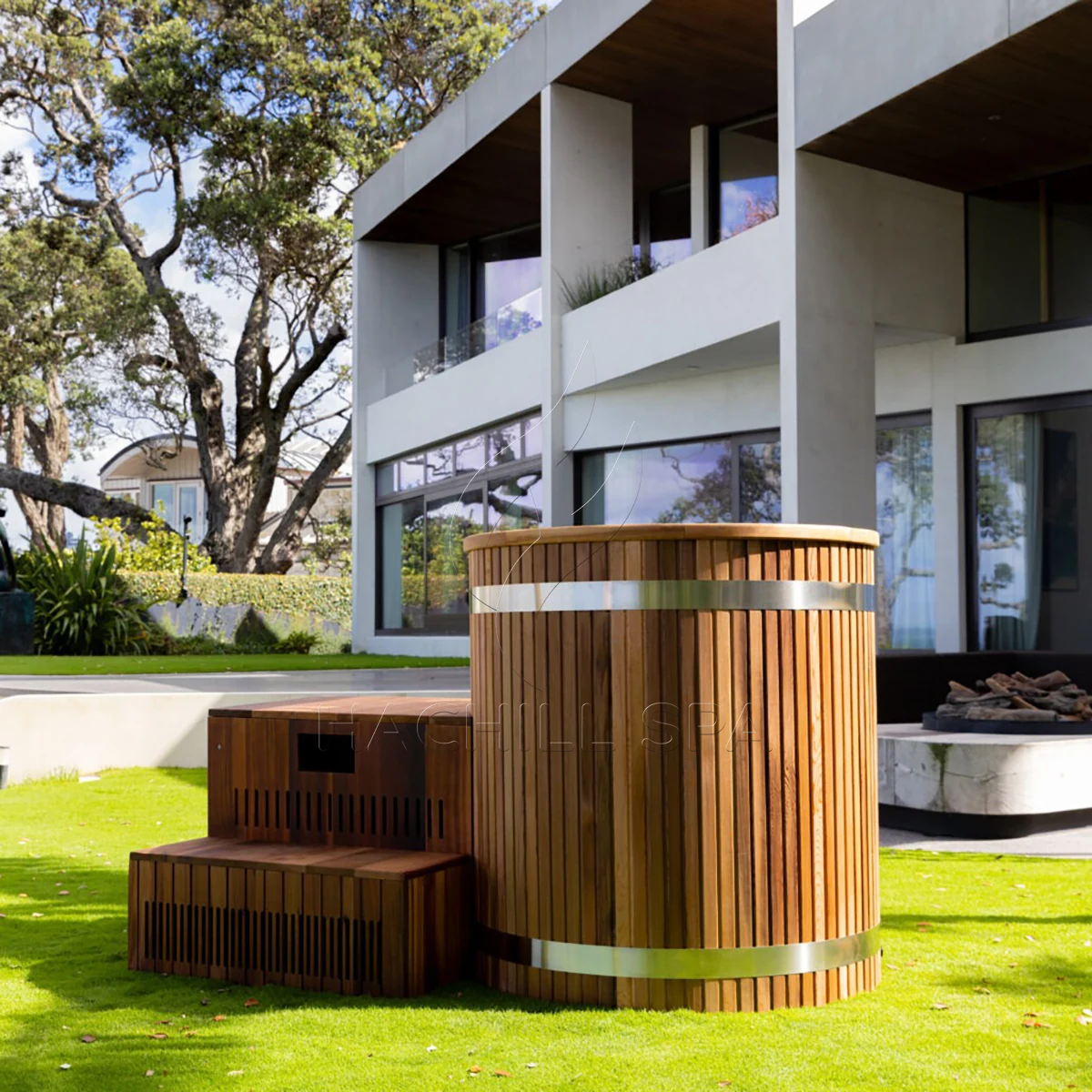
A adequação para uso externo pertence a um modelo exato, configuração de equipamento e condição de local específicos. Registre a estação de operação, períodos supervisionados ou não supervisionados, política de cobertura, resposta a queda de energia, método de limpeza, autoridade de fechamento e se a banheira, o resfriador de água e os controles compartilham um mesmo invólucro. Obtenha os limites ambientais aprovados e as instruções de instalação de cada componente. O manual da International ThermoWood Association recomenda tratamento superficial para madeira termotratada exposta às intempéries, particularmente em climas quentes e úmidos, e não recomenda ThermoWood® para estruturas em contato direto com solo ou água. Esses são limites no nível do material, não prova de que um sistema completo de imersão fria seja à prova de intempéries. Uma fotografia de um produto ao ar livre não prova classificação para intempéries, proteção contra congelamento ou adequação para áreas costeiras.
Separe a proteção fornecida com o produto do trabalho no local. Telhados, quebra-ventos, fundações, drenos, impermeabilização, proteção elétrica contra intempéries, ventilação e gerenciamento de neve/chuva podem pertencer a partes diferentes. Marque cada entrada como aprovada, medida, estimada ou em aberto.
Registro de limites operacionais para uso externo
| Limite | Evidência obrigatória | Entrada responsável | Condição de manutenção |
|---|---|---|---|
| Modelo/configuração exata | Pedido, desenho e lista de equipamentos | Fornecedor/comprador | Somente evidência de modelo relacionado |
| Temporada de operação/fechamento | Plano operacional aprovado | Operador/projeto | Estado sem supervisão indefinido |
| Limites dos componentes | Manuais/folhas de dados exatos | Fornecedor | Declaração genérica para uso externo |
| Proteção do local | Plano final de telhado, proteção, dreno e ventilação | Equipe do projeto | Trabalho no local assumido |
| Resposta de energia/congelamento | Procedimento de isolamento e drenagem | Fornecedor/instalador/operador | Caminho residual desconhecido |
| Autoridade de reabertura | Procedimento de liberação específico da causa | Operador/projeto | Nenhum papel competente nomeado |
Obter dados climáticos do local no local do equipamento
Use dados meteorológicos e de projeto relevantes ao local, em vez de um rótulo climático de cidade. Colete faixa de bulbo seco, umidade relativa ou ponto de orvalho, precipitação e direção de chuva dirigida pelo vento, orientação solar/sombreamento, duração e ciclos de congelamento, vento/detritos, neve quando aplicável e exposição a sal/cloreto. Dados regionais históricos apoiam o planejamento, mas paredes locais, telhados, calor refletido e paisagismo criam microclimas.
Para um local existente, registre as condições na banheira proposta e na entrada de ar do condensador. Indique instrumento, local, intervalo, duração e dados ausentes. Para um novo local, distinga dados climáticos oficiais, valores de projeto e premissas não verificadas. Para projetos nos EUA, Normais Climáticas dos EUA atuais da NOAA podem fornecer uma base de planejamento, mas as normais de estação não substituem os valores de projeto ou as medições do microclima final. A equipe qualificada do projeto seleciona as condições de projeto determinantes.
Ficha de aquisição de dados climáticos externos
| Motorista | Fonte/método | Base de localização/horário | Decisão |
|---|---|---|---|
| Temperatura do ar/UR | Dados oficiais mais registrador | Entrada da banheira e do condensador | Térmico/condensação |
| Chuva/umedecimento | Observação de orientação e local | Borda, painéis e base | Drenagem/secagem após o molhamento |
| Carga solar | Revisão de trajetória solar/sombreamento | Cobertura, madeira e equipamentos | Acabamento/superfície/térmico |
| Ciclos de congelamento | Base climática/do projeto | Todos os caminhos de água expostos | Drenagem/fechamento |
| Vento/detritos/neve | Base ambiental do projeto | Cobertura, entrada de ar e teto | Retenção/obstrução |
| Costa/cloretos | Distância do local/exposição e depósitos | Metal, juntas e acesso para lavagem | Material/inspeção |
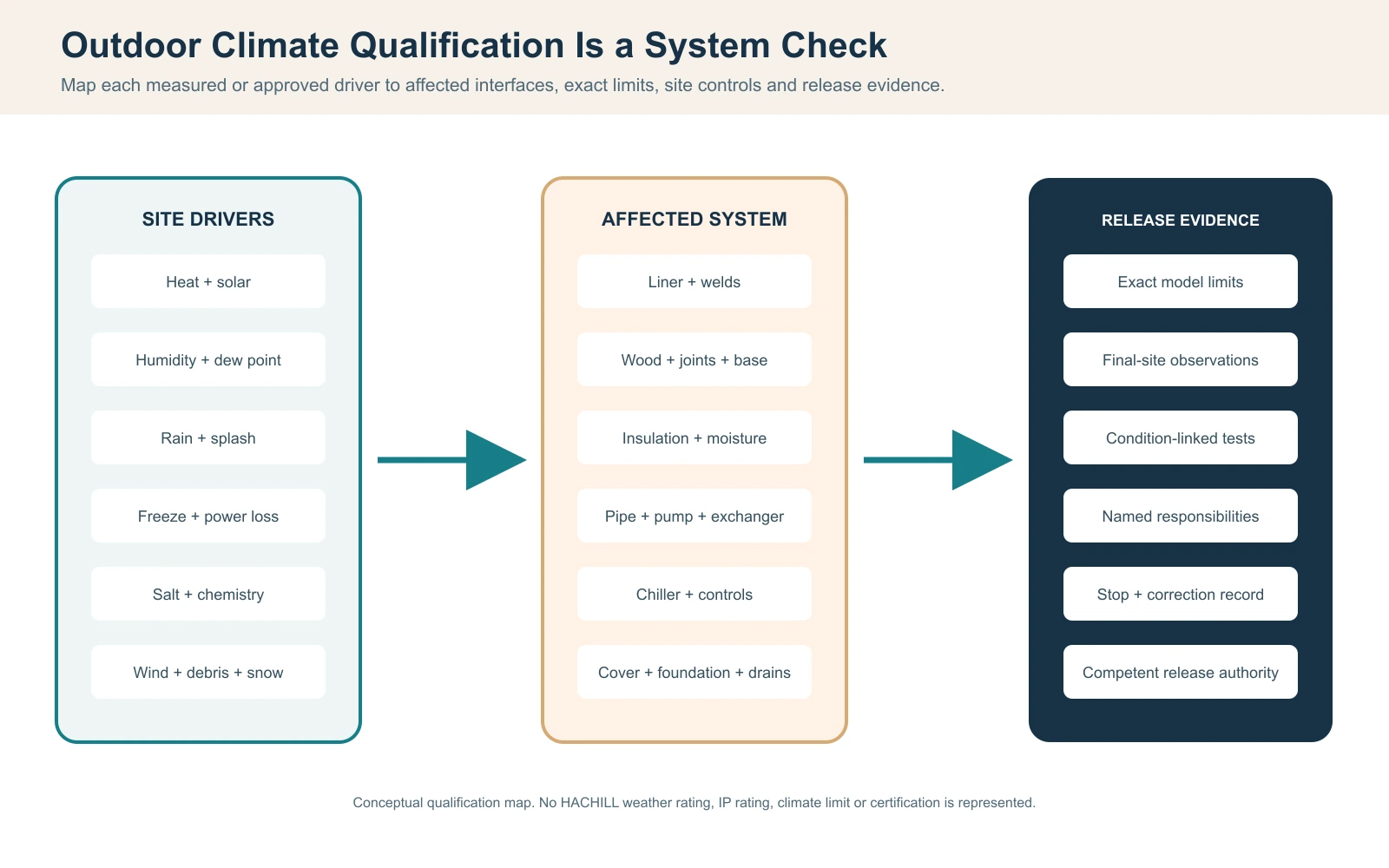
Mapear Condições Climáticas para Componentes e Limites Exatos
Não pergunte se o Thermowood é adequado para um clima isoladamente. Mapeie cada condição para revestimento, madeira, fixadores, isolamento, vedações, tubulações, resfriador, bomba, controles, cobertura, fundação e drenagem. Para cada componente, cite o limite aprovado exato ou marque como aberto. O mesmo gabinete pode conter equipamentos com diferentes limites de ambiente, ventilação ou ingresso.
Matriz de qualificação clima-componente
| Motorista | Interfaces afetadas | Evidências necessárias | Pergunta de liberação |
|---|---|---|---|
| Alta temperatura ambiente/solar | Cobertura, revestimento, madeira, condensador | Limites exatos e dados do local final | Resfriamento útil e materiais aceitos? |
| Umidade/ponto de orvalho | Superfícies frias, isolamento, fundos de painel | Observação vinculada à condição | Condensação controlada? |
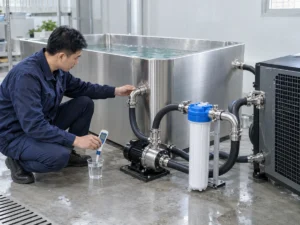
| Congelamento/perda de energia | Banheira, tubulação, filtro, trocador de calor, válvulas | Procedimento de inventário e drenagem | Todas as zonas retidas controladas? |
| Água de chuva/lavagem | Borda, juntas, base, compartimento de equipamentos | Teste de caminho úmido e retorno seco | Sem migração descontrolada? |
| Sal/cloretos | Metais, soldas, fixadores, depósitos | Evidência de material e limpeza | Exposição/manutenção compatível? |
| Vento/detritos/neve | Cobertura, entrada, teto e drenos | Projeto e inspeção qualificados do local | Sem carga/obstrução insegura? |
Uma célula verde precisa de evidência, não de confiança. Se um limite crítico for desconhecido, mantenha a qualificação climática em aberto em vez de fazer uma média das resistências em outros pontos.
Rastreie os caminhos de chuva, respingos e secagem
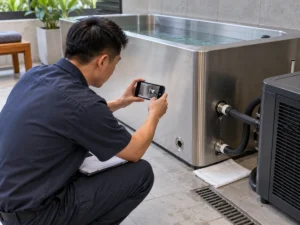
Trace o movimento da água do céu, do usuário, da limpeza e do transbordamento através das juntas do aro, faces dos painéis, topo das fibras, fixadores, verso dos painéis, base e compartimento do equipamento. Verifique se o produto instalado consegue drenar e secar sob o telhado, a fundação e o fluxo de ar aceitos. O revestimento Thermowood não é o sistema de impermeabilização do edifício, e um dreno de piso não prova que a água chega até ele.
Use uma observação controlada de molhagem com fonte declarada, duração ou método de quantidade, condição de vento/telhado, pontos de observação e tempo de acompanhamento. Inspecione os caminhos ocultos antes de fechar os painéis. Não invente um tempo de secagem universal; o acabamento, a geometria das juntas, a temperatura, a umidade e a ventilação o controlam.
Registro de molhagem e secagem externa
| Ponto de verificação | Aquisição | Passar evidência | Parar/retestar |
|---|---|---|---|
| Borda/juntas | Método controlado de chuva/respingo | A água escoa para a face/caminho pretendido | A água entra na junta cega |
| Painel traseiro/subestrutura | Inspeção pré-fechamento e de acompanhamento | O caminho de drenagem/ventilação permanece aberto | Umidade presa persistente |
| Base/fundação | Nível e observação de umidade | Sem contato da madeira com acúmulo de água | Água parada |
| Compartimento de equipamentos | Teste de umidade do painel final | Sem água não controlada nos equipamentos | Umidade elétrica/equipamentos |
| Retorno a seco | Acompanhamento da condição com registro de data e hora | Condição aceita alcançada | Estado oculto desconhecido |
| Zona úmida da edificação | Registro de impermeabilização/drenagem do projeto | Aceitação qualificada separada | Produto usado como comprovação de impermeabilização |
Cenário de engenharia: uma instalação coberta permanece mais úmida do que uma exposta
Problema observado: As costas do painel permanecem úmidas mesmo que a chuva direta raramente alcance a banheira.
Causa provável: Sombra profunda, ventilação da base bloqueada e respingos repetidos impedem a secagem; a suposição de apenas cobertura ignorou a umidade e o fluxo de ar.
Como verificar: Registre eventos de umedecimento, ar/UR, observações das costas do painel, folga da base e tempo de secagem sem remover evidências primeiro.
Caminho de prevenção ou correção: Restabeleça o caminho de drenagem/ventilação aprovado ou revise o detalhe do local/produto e repita a mesma molhagem e observação de acompanhamento.
Qualificar carga solar, alta temperatura ambiente e ar do condensador
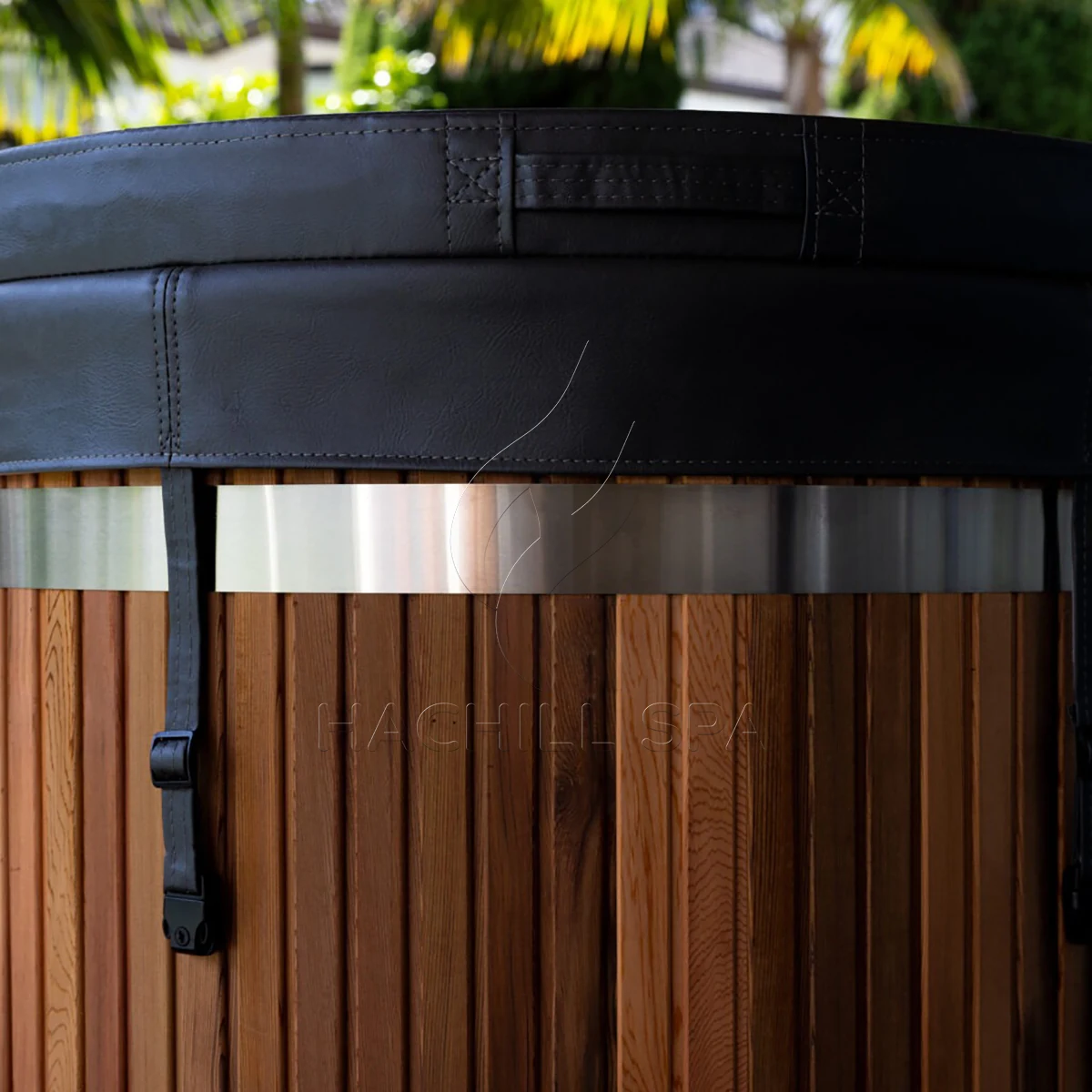
A exposição solar afeta a temperatura da superfície, a mudança de cor, a condição da cobertura, o ganho de calor da água e o ar local dos equipamentos. A International ThermoWood Association observa que o ThermoWood® não tratado acinzenta sob exposição UV e recomenda tratamento superficial protetor para madeira termotratada exposta às intempéries; se a manutenção da aparência for importante, acorde o sistema de acabamento e a expectativa de manutenção antes de fazer o pedido. A seleção do resfriador de água deve usar a capacidade de resfriamento útil nas condições relevantes de água, ambiente e vazão; potência do compressor ou potência de entrada não é capacidade de resfriamento. Meça o ar na entrada do condensador na admissão real, não em uma estação meteorológica distante, e verifique se o ar de descarga recircula atrás de telas ou vegetação.
Registro de teste térmico e de fluxo de ar em clima quente
| Entrada | Aquisição | Por que é necessário | Condição inválida |
|---|---|---|---|
| Temperaturas da água a granel | Sensores calibrados nomeados | Tendência de rebaixamento/manutenção | Leitura única de parede não misturada |
| Ambiente na entrada do condensador | Registrador na captação real | Condição de resfriamento disponível | Somente aplicativo de clima |
| Estado do fluxo/filtro do circuito | Método de campo aprovado | Carga do trocador de calor | Premissa limpa/de placa de identificação |
| Estado solar/cobertura | Observação com registro de data e hora | Ganho de calor simultâneo | Diferente do uso aceito |
| Compressor/bomba/controle | Registro de controle/elétrico | Distinguir desarme da proteção, ciclos de funcionamento e capacidade | Estado ausente |
| Recirculação de descarga | Observação de ar no local final | Temperatura local de admissão | Painéis/paisagem ausentes |
Cenário de engenharia: um teste de resfriador em clima ameno passa, mas a operação no verão falha
Problema observado: A banheira atinge a temperatura alvo durante a comissão à sombra, mas desvia ou desarma durante a operação à tarde.
Causa provável: O teste de aceitação omitiu o microclima solar na entrada do condensador e a recirculação de ar quente após a instalação de telas e plantio.
Como verificar: Sincronize dados de temperatura ambiente de entrada, temperaturas da água, fluxo, cobertura, solar e estado de controle no arranjo final do local.
Caminho de prevenção ou correção: Corrija o fluxo de ar/sombreamento dentro dos limites aprovados ou revise a seleção do equipamento e repita o teste de condição quente declarado antes da liberação.
Separe Condensação em Clima Úmido de Vazamento
A condensação é plausível quando uma superfície fria está abaixo do ponto de orvalho do ar circundante. Registre temperatura do ar e UR, temperaturas das superfícies nomeadas, temperatura da água, estado de ventilação e tempo. Use um método de cálculo ou instrumento identificado. Isso apoia o diagnóstico, mas não exclui um vazamento simultâneo de conexão.
Inspecione a continuidade do isolamento, o caminho de vapor, costuras, válvulas, suportes e penetrações. A água pode migrar de uma ponte térmica para outro local. As escolhas corretivas exigem condições reais e materiais aprovados, não uma promessa genérica de que o Thermowood previne condensação.
Evidências de condensação e fonte de vazamento
| Entrada/observação | Método | Decisão | Limitação |
|---|---|---|---|
| Temperatura do ar/UR | Registrador calibrado/localização | Base do ponto de orvalho | O microclima pode variar |
| Temperatura da superfície | Ponto/método nomeado | Plausibilidade da condensação | Emissividade/contato importa |
| Temperatura da água/tempo | Série temporal verificada | Causa da superfície fria | Posicionamento registrado |
| Isolamento de juntas | Observação seca/tecido ou método aprovado | Evidência ativa de vazamento | Migração oculta possível |
| Estado do isolamento/barreira de vapor | Inspeção as-built | Ponte fria/caminho | Áreas ocultas permanecem abertas |
| Eventos de chuva/respingos | Registro operacional com data e hora | Correlação com fontes externas | Fontes sobrepostas possíveis |
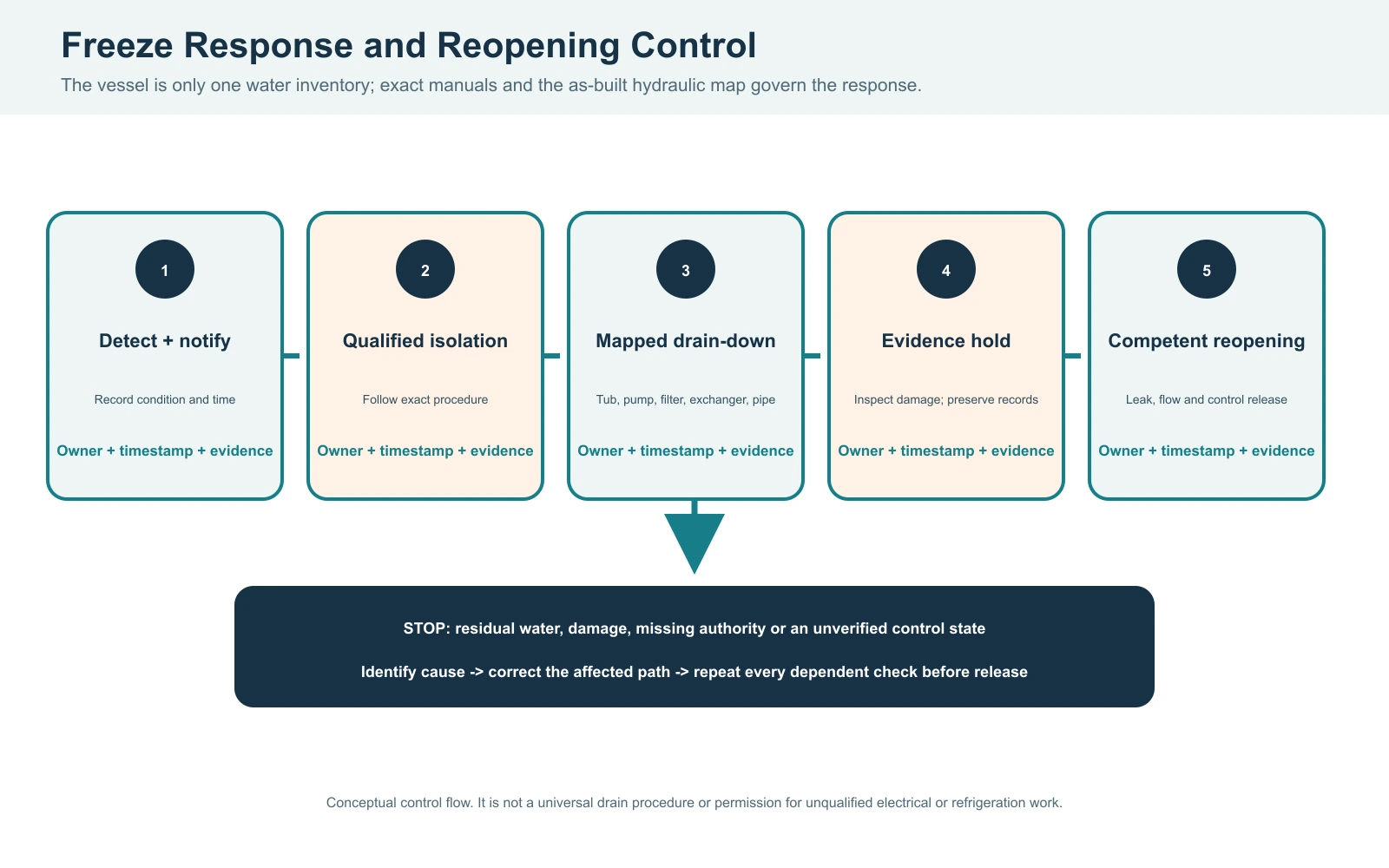
Mapear inventário de água suscetível a congelamento e tempo de resposta
Uma banheira que parece vazia pode reter água em filtros, trocadores de calor, bombas, válvulas de retenção, alças de nível elevado e tubulações do local. O planejamento contra congelamento começa com o esquema hidráulico exato e os manuais dos componentes. Orientações de invernização do fabricante, como o manual da bomba Pentair Max-E-Pro ilustra por que os caminhos de água da bomba e da tubulação devem ser tratados explicitamente quando condições de congelamento são possíveis; é um exemplo de orientação no nível do componente, não um procedimento de invernização HACHILL. Marque cada ponto de isolamento e drenagem, limitação por gravidade, volume residual e ação qualificada necessária. Não chame um sistema de à prova de congelamento, a menos que evidências verificadas sustentem a configuração e a condição exatas.
Registre o tempo de detecção e isolamento/drenagem sob um exercício controlado. Uma relação de planejamento é tempo de exposição ao congelamento não controlado = tempo de detecção + tempo de resposta competente + tempo de isolamento/drenagem. Isto não prevê a temperatura de dano; expõe a dependência operacional durante perda de energia ou fechamento.
Mapa de parada por congelamento e reabertura
| Elemento | Evidência obrigatória | Condição de manutenção | Verificação de reabertura |
|---|---|---|---|
| Cuba e dreno baixo | Procedimento/nível exato | Caminho residual aberto | Inspeção visual/aprovada |
| Bomba/filtro/trocador | Instruções de drenagem de componentes | Um ponto baixo assumido | Verificações de integridade/vazamento/fluxo |
| Tubulação/válvulas do local | Pontos altos/baixos conforme construído | Ramal aprisionado desconhecido | Inspeção qualificada |
| Energia/controle | Alarme e resposta a interrupções | Dependência sem supervisão | Teste de controle e sensor |
| Cobertura/involucro | Condição de inverno aprovada | Conflito neve/vento/ventilação | Verificação física/acesso |
| Resposta do operador | Exercício cronometrado e autoridade | Nenhum respondedor competente | Registro e reciclagem |
Cenário de engenharia: o vaso drena, mas o trocador de calor congela
Problema observado: A banheira parece vazia após o desligamento, mas um componente a jusante vaza durante o reinício.
Causa provável: A lista de verificação de drenagem cobriu apenas o vaso e omitiu volumes retidos em componentes e tubulações do local.
Como verificar: Compare o circuito conforme construído com os manuais exatos e rastreie cada válvula, válvula de retenção, ponto alto e ponto de drenagem antes de pressurizar.
Caminho de prevenção ou correção: Emita um mapa de desligamento específico da configuração, corrija o caminho retido e repita as verificações de vazamento, fluxo e controle sob autoridade competente de reabertura.
Trate o Sal Costeiro e a Química da Água como Exposições Combinadas
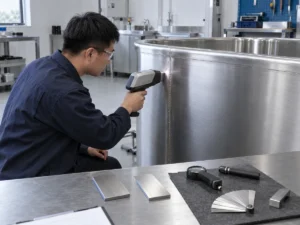
A exposição costeira pode depositar sais em metais, madeira, fixadores e equipamentos, mesmo sem contato direto com a água do mar. Revise a liga e a fabricação do revestimento, o tratamento de soldas, o material dos fixadores, o contato entre metais dissimilares, as frestas, a drenagem e o acesso para remoção de depósitos. A orientação sobre corrosão da Outokumpu explica que ambientes contendo cloreto podem aumentar o risco de corrosão por pite e em frestas no aço inoxidável. Não trate uma designação de grau de aço inoxidável como prova de imunidade costeira; liga exata, fabricação, temperatura, química, depósitos e condições de limpeza são todos relevantes.
Separe os depósitos atmosféricos da química da água tratada e dos agentes de limpeza, e então considere onde eles se combinam na borda e na linha d'água. Defina inspeção e acesso de limpeza aprovado sem inventar frequências universais. Registre depósitos reais, química e condição antes do reparo.
Exposição costeira e evidência de corrosão
| Interface | Evidência | Inspeção/dados | Parada/escalonamento |
|---|---|---|---|
| Revestimento/solda/acabamento | Registro exato de material/fabricação | Linha d'água e zonas afetadas pelo calor | Pites/fissuras/material aberto |
| Fixadores/metais | Programação de contato material/contato | Inspeção de manchas e frestas | Substituição não aprovada |
| Madeira/acabamento | Amostra/sistema aprovado | Estado de sal/depósito e úmido-seco | Contaminação persistente |
| Lado do ar do equipamento | Limite manual/ambiental | Depósitos na serpentina/entrada de ar | Condição obstruída/corroída |
| Química da água | Registros aprovados do operador | pH/sanitizante/cloreto conforme aplicável | Água fora de controle |
| Acesso para limpeza | Teste de procedimento/tarefa aprovado | Remoção e secagem | Depósitos inacessíveis |
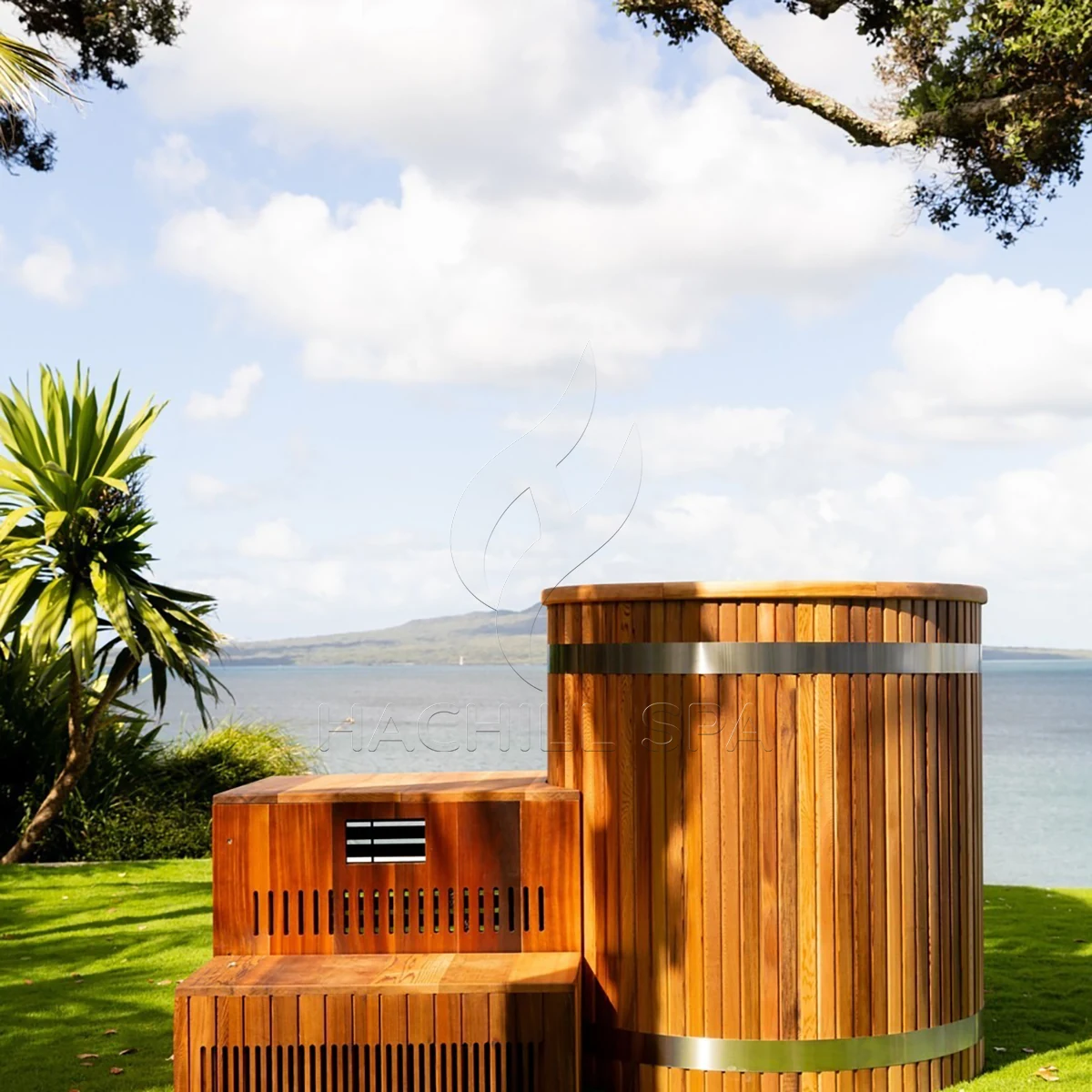
Coordenar vento, detritos, fundação e drenagem
O vento pode levantar ou deslocar coberturas, empurrar chuva para dentro das juntas e carregar detritos para as serpentinas do condensador e drenos. Neve ou escoamento do telhado podem bloquear o acesso ou adicionar cargas. Profissionais de projeto qualificados determinam cargas estruturais de vento/neve; este guia não fornece âncoras universais ou valores de carga.
Verifique o nível da fundação e as reações de apoio usando a massa preenchida exata e a geometria da base. Coordene caimentos do piso ou da base, impermeabilização, rota de drenagem, proteção elétrica contra intempéries, folgas do condensador e remoção futura de componentes. Mantenha vegetação, telas e enclausuramentos fora dos envelopes exatos de ar e manutenção dos equipamentos, e resolva os requisitos locais estruturais, de drenagem e elétricos com os profissionais de projeto apropriados.
Aceitação da interface do local externo
| Interface | Evidência do projeto | Verificação de campo | Condição de manutenção |
|---|---|---|---|
| Fundação/suporte | Projeto qualificado e desenho da base | Levantamento de nível/suporte | Caminho de reação/carga não aprovado |
| Drenagem/impermeabilização | Rota/sistema qualificado | Evento de umidade controlado | Acúmulo de água/descarga não aprovada |
| Elétrico/climático | Classificação exata e projeto local | Instalação/teste qualificado | Proteção/entrada aberta |
| Vento/cobertura/detritos | Projeto e procedimento operacional | Inspeção/simulação no local final | Captação/entrada não controlada |
| Condensador/serviço | Invólucro necessário | Verificação final de painéis/paisagismo | Recirculação/sem caminho de remoção |
| Acesso/saída | Layout aprovado | Rota úmida e sazonal | Abordagem bloqueada/insegura |
Planeie a inspeção sazonal e a carga de trabalho de encerramento
A adequação para uso exterior depende da capacidade do operador. Liste inspeção de tempestades, remoção de detritos, inspeção de sal/depósitos, gestão de coberturas, verificações de caminhos de drenagem, encerramento por congelamento, reabertura sazonal e tarefas de acabamento. Meça o tempo prático representativo e separe o tempo de encerramento, secagem ou cura necessário.
Uso carga de trabalho sazonal = soma(frequência do evento x tempo de tarefa observado) + preparação + tempo de encerramento/secagem/cura + registos como método de planeamento de projeto, não uma promessa universal de mão de obra. Métodos de manutenção detalhados provêm do pós 2252 e de manuais exatos.
Folha de carga de trabalho operacional sazonal
| Tarefa/evento | Aquisição | Dependência de encerramento | Evidência de liberação |
|---|---|---|---|
| Verificação de chuva/tempestade | Tempo de tarefa pós-evento | Acesso seguro/clima | Sem água retida/danos |
| Limpeza de detritos/entrada | Demonstração final no local | Isolamento do equipamento | Caminho de ar/drenagem restaurado |
| Verificação de depósito costeiro | Inspeção vinculada à exposição | Limpeza/secagem aprovada | Condição aceite |
| Paragem por congelação | Perfuração qualificada cronometrada | Isolamento de energia/água | Todas as zonas mapeadas drenadas |
| Reabertura sazonal | Lista de verificação específica da causa | Testes qualificados de fuga/fluxo/controlo | Autoridade nomeada |
| Trabalho de acabamento/painel | Método de manutenção aprovado | Secagem/cura e encerramento para hóspedes | Registo de amostra/condição |
Escrever um Plano de Comissionamento Vinculado à Condição
Um resultado de comissionamento só é útil para a condição que representa. Antes do teste, declare se o objetivo é pull-down, manutenção de temperatura, controle de umedecimento, fluxo de ar do condensador, resposta à perda de energia ou reabertura sazonal. Registre a configuração exata do produto, configurações de software ou controle, estado do filtro, arranjo de tubulação, posição da tampa, carga do usuário e telas finais ou paisagismo. Um teste com painéis abertos temporários não pode fechar uma reivindicação de fluxo de ar para o invólucro acabado.
Construa uma linha do tempo sincronizada em vez de coletar leituras isoladas. Nomeie cada instrumento, status de calibração ou verificação, localização do sensor, intervalo de registro, condição de início e parada, regra de dados ausentes e pessoa que controla o teste. A temperatura da água deve representar a condição de massa misturada; uma única leitura de parede pode ser tendenciosa pelo fluxo de entrada, exposição solar ou contato do sensor. O ar de entrada do condensador deve ser medido onde a unidade realmente aspira o ar. A evidência de fluxo deve usar o método de campo aprovado e a condição de filtro aceita.
Separe o desempenho ambiental da proteção do equipamento. Um desligamento por alta pressão, alarme de baixa vazão, falha de sensor, interrupção da bomba ou perda de energia não é apenas um dado inconveniente. Preserve o estado de controle e a sequência temporal, identifique a causa e inspecione o equipamento afetado antes de reiniciar. Se um dispositivo de proteção desarmar, siga o manual exato do equipamento e não burle a proteção apenas para concluir um teste. Trabalhos elétricos fixos, trabalhos com fluido refrigerante e comissionamento regulamentado permanecem com pessoal devidamente qualificado.
Plano de comissionamento externo vinculado à condição
| Objetivo do teste | Entradas declaradas | Registro obrigatório | Limite de liberação |
|---|---|---|---|
| Pull-down/manutenção | Volume de água, início/alvo, ambiente, solar, cobertura, carga do usuário | Tendência sincronizada de água/ar/fluxo/controle | Somente condição e configuração declaradas |
| Fluxo de ar do condensador | Painéis finais, telas, plantio e folgas de serviço | Temperaturas de admissão/descarga e observação de recirculação | Arranjo aberto temporário é inválido |
| Molhagem/retorno à secagem | Método de chuva/respingo, vento/telhado, condição de acompanhamento | Caminho, inspeção oculta e carimbos de data/hora | Sem migração descontrolada ou estado preso |
| Diagnóstico de condensação | Ar/UR, água e temperaturas de superfície nomeadas | Método do ponto de orvalho mais verificações independentes de vazamento | Plausibilidade não exclui vazamento |
| Resposta ao congelamento | Inventário mapeado, deteção e resposta competente | Isolamento/drenagem cronometrado e inspeção residual | Sem libertação no inverno com caminho de retenção aberto |
| Reabertura | Causa, correção, verificações de fugas/caudal/controlo/drenagem | Autorização competente nomeada e evidência retida | Separado da conclusão da paragem |
Defina a janela de aceitação antes do teste. O plano deve indicar quais as condições que devem permanecer dentro dos limites aprovados, durante quanto tempo a observação continua, que dados invalidam a execução e quem pode interrompê-la. Se o clima impedir a condição determinante, feche apenas as partes efetivamente demonstradas e mantenha o restante requisito sazonal como item em aberto. Um resultado de dia ameno pode apoiar o trabalho e os controlos, mas não pode comprovar a retenção em tarde quente, a resposta ao congelamento ou a molhagem induzida pelo vento.
Ao comparar fornecedores ou locais, normalize os registos antes de tirar conclusões. Compare o mesmo volume de água, temperatura inicial e alvo, condição ambiente e solar, estado do caudal/filtro, política de cobertura e método de medição. Se esses dados de entrada diferirem, descreva os registos como observações operacionais separadas, em vez de classificar um sistema como mais eficiente. Isto evita que uma janela de teste favorável se torne numa alegação de desempenho não suportada para toda a gama de produtos.
Cenário de engenharia: um registo de comissionamento parece completo, mas não pode suportar a libertação
Problema observado: O relatório contém muitas leituras de temperatura, mas faltam o ecrã final, a política de cobertura, a condição do caudal e as localizações dos sensores.
Causa provável: A equipe registrou os valores antes de congelar o método de teste e a configuração final instalada.
Como verificar: Reconstrua a linha do tempo a partir de fotografias, registros de controle, registros do instalador e localizações dos instrumentos; marque cada entrada indisponível em vez de estimá-la.
Caminho de prevenção ou correção: Repita apenas o teste afetado sob a configuração final com um método pré-aprovado, condições de parada e autoridade de liberação nomeada.
Aceitar Condições Climáticas e Reabertura Sazonal Separadamente
A aceitação documental encerra o modelo, a configuração, os limites ambientais exatos, a base climática do local e as responsabilidades. A aceitação da construção encerra fundação, drenagem, elétrica e caminhos de ar. Molhagem, térmica, condensação, resposta ao congelamento e reabertura sazonal são testes separados porque seus métodos e autoridades diferem.
Quando uma condição falha, preserve carimbos de data/hora, instrumentos, locais, clima, temperaturas de água/ar, configuração, fotografias e estado de controle. Identifique a causa antes de alterar múltiplas variáveis. Registre a correção e os testes dependentes. Não sobrescreva o evento falho com um reteste em condições climáticas favoráveis.
Aceitação climática externa e cronograma de disputas
| Etapa | Passar evidência | Condição de retenção/parada | Reteste controlado |
|---|---|---|---|
| Documentos | Limites exatos, clima e funções | Reivindicação externa genérica/limite aberto | Reemitir base aprovada |
| Construção | Fundação, drenagem, energia, ar, acesso | Interface do local aberta | Reinspeção qualificada |
| Molhagem/condensação | Evento declarado e evidência de origem | Migração/água não controlada | Repetir mesma condição aceita |
| Térmica/fluxo de ar | Registro de água/entrada/fluxo vinculado à condição | Desarme da proteção, desvio térmico ou ensaio inválido | Corrigir causa e repetir |
| Resposta ao congelamento | Inventário, drenagem e exercício cronometrado | Resposta residual/aberta competente | Repetir processo mapeado completo |
| Reabertura | Vazamento, fluxo, controle, drenagem e registros | Autoridade de dano/ausência | Liberação específica da causa |
Cenário de engenharia: um teste de mola aprovado é usado para encerrar uma reclamação de inverno
Problema observado: O sistema é aceito após comissionamento em clima ameno, mesmo que o desligamento por congelamento e o reinício nunca tenham sido demonstrados.
Causa provável: Um teste operacional foi incorretamente tratado como evidência para todas as condições sazonais.
Como verificar: Compare a matriz climática aceita e o plano de teste com as condições reais e identifique estados não testados de congelamento, perda de energia e água residual.
Caminho de prevenção ou correção: Mantenha a liberação de inverno aberta, conduza a evidência qualificada de desligamento/reinício em uma condição declarada apropriada e preserve aprovações separadas.
Classificar Evidências e Atribuir Responsabilidades Climáticas
Escada de evidências climáticas externas (escala de trabalho do projeto; não é um padrão do setor)
| Grau | Evidência | Uso permitido | Limite |
|---|---|---|---|
| A | Teste testemunhado de local/configuração exata | Aceitação específica da condição | Somente duração/método declarado |
| B | Limite de modelo exato aprovado e projeto | Seleção/envio | Estado de campo verificado separadamente |
| C | Registo de componentes rastreável/cálculo do local | Suporte de interface | Sistema completo não comprovado |
| D | Estimativa qualificada com premissas | Planejamento | Não é possível fechar a liberação |
| E | Foto exterior/afirmação genérica | Orientação | Sem comprovação ambiental |
O fornecedor fornece os limites exatos de componentes e configuração. A equipe do projeto define o clima e o design do local. O instalador registra as interfaces conforme construído e o comissionamento. O operador é responsável pelos procedimentos sazonais e registros. Partes locais qualificadas aprovam trabalhos estruturais, elétricos, de drenagem e de uso público regulamentado. Engenharia de Produto HACHILL pode revisar os dados exatos do produto; não pode substituir essas autoridades.
Emitir um pedido de cotação normalizado para o clima
Envie modelo/formato exato, localização do local, fonte de dados climáticos, telhado/sombra, chuva e orientação solar, humidade, plano de congelação, exposição costeira, época de operação, caso de água/térmico, energia, fundação, drenagem, fluxo de ar, quantidade, capacidade de manutenção, evidência e necessidades de aceitação. Marque valores em aberto em vez de deixar os fornecedores assumi-los.
Campos de pedido de cotação para banho frio de Thermowood exterior
| Campo | Por que é necessário | Resposta do fornecedor/projeto | Fechamento |
|---|---|---|---|
| Base de clima/exposição | Define os verdadeiros fatores determinantes | Limites, premissas e opções | Proposta técnica |
| Configuração exata | Impede a transferência entre modelos relacionados | Lista de materiais/desenhos/manuais | Submissão |
| Condições térmicas/do ar | Controla o resfriamento útil | Seleção/teste vinculados à condição | Plano de comissionamento |
| Congelamento/fechamento | Controla a água retida e a resposta | Procedimento/interfaces exatos | Liberação sazonal |
| Obras no local | Separa fundação/dreno/energia/ar | Limite incluído/excluído | Coordenação |
| Evidência/aceitação | Torna as ofertas comparáveis | Documentos, testes, testemunhas | Ordem de compra/abertura |
Perguntas frequentes
Toda banheira de imersão fria em Thermowood pode ficar ao ar livre o ano todo?
Não há resposta universal aplicável. Verifique os limites exatos da banheira, do chiller, dos controles, da tubulação e da cobertura em relação ao calor, umidade, chuva, congelamento, vento, exposição ao sal, proteção do local e capacidade de fechamento do operador.
O Thermowood torna uma banheira de imersão fria resistente às intempéries?
Não. O Thermowood é uma das camadas de material. A qualificação para uso externo também depende do revestimento interno, da estrutura, das juntas, dos fixadores, do isolamento, das classificações dos equipamentos, da drenagem, da ventilação, da fundação, do trabalho elétrico e do projeto do local.
Como distinguir condensação de um vazamento em áreas externas?
Registre a temperatura do ar/RH sincronizada, as temperaturas de superfície e da água, a ventilação e as observações isoladas das juntas. A condensação pode ser plausível abaixo do ponto de orvalho, mas um vazamento simultâneo ainda deve ser verificado.
O que deve ser drenado antes do congelamento?
Siga exatamente os manuais e um mapa hidráulico conforme construído. A banheira, as bombas, os filtros, os trocadores de calor, as válvulas, os sifões e a tubulação do local podem reter água mesmo quando o tanque parece vazio.
Quais dados climáticos devem ser enviados com um pedido de cotação (RFQ)?
Informe a base de temperatura/umidade do local, chuva e orientação solar, duração do congelamento, considerações sobre vento/detritos ou neve, exposição costeira, telhado/sombra, temporada de uso, isolamento térmico, drenagem, capacidade de energia e manutenção.
Referência de Base e Limites
NOAA U.S. Climate Normals fornece normais climáticas de estações e em grade para o planejamento nos EUA; o microclima local e as condições de projeto ainda exigem revisão.
International ThermoWood Association Handbook fornece informações específicas sobre ThermoWood quanto à exposição às intempéries, tratamento superficial e condições de serviço; a adequação exata do sistema instalado ainda depende do produto completo e do local.
Outokumpu corrosion-resistance guidance apoia o limite de corrosão localizada por cloretos usado na seção costeira; não estabelece uma classificação universal de corrosão para um produto HACHILL.
Pentair pump winterization guidance ilustra por que a água retida em equipamentos e tubulações deve ser tratada antes de condições de congelamento; os procedimentos exatos da HACHILL permanecem específicos por modelo.
Limite técnico: Nenhum limite ambiental exato da HACHILL, classificação IP, classificação de proteção contra congelamento, classificação de resistência à corrosão, resultado de resfriamento, alegação sobre processamento da madeira, vida útil ou certificação é inferido aqui. Registros de produtos aprovados, manuais exatos, evidências do local e regras locais aplicáveis controlam.
Transforme os dados climáticos em uma revisão de projeto externo
Envie à HACHILL o formato exato, a base climática do local, a orientação do telhado e solar, a exposição a congelamento e ambientes costeiros, a temporada de operação, o caso térmico, a energia, a fundação, a drenagem, o fluxo de ar, a quantidade e as necessidades de evidência. A equipe pode revisar as interfaces do produto enquanto as partes qualificadas do projeto mantêm a autoridade local de design.