Resposta rápida: Se você está comparando UV vs ozônio para uma banheira de imersão fria, nenhuma das tecnologias é universalmente melhor. A UV trata a água apenas enquanto ela passa por um reator devidamente especificado e depende da vazão, da transmissividade UV, da potência da lâmpada e da condição de manutenção do equipamento. O ozônio pode proporcionar oxidação e tratamento antimicrobiano quando a geração, a injeção, a mistura/contato, o monitoramento e o manuseio do gás são corretamente projetados. Nenhuma das tecnologias deve ser presumida como substituta da filtração, da limpeza física, da verificação da água ou — quando o caso de uso exigir — de uma estratégia de desinfecção residual. Não escolha apenas pelo volume da banheira, pela potência da lâmpada, pela produção do gerador de ozônio ou por alegações de marketing. Escolha pela função de tratamento, pelas condições hidráulicas e da água reais, pela capacidade de manutenção, pela compatibilidade de materiais e por a banheira de imersão fria ser privada ou compartilhada/comercial. Se esses dados não estiverem definidos, RETENÇÃO é mais defensável do que uma recomendação baseada em suposições.
UV vs ozônio para banheira de imersão fria: qual escolher?
Não escolha entre UV e ozônio perguntando qual tecnologia parece mais potente.
Pergunte, em vez disso: Qual função de tratamento este componente precisa desempenhar, e qual evidência mostra que ele consegue desempenhar essa função nas condições reais do sistema?
UV e ozônio têm requisitos operacionais diferentes. O desempenho da UV depende de a água passar por um reator UV sob condições hidráulicas, ópticas e de equipamento adequadas. O tratamento com ozônio depende da produção de ozônio, da sua transferência para a água, da obtenção da mistura/contato pretendidos e do manuseio adequado do gás não utilizado. Anexo do Model Aquatic Health Code do CDC fornece contexto técnico de saúde pública aquática para essas distinções.
Regras genéricas como “UV para banheiras pequenas, ozônio para banheiras grandes” não são um atalho de engenharia defensável. O volume do vaso importa, mas não substitui o trajeto real de circulação, a vazão de operação, a carga de usuários, a condição da água, a validação do reator ou o projeto de contato do ozônio, o acesso para manutenção e a capacidade de manutenção.
| Variável de decisão | UV | Ozônio |
|---|---|---|
| Pergunta principal de seleção | O reator consegue entregar o tratamento necessário nas suas condições operacionais validadas? | O sistema consegue gerar, entregar e colocar o ozônio em contato conforme o previsto? |
| Armadilha de especificação | Apenas a presença ou a potência da lâmpada | Apenas a capacidade do gerador |
| Dependências principais | Vazão, transmissividade UV, condição da lâmpada/luva e faixa operacional validada | Geração, injeção, contato, monitoramento e manuseio do gás |
| Residual persistente em todo o vaso? | Não deve ser presumido | Não deve ser presumido |
| Filtragem substituída? | Não | Não |
| Resultado possível | UV / EM ESPERA | Ozônio / EM ESPERA |
Para água recreativa retida/compartilhada, as evidências de saúde pública utilizadas aqui tratam a UV e o ozônio como camadas de tratamento, e não como substitutos completos do restante do sistema de sanitização. O resumo de evidências sobre banheira de imersão fria do NCCEH afirma que a UV e o ozônio não fornecem desinfecção residual no contexto de saúde pública compartilhada que examina.
Regra de decisão: Nenhum dos dois é universalmente melhor. Escolha a tecnologia cujo papel de tratamento e condições de operação correspondam ao sistema completo.
Se o sistema ainda não definiu essas condições, RETENÇÃO é mais defensável do que presumir.
O que a UV realmente faz — e o que determina se ela funciona conforme o previsto
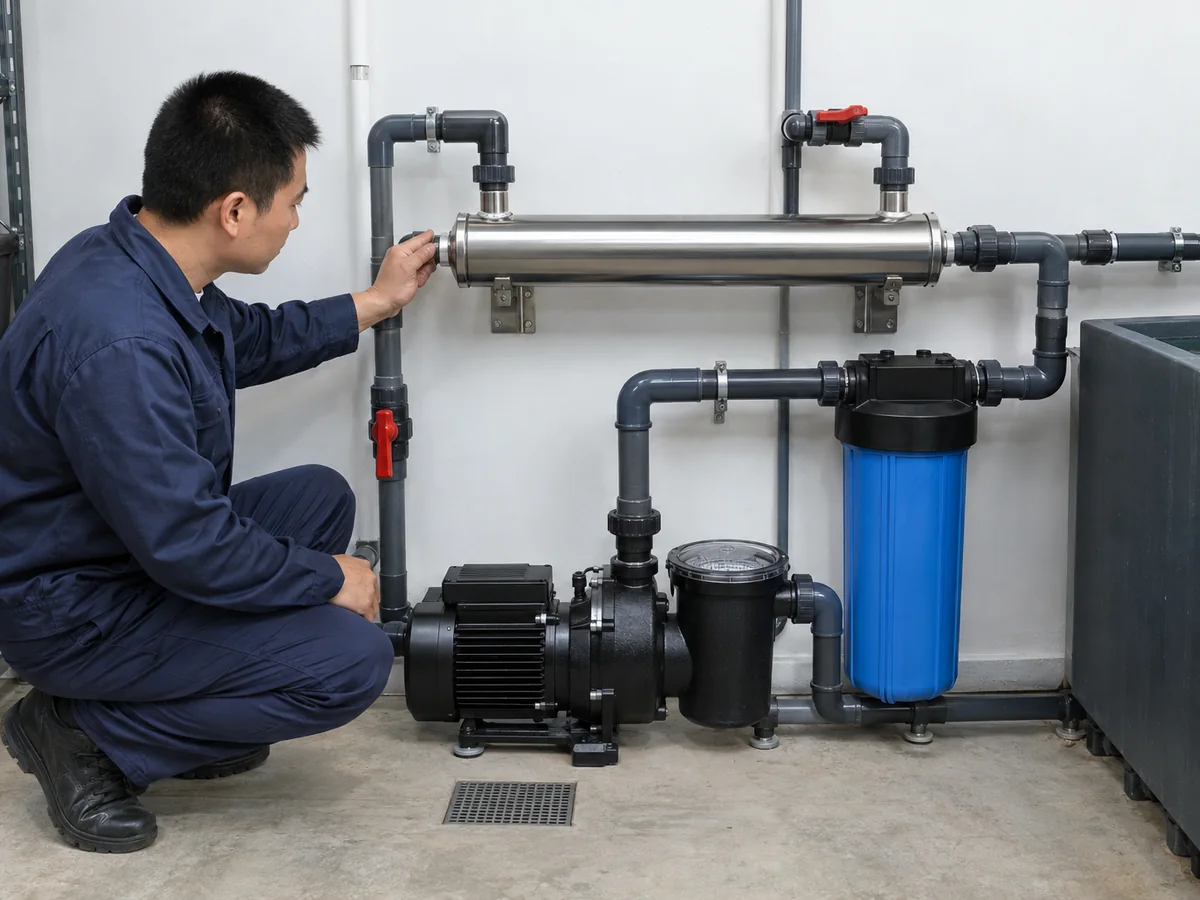
Um sistema UV trata a água enquanto essa água passa pelo reator UV. Uma lâmpada UV estar ligada não é a mesma coisa que comprovar que a água recebeu o tratamento pretendido.
A vazão faz parte da condição de desempenho
Um reator UV deve operar dentro das condições usadas para estabelecer seu desempenho. Manual de Orientação sobre Desinfecção por Ultravioleta da EPA é uma referência de validação UV para água potável, não uma regra para banheira de imersão fria. O 2024 Model Aquatic Health Code utiliza explicitamente práticas de validação da EPA para equipamentos UV de saúde pública aquática e exige documentação de validação específica por modelo. Nesses referenciais, a vazão de operação, a transmissividade UV, a potência/intensidade da lâmpada e a faixa operacional validada fazem parte da base de desempenho.
Uma especificação de potência da lâmpada não pode, por si só, estabelecer se a água está recebendo tratamento validado adequado.
Água que parece límpida não é necessariamente opticamente equivalente
O tratamento UV depende de quão efetivamente a luz ultravioleta atravessa a água. A transmissividade UV, ou UVT, é, portanto, uma variável operacional. Uma banheira de imersão visualmente límpida não informa o valor de UVT nem prova que o reator está operando dentro das condições assumidas por sua validação.
O NCCEH observa que a turbidez pode afetar a eficácia da desinfecção UV na água de banheira de imersão fria.
O envelhecimento da lâmpada e a incrustação importam
A condição do equipamento UV muda ao longo do tempo. A orientação da EPA identifica o envelhecimento da lâmpada e a incrustação das camisas das lâmpadas ou das janelas dos sensores como fatores que podem reduzir o desempenho efetivo do UV, e não apoia tratar um único intervalo de limpeza como universal para todas as instalações.
Em vez de perguntar apenas se a banheira de imersão fria “tem UV”, pergunte se o sistema proposto consegue documentar seu componente exato de tratamento, faixa de operação, base de vazão, premissas de qualidade da água, requisitos de monitoramento e manutenção.
Dispositivo instalado ≠ tratamento verificado.
O que o ozônio realmente faz — e por que a produção do gerador não conta a história toda
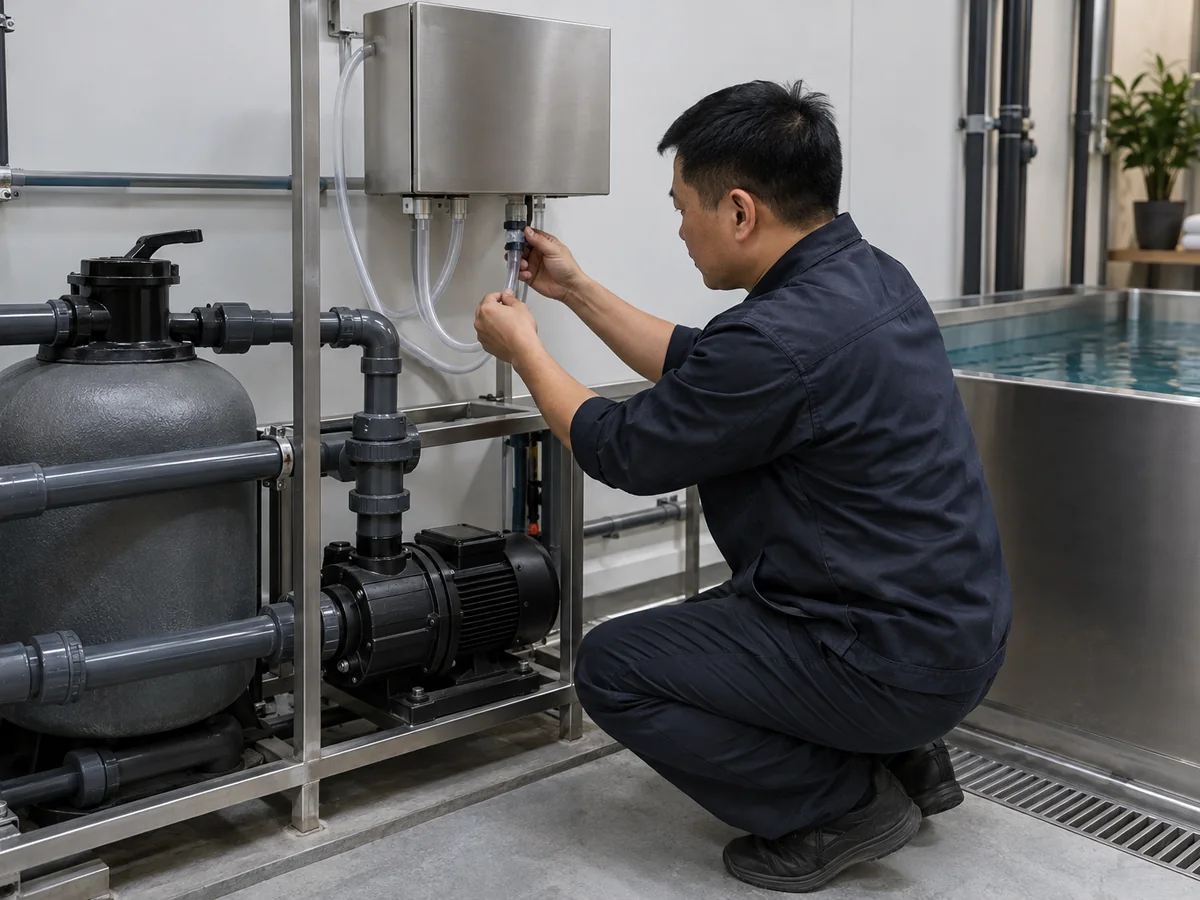
Um gerador de ozônio pode produzir ozônio, mas isso por si só não prova quanto tratamento útil a água recebe.
Ozônio gerado não é o mesmo que tratamento entregue
A placa de identificação de um gerador de ozônio pode descrever a capacidade de produção, mas o tratamento depende do que acontece após a geração. O ozônio precisa chegar à água e interagir com ela nas condições previstas pelo projeto de tratamento.
Em seu escopo de saúde pública aquática, o documento de código 2024 MAHC trata um sistema de ozônio como mais do que um gerador: ele inclui injeção, equipamento de reação/contato, manuseio/destruição de gás e elementos de monitoramento/controle. Esses componentes de código de instalações aquáticas públicas não devem ser copiados integralmente para toda especificação residencial privada, mas mostram por que a produção do gerador sozinha não é uma alegação completa de tratamento.
A oxidação não é automaticamente uma sanitização completa
O ozônio é um oxidante poderoso e pode realizar tratamento antimicrobiano sob condições adequadamente projetadas. Mas “o ozônio oxida contaminantes” não estabelece que uma banheira de imersão fria esteja totalmente sanitizada. A primeira afirmação descreve uma função de tratamento; a segunda faz uma alegação de segurança da água de todo o sistema.
O ozônio não deve ser tratado como proteção residual permanente
No framework de banheira de imersão fria/saúde pública revisado para este artigo, o ozônio não fornece um residual desinfetante persistente em toda a água retida. Uma zona de tratamento no sistema de circulação não deve ser confundida com proteção residual contínua em todo o vaso.
O manuseio de gás faz parte da decisão
entrada da NIOSH sobre ozônio identifica o ozônio como um oxidante poderoso e lista a inalação como via de exposição, com efeitos oculares, em membranas mucosas e respiratórios entre os riscos reconhecidos. Isso torna a contenção de gás, a estratégia de destruição/ventilação e a resposta a vazamentos parte da decisão de equipamento, e não uma reflexão opcional posterior.
O comprador deve perguntar como o sistema proposto vai da saída do gerador ao tratamento controlado — e como o ozônio não utilizado é manuseado com segurança. Se a resposta parar na classificação do gerador, o caso de tratamento está incompleto.
O que nem UV nem ozônio substituem: filtração, proteção residual e verificação da água
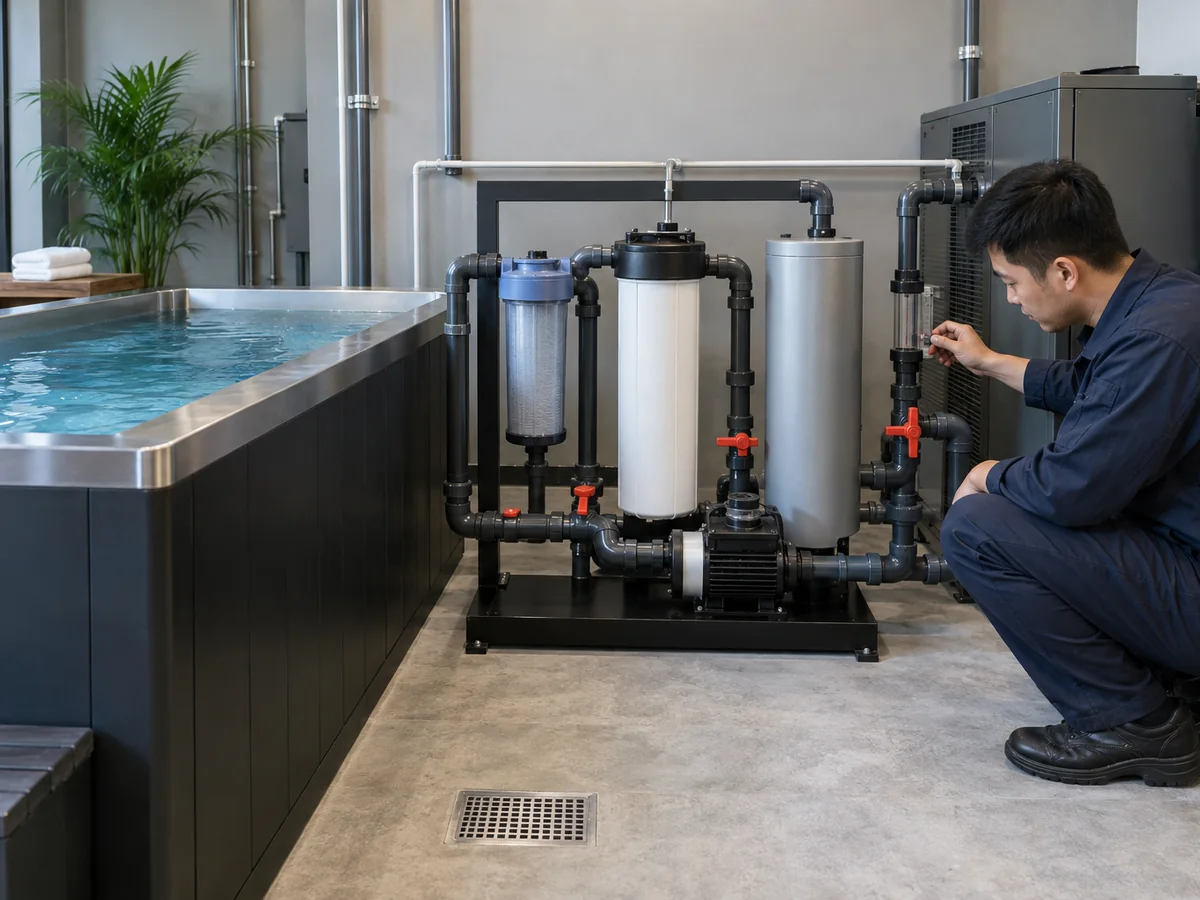
O erro mais importante a evitar é tratar um único dispositivo de tratamento como se fosse todo o sistema de cuidado da água.
Filtragem não é desinfecção
Um filtro remove material físico selecionado da água que passa por ele. UV e ozônio desempenham funções de tratamento diferentes. Um não se torna desnecessário simplesmente porque o outro existe.
Da HACHILL Guia de cuidado da água da banheira de imersão fria mantém circulação, filtragem, sanitização, testes, limpeza física e substituição da água com base nas condições como controles separados.
Filtragem ≠ desinfecção.
Tratamento pontual não é o mesmo que proteção residual
A questão mais importante do sistema é: O que protege a água retida fora do dispositivo de tratamento ou da zona de tratamento?
O UV atua enquanto a água passa pelo reator. O ozônio opera por meio do seu processo de entrega e contato e depois se decompõe. Nenhum dos dois deve ser automaticamente descrito como fornecedor de proteção desinfetante persistente em todo o vaso.
Para contextos de banheira de imersão fria compartilhada/pública, O resumo de evidências sobre banheira de imersão fria do NCCEH recomenda especificamente UV ou ozônio em combinação com cloro ou bromo, porque UV e ozônio não fornecem desinfecção residual. Essa afirmação não deve ser convertida em uma regra legal universal para residências particulares.
“Livre de produtos químicos” não é uma alegação confiável para todo o sistema
A presença de UV ou ozônio não prova, por si só, que o controle de residual, os testes de água, a filtração, a limpeza física ou a manutenção do equipamento sejam desnecessários. A questão mais adequada é quais controles permanecem necessários depois que o componente de tratamento executou sua própria função.
Água límpida não é suficiente
A aparência visual pode identificar problemas óbvios, mas não consegue estabelecer controle microbiológico nem confirmar que todos os parâmetros de tratamento estão dentro da faixa operacional exigida.
Água límpida ≠ condição da água verificada.
Manutenção, compatibilidade e segurança: o que pode desqualificar UV ou ozônio
A manutenção faz parte da validade do tratamento. Um método tecnicamente sólido ainda pode ser a escolha errada para o projeto se o sistema não conseguir manter o equipamento dentro das condições que tornam a alegação de tratamento crível.
Uma rota UV deve permanecer em HOLD quando a base operacional não está clara
- A vazão operacional relevante é desconhecida.
- A faixa operacional validada não pode ser fornecida.
- As premissas de condição da água não estão claras.
- A condição da lâmpada ou do tubo de quartzo não pode ser mantida de forma razoável.
- O acesso de manutenção necessário não está disponível.
- Falha ou operação fora de especificação não pode ser identificada.
Essas lacunas não provam que o UV é inadequado. Elas significam que a alegação de tratamento por UV ainda não está suficientemente verificada.
Uma rota com ozônio exige mais do que um gerador instalado
- A injeção ou mistura não está definida.
- O arranjo de contato não está claro.
- O tratamento de off-gas não foi abordado.
- Os controles de exposição indoor relevantes não estão resolvidos.
- A compatibilidade de materiais não está verificada.
- O monitoramento ou a resposta a falhas não está claro.
- A produção do gerador é a única evidência de tratamento.
A compatibilidade deve ser específica para cada configuração
Como o ozônio é um oxidante forte, a compatibilidade de materiais é uma consideração real de projeto do sistema. A compatibilidade exata pertence ao equipamento de ozônio real, às condições de operação e à documentação dos componentes — não a uma tabela universal de materiais.
Pergunta de manutenção mais adequada: O operador pretendido consegue manter este sistema dentro das condições que tornam o desempenho do tratamento confiável?
Banheira de imersão fria residencial privativa vs uso compartilhado ou comercial: por que a decisão de tratamento muda
Uma banheira de imersão fria de uma única residência e uma banheira de imersão fria compartilhada de uso comercial não devem receber automaticamente a mesma recomendação de UV ou ozônio. A diferença importante não é simplesmente o tamanho do vaso; é o modelo de operação.
| Área de decisão | Banheira de imersão fria residencial privativa | Banheira de imersão fria compartilhada / comercial |
|---|---|---|
| Base operacional principal | Instruções exatas do equipamento, instruções do produto de tratamento, padrão de uso real e requisitos locais aplicáveis | Procedimentos operacionais definidos da instalação, além dos requisitos aplicáveis de saúde pública e locais |
| Modelo de usuário | Usuários domésticos/privados conhecidos | Uso compartilhado repetido e responsabilidade formal do operador |
| Necessidade de verificação | Deve corresponder ao sistema privado real | Frequentemente exige uma abordagem operacional mais formal, com múltiplas barreiras e documentação |
| Atalho regulatório a evitar | Não importe automaticamente todos os requisitos de instalações aquáticas públicas | Não presuma que um recurso do fabricante, por si só, comprove conformidade |
O MAHC é um código-modelo, não uma lei universal nos EUA
Página atual do Model Aquatic Health Code do CDC identifica o MAHC como uma estrutura-modelo para instalações aquáticas públicas, e não como lei federal aplicável automaticamente a toda banheira de imersão fria nos EUA. A adoção e as modificações locais são relevantes. Para um projeto comercial compartilhado, confirme a autoridade competente real.
O escopo da norma não é certificação de produto
Visão geral de 2026 da NSF’s sobre a NSF/ANSI/CAN 50 específica para imersão fria afirma que banheiras frias com sistemas de circulação, tratamento ou desinfecção estão dentro do escopo atual da norma. Uma norma que abrange uma categoria de produto não significa que um produto específico seja certificado ou listado.
Este artigo não presume que qualquer sistema UV, ozônio ou sistema completo de imersão fria da HACHILL possua certificação NSF/ANSI/CAN 50 sem evidência específica do produto.
Para o planejamento mais amplo de locais de uso compartilhado após a conclusão da comparação de tratamento, a página de solução Centros de Recuperação da HACHILL é o próximo responsável apropriado.
Escolha UV, Ozônio, Ambos ou HOLD: Uma Matriz de Decisão para Tratamento de Imersão Fria
Neste ponto, selecione a partir das entradas do sistema — não a partir de qual tecnologia soa mais avançada.
UV
Inclua na lista quando o tratamento UV de passagem for a função pretendida e as condições operacionais validadas do modelo, monitoramento, manutenibilidade e arquitetura mais ampla de gestão da água puderem ser documentados.
OZÔNIO
Pré-selecione quando o tratamento de oxidação/antimicrobiano for a função pretendida e geração, entrega, mistura/contato, compatibilidade, monitoramento, manuseio de gás e manutenção estiverem definidos.
UV + OZÔNIO
Considere apenas quando cada tecnologia tiver um papel justificado separado e o sistema combinado permanecer manutenível e compatível. A combinação não deve ser tratada como prova de proteção residual ou saneamento completo.
RETENÇÃO
Use quando entradas críticas de tratamento, hidráulica, residual, manutenção, compatibilidade ou regulatórias permanecerem em aberto.
O que você deve pedir ao fornecedor para confirmar?
| Informação do fornecedor | Por que é importante |
|---|---|
| Componente/modelo exato de tratamento | Confirma qual hardware está de fato sendo avaliado |
| Função de tratamento pretendida | Evita que um componente seja vendido como o programa completo de cuidado da água |
| Use o modelo e a carga esperada de banhistas | Separa o uso privado de baixa frequência do uso compartilhado/comercial repetido |
| Vazão operacional / faixa validada | Essencial para avaliar a aplicabilidade do UV |
| Base relevante das condições da água | Verifica se as premissas de desempenho se aplicam à água real |
| Base de geração, injeção e contato de ozônio | Separa a saída do gerador do tratamento efetivamente entregue |
| Estratégia de desinfecção residual | Define a proteção fora da etapa de tratamento |
| Arquitetura de filtração e circulação | Confirma que o tratamento está conectado a um circuito completo |
| Monitoramento / alarme / indicação de falha | Mostra como a operação fora da especificação pode ser detectada |
| Requisitos de manutenção | A confiabilidade do tratamento depende da condição de manutenção dos equipamentos |
| Compatibilidade de materiais | Importante para componentes expostos ao ozônio |
| Evidência de certificação/listagem quando alegada | Confirma o escopo exato do produto e da certificação |
| Base de destino / AHJ para projetos comerciais | Os requisitos podem variar conforme a jurisdição |
Pergunta de compra mais adequada: Qual tratamento foi realmente definido, sob quais condições de operação, e quais responsabilidades permanecem fora desse componente?
Após a definição da arquitetura de tratamento: revise o formato de banheira de imersão fria adequado ao projeto. Os componentes exatos de bomba, filtragem, sanitização, UV, ozônio ou outro tratamento de água ainda precisam ser confirmados para a configuração selecionada, em vez de serem inferidos a partir do formato da banheira.
Perguntas frequentes
UV ou ozônio é melhor para uma banheira de imersão fria?
Nenhum dos dois é universalmente melhor. UV e ozônio desempenham funções de tratamento diferentes e dependem de condições de operação distintas. Escolha de acordo com o objetivo do tratamento, a vazão do sistema, a estratégia de residual, a manutenção, a compatibilidade e o modelo de uso. Se esses dados ainda não estiverem definidos, AGUARDAR é mais defensável do que escolher apenas pelo nome da tecnologia.
UV ou ozônio podem substituir cloro ou bromo em uma banheira de imersão fria?
Não presuma isso. No contexto de banho frio compartilhado/público revisado pela NCCEH, nem UV nem ozônio fornecem desinfecção residual, e o resumo recomenda usá-los com cloro ou bromo. Essa orientação de saúde pública não deve ser convertida em uma regra legal universal para residências privadas. Sistemas residenciais devem seguir as instruções exatas do equipamento, instruções do produto de tratamento e requisitos locais aplicáveis.
O ozônio pode substituir a filtragem em uma banheira de imersão fria?
Não. A filtragem e o tratamento com ozônio desempenham funções diferentes em um sistema de recirculação de água retida. O tratamento com ozônio não elimina a necessidade de definir a rota de circulação e filtragem.
Uma banheira de imersão fria pode usar UV e ozônio ao mesmo tempo?
Potencialmente. Usar ambos pode fazer sentido quando cada tecnologia tem uma função separada e respaldada por evidências na arquitetura completa de tratamento. A instalação de ambos não deve ser presumida como criação automática de um sistema mais seguro ou melhor.
Água límpida significa que uma banheira de imersão fria está devidamente sanitizada?
Não. A clareza visual não estabelece controle microbiológico, proteção residual ou que o sistema de tratamento esteja operando dentro de todas as suas condições exigidas. Use o método de verificação apropriado ao sistema real de tratamento de água, em vez de se basear apenas na aparência.