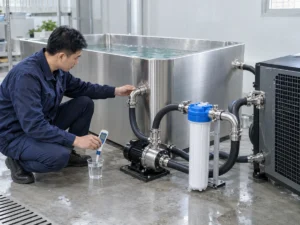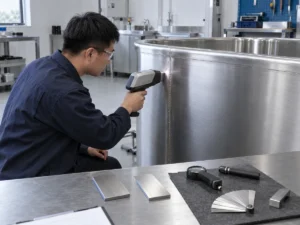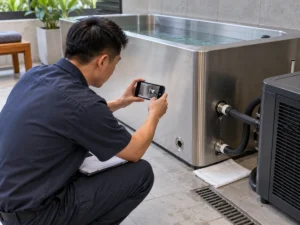
Kurze Antwort: Wenn Sie vergleichen UV vs. Ozon für ein Kaltwasser-Tauchbecken, – keine der beiden Technologien ist grundsätzlich besser. UV behandelt Wasser nur, während es einen ordnungsgemäß spezifizierten Reaktor durchströmt, und hängt von Durchfluss, UV-Transmissivität, Lampenleistung und dem gewarteten Zustand der Anlage ab. Ozon kann Oxidation und antimikrobielle Behandlung bieten, wenn Erzeugung, Eindüsung, Vermischung/Kontaktzeit, Überwachung und Gasbehandlung korrekt ausgelegt sind. Keine der beiden Technologien sollte als Ersatz für Filtration, physikalische Reinigung, Wasserüberprüfung oder – wo der Anwendungsfall dies erfordert – eine Strategie zur Restdesinfektion angenommen werden. Nicht allein nach Beckenvolumen, Lampenleistung, Ozon-Generatorleistung oder Marketingaussagen entscheiden. Entscheiden Sie nach Behandlungsrolle, tatsächlichen hydraulischen und Wasserbedingungen, Wartungsfähigkeit, Materialverträglichkeit und danach, ob das Tauchbecken privat oder gemeinschaftlich/gewerblich genutzt wird. Wenn diese Eingangsdaten nicht definiert sind, ZURÜCKHALTEN ist besser begründbar als eine geratene Empfehlung.
UV vs. Ozon für ein Kaltwasser-Tauchbecken: Welches sollten Sie wählen?
Wählen Sie nicht zwischen UV und Ozon, indem Sie fragen, welche Technologie leistungsstärker klingt.
Fragen Sie stattdessen: Welche Behandlungsaufgabe muss diese Komponente erfüllen, und welche Nachweise zeigen, dass sie diese Aufgabe unter den tatsächlichen Systembedingungen erfüllen kann?
UV und Ozon haben unterschiedliche Betriebsanforderungen. Die UV-Leistung hängt davon ab, dass Wasser unter geeigneten hydraulischen, optischen und anlagentechnischen Bedingungen einen UV-Reaktor durchströmt. Die Ozonbehandlung hängt davon ab, Ozon zu erzeugen, es in das Wasser einzutragen, die beabsichtigte Vermischung/Kontaktzeit zu erreichen und nicht genutztes Gas ordnungsgemäß zu behandeln. Anhang des Model Aquatic Health Code der CDC liefert den technischen Kontext aus dem öffentlichen Schwimmbadbereich für diese Unterscheidungen.
Pauschale Regeln wie “UV für kleine Becken, Ozon für große Becken” sind keine belastbare technische Abkürzung. Das Beckenvolumen ist wichtig, ersetzt aber nicht den tatsächlichen Kreislaufweg, den Betriebsdurchfluss, die Nutzerlast, den Wasserzustand, die Reaktorvalidierung oder die Ozon-Kontaktauslegung, den Wartungszugang und die Wartungsfähigkeit.
| Entscheidungsvariable | UV | Ozon |
|---|---|---|
| Zentrale Auswahlfrage | Kann der Reaktor die erforderliche Behandlung unter seinen validierten Betriebsbedingungen leisten? | Kann das System Ozon wie vorgesehen erzeugen, einbringen und in Kontakt bringen? |
| Spezifikationsfalle | Vorhandensein oder Leistung der Lampe allein | Generatorleistung allein |
| Wesentliche Abhängigkeiten | Durchfluss, UV-Transmissivität, Zustand von Lampe/Hülse und validierter Betriebsbereich | Erzeugung, Eindüsung, Kontakt, Überwachung und Gasführung |
| Dauerhaftes Restdesinfektionsmittel im gesamten Becken? | Sollte nicht angenommen werden | Sollte nicht angenommen werden |
| Filtration ersetzt? | Nein | Nein |
| Mögliches Ergebnis | UV / HOLD | Ozon / HOLD |
Für zurückgehaltenes/gemeinschaftlich genutztes Freizeitwasser behandelt die hier herangezogene Public-Health-Evidenz UV und Ozon als Behandlungsebenen und nicht als vollständigen Ersatz für den Rest des Sanitärsystems. NCCEH-Kurzbericht zur Evidenz bei Kaltwasser-Tauchbecken stellt fest, dass UV und Ozon im untersuchten Kontext gemeinsam genutzter bzw. öffentlicher Wasseraufbereitung keine Restdesinfektion bieten.
Entscheidungsregel: Keines ist grundsätzlich besser. Wählen Sie die Technologie, deren Behandlungsrolle und Betriebsbedingungen zum Gesamtsystem passen.
Wenn das System diese Bedingungen noch nicht definiert hat, ZURÜCKHALTEN ist besser begründbar als zu raten.
Was UV tatsächlich bewirkt – und was bestimmt, ob es wie vorgesehen funktioniert
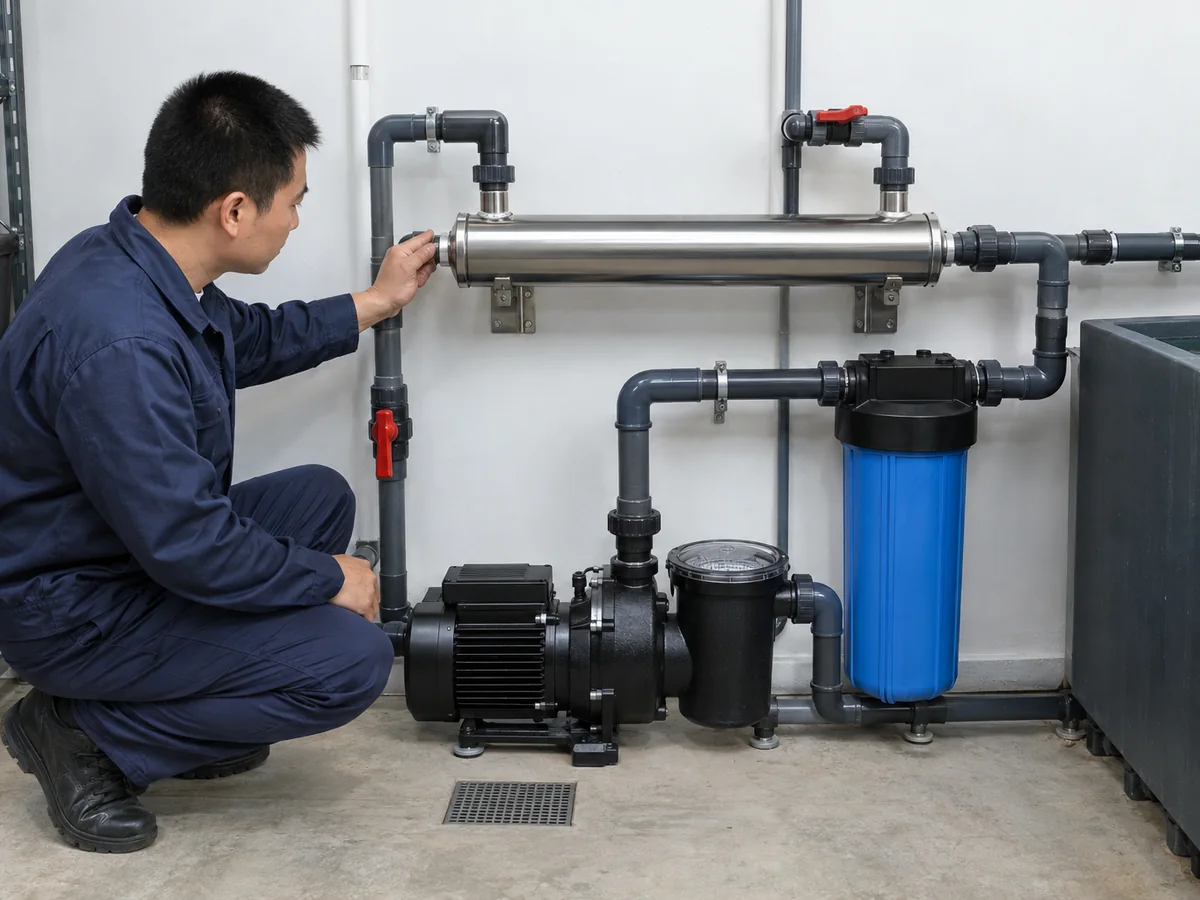
Ein UV-System behandelt Wasser, während dieses Wasser durch den UV-Reaktor strömt. Dass eine UV-Lampe eingeschaltet ist, ist nicht dasselbe wie der Nachweis, dass das Wasser die vorgesehene Behandlung erhalten hat.
Der Durchfluss ist Teil der Leistungsbedingung
Ein UV-Reaktor muss innerhalb der Bedingungen betrieben werden, die zur Feststellung seiner Leistung herangezogen wurden. UV-Desinfektionsleitfaden der EPA ist eine UV-Validierungsreferenz für Trinkwasser, keine Regel für Kaltwasser-Tauchbecken. Der 2024 Model Aquatic Health Code verwendet ausdrücklich EPA-Validierungspraktiken für UV-Geräte im öffentlichen Schwimmbadbereich und verlangt modellspezifische Validierungsdokumentation. In diesen Rahmenwerken sind Betriebsdurchfluss, UV-Transmissivität, Lampenleistung/-intensität und der validierte Betriebsbereich Teil der Leistungsgrundlage.
Eine Lampenleistungsangabe kann für sich genommen nicht belegen, ob das Wasser eine ausreichende validierte Behandlung erhält.
Klares Wasser ist nicht zwangsläufig optisch gleichwertig
Die UV-Behandlung hängt davon ab, wie effektiv ultraviolettes Licht das Wasser durchdringt. Die UV-Transmission, oder UVT, ist daher eine Betriebsvariable. Ein optisch klares Tauchbecken sagt nichts über den UVT-Wert aus und belegt nicht, dass der Reaktor innerhalb der bei seiner Validierung angenommenen Bedingungen betrieben wird.
NCCEH weist darauf hin, dass Trübung die Wirksamkeit der UV-Desinfektion in Kaltwasser-Tauchbecken beeinträchtigen kann.
Lampenalterung und Verunreinigung sind relevant
Der UV-Anlagenzustand verändert sich im Laufe der Zeit. Die EPA-Leitlinie nennt Lampenalterung sowie Ablagerungen an Lampenschutzhülsen oder Sensorfenstern als Faktoren, die die effektive UV-Leistung mindern können, und sie stützt nicht die Annahme, dass ein einheitliches Reinigungsintervall für jede Installation gilt.
Statt nur zu fragen, ob ein Tauchbecken “UV hat”, sollte gefragt werden, ob das vorgeschlagene System seine genaue Behandlungs komponente, den Betriebsbereich, die Durchflussgrundlage, die Wasserbeschaffenheitsannahmen sowie Überwachungs- und Wartungsanforderungen dokumentieren kann.
Gerät installiert ≠ Behandlung verifiziert.
Was Ozon tatsächlich bewirkt – und warum die Generatorleistung nicht die ganze Geschichte ist
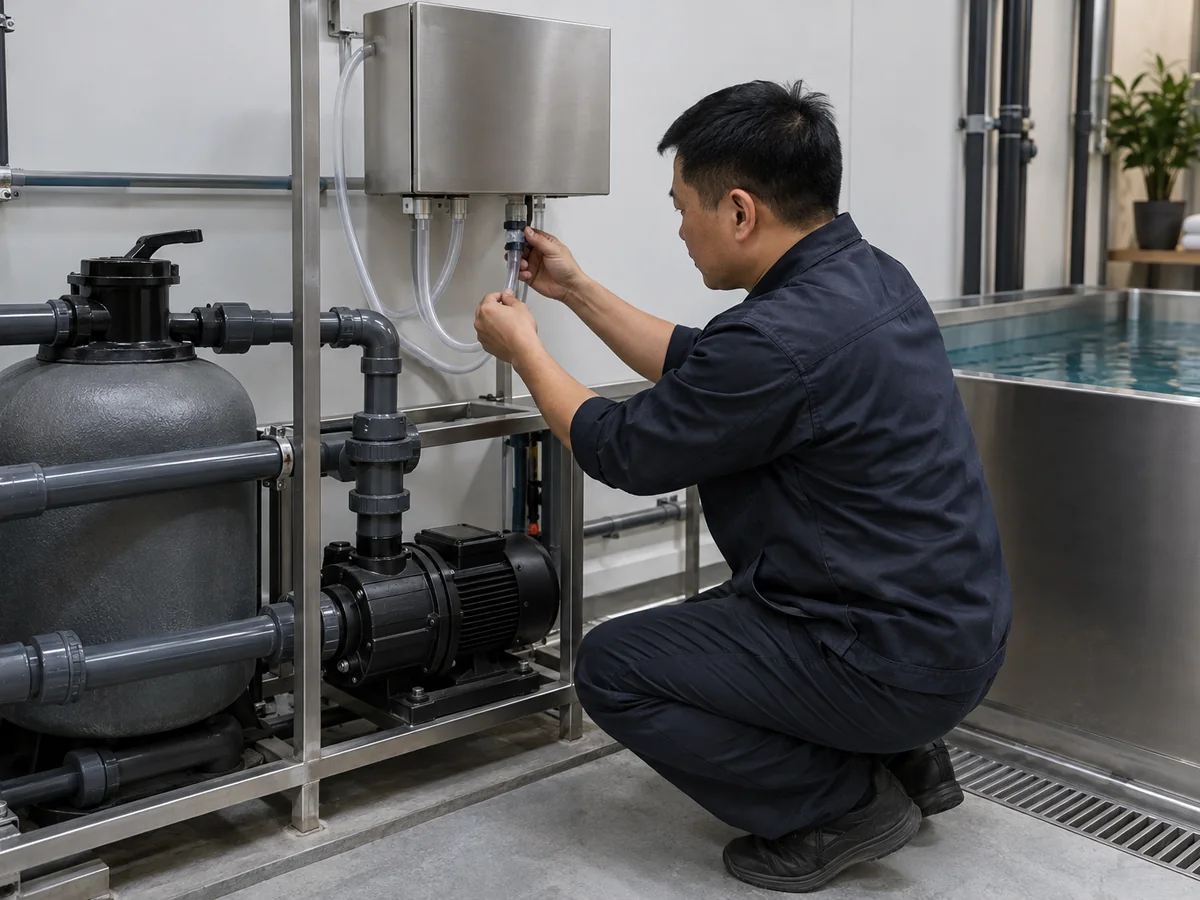
Ein Ozon generator kann Ozon erzeugen, doch das allein belegt nicht, wie viel nutzbare Behandlung das Wasser erhält.
Erzeugtes Ozon ist nicht dasselbe wie zugeführtes Behandlungsergebnis
Ein Typenschild eines Ozon generators kann die Erzeugungsfähigkeit beschreiben, doch die Behandlung hängt davon ab, was nach der Erzeugung geschieht. Ozon muss das Wasser erreichen und unter den im Behandlungsdesign angenommenen Bedingungen damit in Wechselwirkung treten.
Im Anwendungsbereich für öffentliche Schwimmbäder enthält das 2024 MAHC-Codedokument betrachtet ein Ozonsystem als mehr als einen Generator: Es umfasst Injektion, Reaktions-/Kontakteinrichtungen, Gasführung/-zerstörung sowie Überwachungs-/Steuerungselemente. Diese Komponenten aus dem öffentlichen Schwimmbadbereich sollten nicht pauschal in jede private Wohnspezifikation übernommen werden, sie zeigen jedoch, warum die Generatorleistung allein keine vollständige Aufbereitungsaussage darstellt.
Oxidation ist nicht automatisch eine vollständige Desinfektion
Ozon ist ein starkes Oxidationsmittel und kann unter entsprechend ausgelegten Bedingungen antimikrobiell wirken. Dass “Ozon oxidiert Verunreinigungen” bedeutet jedoch nicht, dass ein Kaltwasser-Tauchbecken vollständig desinfiziert ist. Das erste beschreibt eine Behandlungsfunktion; das zweite ist eine Wasser-Sicherheitsaussage über das gesamte System.
Ozon sollte nicht als dauerhafte Restdesinfektion betrachtet werden
Im für diesen Artikel geprüften Rahmen für Kaltwasser-Tauchbecken und öffentliche Gesundheit bietet Ozon keinen persistenten Desinfektionsmittel-Restgehalt im gesamten vorgehaltenen Wasser. Eine Behandlungszone im Kreislaufsystem sollte nicht mit einer fortlaufenden Restdesinfektion im gesamten Becken verwechselt werden.
Gas-Handling ist Teil der Entscheidung
NIOSH-Eintrag zu Ozon identifiziert Ozon als starkes Oxidationsmittel und nennt die Inhalation als Expositionsweg, wobei Augen-, Schleimhaut- und Atemwegseffekte zu den anerkannten Gefahren zählen. Damit werden Gaseinschluss, Zerstörungs-/Ableitungsstrategie und Leckagereaktion Teil der Geräteentscheidung statt einer optionalen Zusatzüberlegung.
Ein Käufer sollte fragen, wie das vorgeschlagene System von der Generatorleistung zu einer kontrollierten Behandlung gelangt – und wie nicht genutztes Ozon sicher behandelt wird. Endet die Antwort bei der Generatorleistung, ist der Behandlungsnachweis unvollständig.
Was weder UV noch Ozon ersetzt: Filtration, Restdesinfektion und Wasserüberprüfung
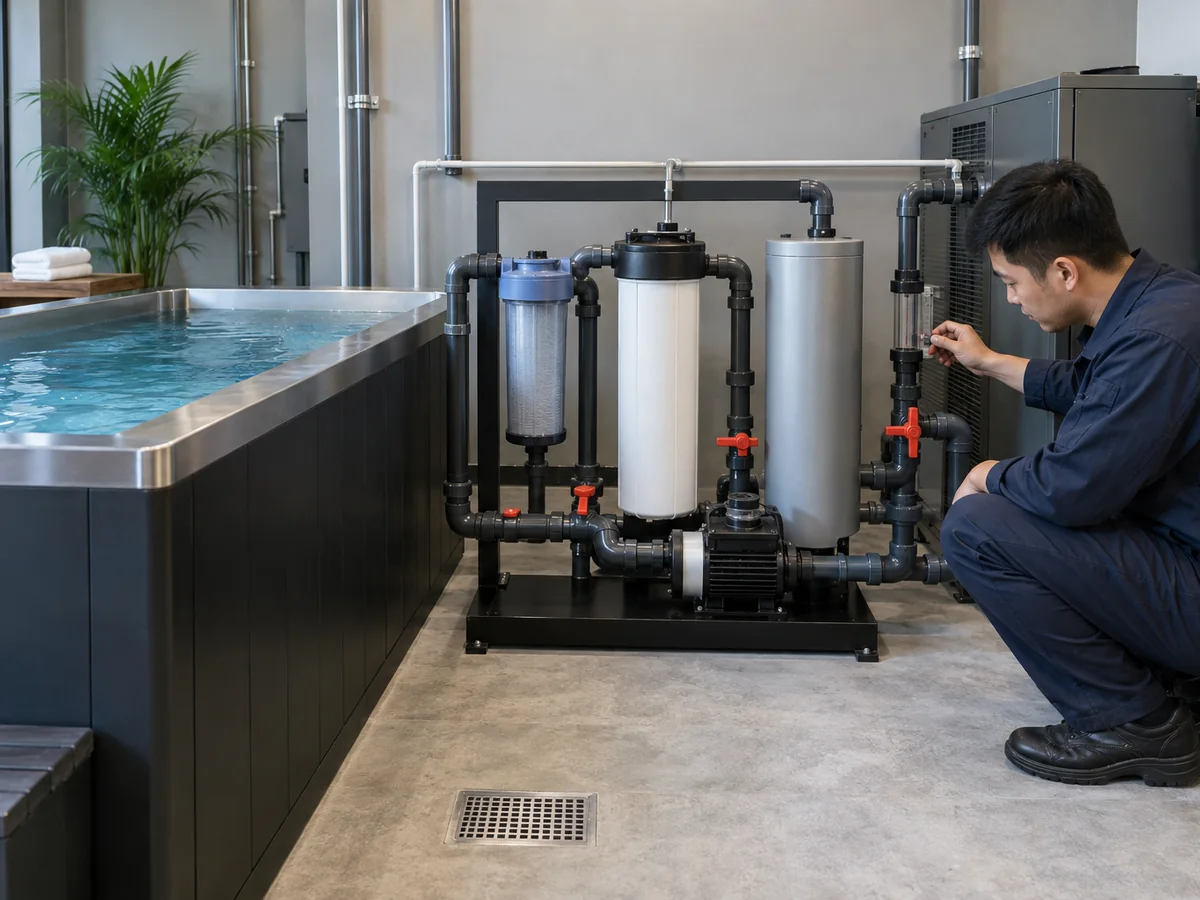
Der wichtigste Fehler, den es zu vermeiden gilt, ist, ein einzelnes Behandlungsgerät als das gesamte Wasserpflegesystem zu betrachten.
Filtration ist keine Desinfektion
Ein Filter entfernt ausgewähltes physikalisches Material aus dem durchströmenden Wasser. UV und Ozon erfüllen unterschiedliche Aufbereitungsfunktionen. Das eine wird nicht allein dadurch unnötig, dass das andere vorhanden ist.
HACHILL’s Leitfaden zur Wasserpflege bei Kaltwasser-Tauchbecken behält Umwälzung, Filtration, Hygiene, Prüfung, mechanische Reinigung und zustandsabhängigen Wasserwechsel als separate Kontrollen bei.
Filtration ≠ Desinfektion.
Punktbehandlung ist nicht dasselbe wie Residualschutz
Die wichtigere Systemfrage lautet: Was schützt zurückgehaltenes Wasser außerhalb des Behandlungsgeräts oder der Behandlungszone?
UV wirkt, während das Wasser durch den Reaktor strömt. Ozon wirkt über seinen Eintrag- und Kontaktprozess und zerfällt anschließend. Keines von beiden sollte automatisch als dauerhafter Desinfektionsschutz im gesamten Behälter beschrieben werden.
Für gemeinschaftliche/öffentliche Cold-Plunge-Kontexte, NCCEH-Kurzbericht zur Evidenz bei Kaltwasser-Tauchbecken empfiehlt ausdrücklich UV oder Ozon in Kombination mit Chlor oder Brom, weil UV und Ozon keine Depotdesinfektion bieten. Diese Aussage sollte nicht in eine allgemeingültige rechtliche Regel für Privathaushalte umgewandelt werden.
„Chemikalienfrei“ ist keine verlässliche systemweite Aussage
Das Vorhandensein von UV oder Ozon belegt für sich genommen nicht, dass Restdesinfektion, Wasserprüfung, Filtration, mechanische Reinigung oder Gerätewartung unnötig sind. Die bessere Frage ist, welche Kontrollen erforderlich bleiben, nachdem die Behandlungsstufe ihre eigene Aufgabe erfüllt hat.
Klares Wasser reicht nicht aus
Das visuelle Erscheinungsbild kann offensichtliche Probleme erkennen lassen, aber es kann keine mikrobiologische Kontrolle belegen oder bestätigen, dass jeder Behandlungsparameter innerhalb seines erforderlichen Betriebsbereichs liegt.
Klares Wasser ≠ verifizierter Wasserzustand.
Wartung, Kompatibilität und Sicherheit: Was UV oder Ozon ausschließen kann
Die Wartung ist Teil der Gültigkeit der Behandlung. Eine technisch einwandfreie Methode kann dennoch die falsche Projektwahl sein, wenn das System die Ausrüstung nicht innerhalb der Bedingungen halten kann, die die Behandlungsaussage glaubwürdig machen.
Eine UV-Route sollte auf HOLD bleiben, wenn die Betriebsgrundlage unklar ist
- Der relevante Betriebsdurchfluss ist unbekannt.
- Der validierte Betriebsbereich kann nicht angegeben werden.
- Die Annahmen zur Wasserbeschaffenheit sind unklar.
- Der Zustand von Lampe oder Hülse kann nicht sinnvoll instand gehalten werden.
- Erforderlicher Servicezugang ist nicht verfügbar.
- Ein Ausfall oder ein Betrieb außerhalb der Spezifikation kann nicht erkannt werden.
Diese Lücken beweisen nicht, dass UV ungeeignet ist. Sie bedeuten, dass die UV-Behandlungsaussage noch nicht ausreichend verifiziert ist.
Ein Ozonverfahren erfordert mehr als einen installierten Generator
- Injektion oder Vermischung ist nicht definiert.
- Die Kontaktanordnung ist unklar.
- Der Umgang mit Abgasen wurde nicht berücksichtigt.
- Relevante Schutzmaßnahmen gegen Innenraumbelastung sind ungeklärt.
- Materialverträglichkeit ist nicht verifiziert.
- Überwachung oder Reaktion auf Ausfälle ist unklar.
- Die Generatorleistung ist der einzige Nachweis für die Aufbereitung.
Kompatibilität muss konfigurationsspezifisch sein
Da Ozon ein starkes Oxidationsmittel ist, ist die Materialkompatibilität ein echter Aspekt der Systemauslegung. Die genaue Kompatibilität gehört zur tatsächlichen Ozonausrüstung, zu den Betriebsbedingungen und zur Komponentendokumentation – nicht zu einer universellen Materialtabelle.
Bessere Wartungsfrage: Kann der vorgesehene Betreiber dieses System innerhalb der Bedingungen halten, die seine Aufbereitungsleistung glaubwürdig machen?
Kaltwasser-Tauchbecken für Privathaushalt vs. gemeinschaftliche oder gewerbliche Nutzung: Warum sich die Aufbereitungsentscheidung ändert
Ein Tauchbecken für einen Haushalt und ein gemeinschaftlich genutztes gewerbliches Tauchbecken sollten nicht automatisch dieselbe UV- oder Ozon-Empfehlung erhalten. Der wichtige Unterschied ist nicht einfach die Beckengröße, sondern das Betriebsmodell.
| Entscheidungsbereich | Privates Tauchbecken im Haushalt | Gemeinschaftlich / gewerblich genutztes Tauchbecken |
|---|---|---|
| Primäre Betriebsgrundlage | Genaue Geräteanweisungen, Anweisungen zu Aufbereitungsprodukten, tatsächliches Nutzungsmuster und geltende lokale Anforderungen | Definierte Betriebsverfahren der Einrichtung sowie geltende Anforderungen des öffentlichen Gesundheitswesens und lokale Vorgaben |
| Nutzermodell | Bekannte private/häusliche Nutzer | Wiederholte gemeinsame Nutzung und formale Betreiberverantwortung |
| Nachweisbedarf | Muss zum tatsächlichen privaten System passen | Erfordert häufig einen formelleren, dokumentierten Ansatz mit mehreren Schutzbarrieren |
| Regulatorische Abkürzung, die zu vermeiden ist | Nicht automatisch jede Anforderung für öffentliche Wasseranlagen übernehmen | Nicht annehmen, dass ein Herstellermerkmal allein die Konformität belegt |
Der MAHC ist ein Modellkodex, kein allgemein geltendes US-Gesetz
Aktuelle Seite des CDC zum Model Aquatic Health Code stuft den MAHC als Modellrahmen für öffentliche Wasseranlagen ein und nicht als Bundesgesetz, das automatisch für jedes Cold Plunge in den USA gilt. Die tatsächliche lokale Übernahme und Anpassung sind entscheidend. Bei einem gemeinsamen gewerblichen Projekt ist die tatsächlich zuständige Behörde zu bestätigen.
Standardumfang ist keine Produktzertifizierung
NSF-Überblick 2026 zu NSF/ANSI/CAN 50 speziell für Kaltwasser-Tauchbecken besagt, dass Kaltwasserbecken mit Umwälzungs-, Aufbereitungs- oder Desinfektionssystemen in den aktuellen Geltungsbereich der Norm fallen. Eine Norm, die eine Produktkategorie abdeckt, bedeutet nicht, dass ein bestimmtes Produkt zertifiziert oder gelistet ist.
Dieser Artikel geht nicht davon aus, dass ein HACHILL UV-, Ozon- oder komplettes Kaltwasser-Tauchbeckensystem ohne produktspezifischen Nachweis eine NSF/ANSI/CAN 50-Zertifizierung besitzt.
Für die weiterführende Planung von gemeinschaftlich genutzten Einrichtungen nach Abschluss des Aufbereitungsvergleichs ist die Lösungsseite HACHILL Recovery Centers der passende nächste Schritt.
UV, Ozon, beides oder HOLD wählen: Eine Entscheidungsmatrix für die Kaltwasser-Tauchbecken-Aufbereitung
An diesem Punkt erfolgt die Auswahl anhand der Systemeingaben – nicht danach, welche Technologie fortschrittlicher klingt.
UV
In die Auswahl aufnehmen, wenn die Durchlauf-UV-Aufbereitung die vorgesehene Rolle ist und die validierten Betriebsbedingungen, die Überwachung, die Wartbarkeit und die übergeordnete Wasseraufbereitungsarchitektur des Modells dokumentiert werden können.
OZON
In die Auswahl aufnehmen, wenn die oxidative/antimikrobielle Aufbereitung die vorgesehene Rolle ist und Erzeugung, Einbringung, Vermischung/Kontakt, Kompatibilität, Überwachung, Gasbehandlung und Wartung definiert sind.
UV + OZON
Nur in Betracht ziehen, wenn jede Technologie eine separate begründete Rolle hat und das kombinierte System wartbar und kompatibel bleibt. Die Kombination sollte nicht als Nachweis für Restsschutz oder vollständige Desinfektion behandelt werden.
ZURÜCKHALTEN
Verwenden, wenn kritische Eingangsgrößen zu Aufbereitung, Hydraulik, Rückständen, Wartung, Kompatibilität oder Regulatorik offen bleiben.
Was sollten Sie den Lieferanten bestätigen lassen?
| Lieferantenangaben | Warum das wichtig ist |
|---|---|
| Exakte Komponente/Modell der Aufbereitung | Bestätigt, welche Hardware tatsächlich bewertet wird |
| Vorgesehene Behandlungsrolle | Verhindert, dass eine Komponente als komplettes Wasserpflegeprogramm verkauft wird |
| Modell und erwartete Badebelastung verwenden | Trennt niedrigfrequente private Nutzung von wiederkehrendem gemeinschaftlichem/gewerblichem Einsatz |
| Betriebsdurchfluss / validierter Bereich | Entscheidend für die Bewertung der UV-Anwendbarkeit |
| Relevante Grundlage der Wasserbeschaffenheit | Prüft, ob die Leistungsannahmen zum tatsächlichen Wasser passen |
| Grundlage für Ozonerzeugung, -einspeisung und -kontakt | Trennt Generatorleistung von der bereitgestellten Behandlung |
| Strategie zur Restdesinfektion | Definiert den Schutz außerhalb des Aufbereitungsschritts |
| Filtrations- und Zirkulationsarchitektur | Bestätigt, dass die Aufbereitung an einen vollständigen Kreislauf angeschlossen ist |
| Überwachung / Alarm / Fehleranzeige | Zeigt, wie spezifikationswidriger Betrieb erkannt werden kann |
| Wartungsanforderungen | Die Zuverlässigkeit der Aufbereitung hängt vom gepflegten Zustand der Ausrüstung ab |
| Materialverträglichkeit | Wichtig für ozonausgesetzte Komponenten |
| Zertifizierungs-/Zulassungsnachweis, sofern beansprucht | Bestätigt das exakte Produkt und den Zertifizierungsumfang |
| Bestimmungsort-/AHJ-Grundlage für gewerbliche Projekte | Anforderungen können je nach Rechtsraum variieren |
Bessere Beschaffungsfrage: Welche Behandlung wurde tatsächlich definiert, unter welchen Betriebsbedingungen, und welche Verantwortlichkeiten bleiben außerhalb dieser Komponente?
Nachdem die Aufbereitungsarchitektur definiert ist: prüfen Sie das Cold-Plunge-Format, das zum Projekt passt. Genaue Pumpen-, Filter-, Desinfektions-, UV-, Ozon- oder andere Wasseraufbereitungskomponenten müssen weiterhin für die ausgewählte Konfiguration bestätigt werden und dürfen nicht aus dem Beckenformat abgeleitet werden.
Häufig gestellte Fragen
Ist UV oder Ozon für ein Kaltbecken besser?
Keines ist universell besser. UV und Ozon erfüllen unterschiedliche Behandlungsrollen und hängen von unterschiedlichen Betriebsbedingungen ab. Wählen Sie nach Behandlungsziel, Systemdurchfluss, Reststrategie, Wartung, Kompatibilität und Nutzungsmodell. Wenn diese Eingaben noch nicht definiert sind, ist HOLD besser vertretbar, als allein anhand des Technologienamens zu wählen.
Können UV oder Ozon Chlor oder Brom in einem Kaltbecken ersetzen?
Gehen Sie nicht davon aus. Im von NCCEH geprüften Kontext gemeinschaftlicher/öffentlicher Kaltbecken bietet weder UV noch Ozon eine Depotdesinfektion, und das Briefing empfiehlt deren Verwendung zusammen mit Chlor oder Brom. Diese gesundheitsbehördliche Empfehlung sollte nicht in eine universelle Rechtsregel für Privathaushalte umgewandelt werden. Wohnsysteme sollten die genauen Geräteanweisungen, die Anweisungen der Behandlungsprodukte und die geltenden lokalen Anforderungen befolgen.
Kann Ozon die Filtration in einem Cold Plunge ersetzen?
Nein. Filtration und Ozonbehandlung erfüllen in einem Umwälzsystem mit zurückgehaltenem Wasser unterschiedliche Funktionen. Eine Ozonbehandlung beseitigt nicht die Notwendigkeit, den Umwälz- und Filtrationsweg festzulegen.
Kann ein Kältebecken sowohl UV als auch Ozon verwenden?
Möglicherweise. Beide einzusetzen kann sinnvoll sein, wenn jede Technologie eine separate, durch Belege gestützte Aufgabe in der vollständigen Aufbereitungsarchitektur hat. Es sollte nicht angenommen werden, dass die Installation beider automatisch ein sichereres oder besseres System schafft.
Bedeutet klares Wasser, dass ein Kaltbecken ordnungsgemäß desinfiziert ist?
Nein. Visuelle Klarheit belegt keine mikrobiologische Kontrolle, keine Restwirkung und nicht, dass das Behandlungssystem innerhalb aller erforderlichen Bedingungen arbeitet. Verwenden Sie die für das tatsächliche Wasseraufbereitungssystem geeignete Verifizierungsmethode und nicht allein das Erscheinungsbild.