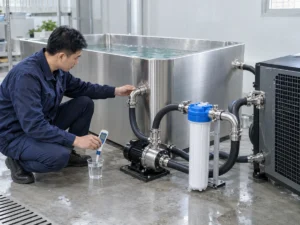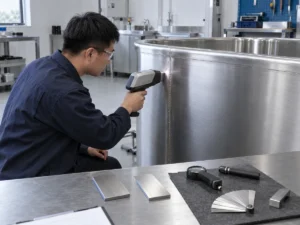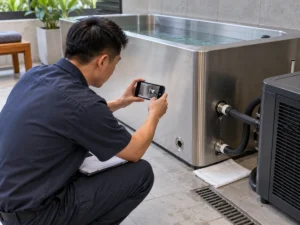
إجابة سريعة: يمكن أن تطيل ظروف المحيط الأكثر حرارة زمن خفض حوض الغمر البارد—وهو الزمن اللازم لتبريد حجم ماء محدد من حالة بداية معروفة إلى حالة هدف—عبر مسارين منفصلين. يمكن أن تدخل حرارة أكبر إلى الماء والوعاء والأسطح المتصلة، بينما قد يضطر المبرّد المبرد بالهواء أيضًا إلى طرد الحرارة في ظل حالة هواء المكثف الأكثر دفئًا.
لا يُثبت تباطؤ خفض درجة الحرارة في الصيف لا أن يثبت بحد ذاته أن المبرد أصغر من اللازم. سجّل حالة الموقع العامة، وميّزها عن الهواء الذي يدخل إلى المكثف فعليًا، ولاحظ ما إذا تغيّرت الشمس، أو حالة الغطاء، أو تدفق الهواء، أو إعادة الدوران، أو تدفق الماء، أو حالة الفلتر، أو أي متغيرات اختبار أخرى. قارن ملاحظات التبريد المتماثلة قبل أن تقرر ما إذا كان التباطؤ متعلقًا بالموقع أو ينبغي نقله إلى مراجعة سعة منفصلة.
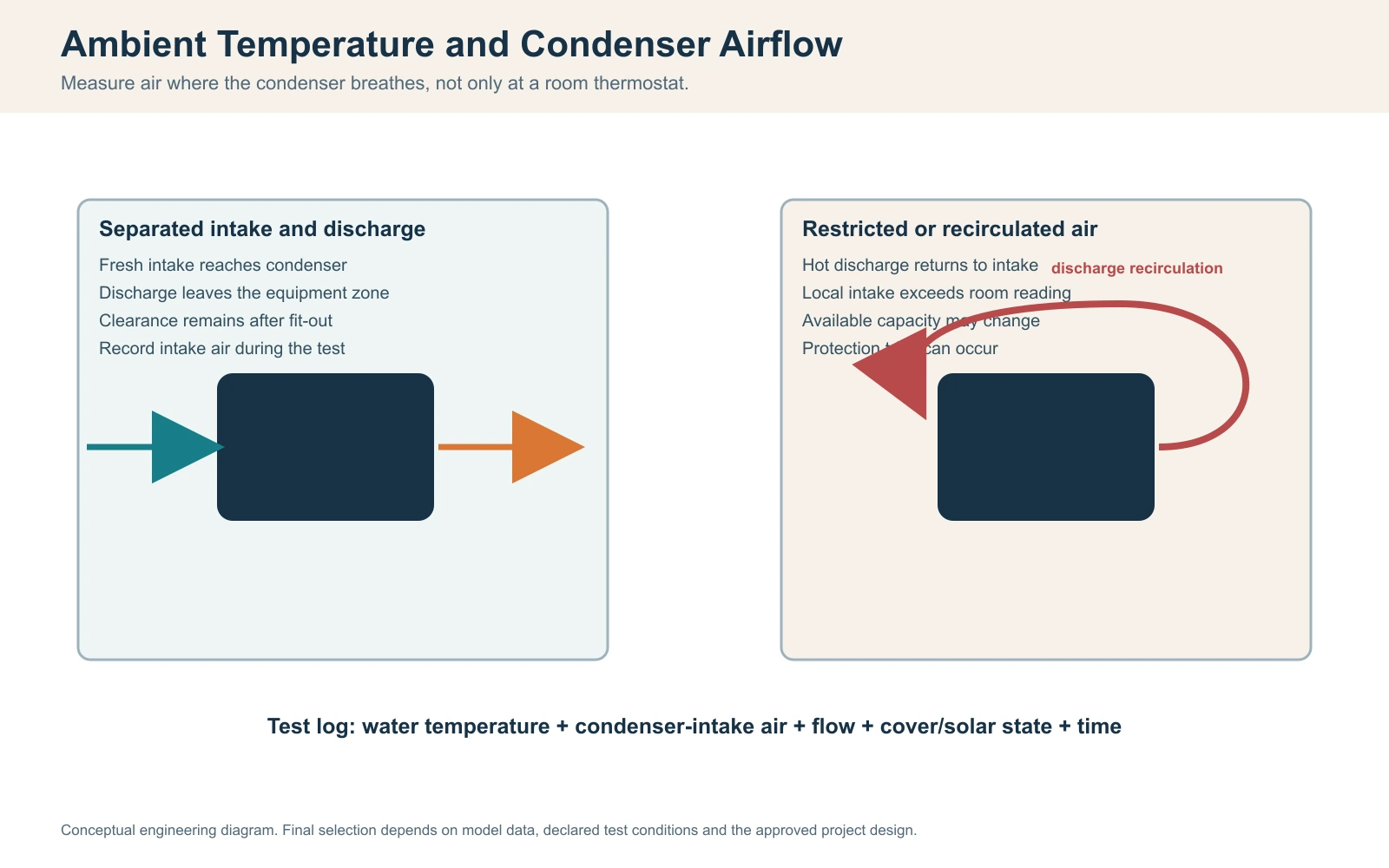
قِس الظروف المحيطة التي يراها مبرد المياه فعلياً
“درجة الحرارة المحيطة” ليست قياساً واحداً موحّداً.
قد يكون في الموقع قيمة من محطة طقس، ودرجة حرارة غرفة، وقراءة مرجعية في الظل قرب حوض الغطس، ودرجة حرارة هواء مختلفة عند مدخل مكثف مبرد المياه. قد تكون كل هذه القراءات مفيدة، لكنها تجيب عن أسئلة مختلفة.
بالنسبة لوحدة تبريد مبرَّدة بالهواء، فإن حالة الهواء الداخل إلى المكثف ذو صلة مباشرة بحدود طرد الحرارة. وكمثال من إحدى الشركات المصنعة، بيانات Carrier 30RB الفنية تدرج صراحةً درجة حرارة هواء الدخول إلى المكثف كجزء من ظروف تصنيفها. وهذا لا يجعل نقطة تصنيف Carrier متطلبًا للغمر البارد؛ بل يوضح لماذا قد يفوّت قياس الطقس البعيد مناخًا محليًا دقيقًا للمعدات ناتجًا عن الجدران أو الحواجز أو غلاف أو هواء تصريف دافئ يعود نحو فتحة السحب.
| القياس | ما الذي يوضحه لك | ما لا يثبته |
|---|---|---|
| الرجوع إلى المحيط الخارجي أو محيط الغرفة | حالة الموقع العامة أثناء الاختبار | كان الهواء الداخل إلى المكثّف متطابقاً |
| البيئة المحيطة قرب حوض الغطس | البيئة الحرارية حول الماء والوعاء والأنابيب المكشوفة | لاحظ المبرد نفس الحالة |
| هواء دخول المكثف أو هواء السحب | حالة الهواء الممثلة لجانب طرد الحرارة | كان الموقع بأكمله عند درجة الحرارة نفسها |
| ملاحظة هواء التصريف | ما إذا كان هواء المكثف الساخن لديه مسار خروج واضح | وجود إعادة تدوير دون التحقق من مسار الهواء الفعلي |
موقع المستشعر الدقيق يعتمد على المعدات والموقع. ما يهم لهذه المقارنة هو أن السجل يذكر حيث من أين جاءت القراءة، ولا يتعامل بصمت مع قيمة محيطة وكأنها قيمة أخرى.
يصبح هذا التمييز أكثر أهمية بعد تغيّر التركيب. قد يكون المبرد قد اختُبر في مساحة مفتوحة، ثم يعمل لاحقًا خلف حاجز أو بجوار جدار أو داخل مقصورة أضيق. قد تبدو درجة حرارة الغرفة أو المرجع الخارجي مشابهة بينما تتغير حالة سحب الهواء إلى المكثف.
استخدم المحيط المرجعي لسياق الموقع، لكن استخدم قراءة تمثل هواء الدخول إلى المكثف عند تشخيص حالة طرد الحرارة.
افصل اكتساب الحرارة من جهة الماء عن طرد الحرارة من جهة المكثف
يمكن للظروف الأكثر حرارة أن تطيل خفض الحرارة عبر مسارين مختلفين. والتعامل مع كليهما على أنه «المبرّد أضعف في الصيف» يخفي السبب.
المسار 1: دخول مزيد من الحرارة إلى نظام الماء البارد
تنتقل الحرارة من المحيط الأدفأ نحو الأسطح الأبرد عبر التوصيل والحمل والإشعاع. وزارة الطاقة الأمريكية إرشادات تدفق الحرارة يوفّر الأساس الفيزيائي للمبنى الذي تقوم عليه تلك المسارات.
بالنسبة لحوض الغمر البارد، يمكن أن يشمل ذلك الحرارة الداخلة عبر جدار الحوض، والحافة، والتجهيزات المكشوفة، والأنابيب، بالإضافة إلى سطح الماء عندما يكون الغطاء مفتوحًا. التعرّض المباشر لأشعة الشمس مسار حراري إشعاعي منفصل.
لهذا يمكن أن تختلف اختبارات خفض الحرارة المتشابهة ظاهريًا عندما يكون أحد التشغيلين في الظل ومغطى بينما يكون الآخر تحت الشمس المباشرة بمساحة سطح مكشوفة أكبر. وقد تعكس النتيجة حملًا حراريًا مختلفًا، لا مبردًا مختلفًا.
يؤثر العزل أيضًا في هذا الجانب من الحدود، لكن منهج مقارنة العزل الكامل ينتمي إلى دليل مقارنة أحواض الغمر البارد المعزولة مقابل غير المعزولة.
المسار 2: المبرد الهوائي يطرد الحرارة في ظل حالة مكثف مختلفة
جانب التبريد له مسار محيطي منفصل. تطرد المبرّدات المبردة بالهواء الحرارة إلى الهواء المحيط، وتتغير حالة تشغيلها مع بيئة التكثيف. Copeland’s إرشادات حمل التبريد يوضح أن درجة حرارة التكثيف تعتمد على وسيط التبريد، والمحيط التصميمي، واختيار المكثف، وأن سلوك الضاغط/المكثف يتغير مع ظروف التشغيل.
يدعم ذلك استنتاجاً مرتبطاً بالظروف، وليس نسبة تخفيض أداء عالمية للغطس البارد. لا يزال الأداء الدقيق عائداً إلى بيانات المبرّد المختار نفسه.
يمكن أن تغيّر حالة هواء المكثّف الأسخن ظروف تشغيل نظام التبريد في الوقت نفسه الذي تضيف فيه المحيطات الأسخن مزيداً من الحرارة إلى جانب الماء البارد.
يمكن أن يحدث هذان التأثيران معًا، لكن ينبغي تشخيصهما بشكل منفصل.
ما الذي تعنيه الرطوبة هنا
للرطوبة أهمية كبيرة في مخاطر التكاثف والرطوبة حول الأسطح الباردة. ويمكن أن تغيّر ما إذا كان الحوض أو التركيبات أو الأنابيب تهبط دون نقطة الندى المحلية وتجمع الرطوبة.
هذا الدليل لا لا تعامل مع الرطوبة كعامل خفض قدرة مباشر عالمي لسعة التشيلر المبرد بالهواء. إذا حدد دليل معدات دقيق أو خريطة أداء الرطوبة كمتغير تشغيلي ذي صلة، فاتبع تلك الوثائق. بخلاف ذلك، أبقِ الرطوبة في سياق الموقع/الرطوبة بدلاً من تحويلها إلى قاعدة غير مدعومة بشأن سعة التبريد.
استبعد مشكلات إعادة التدوير وتدفق الهواء قبل إلقاء اللوم على السعة
قد يبدو المبرّد صغيرًا جدًا بينما تكمن المشكلة الحقيقية في مسار الهواء حول المكثّف.
تحدث إعادة تدوير الهواء الدافئ عندما يعود هواء تصريف المكثّف نحو المدخل بدلًا من مغادرة منطقة المعدات. ويمكن أن يحدث تقييد لتدفق الهواء أو نقص في تغذية الملف عندما لا يستطيع المكثّف سحب أو تصريف ما يكفي من الهواء الحر بسبب تخطيط الموقع أو الجدران أو الحواجز أو العوائق الأخرى. إرشادات تطبيق Trane يحدد إعادة التدوير وتقييد تدفق الهواء إلى المكثف كحالتين يمكن أن تقللا قدرة الوحدة وكفاءتها.
استخدم هذا التسلسل قبل إلقاء اللوم على السعة:
- أكّد المقارنة. هل التبريد الفعلي أبطأ فعلًا من خط أساس صالح، أم أن الشكوى مبنية على يوم حار واحد بظروف بداية مختلفة؟
- تحقق من الهواء الذي يستخدمه المبرد فعليًا. قارن الظروف البيئية المرجعية مع حالة هواء الدخول إلى المكثف.
- افحص مسار السحب والتصريف. ابحث عن انسداد تدفق الهواء، أو عودة التصريف الدافئ نحو المدخل، أو تركيب حاجز جديد، أو تغييرات في غلاف الحماية.
- تحقق من العوامل المربكة غير الهوائية. تظل حالة التدفق/الفلتر، وممارسة الغطاء، وحالة الماء الابتدائية، والحالة المستهدفة، وحالة التحكم/الإنذار مهمة.
- أعد الاختبار ضمن حدود معلنة قبل استنتاج القدرة.
مثال: تبدو الغرفة باردة، لكن مدخل المبرّد أكثر حرارة
لنفترض أن حوض الاستحمام البارد موجود في غرفة تبدو فيها درجة حرارة الهواء العامة مقبولة. لكن المبرّد موضوع حيث يمكن لهواء تصريفه الدافئ أن يعود بالدوران نحو مدخل المكثّف.
لا تستبعد قراءة الغرفة وجود مشكلة في هواء المكثف. السؤال التشخيصي المفيد هو ما إذا كان المبرّد يسحب بشكل متكرر هواءً أدفأ مما تشير إليه الحالة المرجعية.
تلك مشكلة هواء موقع يجب التحقق منها قبل استنتاج أن سعة التبريد صغيرة جدًا.
مثال: تغيّر الأداء بعد إضافة شاشة أو غلاف
لنفترض أن نفس حوض الغمر والمبرّد يخفضان الحرارة بشكل مقبول أثناء اختبار في موقع مفتوح، لكن التبريد يصبح أبطأ بعد إضافة حاجز معماري أو غلاف للمعدات.
لا يثبت تغيير الموقع تلقائيًا أن الحاجز/الشاشة تسبب في التباطؤ. بل يخلق مهمة تحقق محددة: افحص ما إذا كان تدفق هواء السحب، أو خلوص التصريف، أو إعادة التدوير قد تغير مع التركيب النهائي.
إذا تم تصحيح مسار هواء المكثف وما زال الحمل المعلن غير مُلبّى، فإن السؤال التالي يندرج ضمن مراجعة السعة — وليس ضمن قاعدة عامة تقول «الطقس الحار يعني شراء مبرد أكبر».
قارن اختبارات خفض درجة الحرارة في ظروف محيطة متماثلة
لا تصبح ادعاءات درجة الحرارة المحيطة مفيدة إلا عندما تكون اختبارات خفض درجة الحرارة المقارنة قابلة للمقارنة فعلاً.
نقطة نهاية واحدة مثل “وصل إلى الهدف خلال ساعتين” دليل ضعيف إذا تغيرت حالة الماء الابتدائية، أو حالة الهدف، أو هواء سحب المكثف، أو التعرض للشمس، أو حالة الغطاء، أو حالة التدفق بين التشغيلات. وحتى عندما يكون الزمن المنقضي هو المقياس الرئيسي، ينبغي أن تغطي التشغيلات المقارنة نفس نافذة درجة حرارة الماء المحددة أو أن تفصح بوضوح عن الفرق.
يجب أن تثبّت المقارنة أو تسجّل بوضوح المتغيرات التي يمكن أن تغيّر النتيجة.
| مدخل المقارنة | حافظ على التساوي أو سجّله بوضوح | لماذا يهم |
|---|---|---|
| تكوين المبرّد والنظام | نفس المعدات/التكوين | يمنع أخذ تغيير في العتاد على أنه تأثير محيطي |
| حالة الماء الأولية | أساس متطابق أو متقارب | يغيّر الحمل الحراري عند البدء |
| حالة الماء المستهدفة | قاعدة الهدف ونقطة النهاية نفسها | يحافظ على إمكانية مقارنة الوقت المنقضي |
| تدفق الماء وحالة المرشح | نفس حالة التشغيل المعتمدة | قد يتغير سلوك نقل الحرارة والحماية |
| حالة الغطاء | الجدول نفسه | يغيّر اكتساب الحرارة السطحي |
| التعرض لأشعة الشمس | نفس التعرض أو سجّل الفرق | يضيف مسار حرارة منفصلاً |
| المرجع المحيطي | سجّل بشكل متسق | يوفّر سياق الموقع |
| هواء دخول المكثف | سجّل أثناء التشغيل | يمثل حالة طرد الحرارة من المبرّد |
| أحداث المستخدم/إعادة التعبئة | أبقِ خارج الاختبار أو الطابع الزمني | يضيف حملًا ليس من الظروف المحيطة |
| حالة التحكم والإنذار | الحفاظ عليه في جميع المراحل | يشرح الانقطاعات أو أحداث الحماية |
هذا هو مقارنة مُعيّرة وفق الظروف المحيطة، وليس معياراً مختبرياً عالمياً.
يستخدم علم القياس المبدأ العام نفسه: تعتمد قابلية التكرار على ضبط ظروف القياس ذات الصلة، بينما يجب تحديد الظروف المتغيرة بدلًا من إخفائها. ويُعدّ NIST’s مصطلحات التكرارية وإعادة الإنتاجية يدعم هذا التمييز.
قارن الاتجاه، وليس نقطة النهاية فقط
سلسلة الزمن ودرجة الحرارة أكثر فائدة من درجة حرارة نهائية واحدة لأنها يمكن أن تُظهر متى تغيرت الظروف، وما إذا كان المبرّد قد توقف أو عمل بدورات، وما إذا كان حدث ما قد قاطع التشغيل.
إذا بدأ أحد الاختبارات في الظل وانتهى تحت الشمس المباشرة، أو حدث إنذار مكثف في منتصف إحدى دورات التشغيل، فإن الزمن المنقضي وحده ليس مقارنة بيئية نظيفة.
وبالمثل، إذا كان الفرق الملحوظ صغيراً مقارنة بالتباين بين تشغيل وآخر، فقد يكون الاستنتاج الآمن أن المقارنة غير حاسمة بدلاً من أن المحيط أنشأ تراجع أداء مُثبتاً.
إن دليل الهندسة الحرارية وتحديد حجم المبرد للغطس البارد يمتلك سير عمل الحمل الحراري والتحجيم الكامل. لا تحتاج هذه الصفحة إلا إلى بيانات مضبوطة كافية لتقرير ما إذا كانت ظروف المحيط/الموقع تفسّر بشكل موثوق نتيجة خفض الحرارة المتغيّرة.
قرّر ما إذا كانت الظروف المحيطة تفسّر التباطؤ
بعد إجراء القياسات وفحوصات الموقع، اختر الفرع التالي بناءً على الأدلة وليس بناءً على الموسم.
| حالة الأدلة | القرار | الخطوة التالية |
|---|---|---|
| تغيّر واضح في الظروف المحيطة/الموقع ويفسر بشكل موثوق فرق الأداء | شرح البيئة المحيطة / الموقع كافٍ | صحّح حالة الموقع حيثما كان مناسبًا، أو تعامل مع النتيجة على أنها مرتبطة بالحالة |
| تغيّر عامل مربك بين الاختبارات | صحيح / إعادة الاختبار | أعد حدود المقارنة المعلَنة وكرّر ملاحظة الهبوط في درجة الحرارة |
| الأدلة الحاسمة مفقودة | التوقف بانتظار أدلة إضافية | سجّل هواء السحب، وحالة التدفق/المرشح، وحدود الاختبار، والإنذارات أو هوية المعدات |
| تظل القدرة المطلوبة الصالحة غير مستوفاة بعد حصر العوامل البيئية/الموقعية المربكة | التسليم إلى مراجعة السعة | أعد تقييم السعة باستخدام عملية قرار تغيير السعة المخصّصة |
عندما تكون أدلة البيئة المحيطة/الموقع كافية
تُعدّ الظروف المحيطة تفسيرًا موثوقًا عندما تُلاحظ الحالة المتغيّرة فعليًا ويكون فرق الأداء متسقًا مع ذلك الحد المتغيّر—على سبيل المثال، مدخل مكثّف أسخن مؤكد، أو تقييد لتدفق الهواء في الموقع، أو اختلاف جوهري في ظروف الشمس/الغطاء بين الاختبارات.
لا يشهد ذلك بأن كل جزء آخر في النظام صحيح. بل يعني أن الأدلة المتاحة لا تبرر الانتقال مباشرة إلى «مبرّد صغير السعة».
متى يتم التصحيح وإعادة الاختبار
إذا استخدم تشغيلان تمت مقارنتهما تدفق هواء مختلفًا، أو ممارسة تغطية مختلفة، أو تعرضًا شمسيًا مختلفًا، أو حالة تدفق/فلتر مختلفة، أو ظروف بداية مختلفة، فصحّح المقارنة قبل التصعيد إلى السعة.
تغيير المبرّد في الوقت نفسه الذي يتغير فيه حد الاختبار يجعل التشخيص أصعب، لا أسهل.
متى يجب الإيقاف المؤقت
أوقف الحكم على السعة إذا كانت هوية المعدات غير واضحة، أو لم يُسجَّل مدخل المكثف، أو كان حدث حماية غير مفسَّر، أو كانت حالة التدفق/الفلتر غير معروفة.
«يبرد بشكل أبطأ في الصيف» ملاحظة أولية، وليست مواصفة بديلة.
متى يتم التحويل إلى مراجعة السعة
إذا تعذّر تلبية متطلب الخفض أو الاسترداد المطلوب بعد تحديد حدود العوامل المحيطة/الموقع وغيرها من العوامل المشوّشة، فقد تجاوز السؤال نطاق هذه الصفحة.
استخدم دليل تغيير سعة مبرد الغطس البارد لتقرير ما إذا كانت الأدلة تدعم الإبقاء على السعة، أو تصحيح مشكلة أخرى في النظام، أو الانتظار لمزيد من الأدلة، أو مراجعة سعة مختلفة.
«الترقية الآن» ليست فرعًا من تشخيص الظروف المحيطة.
استخدم حدود المعدة الدقيقة قبل تقديم أي ادعاء بشأن الأداء
للإرشادات الهندسية العامة حد صارم: الوثائق الدقيقة للمبرّد هي المرجع لحدود التشغيل الدقيقة.
تنشر المبردات المختلفة المبردة بالهواء نطاقات تشغيل محيطة وخلوصات ومتطلبات تدفق وإنذارات ومنطق حماية مختلفة. وهذا التباين بحد ذاته سبب لعدم تحويل رقم شركة مصنّعة واحدة إلى مواصفة عالمية لحوض الغمر البارد.
| عبارة عامة يمكن أن يدعمها هذا الدليل | المعلومات الدقيقة التي يجب أن تأتي من وثائق المعدات |
|---|---|
| يؤثر هواء الدخول إلى المكثّف على حالة التشغيل | السعة الدقيقة أو الكفاءة عند محيط معيّن |
| إعادة التدوير وتقييد تدفق الهواء قد يقللان من الأداء | الخلوص الدقيق المطلوب للتركيب |
| قد يكون إثبات التدفق أو الحماية من فقدان التدفق جزءًا من مخطط التحكم في المبرّد | نطاق التدفق المسموح به بدقة، وطريقة الإثبات أو منطق الحماية |
| قد يدفع الموقع الساخن التشغيل نحو حد المعدات | نطاق التشغيل المحيطي الأقصى/الأدنى المحدد |
| أحداث الحماية تبطل مقارنة أداء نظيفة | منطق الإنذار الدقيق وإجراء إعادة الضبط وإجراء الصيانة |
| السعة تعتمد على الظروف | خريطة الأداء الدقيقة للطراز المحدد |
حماية التدفق أيضًا خاصة بالمعدات. على سبيل المثال، بيانات تطبيق Trane Ascend ACR يصف مفتاح تدفق ماء مركّبًا في المصنع ومراقبًا من وحدة التحكم لحماية ذلك المبرّد من التشغيل بفقدان التدفق. تعامل مع ذلك كمثال لطراز، وليس كمواصفة تحكم عالمية لحوض الغمر البارد.
إذا كانت هناك حالة فقدان تدفق غير محلولة أو فصل حماية متكرر أو إنذار حد للمعدات نشط، فأوقف المقارنة واتبع وثائق المبرد الدقيقة أو مسار خدمة مؤهل. لا تتجاوز مفتاح التدفق أو حماية الضغط أو حماية التجمد أو أي جهاز سلامة آخر لمجرد إكمال اختبار.
ينطبق الحد نفسه على أعمال التبريد والأعمال الكهربائية المكهربة: هذه المقالة ليست إجراء خدمة عن بُعد.
يجب أن تبقى الحدود المحيطة الخاصة بـ HACHILL، والحد الأدنى للتدفق، والخلوصات، ومنطق وحدة التحكم، وحدود الضغط، أو السعة في المناخ الحار مفتوحة ما لم يتم تأكيدها للطراز المحدد بالضبط. تدعم مراجع Carrier وCopeland وTrane في هذه الصفحة مبادئ هندسية عامة أو أمثلة من المصنّع؛ وهي لا تشهد على تهيئة مبرّد HACHILL غير المتحقق منها.
للتحقق الأولي من توافق النظام عبر الواجهات الحرارية والهيدروليكية والفيزيائية وواجهات التحكم والموقع، استخدم كيف توفق بين حوض الغطس البارد والمبرد. إذا كانت المقارنة بين عرض أسعار بحسب القدرة الحصانية أو مخرج التبريد أو COP، فاستخدم مقارنة القدرة الحصانية لمبرد حوض الغطس البارد بقدرة التبريد قبل التعامل مع الملصق كنتيجة أداء.
الأسئلة الشائعة
هل يعني الطقس الحار تلقائيًا أن مبرد حوض الغمر البارد لديّ ذو سعة أقل من اللازم؟
لا. يمكن أن تزيد الظروف الأكثر حرارة اكتساب الحرارة في نظام المياه الباردة، كما يمكن أن تغيّر حالة هواء المكثّف لمبرّد هوائي التبريد. ينبغي فحص تقييد تدفق الهواء، وإعادة التدوير، والتعرّض للشمس، وحالة التدفق/الفلتر، وظروف الاختبار قبل تشخيص عدم تطابق السعة.
أي درجة حرارة محيطة يجب أن أقيسها؟
سجّل درجة الحرارة المحيطة العامة للموقع أو الغرفة للسياق، لكن ميّزها عن حالة الهواء الممثلة لما يدخل فعليًا إلى المكثف. قد لا تمثل قراءة طقس بعيدة هواء سحب المبرد عندما توجد آثار إعادة تدوير محلية أو تأثيرات حاوية.
هل يمكن أن تؤدي إعادة تدوير المكثف إلى إبطاء تبريد الغطس البارد؟
نعم، يمكن أن يساهم في ذلك. قد يؤدي الهواء الدافئ الخارج العائد نحو مدخل المكثّف إلى رفع حالة هواء الدخول المحلية وتقليل أداء المبرّد. التأثير الدقيق خاص بالمعدة والظروف.
هل يمكن للتظليل تحسين أداء خفض الحرارة؟
قد يقلل الظل من اكتساب الحرارة الشمسية على أسطح الحوض والغطاء والأنابيب المكشوفة. وهو لا يثبت أن سعة المبرد صحيحة، ولا يصحح مشكلة تدفق هواء المكثف بمفرده.
هل تقلل الرطوبة مباشرة من قدرة مبرد الغمر البارد؟
ليس كقاعدة عالمية لهذا الدليل. ترتبط الرطوبة ارتباطًا وثيقًا بالتكثف وخطر الرطوبة حول الأسطح الباردة. يجب أن يأتي أي تأثير مباشر على السعة من تصميم المعدات الدقيق أو بيانات أداء الشركة المصنعة، لا من افتراض عام.
متى ينبغي أن أفكر في مبرّد أكبر؟
فقط بعد تحديد الحمل المطلوب بوضوح وتقييد العوامل الملبِسة المتعلقة بالبيئة/الموقع والتدفق وتدفق الهواء والتحكم وظروف الاختبار بشكل كافٍ. وإذا ظل الحمل الصالح غير مستوفى، فانتقل إلى مراجعة السعة بدلاً من زيادة الحجم انطلاقًا من درجة الحرارة المحيطة وحدها.
جهّز موجز مشروع للظروف المحيطة
إذا كان أداء خفض الحرارة لا يزال يحتاج إلى مراجعة على مستوى الطراز، فأرسل ظروف المشروع بدلاً من جملة “يبرد ببطء في الطقس الحار” فقط.
يشمل:
- هوية المبرّد ووحدة التحكم الحاليين؛
- حجم الماء الفعلي إن كان معروفًا؛
- حالة الماء الأولية؛
- حالة المياه المستهدفة؛
- سجل تمثيلي لزمن الانخفاض أو منحنى الوقت-الحرارة؛
- المحيط المرجعي ومكان قياسه؛
- حالة هواء الدخول إلى المكثف إن توفرت؛
- الشمس المباشرة والظل وحالة الغطاء؛
- الجدران أو الحواجز أو الحاوية أو تغييرات أخرى حول المبرّد؛
- مسار سحب الهواء وطرد الهواء للمكثف؛
- حالة التدفق والمرشّح؛
- أحداث الإنذارات أو الحماية؛
- تركيب داخلي أو خارجي؛;
- الوجهة والسياق المتاح للموقع/الكهرباء إذا كانت مراجعة الطراز المحدد مطلوبة.
افصل المعلومات المؤكدة عن الحقول المفتوحة.
يمنح ذلك HACHILL أساسًا أوضح لتقرير ما إذا كانت الخطوة التالية هي تصحيح ظرف الموقع، أو إعادة اختبار مطابقة، أو مراجعة نظام أوسع، أو مناقشة الطراز/السعة — دون تحويل ملاحظة واحدة في الطقس الحار إلى وعد معدات غير مدعوم.