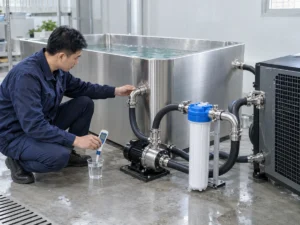
Guide d'ingénierie des matériaux pour cuve de bain froid
Comparatif des matériaux pour les marques, distributeurs, prescripteurs et acheteurs de projets commerciaux.
Réponse directe : Il n’existe pas de matériau de cuve de bain froid universellement meilleur. L’acier inoxydable peut offrir une voie robuste de retenue d’eau soudée, mais l’identité de l’alliage, le nettoyage des soudures, la géométrie des crevasses, la chimie de l’eau et l’isolation contrôlent encore le résultat. Les systèmes en acrylique et en fibre de verre/composite peuvent offrir des formes moulées et des surfaces mouillées non métalliques, mais le support, la construction du stratifié, la compatibilité avec les nettoyants, l’exposition aux UV et la méthode de réparation doivent être vérifiés. Les cuves en polymère rotomoulé ajoutent une autre voie moulée d’une seule pièce, dont la résine, la construction des parois, l’isolation et les raccords sont propres au produit. Le bois thermotraité est couramment une voie de bardage ou de finition extérieure dans les cuves hybrides, et non une preuve de la coque de retenue d’eau. Comparez la construction complète à l’eau réelle, au nettoyage, à l’exposition extérieure, au service commercial et au plan de maintenance.
Le résultat utile pour l'acheteur est un planning des matériaux qui sépare la doublure en contact avec l'eau, la structure, l'isolation, le bardage, les fixations, les joints et la finition, puis relie chaque couche aux preuves, à l'inspection et à la maintenance. Le matériau de la coque seul n'établit pas la performance thermique, la résistance à la corrosion, la réparabilité, la durée de vie ou le coût d'exploitation. Ce guide compare donc la logique décisionnelle plutôt que de publier des affirmations non étayées sur la durée de vie, le taux de corrosion, l'épaisseur ou la certification des produits HACHILL.
Portée de la page : cet article traite de la comparaison des matériaux des baignoires d'immersion froide au niveau du système. La question isolée 304 contre 316, l'alliage ou l'épaisseur exacts du modèle, le statut de certification du produit, la sélection complète du système d'immersion froide et les options de finition propres au modèle restent du ressort de leur documentation dédiée, achat professionnel ou dossiers produits.
Sur cette page
- Comparer les principales options de matériaux pour bain froid
- Comparez un système de matériaux, pas une simple étiquette de surface
- Classez l'exposition avant de nommer le matériau préféré
- Vérifiez les preuves de l'alliage inoxydable et de la surface sans vous fier à l'apparence
- Inspectez les soudures, la teinte de chaleur, les crevasses, la drainabilité et les enregistrements de passivation
- Comparer les systèmes en acrylique, fibre de verre, composite et polymère rotomoulé
- Traitez le Thermowood et les autres habillages comme une enveloppe gérée contre l'humidité
- Vérifier les fixations, les métaux dissemblables, les joints et les pénétrations comme matériaux distincts
- Relier les relevés de chimie de l'eau et de nettoyage aux investigations sur les matériaux
- Normaliser la charge de travail du cycle de vie sans inventer de durée de vie ni de coût
- Élaborer un plan d'inspection traçable des échantillons et de la production
- Contrôler les substitutions de matériaux et les changements de révision
- Preuve du niveau de matériau selon le périmètre, la traçabilité et l'indépendance
- Distinguer la variation esthétique, le défaut de fabrication et les dommages liés à l'utilisation lors de la réception
- Émettre un RFQ qui rend les hypothèses de matériaux comparables
Comparer les principales options de matériaux pour bain froid
N’utilisez le matériau mis en avant que comme premier filtre. La décision d’achat doit comparer ce que le matériau fait dans le bain complet, quelles expositions peuvent modifier ses performances et quelles preuves sont disponibles pour la construction exacte commandée.
Matériaux des cuves d’immersion froide : comparaison rapide pour l’acheteur
| Flux matière | Ce qu'il peut offrir | Ce que les acheteurs doivent vérifier | Erreur de comparaison courante |
|---|---|---|---|
| Acier inoxydable | Chemise ou corps métallique soudé avec joints inspectables et un parcours alliage/finition défini | Nuance exacte, périmètre des composants, traitement des soudures, état de surface, interstices, capacité de drainage, isolation et limites chimiques | Supposer que 304 ou 316 prédit à lui seul la résistance à la corrosion, l'hygiène, la durée de vie ou la rétention du froid |
| Acrylique / composite fibre de verre | Géométrie moulée avec une surface polymère côté eau et des couches de renfort/support séparées | Identité de surface, support/stratifié, support de cadre, limites de nettoyant et d'UV, pénétrations, méthode de réparation et isolation | Traiter « acrylique » ou « fibre de verre » comme une spécification de construction complète |
| Polymère rotomoulé | Corps moulé monobloc pouvant intégrer la forme, les cavités murales ou l’isolation selon la conception | Qualité de polymère, construction paroi/mousse, déclaration UV, raccords, support, limites des produits de nettoyage et procédure de réparation/remplacement | Supposer que tous les plastiques moulés ont le même comportement face aux UV, aux impacts, à l'isolation ou aux produits chimiques |
| Hybride à parement en Thermowood | Aspect et toucher extérieurs du bois, tandis qu’un revêtement intérieur séparé assure la fonction de rétention d’eau | Liner réel, essence/modification du bois, ventilation arrière, drainage, fixations, finition, remplaçabilité et instructions de maintenance | Traiter le bois extérieur comme la barrière d’étanchéité ou comme une construction extérieure sans entretien |
Règle de sélection : choisissez la voie dont la construction complète est documentée pour l’exposition du projet et dont les tâches de nettoyage, d’inspection et de réparation peuvent réellement être assurées par l’exploitant. Si le fournisseur ne peut pas définir les couches derrière l’appellation marketing du matériau, la comparaison reste ouverte.
Comparez un système de matériaux, pas une simple étiquette de surface
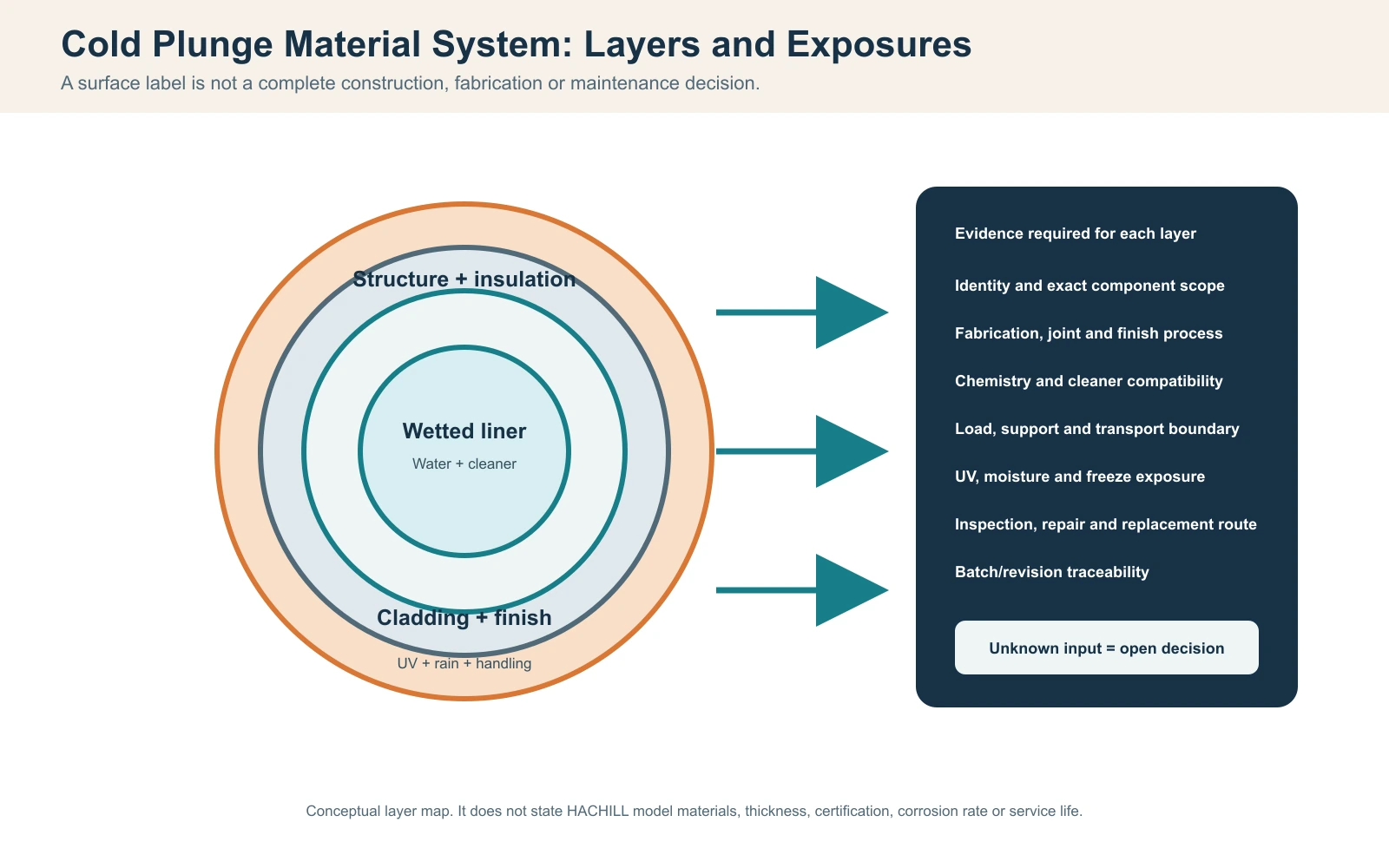
Le choix du matériau d'un bassin d'immersion froide doit distinguer la paroi en contact avec l'eau, le support structurel, l'isolation, le revêtement extérieur, les fixations, les joints, les pénétrations et la finition. Ces couches sont soumises à des conditions différentes d'eau, de produits chimiques, d'UV, de température, de charge et d'entretien. Une coque d'apparence inoxydable ne prouve pas l'alliage, l'épaisseur, le traitement des soudures ou la passivation, tandis qu'une étiquette Thermowood décrit généralement une voie extérieure plutôt que la structure de rétention d'eau.
Commencez par l'environnement de service et les conséquences en cas de défaillance, puis demandez des preuves pour la configuration exacte commandée. Le résultat de la décision doit indiquer quelle couche remplit chaque fonction, à quelle exposition elle est soumise, comment elle est fabriquée et nettoyée, quel document prouve l'affirmation, et quelle inspection libère la production et la livraison. Un avantage matériel générique ne peut pas combler une interface qui reste non spécifiée.
Schéma du système de matériaux du bassin d'immersion froide
| Couche | Fonction principale | Questions d'exposition | Preuve de libération |
|---|---|---|---|
| Revêtement en contact avec l'eau | Contenir l'eau et offrir une surface nettoyable | Chimie, dépôts, produits de nettoyage, température et vidange | Calendrier précis des matériaux/finitions et dossier de fabrication |
| Structure/support | Supporter l'eau, l'utilisateur et les charges de manipulation | Charges ponctuelles, humidité, mouvement et transport | Plan d'appui approuvé et fiche matériaux |
| Isolation / enveloppe | Limiter les apports de chaleur et gérer la condensation | Cycles humide-sec, comportement à cellules fermées/ouvertes et accès | Détail de coupe et construction approuvée |
| Bardage | Finition extérieure et protection | UV, pluie, projections, ventilation et nettoyage | Essence/système exact, finition et instructions d'entretien |
| Fixations/joints | Interfaces de jonction et d'isolation | Interstices, contact galvanique, produits chimiques et remplacement | Nomenclature, contrôle de compatibilité et de substitution |
| Finition | État de surface et aspect | Abrasion, réparation, teinte de chauffe, revêtement et variation | Échantillon approuvé et critères d'acceptation mesurables |
Règle de libération : L'identité du matériau, la qualité de fabrication et les conditions de service sont des étapes distinctes. Réussir l'une ne prouve pas les autres.
Classez l'exposition avant de nommer le matériau préféré
Établissez un registre d'exposition pour le côté eau, l'extérieur et les interfaces. Enregistrez l'approche de désinfection ou de traitement, la chimie normale et anormale, les ajouts de chlorure ou de sel, les variations de l'eau source, les produits de nettoyage, la charge de crème solaire et d'huile corporelle, la fréquence de vidange/remplissage et les périodes d'inactivité. Capturez séparément l'emplacement intérieur ou extérieur, l'air côtier, les UV directs, la pluie, l'exposition au gel-dégel, l'humidité, l'eau stagnante et la ventilation derrière le revêtement.
Utilisez un écran d'exposition défini par le projet plutôt que des taux de corrosion inventés ou des prédictions de durée de vie. Classez la probabilité et la conséquence avec des catégories clairement nommées, enregistrez les preuves derrière chaque notation et définissez à l'avance quels résultats nécessitent des preuves de niveau supérieur, un changement de conception ou un examen spécialisé. L'écran n'est qu'un outil de priorisation ; il ne prédit pas les années de service. Les seuils doivent être fixés par l'équipe du projet et vérifiés par rapport aux instructions du modèle, à la conception chimique et aux conditions locales.
Registre illustratif d'exposition des matériaux
| Exposition | Entrée du projet | Couches concernées | Décision requise |
|---|---|---|---|
| Chlorures/sels | Eau source, ajouts, tendance de concentration et projections | Revêtement, soudures, fixations et quincaillerie | Compatibilité alliage/fabrication/chimie |
| Désinfectant et pH | Plage normale, réponse en cas de déséquilibre et point de dosage | Tous les matériaux en contact et joints | Limites du fournisseur plus contrôle de l'opérateur |
| Produits de nettoyage | Produit, dilution, contact, rinçage et outils | Surface, revêtement, joints et habillage | Nettoyant approuvé et procédure |
| Littoral/UV/météo | Distance/exposition, abri, ensoleillement et pluie | Bardage, quincaillerie et finition extérieure | Protection, drainage et itinéraire d'entretien |
| Gel/sec-humide | Climat, arrêt et vidange | Revêtement, joints, isolation et interfaces de tuyauterie | Protection spécifique au modèle et règles d'arrêt |
| Manutention professionnelle | Utilisateurs, cycles de nettoyage et impacts de livraison | Surface, support et pièces remplaçables | Plan de service, d'inspection et de réparation |
Gardez les données d’entrée inconnues visibles. Si la tendance des chlorures, le choix du nettoyant ou l’abri extérieur n’est pas décidé, le choix du matériau est conditionnel plutôt qu’approuvé. Ne classez pas une exposition inconnue comme à faible risque simplement parce qu’aucune donnée n’a été fournie.
Vérifiez les preuves de l'alliage inoxydable et de la surface sans vous fier à l'apparence
304 et 316 sont des familles d'alliages, pas des déclarations de durabilité complètes. L'option la plus résistante à la corrosion peut convenir à certaines expositions aux chlorures ou en milieu côtier, mais aucune n'est universellement anticorrosion. L'état de surface, la contamination liée à la fabrication, la géométrie des crevasses, les dépôts, la chimie de l'eau, l'utilisation de nettoyants et la maintenance peuvent dominer le comportement local. Les affirmations exactes sur la nuance nécessitent un justificatif propre à la commande.
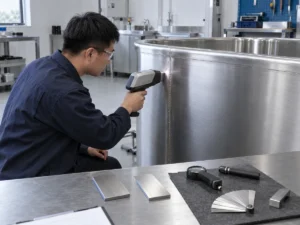
Précisez le système de désignation utilisé, le périmètre des composants et les preuves requises. Un certificat d'essai en usine peut relier une coulée ou un lot aux données chimiques et mécaniques, mais uniquement si la traçabilité relie ce matériau au composant commandé. Un test d'identification positive des matériaux par appareil portable peut confirmer l'identité lorsqu'il est réalisé par une personne compétente avec une méthode documentée, mais il ne prouve ni l'épaisseur, ni la passivation, ni la qualité des soudures, ni les performances futures de corrosion.
Distinguez les finitions brossées, polies, sablées, revêtues et autres selon des critères mesurables ou des échantillons approuvés. Un échantillon visuel établit l'apparence dans les conditions d'éclairage et de visualisation déclarées, et non la construction cachée. Enregistrez la directionnalité, la variation autorisée, le retrait du film protecteur et la méthode de réparation des marques de transport.
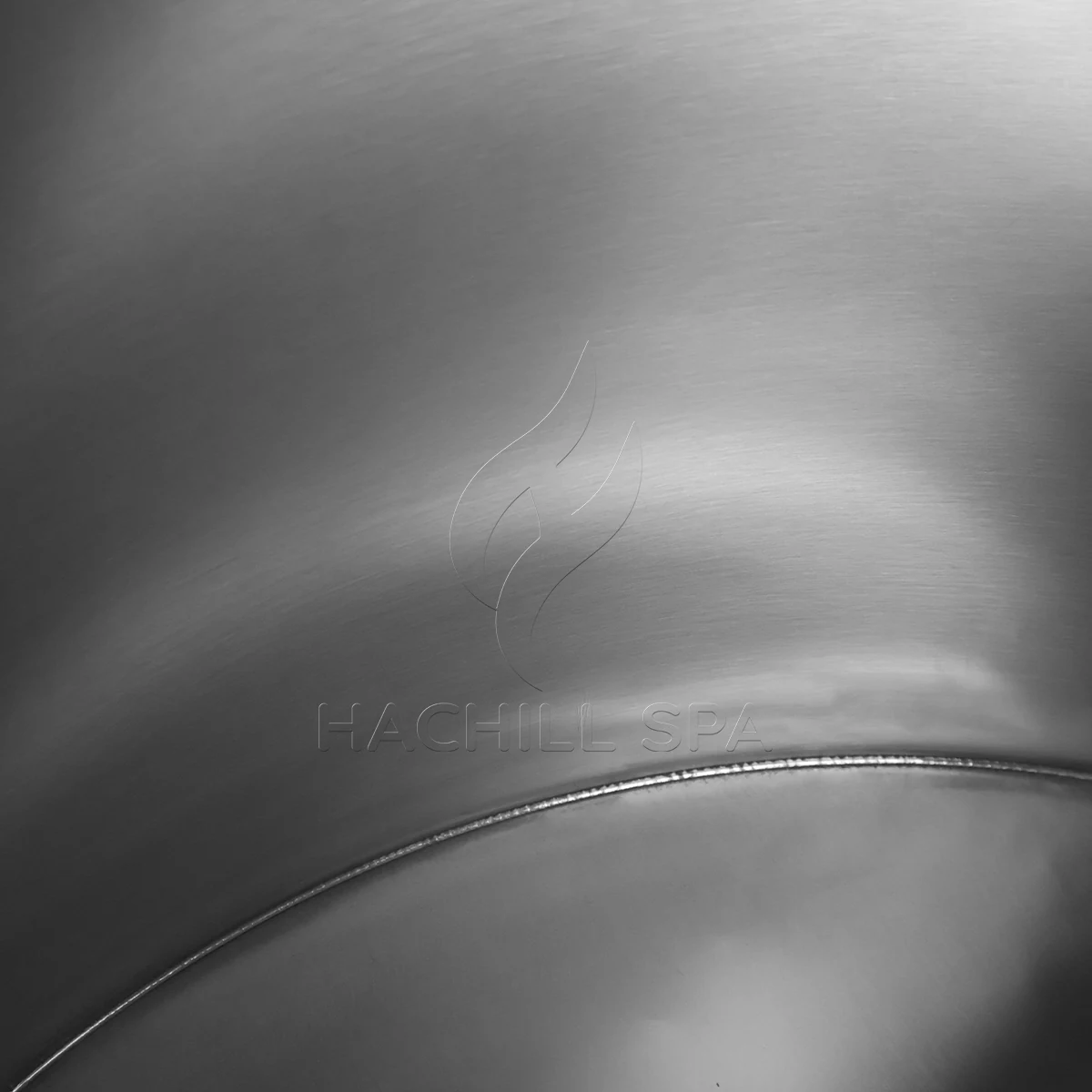
Inspectez les soudures, la teinte de chaleur, les crevasses, la drainabilité et les enregistrements de passivation
La construction en acier inoxydable soudé crée des zones affectées thermiquement, des transitions géométriques et des points de contamination potentiels. Le guide de fabrication et de nettoyage après fabrication du Nickel Institute constitue une source technique de référence appropriée pour cette limite de fabrication. Le plan de fabrication doit définir l'accès aux joints, le profil de soudure, l'élimination de la coloration thermique, la séquence de meulage ou de polissage, le nettoyage, le décapage ou la passivation lorsque spécifié, le rinçage et la protection finale. Un nom de procédé seul est insuffisant ; précisez la portée, la révision de la procédure et les preuves d'acceptation.
Inspectez les drains, les pénétrations, les coins, les raccords et les détails de la ligne de flottaison pour détecter les interstices et les liquides piégés. La vidangeabilité est une propriété de configuration : remplissez une unité de niveau selon un test approuvé, vidangez par le chemin prévu, puis enregistrez les emplacements résiduels et la méthode approuvée d'élimination/séchage. Ne promettez pas une vidange complète à partir d'une photographie ou d'un seul raccord de drain.
Le dossier d'acceptation doit relier tout enregistrement spécifié de décapage ou de passivation à une inspection de vidange/résidus témoin pour la même révision de production. Un enregistrement de procédé ne peut pas se substituer à l'autre.
Calendrier des preuves de fabrication en acier inoxydable
| Caractéristique | Preuve avant production | Contrôle de réception/acceptation |
|---|---|---|
| Matériau de base | Nuance, périmètre des composants et exigence de traçabilité | Correspondance de l'identité et des documents |
| Soudures | Procédure, critères de fabrication et finition accessible | État visuel et preuve approuvée de contrôle non destructif/fuite si requise |
| Teinte de chauffe/oxyde | Méthode d'élimination et périmètre de la zone affectée | Aucune décoloration résiduelle inacceptable selon les critères convenus |
| Décapage/passivation | Procédé spécifié, chimie/contrôle et enregistrement | Le certificat/enregistrement correspond au composant et à la révision |
| Interstices/évacuations | Examen du dessin de détail et de la nettoyabilité | Inspection de l'évacuation/résidu attestée |
| Surface finale | Échantillon approuvé, critère de rugosité/finition si requis | Éclairage, distance de visualisation et classification des défauts |
Scénario d'ingénierie : un échantillon poli est conforme, mais les soudures de production se décolorent
Problème observé : Le coupon plat approuvé semble uniforme, tandis que les coins fabriqués présentent ensuite une décoloration ou des dépôts locaux.
Cause probable : L'approbation de l'échantillon ne couvrait que l'apparence et omettait la teinte de chaleur de soudure, la géométrie des interstices, le nettoyage final ou la chimie du site.
Comment vérifier : Comparez le dossier de soudure/processus de production, la finition de la zone affectée, la drainabilité, l'historique de l'eau et l'utilisation de nettoyants avec les critères approuvés.
Voie de prévention ou corrective : Approuvez un échantillon fabriqué représentatif et le processus, puis inspectez les mêmes caractéristiques en production.
Comparer les systèmes en acrylique, fibre de verre, composite et polymère rotomoulé au regard du support et de la réparation
Les baignoires en acrylique, en fibre de verre/composite et en polymère rotomoulé doivent être évaluées en tant que constructions plutôt que comme des catégories génériques de « plastique ». Demandez quelle couche est orientée vers l'eau, ce qui assure la rigidité structurelle, où la coque est soutenue, si l'isolation est séparée ou intégrée, et comment les évacuations, jets, raccords et autres pénétrations sont renforcés ou scellés. Le brillant de surface ou un aspect monobloc ne prouve pas la résistance commerciale, la performance aux chocs, la résistance aux UV ou la réparabilité.
Demandez les limites de nettoyant, désinfectant, solvant, UV et température pour la construction exacte. Les données techniques des produits PMMA, par exemple, montrent que la résistance chimique varie selon le produit chimique et la condition de contact ; c'est une raison de vérifier le matériau réel de la baignoire et le manuel, et non de transférer les limites d’un autre fournisseur d'acrylique à la coque commandée. Les concentrés, les solvants incompatibles, les outils abrasifs, les portées non supportées et les charges ponctuelles peuvent créer des modes de défaillance différents des conditions d'exploitation diluées normales.
Les produits rotomoulés ajoutent une autre voie : confirmez la désignation du polymère, la construction de la paroi, les détails de mousse ou de cavité, la déclaration UV, le renforcement des raccords et la méthode de remplacement ou de réparation. Un corps moulé peut réduire certaines jonctions, mais les raccords, évacuations, orifices et accessoires restent des interfaces nécessitant une inspection.
Définissez les classes de réparation avant l’achat. Un polissage superficiel, une réparation d’acrylique, une réparation de gelcoat, une réparation de stratifié ou un remplacement de coque moulée ont des besoins différents en compétences, en matériaux et en vérification. L’acheteur doit savoir quel dommage est cosmétique, lequel nécessite un examen structurel, si une correspondance de couleur est réalisable et quel contrôle d’étanchéité ou d’intégrité après réparation est requis.
Fiche comparative polymère et composite
| Question | Voie acrylique | Voie fibre de verre/composite | Filière polymère rotomoulé | Preuve |
|---|---|---|---|---|
| Couche en contact avec l'eau | Identité et condition de formage de la feuille/surface | Système de résine, gelcoat ou liner | Désignation du polymère et surface moulée | Calendrier de construction exact |
| Support | Cadre, renfort et portées non soutenues | Rigidité du stratifié, nervures et cadre | Géométrie des parois, support de base et chemin de charge en condition remplie | Plan de support approuvé ou dossier de construction |
| Limites chimiques | Restrictions relatives aux nettoyants, désinfectants et solvants | Compatibilité résine/finition et rinçage | Restrictions relatives aux produits de nettoyage, désinfectants et à la fissuration sous contrainte lorsqu'elles sont déclarées | Manuel ou déclaration de matériau spécifique au modèle |
| UV/extérieur | Limite d'exposition et protection | Parcours de vieillissement de la résine/finition | Formulation UV, couverture/protection et déclaration d'usage extérieur | Usage déclaré et exposition sur site |
| Réparation | Classification des rayures/fissures et méthode approuvée | Réparation cosmétique ou de stratifié | Voie approuvée pour la réparation du plastique ou le remplacement de composant | Consigne de réparation et contrôle d’acceptation |
| Réception | Déformations, fissures et défauts de surface | Indication d'impact, de délaminage et finition | Déformation, dommages d'impact, dommages aux raccords et état du mur | Critères d'inspection/défauts convenus |
Traitez le Thermowood et les autres habillages comme une enveloppe gérée contre l'humidité
Le bois extérieur change l'apparence, le toucher et le positionnement de la marque, mais il ne doit pas être confondu avec le liner en contact avec l'eau, sauf si le design exact indique le contraire. Vérifiez l'essence ou la voie de modification, l'humidité à la fabrication, le profil des lames, le traitement des abouts, la ventilation arrière, le dégagement au sol, les fixations, le revêtement ou l'huile, la remplaçabilité et l'accès à la structure derrière.
L'exposition aux intempéries peut modifier l'aspect du bois extérieur et son état d'humidité, tandis que des cycles répétés d'humidification et de séchage augmentent l'importance du drainage, de la ventilation et du traitement des joints. Le Association internationale ThermoWood identifie les classes de produits ThermoWood pour différentes conditions d’application, y compris le bardage extérieur, et oriente les utilisateurs vers des recommandations techniques propres au produit. Le Manuel du bois du Laboratoire des produits forestiers de l'USDA fournit un contexte plus large sur l'humidité du bois et les changements dimensionnels. L'espèce exacte, la classe de modification, le système de finition et les instructions du produit prévalent toujours. N'énoncez pas d'intervalle de maintenance universel.
Consigner le bardage comme une enveloppe gérant l'humidité, incluant la ventilation arrière, le drainage de la base, l'exposition des bouts de bois et le chemin d'accès pour l'inspection ou le remplacement des planches.
Pour les options actuelles de la famille de produits utilisant cette voie extérieure, consultez la gamme de bains froids en Thermowood HACHILL; ; ce guide des matériaux reste la référence pour la comparaison entre matériaux.
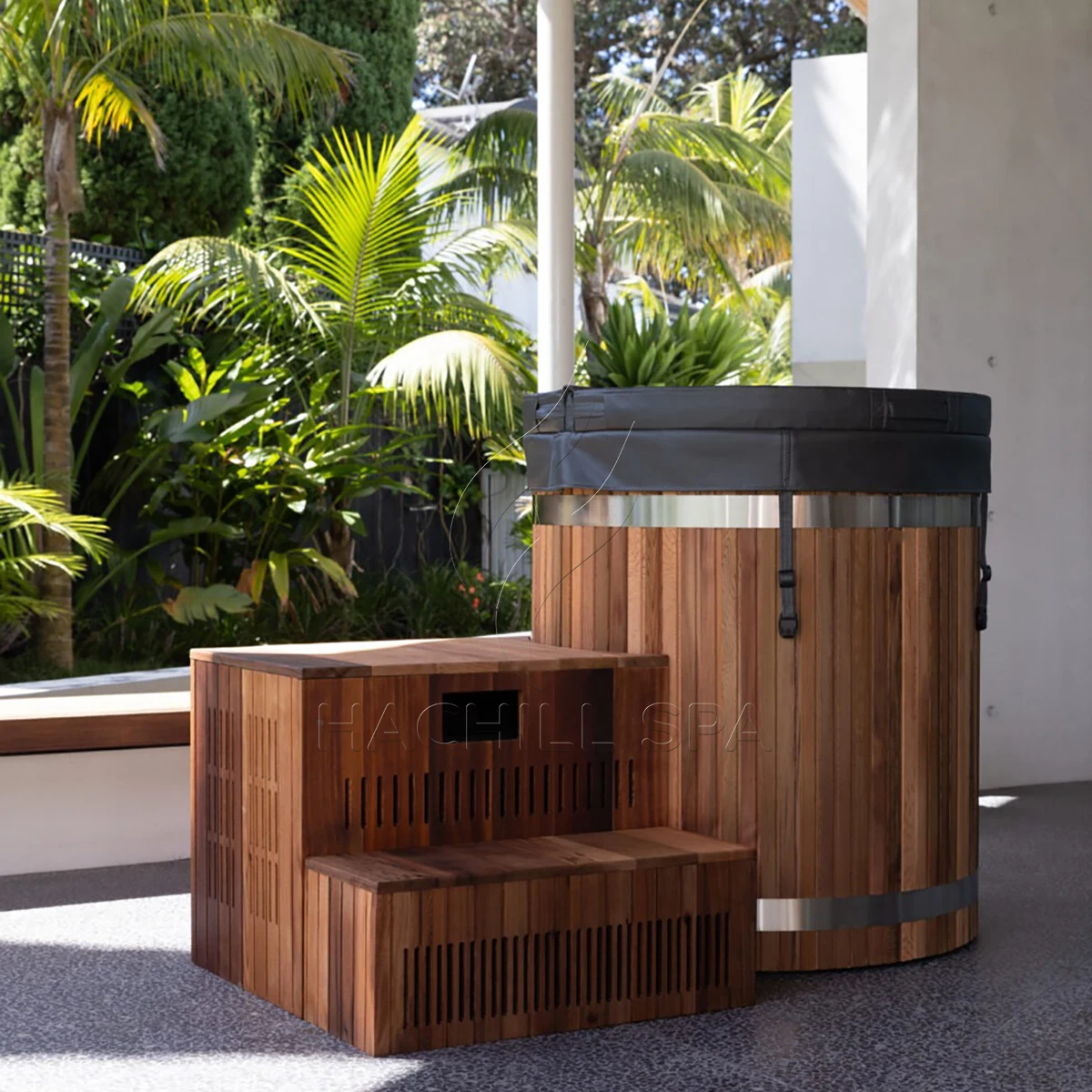
Scénario d'ingénierie : les planches extérieures se décolorent à la base
Problème observé : Le revêtement inférieur s'assombrit et reste humide après que le reste du bain a séché.
Cause probable : Les éclaboussures, l'eau stagnante, la ventilation arrière bloquée ou le manque de dégagement à la base n'ont pas été inclus dans l'examen des matériaux.
Comment vérifier : Inspectez le ruissellement, la cavité arrière, le fil de bois, les fixations, le registre de revêtement, les produits de nettoyage et le drainage du site.
Voie de prévention ou corrective : Corrigez le chemin d'humidité, remplacez ou refaites la finition uniquement selon la méthode approuvée, et révisez les déclencheurs d'inspection.
Vérifier les fixations, les métaux dissemblables, les joints et les pénétrations comme matériaux distincts
Les assemblages mixtes peuvent défaillir aux interfaces même lorsque chaque matériau principal est acceptable. Cartographiez chaque fixation, charnière, drain, raccord, logement de capteur, joint d'étanchéité, garniture et élément décoratif exposé à l'humidité ou susceptible de l'être. Consignez le matériau, le revêtement, l'isolation, la remplaçabilité et l'exposition au nettoyage. Des métaux nominalement similaires peuvent encore créer des crevasses, tandis que des métaux dissemblables peuvent nécessiter une isolation et un drainage.
Les joints et adhésifs doivent être compatibles avec la chimie de l'eau, les nettoyants, la température et le mouvement des joints. Une déclaration selon laquelle un mastic est étanche ne prouve pas l'adhérence au substrat sélectionné ni la résistance aux produits chimiques de l'installation. Utilisez les données du fournisseur et des preuves de joints représentatives lorsque l'interface est critique.
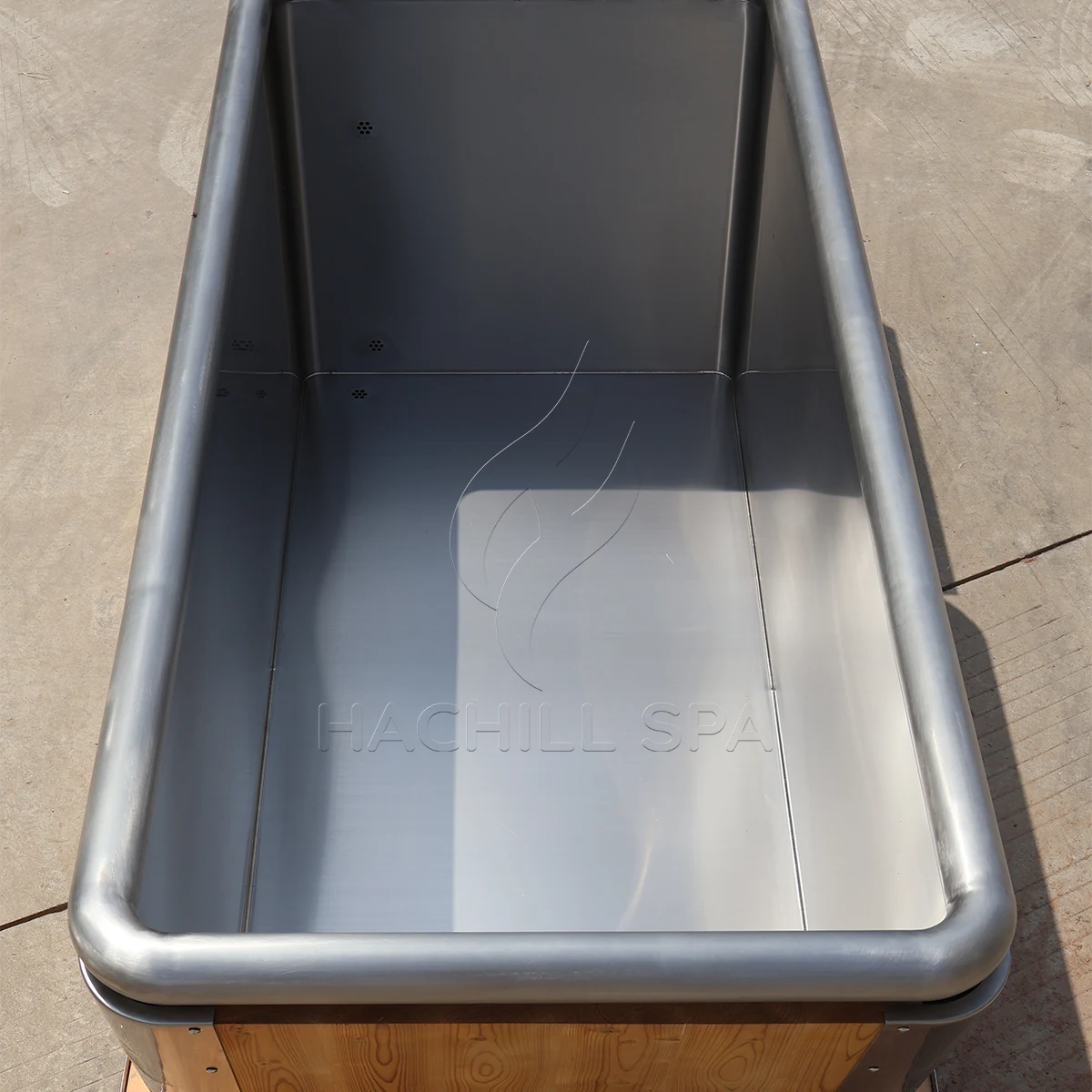
Relier les relevés de chimie de l'eau et de nettoyage aux investigations sur les matériaux
La garantie matérielle et les discussions sur les causes profondes nécessitent un registre d'exploitation. Consignez l'eau source, la date de remplissage, le désinfectant ou la méthode de traitement, le pH et les autres champs requis par le modèle/manuel, les événements de dosage, les lectures inhabituelles, la vidange/le remplissage, le produit de nettoyage, la dilution, le temps de contact, le rinçage, les outils et l'opérateur. Pour un usage commercial, consignez la fermeture et les mesures correctives lorsque l'eau ou les conditions de nettoyage sortent du cadre approuvé.
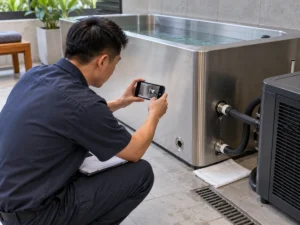
Utilisez des preuves synchronisées lors de l'investigation de la corrosion, des piqûres, des changements de revêtement, des fissures, du gonflement ou des dommages aux joints. Photographiez l'emplacement et l'échelle, consignez la relation avec la ligne d'eau, les dépôts, l'état de la face inférieure et des crevasses, identifiez le composant exact et le lot, et préservez l'historique chimique/de nettoyage. Une photographie seule ne peut pas distinguer la contamination de fabrication, la chimie d'exploitation, l'exposition externe ou les dommages de service.
L'historique de nettoyage doit identifier le produit, la dilution, le temps de contact, le rinçage, l'outil, l'opérateur et tout écart, plutôt que de consigner uniquement que la baignoire a été nettoyée.
Pour la pratique courante de filtration, d'assainissement et d'entretien de l'eau, poursuivez vers la Guide d'entretien de l'eau des bains froids; ; cette section reste limitée aux preuves et à l'analyse de l'état des matériaux.
Journal d'investigation de l'état des matériaux
| Enregistrer | Méthode/source | Pourquoi c'est important |
|---|---|---|
| Identité du composant | Révision du modèle, du numéro de série, du lot, de la nomenclature et du plan | Relie la condition au système de matériaux exact |
| Emplacement/apparence | Photos à l'échelle, ligne de flottaison et interfaces adjacentes | Sépare la géométrie locale et l'exposition générale |
| Historique de l'eau | Instrument, résultat, heure, action corrective | Teste l'hypothèse chimique et la conformité aux limites |
| Historique du nettoyant | Produit, dilution, contact, rinçage, outil et opérateur | Teste les hypothèses de compatibilité et de mauvaise utilisation |
| Exposition extérieure | UV, air côtier, pluie, gel et abri | Teste les causes non liées à l'eau |
| Preuves de fabrication | Dossier des matériaux, soudures, finitions et réparations | Teste les hypothèses liées au processus de production |
| Échantillon conservé | Échantillon témoin/coupon contrôlé si convenu | Prend en charge les tests indépendants sans détruire les preuves |
Normaliser la charge de travail du cycle de vie sans inventer de durée de vie ni de coût
Comparez les parcours de matériaux sur une période de planification déclarée en utilisant les mêmes tâches incluses et le même périmètre de main-d'œuvre. Listez l'inspection, le nettoyage de routine, le retrait des dépôts, le polissage ou les travaux de finition, le remplacement des joints ou des garnitures, les réparations spécialisées, le temps de fermeture et les consommables. Utilisez les taux de main-d'œuvre sur site uniquement s'ils sont fournis par l'acheteur ; sinon, indiquez les unités de charge de travail et les champs de coûts ouverts.
Normalisez le travail par tâche plutôt que par une allégation inventée de durée de vie. Une méthode de planification transparente est charge de travail annuelle = somme(fréquence de la tâche x durée mesurée ou approuvée de la tâche) + temps d’accès/préparation. Laissez la fréquence et la durée ouvertes jusqu’à ce qu’elles puissent être étayées par les instructions du modèle, des essais chronométrés représentatifs ou l’historique de l’établissement. Ne convertissez pas une charge de travail préliminaire plus faible en coût de cycle de vie garanti plus bas.
Feuille de calcul de la charge de travail de maintenance du cycle de vie
| Tâche | Base de fréquence | Source de temps/données | Conséquence opérationnelle |
|---|---|---|---|
| Inspection | Manuel, exposition et premiers résultats sur site | Inspection représentative minutée | Peut détecter la corrosion, les fissures, l'humidité ou le changement de joint |
| Nettoyage de routine | Procédure d'utilisation et de soin de l'eau | Essai chronométré de nettoyage/rincage/séchage | Main-d'œuvre et fenêtre de fermeture |
| Travaux de dépôt/finition | Déclencheur observé, pas un calendrier supposé | Méthode approuvée et essai mesuré | Aspect et état de surface |
| Traitement du revêtement | Exposition et déclencheur de finition approuvé | Enregistrement spécifique au site | Accès, séchage et fenêtre météo |
| Réparation/remplacement | Classe de défaut et voie approuvée | Preuve du fournisseur/service local | Pièces, compétence et temps d'arrêt |
| Documentation | Exigence commerciale/exploitant | Consigner et examiner le temps | Prend en charge la garantie, l'assurance qualité et les litiges |
Élaborer un plan d'inspection traçable des échantillons et de la production
Approuvez les échantillons selon leur objectif. Un échantillon de couleur/texture, un échantillon de soudure fabriqué, une éprouvette de joint, un échantillon de revêtement et un premier article complet répondent à des questions différentes. Étiquetez chaque échantillon avec le produit, le matériau, la finition, le processus, la date et la révision ; consignez l'éclairage et la distance de visualisation pour l'apparence. Une image marketing n'est pas un maître contrôlé.
Définissez la vérification des matériaux entrants, les contrôles en cours de processus, l'approbation du premier article, l'échantillonnage par lots, l'inspection finale et la revue des documents. Le plan doit nommer la méthode d'inspection, la taille de l'échantillon ou la fréquence, la classification des défauts, l'autorité d'acceptation et la conservation des enregistrements. Si des essais destructifs sont requis, identifiez qui fournit les coupons sacrificiels et comment ils représentent la production.
Échantillon de matériau et plan de contrôle de la production
| Point de contrôle | Enregistrer | Règle de libération/maintien |
|---|---|---|
| Matériau entrant | Identité, lot fournisseur, certificat et traçabilité | Toute non-conformité ou preuve requise manquante bloque l'utilisation |
| Première fabrication | Soudure/joint/finition représentatifs et révision du processus | Approbation acheteur/fournisseur avant la poursuite du lot |
| En cours de processus | Contrôles de teinte de chaleur, finition, contamination, support et interface | Corriger la cause avant que le travail affecté ne soit masqué |
| Apparence finale | Échantillon approuvé, éclairage/distance et classe de défaut | Séparer la variation cosmétique du défaut fonctionnel |
| Fonctionnel | Tests d'étanchéité, de drainabilité et spécifiques à la configuration | Les défaillances mettent en quarantaine l'unité/lot affecté conformément au plan |
| Pack de documents | Révision de la nomenclature, certificats, écarts et réparations | Maintien de l'expédition jusqu'à ce que les enregistrements requis soient complets |
Contrôler les substitutions de matériaux et les changements de révision
Les commandes en marque privée et les commandes de projet nécessitent un processus de substitution écrit. Un changement proposé dans la source d'alliage, le bois, la résine, le revêtement, la fixation, le mastic, l'isolation ou la finition doit identifier la raison, les modèles/lots affectés, la base d'équivalence, l'impact sur la compatibilité, l'impact sur l'apparence, l'impact sur les tests et les documents nécessitant une révision. “ Équivalent ” est une conclusion à démontrer, pas une étiquette d'achat.
Le fournisseur propose et fournit des preuves ; l'acheteur ou l'autorité technique nommée approuve le changement contractuel ; les installateurs et opérateurs concernés sont informés ; des réviseurs locaux qualifiés réévaluent les interfaces réglementées si nécessaire. La pression d'urgence d'approvisionnement n'élimine pas cette séquence. Une substitution non approuvée est une non-conformité même si le produit fini semble similaire.
Matrice de responsabilité du contrôle des changements de matériaux
| Décision | Plomb | Sortie requise |
|---|---|---|
| Limite d'exposition et de fonctionnement | Acheteur/exploitant avec spécialistes du traitement et du site | Environnement, chimie et intrants de nettoyage approuvés |
| Proposition de matériau/construction | Ingénierie/fabrication du fournisseur | Calendrier exact, processus et preuves |
| Proposition de substitution | Fournisseur | Dossier d'impact/équivalence et périmètre concerné |
| Approbation commerciale/technique | Autorité acheteuse désignée | Révision signée ou rejet |
| Compatibilité d'installation | Installateur/équipe de conception | Interfaces et méthodes mises à jour |
| Mise à jour exploitation/maintenance | Exploitant | SOP révisé, formation et consommables |
| Acceptation finale | Témoins/autorité désignés | Écart clos et enregistrement de configuration |
Preuve du niveau de matériau selon le périmètre, la traçabilité et l'indépendance
La preuve est la plus solide lorsqu'elle identifie le composant exact, le lot de production, la configuration, la révision du processus, la condition, la méthode et l'émetteur responsable. Un calendrier approuvé spécifique à la commande et un enregistrement de production traçable priment généralement sur une fiche technique générique ; un manuel actuel spécifique au modèle prime sur une légende de vente ; un test avec témoin prime sur une assurance verbale non documentée.
Hiérarchie des preuves matérielles
| Niveau | Exemple | Utilisation de la décision |
|---|---|---|
| A | Enregistrement traçable de commande/lot, première pièce approuvée ou réception attestée | Libérer le composant et l'état déclarés |
| B | Calendrier spécifique au modèle, manuel ou rapport tiers limité en vigueur | Concevoir/vérifier dans le cadre déclaré |
| C | Déclaration d'ingénierie du fournisseur contrôlé avec hypothèses | Clôturer une question nommée après acceptation des hypothèses |
| D | Brochure générique, photographie, échantillon non étiqueté ou allégation de catégorie | Découverte uniquement ; pas une acceptation d'achat |
| Ouvert | Composant, lot, révision, état ou méthode manquant | Retenir la réclamation ou la substitution concernée |
Le langage de certification exige un soin particulier. Un aperçu de norme explique la portée ; il ne prouve pas que HACHILL ou un modèle individuel est certifié. Vérifiez le titulaire du certificat, la liste des modèles, l'édition, le marché et le statut à partir du dossier réel avant de publier une allégation de certification.
Distinguer la variation esthétique, le défaut de fabrication et les dommages liés à l'utilisation lors de la réception
Rédigez les règles d'acceptation avant la production. Définissez les conditions de visualisation esthétique, l'échantillon de référence, la variation naturelle autorisée, les limites de défauts mesurables le cas échéant, les contrôles fonctionnels, les exigences documentaires et qui peut classer une constatation. La variation naturelle du bois, une marque de transit superficielle, un oxyde de soudure inacceptable, une discontinuité de revêtement et une fissure structurelle ne peuvent pas partager une catégorie “ qualité ” vague.
En cas de litige, mettez en quarantaine l'article ou le lot concerné, conservez l'emballage et les enregistrements bruts, identifiez la configuration et la révision du processus, documentez l'historique de l'eau/nettoyant/exposition, et convenez si la question concerne l'identité, la fabrication, l'apparence, le transport, l'installation ou l'exploitation. Ne polissez pas, ne nettoyez pas chimiquement et ne réparez pas les preuves avant que les deux parties n'approuvent la méthode d'investigation.
Registre d'acceptation des matériaux et des litiges
| Classe de constatation | Preuve initiale | Règle d'arrêt/nouvel essai |
|---|---|---|
| Identité/traçabilité | Composant, lot et certificat/calendrier requis | Retenir lorsque l'identité requise ne peut pas être établie |
| Variation esthétique | Échantillon approuvé et conditions de visualisation | Classer avant réparation ; réinspecter dans les mêmes conditions |
| Défaut de fabrication | Preuves de dessin/processus/contrôle et d'étanchéité/fuite | Arrêter la libération concernée ; corriger la cause et retester le périmètre concerné |
| Dommage de transport/installation | Enregistrements de pré-expédition, de caisse, de réception et de manutention | Préserver les preuves et désigner l'autorité de réparation |
| Condition de service | Journal de chimie, de nettoyant, d'exposition et de maintenance | Rétablir la limite approuvée ; examen spécialisé si nécessaire |
| Réparation | Méthode, matériaux, technicien et contrôle final approuvés | Aucune libération tant que la réparation n'est pas enregistrée comme acceptée |
Un nouveau test ne doit modifier que la cause identifiée et préserver toutes les autres conditions valides. Si le matériau, le procédé, le nettoyant, la chimie de l'eau et la méthode d'essai changent tous ensemble, le résultat ne peut pas attribuer la cause. Cesser l'utilisation en cas de fuites actives, de fissures structurelles, de dommages tranchants, de support instable, d'exposition électrique suspectée, d'attaque chimique incontrôlée ou de toute réparation nécessitant de contourner la protection du produit ; faire appel à un service qualifié et aux professionnels locaux concernés.
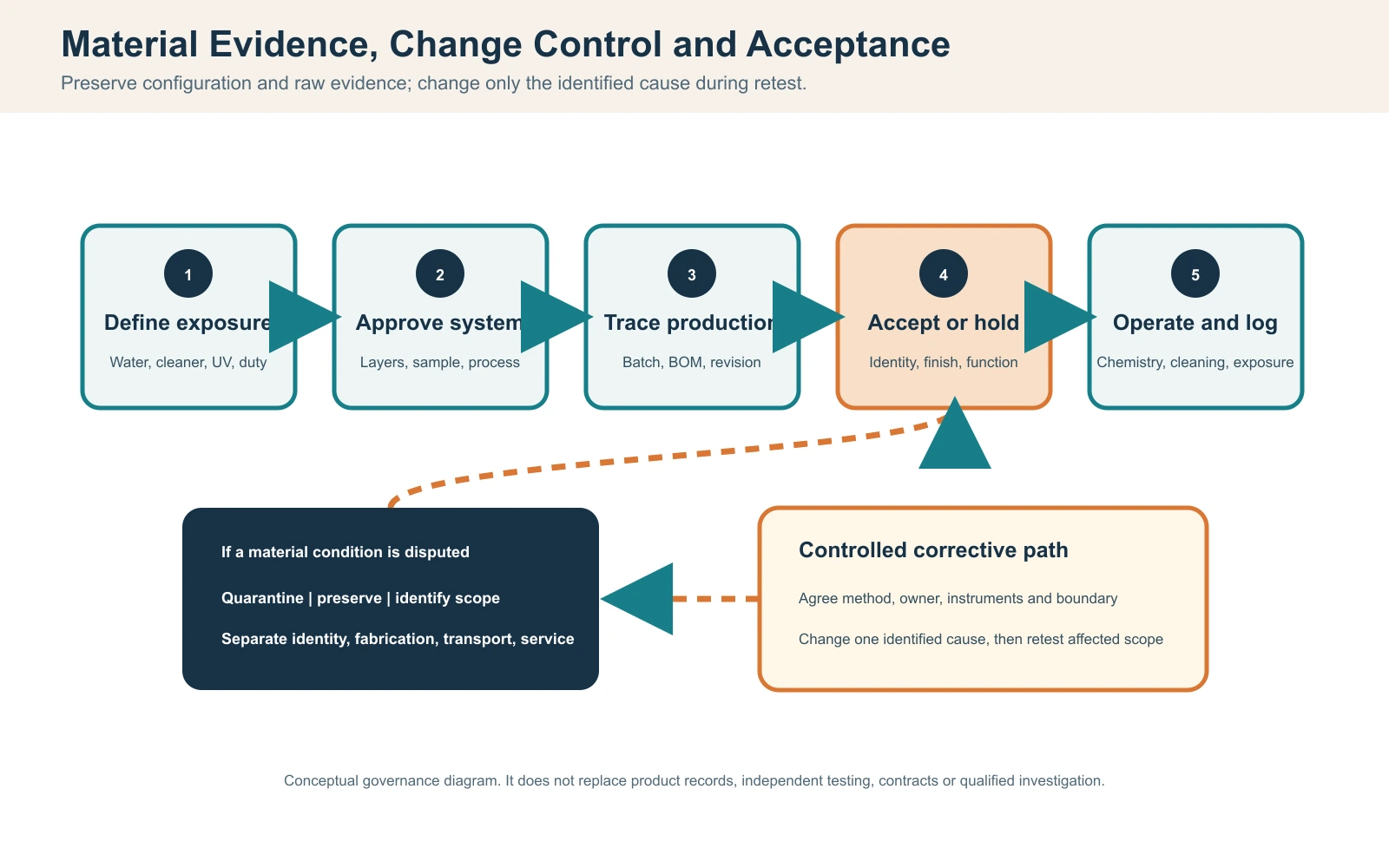
Émettre un RFQ qui rend les hypothèses de matériaux comparables
Envoyez la même carte des couches, le registre d'exposition, la chimie et les limites du nettoyant, les conditions du site, les exigences d'apparence, la traçabilité, le plan d'échantillonnage, l'inspection, le contrôle des substitutions, l'emballage et la demande de données de maintenance à chaque fournisseur. Demandez à chaque soumissionnaire d'indiquer conformité, écart, alternative ou question ouverte avec preuves à l'appui. La comparaison des prix avant l'alignement de ces champs récompense les exclusions cachées.
Feuille de normalisation des demandes de devis pour matériaux de bain froid
| Champ de l'appel d'offres | Saisie de l'acheteur | Réponse du fournisseur |
|---|---|---|
| Application/exposition | Intérieur/extérieur, usage commercial, bord de mer/UV/gel | Adéquation déclarée et conditions |
| Eau/nettoyage | Traitement, contrôle de la chimie et procédure opératoire normalisée de nettoyage | Limites de compatibilité et produits interdits |
| Plan des couches | Fonction requise et voies préférées | Revêtement exact, structure, isolation, bardage, fixations et joints |
| Fabrication/finition | Exigences de soudure, de surface, de joint et d'échantillonnage | Procédé, acceptation et voie de réparation |
| Preuve | Certificats/traçabilité/enregistrements requis | Portée du document, émetteur et révision |
| Contrôle des modifications | Autorité d'approbation et délai de notification | Procédure de substitution |
| Cycle de vie | Capacité de l'opérateur et accès | Inspection, nettoyage, consommables, pièces et tâches spécialisées |
Questions fréquemment posées
L'acier inoxydable 316 est-il toujours requis pour un bain froid ?
N° Le choix du matériau dépend de la chimie de l'eau, des chlorures, du contrôle des désinfectants, des produits de nettoyage, de l'exposition côtière, de la fabrication et de l'entretien. Un projet peut justifier un grade particulier, mais la décision doit être documentée plutôt qu'inférée à partir d'une règle générique.
Les acheteurs peuvent-ils identifier le grade d'acier inoxydable à partir d'une photo ?
N° L'apparence de surface ne permet pas de distinguer de manière fiable l'alliage ni de prouver l'épaisseur, le traitement des soudures ou la passivation. Utilisez le calendrier des matériaux approuvé et les preuves spécifiques à la commande lorsqu'une mention de qualité est importante.
Le Thermowood est-il sans entretien en extérieur ?
N° Le comportement extérieur dépend toujours du matériau exact, de la finition, de l'exposition aux UV et à la pluie, du drainage, de la ventilation, des fixations et des instructions d'entretien. Confirmez la spécification commandée et le plan du site.
Pourquoi les soudures et les drains comptent-ils dans un bassin en acier inoxydable ?
Les zones affectées par la chaleur de soudure, les finitions rugueuses, les interstices et les dépôts piégés peuvent devenir des risques locaux de corrosion ou de nettoyage. Le plan de fabrication et d'acceptation doit traiter la qualité des soudures accessibles, le traitement de surface et la capacité de drainage.
Le matériau de la coque détermine-t-il la capacité d’un bain froid à maintenir sa température ?
Non. Le matériau de la coque n’est qu’une partie du système thermique. L’épaisseur et la continuité de l’isolation, la conception de la couverture, le volume d’eau, la tuyauterie, les conditions ambiantes, l’équipement de circulation et le refroidisseur influent tous sur l’apport de chaleur et la régulation de température. Comparez la construction complète et les conditions d’essai plutôt que de supposer que l’inox, l’acrylique ou le polymère est intrinsèquement plus efficace.
Quelles informations sur les matériaux doivent figurer dans une demande de devis (RFQ) ?
Précisez l'exposition, la méthode de traitement de l'eau, les matériaux demandés en contact avec l'eau et extérieurs, la finition, les attentes en matière de traitement des joints, la compatibilité des produits de nettoyage, les exigences de preuve et le processus d'approbation des substitutions. Évitez les valeurs d'épaisseur ou de qualité non justifiées.
Ressources HACHILL associées
Catégorie de produit : bassin d'immersion froide
Utilisez la catégorie principale bain froid lorsque la voie matériau ne constitue qu'un critère parmi d'autres dans le choix de la famille de produits.
Gamme de bains froids verticaux
Utilisez cette catégorie de format une fois la direction matériau établie, lorsque la décision suivante porte sur le format corporel et la présélection de modèles.
Gamme de bains froids allongés
Utilisez cette catégorie de format une fois la direction matériau établie, lorsque la décision suivante porte sur le format corporel et la présélection de modèles.
Gamme de bains froids Thermowood
Utilisez cette filière de finition après avoir déterminé qu’une construction hybride à parement Thermowood convient au projet et que l’étape suivante est la comparaison des modèles actuels.
Guide d'achat de bain froid commercial
Utilisez le guide d’achat commercial lorsque le matériau ne représente qu’une partie d’une décision plus large portant sur le format de la baignoire, le refroidissement, la circulation, l’hygiène, les utilités, la documentation et le périmètre de la RFQ.
Guide d'entretien de l'eau pour bain froid
Utilisez le guide d'entretien de l'eau lorsque la question ouverte concerne la filtration, l'assainissement, l'entretien courant de l'eau ou les registres d'exploitation, et non le choix des matériaux.
Demander un devis de projet
Utilisez la voie RFQ une fois l'exposition, les couches de matériaux, les exigences de preuve et les hypothèses ouvertes suffisamment définies pour l'examen par le fournisseur.
Base de référence
- Nickel Institute: Stainless Steel for Potable Water Treatment Plants – Contexte sur l’exposition aux chlorures, la géométrie des crevasses, les conditions stagnantes et les facteurs de corrosion en interaction ; cela ne crée pas de limite universelle de chlorures pour le bain froid.
- Nickel Institute: Fabrication and Post-Fabrication Cleanup of Stainless Steels – Contexte pour la coloration thermique, la contamination, le meulage, le nettoyage et le traitement après fabrication ; les exigences exactes de production restent propres à la configuration.
- International ThermoWood Association : classes de produits et applications ThermoWood – Contexte officiel sur le traitement ThermoWood, les classes de produits et les applications extérieures ; l’essence, la finition et les instructions d’entretien HACHILL exactes restent propres à la commande.
- Manuel du bois du Laboratoire des produits forestiers de l'USDA – Contexte général sur l’humidité du bois et les variations dimensionnelles.
- données de résistance chimique de l'acrylique ACRYLITE – Illustre que la compatibilité chimique du PMMA dépend du produit chimique et des conditions d’exposition ; il ne s’agit pas d’un certificat de compatibilité pour la coque de baignoire d’un autre fabricant.
Limite technique et de sécurité pour la comparaison des matériaux de baignoire de bain froid par les acheteurs de produits : Les manuels de produit, les dessins approuvés, les exigences locales en matière de construction, d'électricité, de santé publique et d'accessibilité, les corps de métier agréés et les professionnels médicaux ou de sécurité qualifiés priment sur les conseils généraux en ligne. Cet article ne revendique aucune certification, performance garantie sur site ou bénéfice médical individuel.
Transformez le relevé d'exposition en un cahier des charges matériaux
Envoyez à HACHILL les informations sur l’installation et l’usage prévu, le plan de traitement de l’eau et de nettoyage, l’exposition intérieure/extérieure et côtière, la voie matériau privilégiée si elle est connue, les couches de construction requises, la référence de finition, les exigences en matière de preuves et d’inspection, la quantité, la destination et le périmètre de marque. L’équipe peut examiner une configuration tandis que les champs non étayés restent explicitement ouverts.