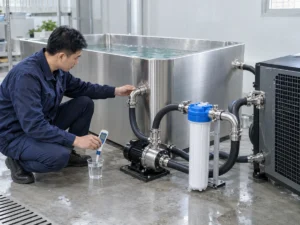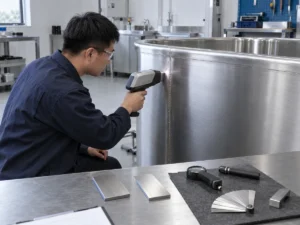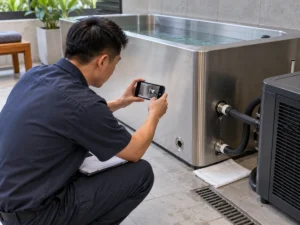
Guida tecnica alla vasca per immersione in acqua fredda
Approvvigionamento B2B e selezione di progetto per operatori commerciali, distributori, progettisti e marchi del benessere.
Risposta diretta: Acquista una vasca fredda commerciale come un sistema operativo completo, non come un contenitore più una dimensione di refrigeratore di richiamo. Prima di confrontare i preventivi, definisci il turnover degli utenti, il volume d'acqua operativo effettivo, le temperature di partenza e obiettivo, le condizioni ambientali di aspirazione del condensatore, le aspettative di pull-down e di recupero tra un utente e l'altro, la circolazione, la filtrazione e il trattamento, l'ingresso e l'uscita, lo scarico, l'alimentazione elettrica, l'accesso per la manutenzione e i requisiti della destinazione. Due prezzi non sono confrontabili finché il perimetro di fornitura non è identico: vasca, refrigeratore d'acqua, pompa, filtro, apparecchiature di trattamento, copertura, controlli, messa in servizio, documenti, materiali di consumo e ricambi iniziali devono ciascuno essere identificati come forniti, forniti localmente o esclusi.
Il risultato utile di una guida all'acquisto è una shortlist controllata e una RFQ a cui i fornitori possono rispondere senza ipotesi nascoste. Questa guida si concentra sugli input decisionali, sulle evidenze e sulle verifiche di accettazione. Non pubblica dichiarazioni non verificate di HACHILL su capacità, raffreddamento, certificazione, garanzia o consegna, e non tratta un'etichetta di prodotto commerciale come approvazione per uso pubblico.
Ambito della pagina: Questa pagina gestisce la decisione di acquisto a livello di sistema. I termini delle categorie di prodotto appartengono alla pagina della categoria vasche per immersione in acqua fredda; le dimensioni e le configurazioni dei modelli appartengono alle pagine prodotto; i termini produttore, OEM e private label appartengono alle pagine dei servizi. La corrispondenza dettagliata dell'interfaccia vasca-refrigeratore d'acqua appartiene alla Guida all'abbinamento tra vasca per immersione in acqua fredda e refrigeratore d'acqua, mentre la qualificazione del formato verticale appartiene alla Guida all'acquisto di vasche verticali per immersione fredda per strutture commerciali.
In questa pagina
- Qualifica il servizio commerciale prima di confrontare i modelli
- Scrivi il brief operativo prima di leggere il catalogo
- Valuta pull-down e recupero come compiti separati
- Definisci il sistema completo di acqua, raffreddamento e circolazione
- Confronta il formato della vasca con il compito dell'utente
- Pianifica il sito, le utenze, lo scarico e il percorso di manutenzione
- Definisci la sanificazione come programma operativo
- Raccogli i dati di messa in servizio e separa le cause
- Controlla evidenze, responsabilità e blocchi di rilascio
- Utilizzare porte di evidenza prima del pagamento e della spedizione
- Scrivere le regole di accettazione e controversia prima della spedizione
- Pianifica ricezione, messa in servizio e avvio operativo
- Input RFQ per vasca per immersione fredda commerciale
- Matrice di confronto preventivi
Qualifica l'impiego commerciale prima di confrontare i modelli cold plunge
Una vasca fredda commerciale è qualificata dal carico operativo e dai confini di responsabilità, non da un’etichetta sul preventivo. Prima di confrontare forma del vaso, potenza del chiller o opzioni di trattamento, congelare almeno questi input: volume d’acqua operativo, temperature di partenza e obiettivo, tempo di pull-down richiesto, picco utenti all’ora, temperatura di ingresso del condensatore di progetto e tempo disponibile per il recupero dopo una sessione rappresentativa. Aggiungere regole di personale, pulizia, chiusura e supervisione. Senza questi input, un fornitore può solo quotare sulla base di assunzioni anziché di un carico controllato.
Lo stesso prodotto può essere funzionante in uno studio di recupero supervisionato e inadatto in un servizio alberghiero che opera per lunghi periodi con utenti misti. Un turnover più elevato aggiunge calore corporeo, introduce contaminanti più frequentemente, aumenta la perdita d'acqua in entrata/uscita e comprime il tempo disponibile per filtrazione e recupero. Cambia anche il carico di lavoro dell'operatore. Un acquirente ha quindi bisogno di controlli separati termici, idraulici, di gestione dell'acqua, del locale e del personale, piuttosto che una dichiarazione generica che l'unità è di grado commerciale.
Scheda di qualificazione per vasca fredda professionale
| Input decisionale | Cosa registrare | Perché può escludere una proposta |
|---|---|---|
| Modalità di utilizzo | Orari di apertura, utenti di punta/ora, intervalli tra sessioni e periodi di chiusura | Gestisce il carico di recupero, il volume di trattamenti e il personale |
| Duty di temperatura | Volume operativo, temperature iniziali/obiettivo dell'acqua e tempo consentito | Definisce l'energia dell'acqua e la potenza richiesta in base alle condizioni |
| Ambiente di installazione | Interno/esterno, temperatura ambiente di progetto, esposizione solare/meteo e percorso dell'aria del condensatore | Modifica il guadagno termico, la potenza del refrigeratore e i requisiti di protezione |
| Interfaccia utente | Metodo di ingresso, utenti rappresentativi, supervisione, approccio bagnato e spazio interno utilizzabile | Può rifiutare una vasca che si adatta alla stanza ma non alle persone o al modello operativo |
| Interfacce del sito | Carico riempito, percorso di consegna, alimentazione, drenaggio, ventilazione e rimozione per la manutenzione | Può creare lavori edili o impedire installazione e manutenzione |
| Evidenze e ambito | Configurazione esatta, componenti inclusi, condizioni di prova, documenti e responsabilità locali | Previene preventivi non confrontabili e ipotesi di conformità non supportate |
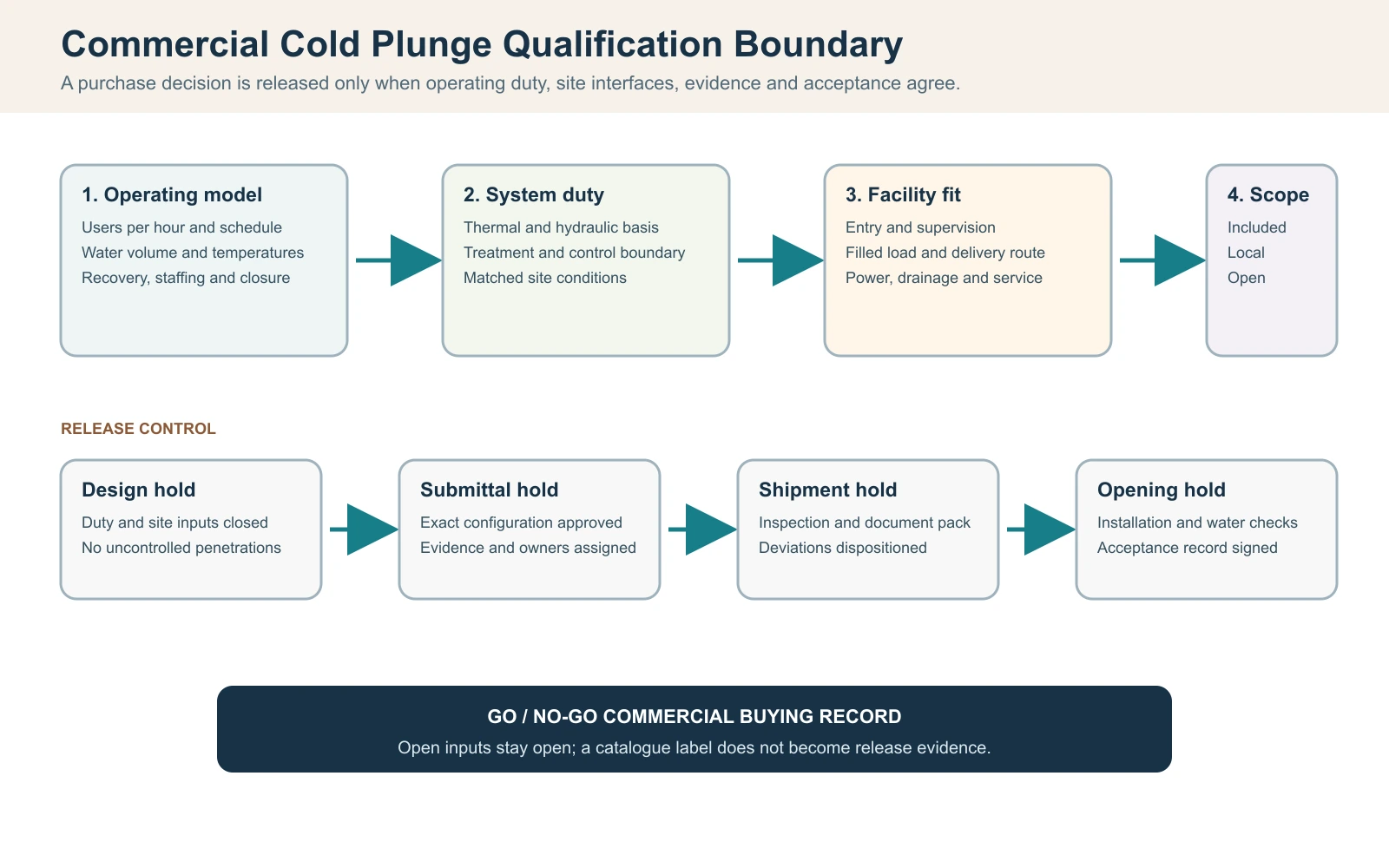
Regola go/no-go: non emettere un ordine di acquisto mentre un input richiesto è rappresentato solo da un'etichetta di catalogo, una foto applicativa o un'ipotesi non corrispondente del fornitore. Registralo come aperto, assegna un responsabile e definisci le evidenze necessarie per chiuderlo.
Scrivi il brief operativo prima di leggere il catalogo
Una residenza utilizzata da un proprietario addestrato e un centro di recupero che serve sessioni ripetute impongono carichi operativi diversi anche quando il recipiente visibile è simile. Registrare orari di apertura, utenti di punta per ora, intervallo tra sessioni, supervisione, strategia di riempimento e svuotamento, chiusure per pulizia e l'intervallo di temperatura dell'acqua previsto. Questo è il brief operativo rispetto al quale vengono verificate le decisioni su recupero, trattamento, personale e spazio di servizio.
Il brief dovrebbe anche identificare se l'installazione è interna o esterna, l'intervallo di temperatura ambiente di progetto, l'esposizione solare, la ventilazione, il rischio di gelo e la disponibilità di alimentazione elettrica. Un refrigeratore selezionato solo in base al volume d'acqua può soddisfare una condizione nominale di catalogo ma non riuscire a recuperare tra un utente e l'altro in un'area impianti calda o poco ventilata. Mantenere le prestazioni richieste separate dalle caratteristiche preferite in modo che le alternative possano essere confrontate equamente.
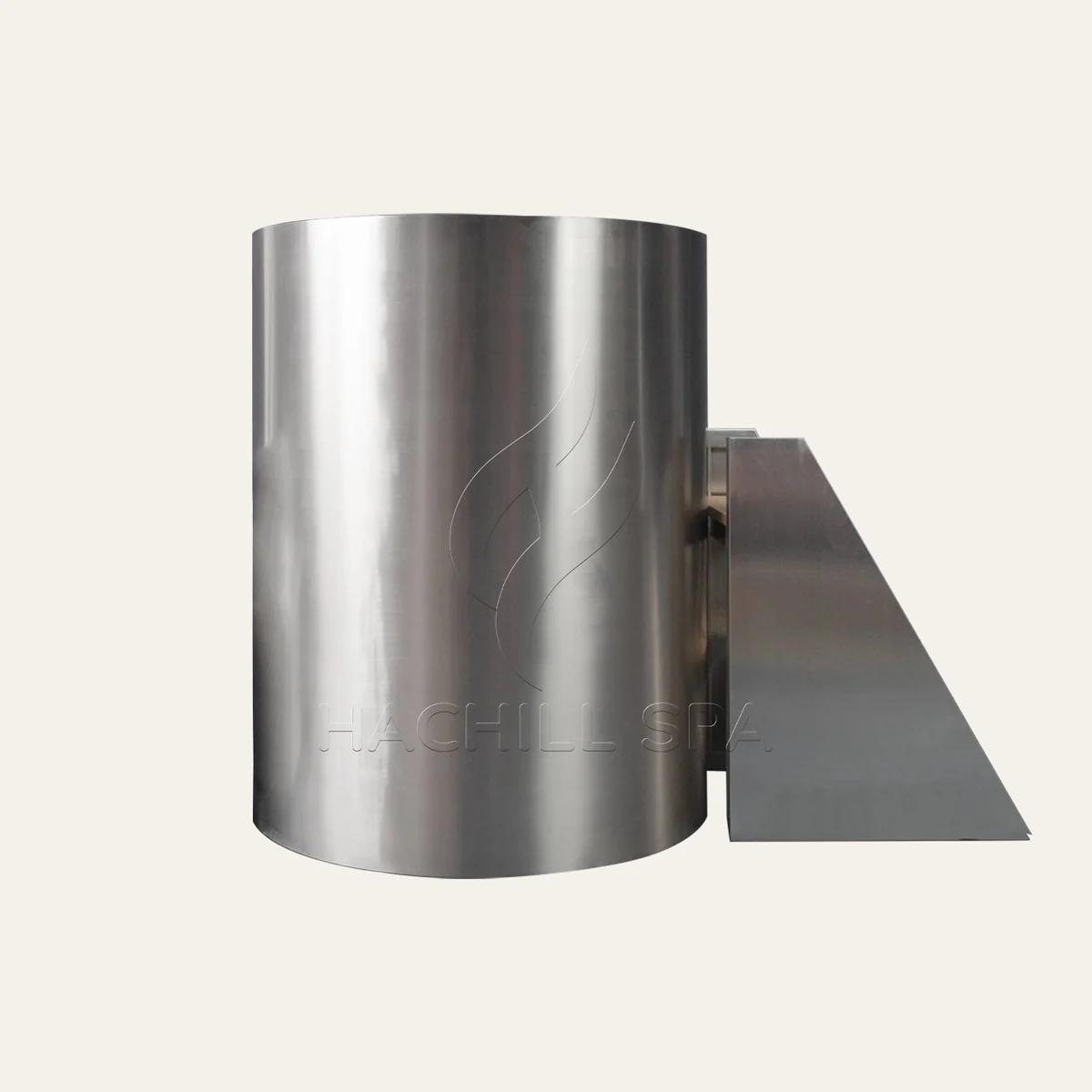
Valuta pull-down e recupero come compiti commerciali separati
Il primo screening termico è il calore sensibile rimosso dall'acqua. Per una stima iniziale dell'acqua liquida in questo intervallo di temperatura, utilizzare Q = m x cp x Delta T, dove m è la massa dell'acqua in chilogrammi, cp è pari a circa 4.18 kJ/kg-K, e Delta T è la riduzione di temperatura. Il risultato è uno screening energetico solo acqua: non include il calore che entra attraverso il recipiente, la superficie scoperta, le tubazioni, la pompa, la stanza o gli utenti, e non prova la resa di un particolare chiller.
Calcolo illustrativo della discesa di temperatura
Supponiamo un caso di pianificazione con 500 L di acqua operativa raffreddata da 20 C a 10 C. Approssimando la massa d'acqua a 500 kg si ottiene 500 x 4.18 x 10 = 20,900 kJ, ovvero circa 5.81 kWh termici. Se un sistema candidato può fornire un raffreddamento utile netto verificato di 2.5 kW in tutto l'intervallo di condizioni rilevante, il tempo ideale solo acqua è di circa 5.81 / 2.5 = 2.32 ore.
Questo risultato di 2.32 ore non è una promessa di sito. Il tempo effettivo è più lungo quando entrano calore ambientale e solare, la pompa aggiunge calore, il coperchio è aperto, il flusso è fuori dall'intervallo richiesto, l'aria del condensatore viene ricircolata o la capacità utile diminuisce quando l'acqua si avvicina al target. Utilizzare la capacità netta legata alle condizioni o una registrazione controllata della discesa di temperatura dell'intero sistema, non la potenza del compressore, i watt in ingresso o un punto di capacità misurato con acqua più calda.
Calcolo illustrativo del recupero post-utilizzo
Se una sessione rappresentativa aumenta di 1.5 K il volume d'acqua ben miscelato di 500 L, l'aumento di energia dell'acqua misurato è di circa 500 x 4.18 x 1.5 = 3,135 kJ, o 0.871 kWh termici. Con gli stessi 2.5 kW netti verificati, il tempo di recupero ideale solo acqua è di circa 20.9 minuti. Il recupero reale include anche apporti termici continui del sito e cicli di controllo. Misurare l’aumento di temperatura della sessione e l’intervallo effettivo tra gli utenti invece di trattare un valore di utenti al giorno come duty di picco.
Foglio di lavoro illustrativo per il carico commerciale
| Ingresso | Valore illustrativo | È richiesta una prova del progetto |
|---|---|---|
| Volume d'acqua operativa | 500 L | Configurazione approvata o volume di riempimento misurato |
| Temperatura iniziale / target | 20 C / 10 C | Brief operativo e registro di test sincronizzato |
| Energia solo acqua | 5.81 kWh termici | Calcolo con unità e ipotesi |
| Capacità netta correlata alle condizioni | 2.5 kW illustrativo | Dati di modello/configurazione a condizioni corrispondenti di acqua, ambiente, portata e alimentazione |
| Tirante ideale | 2.32 h | Solo risultato di screening; validare l'intero sistema installato |
| Aumento della sessione misurato | 1.5 K illustrativo | Temperature prima/dopo ben miscelate e timestamp |
| Recupero ideale | 20.9 min | Aggiungere guadagni in corso e comportamento di controllo prima dell'accettazione |
Lo screening del carico riempito è separato: massa operativa totale = prodotto secco + acqua + utenti massimi + copertura/accessori. Utilizzare la massa del prodotto approvata e il volume operativo effettivo, quindi ottenere una revisione strutturale qualificata dove richiesto. Non dedurre l'idoneità del pavimento dal peso di spedizione a vuoto.
Definire il sistema completo di acqua, raffreddamento e circolazione
La vasca, la pompa di circolazione, il filtro, il chiller e l’attrezzatura di trattamento formano un unico circuito idraulico. Diametro interno dei tubi, lunghezza equivalente, raccordi, posizioni delle valvole, condizioni del filtro e perdite di carico dei componenti influenzano la portata effettiva attraverso lo scambiatore di calore. Una pompa può mostrare una portata massima di catalogo elevata ma fornire troppo poco una volta aggiunta la resistenza del circuito installato. Richiedere l’intervallo di portata consentito per ogni componente critico e una curva della pompa per il modello esatto e la frequenza operativa; la corrispondenza dettagliata del circuito appartiene quindi alla guida dedicata vasca-e-chiller.
Il confronto del raffreddamento richiede volume d'acqua, temperature iniziale e target, temperatura ambiente di progetto, tempo di abbattimento richiesto, carico di utenti ripetuti e ipotesi di isolamento. La capacità di raffreddamento nominale deve essere legata a condizioni di test dichiarate. La potenza in cavalli è un descrittore dell'attrezzatura, non una promessa diretta di rimozione del calore. Il preventivo deve indicare cosa viene misurato, cosa viene calcolato e cosa rimane dipendente dal sito.
Quando la rosa dei candidati raggiunge la compatibilità esatta tra vasca, refrigeratore d'acqua, pompa, circuito e controllo, proseguire con la Guida all'abbinamento tra vasca per immersione in acqua fredda e refrigeratore d'acqua anziché ampliare l'analisi di tale interfaccia all'interno di questa guida generale all'acquisto.
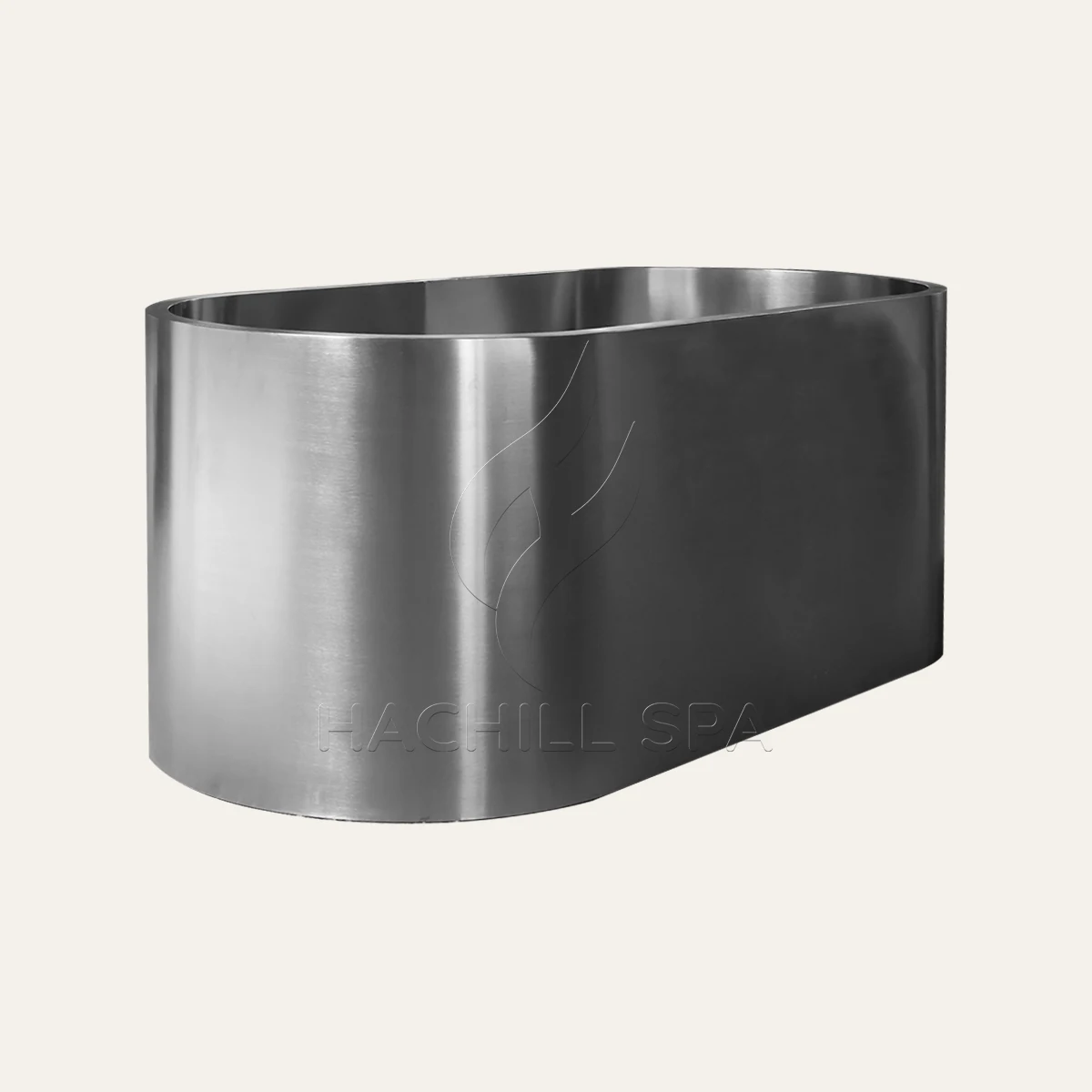
Confronta il formato della vasca con l'attività dell'utente
Le vasche verticali generalmente riducono l'area in pianta ma pongono maggiore enfasi sulla posizione del gradino, sul supporto delle mani, sullo spazio libero in altezza e sull'uscita controllata. Le vasche orizzontali utilizzano più superficie e acqua ma possono offrire un bordo più basso e una postura diversa. Nessun formato è automaticamente più sicuro o più commerciale. La scelta corretta dipende dal profilo dell'utente, dalla supervisione del personale, dalla circolazione del pavimento bagnato, dall'accesso per la pulizia e dal percorso dallo spogliatoio alla zona di recupero.
Confermare lo spazio interno utilizzabile invece di basarsi sulle dimensioni esterne o su un'etichetta di capacità commerciale. Richiedere il livello dell'acqua di esercizio, la disposizione degli ingressi, la geometria interna, la posizione dello scarico, i pesi a vuoto e a pieno, le dimensioni imballate e i punti di sollevamento. Un disegno quotato supporta la pianificazione iniziale; il disegno d'ordine approvato deve determinare fondazioni, porte, svolte nei corridoi e posizioni finali degli allacciamenti.
Se si sta valutando un formato verticale, utilizzare la Guida all'acquisto di vasche verticali per immersione fredda per strutture commerciali per la decisione di fattibilità a livello di formato prima della selezione del modello esatto.
Scenario ingegneristico: i sistemi quotati non sono equivalenti
Problema osservato: Una proposta appare più economica ma esclude filtro, pompa di circolazione, copertura, messa in servizio e cartucce di ricambio.
Causa probabile: La richiesta di offerta descrive una vasca fredda ma non definisce il confine di fornitura o i deliverable richiesti.
Come verificare: Creare una matrice di inclusione riga per riga e riconciliarla con quotazione, disegni e distinta base.
Prevenzione o percorso correttivo: Approvare una matrice di responsabilità prima del confronto dei prezzi e riportarla nell'ordine di acquisto.
Pianifica sito, utenze, drenaggio e percorso di servizio
Un cold plunge crea acqua di schizzo e può produrre condensa su superfici fredde e tubazioni. Coordinare una base piana portante, impermeabilizzazione dove richiesta dall'assemblaggio edilizio, drenaggio, controllo dello scivolamento, ventilazione o deumidificazione, protezione elettrica e un percorso accessibile per ispezionare valvole, filtri a cestello, filtri e il chiller. Nei luoghi di lavoro negli Stati Uniti in cui si applica l'OSHA, 29 CFR 1910.22 richiede che i pavimenti dei locali di lavoro siano mantenuti puliti e, nella misura del possibile, asciutti; dove si utilizzano processi bagnati, il drenaggio deve essere mantenuto e devono essere forniti posti in piedi asciutti nella misura del possibile. Questa è una base per il luogo di lavoro, non un sostituto dei requisiti locali di sanità pubblica, edilizia, accessibilità o strutture acquatiche. La protezione elettrica finale, la messa a terra, l'equipotenzialità e le disposizioni GFCI o RCD devono seguire le istruzioni esatte dell'attrezzatura e le regole locali applicabili.
Non incassare un refrigeratore in una struttura senza confermare le distanze di aspirazione, scarico e manutenzione. Un flusso d'aria limitato al condensatore aumenta la pressione di esercizio e può ridurre la capacità o causare interventi di protezione. Allo stesso modo, un collegamento di scarico visibile in una foto del prodotto non stabilisce il percorso di scarico del sito, l'autorizzazione allo scarico o il metodo di svuotamento in condizioni di gelo.
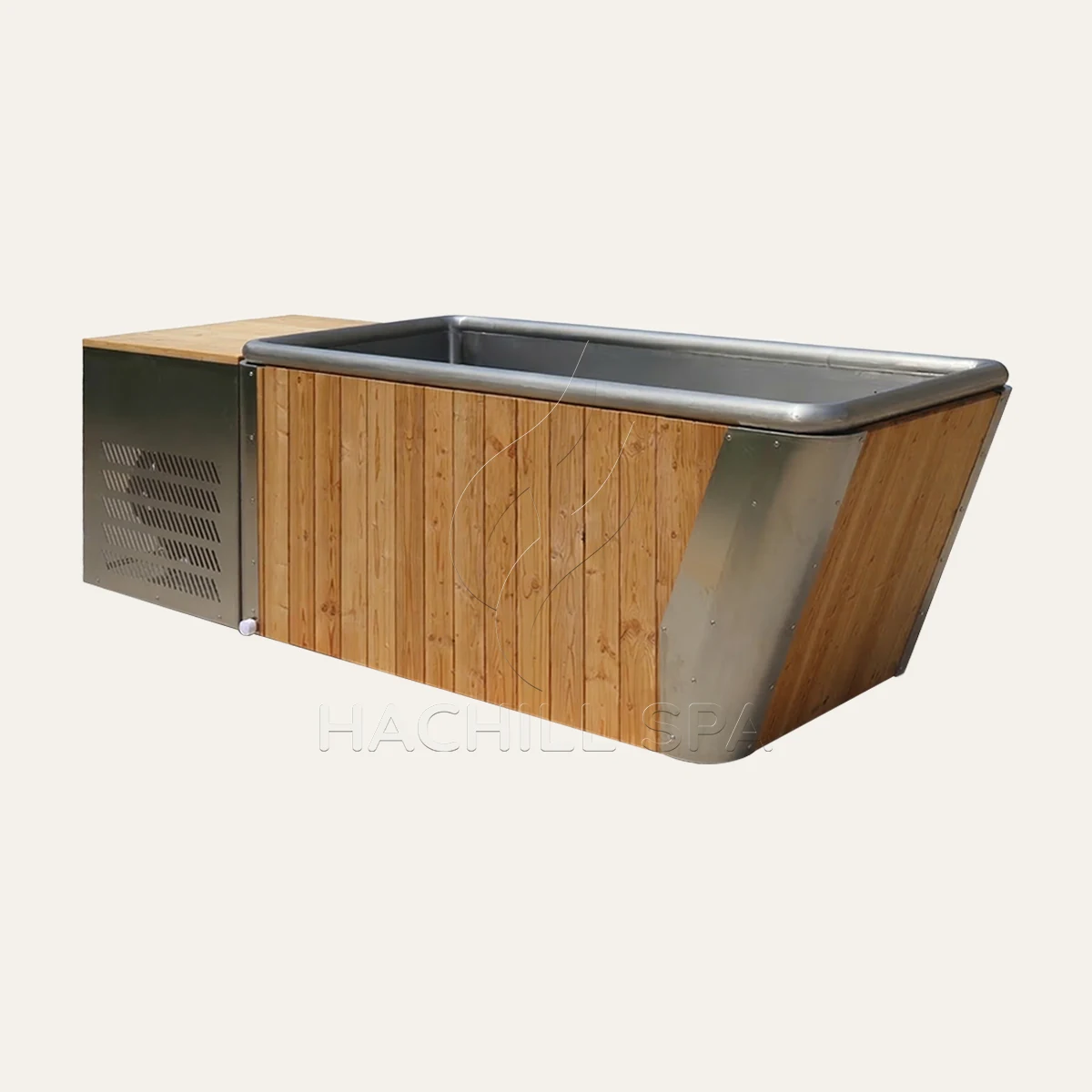
Definire la sanificazione come programma operativo
La filtrazione, i raggi UV, l'ozono o un'altra tecnologia secondaria non eliminano la necessità di un programma documentato di gestione dell'acqua. L'operatore ha comunque bisogno dei limiti chimici, dei metodi di prova, della registrazione, della manutenzione del filtro, degli intervalli di pulizia, della risposta alla contaminazione e dei criteri di chiusura richiesti dalle norme operative applicabili. A febbraio 2026, NSF ha dichiarato che le vasche fredde che incorporano sistemi di circolazione, trattamento o disinfezione rientrano già nell'ambito della norma NSF/ANSI/CAN 50, inclusi sistemi preconfezionati e costruiti in campo. Tale dichiarazione di ambito non è una dichiarazione di certificazione per alcun modello HACHILL, e le autorità di regolamentazione possono classificare o accettare le vasche fredde in modo diverso a seconda della giurisdizione. Per contesti acquatici pubblici statunitensi, la Codice sanitario per impianti acquatici modello CDC rimane una guida modello volontaria anziché una legge federale, quindi l'adozione e l'applicabilità locali devono essere confermate.
Chiedere al fornitore di identificare ogni componente di trattamento, il suo ordine di installazione, le condizioni di portata richieste, i punti di manutenzione accessibili, i consumabili e i limiti di compatibilità. Frasi di marketing come autopulente o senza prodotti chimici non sostituiscono le prestazioni documentate dei componenti, una procedura operativa e l'accettazione locale ove richiesta. Quando le prove sono incomplete, tenere l'affermazione fuori dalla specifica e assegnare un responsabile per chiuderla.
Per il programma dettagliato di filtrazione, sanificazione, test e manutenzione, usare il Guida alla cura dell'acqua della vasca fredda; questa guida all'acquisto resta responsabile solo di garantire che il programma operativo sia definito e assegnato prima dell'acquisto.
Scenario tecnico: il chiller sembra sottodimensionato dopo l'apertura
Problema osservato: L'acqua raggiunge la temperatura target durante la notte ma non riesce a recuperare durante sessioni consecutive.
Causa probabile: La selezione ha utilizzato il volume del serbatoio e una condizione di prova lieve, omettendo carico utente, aperture di porta o coperchio, calore ambientale e tempo di recupero.
Come verificare: Registrare temperature di ingresso e uscita, condizioni ambientali, indicazione di flusso e tempi utente, quindi confrontarli con la base di selezione dichiarata.
Prevenzione o percorso correttivo: Specificare separatamente i compiti di abbattimento e recupero tra utenti e richiedere dati prestazionali in condizioni pertinenti.
Raccogli dati di messa in servizio che separano cause di prodotto, sito e funzionamento
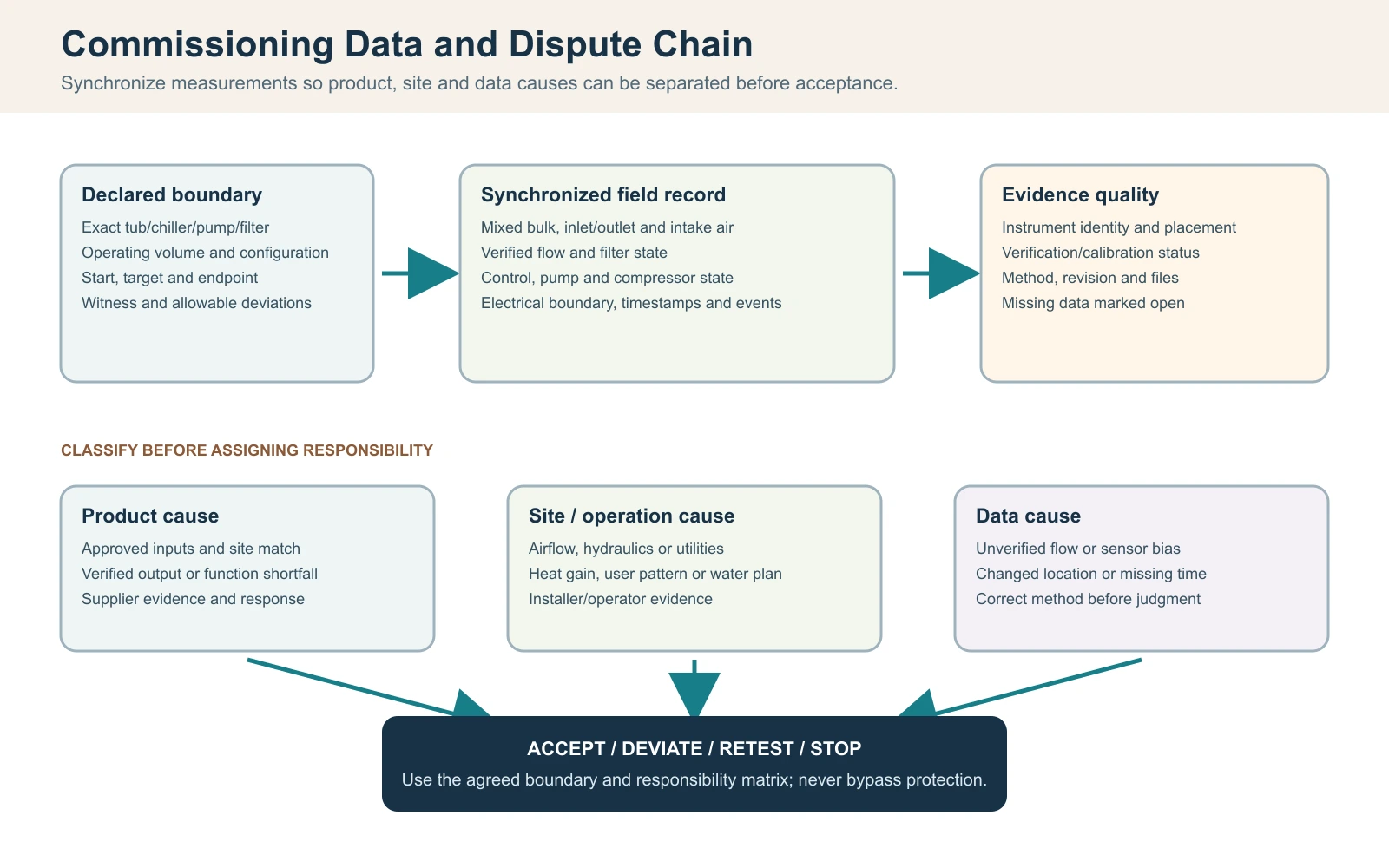
Un acquirente commerciale necessita di una registrazione sincronizzata, perché una curva di temperatura osservata da sola non può mostrare perché le prestazioni sono cambiate. Identificare la configurazione esatta di vasca, chiller, pompa, filtro e controllo; registrare l'identità dello strumento e la posizione del sensore; mescolare l'acqua prima delle letture di massa; e posizionare la misurazione ambientale all'ingresso del condensatore piuttosto che a un termostato ambiente comodo. Registrare le deviazioni invece di correggere il registro dopo il test.
Registro dati di commissioning per cold plunge commerciale
| Ora / evento | Acqua e ambiente | Stato idraulico/controllo | Evidenza operativa |
|---|---|---|---|
| Prima del riempimento | Volume operativo approvato e temperatura dell'acqua di sorgente | Posizioni valvole, stato filtro e stato scarico | Configurazione, identità seriale e revisioni disegni |
| Inizio test | Acqua di massa miscelata, ingresso/uscita chiller e aria ingresso condensatore | Flusso verificato o metodo, modalità pompa, setpoint e stato coperchio | Tensione/frequenza di alimentazione e confine di input totale se misurato |
| Intervalli fissi | Stesse posizioni sensori e timestamp | Stato compressore/ventola/pompa, allarmi e indicazione pressione filtro | Apertura di porta/coperchio, esposizione solare e altre deviazioni |
| Sessione utente | Miscela di acqua sfusa prima/dopo e condizione ambientale | Stato di controlli e circolazione | Numero utenti, tempi di sessione e perdita d'acqua anomala |
| Endpoint | Miscela finale di acqua sfusa e ambiente di aspirazione | Transizione di controllo e prova di flusso stabile | Tempo trascorso, testimone, eccezioni e riferimenti file |
Utilizzare il record per classificare una carenza. Una causa di prodotto può essere supportata quando la configurazione approvata, le condizioni, il flusso e le utenze corrispondono, ma l'output verificato rimane al di sotto del limite concordato. Una causa di sito può includere aria del condensatore limitata, tubazioni sottodimensionate, carico ambientale eccessivo o alimentazione errata. Una causa di dati include flusso non verificato, bias del sensore, posizioni variabili o timestamp mancanti. Non attribuire colpe finché questi tre gruppi di cause non sono separati.
Interrompere il test e utilizzare un servizio qualificato in caso di ripetute protezioni elettriche o di pressione, indicazione di perdita di refrigerante, cablaggio danneggiato, surriscaldamento, fumo, acqua su interfacce elettriche non sicure o qualsiasi condizione vietata dal manuale del modello. Gli operatori possono ispezionare condizioni visibili e registrazioni; non devono aprire involucri elettrici/di refrigerante o bypassare un controllo di protezione per completare un test.
Evidenze di controllo, responsabilità e blocchi di rilascio
Gerarchia delle evidenze di approvvigionamento a cinque livelli raccomandata
| Livello | Documentazione | Uso consentito |
|---|---|---|
| 1 | Record di accettazione testimoniato specifico per ordine alle condizioni concordate | Accettazione contrattuale finale entro il limite scritto |
| 2 | Rapporto di modello/configurazione indipendente o accreditato a condizioni corrispondenti | Confronto ad alta confidenza dopo revisione di ambito/applicabilità |
| 3 | Mappa di test del produttore specifica per modello con metodo, revisione e condizioni | Selezione ingegneristica con limitazioni dichiarate |
| 4 | Calcolo trasparente utilizzando input approvati | Screening e identificazione di lacune, non prova delle prestazioni consegnate |
| 5 | Brochure generica, etichetta di categoria, HP, foto o dichiarazione verbale | Solo scoperta; non prova di rilascio |
Matrice delle responsabilità per il cold plunge commerciale
| Decisione | Fornitore | Acquirente/gestore | Installatore / professionista locale | Evidenza di rilascio |
|---|---|---|---|---|
| Brief operativo | Verifica fattibilità e input aperti | Gestisci utenti, programma, obiettivo e personale | Verifica implicazioni per siti regolamentati | Base di servizio approvata |
| Ambito prodotto/sistema | Identifica la configurazione esatta fornita | Approvare inclusioni, esclusioni e sostituzioni | Coordinare le interfacce fornite localmente | Ambito e disegni controllati |
| Struttura/consegna | Fornire dati approvati su massa e movimentazione | Fornire vincoli di percorso e di sito | Approvare supporto, sollevamento e accesso dove richiesto | Rilascio di percorso e fondazione |
| Idraulica/trattamento | Fornire limiti e istruzioni dei componenti | Piano operativo/idrico proprio | Installare e verificare le tubazioni di sito | Registri di flusso, trattamento e scarico |
| Conformità elettrica/di sito | Fornire dati elettrici del modello | Identificare destinazione e uso operativo | Progettazione qualificata, protezione, collegamento e approvazione | Registri locali firmati dove richiesto |
| Messa in servizio | Supportare i controlli di prodotto concordati | Fornire operatore e testimone | Completare i controlli regolamentari e di installazione | Registro di accettazione/scostamenti firmato |
Questa gerarchia delle evidenze è un metodo di controllo dell’approvvigionamento, non uno standard di settore. Una sequenza pratica di progetto può usare quattro blocchi: blocco di progettazione prima di lavori irreversibili in sito; blocco di sottomissione prima dell’ordine d’acquisto o del rilascio in produzione; blocco di spedizione prima dell’invio; e blocco di apertura prima che gli utenti entrino. Ogni blocco dovrebbe chiudersi solo quando l’evidenza nominata è corrente per la configurazione ordinata. Un riferimento normativo aiuta a definire un requisito o un ambito di prova; non prova di per sé che un modello HACHILL sia certificato, approvato o accettato nel mercato di destinazione.
Utilizzare porte di evidenza prima del pagamento e della spedizione
Le prove dovrebbero diventare più specifiche con l'avanzare del progetto. Una pagina di categoria può supportare la scoperta iniziale, ma l'approvazione della shortlist richiede un programma e un disegno a livello di modello. Il rilascio della produzione richiede la configurazione approvata, la destinazione elettrica, i materiali, la finitura, le etichette, l'imballaggio e il piano di prova. Il rilascio della spedizione richiede registri di identità, risultati di ispezione, prove di imballaggio e il set di documenti concordato nell'ordine. Nessuno di questi registri da solo dimostra la conformità al di fuori del modello, del mercato e della revisione dichiarati.
Impostare i punti di blocco attorno a decisioni costose da invertire. Non tagliare una penetrazione nel pavimento da una posizione preliminare dello scarico, ordinare il cablaggio del sito da un'immagine di stile di vita o approvare un chiller da un'etichetta di potenza. Bloccare queste azioni finché non vengono emessi disegni di collegamento controllati, dati elettrici e condizioni di prestazione. Dove è richiesta la certificazione di destinazione, nominare le prove esatte e la parte responsabile della revisione invece di trattare CE, UL, ETL o un altro marchio come parole intercambiabili.
I termini di pagamento possono fare riferimento a risultati oggettivi senza promettere un risultato che il fornitore non può controllare. I registri utili includono disegni approvati, una distinta base congelata, controlli di fabbrica concordati, fotografie di imballaggio e non conformità risolte. Le prestazioni in sito dipendono ancora dalle condizioni di installazione, dal flusso, dalla temperatura ambiente, dalla gestione dell'acqua e dal funzionamento, quindi le prove di fabbrica e le prove di messa in servizio dovrebbero rimanere separate.
I documenti di destinazione necessitano di un proprio controllo di rilascio. Confermare lingua delle etichette, informazioni di rating, confine tra spina e cablaggio in campo, manuali, contenuto degli avvisi, identificazione dei ricambi e l’ambito esatto del modello di qualsiasi record di conformità. Un documento di un’altra configurazione, tensione o mercato può essere un background utile ma non può chiudere il requisito del prodotto ordinato. Dove NSF/ANSI/CAN 50, una certificazione elettrica, un’approvazione di salute pubblica o un altro requisito specifico della destinazione sono rilevanti, registrare l’evidenza esatta di modello/configurazione e la parte responsabile di accettarla. Mantenere aperta l’evidenza mancante finché il revisore responsabile non la chiude.
Scrivere le regole di accettazione e controversia prima della spedizione
L'accettazione deve identificare la configurazione esatta, il volume operativo, la condizione di avvio/bersaglio, il tempo consentito o il punto di capacità, la temperatura ambiente di ingresso del condensatore, il flusso d'acqua, lo stato di copertura/solare, il confine elettrico, le posizioni dei sensori, gli strumenti, il metodo di miscelazione, la modalità di controllo, il punto finale, il testimone e le deviazioni consentite. Se la condizione si sposta al di fuori della banda concordata, contrassegnare la prova come non valida o applicare solo un metodo di correzione pre-concordato. Non improvvisare una correzione dopo aver visto il risultato.
Registro di accettazione e contestazioni
| Contestazione | Prove da esaminare | Disposizione immediata |
|---|---|---|
| L'abbassamento richiede più tempo | Volume d'acqua, guadagni di calore, capacità netta abbinata, flusso, controlli e timestamp | Mantenere il risultato aperto; classificare le cause prodotto/sito/dati |
| Le letture della temperatura dell'acqua non concordano | Identità del sensore, posizionamento, miscelazione, risoluzione e stato di verifica | Non fare la media di letture incompatibili; correggere il metodo e ripetere il test |
| L'ambito quotato è incompleto | Ambito approvato, disegni, lista di imballaggio e registro di sostituzione/modifica | Bloccare la ricezione o l'installazione finché la responsabilità non è risolta |
| Le prestazioni del trattamento sono contestate | Percorso del flusso, stato dei componenti, registri chimici/di prova e procedura operativa | Vicino agli utenti se il limite idrico approvato non può essere dimostrato |
| Appare un danno visibile o una perdita | Ricezione di foto, registrazione della cassa, identità congiunta e registro del primo riempimento | Interrompere il riempimento/funzionamento, preservare le prove e assegnare l'ispezione |
| Manca l'approvazione locale | Requisito di destinazione, prova del modello/componente e revisione qualificata | Non mettere in servizio o aprire finché il percorso dell'autorità responsabile non è chiuso |
Concordare chi può assistere, chi può dichiarare una deviazione, chi paga per una nuova prova in ciascuna categoria di causa e quale documento prevale in caso di conflitto tra brochure, disegno e manuale. Correggere il documento di riferimento tramite controllo delle revisioni piuttosto che consentire al personale di cantiere di selezionare la dichiarazione più conveniente.
Pianifica ricezione, messa in servizio e operatività iniziale
L'ispezione in accettazione dovrebbe avvenire prima che la cassa venga scartata o che il prodotto venga spostato attraverso un percorso difficile. Confrontare l'identità del modello e le quantità con la bolla di accompagnamento, ispezionare le superfici accessibili e i raccordi, registrare i danni da trasporto, confermare i componenti sciolti e confrontare le revisioni dei documenti. Una carenza nascosta scoperta dopo l'installazione è più difficile da attribuire, mentre un segno di impatto non registrato può essere successivamente scambiato per un difetto di fabbricazione.
La messa in servizio dovrebbe verificare il sistema installato piuttosto che ripetere una lista di controllo di fabbrica. Confermare supporto e livellamento, tenuta idraulica, posizione delle valvole, adescamento, flusso, stato del filtro, indicazione della temperatura, risposta del controllo, funzionamento del trattamento, drenaggio e accesso sicuro. Registrare il volume d'acqua, le condizioni ambientali e i tempi quando si valuta il raffreddamento. Interrompere e indagare su perdite persistenti, flusso sconosciuto, interventi della protezione elettrica, rumori anomali o un risultato di temperatura al di fuori del limite di prova concordato; non disattivare gli interblocchi per rispettare una data di apertura.
Il primo periodo operativo dovrebbe avere responsabili nominati per test dell'acqua, manutenzione del filtro, pulizia, risposta agli allarmi e scorte di consumabili. Confrontare il ricambio effettivo degli utenti di punta, le condizioni di aspirazione del condensatore e gli intervalli di recupero con le ipotesi di acquisto. Se la struttura opera diversamente dal brief approvato, aggiornare le procedure e rivedere la capacità del sistema prima di descrivere la deviazione come guasto del prodotto. Questo feedback dovrebbe anche essere portato nel prossimo ordine o nella specifica del distributore.
Chiudere la consegna con un elenco di eccezioni piuttosto che con una firma di accettazione generica. Registrare documenti aperti, formazione incompleta, collegamenti temporanei, lacune nei pezzi di ricambio e deviazioni dal layout approvato. Assegnare a ogni voce un responsabile e prove di chiusura. L'operatore deve anche sapere quali osservazioni riguardano la manutenzione ordinaria, quali richiedono l'installatore e quali il fornitore dell'attrezzatura.
Per un distributore o un acquirente con marchio privato, riportare i riscontri ricorrenti di ricezione e messa in servizio nella specifica controllata. Raccordi allentati ripetuti possono richiedere un controllo dell'imballaggio o della pre-spedizione; problemi ripetuti di flusso d'aria in sito possono richiedere un disegno del layout più chiaro. Questa è una prova commerciale più forte rispetto all'aggiunta di affermazioni non supportate alla pagina di vendita, perché collega il miglioramento del prodotto a un guasto osservabile e a un'azione preventiva.
Input RFQ per vasca per immersione fredda commerciale
Input RFQ per vasca per immersione fredda commerciale
| Ingresso | Perché cambia la decisione | Documentazione richiesta |
|---|---|---|
| Utilizzo e turnover | Modifiche al recupero, al trattamento e ai turni del personale | Programma operativo e utenti all'ora |
| Acqua e temperatura | Definisce la massa termica e la rimozione del calore | Volume operativo, temperature iniziali/obiettivo e tempo |
| Ambiente e posizione | Modifica il carico del condensatore, il guadagno di calore e la protezione dagli agenti atmosferici | Intervallo di temperatura ambiente di progetto e piano interno/esterno |
| Idraulica | Controlla il flusso reale dello scambiatore di calore e del filtro | Intervallo di portata, curva della pompa, programma di tubazioni e apparecchiature |
| Sanificazione | Determina il trattamento e il carico di lavoro dell'operatore | Elenco componenti, base di validazione e piano dell'acqua |
| Servizi e accesso | Può squalificare un sistema dopo l'acquisto | Schema elettrico, drenaggio e disegno di manutenzione |
Matrice di confronto preventivi
Matrice di confronto preventivi
| Voce di riga | Incluso | Fornitura locale | Prove aperte |
|---|---|---|---|
| Vasca, isolamento e coperchio | Identificare l'esatto ambito dell'ordine | Registrare gli elementi costruiti in cantiere | Materiali e disegno approvato |
| Chiller e controlli | Modello e punto di funzionamento | Rivestimento meteorologico, se presente | Condizioni di prova della capacità |
| Pompa, filtro e trattamento | Modelli e materiali di consumo | Impianto idraulico in sito | Calcolo idraulico e validazione |
| Avviamento e formazione | Attività e registrazioni | Lavori di mestiere abilitato | Criteri di accettazione |
| Ricambi e documentazione | Pacchetto iniziale | Inventario locale | Lingue e stato di revisione |
Lista di controllo del progetto
- Congelare il brief operativo e l'ipotesi di turnover degli utenti.
- Approvare la matrice completa di fornitura e responsabilità.
- Confermare la revisione del disegno, il percorso di imballaggio, il piano di sollevamento e il carico riempito.
- Verificare il carico del chiller, le condizioni di prova, il range di portata e gli spazi liberi del condensatore.
- Approvare le responsabilità di trattamento, test, pulizia e chiusura.
- Definire gli accessi elettrici, di drenaggio, di ventilazione e di servizio in sito.
- Registrare i controlli di accettazione in fabbrica, alla ricezione e in fase di commissioning.
Informazioni da includere in una richiesta di preventivo (RFQ)
Inviare input a livello di modello e specifici del sito affinché i fornitori possano chiarire le ipotesi prima del confronto dei prezzi:
- Applicazione e mercato di riferimento
- Utenti previsti all'ora e programma operativo
- Requisiti di formato della vasca e spazio utile
- Volume d'acqua o shortlist di modelli approvati
- Temperature iniziali e target dell'acqua
- Intervallo di temperatura ambiente di progetto e tempo di recupero
- Posizione interna/esterna e ventilazione
- Tensione, frequenza e fase
- Requisiti di trattamento e operatore
- Vincoli di scarico, consegna e assistenza
- Documenti richiesti e conformità alla destinazione
- Quantità, branding e ambito dell'imballaggio
Domande frequenti
Qual è il primo aspetto che i buyer commerciali dovrebbero confrontare in una vasca per immersione fredda?
Prima di tutto, confronta il brief operativo e il confine di responsabilità. Il ricambio degli utenti, la temperatura target, le condizioni ambientali, il tempo di recupero, l'approccio alla sanificazione, le utenze e l'accesso all'assistenza determinano se due sistemi sono realmente equivalenti. Il prezzo della vasca o l'etichetta della potenza del refrigeratore da soli non possono dimostrarlo.
Il termine "commerciale" significa che la vasca per immersione fredda è approvata per uso pubblico?
No. Commerciale è un termine di posizionamento del prodotto, non un'approvazione per uso pubblico. Le strutture pubbliche o condivise devono confermare i requisiti di salute pubblica, elettrici, edilizi e di accessibilità della destinazione’, insieme a procedure operative e prove specifiche per modello. NSF osserva che le interpretazioni normative delle vasche fredde variano da stato a comune, quindi la revisione locale responsabile rimane importante.
Quali informazioni sul refrigeratore devono essere incluse in una richiesta di preventivo (RFQ)?
Indicare il volume d'acqua operativo, le temperature iniziale e target, la temperatura ambiente di progetto, i tempi di raffreddamento e recupero desiderati, il profilo di utilizzo, l'isolamento, la posizione di installazione, la tensione e la frequenza. Richiedere la capacità di raffreddamento alle condizioni dichiarate, la portata richiesta, le informazioni di collegamento e gli spazi liberi per il condensatore.
La luce UV o l'ozono dovrebbero sostituire i test di routine dell'acqua?
No. Il trattamento secondario può supportare un programma di gestione dell'acqua progettato, ma non sostituisce il controllo chimico approvato, la filtrazione, la pulizia, i test, la registrazione e la risposta alla contaminazione. Il programma esatto deve corrispondere alle istruzioni dell'apparecchiatura, alle modalità di utilizzo e alle normative locali.
Cosa bisogna controllare all'arrivo della vasca per immersione fredda?
Prima di spostare l'unità, verifica le condizioni del collo, il modello e il numero di serie, eventuali danni visibili, raccordi allentati, parti incluse, revisioni della documentazione e la lista di imballaggio approvata. Dopo l'installazione, segui la procedura di accettazione concordata per perdite, flusso, controlli, trattamento e temperatura prima di metterla a disposizione degli utenti.
Risorse HACHILL correlate
Categoria di prodotto: vasca per immersione fredda
Usa la categoria di prodotto quando il brief operativo è definito e il compito successivo è la selezione della famiglia di prodotti.
Soluzioni commerciali per l'immersione fredda
Utilizzare la pagina della soluzione commerciale quando tipo di sede, ambito del progetto e implementazione commerciale sono più importanti del confronto individuale dei prodotti.
Guida alla cura dell'acqua per vasche di immersione fredda
Usare la guida alla cura dell'acqua quando la decisione rimanente riguarda filtrazione, sanificazione, test, pulizia o registrazioni operative di routine.
Richiedi un preventivo per il progetto
Utilizzare il percorso RFQ quando servizio, ambito, interfacce del sito e prove richieste sono definiti abbastanza bene per la revisione del fornitore.
Base di riferimento
- NSF: requisiti NSF/ANSI/CAN 50 per le vasche fredde – Guida sull’ambito di applicazione di febbraio 2026 che indica che le vasche fredde con sistemi di circolazione, trattamento o disinfezione rientrano nella norma NSF/ANSI/CAN 50; questa non è una dichiarazione di certificazione per alcun modello HACHILL.
- CDC 2024 Model Aquatic Health Code, 5ª edizione – Guida modello statunitense corrente per strutture acquatiche pubbliche; non è legge federale e l'adozione/applicabilità locale deve essere confermata.
- catalogo degli standard PHTA – Catalogo corrente degli standard ANSI/PHTA per piscine pubbliche, spa e vasche idromassaggio; l'applicabilità dipende dal progetto e dalla giurisdizione.
- OSHA 29 CFR 1910.22 – Requisiti statunitensi per superfici di calpestio e camminamento sul lavoro, inclusi drenaggio del processo umido e luoghi asciutti di stazionamento fattibili dove si applica la norma.
- NIST Chemistry WebBook: acqua – Riferimento di capacità termica in fase liquida a supporto del valore di prima approssimazione di circa 4.18 kJ/kg-K utilizzato nel calcolo illustrativo di screening.
Confine tecnico e di sicurezza per la Guida all'acquisto di vasche per immersione fredda per aziende e acquirenti di prodotto: Manuali di prodotto, disegni approvati, requisiti locali edilizi, elettrici, di sanità pubblica e di accessibilità, professioni autorizzate e professionisti qualificati in ambito medico o della sicurezza hanno priorità rispetto alla guida web generica. Standard e guide esterne sono usati per definire domande basate sulle prove, non per rivendicare certificazione o approvazione locale per un modello HACHILL. Questo articolo non rivendica prestazioni garantite in sito o benefici medici individuali.