How Long Should You Stay in a Sauna?

Sauna Use & Safety Guide

Sauna session time is best treated as a conservative planning reference, not a target to endure. Heat intensity, humidity, sauna type, hydration, individual tolerance and health circumstances can all change when it is appropriate to leave.

Quick Answer

For many generally healthy adults, about 15–20 minutes is a common general sauna reference, while a beginner may start around 5 minutes. There is no universal safe or optimal duration. Sauna type, heat, humidity, hydration and individual tolerance matter, and you should leave sooner if you feel unwell.

Source context: Cleveland Clinic sauna safety guidance recommends relatively short sessions, a more conservative start for new users, and leaving the sauna if dizziness, weakness, breathing difficulty or other discomfort develops.

Use the clock as a planning tool, but use heat tolerance and symptoms as the stop criteria. A published duration is a general reference or study protocol, not a requirement to stay inside until a timer ends.

General clinical guidance Not individualized medical advice

Interpretation rule: the right decision for one session depends on the actual thermal environment and the person using it.

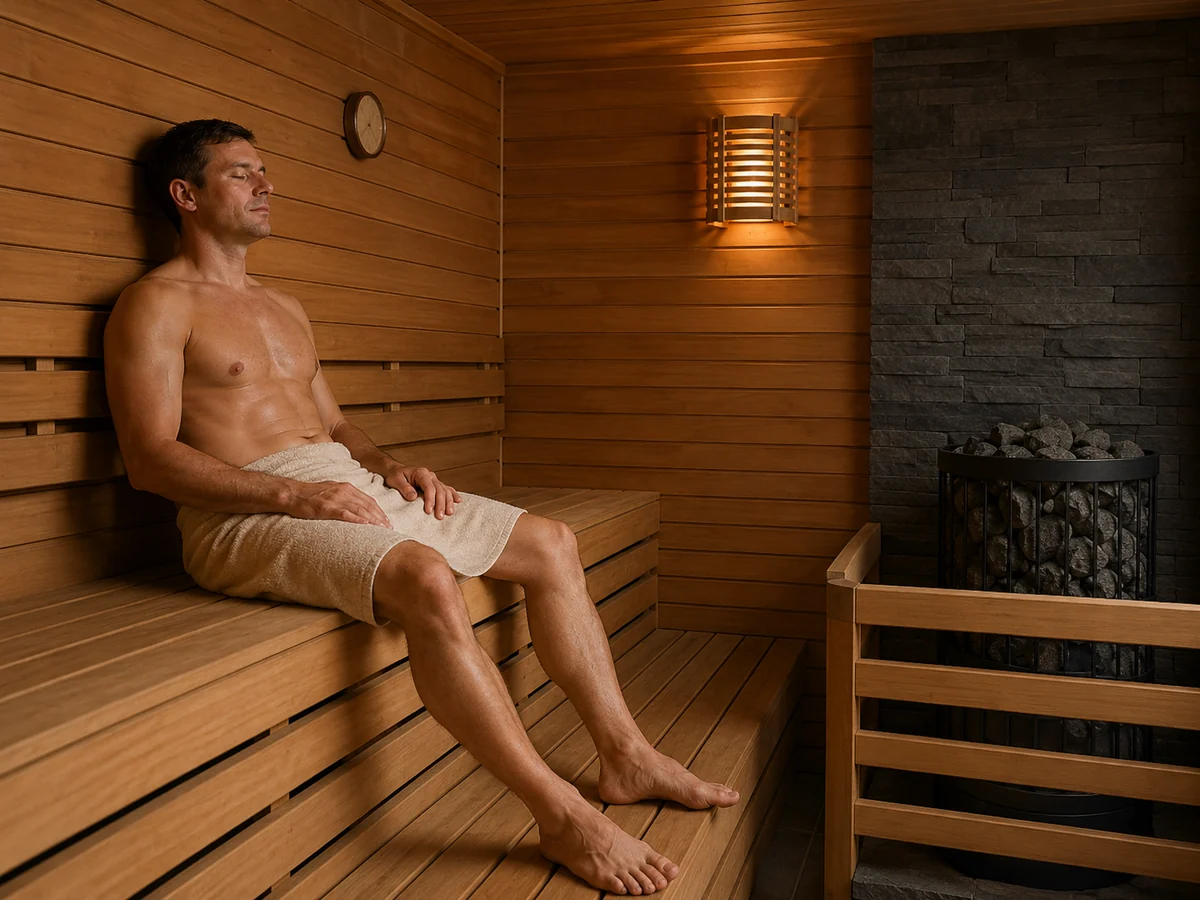
Adult sauna user seated calmly during a sauna session with a wall timer nearby
Session time is a planning reference, not a target that should override heat tolerance or symptoms.

Conceptual visualization; not a recommendation for a specific sauna duration.

There Is No Single “Best” Sauna Session Length

Search results often reduce sauna use to one number: 10 minutes, 15 minutes or 20 minutes. That is easy to remember, but it oversimplifies heat exposure.

Two people can spend the same amount of time in a sauna and experience different thermal loads. Even the same person may tolerate the same room differently on separate days.

Heat conditions change

Air temperature, humidity, heater output, steam events, bench height and room geometry can change how intense a session feels.

People change too

Hydration, recent exercise, illness, medication, alcohol, acclimation and individual cardiovascular response can all change tolerance.

A research protocol is not a personal prescription

If a study uses a 15-minute exposure under defined conditions, that tells us what researchers tested. It does not establish a universal target for every sauna user. The more useful question is whether the actual heat environment remains comfortably tolerated by the person using it.

What Changes How Long You Can Comfortably Stay in a Sauna?

Session duration only makes sense when the conditions surrounding the session are understood.

Variables that can change comfortable sauna session duration
VariableWhy It Changes the Decision
Sauna typeTraditional, infrared and high-humidity environments create different thermal conditions.
TemperatureGreater heat generally increases thermal strain and can reduce comfortable exposure time.
Humidity / löylyAdded moisture can make the same air temperature feel substantially more intense.
Bench positionHigher seating positions can be hotter than lower levels in many traditional sauna layouts.
AcclimationA person new to sauna may tolerate less exposure than someone familiar with the same environment.
HydrationSweating increases fluid loss and dehydration can reduce heat tolerance.
Recent exerciseExercise can alter body temperature and hydration before entering.
AlcoholAlcohol can impair judgment and is a poor combination with deliberate heat exposure.
MedicationSome medicines may affect blood pressure, sweating or heat response.
Health statusMedical circumstances can change whether sauna use is appropriate and may require individualized guidance.

Before You Start: Check the Person, the Heat and the Equipment

A safer session decision begins before the timer starts. The goal is to notice conditions that make a generic time reference less useful.

Checks to make before starting a sauna session
CheckQuestions to AskWhy It Matters
Current conditionDo you already feel dehydrated, dizzy, unusually fatigued or unwell?Starting with symptoms can make heat harder to tolerate.
Sauna environmentIs this sauna hotter, more humid or otherwise different from the one you normally use?Your usual duration does not automatically transfer to unfamiliar thermal conditions.
Personal factorsAre pregnancy, a relevant medical condition, a history of fainting or a medication likely to change heat response?Generic consumer guidance cannot replace individualized advice in higher-risk circumstances.
Equipment instructionsHave you checked the operating guidance for the actual sauna or heater system?Equipment-specific warnings and operating limits take priority over a generic online routine.
Do not use a shorter timer as a substitute for medical clearance.

If you have a medical concern about heat exposure, seek individualized guidance from a qualified healthcare professional.

Sauna Type Changes the Meaning of “10 or 20 Minutes”

Traditional sauna

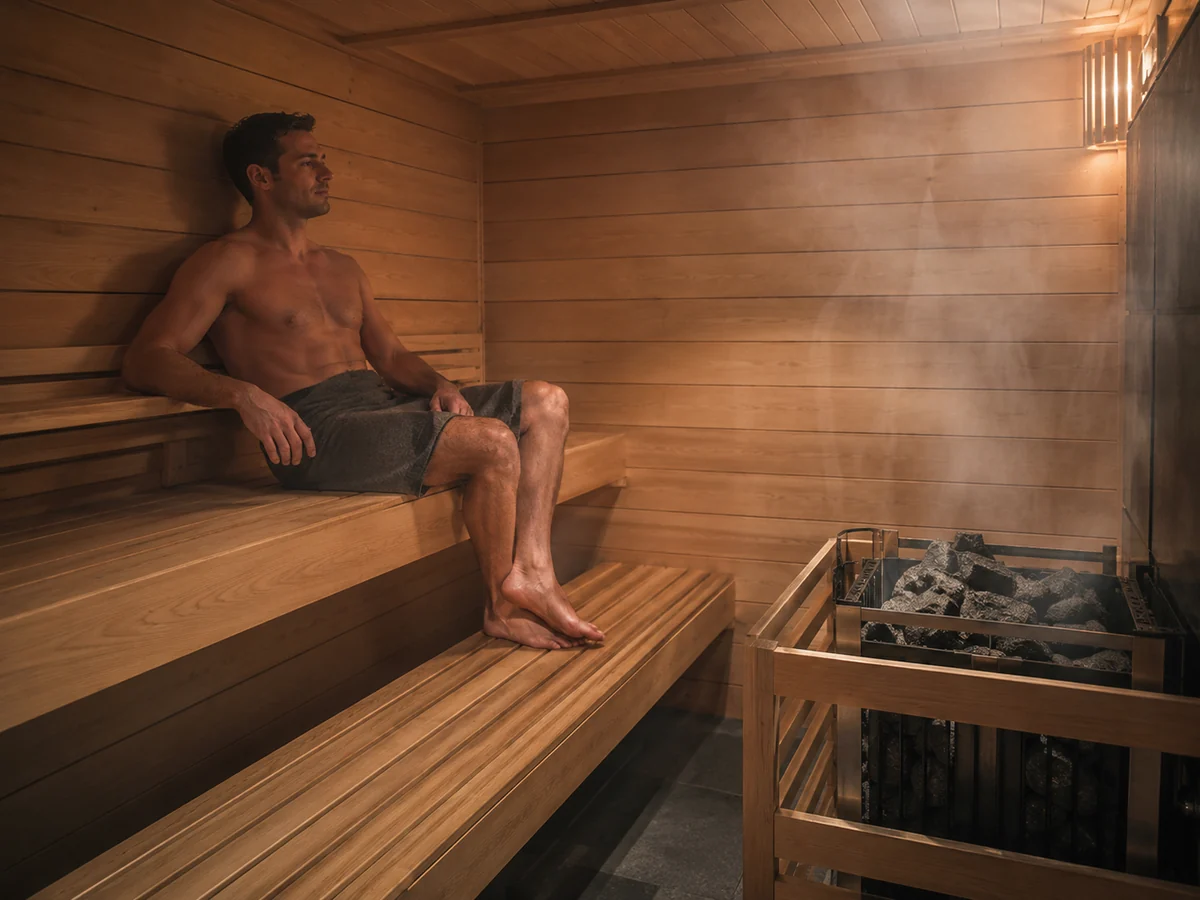
Traditional saunas heat the surrounding air and may include brief increases in humidity when water is placed on hot stones. A hotter sauna, stronger löyly, higher bench position or unfamiliar room can justify leaving earlier than a generic time reference.

Traditional sauna with upper and lower benches and a protected stone heater
Heat exposure can change with heater output, humidity and seating position even when session time stays the same.

Conceptual thermal-environment illustration; no universal temperature or duration is implied.

Infrared sauna

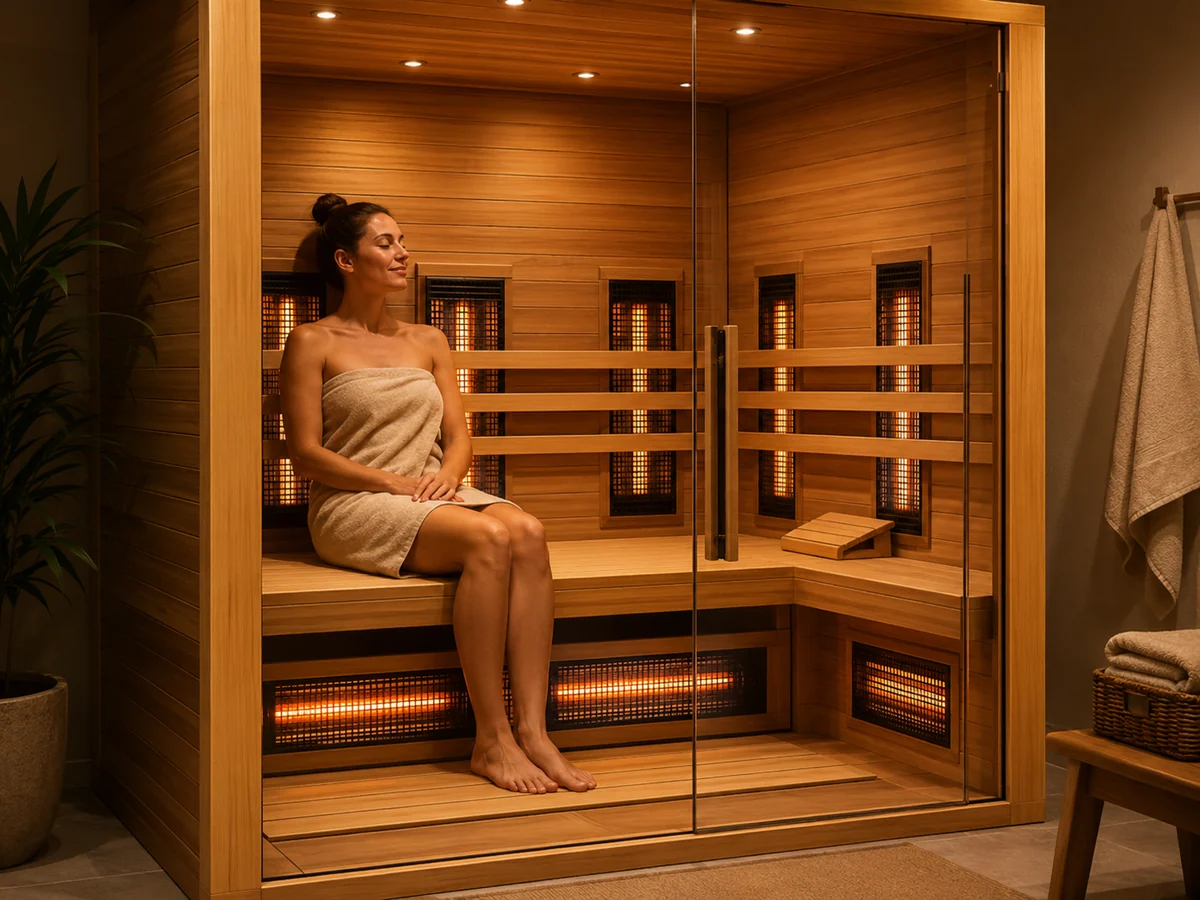
Infrared sauna creates a different thermal environment and often operates at a lower air temperature than a conventional sauna. Lower air temperature does not mean unlimited exposure. Specific equipment instructions and individual heat tolerance still matter.

Adult seated in an infrared sauna with wall heating panels
Infrared sauna creates a different thermal environment, but session duration still depends on equipment guidance and individual heat tolerance.

Conceptual infrared-sauna environment; not a medical or treatment visualization.

Steam rooms are a different heat environment

Steam rooms use much higher humidity than a typical dry sauna. High humidity changes how effectively sweat evaporates and therefore changes how heat is experienced. A steam-room routine should not automatically be copied from a dry-sauna routine.

For the broader differences in heat mechanism, humidity, utilities and equipment selection, compare sauna heat types. This page keeps its focus on how those differences affect session duration and tolerance.

Higher Heat Usually Means You Should Be More Conservative with Time

It is tempting to build a chart that gives an exact duration for every temperature. That would imply a level of precision the evidence does not support.

If you need the full temperature ranges, measurement context and sauna-type differences, use the sauna temperature guide. Here, temperature is treated only as one modifier of session duration.

Conservative duration approach for different thermal conditions
Thermal ConditionPractical Duration Approach
Mild or relatively low-intensity exposureStart conservatively and assess your response.
Moderate familiar heatKeep exposure controlled; do not chase a clock target.
High heatBe more conservative with continuous exposure.
High heat plus strong humidityPay closer attention to early signs of intolerance.
Unfamiliar saunaTreat it as a new thermal environment, even if you use sauna regularly elsewhere.
Unfamiliar heater or steam patternDo not assume your normal session time applies.

Why humidity can shorten comfortable exposure

Sweating helps the body dissipate heat partly through evaporation. When humidity increases, evaporation becomes less effective, which is one reason a strong löyly event can feel much more intense even though the clock has barely moved.

A Practical Session Decision Framework

Use a simple sequence instead of treating the timer as a dose:

  1. Enter conservatively. Use a familiar, controlled heat setting where possible and do not begin with the goal of reaching a maximum time.
  2. Reassess during the session. Pay attention to comfort, breathing, light-headedness, weakness, nausea and any unusual change in how the heat feels.
  3. Exit when tolerance changes. Do not stay simply to complete a planned duration once the heat is no longer comfortably tolerated.
  4. Cool down before deciding on another round. Reassess after leaving the heat; another round is optional.

Enter conservatively → Reassess → Exit if tolerance changes → Cool down → Decide whether to stop

Beginners Should Build Heat Tolerance Gradually

A first session should be conservative and focused on learning how your body responds to the specific heat environment, rather than matching another person’s routine.

  • Start conservatively.
  • Avoid competitive behavior or time targets.
  • Leave before heat becomes difficult to tolerate.
  • Cool down before deciding whether another round is appropriate.
  • Rehydrate according to your normal needs and circumstances.

Experience does not make you heat-proof

Regular sauna use may make the environment familiar, but your usual routine may not apply if the sauna is hotter, humidity is higher, you are dehydrated, you are ill, you recently exercised hard, consumed alcohol, or a medication affects your response to heat.

Multiple Shorter Rounds Are Different from One Long Continuous Session

Many sauna routines involve repeated periods of heating and cooling rather than one uninterrupted attempt to remain in the room as long as possible.

Heat → Exit → Cool Down → Reassess → Optional Next Round

The important word is optional. Cooling between rounds changes the thermal situation, but repeated rounds still add heat exposure and fluid loss. Reassess after cooling before deciding whether another round makes sense.

Hydration Matters More Than Reaching a Time Target

Sauna sweating causes fluid loss. Dehydration can reduce heat tolerance and may contribute to headache, weakness, dizziness and other signs of heat strain.

Practical boundary:

Do not prioritize completing a session over maintaining normal hydration and heat tolerance. Fluid requirements vary, so this guide does not prescribe one universal volume of water.

Avoid alcohol with sauna heat

Alcohol is a poor combination with deliberate heat exposure because it can impair judgment and make emerging discomfort easier to ignore. Do not treat alcohol as part of a sauna heat routine.

Leave the Sauna Early if Your Body Is Not Tolerating the Heat

Your physical response should override a planned session time.

Stop the session and leave the heat if you develop:
  • dizziness or light-headedness;
  • unusual weakness;
  • nausea;
  • headache;
  • confusion;
  • difficulty breathing;
  • chest discomfort;
  • feeling faint; or
  • an unusual inability to tolerate the heat.

Safety basis: Cleveland Clinic advises leaving the sauna when you feel unwell, dizzy, weak, short of breath or uncomfortable. Mayo Clinic heat-exhaustion guidance lists faintness, dizziness, nausea, headache and mild confusion among warning signs of heat illness.

Adult cooling down outside a sauna after ending a heat session
Leave the heat when it is no longer well tolerated; a planned session time should never require pushing through symptoms.

Conceptual wellness-use visualization; not emergency or medical-care guidance.

When symptoms are more serious

Fainting, marked confusion or agitation, seizure, inability to drink, or signs of heatstroke require urgent medical help. Mayo Clinic identifies those findings as reasons to seek emergency help in the context of heat illness. Severe breathing difficulty, chest symptoms or other severe or persistent symptoms also require appropriate medical assessment. Do not return to the sauna to test whether serious symptoms improve.

Some People Should Be More Cautious with Sauna Heat

General advice about sauna duration cannot replace individualized medical guidance. People with relevant cardiovascular or blood-pressure conditions, pregnancy, medication-related heat sensitivity, neurologic conditions that affect heat tolerance, a history of fainting, or previous heat intolerance should seek individualized guidance from a qualified healthcare professional.

People who have recently had a heart attack or stroke, or who are otherwise medically unstable, should not rely on a consumer duration article to decide whether sauna use is appropriate.

This page intentionally does not assign a specific number of minutes to a diagnosis, medication, pregnancy status or other personal medical circumstance.

What Sauna Research Can—and Cannot—Tell You About Session Length

Sauna research is useful, but the meaning of a session length depends on the type of evidence and the conditions that were studied.

What different evidence types can and cannot establish about sauna duration
Evidence TypeWhat It Can SupportWhat It Cannot Establish Alone
Clinical safety guidanceGeneral practical precautionsOne person’s optimal session duration
Controlled interventionResponse to a defined study protocolA universal sauna prescription
Observational researchAssociations between habits and outcomesGuaranteed cause and effect
Systematic reviewOverall evidence patterns and limitationsAn individualized treatment dose
Manufacturer guidanceEquipment-specific operation and warningsMedical effectiveness
Traditional practiceCultural use patternsA universal safety threshold

Research protocol is not treatment dosage

A study that uses a particular temperature and session length describes what researchers tested under defined conditions. It does not establish that the same exposure is appropriate for another person or another sauna. A peer-reviewed systematic review of dry sauna research found substantial variation in sauna type, duration, frequency and study design, and concluded that the evidence was insufficient to recommend a specific temperature, frequency or duration for a particular health outcome.

A 2026 narrative review indexed in PubMed likewise notes that bathing conditions and population context influence findings and calls for future studies with clearly defined exposure parameters and clinical endpoints.

What that means for this guide

Clinical guidance can support conservative safety practices, and studies can describe responses under defined protocols. Neither turns a published number of minutes into a personal prescription. That is why this page gives a general time reference while keeping heat intensity, humidity, sauna type, hydration and symptoms close to the decision.

A Short Note for Shared Sauna Operators

Hotels, gyms and other shared-sauna operators should keep operating rules separate from personal medical advice. Follow the installed equipment documentation, site procedures and applicable local requirements; make exit and stop rules clear; and refer individualized medical questions to qualified healthcare professionals rather than prescribing a “health-optimization” session time.

Common Sauna Session-Time Mistakes

Common sauna duration mistakes risks and better approaches
MistakeWhy It Is a ProblemBetter Approach
Treating 20 minutes as mandatoryIndividual tolerance and thermal conditions vary.Use time as a reference, not a target.
Copying another person’s routineHeat response differs between people.Follow your own response to the actual room.
Assuming experience removes riskHydration, illness and room conditions change.Reassess every session.
Assuming lower air temperature means unlimited timeInfrared and other sauna types still create thermal exposure.Follow equipment guidance and personal tolerance.
Ignoring dizziness or unusual weaknessThose symptoms can signal poor heat tolerance.Leave the heat and cool down.
Copying a study protocolResearch populations and conditions may not match your situation.Use research for context, not as a personal prescription.

One Illustrative Scenario

Situation: A regular sauna user normally stays for a familiar amount of time at home, then visits a sauna that feels hotter and more humid.

Better decision: Treat the unfamiliar room as a new thermal environment rather than assuming the usual duration still applies. Enter conservatively, reassess during the session, and leave earlier if tolerance changes.

Illustrative scenario only; not a HACHILL customer case and not individualized medical advice.

Frequently Asked Questions

How long should you stay in a sauna?

For many generally healthy adults, about 15–20 minutes is a common general reference, while a beginner may start around 5 minutes. There is no universal optimal duration, and heat conditions, hydration, sauna type and individual tolerance can justify leaving sooner.

Is 20 minutes too long in a sauna?

It can be. Twenty minutes may be tolerated by some people in some conditions and be too much for another person or a hotter, more humid environment. Do not treat 20 minutes as a mandatory target.

How long should a beginner stay in a sauna?

Start conservatively. Cleveland Clinic notes that new users may need to begin around five minutes and increase gradually. Leave sooner if you feel unwell or the heat becomes difficult to tolerate.

Can you stay longer in an infrared sauna than a traditional sauna?

Not automatically. Infrared sauna often uses a lower air temperature than a conventional sauna, but that does not create a universal longer safe duration. Follow the equipment instructions and your response to the heat.

Should you leave a sauna if you feel dizzy?

Yes. Leave the heat rather than trying to complete a timer. Severe, worsening or persistent symptoms require appropriate medical assessment.

Does staying longer provide more sauna benefits?

Longer does not automatically mean better. Current research does not establish a universal rule in which extra minutes guarantee additional benefit, and study protocols should not be treated as individualized prescriptions.

Evidence and Safety Basis

The article separates general sauna-use guidance from individualized medical advice. Research exposure times are treated as study protocols, not treatment dosages or universal consumer targets.

Evidence review date: September 3, 2026. These sources support general safety framing and evidence interpretation; they do not establish an individualized sauna prescription.

Choosing a Sauna as Well as Using One?

Session duration is only one part of the decision. If you are comparing sauna equipment, start with the HACHILL sauna categories and evaluate the intended users, indoor or outdoor setting, room capacity, heater and controls, electrical supply, ventilation, climate, installation constraints and manufacturer documentation.

Editorial scope: This guide provides general sauna-use and safety information. It does not diagnose conditions, provide medical clearance or prescribe an individualized heat-exposure dose.

Evidence boundary: Sauna studies vary in sauna type, temperature, humidity, population, frequency and session protocol. The evidence and safety statements on this page were rechecked against the named medical and peer-reviewed sources on September 3, 2026; no independent physician review is claimed.