HACHILL KOUDE DUIKGIDS · TEMPERATUUR EN BEDRIJFSCONTEXT
Direct antwoord: Er bestaat niet één universeel optimale koude-dompeltemperatuur. Een nuttig onderzoeksreferentieband is rond 10–15°C (50–59°F), terwijl gepubliceerde onderzoeken naar onderdompeling in koud water ook kouder omvatten omstandigheden. Beschouw 10–15°C als bewijscontext – niet als een universeel ‘beste’ temperatuur, een persoonlijk recept of een bewijs dat kouder water is beter.
De nuttigste manier om na te denken over de koude duiktemperatuur is door te scheiden drie vragen: welke onderzoeksprotocollen doorgaans worden gebruikt, wat de temperatuur is daadwerkelijk in het water wordt gemeten, en wat geschikt is voor a bepaalde blootstellingscontext. Deze vragen houden verband met elkaar, maar zijn dat niet verwisselbaar.
In deze gids wordt uitgelegd wat het vaak genoemde temperatuurbereik werkelijk betekent: waarom kouder niet automatisch beter is, hoe de belichtingstijd de temperatuur verandert context, en waarom het instelpunt van een koelmachine niet noodzakelijkerwijs de temperatuur a is gebruikerservaringen.
Welke temperatuur moet een cold plunge hebben?
Er bestaat een nuttige onderzoeksreferentieband 10–15°C (50–59°F). Onderzoek naar onderdompeling in koud water ook omvat temperaturen onder deze band, dus onder 10–15°C moet worden verstaan bewijscontext in plaats van een universele drempel, persoonlijk voorschrift of apparatuurvereiste.
Het huidige bewijsmateriaal heeft niet één temperatuur vastgesteld die het beste is elke gebruiker, doel of uitkomst. Studies verschillen in deelnemerspopulatie, onderdompelingsduur, onderdompelingsdiepte, oefencontext en het resultaat gemeten.
Een onderzoeksprotocol beantwoordt een onderzoeksvraag onder gedefinieerde voorwaarden; het wordt niet automatisch een individueel blootstellingsadvies.
De praktische afhaalmogelijkheid is daarom niet om het laagst mogelijke na te streven temperatuur. Begrijp eerst wat het temperatuurgetal vertegenwoordigt, houd vervolgens rekening met de blootstellingstijd, de gebruikerscontext en het daadwerkelijk gemeten water voorwaarde.
Wat betekent het vaak onderzochte temperatuurbereik voor cold plunge eigenlijk?
De 10–15°C (50–59°F) band komt veelvuldig voor onderzoek naar onderdompeling in koud water, met name in protocollen voor sportherstel. Gepubliceerde onderzoeken maken ook gebruik van koudere omstandigheden, zo blijkt uit de onderzoeksliteratuur mag niet worden teruggebracht tot één vast temperatuurbereik.
Herhaaldelijk gebruik van vergelijkbare protocollen maakt studievergelijkingen eenvoudiger, maar dat is niet zo kan een misleidende snelkoppeling creëren: vaak onderzocht betekent niet wetenschappelijk vastgesteld als optimaal.
A 2025 systematische review van koudwateronderdompeling bij gezonde volwassenen studies opgenomen waarbij temperaturen van ongeveer 7°C tot 15°C werden gebruikt en genoteerd dat de wetenschappelijke basis onvoldoende blijft om een optimale CWI te definiëren protocol.
Een nieuwere Systematische review en meta-analyse van temperatuurafhankelijk herstel uit 2026 vergeleken onderzoeken met ongeveer 5°C, 10°C en 15°C. Verschillen tussen temperatuursubgroepen waren niet statistisch significant, dus de Uit onderzoek is niet gebleken dat een van die temperatuurbanden superieur is. De auteurs beschrijven de temperatuursubgroepanalyses ook als verkennend, wat nog een reden is om een subgroepresultaat niet in een universeel resultaat om te zetten recept.
Een groot deel van de temperatuurspecifieke evidence komt eveneens uit herstel na inspanning, inclusief pijn, prestaties en spierbeschadigingen. De resultaten van deze instellingen zouden dat niet moeten zijn stilzwijgend uitgebreid tot beweringen over elk welzijnsdoel of elke gebruiker bevolking.
| Wat het bereik kan betekenen | Wat het niet betekent |
|---|---|
| Een gangbare referentieband in CWI-onderzoek | Een universele beste temperatuur |
| Een bruikbare basis voor het vergelijken van onderzoeksprotocollen | Een persoonlijk medisch voorschrift |
| Een temperatuurcontext die in herstelonderzoek wordt gebruikt | Bewijs dat elk voordeel in dit bereik het grootst is |
| Een praktische referentie voor het bespreken van apparatuurvereisten | Bewijs dat koudere of warmere instellingen ongeschikt zijn |
Het getal is daarom het meest bruikbaar als evidencecontext: het helpt lezers onderzoek te interpreteren en helpt projectteams een operationele vereiste te beschrijven, maar dat doet het niet elke blootstellingsbeslissing afhandelen.
Is een koudere cold plunge altijd beter?
Nee. Uit het huidige bewijsmateriaal blijkt niet dat het geleidelijk aan een koude duik neemt kouder verbetert automatisch het resultaat.
Recent temperatuurspecifiek onderzoek na inspanning waarbij zeer koude en koude temperaturen werden vergeleken meer gematigde onderdompelingsomstandigheden hebben niet aangetoond dat de koudste is conditie het beste presteert.
Dat bewijst niet dat warmer koud water ook universeel beter is. Het betekent dat het bewijsmateriaal geen eenvoudige regel ondersteunt waarin lager temperatuur levert automatisch een groter gewenst voordeel op.
Het onderscheid tussen intensiteit en effectiviteit zaken. Kouder water kan dramatisch ernstiger aanvoelen, maar een sterker gevoel is dat wel geen bewijs van een beter herstelresultaat.
A Peer-reviewed onderzoek uit 2025 naar menselijke koude-adaptatie en koudeshock reacties beschrijft substantiële respiratoire en cardiovasculaire reacties op de begin van onderdompeling in koud water. Dat bewijs ondersteunt de behandeling van verkoudheid intensiteit als een veiligheidsoverweging in plaats van als bewijs van groter voordeel.
De nuttige vraag is dus niet: “Hoe laag kan de koelmachine gaan?” Het is, “Welke waterconditie past bij het beoogde gebruik zonder aan te nemen dat dit groter is koude intensiteit levert een beter resultaat op?”
Waarom temperatuur en blootstellingsduur samen moeten worden beschouwd
Temperatuur is slechts één onderdeel van een protocol voor koudwateronderdompeling. De blootstellingsduur is ook van belang.
Onderzoeksprotocollen specificeren normaal gesproken meerdere variabelen tegelijk: water temperatuur, onderdompelingsduur, onderdompelingsdiepte, deelnemerspopulatie en de uitkomst die wordt bestudeerd.
A Systematische review uit 2022, meta-analyse en meta-regressie van onderdompeling in koud water na de training onderzocht temperatuur en duur binnen herstelprotocollen en deed dat niet stel een eenvoudige universele formule op die één watertemperatuur omzet in één juiste belichtingstijd voor ieder persoon.
Een langere belichting is ook niet automatisch beter. Een temperatuur zoals 10°C of 15°C beschrijft een deel van de waterconditie; het definieert niet de volledige blootstelling.
Lezers die beslissen hoe lang ze een cold plunge nemen moet daarom de duur behandelen als een afzonderlijk besluit dat moet worden genomen geïnterpreteerd naast gemeten watercondities en andere relevante veiligheidsfactoren. Voor gedetailleerde richtlijnen voor de sessieduur kunt u de speciale handleiding gebruiken duur gids.
Cold Plunge-setpoint versus werkelijke watertemperatuur
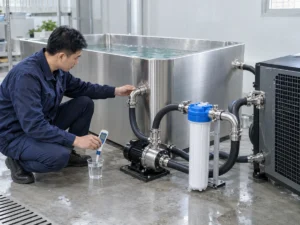
Een chiller setpoint is het gewenste controledoel. Dat doet het bewijst op zichzelf niet de temperatuur van elk deel van het water in de badkuip of de toestand die een gebruiker op een bepaald moment ervaart.
Met de controllerdocumentatie kan het geselecteerde setpoint worden onderscheiden van de temperatuur gemeten door de controllersensor. Bijvoorbeeld Aqua Logic DC-serie controllerinstructies Beschrijf afzonderlijk het geselecteerde setpoint en het weergegeven huidige water temperatuur en toont een aan/uit-verschil rond het controledoel die specifieke regelaar.
Dat voorbeeld demonstreert een controleprincipe; het is geen bewering dat HACHILL gebruikt dezelfde controller.
De locatie van de sensor is ook van belang. ASHRAE Grondbeginselen van controle definieert het setpoint als de gewenste waarde van de regelvariabele en legt uit dat een sensor die gecontroleerde variabele meet voor feedback. Toegepast op een koudwatersysteem zou daarom een weergegeven sensorwaarde moeten verschijnen worden geïnterpreteerd op basis van waar en hoe die sensor het water meet.
Dit is een algemeen meet- en controleprincipe, en niet een bewering daarover elke koude duik ontwikkelt een betekenisvolle temperatuurgradiënt of zo sensoropstelling is van toepassing op elk HACHILL-systeem.
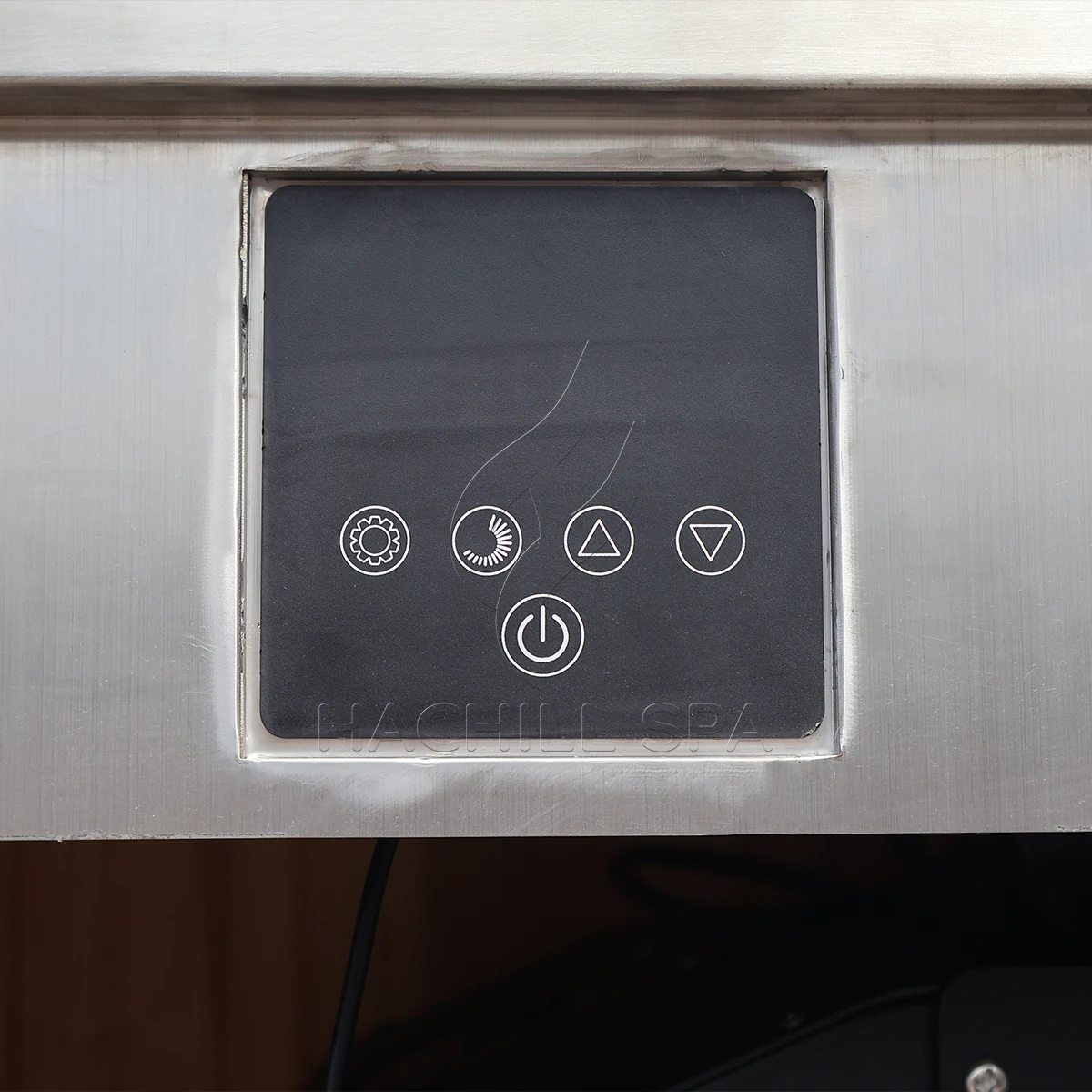
- Onderscheid de geselecteerde setpoint van de weergegeven gemeten temperatuur.
- Stel vast waar de sensor van de regelaar het water meet.
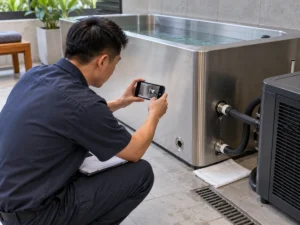
- Als de temperatuur in de gebruikerszone van belang is, controleer dan de waterconditie bij a representatieve meetlocatie onder een gedefinieerde bedrijfstoestand.
- Noteer bij het vergelijken de meetlocatie en de systeemstatus lezingen.
- Als een project onafhankelijke verificatie vereist, definieer dan het instrument, meetlocatie, timing en acceptatietolerantie voordat u gaat vergelijken lezingen.
- Ga er niet van uit dat het laagst selecteerbare instelpunt van een controller het bewijs levert Het complete systeem kan die waterconditie op elke locatie bereiken en vasthouden.
Belangrijkste uitrustingsonderscheid: controllermogelijkheden ≠ representatieve watertemperatuur ≠ persoonlijk begeleiding bij blootstelling.
Ga verder voor vragen over koelcapaciteit, pull-down, vasthouden en herstel naar de handleiding voor het dimensioneren van een cold-plunge-chiller .
Welke temperatuurinformatie moeten kopers en faciliteiten specificeren?
Een bruikbare apparatuuropgave vereist meer dan: “De chiller moet tot 5°C gaan.”
De koper moet eerst definiëren welke waterconditie het project vereist, waar die temperatuur is gemeten en onder welke bedrijfsomstandigheden het moet worden onderhouden.
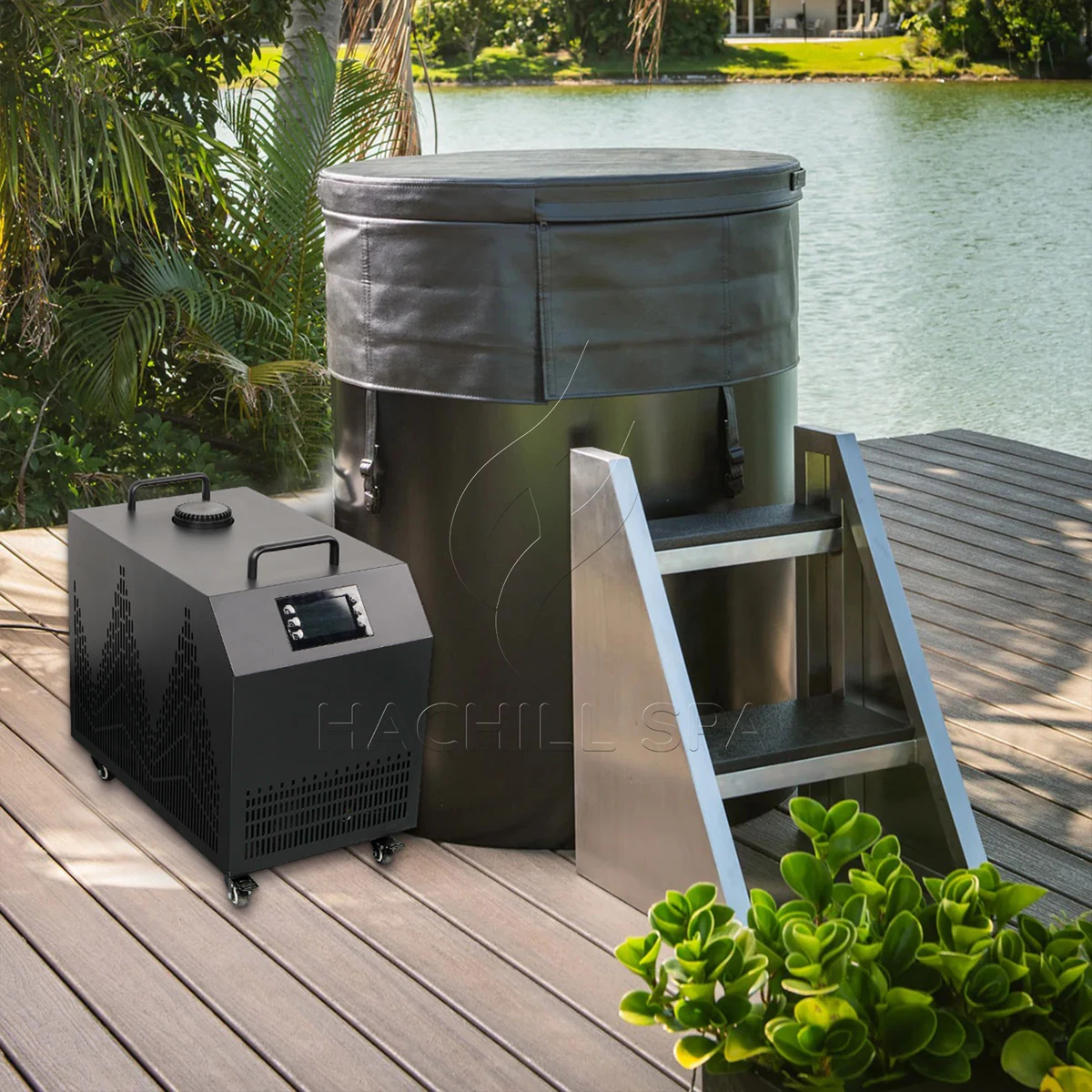
- Beoogde bedrijfstemperatuur of bedrijfsband: de beoogde waterconditie, niet alleen het laagste getal dat op a wordt weergegeven controleur.
- Meetbasis: waar de heersende temperatuur wordt gemeten en welke meting dat doet worden gebruikt voor routinematige bediening of projectverificatie.
- Watervolume en uitgangssituatie: factoren die de benodigde koelcapaciteit beïnvloeden om het doel te bereiken.
- Gebruikspatroon: incidenteel gebruik, herhaalde sessies en commerciële omzet creëren verschillende operationele eisen.
- Definitie van de bedrijfstoestand: vermeld of de temperatuureis na stabilisatie geldt, tijdens normaal gebruik, na verwachte omzet of op een ander gedefinieerd systeem staat.
- Verificatiemethode: definieer het instrument, de meetlocatie, timing en projectspecifiek acceptatietolerantie gebruikt voor inbedrijfstelling of routinecontroles.
- Site-omgeving: Omgevings- en installatieomstandigheden beïnvloeden de thermische belasting van de koeling systeem moet beheren.
- Geselecteerde kuip en koelconfiguratie: de geschiktheid moet worden geverifieerd voor de exacte uitrusting en het aangegeven project conditions.
Deze factoren scheiden ook de verantwoordelijkheden. De koper of faciliteit bepaalt de beoogde waterconditie en het operationele gebruiksscenario. De apparatuurleverancier verifieert wat de exact aangeboden configuratie daaronder kan ondersteunen projectvoorwaarden. De exploitant is eigenaar van de routine van de site exploitatie- en meetbeleid. Individuele gezondheids- of blootstellingsbegeleiding blijft gescheiden van de apparatuurspecificatie.
Als de kuip of het model nog open is, ga dan verder naar de HACHILL Cold Plunge-categorie om de productroute te verkleinen.
Als de beoogde bedrijfsconditie al is gedefinieerd en de vraag is of het koelsysteem kan voldoen aan de vereiste pull-down, holding en invorderingsplicht, ga verder met de handleiding voor het dimensioneren van een cold-plunge-chiller .
Veelgestelde vragen
Welke temperatuur moet een cold plunge hebben?
Rond de 10–15°C (50–59°F) is een veel bestudeerde referentieband, maar dat is het wel mag niet worden behandeld als een universeel persoonlijk doelwit. Onderzoek maakt ook gebruik van koudere omstandigheden, en er is geen enkele temperatuur vastgesteld optimaal voor elke gebruiker of uitkomst.
Is 10°C te koud voor een koude duik?
Een temperatuurgetal alleen kan niet bepalen of er sprake is van een blootstelling geschikt voor een bepaalde persoon. Er verschijnt tien graden Celsius onderzoek naar onderdompeling in koud water, maar onderzoeksprotocollen zijn niet universeel persoonlijke veiligheidsvoorschriften.
Is een koudere koude duik beter?
Niet automatisch. Het huidige temperatuurspecifieke herstelonderzoek heeft dat opgeleverd Het is niet vastgesteld dat de koudste waterconditie consequent produceert het beste resultaat. Een grotere koude-intensiteit mag niet als bewijs worden beschouwd van grotere werkzaamheid.
Is het instelpunt van de koelmachine hetzelfde als de werkelijke watertemperatuur?
Niet noodzakelijkerwijs. Een instelpunt is een regeldoel, terwijl het wordt weergegeven temperatuur afkomstig is van een bepaalde sensor en meetlocatie. Interpreteer de meetwaarde volgens de werkelijke controller, sensor positie en bedrijfstoestand.
Verandert de duur van de koude duik de manier waarop temperatuur moet worden geïnterpreteerd?
Ja. Temperatuur en blootstellingstijd zijn afzonderlijke protocolvariabelen samen moeten worden beschouwd. Een watertemperatuur definieert niet de temperatuur volledige belichting of creëer één universele sessieduur.
Referentiebasis
- Systematische review en meta-analyse uit 2025 van onderdompeling in koud water in healthy adults — temperatuurcontext, protocolvariabiliteit en bewijsgrenzen rondom het definiëren van een optimaal CWI-protocol.
- Temperatuurafhankelijke CWI systematische review en meta-analyse uit 2026 – temperatuurspecifiek herstel na inspanning en de afwezigheid ervan van een bevestigde subgroep met superieure temperatuur.
- 2022 CWI systematische review, meta-analyse en meta-regressie — grenzen voor temperatuur, duur en herstel na inspanning.
- Evaluatie uit 2025 van menselijke aanpassing aan de koude en reacties op koude schokken — context van respiratoire en cardiovasculaire koudeschokreactie.
- Aqua Logic DC-serie controllerinstructies — voorbeeld van het onderscheid tussen een geselecteerd regelaarinstelpunt en de watertemperatuur gemeten door de sensor; geen HACHILL-component beweren.
- ASHRAE-handboek — Grondbeginselen van controle — algemene meetcontext voor het lokaliseren van sensorelementen waar de De gemeten toestand is representatief voor de gecontroleerde variabele.
Scope: In dit artikel wordt het bewijsmateriaal, de metingen en de metingen van koude duiktemperaturen uitgelegd grenzen van apparatuurspecificaties. Het biedt geen geïndividualiseerd aanbod medisch advies of beweren dat één temperatuur universeel optimaal is of veilig.
Definieer de waterconditie voordat u het systeem op maat maakt
Voor een commerciële of projectaanvraag geeft u het doelbedrijf op temperatuur of band, meetbasis, geselecteerd kuip- of watervolume, locatie omstandigheden, gebruiksschema en status van het koelsysteem. Definieer de operationele status en verificatiemethode wanneer temperatuuracceptatie ertoe doet. Dat houdt productselectie en beoordeling van thermische belasting gescheiden van individueel begeleiding bij blootstelling.
Vraag een projectbeoordeling aan