Guía de tiempos de inmersión en agua fría
Respuesta rápida: No hay un ganador universal “antes” o “después”. Si la prioridad es la fuerza o la hipertrofia a largo plazo, la inmersión repetida en agua fría inmediatamente después del entrenamiento contra resistencia merece precaución porque la evidencia actual sugiere que puede atenuar modestamente la hipertrofia y, en algunas condiciones, la adaptación de fuerza. Si necesita rendir de nuevo pronto, la CWI después del ejercicio puede tener una compensación de recuperación diferente. Antes del ejercicio, su evidencia de rendimiento más clara es como preenfriamiento para actividad de resistencia en condiciones de calor, no como un potenciador universal del rendimiento en el gimnasio.
La decisión comienza con el resultado que intentas proteger: recuperación aguda, adaptación a largo plazo, rendimiento en plazos cortos o manejo del calor. Esos son objetivos diferentes. Sentir menos dolor hoy no demuestra que la fuerza, la potencia o la hipertrofia hayan mejorado, y la evidencia de la inmersión en agua fría inmediatamente después de levantar pesas no debe convertirse en una regla universal de varias horas después.
¿Baño de inmersión en frío antes o después del entrenamiento? Empieza por el objetivo del entrenamiento
El momento de la inmersión en agua fría debe seguir el objetivo del entrenamiento, no una idea genérica de que el frío es “bueno para la recuperación”. Un levantador que busca maximizar la hipertrofia tiene una decisión diferente a la de un atleta que debe competir pronto. Un atleta de resistencia que se prepara para un evento caluroso tiene otra.
Por eso, reglas simples como “sumérgete siempre después del cardio” o “espera seis horas después de levantar pesas” son demasiado amplias. La investigación sobre inmersión en agua fría mide diferentes resultados bajo diferentes condiciones de ejercicio, momento y exposición. Una mejor primera pregunta es: ¿Qué resultado es más importante en esta sesión?
La recuperación aguda no es lo mismo que la adaptación a largo plazo
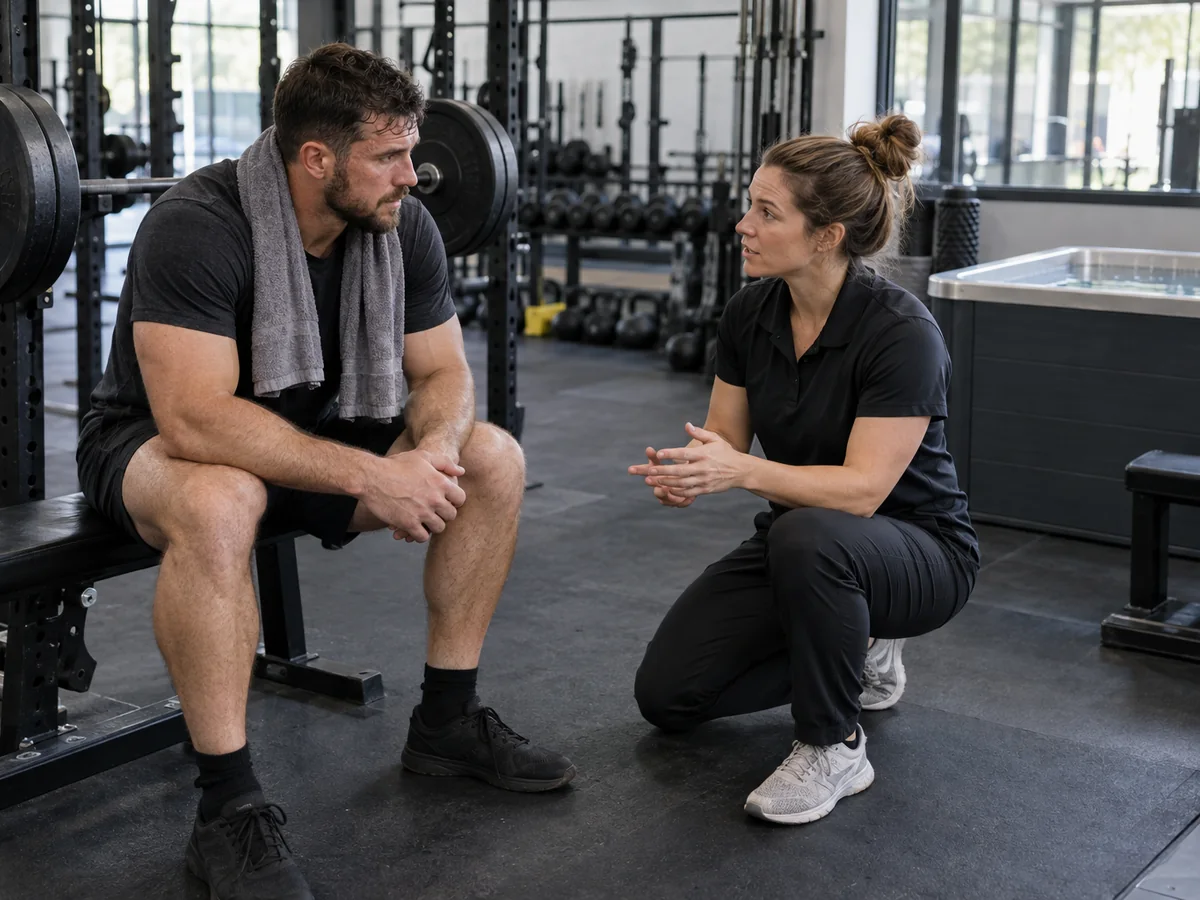
La recuperación aguda se refiere a lo que sucede en las próximas horas o días: dolor muscular, recuperación percibida, restauración de fuerza o potencia, biomarcadores o disposición para otro rendimiento. La adaptación a largo plazo se refiere a lo que sucede después de un entrenamiento repetido durante semanas o meses en resultados como tamaño muscular, fuerza o capacidad de resistencia.
Esas preguntas pueden apuntar en direcciones diferentes. Un baño de inmersión en frío después del ejercicio puede mejorar algunas medidas seleccionadas de recuperación a corto plazo, mientras que la inmersión en agua fría (CWI) repetida e inmediata después del entrenamiento de fuerza puede ir en contra de algunas de las adaptaciones que un levantador intenta preservar.
Esto no es una contradicción. Es una diferencia de resultados.
Menos agujetas no significa automáticamente mejor rendimiento o mejores ganancias
Las agujetas son información útil, pero no son una métrica completa de recuperación. Una gran revisión sistemática de la inmersión en agua fría (CWI) después del ejercicio encontró que los efectos de recuperación varían según el ejercicio previo, el resultado medido y el momento: la recuperación de resistencia mejoró en algunos puntos, mientras que el rendimiento en sprints y saltos podría ser peor poco después de la inmersión, con otros resultados de fuerza o potencia mejorando más tarde. Consulte la revisión sistemática sobre la recuperación del rendimiento físico después de la inmersión en agua fría (CWI).
Así que mantenga estas preguntas separadas:
- ¿Siento menos agujetas?
- ¿Se ha recuperado la calidad de rendimiento que necesito para la próxima sesión?
- ¿Estoy tratando de maximizar la adaptación a largo plazo de este bloque de entrenamiento?
- ¿Tengo otra competición importante lo suficientemente pronto como para que la recuperación a corto plazo merezca más peso?
Las agujetas (DOMS) ≠ recuperación completa del rendimiento ≠ adaptación a largo plazo.
Después del entrenamiento de fuerza: inmersión en frío inmediata, crecimiento muscular y los límites de la regla de las 4–6 horas
Si la fuerza o la hipertrofia es la prioridad, la razón más sólida para la precaución es la inmersión en agua fría repetida inmediatamente después del entrenamiento de resistencia. La evidencia actual de revisiones sistemáticas sugiere que este patrón puede atenuar modestamente la hipertrofia, con evidencia separada que también apunta a una reducción de la adaptación de la fuerza en algunas condiciones.
El alcance es fundamental. La investigación no justifica afirmar que una inmersión destruye el crecimiento muscular, que cada inmersión en frío en un día de levantamiento reduce las ganancias, o que una hora específica posterior sea segura.
Qué aborda realmente la evidencia sobre la inmersión en agua fría inmediatamente después del levantamiento
Una revisión sistemática y metaanálisis de 2024 sobre el entrenamiento de resistencia y la hipertrofia encontró que la inmersión en agua fría utilizada inmediatamente después del ejercicio de resistencia puede atenuar los cambios hipertróficos. En los estudios incluidos, la inmersión comenzó inmediatamente o dentro de los 15 minutos posteriores al entrenamiento y generalmente se repitió a lo largo del programa de entrenamiento. La revisión también consideró que la calidad de la evidencia subyacente era relativamente limitada, por lo que el hallazgo debe interpretarse con precaución. Ver la revisión sistemática y metaanálisis de hipertrofia de 2024.
Eso le da a esta evidencia un límite claro:
| Alcance de la evidencia | Qué puede respaldar | Lo que no demuestra |
|---|---|---|
| La inmersión en agua fría repetida comenzó inmediatamente o dentro de unos 15 minutos después del entrenamiento de resistencia | Precaución cuando la hipertrofia es un objetivo importante a largo plazo | Que cada baño de inmersión en frío el mismo día reduce la hipertrofia |
| Estudios crónicos de entrenamiento de resistencia | Posible interferencia con adaptaciones seleccionadas | Que un baño de inmersión aislado provoca una pérdida medible de ganancias |
| Metanálisis de fuerza | Cierta evidencia de adaptación de fuerza atenuada | Que todos los métodos de CWI reducen la fuerza por igual |
| Uso diferido varias horas después del levantamiento | La evidencia sigue siendo incompleta | Un umbral universal de “seguro después de X horas” |
La adaptación de la fuerza necesita una redacción aparte. Un metaanálisis de 10 estudios encontró una pequeña atenuación general en las ganancias de fuerza, pero el resultado no fue uniforme: el subgrupo de un solo miembro mostró atenuación, mientras que el subgrupo de CWI de cuerpo completo no mostró una diferencia significativa. La muestra combinada también era 92 % hombres, lo que limita la generalización del resultado. Consulte el metanálisis de adaptación de fuerza.
La conclusión defendible es, por tanto:
La inmersión en agua fría (CWI) repetida inmediatamente después del entrenamiento de resistencia merece cautela cuando la hipertrofia o la adaptación de fuerza a largo plazo son una prioridad.
No lo es:
todo uso de agua fría después del entrenamiento de fuerza es perjudicial.
Por qué la regla de “esperar 4–6 horas” no debe tratarse como un umbral universal probado
La popular regla de las 4–6 horas es más precisa de lo que permite la evidencia directa.
Un artículo para profesionales de ACSM señala que algunos atletas y profesionales alejan la CWI del entrenamiento de fuerza o hipertrofia entre cuatro y seis horas, y también reconoce que solo unos pocos estudios han examinado directamente el momento de aplicación después del ejercicio. Consulte el discusión del ACSM para profesionales sobre el momento de aplicación de la CWI. Eso convierte el intervalo de 4–6 horas en una heurística práctica de programación—no un límite fisiológico validado.
Más importante aún, la revisión de hipertrofia de 2024 limita su conclusión al momento inmediatamente posterior al ejercicio que realmente se estudió y afirma que los efectos de la CWI aplicada varias horas después siguen siendo desconocidos.
Esto deja un límite claro en la evidencia:
Con respaldo: la CWI repetida inmediatamente después del entrenamiento de fuerza puede atenuar la hipertrofia.
No establecido: que un único límite de horas de retraso separe el uso perjudicial del seguro o garantice que la adaptación esté protegida.
Si preservar la adaptación al entrenamiento de fuerza es la prioridad, separar CWI de la ventana inmediata posterior al levantamiento es una elección de programación razonable cuando sea práctico. La evidencia aún no establece una hora posterior específica que garantice que la cuestión de interferencia quede resuelta.
Si está decidiendo cuánto debe durar una sesión, utilice la guía de HACHILL guía de duración de inmersión en frío. Si la pregunta es con qué frecuencia repetir CWI a lo largo de una semana de entrenamiento, use el guía de frecuencia de inmersión en frío.
Después de entrenamiento de resistencia o deportes de equipo: cuando la recuperación de corto plazo es importante
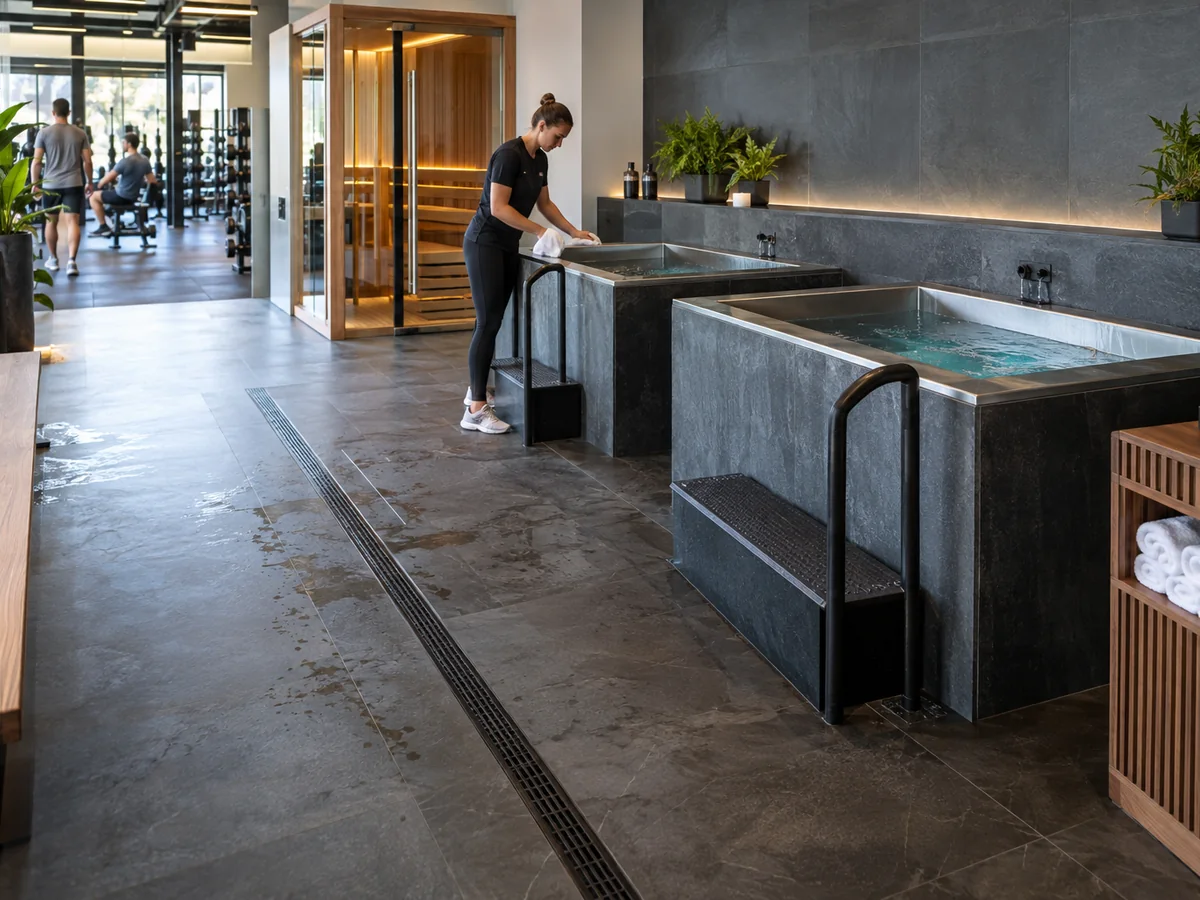
La inmersión en agua fría (CWI) después del ejercicio puede tener una justificación más sólida cuando el objetivo inmediato es restaurar determinadas cualidades antes de otro esfuerzo exigente. Esto es distinto de afirmar que los atletas de resistencia o de deportes de equipo deban tomar siempre un baño de inmersión en frío después de entrenar.
Una revisión sistemática y metaanálisis en red específicos por modalidad de 2026 que abarcó aplicaciones de fuerza, resistencia y deportes de equipo encontró que los efectos de CWI difieren según el tipo de ejercicio, el resultado y el protocolo. La revisión incluyó 87 estudios y 2,313 participantes, con certeza variable entre resultados, y sus resultados no respaldan una prescripción universal de CWI posterior al ejercicio. Consulte la Metanálisis en red específico por modalidad 2026.
Una revisión sistemática específica de fútbol de 2026 añade un ejemplo útil de recuperación en poco tiempo: la CWI se asoció con una mejor recuperación de algunas medidas, incluidas la contracción voluntaria máxima y el dolor muscular de aparición tardía, mientras que el rendimiento en sprint no mejoró claramente y los intervalos de predicción para los resultados agrupados incluyeron el nulo. Consulte la Revisión sistemática de 2026 sobre CWI pospartido en futbolistas entrenados. El punto práctico no es que el fútbol demuestre un protocolo universal; es que los resultados de recuperación pueden variar incluso dentro de un mismo deporte.
La recuperación aguda y la preparación para la siguiente sesión son diferentes de la adaptación a la resistencia
La recuperación aguda puede incluir:
- dolor muscular;
- recuperación percibida;
- restauración de la fuerza o la potencia;
- rendimiento en sprint o salto;
- rendimiento aeróbico;
- biomarcadores de daño muscular.
Esos resultados no evolucionan de forma conjunta.
La adaptación de resistencia a largo plazo es otra cuestión. Una revisión sistemática con metaanálisis sobre la inmersión en agua fría (CWI) regular durante el entrenamiento encontró que la CWI se asociaba con peores adaptaciones al entrenamiento de fuerza, pero no no mostró un efecto claro —positivo o negativo— sobre las adaptaciones del rendimiento aeróbico medidas en los estudios de resistencia. Véase el metaanálisis de 2021 sobre adaptación al entrenamiento crónico.
Esto respalda dos distinciones:
Beneficio de recuperación a corto plazo ≠ mejor adaptación de resistencia a largo plazo.
y
No se detectó un deterioro claro de la adaptación a la resistencia ≠ mejora de la adaptación a la resistencia.
El cambio de rumbo de la competencia puede cambiar la decisión
Considerar dos atletas después de sesiones exigentes.
Una está en un bloque de desarrollo sin una actuación importante próxima. La otra debe volver a funcionar en un plazo de rotación corto. Sus prioridades son diferentes aunque la inmersión en frío sea idéntica.
Para el segundo atleta, ciertos resultados agudos de recuperación seleccionados pueden merecer más peso. Eso no significa que toda medida de rendimiento vaya a recuperarse mejor, y no significa que la misma rutina deba repetirse automáticamente después de cada sesión de entrenamiento durante un bloque centrado en la adaptación.
Escenario ilustrativo — no es un caso de atleta de HACHILL: Un atleta de deporte de equipo termina un partido y se aproxima pronto otro rendimiento de alta exigencia. La decisión de cronología se basa en las cualidades específicas necesarias para el siguiente evento y en la ventana de recuperación disponible. Esta es una decisión de recuperación rápida, no una prueba de que la CWI de rutina posterior al entrenamiento sea óptima para la adaptación a largo plazo.
Antes de un entrenamiento: el pre-enfriamiento en calor es un caso especial, no un impulso universal del rendimiento
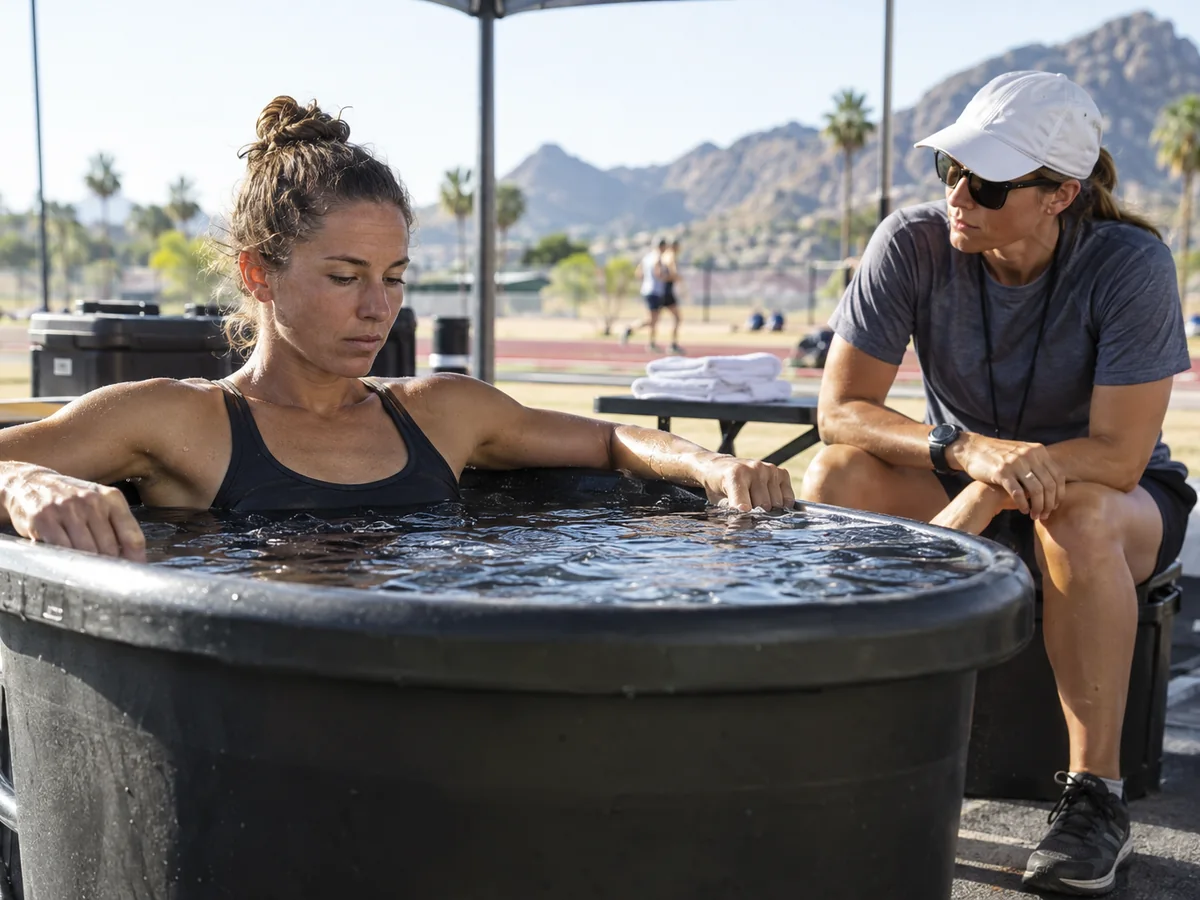
CWI antes del ejercicio tiene un papel claro respaldado por la evidencia: preenfriamiento antes del ejercicio de resistencia en condiciones de calor.
Eso es mucho más limitado que las afirmaciones de que una inmersión en frío antes del entrenamiento mejora universalmente la fuerza, la concentración, la motivación o el rendimiento deportivo.
Cuándo puede importar el preenfriamiento para el ejercicio de resistencia en condiciones de calor
Un metaanálisis específico de CWI sobre preenfriamiento incluyó ejercicio de resistencia de más de seis minutos en temperaturas ambientales de al menos 26°C y encontró un efecto global favorable en las medidas de rendimiento de resistencia. Véase el metaanálisis de preenfriamiento con CWI antes del ejercicio en el calor.
La traducción útil es:
Cuando el problema de rendimiento es gestionar el calor durante el ejercicio de resistencia, el preenfriamiento puede ser relevante.
Eso es una estrategia específica para el evento y el entorno. No es una regla general que el agua fría deba usarse antes de cada entrenamiento.
Por qué esa evidencia no se aplica automáticamente a sesiones ordinarias de fuerza o de gimnasio
La evidencia más sólida sobre el preenfriamiento no establece que una inmersión en frío antes de una sesión normal de levantamiento mejore la fuerza, la potencia o la calidad del entrenamiento.
El alcance correcto es:
La evidencia se aplica más claramente a: rendimiento de resistencia con calor considerable.
No establece: un beneficio universal previo al entrenamiento para el entrenamiento de fuerza, el ejercicio indoor habitual, la concentración mental o el rendimiento «impulsado por la dopamina».
Sentirse alerta después de la exposición al frío no es lo mismo que demostrar un mejor rendimiento deportivo.
Si la temperatura del agua en sí es la cuestión, mantenga esa tarea con el equipo de HACHILL guía de temperatura para inmersión en frío en lugar de copiar una temperatura de investigación en un artículo sobre la duración como una prescripción universal para el consumidor.
Aclimatación al calor y entrenamiento mixto: cuando el objetivo de recuperación puede entrar en conflicto con el objetivo de adaptación
La aclimatación al calor plantea una cuestión distinta de la del rendimiento agudo en el calor. El enfriamiento puede ayudar a gestionar la tensión térmica o la recuperación, mientras que el entrenamiento de aclimatación al calor utiliza deliberadamente la exposición repetida al calor para impulsar la adaptación.
Es tentador concluir que el enfriamiento posterior al ejercicio debe borrar ese estímulo. La evidencia actual no es lo suficientemente sólida para esa afirmación universal.
El enfriamiento para confort o rendimiento no es lo mismo que la adaptación al calor del edificio
Una revisión de 2024 centrada específicamente en la recuperación durante la aclimatación al calor por ejercicio concluyó que la evidencia directa sobre el efecto del enfriamiento posterior al ejercicio en la adaptación al calor sigue siendo limitada. Su interpretación general fue que el enfriamiento basado en la recuperación no interferiría necesariamente con el estímulo fisiológico ya logrado durante la exposición al calor, pero los autores describieron explícitamente la conclusión como exploratoria porque faltan datos directos. Consulte la Revisión de 2024 sobre enfriamiento posterior al ejercicio y aclimatación al calor.
Eso hace un Conocido / Aún incierto distinción más precisa que una regla rígida.
- El preenfriamiento puede favorecer un rendimiento de resistencia seleccionado en condiciones de calor.
- La CWI inmediata repetida después del entrenamiento de resistencia merece precaución en el entrenamiento centrado en hipertrofia.
- Los resultados seleccionados de recuperación aguda pueden mejorar después de la CWI.
- En un estudio controlado de entrenamiento con calor, el preenfriamiento regular no pareció atenuar la adaptación al calor.
- El efecto exacto del enfriamiento de recuperación posterior al ejercicio sobre la aclimatación al calor en diferentes protocolos.
- Una hora universal de retraso posterior al levantamiento que protege la adaptación.
- Un único programa de tiempos que optimiza simultáneamente la fuerza, la resistencia, la recuperación a corto plazo y la adaptación al calor.
Ese estudio no establece que todo protocolo de enfriamiento previo o posterior al ejercicio sea neutro para la aclimatación al calor.
La incertidumbre es un resultado de la evidencia, no un vacío que deba llenarse con una regla segura.
El entrenamiento mixto de fuerza, resistencia y dos sesiones diarias requiere una decisión de prioridades
El entrenamiento mixto hace que las reglas universales de cronometraje sean aún menos útiles.
Un día puede combinar trabajo de levantamiento y resistencia, o la adaptación a largo plazo puede competir con la necesidad de rendir de nuevo pronto. Entonces, la CWI debe evaluarse frente a la prioridad del bloque de entrenamiento o de la próxima sesión—no simplemente etiquetarse como “recuperación”.
Una secuencia práctica es:
- Identifique la adaptación o el resultado de rendimiento que intenta proteger.
- Pregunte si la evidencia disponible de CWI aborda ese modo de ejercicio, resultado y momento exactos.
- Si la evidencia solo cubre una modalidad diferente o una ventana inmediata posterior al ejercicio, no la extienda de forma implícita.
- Cuando los objetivos entren en conflicto, recurra al asesoramiento adecuado de un entrenador, de especialistas en ciencias del deporte o de profesionales sanitarios cualificados en lugar de inventar una hora universal.
Escenario ilustrativo — no es un caso de atleta de HACHILL: Un atleta está en un bloque centrado en la fuerza, pero también tiene una sesión de resistencia más tarde ese mismo día. La CWI inmediata después del levantamiento plantea una cuestión de adaptación diferente del preenfriamiento antes del ejercicio de resistencia con calor sustancial. Esas categorías de evidencia no deben reducirse a una única regla de “día de cold plunge”.
Use esta guía de decisión sobre el momento del baño de inmersión en frío
Una buena decisión de temporización no tiene que devolver una única respuesta universal. Puede devolver precaución, considerar, caso especial o retener.
| Pregunta de decisión | Orientación basada en la evidencia | Límite |
|---|---|---|
| ¿La prioridad es la fuerza a largo plazo o la hipertrofia? | La CWI inmediata repetida después de la resistencia merece precaución | La evidencia no define un único umbral seguro universal varias horas después |
| ¿Necesita realizarlo de nuevo pronto? | Determinados resultados de recuperación aguda pueden hacer que la CWI posterior al ejercicio sea más relevante | El dolor muscular o la recuperación percibida no garantizan que se restablezcan todas las medidas de rendimiento |
| ¿El objetivo es el desarrollo de resistencia a largo plazo? | No suponga que el CWI regular mejora la adaptación de resistencia | La evidencia crónica disponible no establece un beneficio de adaptación |
| ¿Te estás preparando para el rendimiento de resistencia en calor sustancial? | El preenfriamiento puede ser un caso especial relevante | Esto no establece un beneficio universal previo al entrenamiento |
| ¿La aclimatación al calor es un objetivo principal de entrenamiento? | Mantenga visible la incertidumbre y tome una decisión a nivel de programa | La evidencia no justifica afirmar que el enfriamiento de recuperación destruye definitivamente la aclimatación. |
| ¿La fuerza, la resistencia o dos sesiones compiten por la prioridad? | Decida qué resultado importa más antes de elegir el momento | No se ha establecido un programa universal de entrenamiento mixto |
| ¿Es incierta la idoneidad médica? | Busque orientación profesional individualizada antes de la inmersión en agua fría | La evidencia de sincronización de las ciencias del deporte no es autorización médica |
La inmersión en agua fría también tiene una cuestión separada de seguridad fisiológica. La inmersión en frío planificada no es el mismo contexto que la inmersión accidental en aguas abiertas, pero la exposición repentina al frío aún puede alterar rápidamente la respiración, la frecuencia cardíaca y la presión arterial; la evidencia sobre el momento del entrenamiento no anula la idoneidad de salud individual. El Guía de seguridad para aguas frías del Servicio Nacional de Meteorología de EE. UU. describe la respuesta al choque por frío, mientras que Guía actual de Cleveland Clinic sobre inmersión en frío identifica situaciones de salud en las que es apropiada la revisión por parte de un clínico.
El momento no reemplaza las decisiones de temperatura, duración o frecuencia
Incluso una elección de tiempos bien fundamentada no le indica qué tan fría debe estar el agua, cuánto debe durar la sesión ni con qué frecuencia debe repetirse.
Mantenga esas preguntas con sus propios responsables de página:
- ¿Cuánto tiempo? ¿Cuánto tiempo debe durar el baño de inmersión en frío?
- ¿Qué temperatura? ¿Qué temperatura tiene un baño de inmersión en frío?
- ¿Con qué frecuencia? ¿Con qué frecuencia se debe tomar un baño de inmersión en frío?
Un artículo de investigación puede combinar una temperatura, duración, momento y grupo de participantes particulares porque esas son las condiciones experimentales. Eso no convierte el protocolo completo en una prescripción universal para el consumidor.
Para la planificación de instalaciones comerciales en lugar de un protocolo individual para atletas, de HACHILL Página de planificación del Centro de Recuperación cubre equipos, acceso, personal e interfaces de operación mientras mantiene separadas las decisiones de idoneidad médica y exposición.
En resumen: elija el momento de la inmersión en frío según el resultado que intenta proteger. Si la prioridad es la adaptación de fuerza o hipertrofia, evite tratar la CWI inmediata posterior al levantamiento como un paso de recuperación predeterminado. Si se aproxima otro rendimiento exigente, pondere la calidad específica de recuperación que necesita en lugar de basarse solo en el dolor muscular. Utilice las afirmaciones sobre preenfriamiento principalmente para ejercicio de resistencia en condiciones de calor, donde la evidencia es sustancialmente más sólida. Y no convierta “4–6 hours” ni ningún protocolo de investigación en una garantía universal.