Risposta rapida: Se la domanda è quale ordine sia più direttamente rappresentato nella ricerca combinata su sauna e acqua fredda, sauna seguita da immersione in acqua fredda o da una pausa di raffreddamento con acqua fredda è la sequenza più chiaramente allineata alla ricerca. Gli studi pubblicati nel 2016, 2020, 2025 e 2026 hanno tutti utilizzato il caldo prima del freddo nell'esaminare le risposte cardiovascolari o termiche acute. Nessuno degli studi citati ha confrontato direttamente sauna-prima con freddo-prima per determinare un ordine universalmente superiore per salute, recupero, sonno o benessere generale. La conclusione difendibile è quindi limitata: sauna → freddo è meglio rappresentata nei protocolli combinati disponibili, non provata come migliore per ogni persona. Il tuo obiettivo, l'idoneità medica, la risposta a caldo e freddo, la dose di esposizione e la capacità di fermarsi in sicurezza contano più che copiare un singolo esperimento. Tempistica dell'allenamento, temperatura dell'immersione, durata e flusso della struttura commerciale sono decisioni separate.
Sauna prima o dopo l'immersione in acqua fredda? Cosa hanno realmente testato gli studi
La risposta più solida che questa pagina può supportare riguarda quale ordine combinato sia stato effettivamente studiato, non quale ordine sia universalmente migliore. Negli studi sull'uomo esaminati di seguito, l'esposizione alla sauna precedeva l'immersione in acqua fredda o una pausa di raffreddamento che includeva acqua fredda.
| Studio | Cosa ha testato il protocollo | Cosa non stabilisce |
|---|---|---|
| Radtke et al., 2016 37 uomini con insufficienza cardiaca, coronaropatia o nessuna delle due | Esposizioni in sauna finlandese seguite da un'immersione finale in acqua fredda; sono state misurate le risposte emodinamiche e autonomiche. Record PubMed | Nessun confronto con acqua fredda per prima; non è uno studio sull'ordine nella popolazione generale. |
| Podstawski et al., 2020 55 giovani uomini sedentari | La sauna seguita da immersione in acqua fredda è stata confrontata con la sauna seguita da una condizione di raffreddamento con doccia breve/riposo. Abstract della rivista | Nessun confronto tra sauna prima e freddo prima. |
| Szafraniec et al., 2025 28 donne normotese | Fasi ripetute di riscaldamento in sauna finlandese sono state seguite da periodi di raffreddamento che includevano immersione in acqua fredda; sono state monitorate le risposte cardiovascolari. Studio su Scientific Reports | Nessun braccio in ordine inverso e nessuna affermazione che una sequenza sia migliore per tutti gli esiti. |
| Owen et al., 2026 16 adulti sani | In un disegno crossover, la sauna con raffreddamento ad aria è stata confrontata con il raffreddamento in sauna che includeva una breve immersione in acqua fredda. Studio su Experimental Physiology | Isola un effetto del metodo di raffreddamento all'interno di un protocollo con sauna prima; non confronta freddo prima con sauna prima. |
Questi studi rendono sauna → freddo una sequenza difendibile basata sulla ricerca quando si desidera replicare l'ordine che è stato studiato. Non dimostrano che l'ordine inverso sia inefficace, non sicuro o inferiore, e non stabiliscono una regola universale di conclusione.
Questa distinzione è il fulcro dell'articolo: utilizzare la ricerca per descrivere ciò che è stato testato, senza trasformare un protocollo di studio in una prescrizione personale.
Una sequenza comune non significa una sequenza migliore provata
Tre idee diverse vengono spesso confuse nei consigli su sauna e freddo: una pratica tradizionale, un protocollo utilizzato in uno studio e un'evidenza comparativa secondo cui un protocollo produce un risultato migliore. Non si tratta dello stesso livello di evidenza.
Uno studio può esaminare una sequenza senza confrontare le sequenze
Se i ricercatori fanno eseguire ai partecipanti una sauna e poi l'immersione in acqua fredda, possono misurare ciò che accade durante quel protocollo. A meno che lo studio non confronti anche la sequenza inversa con un disegno appropriato, non può dimostrare che la sauna per prima produca un risultato complessivo migliore rispetto al freddo per primo.
Sequenza studiata ≠ sequenza superiore.
Søberg 2021 non prova che tutti dovrebbero finire con il freddo
Lo studio Søberg del 2021 è spesso citato online a sostegno dell'idea che le sessioni di contrasto debbano sempre terminare con l'esposizione al freddo. La ricerca originale ha esaminato uomini esperti nel nuoto invernale e si è concentrata sulla termoregolazione, sull'adattamento al freddo e sulle risposte legate al tessuto adiposo bruno. Non ha non randomizzato i partecipanti tra sauna per prima e freddo per primo, e non ha testato la conclusione al freddo rispetto alla conclusione al caldo come routine concorrenti per i consumatori. Il record dello studio originale mostra la popolazione effettiva e la domanda di ricerca.
Søberg 2021 non era uno studio sull“”always finish cold".
Un meccanismo non è la stessa cosa di un risultato
Il calore e il freddo producono reali risposte fisiologiche acute. Questo non significa che ogni possibile meccanismo dimostri un beneficio per l'utente.
| Livello di evidenza | Cosa può indicare |
|---|---|
| Risposta fisiologica acuta | Cosa cambia durante o subito dopo l'esposizione |
| Protocollo di studio | Quali condizioni sono state effettivamente testate dai ricercatori |
| Evidenza di esito comparativo | Se un intervento ha superato un altro per un esito definito |
| Raccomandazione per uso personale | Richiede che l'evidenza e il limite di sicurezza corrispondano alla singola domanda |
Risposta fisiologica ≠ risultato comprovato.
Ordine di inizio, ordine di conclusione, tempo di transizione e numero di cicli sono domande diverse
Sapere quale modalità viene per prima non fornisce un protocollo completo di terapia del contrasto.
| Variabile di protocollo | La domanda effettiva |
|---|---|
| Ordine di inizio | Prima la sauna o la vasca fredda? |
| Ordine di conclusione | Quale esposizione viene per ultima? |
| Tempo di transizione | In quanto tempo si passa da una all'altra? |
| Numero di cicli | Quante volte si alterna? |
| Temperatura | Quanto è calda o fredda ogni esposizione? |
| Durata | Quanto dura ogni esposizione? |
Gli studi pubblicati su sauna e acqua fredda utilizzano durate di riscaldamento, strutture di raffreddamento, condizioni di immersione e disegni di ciclo diversi. Ad esempio, lo studio del 2025 su sauna ripetuta e CWI e lo Studio crossover 2026 sull'immersione in acqua fredda durante le pause di raffreddamento della sauna hanno utilizzato protocolli diversi e hanno risposto a diverse domande di fisiologia acuta. Nessuno dei due è una routine universale e nessuno confronta sauna-prima rispetto a freddo-prima come sequenze concorrenti.
Iniziare con la sauna non significa automaticamente che si debba terminare con il freddo
Iniziare con il caldo non stabilisce di per sé quale debba essere l'esposizione finale. La ricerca esaminata per questo articolo non giustifica una regola universale secondo cui tutti dovrebbero sempre terminare con il freddo, sempre riscaldarsi di nuovo dopo, o utilizzare uno specifico stato finale per il metabolismo, il recupero o il sonno.
Non è stabilito qui alcun termine universale per la transizione immediata
Alcuni protocolli di ricerca utilizzano l'immersione in acqua fredda come parte di una pausa di raffreddamento strutturata; altri includono raffreddamento aggiuntivo o riposo. Ciò non giustifica trasformare un protocollo in una regola secondo cui tutti devono entrare in acqua fredda entro un numero specifico di minuti.
Anche l'ordine non determina quante serie eseguire
Uno studio può utilizzare riscaldamento e raffreddamento ripetuti perché i ricercatori necessitano di un intervento standardizzato. Quel numero di cicli appartiene all'esperimento, non automaticamente a un lettore generico.
Allo stesso modo, gli studi sulla terapia con acqua a contrasto—alternanza di acqua calda e fredda—non devono essere considerati prova diretta di una sequenza sauna più vasca fredda.
La terapia con acqua a contrasto ≠ prova dell'ordine sauna-vasca fredda.
Per domande precise sull'esposizione, consultare i manuali separati di HACHILL: Guida alla durata in sauna, Guida alla durata nella vasca fredda, e Guida alla temperatura della vasca fredda.
Una risposta sull'ordine non è una prescrizione di dose.
Quando è opportuno mettere in pausa, interrompere o evitare la prossima transizione caldo–freddo?
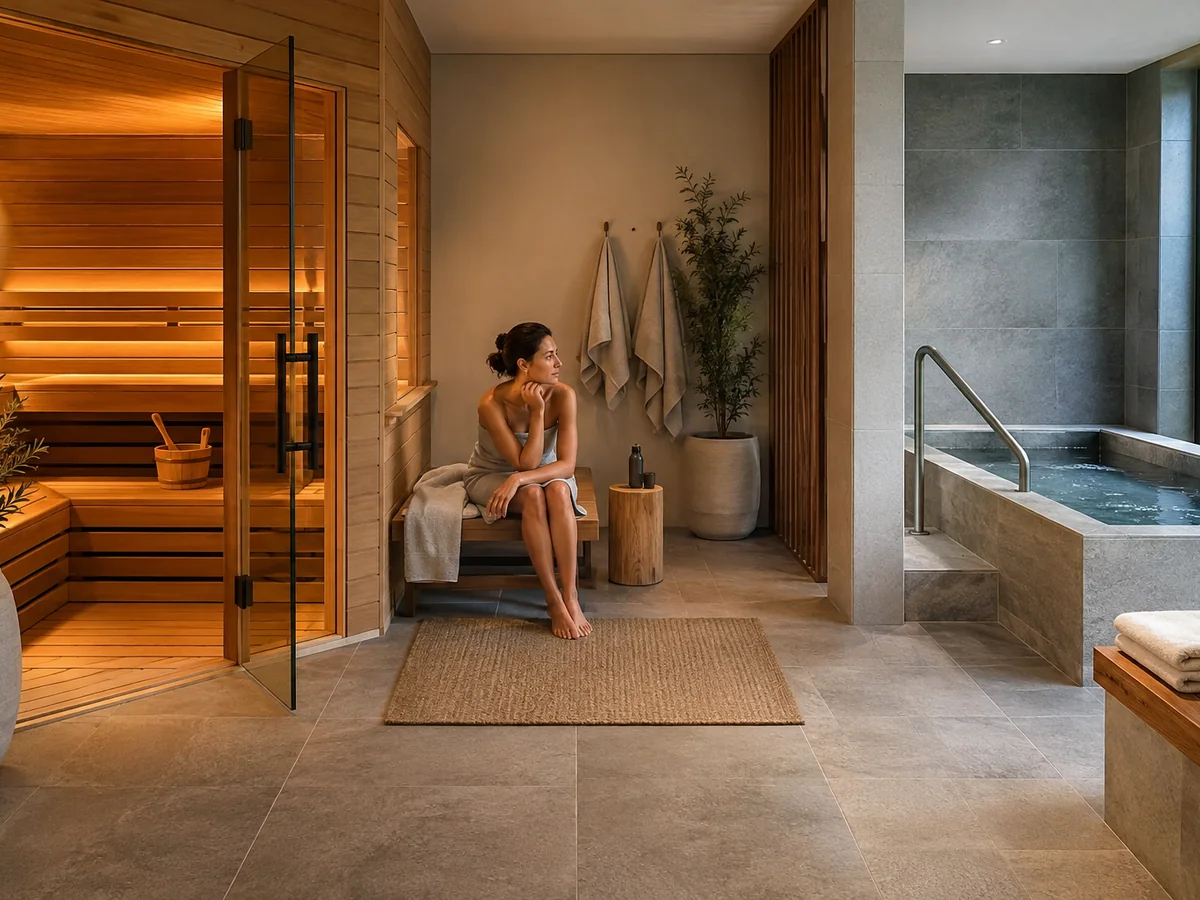
La sequenza pianificata non deve mai prevalere sulla tua effettiva risposta al caldo o al freddo.
L'immersione in acqua fredda può innescare una risposta acuta da shock da freddo che comporta rapidi cambiamenti nella respirazione e nell'attività cardiovascolare. Una revisione sistematica e meta-analisi 2024 sull'assuefazione allo shock da freddo ha rilevato che l'immersione ripetuta può ridurre in media diverse componenti di tale risposta. L'assuefazione, tuttavia, non è prova di sicurezza individuale e non elimina la necessità di una via di uscita agevole e di regole di interruzione basate sui sintomi.
La sauna crea uno stress separato da calore e perdita di liquidi. Linee guida sulla sauna della Cleveland Clinic consiglia di uscire se si manifestano capogiri, debolezza, difficoltà respiratorie o disagio significativo e raccomanda una consulenza medica nelle circostanze pertinenti. Le sue linee guida sull'immersione in acqua fredda consigliano parimenti di uscire in caso di stordimento o disagio preoccupante e sottolineano lo stress cardiovascolare e respiratorio dovuto all'esposizione al freddo.
SE NON SONO PRESENTI SEGNALI DI ALLARME
L'assenza di un sintomo preoccupante non stabilisce di per sé l'idoneità medica. Rimani attento a come stai rispondendo e non usare questa sezione come un via libera medico.
PAUSA O INTERROMPI
Non forzare la successiva esposizione programmata se si manifestano capogiri, svenimento, debolezza insolita, grave difficoltà respiratoria, respirazione incontrollata all'ingresso in acqua fredda, confusione, scarsa coordinazione, fastidio al petto o marcato disagio.
NESSUN PROTOCOLLO GENERICO
Se l'idoneità medica è incerta a causa di una condizione di salute rilevante, gravidanza, farmaci, precedenti svenimenti o precedenti indicazioni di limitare il caldo o il freddo, una guida sanitaria personalizzata è più appropriata di una sequenza online.
La familiarità non elimina il rischio
L'esposizione ripetuta al freddo può ridurre alcune componenti della risposta media allo shock da freddo, ma l'assuefazione non è immunità. Anche l'uso familiare della sauna non rende impossibili disidratazione, surriscaldamento, svenimento o una risposta insolita.
Familiarità ≠ assenza di stress da caldo o freddo.
L'alcol non dovrebbe essere usato per rendere la routine più facile
Le linee guida di sicurezza per la sauna raccomandano di evitare l'uso della sauna dopo aver bevuto alcolici, e la sudorazione aumenta la perdita di liquidi. Una cold plunge successiva non inverte giudizio compromesso, disidratazione o un'altra ragione per cui la sessione di calore era inappropriata.
Il tuo obiettivo o il contesto di allenamento cambiano davvero l'ordine?

A volte l'obiettivo cambia la decisione. Ma spesso cambia quale pagina di evidenza ti serve, piuttosto che creare una nuova sequenza sauna/vasca fredda.
L'allenamento di forza è un buon esempio
Un 2024 revisione sistematica e meta-analisi ha rilevato che l'immersione in acqua fredda usata immediatamente dopo sessioni di allenamento con resistenza può attenuare modestamente i guadagni ipertrofici, pur valutando gli studi sottostanti come generalmente di qualità da discreta a scarsa. Gli autori osservano anche che le prove analizzate si applicano alla CWI eseguita entro circa 15 minuti dalla cessazione dell'esercizio; non stabiliscono l'effetto di un'immersione occasionale diverse ore dopo.
Quel riscontro riguarda tempistica dell’esposizione al freddo rispetto all’allenamento di forza. Non prova che il freddo per primo sia migliore dopo il sollevamento pesi, e collocare una sauna prima del bagno freddo non elimina la questione della tempistica.
Tempistica dell’allenamento ≠ sequenza generale sauna/vasca fredda.
I lettori che prendono una decisione specifica per l'allenamento dovrebbero usare HACHILL’s Cold Plunge prima o dopo l'allenamento guida invece di trattare la sauna per prima come una soluzione tampone.
Le dichiarazioni di recupero necessitano anche di un esito, non solo di un meccanismo
Una persona può sentire meno indolenzimento o preferire la sensazione dopo l'esposizione al freddo. Ciò non stabilisce automaticamente un migliore adattamento a lungo termine. Allo stesso modo, il fatto che caldo e freddo creino diverse risposte fisiologiche acute non basta per affermare che uno stato finale produca un recupero universalmente superiore.
Sentirsi meglio ≠ adattamento migliore dimostrato.
Rilassamento, sonno e stato di allerta non sono regole universali di sequenza
Alcune persone preferiscono terminare al caldo perché lo trovano rilassante. Altre preferiscono la sensazione di terminare al freddo. Sono preferenze valide quando vengono descritte come preferenze.
Le prove esaminate per questo articolo non giustificano trasformarle in affermazioni universali come terminare al caldo per un sonno scientificamente ottimale, terminare al freddo per una vigilanza superiore, freddo prima è meglio al mattino, o sauna per ultima è sempre meglio la sera.
La preferenza può sciogliere il pareggio—ma preferenza ≠ superiorità medica.
Scegliere una sequenza: schema allineato alla ricerca, preferenza personale o nessun protocollo generico
Una volta separati ordine, dose e sicurezza, la decisione diventa molto più chiara.
| La vostra situazione | Percorso basato sulle evidenze | Cosa non significa il percorso |
|---|---|---|
| Si desidera l'ordine combinato più direttamente rappresentato nella ricerca attuale su sauna+CWI | SEQUENZA ALLINEATA ALLA RICERCA — Sauna → freddo | Non dimostrato universalmente migliore e non una prescrizione personale |
| Entrambi gli ordini sono per il resto appropriati e nessuna evidenza specifica per l'obiettivo stabilisce superiorità | PREFERENZA / CONTESTO | La preferenza non è un'indicazione sulla salute |
| L'idoneità medica è incerta o compaiono sintomi preoccupanti | NESSUN PROTOCOLLO GENERICO | Non forzare una routine presa da internet |
| La tua domanda riguarda principalmente l’adattamento all’allenamento o il recupero post-esercizio | RESPONSABILE TEMPISTICHE ALLENAMENTO | L'ordine della sauna non risolve la questione della tempistica di allenamento |
| La tua domanda riguarda minuti, temperatura dell'acqua o numero di round | RESPONSABILE DOSAGGIO / SICUREZZA | La sequenza non stabilisce la dose di esposizione |
SEQUENZA ALLINEATA ALLA RICERCA
Se il tuo obiettivo è replicare l'ordine combinato rappresentato dagli studi esaminati qui, sauna seguita da immersione in acqua fredda è la corrispondenza di ricerca più vicina. Ciò non stabilisce superiorità o idoneità personale.
PREFERENZA / CONTESTO
Quando entrambe le modalità sono altrimenti appropriate e l'evidenza diretta sui risultati non stabilisce un vincitore per il tuo obiettivo, la preferenza per la finitura e il contesto pratico possono rompere il pareggio.
NESSUN PROTOCOLLO GENERICO
Utilizzare una consulenza individualizzata invece di una sequenza trovata su internet quando l'idoneità medica non è risolta, compaiono sintomi preoccupanti, è presente una compromissione o la routine richiederebbe ipotesi di esposizione non supportate.
La sequenza non è sempre la prima domanda che deve essere risolta.
Una volta chiarite le prove e la questione di sicurezza: esplorare le famiglie di apparecchiature che si adattano all’allestimento previsto. Per una sede commerciale definita, proseguire nel percorso di pianificazione della struttura anziché trasformare un articolo su una sequenza pubblica in un protocollo operativo.
Per le strutture: pianificare il flusso utente caldo–freddo senza prescrivere un unico protocollo universale
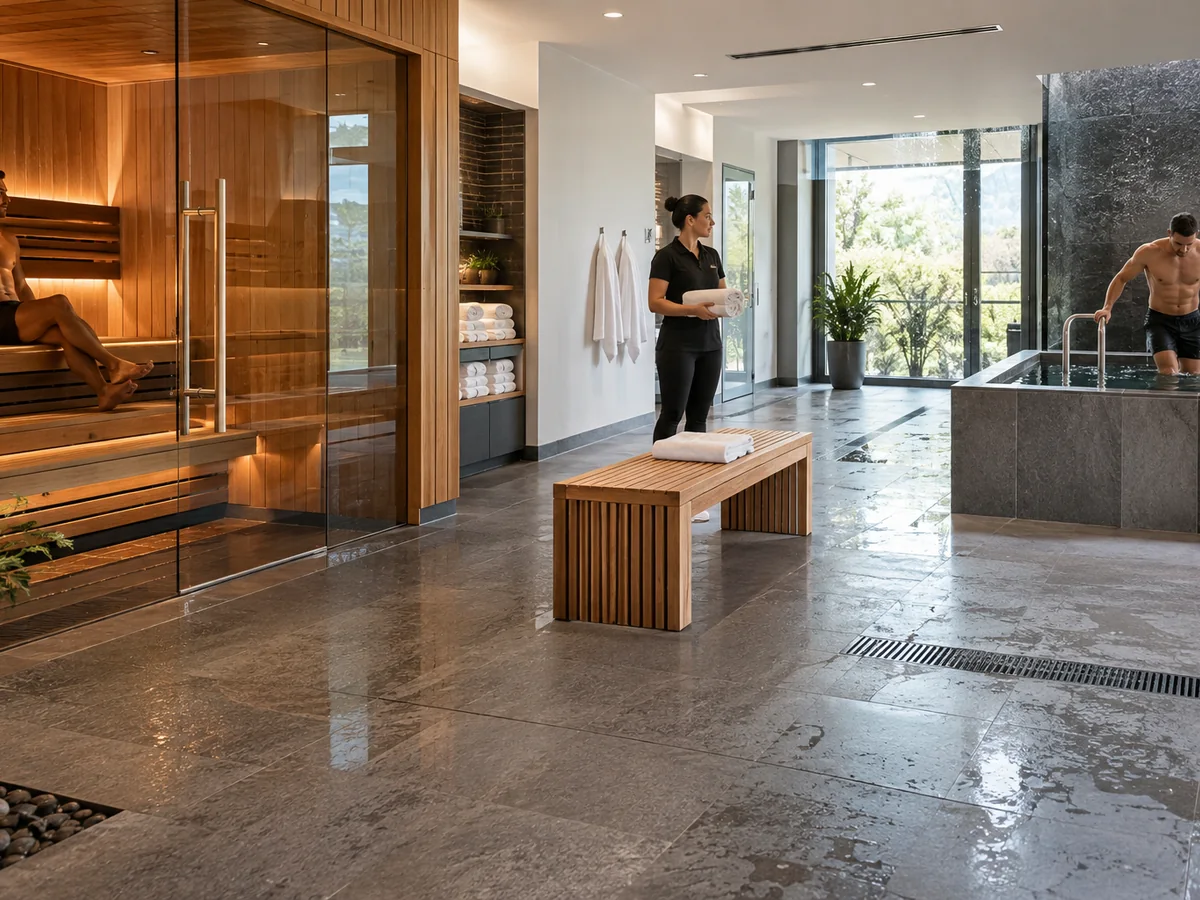
Una struttura commerciale con sauna e vasca fredda ha un problema diverso da risolvere: le persone devono potersi muovere nello spazio in sicurezza, indipendentemente dal fatto che il percorso operativo revisionato della struttura sia caldo → freddo, freddo → caldo o includa una fase di recupero separata.
Un layout della struttura dovrebbe supportare il percorso operativo; non dovrebbe essere trattato come prova medica che ogni ospite necessiti dello stesso ordine di esposizione.
- Gli utenti bagnati possono spostarsi tra zone termiche senza un percorso pedonale inutilmente pericoloso?
- Esiste una strategia di drenaggio credibile lungo le aree di circolazione bagnate?
- Esiste un luogo dove fermarsi o recuperare invece di forzare una transizione immediata?
- La visibilità e la circolazione del personale sono adatte al modello operativo?
- Privacy e movimento degli utenti possono coesistere?
- La pulizia e la manutenzione possono avvenire senza interferire con il flusso degli ospiti?
Per contesti lavorativi statunitensi, Norme OSHA sulle superfici di calpestio e di lavoro richiedono che i pavimenti dei locali di lavoro siano mantenuti asciutti per quanto fattibile e richiedono drenaggio dove vengono utilizzati processi bagnati. Questo è un supporto utile per una gestione deliberata delle aree bagnate, ma il suo ambito è la sicurezza sul lavoro—non un codice universale di progettazione spa. Requisiti edilizi, di accessibilità, di salute pubblica, elettrici e altri requisiti strutturali rimangono specifici per giurisdizione e progetto.
di HACHILL Pianificazione delle attrezzature per studio di contrastoterapia la pagina possiede il compito più profondo della struttura, inclusi circolazione, interfacce umido/secco, percorsi del personale e pianificazione operativa.
Una struttura può quindi progettare un percorso chiaro senza trasformare l'architettura in un protocollo sanitario universale.
Domande frequenti
Bisogna fare sauna prima o dopo un cold plunge?
Se si desidera replicare l’ordine utilizzato negli studi combinati esaminati qui, sauna seguita da immersione in acqua fredda è la corrispondenza di ricerca più vicina. Tali studi non hanno confrontato direttamente sauna-prima con freddo-prima come routine concorrenti, quindi non provano una sequenza universalmente superiore.
Dovresti concludere con la sauna o con la vasca fredda?
Le prove esaminate qui non stabiliscono un unico stato finale universale. Lo studio di Søberg sul nuoto invernale non prova che tutti debbano terminare al freddo, e la preferenza personale di termine non dovrebbe essere convertita in un’affermazione non supportata su metabolismo, recupero o sonno.
Devi passare direttamente dalla sauna all'acqua fredda?
Nessuna scadenza universale di transizione immediata è stabilita dalle prove esaminate qui. I protocolli di ricerca utilizzano strutture di raffreddamento e tempistiche di transizione diverse, quindi la tempistica di uno studio non dovrebbe essere trattata come regola per ogni utente.
La scelta dell'ordine indica quanti round eseguire?
No. Ordine di inizio, ordine di fine, tempo di transizione, numero di cicli, temperatura e durata sono decisioni separate. Il disegno del ciclo di uno studio fa parte di quello studio, non è automaticamente una prescrizione per uso personale.
Chi dovrebbe evitare di seguire una sequenza generica sauna e cold plunge?
Chiunque abbia incertezza sulla propria idoneità medica non dovrebbe affidarsi solo a una sequenza online generica. Problemi cardiovascolari rilevanti, gravidanza, farmaci o condizioni che possono influire sulla tolleranza al calore o al freddo, svenimenti precedenti, sintomi inspiegati o sintomi preoccupanti durante una sessione sono motivi per ricorrere a una consulenza sanitaria personalizzata anziché forzare la successiva esposizione programmata.