Guia de planejamento de ofurô aquecido a lenha
Uma banheira de hidromassagem a lenha normalmente precisa de algumas horas para aquecer a partir de um enchimento frio. Para planejamento preliminar, cerca de 2–4 horas é uma faixa de mercado útil, mas não é uma especificação universal ou garantia de modelo HACHILL. O tempo real depende do volume de água utilizável, temperatura inicial e alvo, projeto do fogão e da circulação, combustível seco, isolamento, uso de capa, vento e condições ambientais. Use as condições exatas de teste da banheira e do fogão—não um tempo genérico de manchete—ao comparar modelos ou planejar um cronograma operacional comercial.
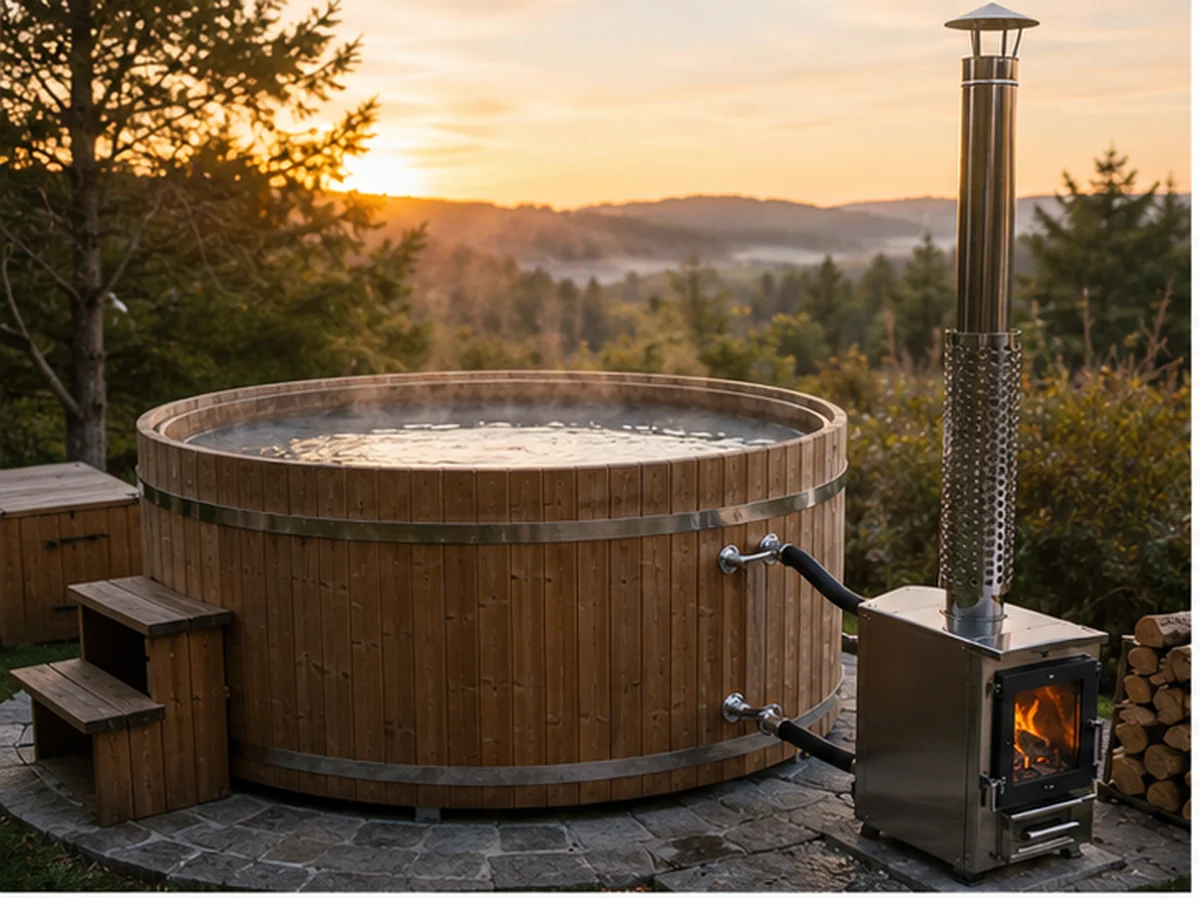
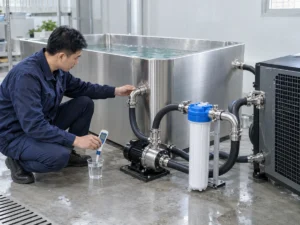
Visualização conceitual; não é um modelo HACHILL verificado nem um teste de desempenho.
Resposta rápida
Para planejamento preliminar, uma banheira de hidromassagem a lenha é frequentemente tratada como um tarefa de aquecimento de 2–4 horas, mas sistemas reais podem ficar fora dessa faixa. O número só é útil quando o volume de água, a temperatura inicial, a temperatura alvo, a configuração do fogão, a rota de circulação, a condição do combustível e o clima são conhecidos. Uma banheira menor com água de enchimento amena e baixa perda de calor pode aquecer mais cedo; uma instalação de inverno de alto volume com água fria, combustível úmido, exposição ao vento ou circulação fraca pode levar muito mais tempo.
- Volume de água utilizável e aumento de temperatura necessário
- Fogão exato, transferência de calor e rota de circulação
- Combustível seco aprovado e combustão estável
- Cobertura, isolamento e tubulação exposta
- Temperatura ambiente, vento e método de operação
Confirme qualquer valor de tempo de aquecimento em relação ao modelo selecionado, à configuração aprovada e às condições de teste documentadas. Os compradores também devem comparar as opções disponíveis linha de banheiras aquecidas a lenha disponíveis antes de solicitar uma estimativa em nível de modelo.
Para controle de documentos, evidências de configuração e requisitos de gate de liberação, use o Guia do Comprador sobre Documentação de Segurança de Banheira Aquecida a Lenha. Esta página permanece responsável pela estimativa de tempo de aquecimento e variáveis de aquecimento.
Quando uma estimativa de tempo de aquecimento é útil—e quando não é
Útil para planejamento
- Compare o volume de água e a elevação de temperatura.
- Permita uma janela realista de preparação.
- Ajuste para o inverno ou locais expostos.
- Compare as condições de teste do fornecedor.
Não é suficiente para aprovação
- Correspondência entre fogão e banheira
- Chaminé, afastamento ou conformidade contra incêndio
- Projeto final de circulação e instalação
- Adequação comercial de higiene ou de pessoal
Critério de decisão: use uma estimativa para triar opções e preparar perguntas. Emita um pedido de compra somente depois que a banheira exata, o fogão, a circulação, as condições do local e o escopo de evidências forem confirmados.
Quanto Tempo Leva para Aquecer um Ofurô a Lenha?
Uma resposta prática de planejamento é cerca de 2–4 horas para muitos sistemas a lenha, mas essa é uma faixa de triagem, não uma especificação transferível. Exemplos publicados de modelos variam porque tamanho da banheira, volume de água, projeto do fogão e condições de teste são diferentes. Uma banheira compacta com água de enchimento em temperatura moderada, combustível seco, baixa exposição ao vento e uma rota eficaz de transferência de calor pode aquecer mais cedo; uma banheira maior cheia com água muito fria no inverno pode levar substancialmente mais tempo. Trate toda alegação em nível de modelo como dependente das condições e verifique o volume de água, a elevação de temperatura, a configuração e o método de teste por trás dela.
Uma Faixa Típica É Apenas um Ponto de Partida
Uma declaração de tempo de aquecimento só se torna útil quando as condições por trás dela são conhecidas:
- Volume de água utilizável
- Temperatura inicial da água misturada
- Temperatura-alvo da água misturada
- Temperatura ambiente e vento
- Configuração exata do fogão e da banheira
- Tipo de combustível e condição de umidade
- Condição da tampa e do isolamento
- Método de circulação e medição
Aquecimento com água fria e reaquecimento são tarefas diferentes
Aquecer água recém-enchida de 8°C a 38°C exige uma elevação de temperatura de 30°C. Reaquecer água retida de 25°C a 38°C exige apenas 13°C. Mesmo com a mesma banheira e o mesmo fogão, a tarefa térmica é, portanto, diferente. Adicionar água fria após limpeza, evaporação ou uso por banhistas também pode prolongar o período de recuperação.
Defina quando o teste de aquecimento começa e termina
- Meça a temperatura inicial da água misturada.
- Registre o volume útil preenchido.
- Acenda o fogão seguindo o procedimento aprovado.
- Opere o sistema sob condições documentadas.
- Misture ou circule a água conforme as instruções.
- Meça a temperatura final da água misturada.
Uma camada quente próxima à superfície ou uma temperatura alta perto da saída do fogão não prova que a banheira completa atingiu a temperatura-alvo.
Por que não existe um tempo universal de aquecimento para ofurô a lenha
O tempo de aquecimento é regido por duas quantidades separadas: a energia exigida pela água e a média líquido calor realmente transferido para essa água. Dados de capacidade térmica da água líquida do NIST sustenta uma aproximação de planejamento de cerca de 4.18 kJ/kg·K próximo das temperaturas normais de banheira de hidromassagem.
Fórmula de planejamento: energia de aquecimento de água em kWh ≈ volume de água em litros × aumento de temperatura em °C × 0.00116. Isso usa cerca de 1 kg de água por litro como premissa prática de estimativa.
O cálculo estima apenas a energia absorvida pela água. Ele não inclui automaticamente perdas pela chaminé, radiação do fogão e da tubulação, calor escapando pela banheira e pela superfície da água, combustão variável, combustível úmido, circulação instável ou exposição externa.
Cálculo ilustrativo: Uma banheira hipotética de 1,200 litros aquecida de 10°C a 38°C tem elevação de temperatura de 28°C e precisa de cerca de 39 kWh de energia teórica da água. Se a transferência líquida média medida de calor para a água fosse de 15 kW, o resultado idealizado seria de cerca de 2.6 horas; a 10 kW líquidos, cerca de 3.9 horas. Esses valores de potência líquida são exemplos de cálculo, não classificações típicas de aquecedor a lenha ou dados de modelo HACHILL. O tempo real de aquecimento pode ser maior porque perdas e combustão variam ao longo do ciclo de queima.
O volume útil de água importa mais do que o número de assentos
Duas banheiras destinadas ao mesmo número de usuários podem ter dimensões internas, deslocamento de banco, linhas de enchimento, deslocamento do fogão e volume real de água abastecida diferentes. Estime a partir do volume de água utilizável aprovado, não apenas das dimensões externas ou da capacidade nominal de pessoas.
A potência nominal do fogão não corresponde ao aquecimento real da água
A transferência útil depende do sistema completo: geometria da fornalha e do trocador, superfície de contato com a água, condição de combustão, tiragem da chaminé, circulação, arranjo de tubos, temperatura da água, perda de calor e manutenção. Pergunte se um tempo de aquecimento publicado vem de um teste completo de banheira e fogão ou apenas de um valor nominal do fogão.
As variáveis que alteram o tempo de aquecimento do ofurô a lenha
Em telas menores, deslize horizontalmente para ver a tabela completa.
| Variável | O que confirmar | Por que isso altera o tempo de aquecimento |
|---|---|---|
| Volume de água utilizável | Litros ou galões reais na linha de enchimento operacional | Mais água exige mais energia |
| Temperatura inicial | Temperatura da água misturada antes de acender | Água mais fria exige um aumento maior de temperatura |
| Temperatura alvo | Temperatura final pretendida da água misturada | Um alvo mais alto aumenta a demanda de energia |
| Configuração do fogão | Combinação exata aprovada de fogão, trocador de calor e banheira | Define a rota de transferência de calor |
| Circulação | Circulação natural, bomba aprovada ou mistura manual | Afeta a transferência de calor e a uniformidade da temperatura |
| Condição do combustível | Tipo de combustível aprovado, umidade e tamanho das peças | Afeta a estabilidade da combustão e o calor útil |
| Tiragem da chaminé | Disposição de chaminé aprovada e fluxo de ar desobstruído | Afeta o desempenho da combustão |
| Cobertura e isolamento | Configuração exata e uso permitido durante o aquecimento | Altera a perda de calor da superfície e do envelope |
| Clima | Temperatura ambiente, vento e precipitação | Altera a perda de calor externa |
| Manutenção | Superfícies de transferência de calor limpas e fluxo sem restrições | Incrustações e restrições podem reduzir o desempenho |
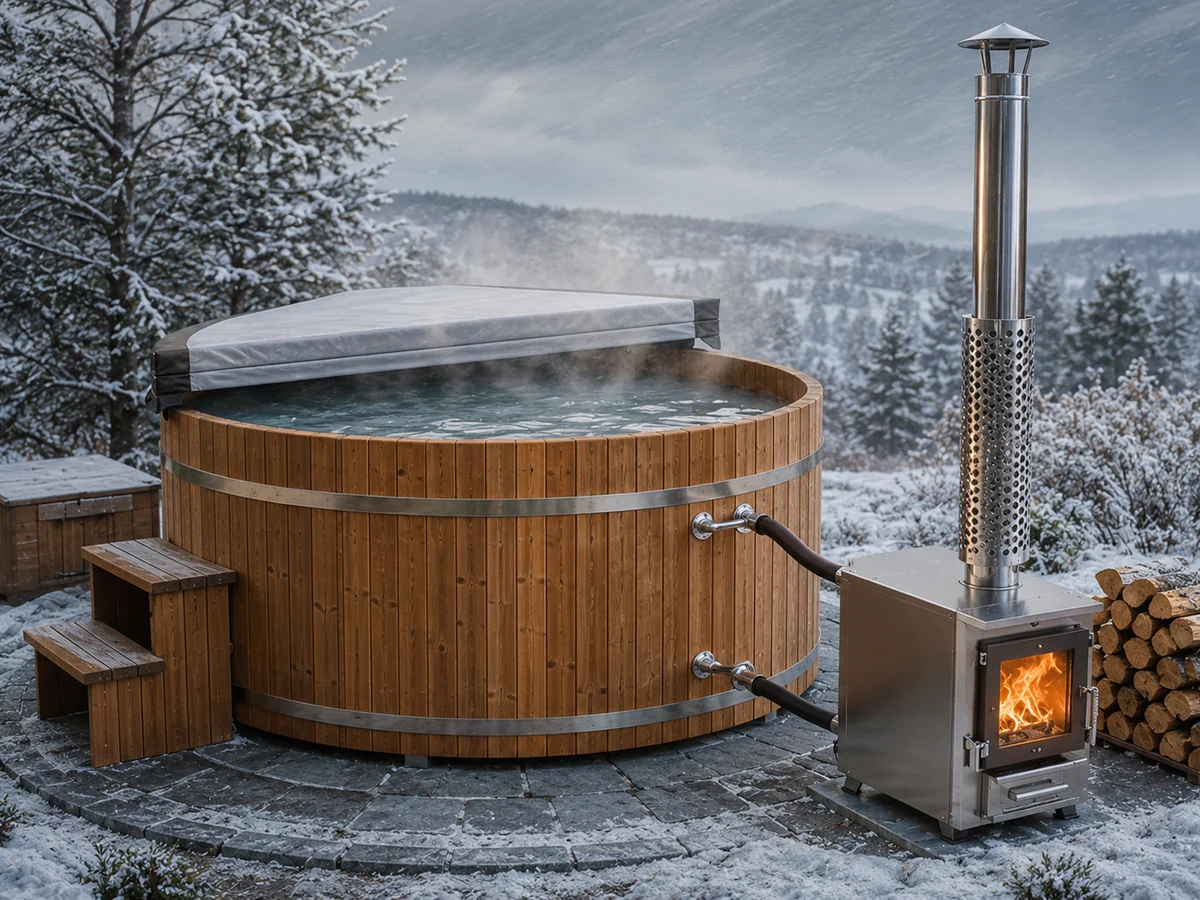
Cena conceitual de operação no inverno; não é um teste de modelo HACHILL verificado nem um resultado universal de tempo de aquecimento. A posição da cobertura é apenas ilustrativa e deve seguir as instruções do produto selecionado e as distâncias seguras do fogão e da chaminé.
Volume de Água e Elevação de Temperatura
O volume de água e o aumento de temperatura exigido criam a carga básica de aquecimento. Registre a temperatura real da água de origem no inverno em vez de aplicar dados de verão sem alteração.
Rota do fogão e transferência de calor
Arranjos internos, externos e outros aprovados de troca térmica têm diferentes caminhos de fluxo, deslocamento de água, exposição de tubulação e requisitos de manutenção. Nenhuma rota é automaticamente mais rápida em todas as configurações.
Circulação e Estratificação de Temperatura
Sistemas de circulação natural dependem de diferenças de temperatura, posição da tubulação, inclinação e fluxo sem restrições. Sistemas bombeados aprovados dependem da seleção da bomba e da resistência da tubulação. Não adicione uma bomba a um sistema de circulação natural, a menos que o fabricante tenha aprovado a modificação.
Qualidade do combustível e controle da combustão
Combustível úmido consome parte da energia do fogo evaporando a umidade em vez de aquecer a água. Use apenas combustível permitido pelas instruções do aquecedor e pelas regras locais. Não queime madeira pintada ou tratada, painéis colados, lixo doméstico ou combustíveis excluídos pelo fabricante.
Cobertura, Isolamento e Perda de Calor
Uma capa isolante compatível pode reduzir a perda de calor superficial, mas não deve criar risco de folga insuficiente ou de incêndio around the stove or chimney. A construção exata e o uso permitido durante o aquecimento devem ser verificados.
Condições climáticas, de vento e sazonais
Ar frio e vento aumentam a perda de calor. O planejamento do local deve considerar temperatura de inverno, exposição ao vento, precipitação, armazenamento de combustível, armazenamento de cobertura, proteção contra congelamento, procedimentos de drenagem e acesso seguro ao redor do equipamento de combustão.
Como estimar o tempo de aquecimento antes de acender o fogão
1. Confirme o volume útil de água
Use o volume de enchimento aprovado do modelo selecionado. Não substitua pelo volume externo da banheira sem considerar bancos, deslocamento do fogão, geometria das paredes e linha de enchimento operacional.
2. Meça a elevação de temperatura
Registre a temperatura inicial da água misturada, a temperatura alvo pretendida e a diferença entre elas.
Como a carga de aquecimento depende do ponto final, revise como selecione e verifique a temperatura-alvo da água mista. Para contexto geral de saúde pública, o CDC recomenda que a água de ofurô não exceda 40°C (104°F); o alvo real do projeto pode precisar ser menor.
3. Identifique a Configuração Aprovada
Confirme a rota do aquecedor, o método de circulação, o arranjo de tubos, a chaminé, o combustível, a cobertura e o método de medição de temperatura.
4. Aplique as Condições Reais do Local
Inclua temperatura ambiente, vento, umidade do combustível, enchimento frio versus reaquecimento, uso de capa e qualquer requisito de limpeza ou reenchimento.
5. Adicione uma Margem Operacional
Uma operação programada deve reservar tempo para enchimento, ignição, circulação estável, mistura, verificação de temperatura verificação, checagens de limpeza, checagens de tratamento da água quando aplicável e redução segura da intensidade de combustão intensidade.
Use o nível de evidência adequado: um cálculo teórico verifica a plausibilidade geral; um teste de modelo controlado estabelece uma linha de base para uma configuração aprovada; registros repetidos no local são a melhor base para programação diária. Mantenha a linha de enchimento, o método de mistura e os locais de medição consistentes.
Fogões internos e externos afetam o sistema de aquecimento de forma diferente
Em telas menores, deslize horizontalmente para ver a tabela completa.
| Consideração | Fogão interno | Fogão externo |
|---|---|---|
| Caminho do calor | Integrado à água da banheira | Calor transferido por conexões externas |
| Deslocamento de água | Pode reduzir o volume útil de água | Geralmente fora da área de banho |
| Proteção do banhista | Requer proteção contra superfícies quentes | A fornalha pode ser separada dos banhistas |
| Dependência de circulação | Depende do projeto interno exato | Fortemente afetado pelo layout dos canos e pela elevação |
| Perda de calor externa | Pode usar menos conexões externas de água | A tubulação e o revestimento do fogão podem adicionar perdas |
| Conclusão sobre o tempo de aquecimento | Deve ser baseada no modelo completo | Deve ser baseada no circuito completo instalado |
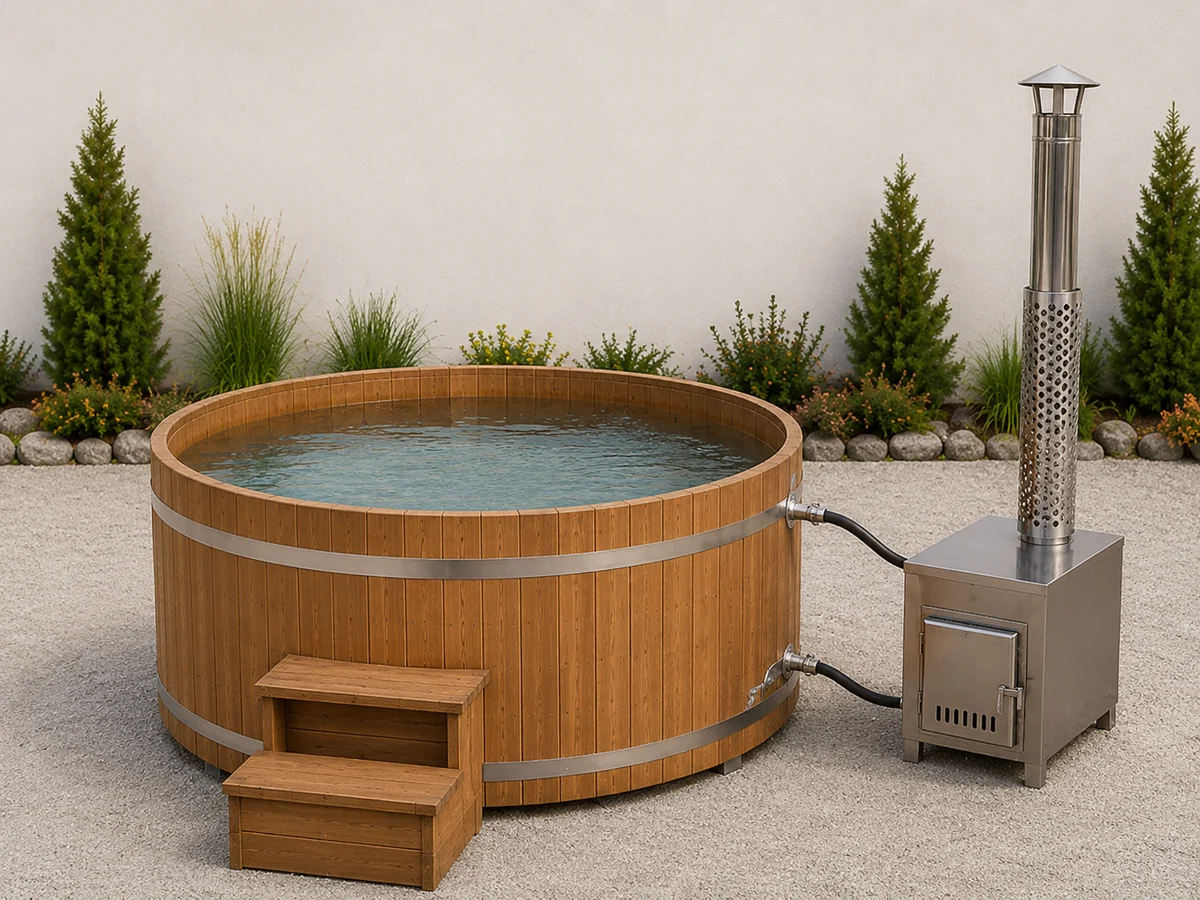
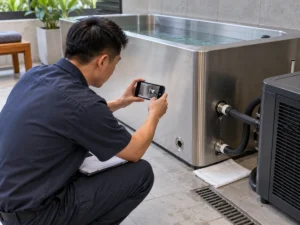
Configuração conceitual com aquecedor externo; geometria das conexões, chaminé e afastamentos devem seguir os documentos do produto selecionado e os requisitos locais.
A rota correta não é determinada apenas pelo tempo de aquecimento. O acesso do usuário, o volume de água utilizável, a limpeza, o espaço disponível, a separação da combustão, a fundação, o layout de tubulação, a manutenção e os requisitos locais de combate a incêndio também afetam a escolha.
Para a decisão de compra comercial mais ampla em formato redondo, incluindo assentos, adequação ao local, cuidado com a água e escopo da cotação, use o Guia de compra de ofurô redondo a lenha.
Para a relação completa entre combustão, termossifão ou circulação bombeada aprovada, tiragem da chaminé e temperatura da água misturada, consulte como ofurôs aquecidos a lenha transferem calor.
Entradas do Local e da Instalação que Afetam o Aquecimento
O desempenho de aquecimento não pode ser separado da instalação. Confirme estas entradas antes de aplicar um resultado de teste a um projeto real:
- Fundação e nivelamento: suportar a carga preenchida e preservar a geometria aprovada do aquecedor e das tubulações.
- Percurso das tubulações: verificar altura da conexão, inclinação, diâmetro e comprimento para o sistema selecionado.
- Chaminé e tiragem: use componentes aprovados e atenda aos requisitos locais de incêndio e fumaça.
- Drenagem e reabastecimento: inclua o efeito da limpeza, reabastecimento parcial e temperatura da água de origem.
- Condições de congelamento: defina procedimentos de drenagem, armazenamento e desligamento sazonal.
Requisitos finais de fundação, chaminé, combustão, drenagem e uso público devem ser revisados pelo instalador local e pela autoridade competente.
Cenários sazonais e operacionais
Cenário residencial ilustrativo
Enchimento a frio em clima ameno
Um usuário residencial enche uma banheira durante clima ameno com combustível seco e exposição limitada ao vento. O aquecimento pode ser mais rápido do que em condições mais frias ou mais expostas, mas o proprietário ainda deve registrar o volume de água, a temperatura inicial e a temperatura final misturada antes de tratar o resultado como repetível.
Cenário sazonal ilustrativo
Enchimento de inverno com água fria
A mesma banheira começa com água mais fria e maior perda de calor. A resposta correta é estender a janela operacional, proteger o combustível da umidade e revisar os procedimentos de gestão de congelamento—não sobrecarregar o fogão.
Cenário técnico composto
Problema de circulação com fogão externo
O fogão queima normalmente, mas a banheira aquece de forma irregular. Causas possíveis incluem ar no circuito, geometria de conexão inadequada, fluxo restrito ou mistura insuficiente. O operador deve seguir o procedimento de inspeção aprovado em vez de alterar a tubulação ou adicionar uma bomba sem revisão do fabricante.
Cenário comercial composto
Planejamento do horário de abertura do resort
A equipe considera apenas o tempo estimado de queima e omite enchimento, ignição, mistura, verificação de temperatura e verificações de cuidado com a água. O cronograma corrigido parte do acesso dos hóspedes e designa um operador treinado para cada etapa de preparação.
Esses cenários são compostos ilustrativos e não representam projetos nomeados de clientes HACHILL.
Maneiras seguras de reduzir o tempo de aquecimento
O objetivo é reduzir a perda de calor evitável e a combustão instável — não levar o equipamento além dos limites aprovados.
Prepare o circuito de água antes de acender
- Encha até o nível operacional exigido.
- Confirme que as superfícies de aquecimento e o circuito de água estão submersos conforme necessário.
- Abra o caminho de circulação aprovado.
- Verifique se há bloqueio visível ou vazamento.
- Confirme que a chaminé e as folgas necessárias estão prontas.
- Siga as instruções de partida do modelo selecionado.
Use combustível seco aprovado
Use combustível seco e armazenado corretamente, de um tipo e tamanho permitidos pelas instruções do fogão. A orientação arquivada Burn Wise da US EPA’s apoia madeira seca e curtida e alerta contra a queima de produtos de madeira revestidos, pintados, tratados sob pressão ou colados e resíduos domésticos. O programa da EPA parou de atualizar este material em 2025, portanto as instruções do fogão selecionado e as regras locais atuais permanecem prevalecentes.
Controle a perda de calor sem criar risco de incêndio
Quando aprovado, use a cobertura isolada correta, proteja a tubulação de água exposta, mantenha o isolamento e reduza a exposição ao vento por meio de planejamento seguro do local. Não coloque isolamento improvisado ou barreiras de vento perto de superfícies quentes ou componentes de chaminé.
Misture e meça antes de adicionar mais combustível
O fogão e as brasas podem continuar transferindo calor depois que a água se aproxima do alvo operacional. Reduza a intensidade da queima conforme as instruções, permita a circulação, misture onde necessário e meça em um local representativo antes de adicionar mais combustível.
Quando o aquecimento lento pode indicar um problema
Uma sessão mais lenta nem sempre é causada por tempo frio. Compare a sessão atual com a linha de base aprovada e os registros operacionais anteriores.
Em telas menores, deslize horizontalmente para ver a tabela completa.
| Condição observada | Possível explicação | Resposta segura |
|---|---|---|
| Combustão fraca ou com fumaça | Combustível úmido, ar restrito, acúmulo de cinzas ou tiragem deficiente | Use apenas verificações de rotina aprovadas; pare se a fumaça invadir a área de operação. |
| Retorno quente, mas temperatura irregular do tanque | Estratificação, bloqueio de ar ou circulação restrita | Siga o procedimento aprovado de mistura e circulação; não modifique a tubulação. |
| O tempo de aquecimento aumenta em sessões repetidas | Mudança de combustível, incrustação, dano na cobertura ou desvio de medição | Compare os registros e execute apenas as tarefas de manutenção aprovadas. |
| Sobreaquecimento, ebulição, vapor ou movimento violento da água | Adição tardia de combustível, fluxo bloqueado ou circulação instável | Impeça o acesso e siga o procedimento de desligamento do fabricante. |
Quando o resultado for substancialmente mais lento do que a linha de base verificada, siga a solução de problemas de aquecimento de ofurô aquecido a lenha sequência antes de adicionar mais combustível ou alterar a rota de circulação.
Pare a operação e obtenha assistência qualificada para circulação bloqueada, ebulição descontrolada, vapor, vazamento, escapamento de fumaça, componentes de chaminé danificados ou movimento estrutural.
Que evidência de tempo de aquecimento um comprador deve solicitar?
Em telas menores, deslize horizontalmente para ver a tabela completa.
| Item de evidência | Por que isso importa | Decisão suportada |
|---|---|---|
| Configuração exata da banheira e do fogão | Evita que o resultado de um modelo’ seja aplicado a outro | Comparação de produtos e cotação |
| Volume de água útil e elevação de temperatura | Define a carga térmica real | Plausibilidade técnica |
| Condições ambientais, cobertura e isolamento | Mostra o limite de perda de calor do teste’s | Comparação no local |
| Tipo de combustível, umidade e método de circulação | Explica as condições de combustão e transferência de calor | Revisão da repetibilidade |
| Método de medição e repetições do teste | Evita que um ponto quente local ou um resultado isolado se torne o valor principal | Evidência de desempenho |
| Desenhos aprovados, escopo de componentes e responsabilidades | Conecta a alegação de desempenho à configuração adquirida | Liberação do pedido de compra e entrega |
Evidência de aquecimento em nível de modelo deve ser revisada junto com a configuração aprovada, desenhos, componentes e revisão de fabricação e controle de qualidade.
Uma declaração útil: sob condições documentadas, a configuração exata de banheira e fogão aqueceu o volume de água utilizável informado da temperatura inicial registrada até a temperatura registrada da água misturada no período medido.
Uma contagem de assentos, imagem de estilo de vida, brochura genérica de categoria ou classificação nominal do fogão não é evidência suficiente por si só.
Planejamento do Tempo de Aquecimento para Resorts e Locais Comerciais
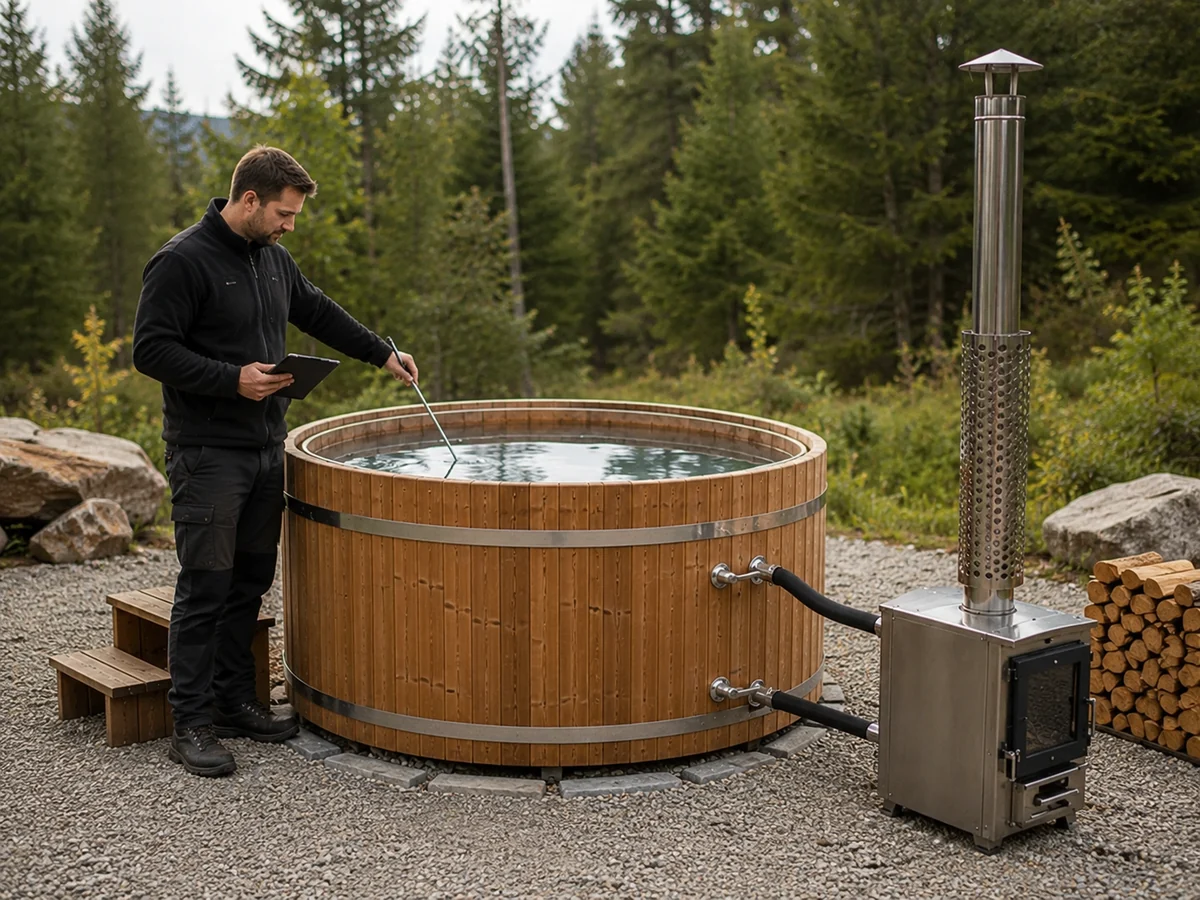
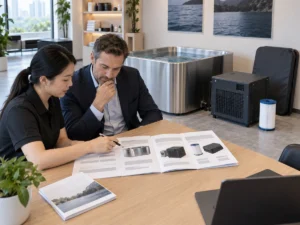
Cena operacional conceitual; não representa um site de cliente nomeado, instalação comercial aprovada ou procedimento operacional específico da HACHILL.
Compradores comerciais devem coordenar o tempo de aquecimento com o fluxo de hóspedes, a equipe, a limpeza, as utilidades e a passagem de turno por meio de planejamento de projetos de bem-estar para hotéis e resorts.
Trabalhe de Trás para Frente a Partir do Horário de Abertura
- Inspeção do local e do equipamento
- Enchimento de água
- Preparação do fogo e ignição
- Aquecimento
- Mistura e verificação da temperatura
- Verificações do tratamento da água
- Aprovação de acesso dos hóspedes
- Monitoramento durante o uso
- Limpeza e desligamento
Defina o Operador e o Procedimento de Monitoramento
Atribua responsabilidade por gestão de fogo, registro de temperatura, armazenamento de combustível, qualidade da água, limpeza, separação de hóspedes, desligamento de emergência, manuseio de cinzas e procedimentos de congelamento.
Confirme se a Operação a Lenha se Adequa ao Local
Em telas menores, deslize horizontalmente para ver a tabela completa.
| Responsabilidade | Fabricante / Fornecedor | Comprador / Local | Instalador / Profissional Local |
|---|---|---|---|
| Configuração de produto aprovada | Fornecer modelo confirmado e âmbito de componentes | Aprovar uso pretendido e resumo operacional | Confirmar compatibilidade com o local |
| Fundação e acesso | Fornecer dimensões e cargas conhecidas do produto, quando disponíveis | Fornecer dados do local e restrições de entrega | Projetar e verificar a fundação final e a rota de manuseio |
| Conformidade com chaminé e incêndio | Forneça instruções do produto e componentes aprovados | Identifique o local e os requisitos locais | Verifique a instalação, folgas e aprovações |
| Tratamento de água e higiene comercial | Indique o equipamento incluído e as limitações do produto | Defina a política de operação, limpeza e monitoramento | Revise os requisitos locais de saúde pública e drenagem |
| Registro do tempo de aquecimento | Forneça a referência de nível de modelo quando disponível | Mantenha registros do local e margens operacionais | Investigue desvios relacionados à instalação quando aplicável |
Defina o Limite de Responsabilidade Antes da Entrega
Em telas menores, deslize horizontalmente para ver a tabela completa.
| Tarefa Operacional | Principais Entradas | Por que isso importa |
|---|---|---|
| Enchimento inicial a frio | Volume total de água, temperatura da água de origem e horário de abertura | Geralmente cria a maior carga de aquecimento individual |
| Recuperação de temperatura | Carga de banhistas, exposição, reabastecimento parcial e estado do fogo | Determina se sessões repetidas são práticas |
| Limpeza e reabastecimento | Política de tratamento de água, volume de drenagem e temperatura de reabastecimento | Pode criar um ciclo adicional de aquecimento diário |
Separar aquecimento inicial, recuperação e uso diário
Uma rota a lenha exige revisão adicional quando o local não pode fornecer operação treinada, chaminé aprovada e plano de folgas, armazenamento seguro de combustível, implantação compatível com fumaça, cuidado confiável com a água, separação de hóspedes, tempo de preparação suficiente, proteção contra congelamento e aprovações locais exigidas. Essas restrições operacionais podem tornar outra rota de aquecimento mais prática para alguns locais.
Lista de verificação do tempo de aquecimento antes da compra ou do primeiro uso
- Modelo e configuração exatos da banheira
- Fogão exato e rota de transferência de calor
- Volume de água utilizável
- Temperatura inicial da água
- Temperatura alvo pretendida
- Aumento total de temperatura necessário
- Fogão interno ou externo
- Circulação natural ou bombeada aprovada
- Tipo de combustível aprovado
- Condição de umidade do combustível
- Configuração de cobertura e isolamento
- Temperatura ambiente e exposição ao vento
- Revisão da chaminé e dos afastamentos
- Fundação e drenagem
- Procedimento de gerenciamento de congelamento
- Método de monitorização da temperatura
- Responsabilidade do operador
- Condições de teste do fornecedor
- Requisitos locais de incêndio, fumo e instalação
Aplicação: Uso residencial, resort, spa ou outro uso comercial
Capacidade: Utilizadores esperados, volume de água utilizável e sessões diárias
Clima: Temperaturas de verão e inverno, vento e exposição
Rota de aquecimento: Preferência por fogão interno ou externo e circulação
Local: Plano de fundação, chaminé, drenagem, acesso e proteção contra geada
Combustível: Tipo de madeira aprovado disponível, armazenamento e controlo de humidade
Cuidados com a Água: Rotina de enchimento, esvaziamento, limpeza, saneamento e reabastecimento
Uso comercial: Horário de abertura, operador treinado, monitorização e necessidades de recuperação
Aquisição: Quantidade, marca, embalagem, destino e âmbito documental
Informações Mínimas para uma Análise ao Nível do Modelo
A seleção final depende da capacidade real de usuários, frequência de uso, ambiente de instalação, clima, fundação, condições do combustível, drenagem, rotina de cuidado com a água, acesso para transporte, requisitos do projeto, regulamentações locais e dados confirmados do fabricante.
Referências de Evidência e Segurança
- NIST Chemistry WebBook: capacidade térmica da água líquida para a base de engenharia do cálculo preliminar de água e energia.
- Orientação de segurança para banheiras de hidromassagem dos Centros de Controlo e Prevenção de Doenças (CDC) para o contexto geral de segurança de temperatura máxima da água de 104°F (40°C).
- Práticas arquivadas do Burn Wise da US EPA para princípios gerais de combustível seco e combustíveis proibidos. O programa Burn Wise parou de atualizar este material em 2025; as instruções atuais do aparelho e as regras locais permanecem prevalecentes.
Essas fontes apoiam apenas princípios gerais de engenharia ou segurança. Elas não estabelecem um tempo de aquecimento testado, certificação, aprovação de instalação ou conformidade de mercado para qualquer modelo HACHILL.
Resumo da decisão:
- Estimativa com base no volume de água utilizável e no aumento de temperatura necessário.
- Avalie a configuração completa da banheira, do fogão e da circulação — não apenas a potência nominal do fogão.
- Adicione uma margem de local e operação para combustível, clima, uso de cobertura, mistura e verificação.
- Solicite condições de teste documentadas antes de aceitar uma alegação de tempo de aquecimento em nível de modelo.
Perguntas frequentes
Quanto tempo normalmente leva para aquecer um ofurô aquecido a lenha?
Cerca de 2–4 horas é uma faixa preliminar útil de planejamento para muitos sistemas, mas não é universal. Confirme o volume exato de água, a elevação de temperatura, a configuração do fogão, a rota de circulação, a condição do combustível, o clima e o método de teste para o sistema selecionado.
Um fogão a lenha maior sempre aquece o ofurô mais rápido?
Não. O tempo de aquecimento depende do conjunto completo de fogão, trocador de calor, circulação e banheira. Uma potência nominal maior não garante que mais calor chegue à água com segurança.
Por que um ofurô aquecido a lenha demora mais para aquecer no inverno?
A operação no inverno geralmente combina água de enchimento mais fria com maior perda de calor pela superfície da água, paredes e componentes expostos. Vento e combustível úmido podem prolongar ainda mais o período de aquecimento.
Um fogão interno aquece mais rápido do que um fogão externo?
Não necessariamente. Fogões internos têm um caminho de calor curto, enquanto sistemas externos dependem mais do design de conexão e circulação. Compare configurações completas testadas em vez de apenas a localização do fogão.
Uma cobertura pode reduzir o tempo de aquecimento?
Uma cobertura isolada compatível pode reduzir a perda de calor na superfície. Ela deve ser usada de acordo com as instruções do produto e mantida afastada de condições inseguras do fogão ou da chaminé.
Como posso estimar o tempo de aquecimento com base no volume de água?
Estime a energia da água a partir de litros × aumento de temperatura × 0.00116 kWh, depois divida por uma estimativa defensável de calor líquido médio entregue à água — não pela classificação bruta do fogão. Adicione margem para perdas de superfície, tubulação, banheira e combustão.
O que um fornecedor deve incluir ao informar o tempo de aquecimento?
Solicite o modelo exato, o volume útil de água, a temperatura inicial e a alvo, as condições do ambiente, a configuração do fogão, o método de circulação, a condição do combustível, o status da cobertura e o método de medição.
Prepare um briefing de aquecimento para banheira de hidromassagem a lenha
Uma análise qualificada precisa de mais do que um tempo-alvo de aquecimento. Prepare a aplicação pretendida, o volume de água utilizável, as temperaturas inicial e alvo, o clima, a preferência de aquecedor e circulação, o combustível, a fundação, a chaminé, a drenagem, a rotina de cuidado com a água, o acesso de entrega e o cronograma de operação.
Para projetos comerciais ou OEM, forneça também capacidade diária, pessoal, mercado de destino, quantidade, branding, embalagem e documentos técnicos ou de conformidade exigidos.
O desempenho final de aquecimento, a instalação e a adequação comercial devem ser confirmados para o modelo selecionado e a configuração de projeto aprovada.
Envie um briefing de projeto de banheira de hidromassagem a lenha
Escopo técnico e limite da revisão: Este guia HACHILL explica as variáveis de aquecimento de banheiras de hidromassagem a lenha, a estimativa preliminar de carga térmica, as condições operacionais e os insumos de projetos B2B. Não é um manual de instalação específico de modelo nem um certificado de desempenho. O volume exato de água, a configuração do fogão, o desempenho de aquecimento, a chaminé, as folgas, o combustível, o tratamento de água e a adequação comercial devem ser confirmados para o produto selecionado e o mercado de destino pelo fabricante, instalador e profissionais locais relevantes.