Guide de chronométrage de l'immersion en eau froide
Réponse rapide : Il n'existe pas de gagnant universel « avant » ou « après ». Si la force ou l'hypertrophie à long terme est prioritaire, une immersion répétée en eau froide immédiatement après un entraînement contre résistance mérite prudence, car les données actuelles suggèrent qu'elle peut atténuer modestement l'hypertrophie et, dans certaines conditions, l'adaptation en force. Si vous devez être de nouveau performant bientôt, l'immersion en eau froide post-exercice (CWI) peut présenter un compromis de récupération différent. Avant l'exercice, sa preuve de performance la plus claire est celle d'un pré-refroidissement pour une activité d'endurance par temps chaud — et non d'un boost universel de performance en salle de sport.
La décision commence par le résultat que vous cherchez à protéger : récupération aiguë, adaptation à long terme, performance à court terme ou gestion de la chaleur. Ce sont des objectifs différents. Se sentir moins courbaturé aujourd'hui ne prouve pas que la force, la puissance ou l'hypertrophie se sont améliorées, et les preuves issues de l'immersion en eau froide immédiatement après la musculation ne doivent pas être transformées en règle universelle applicable plusieurs heures plus tard.
Bain froid avant ou après l'entraînement ? Commencez par l'objectif de l'exercice.
Le moment de l'immersion en eau froide doit suivre l'objectif d'entraînement, et non une idée générique selon laquelle le froid est “ bon pour la récupération ”. Un haltérophile cherchant à maximiser l'hypertrophie a une décision différente de celle d'un athlète qui doit bientôt recompétitionner. Un athlète d'endurance se préparant pour un événement chaud en a une autre.
C'est pourquoi des règles simples comme “ plongez toujours après le cardio ” ou “ attendez six heures après la musculation ” sont trop générales. La recherche sur l'immersion en eau froide mesure différents résultats selon les conditions d'exercice, de timing et d'exposition. Une meilleure première question est : Quel résultat est le plus important pour cette séance ?
La récupération aiguë n'est pas la même chose que l'adaptation à long terme
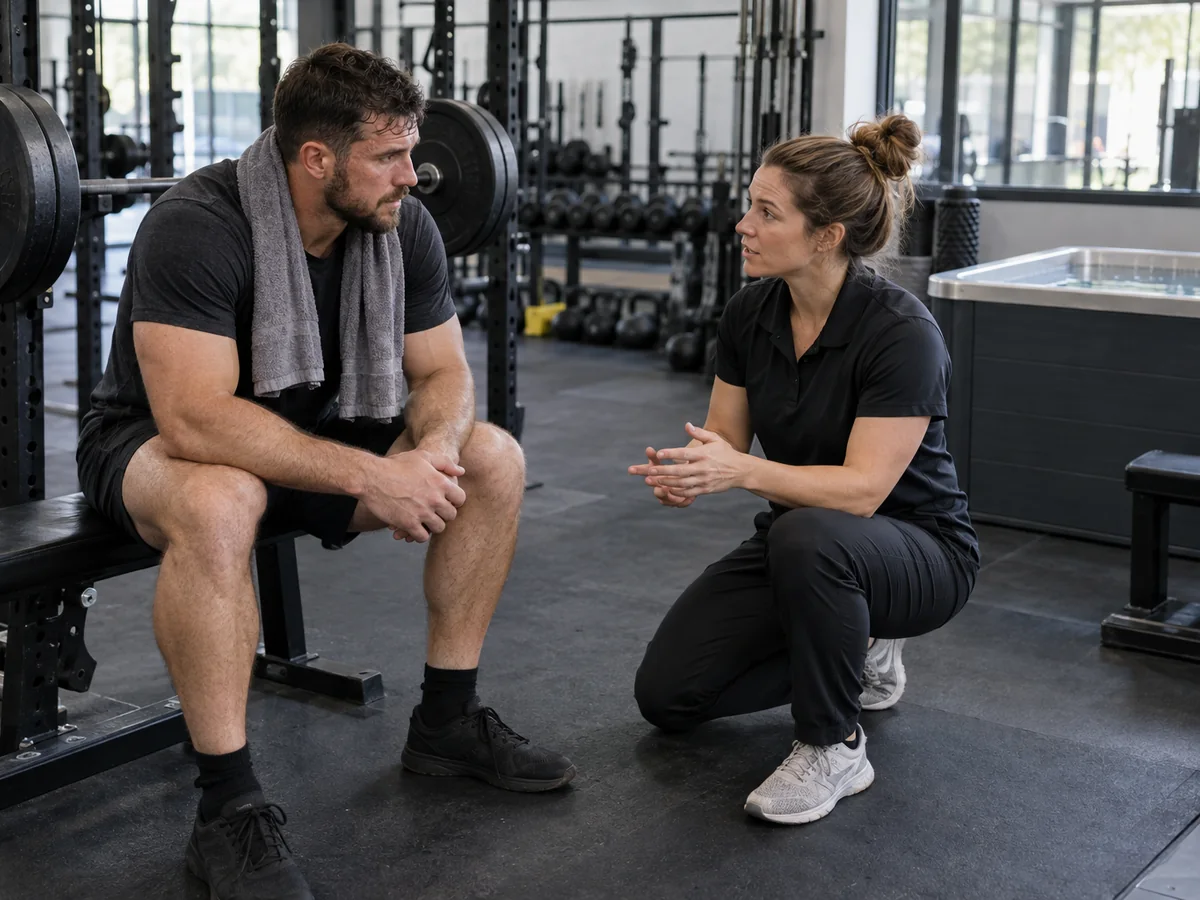
La récupération aiguë s'intéresse à ce qui se passe dans les heures ou les jours suivants : courbatures, récupération perçue, restauration de la force ou de la puissance, biomarqueurs ou préparation pour une autre performance. L'adaptation à long terme s'intéresse à ce qui se passe après un entraînement répété sur des semaines ou des mois, sur des résultats tels que la taille musculaire, la force ou la capacité d'endurance.
Ces questions peuvent orienter dans des directions différentes. Un bain froid après l'exercice peut améliorer certaines mesures de récupération à court terme, tandis qu'une immersion en eau froide (CWI) répétée immédiatement après un entraînement en résistance peut aller à l'encontre de certaines adaptations que le pratiquant cherche à préserver.
Ce n'est pas une contradiction. C'est une différence de résultats.
Moins de courbatures ne signifie pas automatiquement de meilleures performances ou de meilleurs gains
Les courbatures sont une information utile, mais elles ne constituent pas une mesure complète de la récupération. Une grande revue systématique de l'immersion en eau froide (CWI) après l'exercice a montré que les effets sur la récupération varient selon l'exercice précédent, le critère mesuré et le moment de la mesure : la récupération de l'endurance s'améliorait à certains moments, tandis que les performances de sprint et de saut pouvaient être moins bonnes peu après l'immersion, d'autres critères de force ou de puissance s'améliorant plus tard. Voir la revue systématique de la récupération de la performance physique après CWI.
Séparez donc ces questions :
- Est-ce que je ressens moins de courbatures ?
- La qualité de performance dont j'ai besoin pour la prochaine séance est-elle récupérée ?
- Est-ce que je cherche à maximiser l'adaptation à long terme de ce bloc d'entraînement ?
- Ai-je une autre performance importante assez proche pour que la récupération à court terme mérite plus de poids ?
Les courbatures ≠ récupération complète de la performance ≠ adaptation à long terme.
Après l’entraînement de force : immersion froide immédiate, croissance musculaire et limites de la règle des 4–6 heures
Si la force ou l'hypertrophie est la priorité, la principale raison de prudence est l'utilisation répétée de l'immersion en eau froide (CWI) immédiatement après l'entraînement en résistance. Les données probantes issues de revues systématiques actuelles suggèrent que ce schéma peut atténuer modestement l'hypertrophie, et d'autres données indiquent également une réduction de l'adaptation de la force dans certaines conditions.
Le champ d'application est essentiel. La recherche ne justifie pas d'affirmer qu'un seul bain froid détruit la croissance musculaire, que chaque bain froid un jour d'entraînement réduit les gains, ou qu'un moment précis ultérieur est prouvé sûr.
Ce que les données sur l'immersion en eau froide immédiatement après la musculation couvrent réellement
Une revue systématique et méta-analyse de 2024 sur l'entraînement en résistance et l'hypertrophie a constaté que l'immersion en eau froide utilisée immédiatement après l'exercice en résistance peut atténuer les changements hypertrophiques. Dans les études incluses, l'immersion commençait immédiatement ou dans les 15 minutes suivant l'entraînement et était généralement répétée au cours du programme d'entraînement. La revue a également jugé la qualité des preuves sous-jacentes comme relativement limitée, de sorte que le résultat doit être interprété avec prudence. Voir la revue systématique et méta-analyse sur l'hypertrophie de 2024.
Cela donne à cette preuve une limite claire :
| Portée des preuves | Ce qu'il peut étayer | Ce qu'elle ne prouve pas |
|---|---|---|
| CWI répété commencé immédiatement ou dans les 15 minutes environ après l'entraînement en résistance | Prudence lorsque l'hypertrophie est un objectif majeur à long terme | Que chaque bain froid effectué le jour même réduit l’hypertrophie |
| Études chroniques sur l'entraînement en résistance | Interférence possible avec les adaptations sélectionnées | Ce seul bain froid isolé entraîne une perte mesurable des acquis |
| Méta-analyse de résistance | Certaines données probantes d’une adaptation de la force atténuée | Que toutes les méthodes CWI réduisent la résistance de manière équivalente |
| Utilisation différée plusieurs heures après le levage | Les preuves restent incomplètes | Un seuil universel « sûr après X heures » |
L’adaptation de la force nécessite une formulation distincte. Une méta-analyse de 10 études a trouvé une légère atténuation globale des gains de force, mais le résultat n’était pas uniforme : le sous-groupe à un seul membre montrait une atténuation, tandis que le sous-groupe CWI corps entier ne montrait pas de différence significative. L’échantillon regroupé était également composé à 92 % d’hommes, ce qui limite la généralisation du résultat. Voir la méta-analyse de l'adaptation à la force.
La conclusion défendable est donc :
La pratique répétée d’une CWI immédiate après résistance exige de la prudence lorsque l’hypertrophie ou l’adaptation de force à long terme est prioritaire.
Ce n’est pas :
toute utilisation d'eau froide après une séance de musculation est nocive.
Pourquoi « attendre 4–6 heures » ne doit pas être considéré comme un seuil universel prouvé
La règle populaire des 4–6 heures est plus précise que ne le permettent les preuves directes.
Un article destiné aux praticiens de l’ACSM note que certains athlètes et praticiens éloignent la CWI de quatre à six heures de l’entraînement de force ou d’hypertrophie, tout en reconnaissant que seules quelques études ont examiné directement le moment après l’exercice. Voir le Discussion de praticiens de l’ACSM sur le moment du CWI. Cela fait de l’intervalle de 4–6 heures une heuristique de programmation pratique — et non un seuil physiologique validé.
Plus important encore, la revue sur l'hypertrophie de 2024 limite sa conclusion au moment immédiat après l'exercice réellement étudié et indique que les effets de la CWI utilisée plusieurs heures plus tard restent inconnus.
Cela laisse une frontière claire en matière de preuves :
Pris en charge : des CWI répétées immédiatement après la séance de musculation peuvent atténuer l’hypertrophie.
Non établi : qu’une coupure différée d’une heure sépare un usage nocif d’un usage sûr ou garantit que l’adaptation est protégée.
Si la préservation de l'adaptation à l'entraînement en résistance est la priorité, séparer l'immersion en eau froide (CWI) de la fenêtre immédiate après la séance de force est un choix de programmation raisonnable lorsque c'est pratique. Les données probantes n'établissent toujours pas une heure ultérieure précise qui garantisse que la question d'interférence soit résolue.
Si vous déterminez combien de temps une séance doit durer, utilisez HACHILL’s guide de durée d'immersion en eau froide. Si la question est de savoir à quelle fréquence répéter le CWI au cours d'une semaine d'entraînement, utilisez le guide de fréquence des bains froids.
Après un entraînement d'endurance ou de sport d'équipe : quand la récupération à court terme est essentielle
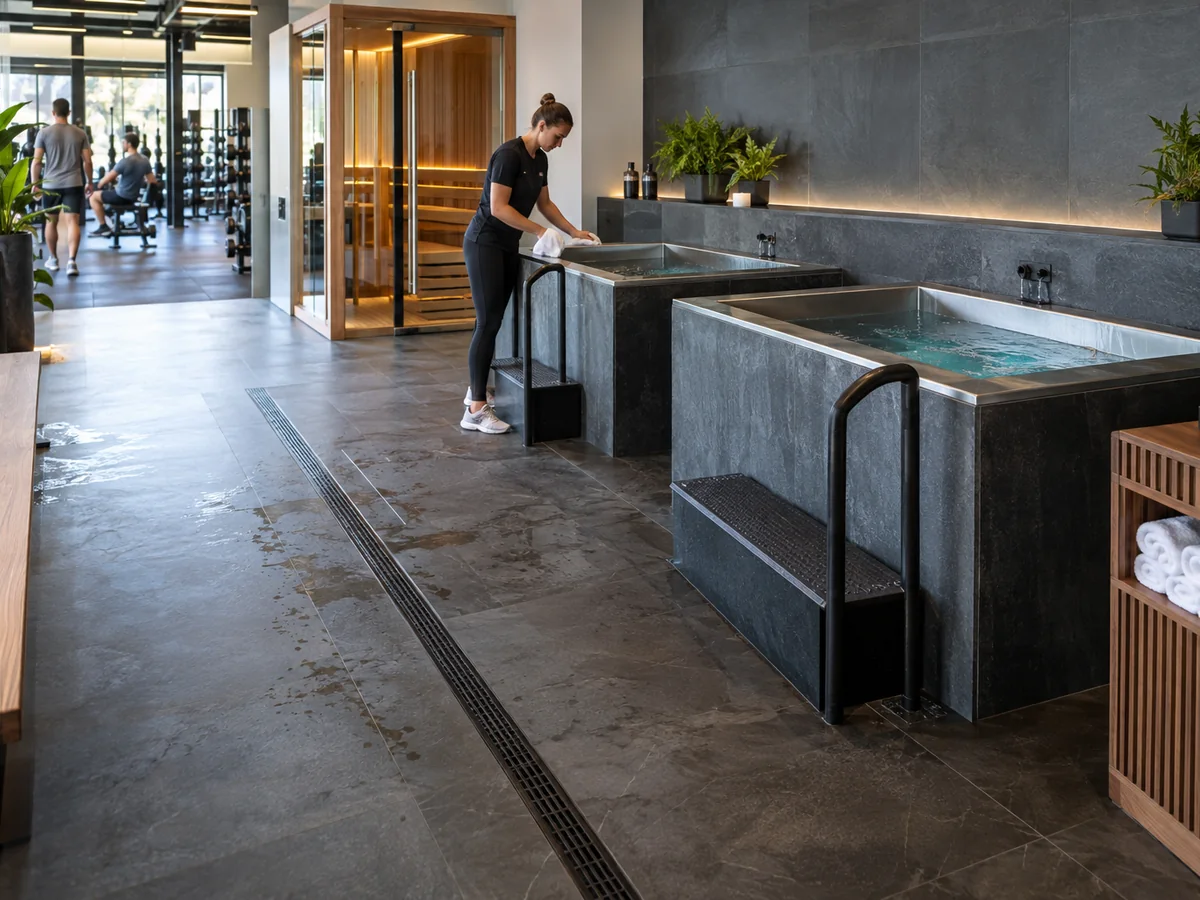
L’immersion à l’eau froide (CWI) après l’exercice peut avoir une justification plus forte lorsque l’objectif immédiat est de restaurer certaines qualités avant une autre performance exigeante. Cela diffère de dire que les athlètes d’endurance ou de sport collectif devraient toujours faire une immersion à froid après l’entraînement.
Une revue systématique et méta-analyse en réseau spécifique à la modalité, publiée en 2026, couvrant les applications de résistance, d’endurance et de sport collectif, a constaté que les effets de l’immersion en eau froide (CWI) diffèrent selon le type d’exercice, le résultat et le protocole. La revue comprenait 87 études et 2,313 participants, avec un niveau de certitude variable selon les résultats, et ses résultats ne soutiennent pas une prescription universelle unique d’immersion en eau froide après l’exercice. Voir la méta-analyse en réseau spécifique à la modalité 2026.
Une revue systématique spécifique au football de 2026 ajoute un exemple utile à court délai de récupération : CWI a été associée à une meilleure récupération de certaines mesures, notamment la contraction volontaire maximale et les courbatures d’apparition retardée, tandis que la performance de sprint n’était pas clairement améliorée et que les intervalles de prédiction pour les résultats regroupés incluaient le zéro. Voir la Revue systématique 2026 sur le CWI post-match chez des footballeurs entraînés. L’intérêt pratique n’est pas que le football prouve un protocole universel ; c’est que les résultats de récupération peuvent évoluer différemment même au sein d’un même sport.
La récupération aiguë et la préparation à la séance suivante diffèrent de l’adaptation d’endurance
La récupération aiguë peut inclure :
- courbatures ;
- récupération perçue ;
- restauration de la force ou de la puissance ;
- performance de sprint ou de saut ;
- performance aérobie ;
- biomarqueurs de lésions musculaires.
Ces résultats n'évoluent pas ensemble.
L’adaptation d’endurance à long terme est une autre question. Une revue systématique avec méta-analyse sur l’immersion en eau froide (CWI) régulière pendant l’entraînement a constaté que la CWI était associée à de moins bonnes adaptations à l’entraînement en résistance, mais a non montrent un effet clair—positif ou négatif—sur les adaptations de performance aérobie mesurées dans les études d’endurance. Voir le méta-analyse 2021 sur l'adaptation chronique à l'entraînement.
Cela met en évidence deux distinctions :
Bénéfice de récupération à court terme ≠ meilleure adaptation d'endurance à long terme.
et
Aucune altération claire de l’adaptation à l’endurance détectée ≠ amélioration de l’adaptation à l’endurance.
Le retournement de compétition peut changer la décision
Prenons le cas de deux athlètes après des séances éprouvantes.
L’un se trouve dans un ensemble en développement, sans performance importante à venir. L’autre doit de nouveau être performant dans un court délai. Leurs priorités diffèrent même si le bain froid est identique.
Pour le deuxième athlète, certains résultats de récupération aiguë sélectionnés peuvent mériter davantage de poids. Cela ne signifie pas que chaque mesure de performance récupérera mieux, et cela ne signifie pas que la même routine doit automatiquement être répétée après chaque séance d’entraînement tout au long d’un bloc axé sur l’adaptation.
Scénario illustratif — il ne s’agit pas d’un cas d’athlète HACHILL : Un athlète de sport collectif termine un match alors qu’une autre performance à forte demande approche bientôt. La décision de timing repose sur les qualités spécifiques nécessaires pour l’événement suivant et sur la fenêtre de récupération disponible. Il s’agit d’une décision à court délai, et non d’une preuve que l’immersion en eau froide (CWI) systématique après l’entraînement soit optimale pour l’adaptation à long terme.
Avant une séance d'entraînement : le pré-refroidissement en cas de chaleur est un cas particulier, pas un boost de performance universel
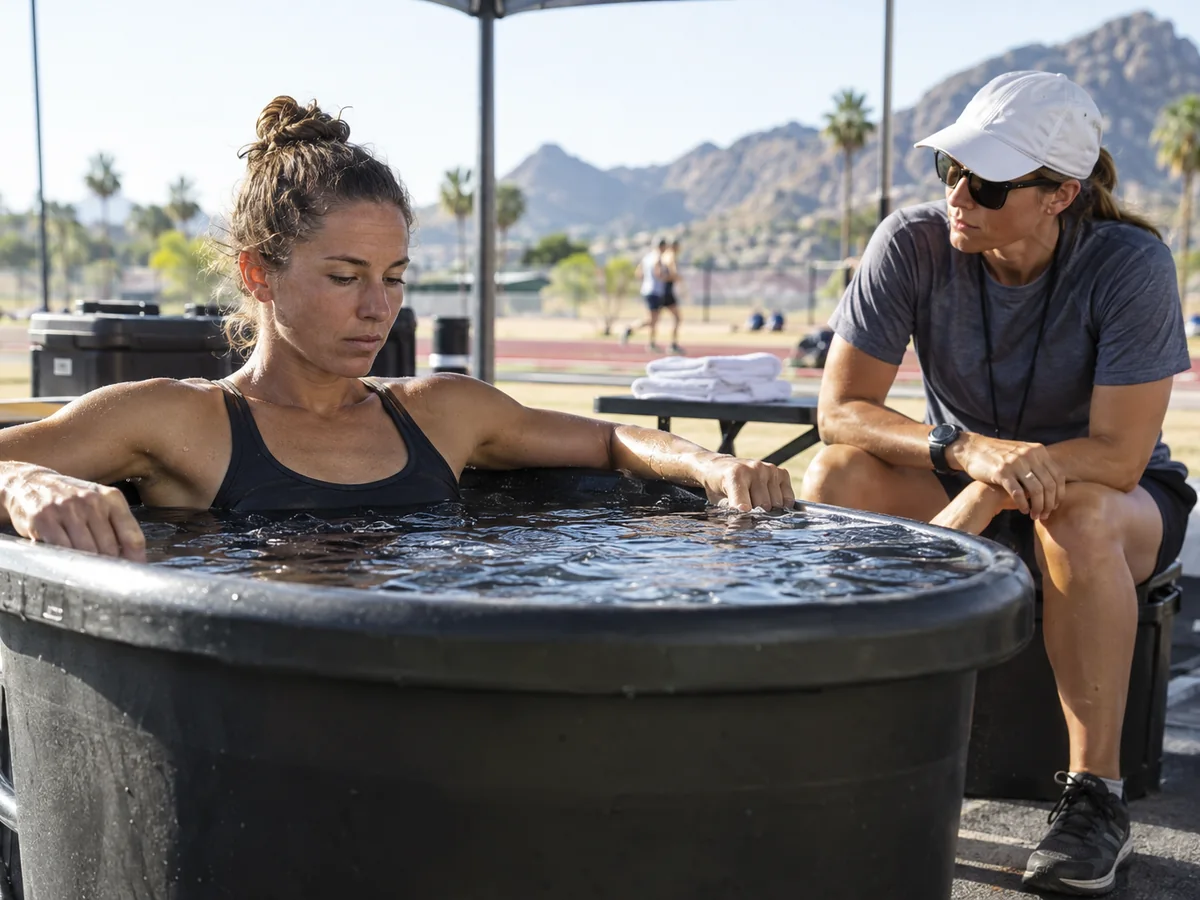
La CWI avant l’exercice a un rôle clair étayé par des preuves : pré-refroidissement avant un exercice d’endurance par temps chaud.
C’est bien plus restrictif que les affirmations selon lesquelles une immersion froide avant l’entraînement améliore universellement la force, la concentration, la motivation ou la performance sportive.
Quand le pré-refroidissement peut compter pour l’exercice d’endurance en conditions chaudes
Une méta-analyse spécifique CWI sur le pré-refroidissement incluait des exercices d’endurance de plus de six minutes à des températures ambiantes d’au moins 26°C et a trouvé un effet global favorable sur les mesures de performance d’endurance. Voir la méta-analyse du pré-refroidissement par CWI avant l'exercice par temps chaud.
La traduction utile est :
Lorsque le problème de performance consiste à gérer la chaleur pendant un exercice d’endurance, le pré-refroidissement peut être pertinent.
Il s'agit d'une stratégie propre à un événement et à un environnement. Ce n'est pas une règle générale selon laquelle l'eau froide doit précéder chaque séance d'entraînement.
Pourquoi ces preuves ne s'appliquent pas automatiquement aux séances de force ordinaires ou en salle de sport
Les données les plus solides sur le pré-refroidissement n’établissent pas qu’une immersion froide avant une séance de musculation normale améliore la force, la puissance ou la qualité de l’entraînement.
Le périmètre correct est :
Les données probantes s'appliquent le plus clairement à : performance d'endurance sous forte chaleur.
Il n'établit pas : un bénéfice universel de pré-entraînement pour l’entraînement en résistance, l’exercice intérieur ordinaire, la concentration mentale ou la performance « dopaminergique ».
Se sentir alerte après une exposition au froid n’est pas la même chose que démontrer une meilleure performance sportive.
Si la température de l’eau est elle-même la question, gardez cette tâche auprès de HACHILL guide de température pour bain froid plutôt que de copier une température de recherche dans un article sur la durée comme prescription universelle pour le consommateur.
Acclimatation à la chaleur et entraînement mixte : quand l'objectif de récupération peut entrer en conflit avec l'objectif d'adaptation
L’acclimatation à la chaleur soulève une question différente de celle de la performance aiguë dans la chaleur. Le refroidissement peut aider à gérer la contrainte thermique ou la récupération, tandis que l’entraînement d’acclimatation à la chaleur utilise délibérément une exposition répétée à la chaleur pour favoriser l’adaptation.
Il est tentant de conclure que le refroidissement post-exercice doit effacer ce stimulus. Les données actuelles ne sont pas assez solides pour cette affirmation universelle.
Le refroidissement pour le confort ou la performance n’est pas la même chose que l’adaptation du bâtiment à la chaleur
Une revue de 2024 consacrée spécifiquement à la récupération pendant l’acclimatation à la chaleur par l’exercice a conclu que les preuves directes concernant l’effet du refroidissement post-exercice sur l’adaptation à la chaleur restent limitées. Son interprétation globale était que le refroidissement axé sur la récupération n’interférerait pas nécessairement avec le stimulus physiologique déjà obtenu pendant l’exposition à la chaleur, mais les auteurs ont explicitement décrit la conclusion comme exploratoire en raison de l’absence de données directes. Voir la revue 2024 sur le refroidissement post-exercice et l'acclimatation à la chaleur.
Cela fait un Connu / Encore incertain une distinction plus précise qu’une règle absolue.
- Le pré-refroidissement peut soutenir certaines performances d’endurance en conditions chaudes.
- La CWI immédiate répétée après un exercice de résistance appelle à la prudence pour un entraînement axé sur l’hypertrophie.
- Certains résultats de récupération aiguë sélectionnés peuvent s’améliorer après une CWI.
- Dans une étude contrôlée d'entraînement à la chaleur, le pré-refroidissement régulier ne semblait pas atténuer l’adaptation à la chaleur.
- L’effet exact du refroidissement de récupération post-exercice sur l’acclimatation à la chaleur selon différents protocoles.
- Une heure de délai universelle après le levage qui protège l'adaptation.
- Un seul calendrier de durées qui optimise simultanément la force, l’endurance, la récupération à court terme et l’adaptation à la chaleur.
Cette étude n’établit pas que tout protocole de refroidissement avant ou après l’exercice est neutre pour l’acclimatation à la chaleur.
L’incertitude est un résultat fondé sur les preuves, non une lacune à combler par une règle péremptoire.
Un entraînement mixte de force, d’endurance et à deux séances par jour exige une décision de priorisation
L’entraînement mixte rend les règles de minutage universelles encore moins utiles.
Une journée peut combiner travail de force et d’endurance, ou l’adaptation à long terme peut entrer en concurrence avec la nécessité de performer à nouveau bientôt. La CWI doit alors être évaluée en fonction de la priorité du bloc d’entraînement ou de la séance suivante — et non simplement étiquetée comme « récupération ».
Une séquence pratique est :
- Identifiez l’adaptation ou le résultat de performance que vous cherchez à protéger.
- Demandez si les données disponibles sur l'immersion en eau froide (CWI) concernent exactement ce mode d'exercice, ce résultat et ce moment.
- Si les données probantes ne couvrent qu’une autre modalité ou une fenêtre immédiate après l’exercice, ne l’étendez pas silencieusement.
- Lorsque les objectifs sont contradictoires, faites appel à un coach, à des spécialistes des sciences du sport ou à un avis médical qualifié approprié plutôt que d’inventer une durée universelle.
Scénario illustratif — il ne s’agit pas d’un cas d’athlète HACHILL : Un athlète suit un bloc axé sur la force mais a aussi une séance d’endurance plus tard le même jour. L’immersion en eau froide (CWI) immédiatement après la musculation soulève une question d’adaptation différente du pré-refroidissement avant un exercice d’endurance par forte chaleur. Ces catégories de preuves ne doivent pas être regroupées en une seule règle de « journée cold-plunge ».
Utilisez cette check-list de décision sur le timing du bain froid
Une bonne décision de timing n'a pas à donner une réponse universelle unique. Elle peut donner attention, à considérer, cas particulier ou en attente.
| Question de décision | Orientation fondée sur les preuves | Limite |
|---|---|---|
| La force à long terme ou l’hypertrophie est-elle la priorité ? | Une CWI immédiate répétée après résistance mérite prudence | Les données probantes ne définissent pas un seuil de sécurité universel unique plusieurs heures après. |
| Devez-vous être à nouveau performant bientôt ? | Certains résultats de récupération aiguë peuvent rendre l’immersion en eau froide (CWI) post-exercice plus pertinente | Les courbatures ou la récupération perçue ne garantissent pas que chaque mesure de performance soit rétablie |
| L'objectif est-il le développement de l'endurance à long terme ? | Ne supposez pas qu’une CWI régulière améliore l’adaptation à l’endurance | Les données probantes chroniques disponibles n'établissent pas de bénéfice d'adaptation |
| Vous préparez-vous à une performance d’endurance dans une chaleur importante ? | Le pré-refroidissement peut être un cas particulier pertinent | Cela n’établit pas un bénéfice universel avant l’entraînement |
| L'acclimatation à la chaleur est-elle un objectif d'entraînement principal ? | Maintenir l'incertitude visible et prendre une décision au niveau du programme | Les données probantes ne justifient pas d’affirmer que le refroidissement de récupération détruit de façon certaine l’acclimatation |
| La force, l'endurance ou deux séances entrent-elles en concurrence de priorité ? | Décider quel résultat compte le plus avant de choisir le moment | Aucun programme universel d’entraînement mixte n’est établi |
| L'aptitude médicale est-elle incertaine ? | Sollicitez des conseils professionnels personnalisés avant toute immersion en eau froide | Les données de chronologie en science du sport ne constituent pas une autorisation médicale |
L’immersion en eau froide soulève aussi une question distincte de sécurité physiologique. Une immersion froide planifiée ne relève pas du même contexte qu’une immersion accidentelle en eau libre, mais une exposition soudaine au froid peut tout de même modifier rapidement la respiration, la fréquence cardiaque et la pression artérielle ; les données sur le moment de l’entraînement ne remplacent pas l’aptitude individuelle à la santé. Le Recommandations de sécurité en eau froide du U.S. National Weather Service décrit la réponse au choc thermique froid, tandis que Recommandations actuelles de la Cleveland Clinic sur le bain froid identifie les situations de santé dans lesquelles un examen par un clinicien est approprié.
Le timing ne remplace pas les décisions relatives à la température, à la durée ou à la fréquence
Même un choix de moment bien étayé ne vous indique pas à quel point l’eau doit être froide, combien de temps la séance doit durer ni à quelle fréquence elle doit être répétée.
Réserver ces questions à leurs responsables de page respectifs :
- Combien de temps ? Combien de temps faut-il rester en bain froid ?
- Quelle température ? Quelle est la température d'un bain froid ?
- À quelle fréquence ? À quelle fréquence faut-il faire une immersion à froid ?
Un article de recherche peut combiner une température, une durée, un moment et un groupe de participants particuliers parce que ce sont les conditions expérimentales. Cela ne fait pas du protocole complet une prescription universelle pour le consommateur.
Pour la planification d'une installation commerciale plutôt que d'un protocole individuel d'athlète, HACHILL’s Page de planification du centre de récupération couvre l’équipement, l’accès, le personnel et les interfaces d’exploitation, tout en gardant distinctes les décisions relatives à l’aptitude médicale et à l’exposition.
En résumé : choisissez le moment de l'immersion froide en fonction du résultat que vous essayez de protéger. Si l'adaptation de la force ou de l'hypertrophie est la priorité, évitez de traiter l'immersion en eau froide immédiatement après la musculation comme une étape de récupération par défaut. Si une autre performance exigeante approche, pesez la qualité de récupération spécifique dont vous avez besoin plutôt que la seule courbature. Utilisez les allégations de pré-refroidissement principalement pour l'exercice d'endurance par temps chaud, où les preuves sont matériellement plus solides. Et ne transformez pas « 4–6 heures » ou tout protocole de recherche en garantie universelle.