Plan the field work around the selected HACHILL product before installation begins.
This page is for contractors, installers, fit-out teams and project coordinators who need to organize delivery access, placement, working space, prepared surfaces, site-assembled work and the local trades involved in installation.
Use the applicable product information for the selected model, then organize the actual site work around the real project conditions.

Before the product reaches its final position, confirm how it will move through the site and where the field team will work.
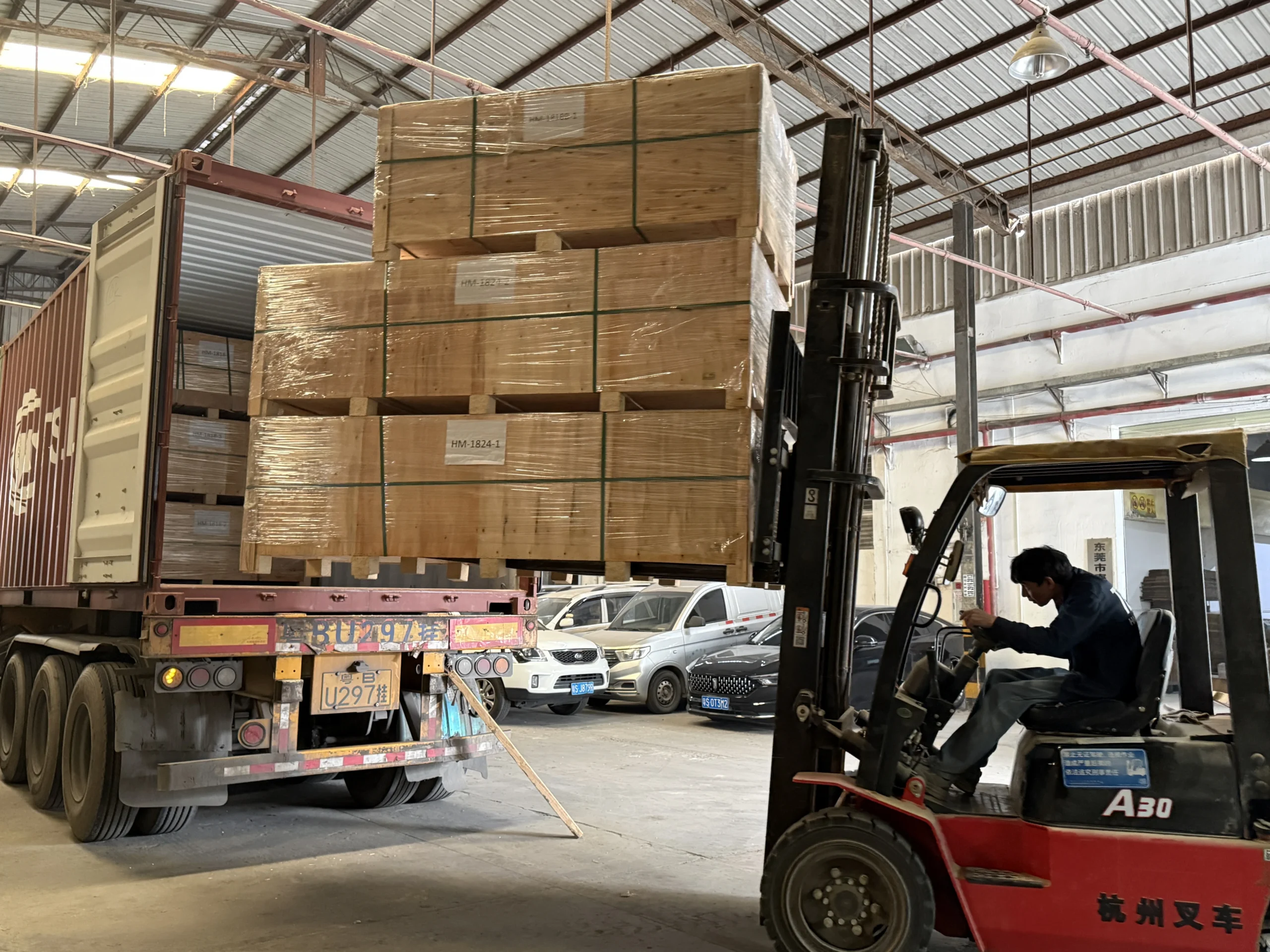
Review the route from the receiving or unloading point to the installation area, including site access, doors, corridors, level changes and the final approach to the installation position.
If packed dimensions, weight, package count or shipment-specific unloading information are needed, use Packaging & Logistics.
Confirm the intended position and the space available to position the product, carry out field assembly where applicable, reach the relevant sides of the product and coordinate the trades involved.
Product-specific technical clearances should come from the applicable model information.
Check that the intended installation area is prepared for the selected product and installation approach. The field team should understand the available base or floor condition before work begins.
Structural design, foundation engineering and load calculations remain outside this page.
For an outdoor sauna site, the outdoor sauna foundation guide helps identify base and drainage questions to confirm with the project designer and selected model information.
Identify whether product movement or placement creates a lifting or handling constraint for the field team. The actual method depends on the shipment, site and contractor plan.
Do not assume lifting equipment, lifting points or handling methods without the applicable project information.
The contractor or installer needs to understand what arrives with the product and what still has to happen on site.
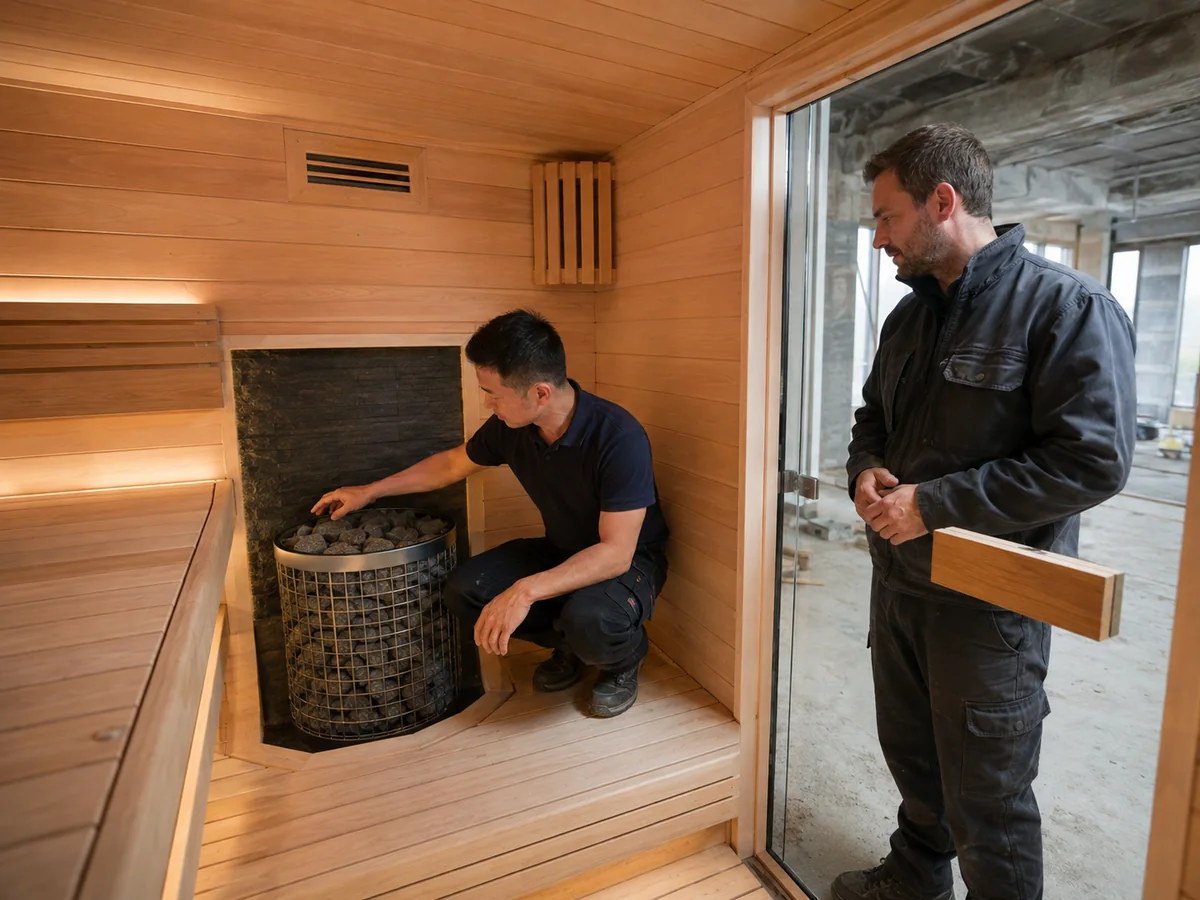
Confirm the applicable product configuration and which elements arrive prepared with the product, then identify which work is expected to take place in the field.
Do not copy another model’s assembly scope based on visual similarity.
Identify only the site connections that apply to the selected product. For the field team, relevant connections may involve electrical, ventilation, plumbing, drainage or another model-specific interface.
Use the applicable product information to identify which local trade needs to handle each relevant connection.
Identify field work that requires the appropriate contractor, installer or qualified local professional. Depending on the project, this may involve electrical, plumbing, structural, ventilation or other regulated work.
Resolve site conditions that would prevent the affected work from proceeding as planned, such as restricted access, unfinished base preparation, unknown site interfaces, insufficient working space or unclear field-assembly scope.
If the site conflicts with the applicable product information, resolve the mismatch before the affected work continues.
Before field installation begins, the contractor or installer should be able to answer a practical set of site questions.
Product — the selected model and relevant installation information are available.
Access — the receiving point, delivery path and final placement route have been reviewed.
Work area — the base or floor and space needed for field work have been considered.
Site interfaces — the relevant utilities or connections for the selected product are understood.
Field scope — supplied and site-assembled work are clear enough for planning.
Trades — the appropriate contractors or qualified local professionals are identified.
Constraints — issues affecting access, placement, interfaces or field execution are resolved before the affected work proceeds.
For installation completion or handover, follow the applicable current product procedure and the agreed project scope rather than assuming one universal commissioning process.
When a site question moves beyond field execution and becomes product-side, engineering, shipment or post-delivery work, continue with the relevant HACHILL product or support resource.
Use this brief when the field team has a defined product and a real installation location to coordinate.
Start with the site facts already known. A complete approval or commissioning pack is not required for the first coordination request; identify the equipment, the field question and the conditions affecting the work.