Design the sales floor around the sauna differences that are easier to understand in person—without using valuable floor space to duplicate models that tell the customer the same story.
A useful showroom is a physical comparison tool, not a catalog warehouse. The range should reveal meaningful contrasts in form, indoor/outdoor direction, scale, visible finish context and the next buying step.
Start with the people who walk through the door and the amount of floor space available. Then decide which sauna needs to be seen, which one only needs a clear comparison story, which the retailer may choose to hold locally, and which should move into a fresh quotation after the customer’s project conditions are known.
Keep the floor sauna-first. Cold Plunge and Wood-Fired Hot Tub products can extend the offer, but they should not blur this page into a mixed outdoor-wellness retailer plan.
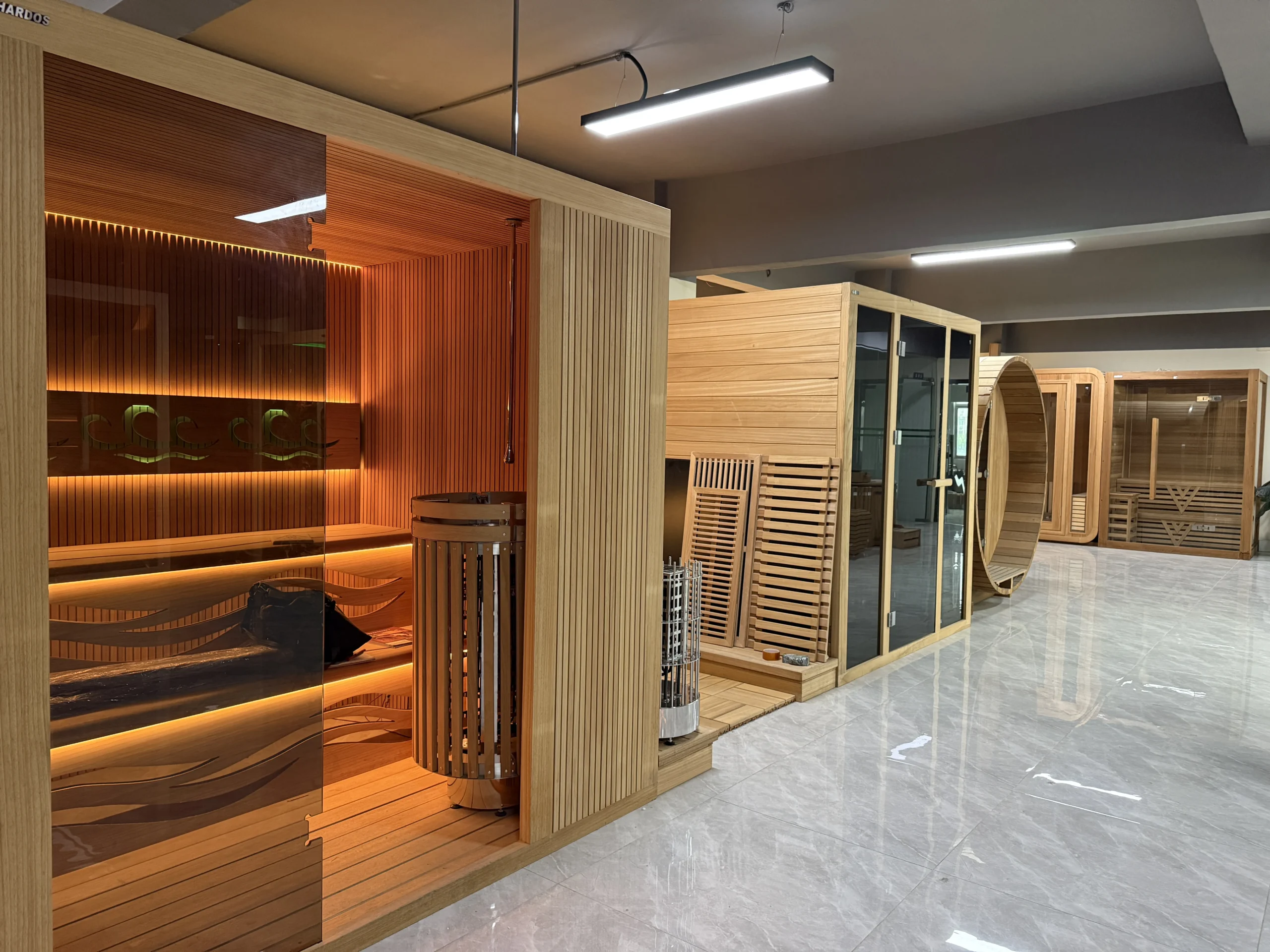
Physical showroom context. Visible cabins support in-person comparison; they do not establish stock, exact order configuration, included options or future availability.
The floor should answer a simple customer question: why would I choose this sauna direction instead of the one beside it? If two displays cannot explain a meaningful difference, both may not deserve floor space.
Describe the typical visitor, destination market, available display area, sales-floor format and the kinds of sauna projects staff most often discuss face to face.
A compact specialist showroom may need only a few strong comparison anchors, while a larger floor can support a broader physical story.
Choose display candidates that make visible contrasts useful to a buyer: indoor versus outdoor direction, enclosure form, apparent scale, glazing, layout and broad finish context.
A model earns floor space by helping a customer make a better comparison—not because another SKU exists.
Use indoor, outdoor or specialized sauna options only when each adds a distinct comparison. Exact specifications, heater/electrical details, configuration and installation information still come from the applicable model page or technical resource.
Balance floor space against range breadth. Some sauna routes need a physical cabin to explain them; others can stay in the assortment without occupying floor space; highly similar models can remain model-page or quotation decisions.
Separate what the customer sees from what the retailer chooses to hold locally and what is quoted only after customer inputs are known. These are retailer range roles, not a sitewide HACHILL inventory or display policy.
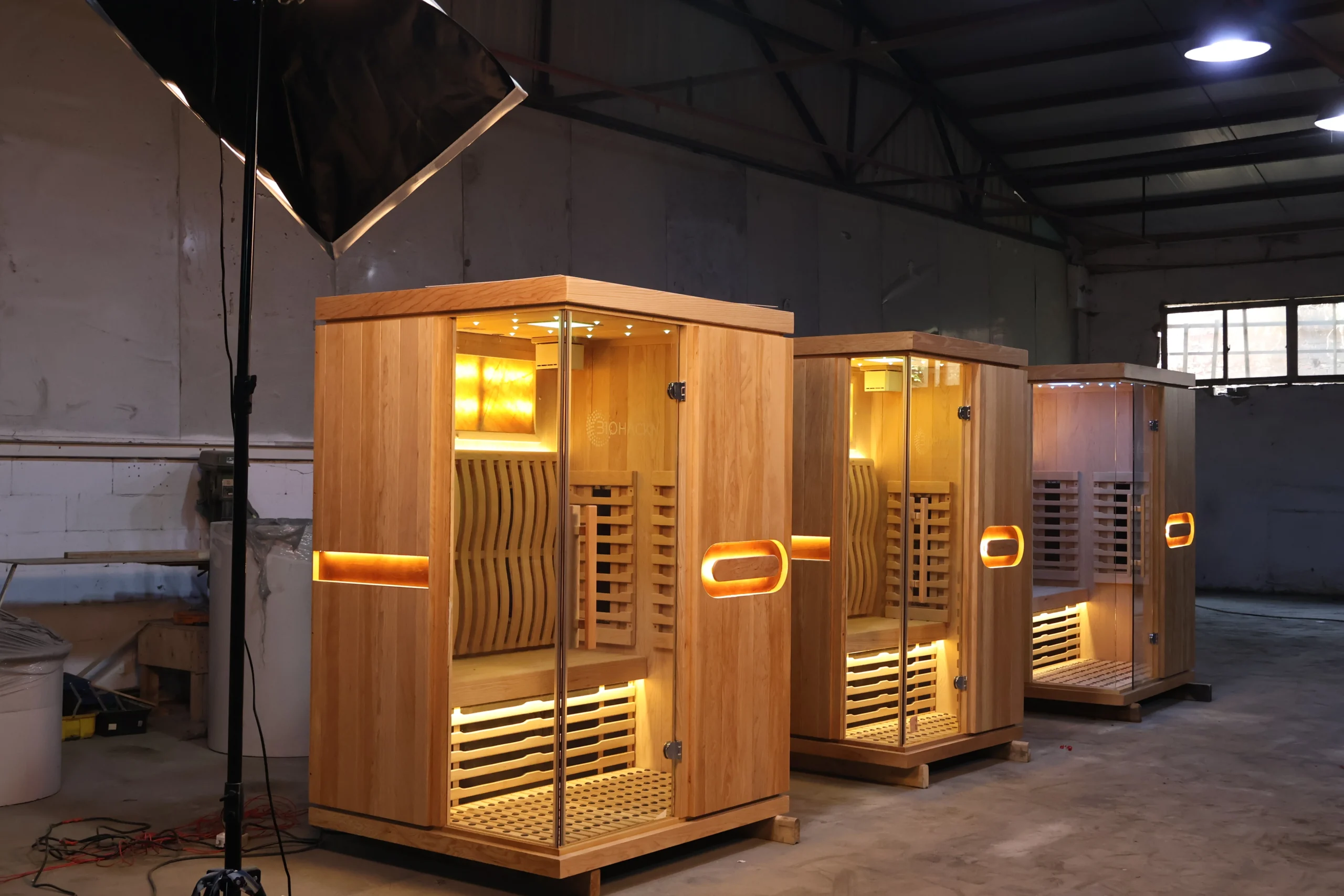
Display context only. The visible units do not prove stock status, exact future configuration, included options or repeat-order availability.
Use a display cabin to make form, apparent scale, glazing, finish context, interior layout and other visible differences tangible for the customer.
The display is a comparison reference; it does not confirm the configuration, inclusions, local inventory position or future availability of a customer’s order.
If the retailer chooses to hold a sauna locally, tie that inventory role to the exact model and configuration the business actually intends to carry rather than treating the entire family as interchangeable.
A retailer-held inventory role says nothing about a universal HACHILL inventory program or standard local availability.
Use a quote-to-order role when the sauna belongs in the selling story but the exact model, configuration or customer/site conditions still need confirmation before a current quotation can be prepared.
Quote-to-order is a sales route, not a promise of availability or a fixed production schedule.
Cold Plunge and Wood-Fired Hot Tub products can broaden the showroom offer where the retailer can support the extra customer questions, but they remain secondary to the sauna comparison floor.
If the commercial job becomes a broad outdoor assortment across sauna, plunge and wood-fired hot tub categories, move to Outdoor Living Retailers instead.
The sales floor should be confident about visible product differences and disciplined about everything that depends on the exact model or site. Staff can guide the comparison, collect the right customer inputs and know when to stop before a technical answer is invented.
Explain the sauna family, visible form, confirmed model dimensions, current included components and the practical difference the customer can see or understand from the showroom comparison.
Ask about indoor/outdoor use, available space, access and the basic utility/heater context already known so the conversation can continue with the appropriate product or technical team.
For customer questions about heating options, the sauna heater buying guide identifies what still needs confirmation from the exact model and site information.
Return specifications, manuals, drawings, inclusions, labels and destination-specific documents to the exact model and configuration before they are treated as customer facts.
Move nonstandard configuration, heater/electrical uncertainty, installation detail, compliance documents and shipment-specific requirements beyond the sales floor and into the appropriate specialist review.
Sales staff are not the engineer or installer. Once a question depends on an exact model, nonstandard configuration, site-specific technical condition or specialist document, continue with the relevant product page or qualified professional.
This page covers in-person sauna comparison and the role each sauna plays on the retail floor. Regional channel planning, branded-product development and online merchandising are separate programs.
Send the floor-space context, sauna comparison roles and customer questions already known. Territory, exclusivity, universal order minimums, display-unit terms, confirmed local inventory and final logistics remain separate commercial decisions.
The goal is a showroom that makes sauna differences easier to buy in person while keeping unverified technical and commercial claims off the sales floor.