Build a sauna and cold-plunge selection that suits your customers—and that your team can explain, deliver and support. HACHILL lists outdoor and indoor saunas, cold-plunge tubs and wood-fired hot tubs for dealers, online sellers and commercial-project suppliers.
A showroom can begin with contrasting cabin sizes. A recovery-equipment dealer may start with an Upright tub or a Laydown model, but should define who supplies and maintains the external cooling and water-treatment equipment. Compare actual dimensions, supplied components and delivery requirements before committing to initial stock.
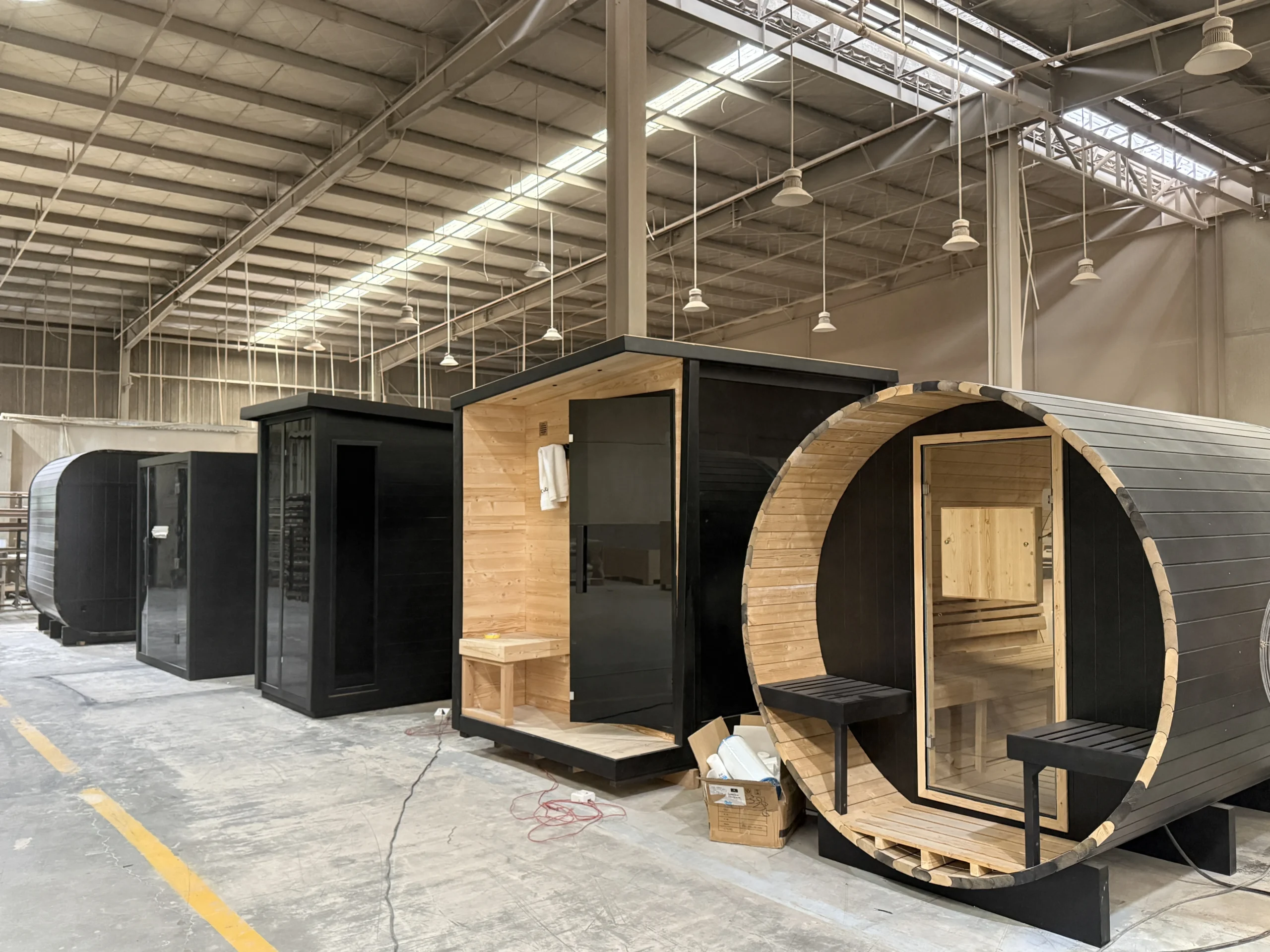
Product-range photograph. For available models and exact configurations, use the linked product pages.
A showroom needs products visitors can compare in person; an online retailer needs clear specifications and delivery information; a commercial supplier needs equipment that can be integrated into a real venue. Start with the products you can explain and support, then expand only when a new model solves a different customer requirement.
For a deeper outdoor sauna lineup, use the outdoor sauna assortment guide.
Start with a small number of visually distinct models—for example, a compact Cube Sauna and a larger Barrel Sauna. Display the real footprint, seating arrangement, heater options and delivery conditions alongside the photographs. More cabins are not useful if buyers cannot explain the difference.
Publish accurate dimensions, what is and is not included, delivery constraints and access to model details before multiplying listings. Two similar-looking tubs may need different cooling equipment or entry arrangements; those differences belong on the product page, not in a later support email.
For hotels, spas and recovery facilities, document expected users, operating frequency, water handling, cleaning, electrical supply and local maintenance before presenting a model as suitable for the project. CT27 is a separately listed commercial cold-plunge model worth reviewing alongside Upright and Laydown options; its name alone does not establish public-use compliance.
Stock models with a clear buyer, usable product documents, known delivery requirements and a service arrangement your team can sustain. If a cold-plunge project still lacks a confirmed cooling-system supplier or local technician, quote the tub and system requirements as a defined enquiry rather than advertising a complete ready-to-use package.
Saunas, cold plunges and wood-fired hot tubs are different purchasing decisions. Select the family by customer use, then check the exact HACHILL model, its physical footprint and what must be added at the destination.
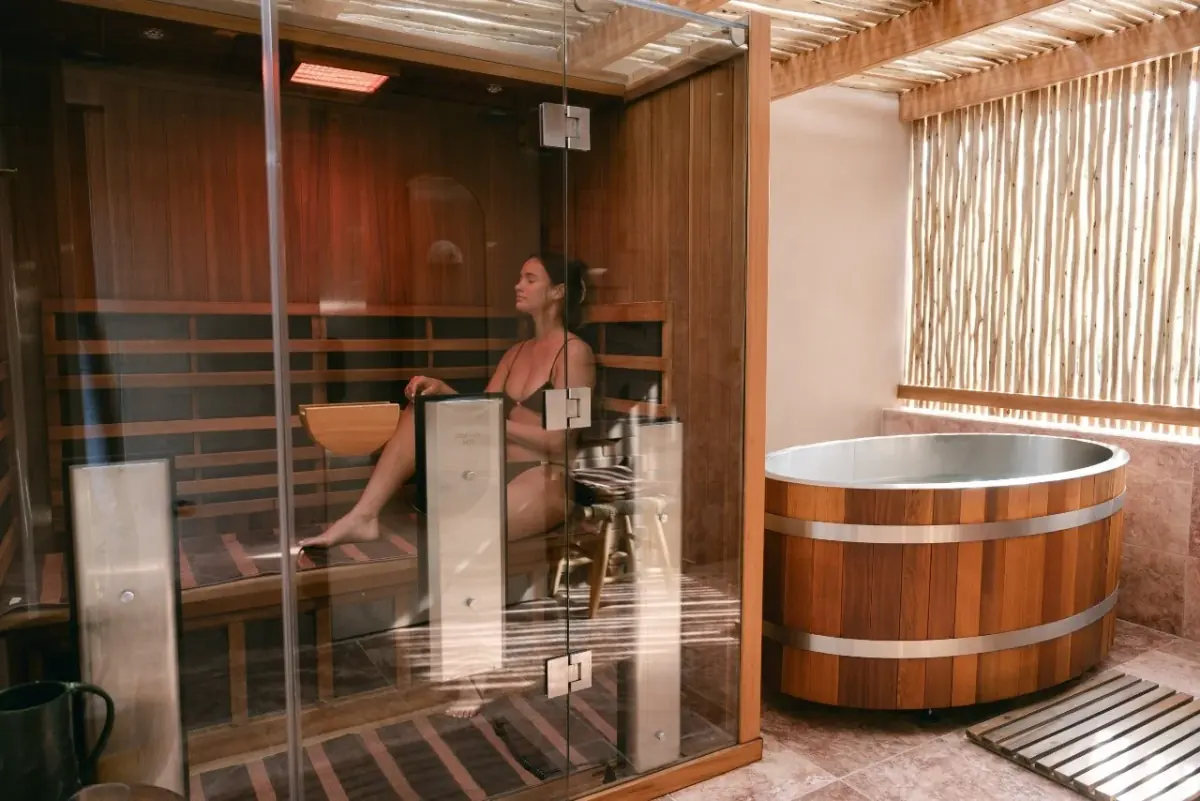
HACHILL product-display reference. Exact-model dimensions and equipment are listed below.
A compact outdoor Cube and a larger Barrel Sauna give customers meaningfully different capacity and space choices. Confirm the ordered heater, controls, electrical supply, ventilation, installation clearances and delivery route for each model; catalog heater recommendations are not an electrical approval.
CT12 is an Upright stainless model; CT16 is a compact Thermowood Laydown model. Choose by entry arrangement, tub footprint and access to water connections. Both are designed for external cooling equipment: the tub listing is not a complete chiller, filtration or sanitation package.
Wood-fired hot tubs may suit outdoor-living dealers with suitable delivery, installation and operating support. A long Rectangular body and a Round tub produce different access, foundation, stove, flue and drainage questions. Keep this an optional product line unless the local market and service capacity support it.
The model pages provide published dimensions, components and relevant product views. For a confirmed order, request the applicable drawing and identify heater or cooling equipment, installation interfaces and destination documentation.
Use these six products to compare showroom size, user position and outdoor footprint. This is an example shortlist—not a complete catalog. Commercial recovery buyers should also review CT27 below.
1–2 person catalog capacity. W1350 × D1300 × H2000 mm external; 4.5 kW recommended heater. Choose this comparison point for personal or paired-use buyers with limited space. Heater and site approval remain project-specific.
6–8 person catalog capacity. Ø2000 × D2400 mm external; 8 kW recommended heater. Compare footprint, delivery path and intended users before stocking alongside a small Cube model.
Ø850 × H1100 mm external, 304 stainless steel, with internal seat. Assess vertical entry and exit, wet-area circulation and space for a separately specified external cooling system.
L1350 × W650 × H750 mm external; Thermo Spruce + 304 stainless steel. Compare horizontal entry, turning space and where the external cooling and water-service equipment will sit.
L2030 × W790 × H760 mm external; Thermo Spruce + 304 stainless steel. Its long body makes entry direction, delivery turns and stove/chimney placement important.
Ø1800 × H960 mm external; Thermo Spruce + 304 stainless steel. Check circular installation space, perimeter access, customer entry and wood-fired operating requirements.
HACHILL lists CT27 as a 1-person Commercial Cold Plunge. Its external envelope is L2123 × W700 × H680 mm, but the interior is L1215 × W600 × H670 mm. That difference matters when assessing usable space, access around the tub and the delivery route. The material listing is Thermo Spruce + 304 stainless steel.
CT27 uses an external cooling-system arrangement. For a gym, spa or hospitality enquiry, review the tub footprint, water and drainage connections, equipment service access, cleaning plan and operating requirements together. “Commercial” is the catalog product designation, not a universal certification for public use.
CT12, CT16 and CT27 are intended for use with external cooling systems. Before offering a working cold-plunge package, identify the chiller, pump, filtration, sanitation, controller, electrical supply, water connections and who is responsible for installation and service. Ask for the completed system specification; tub dimensions do not establish cooling performance. Dealers without local cooling-system support can start with a quotation-led offer rather than stocking an unverified turnkey package.
Compare the complete order, not only the catalog price. The first enquiry should let HACHILL identify the exact product, intended quantity, destination, packing requirements and unresolved equipment or after-sales questions. A quotation should then identify the agreed supply and delivery scope in writing.
List the product revision, intended market, required instructions, electrical or water-system documentation, labels and inspection evidence. Request confirmation of the documents available for the selected model and destination.
For freight comparison, ask for packed rather than bare-product dimensions, gross weight, package count, accessory packing and the applicable shipping basis. Confirm loading and receiving responsibilities before comparing landed costs.
Identify your local installer or technician and who will answer heater, control, cooling and water-system issues. Request the available manuals, parts procedure and escalation contact for the quoted configuration.
Record the approved model revision, accessories, finish, labels and documents. Ask how substitutions or changes to subsequent batches will be communicated and agreed before shipment.
Product photos help show the enclosure or tub; they do not answer every purchasing question. HACHILL also publishes manufacturing, product-specific quality-control and export-packaging information. Use these resources to request the evidence that matters for your chosen models and order—rather than assuming one production or inspection process applies to all products.
See HACHILL’s published workshop, assembly and finishing references. Ask which processes and materials apply to the shortlisted sauna or tub.
The quality information describes checks that may depend on the product. Confirm applicable inspection criteria and available order records before placing a bulk order.
Review HACHILL’s packing examples, then request the packed dimensions, weights, accessory count and receiving requirements for the precise order.
Choose the products first. Distributor appointments, pricing, minimum quantities, territory, samples, lead times, warranty and spare-parts terms need a separate written commercial agreement. OEM and private-label requests follow their own review paths once the base model is clear.
Use the Distributor Program after initial range fit is clear and the next questions involve partner review, territory requests, commercial structure, enablement or ongoing channel commitments.
Use OEM when an established product needs reviewed changes to components, finishes, documents, branding or packaging. Range demand alone does not approve an OEM change.
Use Private Label when the primary task becomes branded labels, manuals, packaging presentation or other brand-facing elements around a confirmed product direction.
Start with your company, destination market and sales channel. Tell us whether your first range is a showroom selection, online retail offer or commercial-project supply; note the models and quantities under consideration. Include important installation, cooling-system, packaging or service questions, even if the final configuration is still open.