\n\n
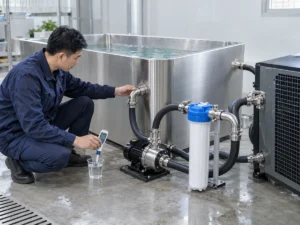
For a cold plunge, 316 stainless steel is not automatically the right choice, and 304 is not automatically inadequate. The useful comparison starts with the actual water-contact component, chloride or salt exposure, sanitizer and cleaning chemistry, fabrication quality, surface condition, crevices and maintenance practices. Under more demanding chloride-related conditions, molybdenum-bearing 316 generally provides more corrosion-resistance margin than 304, but neither grade is corrosion-proof.
\n\n\n\n\n\n\n\n\n\n\n\n\n
That distinction matters to distributors, wellness brands, commercial operators and project buyers because an alloy designation is only one part of the cold-plunge material system. A well-specified 304 component can be a more defensible purchase than a poorly fabricated 316 component, while a more aggressive service environment may justify specifying 316 even when 304 is adequate elsewhere.
\n\n
The purchasing question is therefore not simply, “Which stainless steel is better?” It is: What corrosion exposure will this component actually see, and what material, fabrication and water-care specification is appropriate for that exposure?
\n\n\n
\n\n
What 304 vs 316 Actually Changes in a Cold Plunge
\n\n\n\n\n\n\n\n\n\n\n\n\n
304 and 316 are both austenitic stainless steels widely used where corrosion resistance, cleanability and fabrication are important. For a cold-plunge buyer, the important difference is not appearance. Both may look similar after polishing.
\n\n
The practical distinction is that 316 is a molybdenum-bearing stainless grade. That additional alloying generally improves resistance to localized corrosion in more demanding environments, including some chloride-bearing conditions. This is why 316 often receives stronger consideration when salt, chlorides or other aggressive exposure conditions become more significant.
\n\n
That does not create a simple hierarchy in which 316 is always correct and 304 is always a compromise.
\n\n
The material grade answers only one question: what alloy has been specified for the component? It does not, by itself, establish:
\n\n
- \n
- which parts of the cold plunge actually use that grade;
- whether the liner, drain fittings, fasteners and other wet-prone components use the same material;
- the sheet thickness or fabrication details;
- the quality of weld finishing;
- the surface condition after fabrication;
- how crevices and deposits are controlled;
- compatibility with the planned sanitizer or cleaning products;
- corrosion life in the actual installation; or
- compliance with public-facility water-treatment requirements.
\n
\n
\n
\n
\n
\n
\n
\n
\n
\n\n
This distinction is especially important when comparing supplier quotations. “304 stainless” and “316 stainless” should not be treated as complete product specifications.
\n\n
A buyer needs to know where the grade is used and under what service assumptions it is being selected.
\n\n\n
\n\n
Corrosion Risk Depends on the Exposure, Surface and Detail—not Just the Grade
\n\n\n\n\n\n\n\n\n\n\n\n\n
Stainless steel protects itself through a thin passive surface film. In suitable conditions, that film gives both 304 and 316 useful corrosion resistance. Problems arise when the local environment becomes aggressive enough to disrupt the passive condition or prevent it from remaining stable.
\n\n
For a cold plunge, corrosion therefore has to be evaluated as an interaction between the alloy and its environment.
\n\n
\n\n
Chlorides change the comparison
\n\n
Chloride-containing environments are particularly important because they can contribute to localized forms of corrosion such as pitting and crevice corrosion.
\n\n
316 generally has a stronger resistance margin than 304 under many chloride-related conditions. But “stronger resistance” should not be rewritten as “immune.”
\n\n
If the local environment is sufficiently aggressive, 316 can also pit or suffer crevice corrosion. The relevant question is whether the intended exposure moves the project far enough toward a more demanding corrosion environment that the additional material margin becomes valuable.
\n\n
This is why a buyer should not copy one universal chloride threshold from an unrelated seawater, supply-water, swimming-pool or process-industry reference and use it as an automatic cold-plunge specification. Temperature, water chemistry, concentration, surface condition, oxygen availability, deposits and geometry can all affect the result.
\n\n
Crevices and deposits create local conditions
\n\n
A vessel can have acceptable bulk water chemistry while experiencing much harsher conditions in a small local area.
\n\n
Examples include narrow joints, poorly drained details, deposits, trapped residues and other locations where fresh water exchange is restricted. These zones can behave differently from an open, continuously washed surface.
\n\n
That changes the buying logic.
\n\n
If the design contains persistent crevices or locations that are difficult to clean and drain, simply upgrading the alloy does not remove the underlying geometry or maintenance problem. The more useful specification addresses both the material and the detail that creates the local exposure.
\n\n
Weld condition and heat tint matter
\n\n
Fabrication can also change corrosion performance.
\n\n
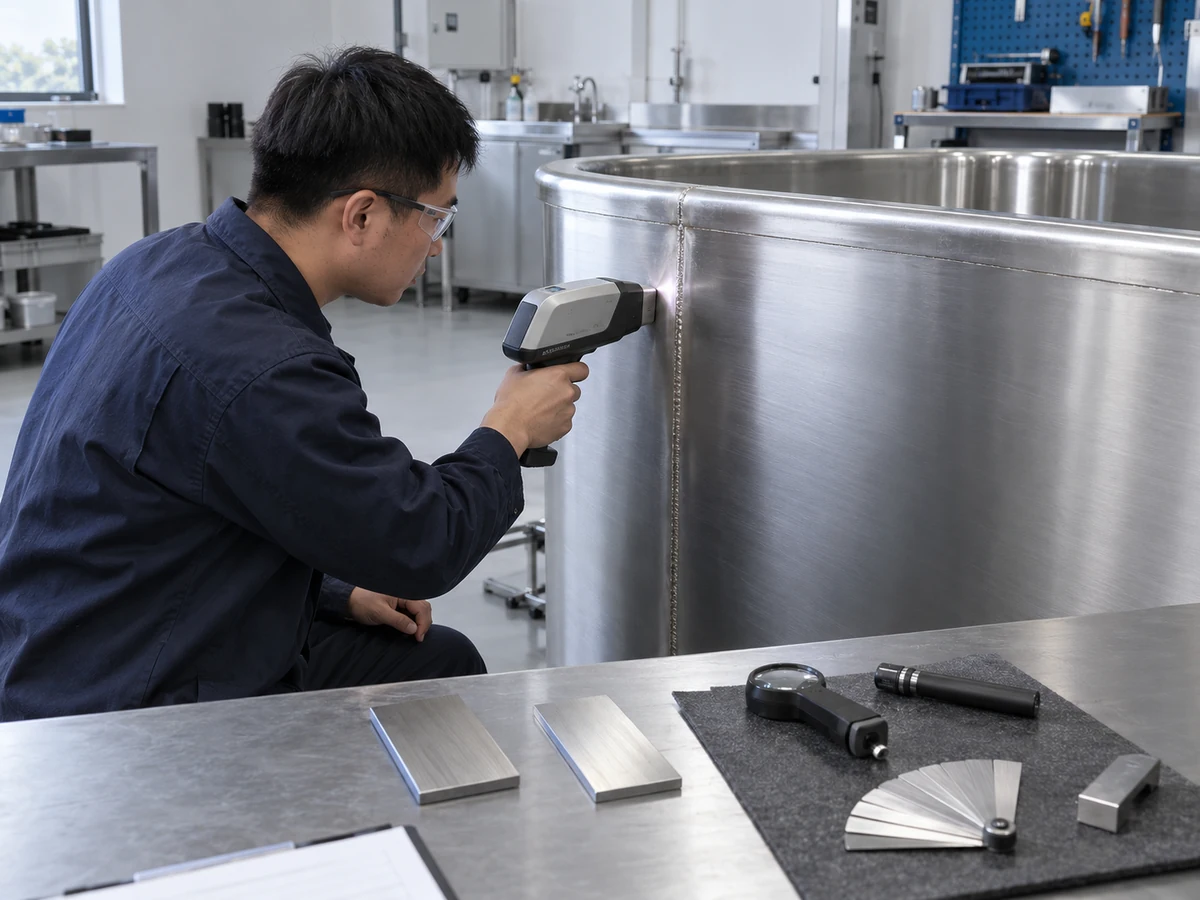
Welding stainless steel creates a heat-affected surface around the joint. If significant weld heat tint and fabrication contamination remain on surfaces exposed to water, local corrosion resistance may be weaker than the nominal grade alone suggests.
\n\n
Post-fabrication cleaning, weld finishing and—where specified—appropriate pickling or passivation treatment therefore deserve separate attention in a purchasing specification.
\n\n
The key lesson is simple:
\n\n
A 316 label cannot compensate for uncontrolled weld condition, contaminated surfaces or poor crevice detailing.
\n
\n\n
Conversely, when 304 is being considered for a less aggressive service condition, fabrication and surface quality remain part of the decision. Grade selection and workmanship are complementary controls, not substitutes.
\n\n\n
\n\n
How Water Care Changes the 304 vs 316 Decision
\n\n\n\n\n\n\n\n\n\n\n\n\n
The water-treatment program is not separate from the material specification.
\n\n
Sanitizers, salts, cleaning products and maintenance procedures determine part of the chemical environment that the stainless steel will experience. If those operating assumptions change, the corrosion assessment may change with them.
\n\n
Oxidizing chlorine chemistry and chloride-containing environments can contribute to localized corrosion of stainless steels. The practical effect depends on factors such as chemical concentration, temperature, exposure time, mixing, rinsing and whether chemicals become locally concentrated on a surface.
\n\n
This is why statements such as “316 is chlorine-proof” or “304 is safe below one universal chlorine level” are not defensible purchasing rules.
\n\n
A project review should instead ask questions such as:
\n\n
- \n
- What sanitation method is intended?
- Is salt deliberately added to the water?
- Which cleaning or descaling chemicals will contact the stainless surface?
- Are concentrated chemicals ever introduced near a stainless component?
- Are surfaces rinsed after cleaning?
- Can deposits or residues remain in joints or low-flow areas?
- What does the selected equipment or chemical manufacturer say about material compatibility?
\n
\n
\n
\n
\n
\n
\n
\n\n
Those questions are more useful than choosing a stainless grade first and designing the water-care process later.
\n\n
316 does not remove water-care responsibility
\n\n
A buyer may choose 316 because the expected service environment justifies more corrosion resistance. That does not make water chemistry irrelevant.
\n\n
Poor chemical handling, excessive local concentration, retained deposits or incompatible cleaners can still create problems. Upgrading the alloy should therefore be treated as additional corrosion margin, not permission to ignore operating controls.
\n\n
Likewise, choosing 304 does not mean the water must be treated according to an invented “304-safe recipe.” The correct cold-plunge water-care program depends on the complete cold-plunge system, sanitizer technology, manufacturer instructions and—where the equipment is operated in a regulated shared or public setting—the applicable facility requirements.
\n\n
\n\n\n
\n\n
When 304 May Be Reasonable—and When 316 Deserves Stronger Consideration
\n\n\n\n\n\n\n\n\n\n\n\n\n
A useful buying comparison is conditional rather than absolute.
\n\n
| Project condition | 304 selection logic | 316 selection logic | What still needs verification |
|---|---|---|---|
| Controlled water chemistry with no identified aggressive chloride exposure | May be a reasonable candidate when the complete fabrication and maintenance basis is suitable | May provide additional margin, but the project should determine whether that margin is necessary | Actual chemistry, component scope, fabrication, finish and maintenance |
| Higher chloride or salt exposure | Requires a more careful corrosion review | Deserves stronger consideration because of its greater localized-corrosion resistance margin | Actual chloride/salt environment and full system conditions |
| Coastal or other chloride-prone environment affecting wet surfaces | Environmental exposure should be included in the material review rather than considering the vessel water alone | Additional corrosion resistance may be useful depending on the actual exposure | Which components are exposed and how they are maintained |
| Aggressive sanitizer or cleaning chemistry | Grade alone cannot establish compatibility | Higher alloy resistance does not remove chemical-compatibility limits | Exact chemical, concentration, contact method, temperature and manufacturer guidance |
| Poor weld finishing, crevices or trapped deposits | Material upgrade does not correct the detailing problem | Material upgrade still does not correct the detailing problem | Fabrication quality, surface restoration, drainability and cleaning access |
| Buyer cannot verify the supplied alloy or component scope | The specification is incomplete | The specification is incomplete | Material identity, component mapping and order documentation |
\n
\n\n
The table intentionally avoids universal chloride, sanitizer or temperature limits. Those numbers are highly dependent on the actual service condition and should not be imported from a different application simply because the same stainless grade appears in both.
\n\n
A lower-corrosion-risk project may not need the highest alloy grade
\n\n
More alloy is not automatically more value.
\n\n
If a project has controlled water chemistry, suitable cleaning procedures, good fabrication details and no identified aggressive exposure, 304 may remain a technically reasonable candidate. The buyer still needs evidence for the exact supplied configuration, but selecting 316 by default does not eliminate that verification work.
\n\n
A more aggressive environment can justify additional material margin
\n\n
The case for 316 becomes stronger when the expected exposure creates a more demanding localized-corrosion environment.
\n\n
Examples may include greater chloride or salt exposure, environmental chloride loading or chemical conditions that place more pressure on the passive surface. The decision remains conditional because fabrication, geometry and maintenance can either support or undermine the advantage of the alloy.
\n\n
The goal is not to identify a universally superior stainless steel. It is to match the material margin to the service risk.
\n\n\n
\n\n
Buyer Trade-Offs Beyond Corrosion: Fabrication, Maintenance and Cost
\n\n\n\n\n\n\n\n\n\n\n\n\n
Material cost is part of procurement, but it should not dominate the engineering decision before the exposure is understood.
\n\n
316 contains additional alloying compared with 304 and may carry a higher material or fabrication cost depending on the market, product geometry and supplier. However, this article cannot establish a universal percentage premium, HACHILL price difference, MOQ difference or lead-time effect. Those belong to the actual quotation.
\n\n
The more useful comparison considers what the buyer receives for the additional specification.
\n\n
Alloy upgrade versus fabrication quality
\n\n
A quotation for 316 is not automatically the stronger technical offer if another important part of the specification is weak or undefined.
\n\n
Buyers should still evaluate:
\n\n
- \n
- weld condition and finishing;
- surface finish;
- crevice and drainage details;
- component interfaces;
- exposure assumptions;
- cleaning access;
- material traceability; and
- maintenance requirements.
\n
\n
\n
\n
\n
\n
\n
\n
\n\n
A supplier offering a higher nominal grade without defining these items may leave important corrosion variables uncontrolled.
\n\n
Maintenance does not disappear with 316
\n\n
Both grades require appropriate operation and cleaning.
\n\n
The expected maintenance burden depends on the complete installation rather than alloy identity alone. Deposits, residues, inappropriate cleaners or neglected local damage can remain relevant even when a more corrosion-resistant grade is selected.
\n\n
Therefore, lifecycle decisions should not be reduced to:
\n\n
higher alloy cost now = lower total cost later.
\n
\n\n
Such a conclusion would require project-specific pricing, maintenance history and service-life evidence that is not established by a generic material comparison.
\n\n
Compare quotations on the same basis
\n\n
If one supplier quotes 304 and another quotes 316, first make sure the offers describe the same component scope.
\n\n
A 316 liner with unidentified fittings is not directly comparable with a quotation that defines the material of the liner, drains, fasteners and other wet components separately.
\n\n
Likewise, “316 stainless” should not be treated as equivalent to “316 stainless, specified surface finish, defined weld treatment and order-specific material traceability.” The second description contains substantially more procurement information.
\n\n
The most useful trade-off comparison is therefore not just price versus grade. It is price versus a clearly defined and verifiable material system.
\n\n\n
\n\n
How to Specify and Verify Stainless Steel Before RFQ or Approval
\n\n\n\n\n\n\n\n\n\n\n\n\n
A buyer should convert the material decision into a specification that another supplier can read and quote consistently.
\n\n
At minimum, define what is being specified before asking whether it should be 304 or 316.
\n\n
1. Identify the exact component
\n\n
State whether the stainless requirement applies to:
\n\n
- \n
- the main water-contact liner;
- internal fittings;
- drain components;
- fasteners;
- exposed covers or trim;
- other wet-prone components; or
- a defined combination of these.
\n
\n
\n
\n
\n
\n
\n
\n\n
Do not assume that one material statement describes every component in the assembly.
\n\n
2. State the material designation and applicable basis
\n\n
Use an exact material designation and, where relevant to the purchasing specification, the applicable material standard.
\n\n
For example, ASTM A240/A240M is a material specification covering stainless plate, sheet and strip. It can support material requirements within its scope, but citing the standard does not prove that a finished cold plunge is suitable for a particular water chemistry, sanitation program or jurisdiction.
\n\n
The same distinction applies to fabrication and passivation documents. ASTM A380/A380M addresses cleaning, descaling, pickling and passivation practices, while ASTM A967/A967M covers chemical passivation treatments and associated testing. These documents do not choose the correct alloy for the buyer and do not constitute complete product certification.
\n\n
3. Define fabrication and surface requirements separately
\n\n
If corrosion performance depends on weld finishing, surface condition or a post-fabrication treatment, state those requirements separately instead of assuming they are included in the words “304 stainless” or “316 stainless.”
\n\n
A useful RFQ may therefore need to identify, where applicable:
\n\n
- \n
- required surface finish;
- weld-finish expectation;
- post-fabrication cleaning requirement;
- pickling/passivation requirement if specified by the project;
- areas where crevice control or drainage matters; and
- documentation needed to confirm the agreed condition.
\n
\n
\n
\n
\n
\n
\n\n
“Passivated stainless” should not be used as an undefined synonym for corrosion-proof material.
\n\n
4. Give the supplier the actual service assumptions
\n\n
A material recommendation is only as useful as the exposure information behind it.
\n\n
Provide the relevant inputs, such as:
\n\n
- \n
- intended water-treatment method;
- known salt or chloride exposure;
- cleaning and sanitation chemicals;
- site or coastal exposure where relevant;
- expected maintenance method; and
- any project-specific material or documentation requirement.
\n
\n
\n
\n
\n
\n
\n\n
If exact chemical compatibility is important, use the selected chemical and equipment manufacturers’ current instructions rather than extrapolating from a generic stainless chart.
\n\n
5. Ask what evidence confirms the ordered material
\n\n
The required evidence should match the claim being verified.
\n\n
A material record or order-specific document may support alloy identity within its stated scope. It does not automatically prove whole-product corrosion performance, sanitation compliance or destination certification.
\n\n
The buyer should be able to answer:
\n\n
- \n
- Which exact component does this material record cover?
- Does the designation match the purchase specification?
- Is the documentation traceable to the ordered configuration?
- Are specified fabrication or surface treatments documented separately where required?
- Does the final product configuration still match the approved material requirement?
\n
\n
\n
\n
\n
\n\n
That turns “304 vs 316” from a marketing comparison into a procurement control.
\n\n
A HACHILL-specific boundary
\n\n
HACHILL’s current cold-plunge range includes multiple models described with 304 Stainless Steel or 304SS. That is useful product-level context, but it should still be confirmed against the exact model and ordered configuration when material identity is important to the project.
\n\n
Current evidence used for this article does not establish a general HACHILL 316 offering. A project that requires 316 should therefore treat availability, component scope, finish and related documentation as configuration questions to be confirmed rather than assumed.
\n\n\n
\n\n
Frequently Asked Questions
\n\n\n\n\n\n\n\n\n\n\n\n\n
Is 316 stainless steel necessary for every cold plunge?
\n
No. 316 generally offers more corrosion-resistance margin than 304 in demanding conditions, particularly where chloride-related exposure is more significant, but that does not make it necessary for every installation. The correct grade depends on the actual water chemistry, site exposure, fabrication, surface condition, geometry and maintenance basis.
\n
\n\n
Can 316 stainless steel still corrode in a cold plunge?
\n
Yes. 316 is more resistant than 304 under many aggressive conditions, but it is not corrosion-proof. Pitting and crevice corrosion can still occur when the local environment is sufficiently aggressive or when design, deposits, fabrication or chemical exposure create unfavorable local conditions.
\n
\n\n
How do salt, sanitizer chemistry and cleaners affect the 304-vs-316 decision?
\n
They form part of the corrosion environment. Salt or chloride exposure and some oxidizing cleaning or sanitation chemicals can increase localized-corrosion risk. The practical effect depends on the actual chemical, concentration, temperature, contact time, rinsing and local geometry, so compatibility should be checked against the intended operating and cleaning program rather than a universal stainless limit.
\n
\n\n
How can a buyer verify that the specified stainless grade is actually supplied?
\n
Tie the requested grade to an exact component and require appropriate order-specific documentation or material traceability for that scope. Surface finish, weld treatment and any specified pickling or passivation requirements should be verified separately. A material designation or certificate should not be treated as proof of the entire product’s corrosion performance or regulatory approval.
\n
\n\n\n
\n\n
Turn the Alloy Choice into a Project Specification
\n\n\n\n\n\n\n\n\n\n\n\n\n
The strongest 304-versus-316 decision is one that can be traced back to the actual service condition.
\n\n
Before requesting a material recommendation or quotation, define the cold-plunge configuration, which components require stainless steel, the expected water-treatment and cleaning method, relevant salt or chloride exposure, the installation environment and any required material documentation.
\n\n
That information allows the material choice to be reviewed as part of the complete product configuration rather than as an isolated alloy upgrade.
\n\n
For a HACHILL project, provide the intended model or format, site and water-care conditions, component-level material requirements and required documentation so the configuration can be reviewed before quotation. Final material availability and suitability remain subject to the selected model, exact configuration and applicable project requirements.
\n\n
Have a defined cold-plunge project?
\n
Send the intended format or model, water-care method, site exposure, component-level stainless requirement and required documentation for configuration review.
\n\n\n
\n\n
\n\n