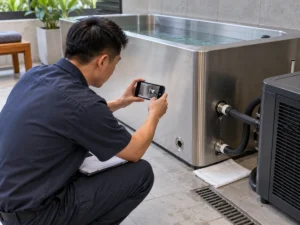
Neither an electric nor a wood-burning sauna heater is universally cheaper. Compare the complete installed and operated system, not the heater or stove sticker price. Electric systems can shift cost toward controls, fixed electrical work and the local electricity tariff. Wood-burning systems can shift cost toward chimney or flue components, protective building work, firewood handling and combustion-system maintenance. The result changes with the exact equipment package, what infrastructure already exists at the property, local energy or fuel pricing, use frequency and the owner’s operating burden. A site that already supports one route can produce a very different result from a site that must build that infrastructure from scratch. For a fair comparison, put both options on the same scope, use pattern and evaluation period before deciding which costs less.
A practical comparison separates four cost layers:
- Equipment price — the heater or stove and the components required to make the selected system operable.
- Installed infrastructure — electrical, chimney, venting, protective or other site work that must still be created.
- Operating input — electricity or firewood under the project’s actual local conditions.
- Ownership burden — maintenance, fuel handling, ash, servicing and operator time that matter to the owner.
The cheaper heater can still become the more expensive project if the surrounding infrastructure and ownership costs are different.
Electric vs Wood-Burning Sauna Heater Cost: Compare the Same Scope
The first mistake is comparing an electric-heater price with a wood-stove price and treating the lower number as the cheaper project.
Those prices answer only the equipment question. A usable comparison asks what must be added to each option before the sauna-heating system is installed, operable and maintainable.
| Cost layer | Electric heater | Wood-burning stove |
|---|---|---|
| Equipment | Heater, required stones, controls, sensors and other model-specific components | Stove, required stones, stove accessories and other model-specific components |
| Installed infrastructure | Fixed electrical connection, control installation, routing and any site upgrades required by the selected system | Chimney or flue connection, protective work, routing and other building interfaces required by the selected system |
| Operating input | Actual electrical energy used at the applicable tariff | Actual firewood used at the delivered or otherwise relevant local fuel cost |
| Ownership burden | Stone, heater, control and electrical-system inspection or service as applicable | Fuel handling, ash, stove care, stones, chimney/flue inspection or service and other combustion-system tasks |
The useful sequence is:
equipment price → installed-system cost → operating cost → ownership burden
Each layer answers a different question. That is why neither “electric is cheaper” nor “wood is cheaper” works as a reliable general rule.
Cost question to answer: What must be added to each option before it becomes a complete installed and usable sauna-heating system?
This page stays focused on cost. The broader decision about heater type, sizing and exact model belongs to the heater-selection process after the project inputs are known.
The Electric Cost Stack: Heater, Controls, Electrical Work and Local Power Rates
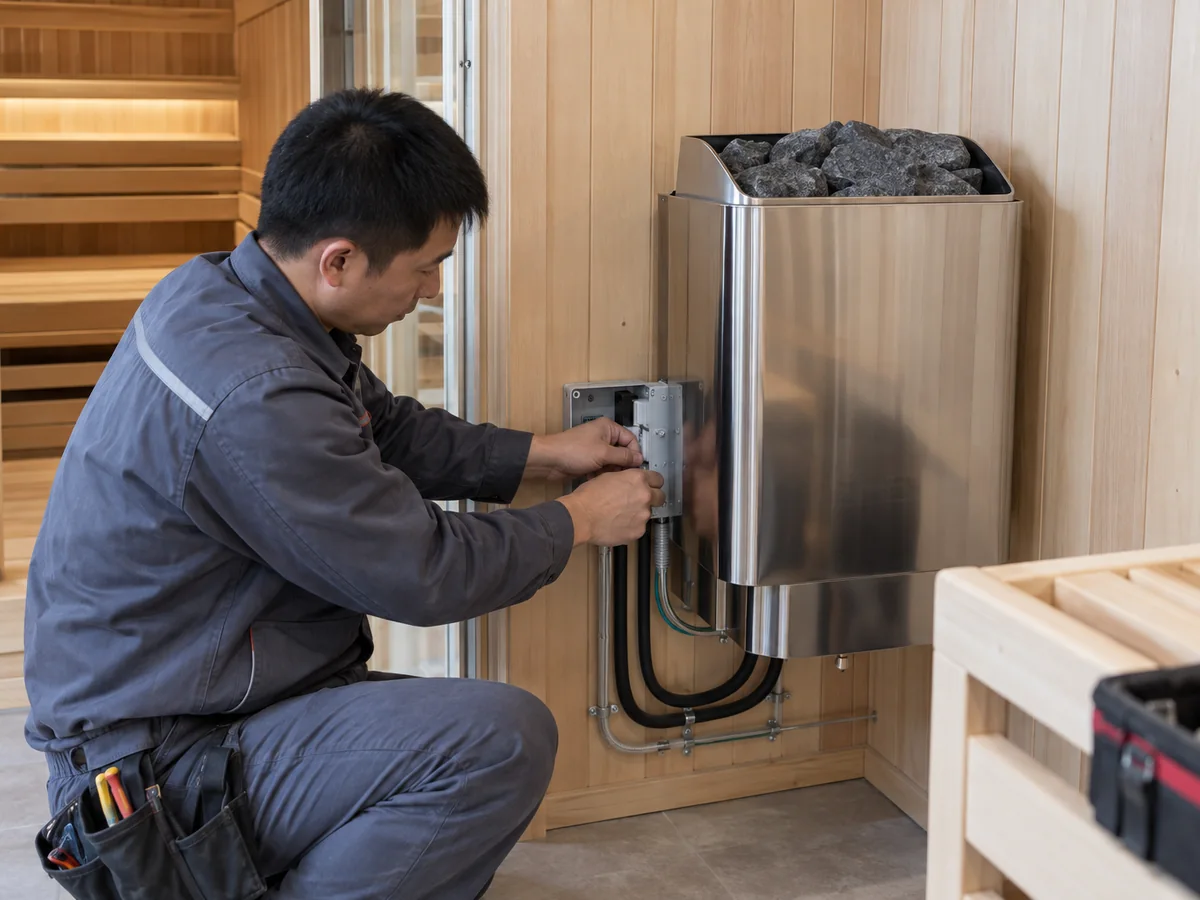
The electric cost stack begins with the heater, but the base equipment price may not include the complete operating system.
Equipment and Control Costs
Electric sauna heaters do not all use the same package or control architecture. Some use built-in controls, while others require or support a separate controller. Stones, sensors, control equipment and other components also depend on the exact product.
Quote check: What does this heater require to operate as the specified system, and which required items are included in the quoted equipment price?
A current manufacturer example shows why this matters. HUUM’s U.S. CORE installation and operation manual states that the CORE heater delivery set contains the heater and listed installation components, while a control system and sauna stones are additionally required.
That is a product-specific example, not a rule for every electric sauna heater. Before comparing prices, verify:
- the exact heater model;
- required stones;
- compatible controls;
- required sensors or other system components;
- what is included in the quoted equipment scope; and
- what must be purchased or installed separately.
If remote control, scheduling or other advanced functions matter to the project, confirm compatibility and included components for the exact control system rather than assuming those functions are standard.
When Electrical Site Work Changes the Installed Cost
The next cost layer belongs to the property. Exact electrical requirements vary by heater model, power rating, supply configuration and jurisdiction. Installed cost therefore depends on both the equipment requirements and what the site can already support.
Potential cost drivers can include:
- fixed electrical connection;
- cable or connection routing;
- control installation;
- disconnecting or control equipment where required by the selected system or local rules;
- and additional site infrastructure where the existing electrical system cannot support the selected equipment as designed.
This does not mean every electric sauna requires a major electrical upgrade. It means a heater price cannot establish the electrical installation cost by itself.
Two properties considering similar equipment can face very different installed costs because one already has a practical supply and routing path while the other needs material additional work.
Do not infer conductor size, breaker size, disconnect requirements or other fixed-wiring details from a generic cost article. Final electrical work must follow the equipment nameplate, the exact manufacturer instructions and the rules applicable to the installation location, using appropriately qualified professionals where required.
Electric Operating Cost: Use Actual Energy and the Applicable Tariff
Electric operating cost is local and project-specific. A useful screening estimate is:
estimated or measured kWh per session × applicable electricity rate × expected sessions
For U.S. context, the U.S. Energy Information Administration’s monthly state-by-sector electricity table shows that average retail prices vary by state and customer sector. It is useful as a market benchmark, but it is not a substitute for the project’s actual utility tariff, time-of-use structure, demand charges or other billing terms.
That distinction matters for B2B projects. A hotel, gym, spa or other commercial operator should use the tariff that actually applies to the site rather than a residential national average.
For screening, use energy actually expected to be consumed—not a made-up nationwide “cost per sauna session.” Nameplate power alone does not describe every minute of real operation because control behavior, room conditions, warm-up, door openings and session length can change energy use.
The Wood-Burning Cost Stack: Stove, Chimney, Site Work and Firewood
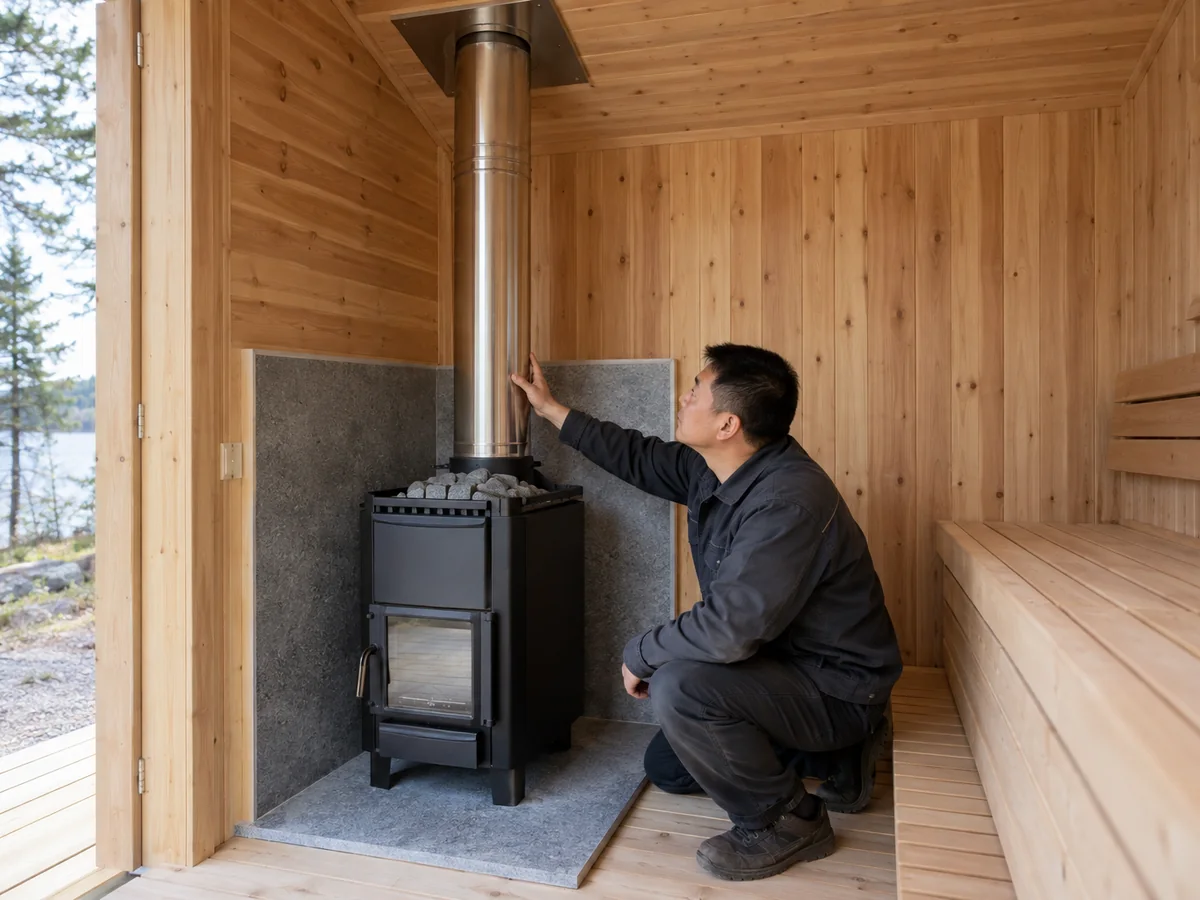
A wood-burning stove price is also only the first line item. The installed system needs a safe path for combustion products, and the stove package does not necessarily include every component required to create that system.
Stove and Venting Infrastructure
The wood-side quote should answer two separate questions: What does the stove cost? and what still has to be added to make the selected stove a complete installed system?
Depending on the product, building and jurisdiction, the cost scope can include:
- the stove;
- required stones or accessories;
- chimney or flue components;
- the connection between stove and venting system;
- installation;
- applicable floor, wall or other protective work;
- roof, wall or other building-interface work created by the final route; and
- inspection or permit-related costs where they apply.
A current manufacturer example illustrates the scope distinction. HUUM’s HIVE Wood guidance states that sauna stones and the connection with the chimney are not included in the HIVE Wood set and must be obtained separately.
That is a HUUM-specific example, not a packaging rule for every wood-burning sauna stove.
Required does not automatically mean included.
Exact chimney configuration, stove clearances, protective measures and connection details are model- and site-specific. Those details matter here because they can change installed cost—not because this article should substitute for the stove manual or a chimney design.
Fixed electrical work, chimney or flue work, and protective building work are cost categories here, not DIY installation instructions. Actual installation should follow the selected equipment documentation and applicable local requirements, with appropriately qualified professionals used where required.
If the comparison develops into construction, envelope, chimney or building-interface planning, continue with HACHILL’s How to Build a Sauna guide.
Fuel, Ash and Chimney Responsibilities
Wood-burning also adds ongoing costs and responsibilities after installation. Depending on the stove and site, these can include:
- sourcing firewood;
- delivery and storage;
- ash handling;
- stove and firebox care;
- stone inspection or maintenance;
- chimney or flue inspection, cleaning and servicing; and
- other tasks required by the selected stove and venting system.
The actual firewood cost is local. Purchased wood, self-sourced wood, delivery distance, storage, moisture condition, fuel consumption and use frequency can all change the result.
A simple screening model is:
estimated firewood used per session × relevant delivered fuel cost × expected sessions
If firewood is self-sourced, the cash fuel price may be low, but that does not automatically make the full ownership burden zero. Collection, processing, storage and operator time may still matter to the buyer, even if the buyer chooses not to assign those activities a dollar value.
The useful wood cost stack is:
stove → required system components → chimney/flue → site work → installation → firewood → ownership maintenance
Which Costs More to Install? The Existing Site Can Reverse the Answer
There is no reliable universal installed-cost winner. The decisive question is often:
Which expensive infrastructure does this property still need to create for the candidate system?
On the electric side, the result can be influenced by:
- the candidate heater and controls;
- existing electrical infrastructure;
- supply capacity and compatibility for the selected equipment;
- connection distance and routing; and
- material electrical work still required.
On the wood-burning side, the result can be influenced by:
- the candidate stove;
- required venting system;
- chimney or flue routing;
- stove position;
- protective and building-interface work; and
- material installation work still required.
This can reverse the result from one property to another.
Illustrative Site A: the property already has a practical electrical route for the candidate electric system, while a wood-burning installation would require substantial new chimney and building-interface work. The electric route may have the lower installed-cost exposure even if its heater price is higher.
Illustrative Site B: the property has significant unresolved electrical work, while an appropriate wood-stove and venting route can be integrated with less new infrastructure. The result may move the other way.
These are illustrative scenarios, not HACHILL customer projects. They explain the cost mechanism without claiming that either heater type is generally cheaper.
A stronger comparison uses equivalent quotation scopes:
- candidate equipment;
- included and excluded components;
- material electrical or venting work;
- site and building-interface work;
- installation labor;
- inspection or permit scope where applicable; and
- the same tax, freight and other commercial assumptions where those costs are material.
If one quote contains only equipment while the other already includes major installation work, the numbers are not yet comparable.
Which Costs More to Own? Compare Energy, Fuel, Maintenance and Operator Time
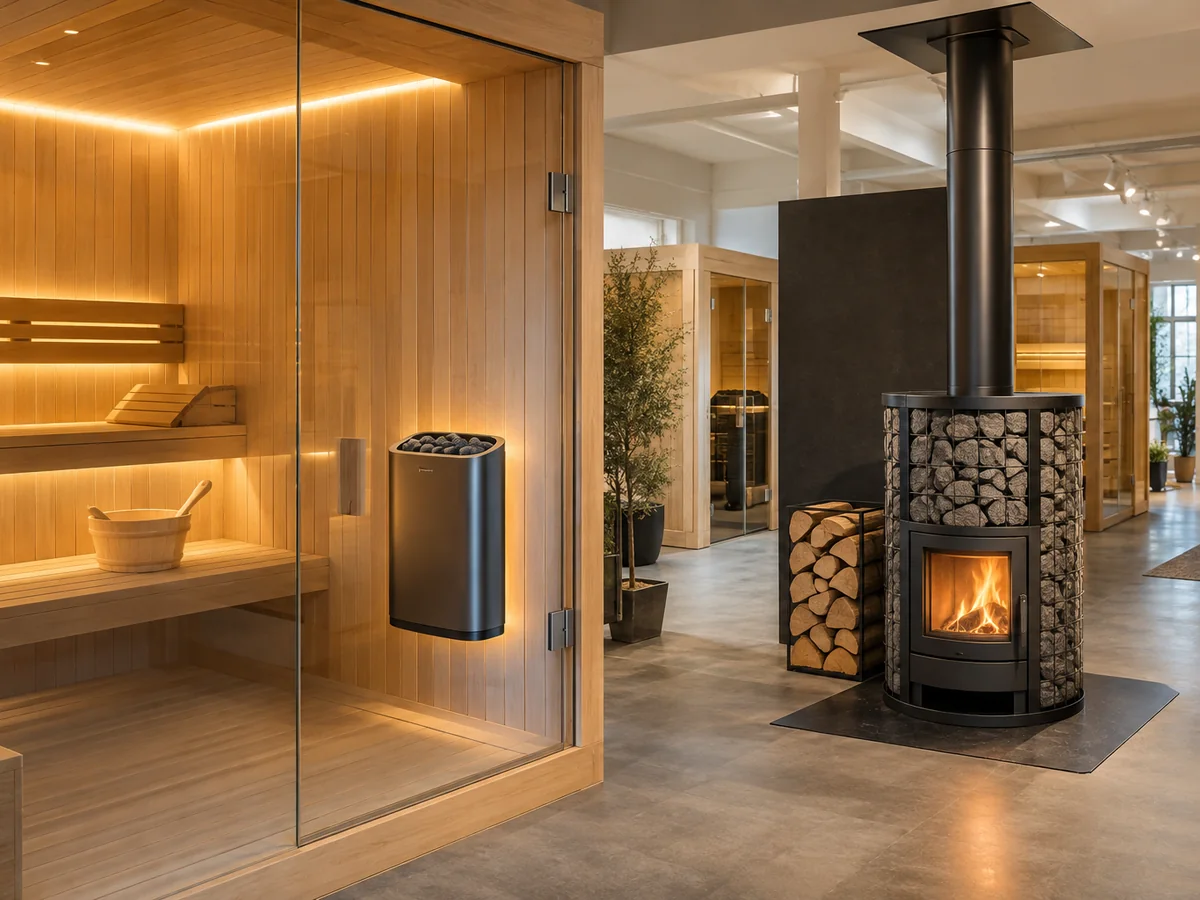
Installed cost is only the first half of the comparison. Long-term ownership depends on local energy or fuel, use frequency, maintenance and how much operating work the owner accepts.
Normalize the Use Pattern Before Comparing Operating Cost
Electric and wood-burning estimates should use the same assumed operating pattern. If the electric estimate represents frequent use while the wood estimate represents occasional use, the comparison is measuring two different ownership cases.
At minimum, record:
- sessions per week or month;
- typical warm-up and occupied-use pattern for the actual room;
- local electricity tariff or firewood cost basis;
- seasonal conditions if they materially change operation;
- maintenance items included in the comparison; and
- the evaluation period.
Do not assume a universal heat-up time or fuel quantity. Room volume, glazing, insulation, ambient conditions, door opening, heater/stove selection and operating practice can change both.
Use Frequency Changes the Cost Profile
A sauna used frequently creates a different ownership profile from one used occasionally. More electric use increases energy consumption and usage-related wear exposure. More wood-burning use means more firewood, firing, ash handling and combustion-system activity.
Operator preference also matters, but it should be kept separate from technical or financial claims. An owner who values tending a wood fire may accept more session-by-session work than an owner who wants minimal operating involvement. That preference does not prove that one heater has technically superior heat or lower cost.
Maintenance Is a Different Cost Set, Not “Maintenance vs No Maintenance”
Electric sauna heaters are not maintenance-free. Depending on the system and use, ongoing responsibilities can include:
- stone inspection and replacement as needed;
- heater condition;
- controls or safety components;
- heating elements; and
- qualified electrical service where needed.
Wood-burning creates a different set that can additionally include:
- firewood handling;
- ash removal;
- stove and firebox care;
- chimney or flue inspection and cleaning; and
- other combustion-system responsibilities defined by the selected stove and local practice.
Ownership question to answer: Which maintenance and operating responsibilities come with each option, and do they matter to this owner or operator?
Operator time belongs in that discussion, but it should not be converted into a fabricated universal hourly cost.
A realistic ownership comparison keeps four inputs visible:
local energy or fuel + equivalent use pattern + maintenance + operating burden
When Should You Put the Cost Comparison on HOLD?
Sometimes there is not enough information to call either route cheaper. The correct decision is to stop the cost conclusion until the missing input is known.
HOLD the cost conclusion when one side still has unresolved scope that could materially change the result.
Here, HOLD is only a cost-screening label used in this article. It does not mean a heater has passed or failed engineering review, code review, permitting or installation approval.
| Missing or unresolved input | Cost-comparison result |
|---|---|
| Exact electric heater/system scope is unknown | HOLD the electric equipment-cost conclusion |
| Material electrical site work is unknown | HOLD the electric installed-cost conclusion |
| Required electric components are unknown | HOLD the equipment-scope comparison |
| Exact wood stove/system package is unknown | HOLD the wood equipment-cost conclusion |
| Material chimney, venting or site work is unknown | HOLD the wood installed-cost conclusion |
| Local electricity or firewood basis is unknown | HOLD the operating-cost conclusion |
| The two options use different session-frequency or evaluation-period assumptions | HOLD the ownership-cost comparison |
| One quote is equipment-only and the other includes major installation work | HOLD the overall comparison |
| Only heater/stove sticker prices are known | HOLD the overall winner |
| Both system scopes, major installation inputs and local operating assumptions are reasonably defined | Compare the cost structures |
Three mistakes deserve particular attention.
Sticker-price-only comparison.
Knowing that one stove costs less than one electric heater does not establish which installed system costs less.
Unequal quote scope.
Equipment-only pricing cannot be fairly compared with a quote that already includes substantial electrical, chimney or installation work.
Different operating assumptions.
Electric and wood estimates must use reasonably equivalent use patterns and evaluation periods before their ownership costs are compared.
Before requesting pricing or making a final comparison, prepare:
- candidate equipment and model family;
- included and excluded components;
- major electrical work;
- major chimney, venting or site work;
- local electricity tariff basis;
- local firewood cost basis;
- expected use frequency and operating pattern;
- evaluation period; and
- major maintenance or operator assumptions.
Once the cost picture is mature enough, the next decision is no longer simply “which one costs less?” It is whether the project should proceed with the electric or wood-burning route and which exact heater configuration fits the sauna, site and operating duty.
For that broader selection step, continue to HACHILL’s Sauna Heater Buying Guide. If you are comparing a specific B2B or commercial project and some pricing inputs or the exact model are still being defined, prepare the known project information and request a project quote.