Quick answer: specify exposure, not a broad climate label
An outdoor sauna should be specified from the conditions the product will actually face, not from a label such as hot, cold, wet or coastal. Start with traceable regional climate information, then document the exact site exposure: wind and rain direction, snow and frost risk, solar exposure, humidity, salt or poolside air, ground moisture, drainage, foundation condition, utility routing and maintenance access. Convert those inputs into product and site questions before confirming the model.
Do not turn “cold climate” into a generic heater multiplier or “coastal” into a universal material rule. The selected sauna, heater documentation, site design and local requirements still control the final thermal, structural, electrical and weather-protection decisions.
A useful sequence is: regional climate data → exact site exposure → product and site requirements → thermal and electrical recheck → RFQ readiness.
Start with Traceable Climate Data
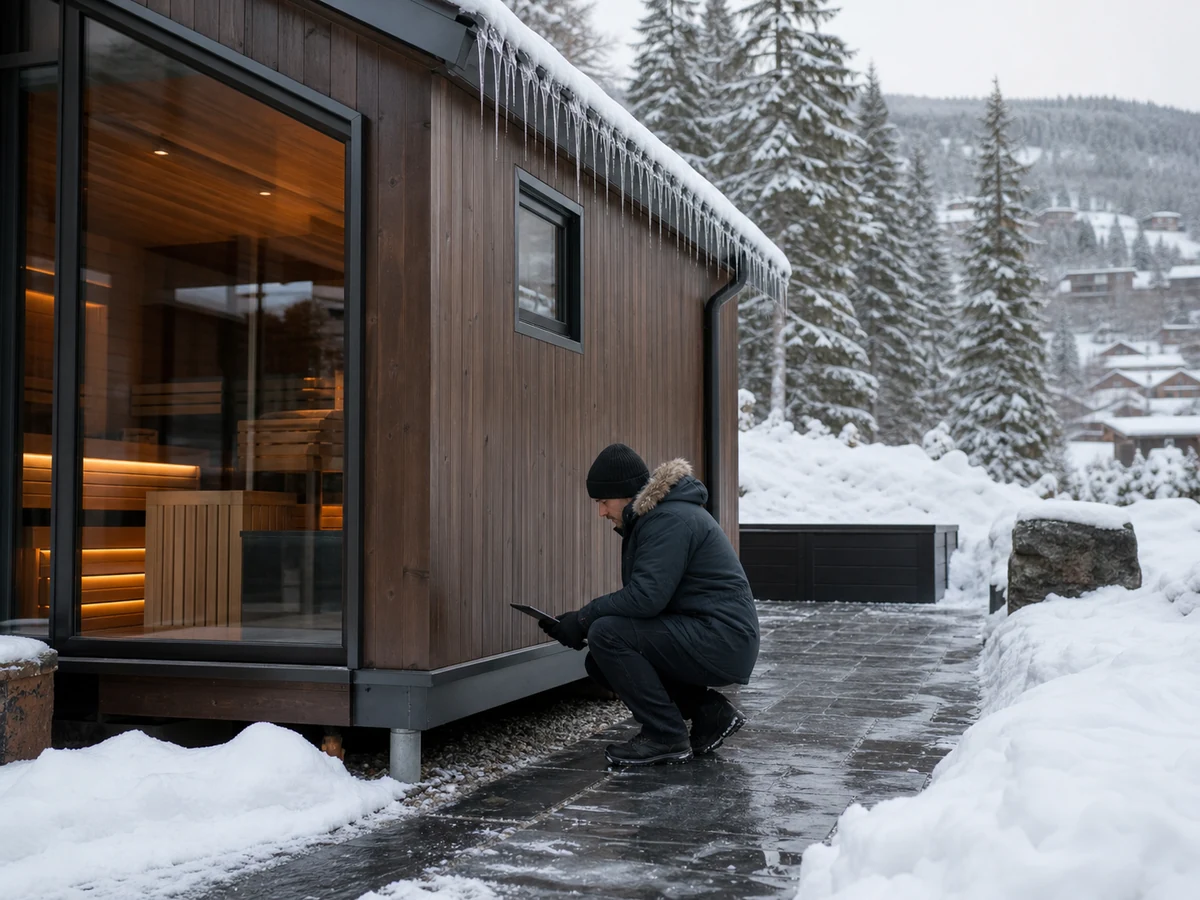
Use project-location data for temperature range, rainfall, snow, wind, humidity, solar exposure and coastal context where those conditions are relevant. A country, state or broad climate label is too coarse for final product and site decisions. Two sites in the same market can have different runoff, wind exposure, shade, access and maintenance conditions.
The World Meteorological Organization’s climatological normals guidance explains how long-period climate averages are used as a reference for conditions likely to be experienced at a location. For a project specification, those normals are a baseline rather than a complete design condition: use the responsible local meteorological or project source for the actual location, and separately identify site-specific exposure or extreme-condition requirements that may affect the project.
General building-envelope guidance supports the same exposure-first logic. The Whole Building Design Guide moisture-management guidance describes how rainwater can be driven by gravity, capillary action, surface tension, air-pressure differences and wind loading, with openings, joints, roof lines and wall bases acting as important moisture interfaces. That guidance is not a HACHILL product specification; it supports the engineering principle that water source, path and discharge matter.
Survey the Exact Sauna Location
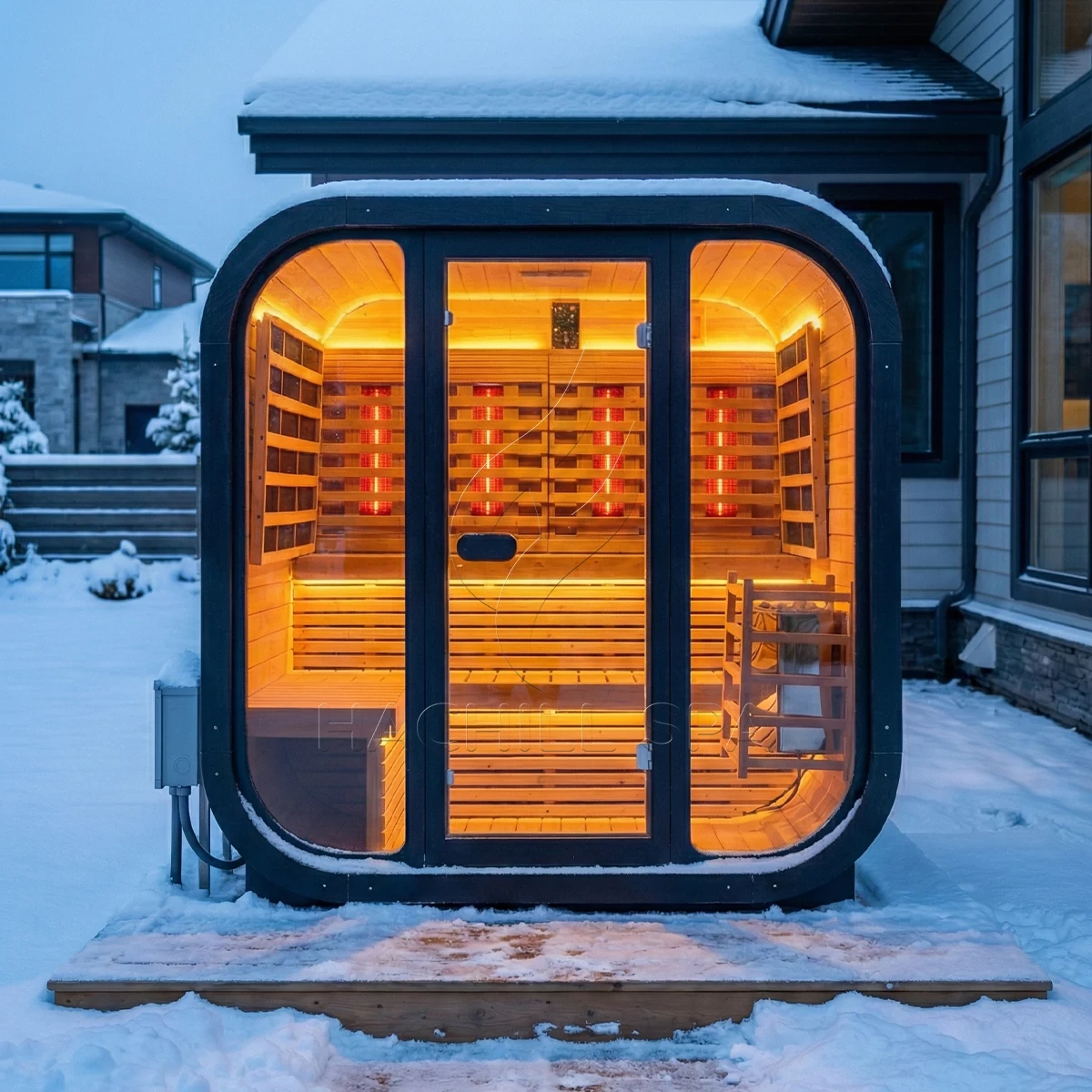
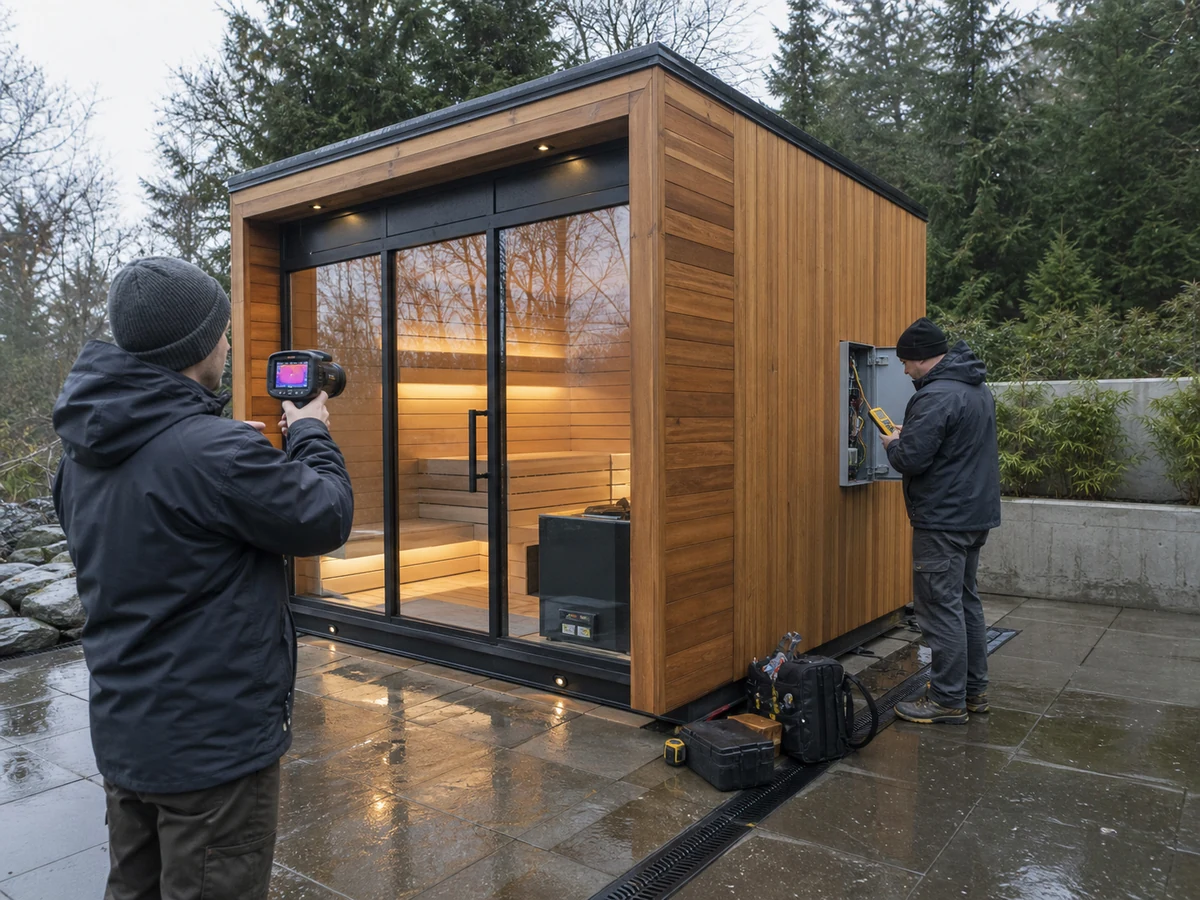
The microclimate around the sauna can change the project even when the regional climate is the same. Check whether the product sits under trees, beside water, near a pool, below a roof discharge, against a wall, on a slope, in deep shade or in an exposed wind corridor. These conditions can change runoff, splash, drying, cleaning, foundation and service-access requirements.
Micro decision example: same region, different site
Consider two projects in the same city. One sauna sits on an open, drained pad with clear service access; another sits below a roof edge beside a pool. The regional weather data may be identical, but the second site adds roof runoff, splash, chemical-laden moisture and maintenance interfaces. The climate label has not changed; the specification inputs have.
Survey the water path as well as the weather. Identify where roof runoff, snowmelt, irrigation, pool splash, cleaning water and surface drainage can reach the enclosure or base, then confirm where that water can leave without being trapped around supports, thresholds, penetrations or service zones.
Once the exposure is defined, use the outdoor sauna weatherproofing checklist to review how water is managed across the roof or upper shell, openings, penetrations, base and drainage path. This climate guide owns the exposure inputs; the weatherproofing guide owns the water-management interfaces.
Translate Exposure into Product and Site Requirements
Climate data is useful only when it changes a specification question. Record each relevant exposure, identify the interface it can affect, and route that question to the product documentation, site designer, installer or responsible local professional as appropriate.
| Exposure | Specification question | Typical project impact to review |
|---|---|---|
| Rain, humidity and slow drying | Where does water arrive, drain and dry, and which interfaces stay wet longest? | Roof and opening details, joints and penetrations, base drainage, drying path and maintenance access |
| Freeze, snow and ice | What are the frost, snow, ice, snowmelt and runoff conditions at the support, roof discharge and entry? | Foundation context, safe access, roof and drainage coordination, freeze/thaw exposure and service planning |
| Wind and exposed terrain | Which faces receive prevailing wind or wind-driven rain, and is the site unusually exposed? | Envelope interfaces, doors and openings, anchorage or structural review where required, and rain-entry risk |
| Sun, heat and strong solar exposure | Which surfaces receive prolonged direct sun and large daily temperature swings? | Exterior finish care, material movement, glazing and user-comfort review, shade strategy and maintenance frequency |
| Coastal, salt or poolside air | What corrosion, deposit and cleaning exposure will fasteners, fittings and electrical interfaces face? | Material and finish review, compatible hardware, cleaning plan, inspection access and replacement planning |
| Ground moisture and poor drainage | Can water pond, splash or wick around supports, lower walls, thresholds or utility penetrations? | Finished grade, support interface, drainage route, inspection access and protection from persistent wetting |
These are review categories, not universal prescriptions. For example, the Association for Materials Protection and Performance notes that corrosion behavior depends on environmental conditions such as humidity and salt-water exposure as well as the material and service context. That supports a corrosion review for coastal or poolside sites; it does not justify one universal fastener or finish specification for every outdoor sauna.
Do not convert exposure labels into unsupported product claims
Terms such as “winter-ready,” “all-weather” or “coastal suitable” are only useful when the supplier can show what they mean for the exact model and supplied scope. Ask which roof or shell components are included, which exterior materials and finishes are used, which hardware is exposed, what maintenance is required, and which site works remain outside the product package.
If a site condition could affect structural resistance, anchorage, snow or wind design, foundation work, electrical installation or local approval, route that condition to the responsible project discipline instead of treating the product brochure as a substitute for project engineering.
Recheck Thermal and Electrical Assumptions
Outdoor conditions can change the thermal and operating context around the selected sauna, but a climate label is not a heater-sizing formula. Record the finished heated-room dimensions, glazing and other exposed surfaces, enclosure construction, expected operating duty and unusual ambient conditions, then apply the sizing method published for the exact heater system being evaluated.
For deeper sizing logic, use the sauna thermal design and heater sizing guide. That guide separates geometric room volume, manufacturer-specific surface adjustments, operating-duty review and final electrical verification.
Cold weather is a review trigger, not a universal multiplier
A cold or windy outdoor site may justify a closer review of the enclosure, warm-up expectations, door use and the candidate heater’s documented room range. It does not justify inventing a percentage heater allowance that the selected manufacturer does not publish.
Electrical requirements remain equipment- and jurisdiction-specific
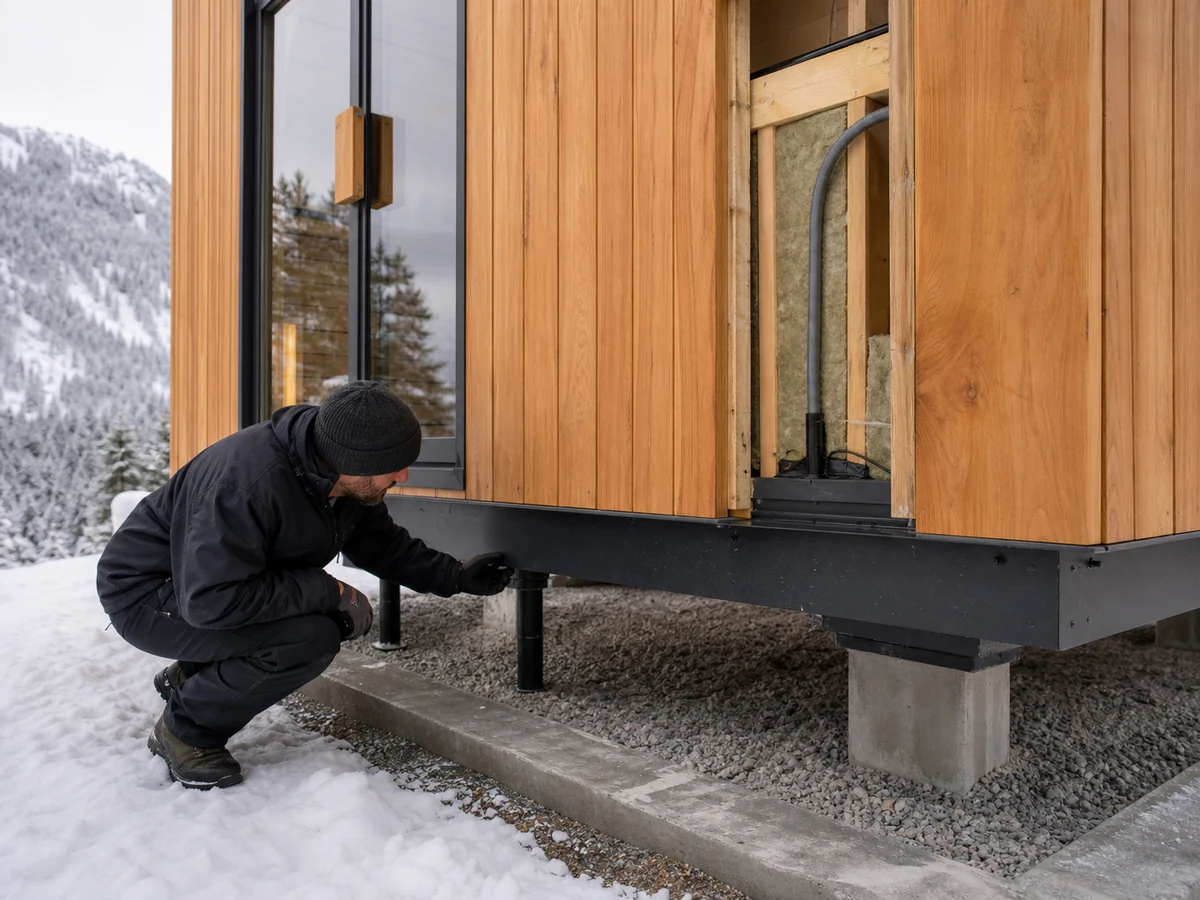
Outdoor routing can add weather-exposure, disconnect, enclosure, cable-routing or local installation considerations, but the exact requirements depend on the selected equipment and jurisdiction. Final conductor sizing, overcurrent protection, disconnects, controls, sensors and fixed connections should follow the equipment documentation and applicable project and local electrical requirements. Do not derive a universal breaker or conductor rule from climate or heater kW alone.
Keep the scopes separate: this page identifies climate and site inputs that may require review; the thermal-design guide owns heater-sizing logic, and the selected equipment documentation and responsible project electrical review own the final electrical basis.
Build a Climate Specification Data Sheet
Before requesting a final product recommendation, collect the site information that can change the decision. Mark each field as confirmed, estimated or still requiring project review.
- Project location: city/region and exact installation setting where available.
- Regional climate inputs: relevant temperature range, rain, snow, wind, humidity and solar exposure.
- Microclimate: nearby water, pool splash, trees, roof runoff, walls, slopes, shade and exposed wind paths.
- Ground and support: foundation status, finished grade, drainage path, frost or settlement concerns requiring project review.
- Product exposure: roof/shell, doors, glazing, penetrations, lower enclosure and exposed hardware.
- Utilities: available electrical context, route to the sauna and any outdoor service interfaces already defined.
- Operation: expected use pattern, door-opening frequency and commercial or intensive-use context where relevant.
- Maintenance: access for inspection, cleaning, finish care and replacement of serviceable components.
- Local project requirements: known approval, structural, electrical or site requirements that must be coordinated by the responsible parties.
Climate specification release gate
| Decision question | READY direction | HOLD / clarify when |
|---|---|---|
| Is the project location defined? | The actual site is known well enough to gather relevant climate and exposure inputs | Only a country or broad region is available |
| Is the exact microclimate understood? | Nearby runoff, water, structures, slopes, shade, wind and access conditions have been reviewed | A local site condition could still materially change exposure or service access |
| Are the main exposure categories recorded? | Rain, wind, snow/frost, sun, humidity, ground moisture and coastal or poolside context are addressed as relevant | A material exposure remains unknown or is being replaced by a generic climate label |
| Are product and site boundaries clear? | Included weather parts, site drainage, foundation, utility route and maintenance access are identified | Site work could still change product fit, water paths or installation assumptions |
| Are thermal and electrical questions routed correctly? | They are flagged for model-specific sizing and electrical review | Climate data is being used as a substitute for final heater or electrical design |
READY FOR RFQ means the project has enough climate and site information for product-fit review and quotation clarification.
HOLD / REQUEST MISSING INPUT means an unresolved exposure or site condition could still change product selection, site work, technical review or responsibility boundaries.
Frequently Asked Questions
Can one outdoor sauna specification work in every climate?
No. The same model route may need different site work, weather scope, structural or electrical review and maintenance planning depending on the actual location and exposure.
Is cold climate only a heater-sizing issue?
No. Cold-climate projects can also require review of frost, snow and ice, foundation conditions, roof discharge, access, drainage, materials, door use and operating expectations. Heater sizing remains a separate model- and project-specific check using the selected manufacturer’s method.
Does a coastal site automatically require one specific material?
No. Salt exposure increases the importance of corrosion review, but the correct material, coating, fastener and maintenance plan depends on the actual components, exposure severity, product design and project requirements. Confirm the supplied material schedule and maintenance instructions instead of relying on a generic “coastal” label.
What should buyers send before asking for a quote?
Send the actual site location and exposure, site photos or drawings where available, drainage and foundation status, utility context, maintenance access, expected operating duty and any local project requirements already known.
Why is microclimate different from regional climate?
Regional climate describes broad weather conditions. Microclimate describes what the sauna actually experiences at its location, including nearby water, roof runoff, walls, slopes, shade, wind openings, pool splash and access conditions.
When should a climate specification stay on hold?
Keep it on hold when an unresolved exposure, drainage, foundation, utility, structural, access or responsibility issue could still change the product route, site work or technical review.
Prepare a Climate-Specific RFQ
Share the climate and exact site exposure, foundation, drainage, utilities, preferred sauna route and project constraints so HACHILL can separate confirmed inputs from items that still need product, site or technical review.