HACHILL COLD PLUNGE COMPARISON GUIDE
Direct answer: A cold plunge tub usually keeps more of the vessel and equipment scope inside a manufactured product package, while a cold plunge pool may move more responsibility into site construction, wet-area design and a shared-water system. Neither format is automatically better. For commercial projects, compare the complete installed scope, simultaneous-use model, serial throughput, water management, service strategy and local classification—not vessel size, water volume or product name alone.
That makes this more than a size comparison. A larger pool may support a simultaneous shared-use concept, while a bank of independent tubs can be a better operational fit when privacy, parallel sessions or service isolation matter. Cost also changes with the project boundary: the vessel price is only one part of the installed system.
The terms pool and tub are useful planning labels, not universal legal categories. Local authorities can classify similar cold-water installations differently, so regulatory requirements should be checked for the actual destination and operating model.
Cold Plunge Pool vs. Cold Plunge Tub: What Is the Practical Difference?
The most useful distinction is not simply “small versus large.” It is how much of the project stays inside a supplied product boundary and how much moves into the surrounding site.
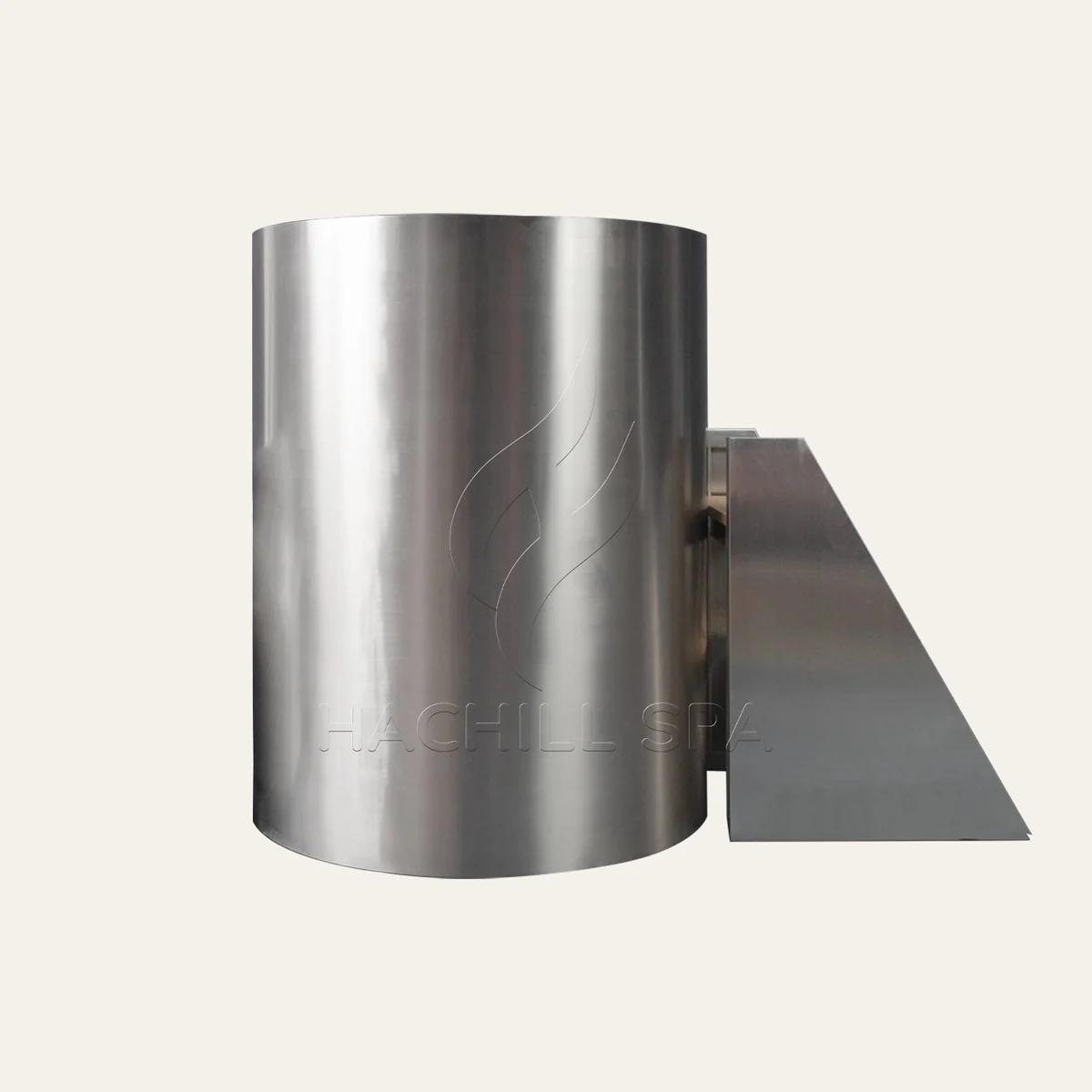
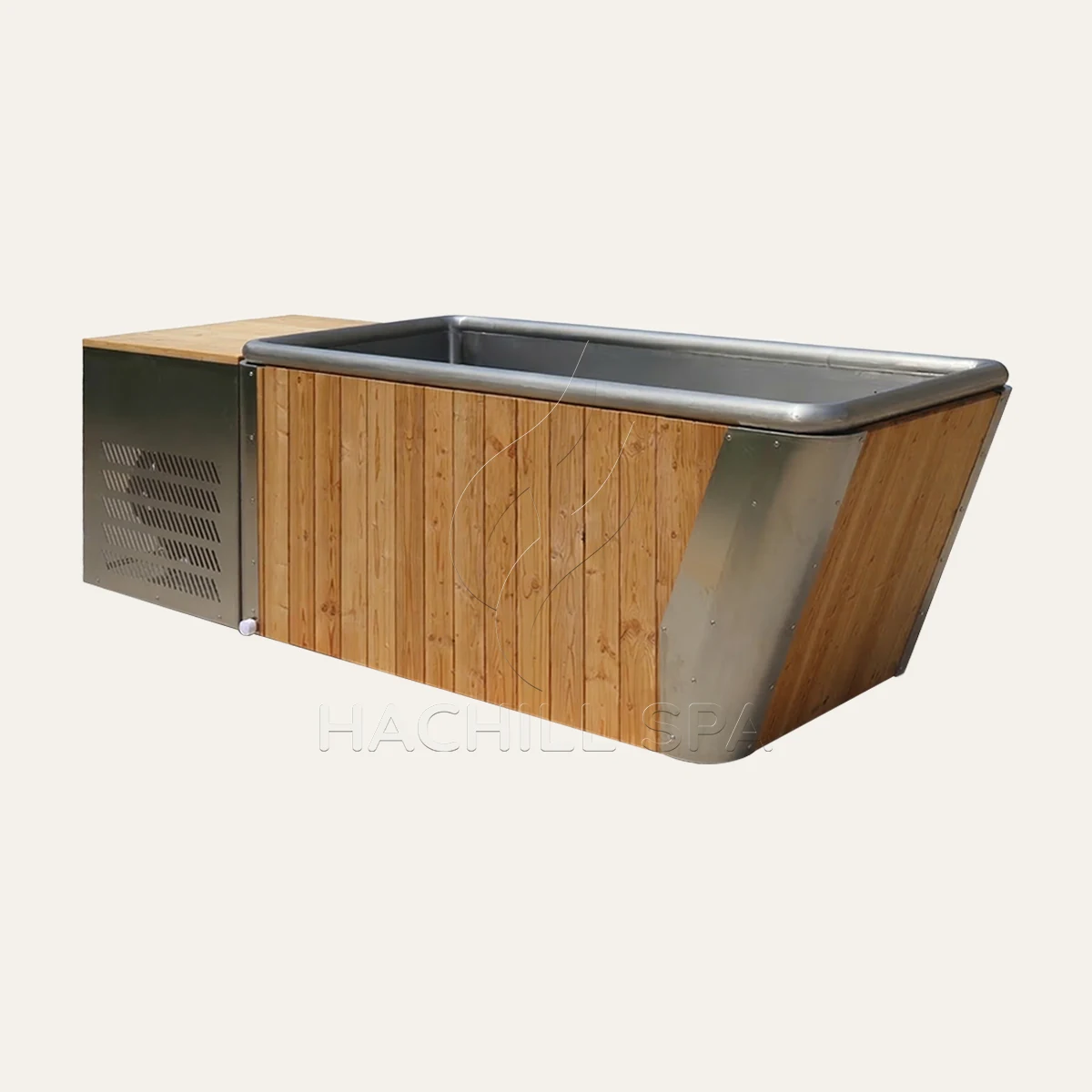
A cold plunge tub often arrives as a defined vessel or system, keeping more of the physical product scope inside the manufactured unit. A cold plunge pool more often extends into a larger or integrated water-body concept, adding interfaces with the building, wet area, drainage, services and shared-use operating plan.
| Comparison point | Cold plunge tub | Cold plunge pool |
|---|---|---|
| Product boundary | More scope may remain within a supplied vessel or system | More scope may extend into the site or building |
| Installation character | Often more product-led | Often more project-led |
| Permanence | May be easier to reposition depending on the design | Often more integrated with the space |
| User model | Often suited to controlled individual sessions | May support a shared or simultaneous-use concept |
| Regulatory status | Must be checked for the actual location and use | Must be checked for the actual location and use |
These are planning tendencies, not legal definitions. A compact built-in basin can create significant building and water-system responsibilities, while a larger manufactured vessel does not enter a particular regulatory class simply because of the name used in marketing.
HACHILL product boundary: The current published HACHILL Cold Plunge range is centered on individual tub formats and models. A larger multi-user pool concept is discussed here as a project-format comparison, not as an implied HACHILL pool-product capability.
Which Usually Costs More: a Cold Plunge Pool or Tub?
A pool can create a larger total project cost, but price alone is too crude a purchasing rule. The useful comparison is the complete installed scope.
A tub may keep more of the vessel and equipment inside a manufactured package, yet it can still require delivery planning, a suitable support condition, utilities, drainage and service clearance. A pool can add more site or building scope around the water body, increasing the work that sits outside the vessel itself. In either format, budget the support basis from the actual filled installation rather than from empty-vessel weight or footprint alone.
Compare these cost boundaries: vessel or fabrication, delivery and access, site preparation, drainage, electrical and utility interfaces, water-system equipment, wet-area or building work, service access and ongoing maintenance responsibilities.
Two projects with similar-looking water areas can therefore have very different budgets. The product price does not reveal who is responsible for the base, drainage, construction interfaces, water treatment, utilities or future access to equipment.
For a complete budget framework rather than a relative pool-versus-tub comparison, use the cold plunge cost planning guide .
How Do Installation and Site Requirements Differ?
The installation difference is best understood as a change in where coordination happens. A manufactured tub can simplify some product interfaces, but it does not eliminate site work. A pool can push more of the solution into the architecture and building services.
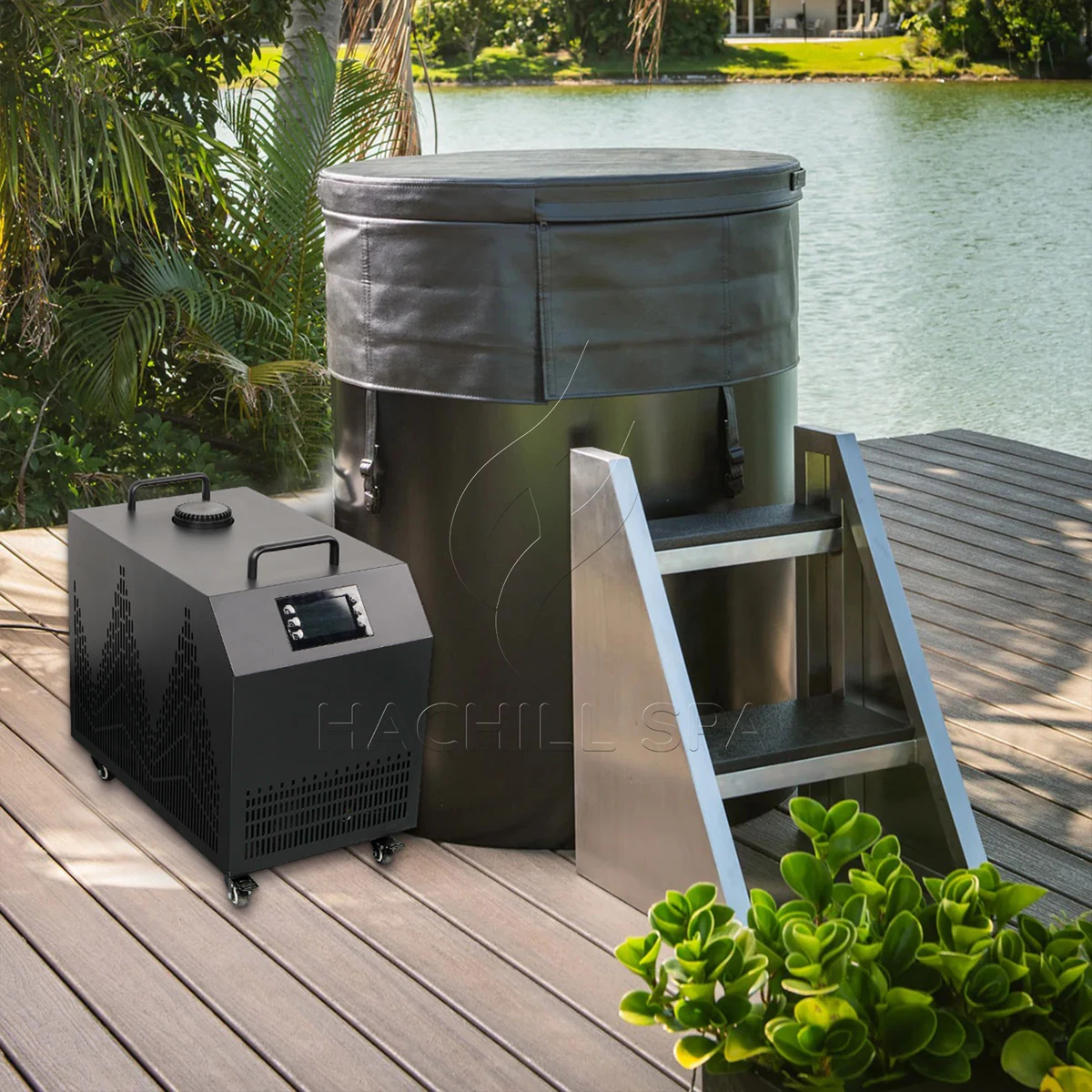
For a tub, project planning may include delivery route, final positioning, the filled operating load, support conditions, electrical supply, drainage, surrounding moisture conditions and access to the chiller or service panels. For a more integrated pool, those same questions can expand into wider wet-area, plumbing, utility-routing and building coordination. Where the installation relies on a building floor, elevated deck or other structural support, the responsible project role should verify the completed load case for the actual vessel, water, users and equipment.
Avoid the shortcuts “tub means no construction” and “pool means permanent concrete.” Neither is reliable across all products and projects. Instead, identify which interfaces are included in the supplied equipment and which remain with the site, installer or design team.
When the decision moves beyond format into cooling capacity, pull-down, holding or recovery duty, use the separate cold plunge thermal engineering and chiller sizing guide .
Occupancy vs. Throughput: One Pool, One Tub, or Multiple Tubs?
For a gym, spa, recovery center or hotel, this distinction is often more useful than comparing vessel dimensions: simultaneous occupancy is not the same as serial throughput.
A pool may allow several people to use one shared water body at the same time if the design, supervision, operating policy and applicable local requirements support that use. A tub configured for one user provides one controlled station, while another tub design may have a different approved occupancy. Multiple independent tubs create a third route: several users may be served in parallel while remaining in separate vessels.
| Format | Potential advantage | Main trade-off to check |
|---|---|---|
| One tub | Controlled individual session, privacy and a compact service boundary | Limited by the selected model and operating policy |
| One pool | Can support a shared experience or genuine simultaneous-use concept | Larger shared-water, site and operating responsibilities may follow |
| Multiple tubs | Parallel individual sessions and separation between stations | Requires space, repeated equipment and a clear operating plan for each unit |
Multiple tubs can also create operational separation. If one independent vessel is unavailable for service, other independent units may remain usable if their own operating conditions are satisfied. That is different from claiming that multiple tubs always produce higher daily capacity.
Actual throughput still depends on session length, turnaround, cleaning or water-release procedure, cooling recovery, staffing, booking model and downtime. A larger water volume, more seats or a wider footprint does not establish users per hour on its own.
Commercial decision rule: Choose the architecture that matches the facility’s real user flow—not simply the option that holds the most water or seats the most people at once.
How Do Water Treatment and Local Regulation Affect the Choice?
Choosing a product called a “tub” does not automatically remove public-aquatic or commercial water-management responsibilities. What matters is how the installation is classified and operated in the destination jurisdiction.
In the United States, the CDC Model Aquatic Health Code is voluntary model guidance rather than federal law. At this September 2026 editorial review, CDC identifies the 2024 MAHC, 5th Edition, as the most recent edition. State, local, territorial and tribal authorities decide whether and how aquatic-health requirements are adopted or modified.
Jurisdiction-specific examples show why product naming cannot answer the compliance question. Ontario’s public-pool regulation specifically defines a public cold plunge pool as a public pool maintained at 15°C or less that is not drained, cleaned, sanitized and refilled before use by each individual.
Utah Code 26B-7-124 provides a materially different public cold-bath definition centered on one-bather use and other statute-specific conditions. It is included here only to demonstrate jurisdictional variation, not as a transferable design rule.
Where a commercial installation falls within applicable aquatic rules, circulation, filtration, treatment, testing, records or other operating responsibilities may become part of the project. The exact requirements belong to the applicable jurisdiction and operating plan, not to the product label alone.
The practical sequence is to confirm the destination, intended users, shared-water model and local classification before freezing the water-system brief.
Which Format Fits Your Project?
For many individual or controlled-session installations, a cold plunge tub is the more product-contained route. A cold plunge pool becomes more relevant when shared simultaneous use or architectural integration is a genuine project requirement. Multiple tubs are another route when parallel individual sessions, privacy or service separation matter.
Do not start with “pool is premium” or “tub is simpler.” Start with the operating model.
| Decision need | Tub | Pool | Multiple tubs |
|---|---|---|---|
| Individual privacy | Often a strong fit | Usually not the main reason to choose it | Can preserve separate user stations |
| Simultaneous shared use | Limited by the selected model | Can be a reason to consider a pool | Parallel use, but in separate vessels |
| Product-contained route | Often stronger | Usually less contained | Repeated product/system scope |
| Architectural integration | Optional | Often more relevant | Usually more product-led |
| Service isolation | One defined unit | Shared system can affect a larger operating boundary | Separate units can provide partial isolation |
| Local aquatic classification | Must be checked | Must be checked | Must be checked |
In practice, a tub often fits controlled individual sessions and a more product-contained installation. A pool becomes more relevant when simultaneous shared use and architectural integration are genuine requirements. Multiple tubs are worth considering when parallel individual sessions, privacy or separation between service boundaries matter more than one shared basin.
HACHILL’s current published cold-plunge range is centered on individual tub formats. If that is the direction of the project, compare the current HACHILL Cold Plunge models and format routes .
For a facility-level brief involving users, site conditions, water management, drainage, cooling and service coordination, continue to the HACHILL Commercial Cold Plunge project route .
Frequently Asked Questions
Is a cold plunge pool better than a cold plunge tub?
Not universally. A tub often keeps more scope inside a manufactured product and can suit controlled individual sessions. A pool becomes more relevant when shared simultaneous use or architectural integration is a genuine project requirement. Compare the operating model rather than the product label.
Which usually costs more, a cold plunge pool or a tub?
A pool can create a larger project scope, but vessel price alone cannot establish the answer. Compare delivery, support, drainage, utilities, water-system equipment, building or wet-area work, service access and operating responsibilities on the same boundary.
Can several people use one cold plunge pool at the same time?
A pool may support simultaneous shared use if the design, supervision, operating policy and applicable local requirements support it. That does not establish daily throughput, which also depends on session timing, turnaround, water-management procedures, cooling recovery, staffing and downtime.
Do cold plunge pools require different water treatment from tubs?
The word “pool” or “tub” does not by itself determine the treatment requirement. Shared-water operation and the installation’s local regulatory classification can change circulation, filtration, sanitation, testing and record-keeping responsibilities. Confirm the applicable authority before fixing the system brief.
Are multiple cold plunge tubs better for commercial throughput?
Multiple tubs can support parallel individual sessions and can separate service boundaries between independent units. They do not automatically create higher daily capacity; actual throughput still depends on session length, turnaround, cooling recovery, cleaning, staffing and the booking model.
Reference Basis
- CDC — Current MAHC Edition and 2024 Model Aquatic Health Code, 5th Edition — U.S. model guidance and the jurisdiction-adoption boundary for public aquatic facilities; CDC identifies the 2024 5th Edition as the most recent edition at this September 2026 review.
- CDC — Operating and Managing Public Pools, Hot Tubs and Splash Pads — operating context for water testing, circulation, filtration, maintenance and records in applicable public/shared facilities.
- Ontario Regulation 565 — Public Pools — jurisdiction-specific public cold plunge pool definition and requirements.
- Utah Code 26B-7-124 — Rules for Public Cold Baths — jurisdiction-specific example using a different cold-bath definition; verify the current statute and local applicability for the actual project.
Regulatory scope: The CDC, Ontario and Utah references demonstrate why classification and operating responsibilities must be checked for the actual destination. They are not a complete compliance review for any project. Product format alone is not evidence of compliance, and this comparison does not claim unverified HACHILL pool capacity, throughput or code approval.
Choose the Project Format Before You Choose the Final System
Define the users, simultaneous-use requirement, site, water-management approach, cooling needs and service strategy first. Then compare the available HACHILL tub route or move into a commercial project review with a clearer system boundary.
Review a Commercial Cold Plunge Project