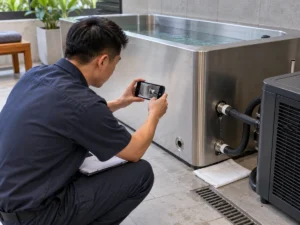
Cold plunge comparison guide
Cold Plunge vs Ice Bath: Cost, Temperature Control, Filtration and Daily Use
A cold plunge vs ice bath decision is mainly about operating method, not which one can feel colder. An ice bath uses added ice and usually puts more preparation, temperature checking, draining and cleaning on the user or staff. A chiller-based cold plunge adds equipment, utilities and maintenance, but it can provide more repeatable temperature control and may support circulation, filtration and treatment components depending on the exact configuration.
For occasional personal use, an ice bath can be the simpler and lower-entry route. For frequent, shared or commercial use, a chiller-based system may reduce repeated ice handling and improve daily readiness—provided water care, drainage, power, condenser airflow and service access are planned correctly.
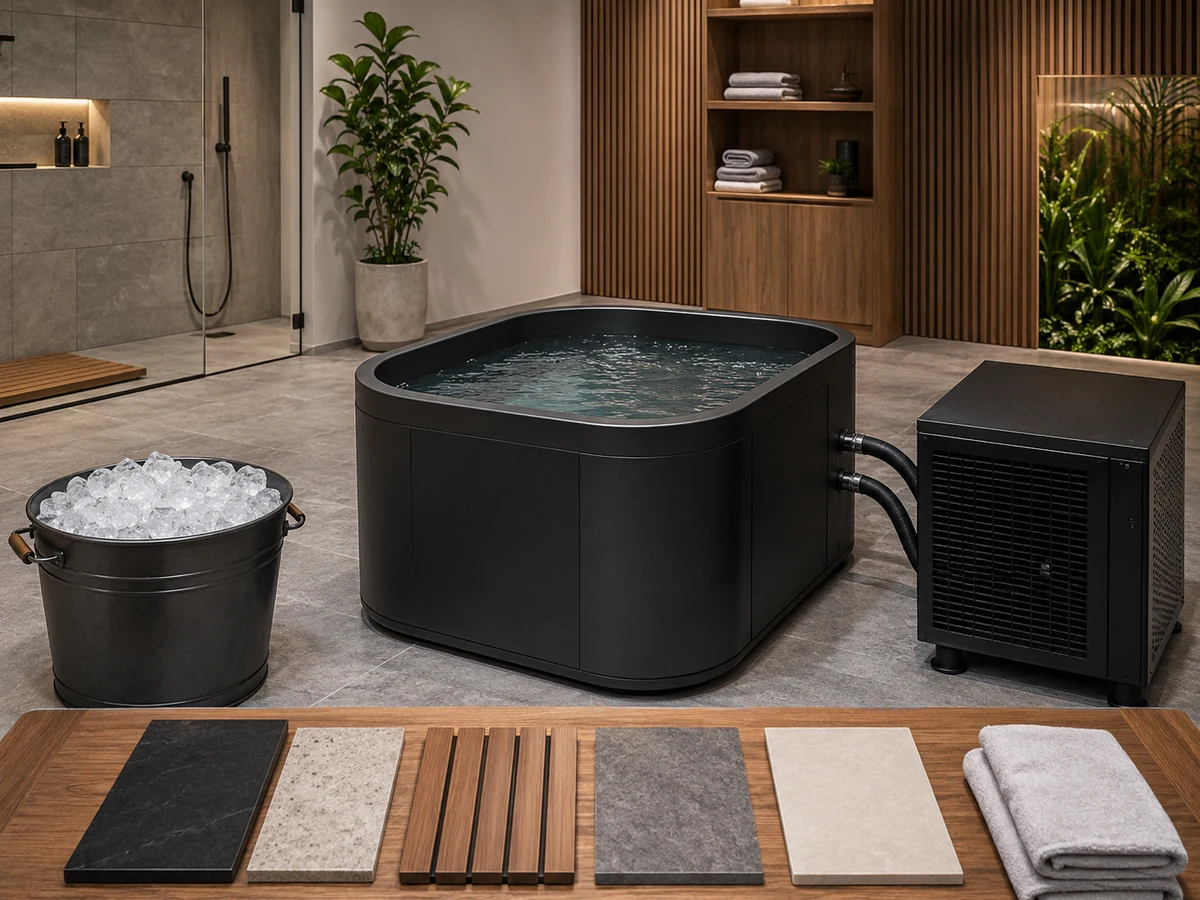
Conceptual visualization for buyer education; not a real HACHILL project photo or model-specific performance claim.
Cold Plunge vs Ice Bath: The Short Answer
Choose an ice bath when use is occasional, budget and setup simplicity matter most, manual ice handling is acceptable and temperature variation is not a problem.
Choose a chiller-based cold plunge when repeatable temperature, less manual preparation, circulation/filtration options and daily readiness matter enough to justify equipment, utilities and maintenance.
For commercial buyers, compare the complete operating burden: expected users, target temperature, usable water volume, ambient conditions, water-care method, drainage, electrical supply, chiller airflow, staff time and service responsibility.
Define the Two Routes Before Comparing Them
In this guide, an ice bath means a vessel cooled primarily by adding ice. It may be a simple tub or an insulated bath, but cooling remains mostly manual and the operator normally manages temperature, water replacement and cleaning directly.
A chiller-based cold plunge means a tub connected to active cooling and water circulation. Depending on the model and configuration, the system may also include a pump, filter, treatment components, cover, drain connection and controls. Those features must be confirmed from the exact product scope rather than inferred from the term “cold plunge.”
After comparing the operating routes here, buyers can review HACHILL cold plunge product routes for product-family direction.
Cold Plunge vs Ice Bath: Key Differences
On mobile, swipe the table horizontally to compare the two operating routes.
| Decision Factor | Ice Bath | Chiller-Based Cold Plunge |
|---|---|---|
| Cooling method | Ice added manually. | Active refrigeration/cooling equipment. |
| Starting cost | Usually lower for a basic setup. | Usually higher because more equipment is included. |
| Temperature repeatability | More dependent on ice amount, starting water temperature and timing. | More repeatable when chiller capacity, flow, ambient conditions and controls are correctly matched. |
| Daily preparation | More ice handling and manual reset. | Less repeated ice handling, but system checks and maintenance remain. |
| Filtration / treatment | Often absent unless separately added. | May include circulation, filtration or treatment components; exact scope is model-specific. |
| Shared / commercial use | Can create significant staff and between-user water-care burden. | Can better support repeated use if water care, utilities and operating procedures are properly defined. |
| Site requirements | Water, drainage, floor safety and ice logistics. | Water, drainage, electrical supply, airflow/heat rejection, service access and water care. |
Cost: Compare the Purchase and the Operating Routine
An ice bath is usually cheaper to start because it can avoid a chiller, circulation pump, filter and associated electrical scope. The trade-off is recurring ice handling, more manual temperature preparation and often more frequent drain/clean/refill work.
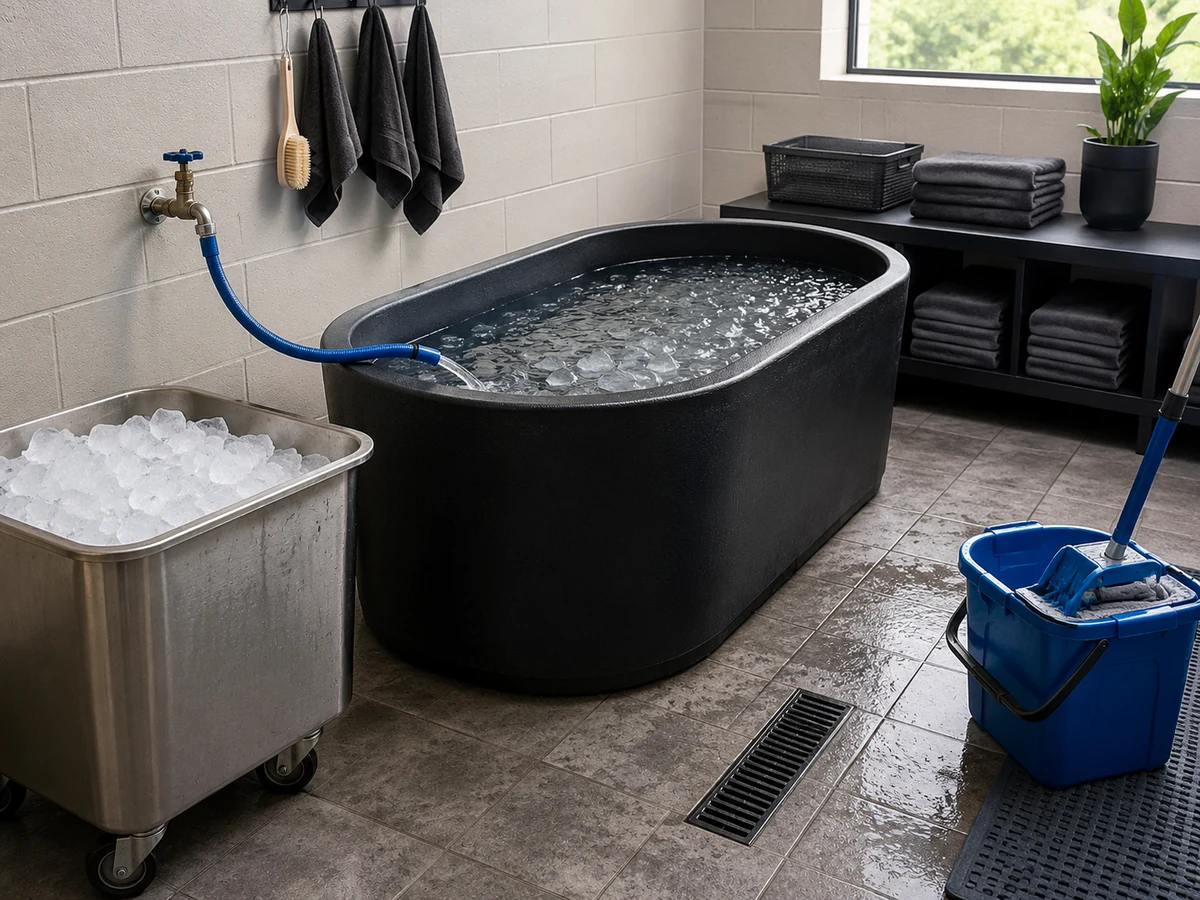
Conceptual visualization; no fixed ice cost, temperature or operating result is implied.
A chiller-based cold plunge usually costs more upfront and adds electricity, maintenance and serviceable components. Its economic case becomes stronger only when the reduced preparation burden, repeatable availability or commercial workflow is valuable to the buyer.
Do not use one generic monthly running-cost number. Ice price, water use, electricity, ambient conditions, insulation, operating schedule, maintenance and staff labor are site-specific. For a full budget boundary, use HACHILL’s cold plunge cost guide.
Temperature Control: Manual Cooling vs Active Cooling
Ice lowers water temperature, but the result changes with ice quantity, water volume, starting temperature, ambient conditions, insulation, time and user load. An ice bath can therefore be perfectly usable while still being less repeatable from session to session.
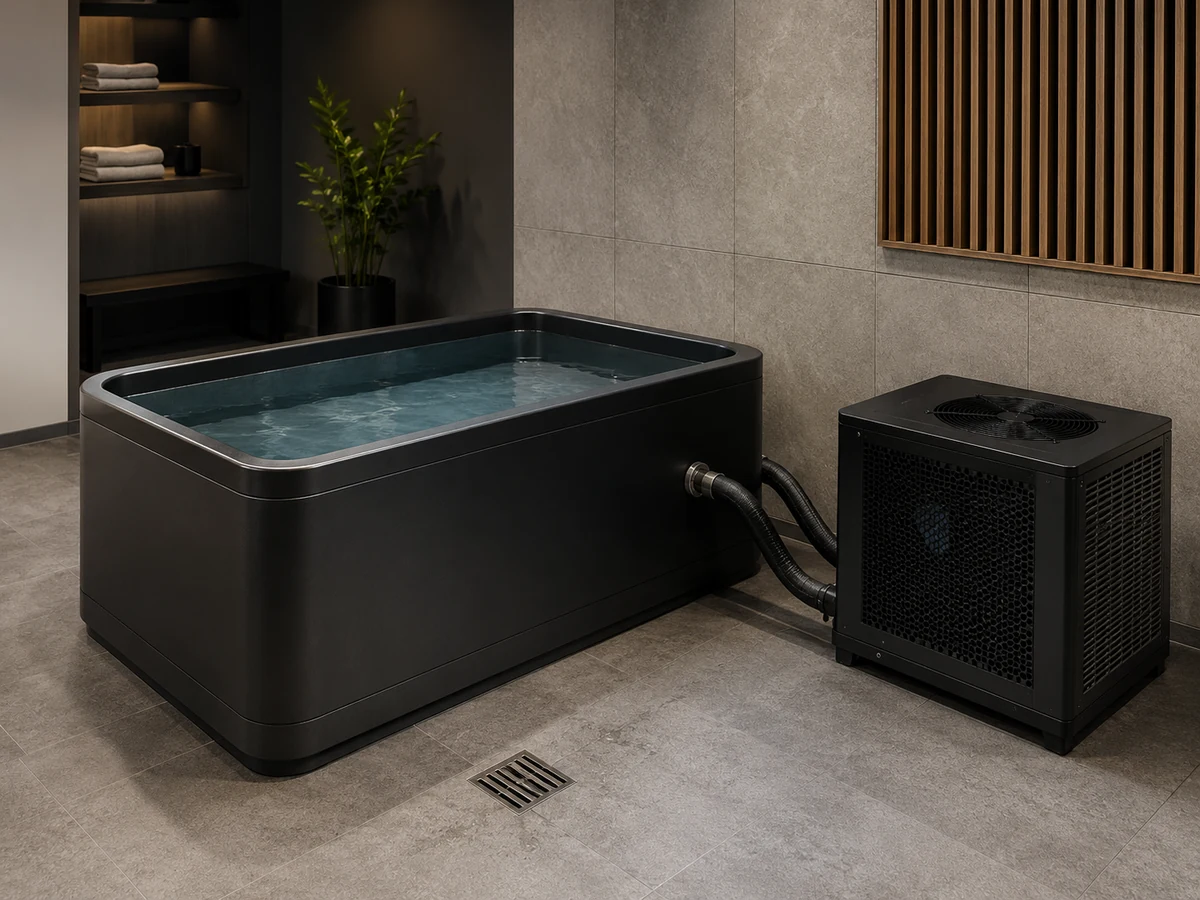
Conceptual visualization; no guaranteed temperature, pull-down time or chiller performance is implied.
A chiller can hold or recover toward a setpoint, but only within the limits of its useful cooling capacity, water flow, heat exchanger, insulation, cover use, condenser-air condition and duty cycle. A higher HP label by itself does not establish faster cooling or better project fit.
For technical selection, keep this comparison page at the route level and use the dedicated guides for chiller HP vs cooling capacity, ambient temperature and pull-down time, or the full cold plunge chiller sizing method.
Filtration and Water Care: Cooling Does Not Make Water Hygienic
Water care is one of the most important practical differences between a simple ice bath and a system designed for repeated use. A basic ice bath often depends on manual drain, cleaning and refill. A chiller-based plunge may add circulation, filtration and treatment components, but those components do not remove the operator’s responsibility for testing, cleaning and condition-based water replacement.
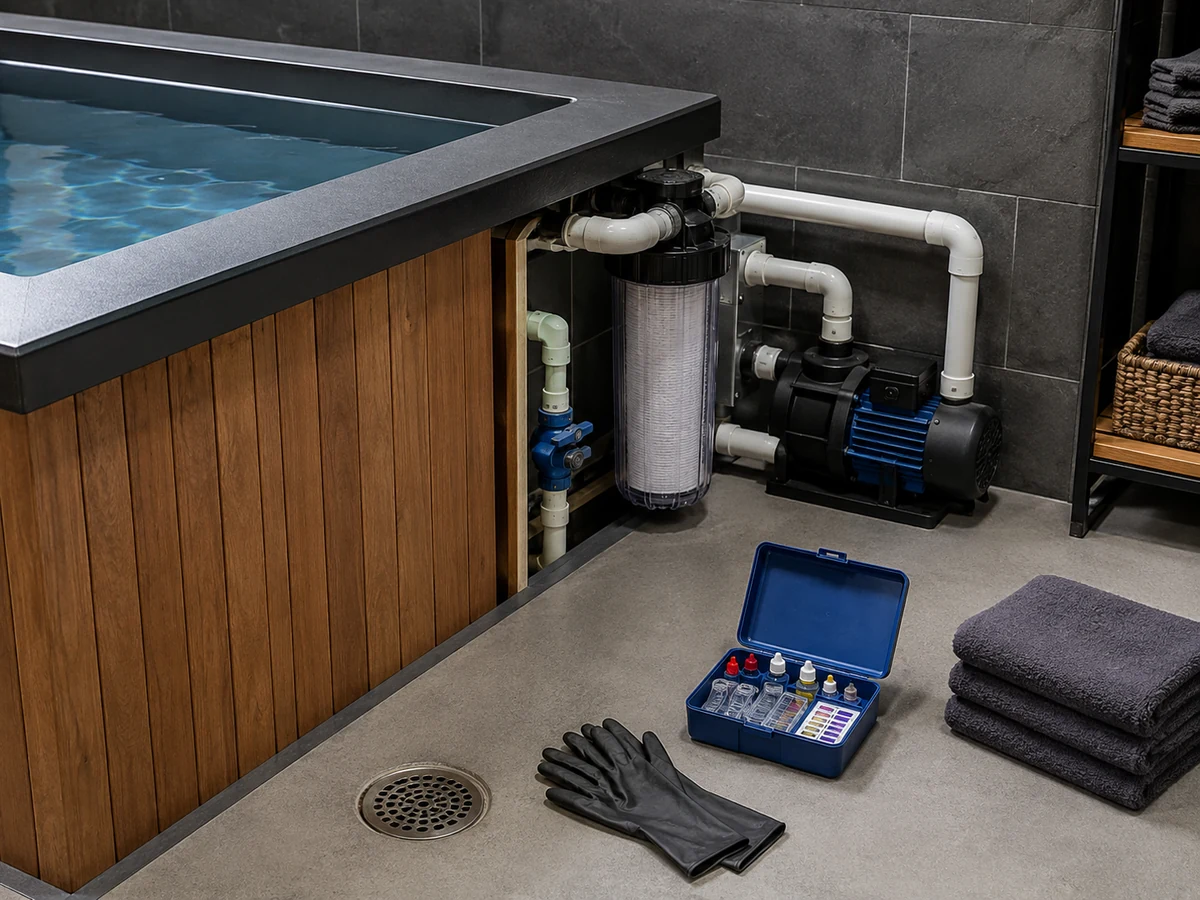
Conceptual visualization; exact filter, pump and sanitation components must be confirmed by model and configuration.
The cold-plunge-specific NCCEH evidence brief notes that shared cold plunge vessels can present waterborne and physical hazards and distinguishes recirculating systems from stand-alone vessels without filtration/disinfection. Its recommendations are public-health guidance, not a universal product specification; local rules and the exact system configuration still govern.
Filtration removes selected suspended material; it is not automatically sanitation. If a product claims UV, ozone, chemical treatment or another treatment route, confirm the exact component, compatible water chemistry, maintenance requirement and intended-use limits. For the detailed operating method, see how to keep cold plunge water clean.
Daily Use: Which Routine Can You Actually Operate?
The best comparison is the routine the user or staff must repeat.
Typical Ice Bath Routine
- fill or check the tub;
- move and add ice;
- wait and verify water temperature;
- manage debris and water condition;
- drain, clean and refill as required.
Typical Chiller-Based Routine
- check water temperature and system status;
- confirm circulation and filter condition;
- manage the specified water-treatment routine;
- clean contact surfaces and surrounding wet area;
- keep condenser airflow and service access clear.
A chiller changes the type of labor; it does not eliminate maintenance. An ice bath favors simpler equipment but more repeated preparation. A chiller-based route favors operational repeatability but requires technical components to be maintained correctly.
Commercial Use Changes the Comparison
Once multiple people share the water, the purchase becomes an operating-system decision. User turnover, cleaning, water treatment, wet-floor control, staff training, maintenance access, documentation and local public-health requirements can matter more than the difference in tub price.
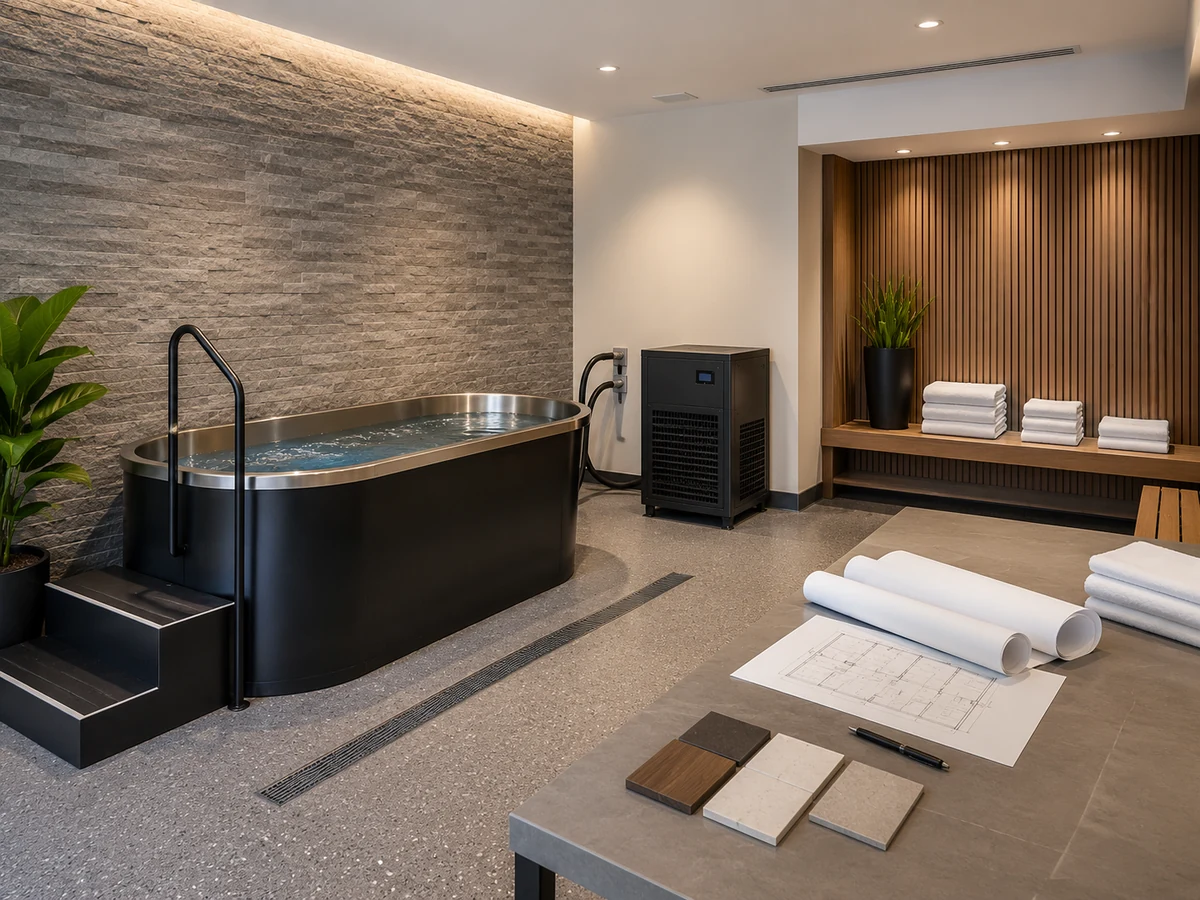
Conceptual visualization; not a real customer site, project case or operating result.
For gyms, recovery studios, spas and hotels, a chiller-based route may be easier to integrate into repeated daily operation when temperature control and water-care components are correctly specified. A simple ice bath can still be used in some settings, but a personal-use routine should not be assumed to be suitable for shared commercial operation.
For facility planning, review HACHILL’s recovery center cold plunge planning route before freezing product configuration.
Site Checklist Before You Choose Either Route
Many cold plunge problems begin with missing site inputs rather than the tub itself.
Final Decision: Choose by Operating Burden, Not Product Name
Choose an ice bath when
Use is occasional, user count is low, manual ice handling is acceptable, drainage and cleaning are easy, and session-to-session temperature variation is acceptable.
Choose a chiller-based cold plunge when
Repeatable cooling, less manual preparation, daily readiness and an integrated circulation/filtration route matter enough to justify utilities, maintenance and serviceable equipment.
Hold the purchase when
You cannot yet define users, water volume, target temperature, drainage, electrical supply, chiller location, treatment method, cleaning responsibility or commercial operating rules.
For B2B projects, convert this comparison into a short operating brief before requesting a model-level quotation.
What to Prepare Before Requesting a Cold Plunge Quote
Provide the operating conditions that change product selection instead of asking for a generic cold plunge price.
Use and Site Inputs
- buyer type and intended use;
- expected users and sessions per day;
- target water temperature and expected operating water volume;
- indoor/outdoor location and ambient conditions;
- available electrical supply;
- drainage, refill and chiller placement.
Water-Care and Commercial Inputs
- filtration and treatment expectations;
- cleaning and testing responsibility;
- quantity and destination market;
- branding or packaging requirements;
- documentation, spare-parts and after-sales expectations.
With those inputs defined, request a model-level quotation through HACHILL’s RFQ channel.
Evidence and Reference Notes
External sources support public-health and cold-exposure boundaries only. They do not prove performance, component scope, sanitation capability, compliance status or medical outcomes for a specific HACHILL product.
- NCCEH: Cold plunge tanks — considerations for environmental public health — cold-plunge-specific discussion of shared-water hazards, recirculation, filtration/disinfection and cleaning.
- CDC: Home pool and hot tub water treatment and testing — general aquatic-water reference for treatment/testing principles; not a cold-plunge-specific standard.
- American Heart Association: cold-water immersion risks — used for cold-shock and cardiovascular-risk context.
- Cleveland Clinic: cold plunge safety guidance — used for cautious medical-suitability and stop-use framing.
Frequently Asked Questions
Is a cold plunge the same as an ice bath?
Not always. An ice bath usually relies on manually added ice. A chiller-based cold plunge uses active cooling and circulation equipment. Some sellers use the terms loosely, so compare the actual system rather than the label.
Is an ice bath cheaper than a cold plunge?
A basic ice bath is usually cheaper to start, but the operating comparison also includes ice, water, cleaning and labor. A chiller-based plunge usually costs more upfront and adds electricity and maintenance, but it can reduce repeated ice preparation.
Does a cold plunge always stay at its target temperature?
No. Performance depends on useful chiller capacity, water volume, ambient conditions, insulation, cover use, flow, filter condition, condenser airflow and user load.
Does filtration mean I do not need to change or treat the water?
No. Filtration is only one part of water care. Shared systems may also require a compatible treatment method, testing, cleaning and condition-based water replacement under applicable local requirements.
Which route fits a gym, spa or recovery center better?
A chiller-based system often fits repeated daily operation better when temperature readiness and structured water care matter, but suitability depends on user load, site utilities, treatment scope, maintenance access and local requirements.
Are cold plunges and ice baths safe for everyone?
No. Cold immersion can trigger rapid breathing, blood-pressure and cardiovascular responses, and prolonged exposure can cause hypothermia or loss of motor control. People with relevant medical conditions should discuss cold-water immersion with a qualified healthcare professional.
Safety, Health and Use-Limitation Note
Cold plunges and ice baths are discussed here as wellness or recovery-routine products, not as medical treatment. This article does not claim that cold exposure treats, cures or prevents disease or guarantees recovery outcomes.
Commercial facilities should establish supervision, user-screening rules, emergency procedures, hygiene procedures and stop-use conditions appropriate to the facility and local requirements.